
Author: Susan Huebert

  • Career Profile: Marine Engine Technician (French version available)

    Career Profile: Marine Engine Technician (French version available)

    Jobs People Do | JobsPeopleDo.com

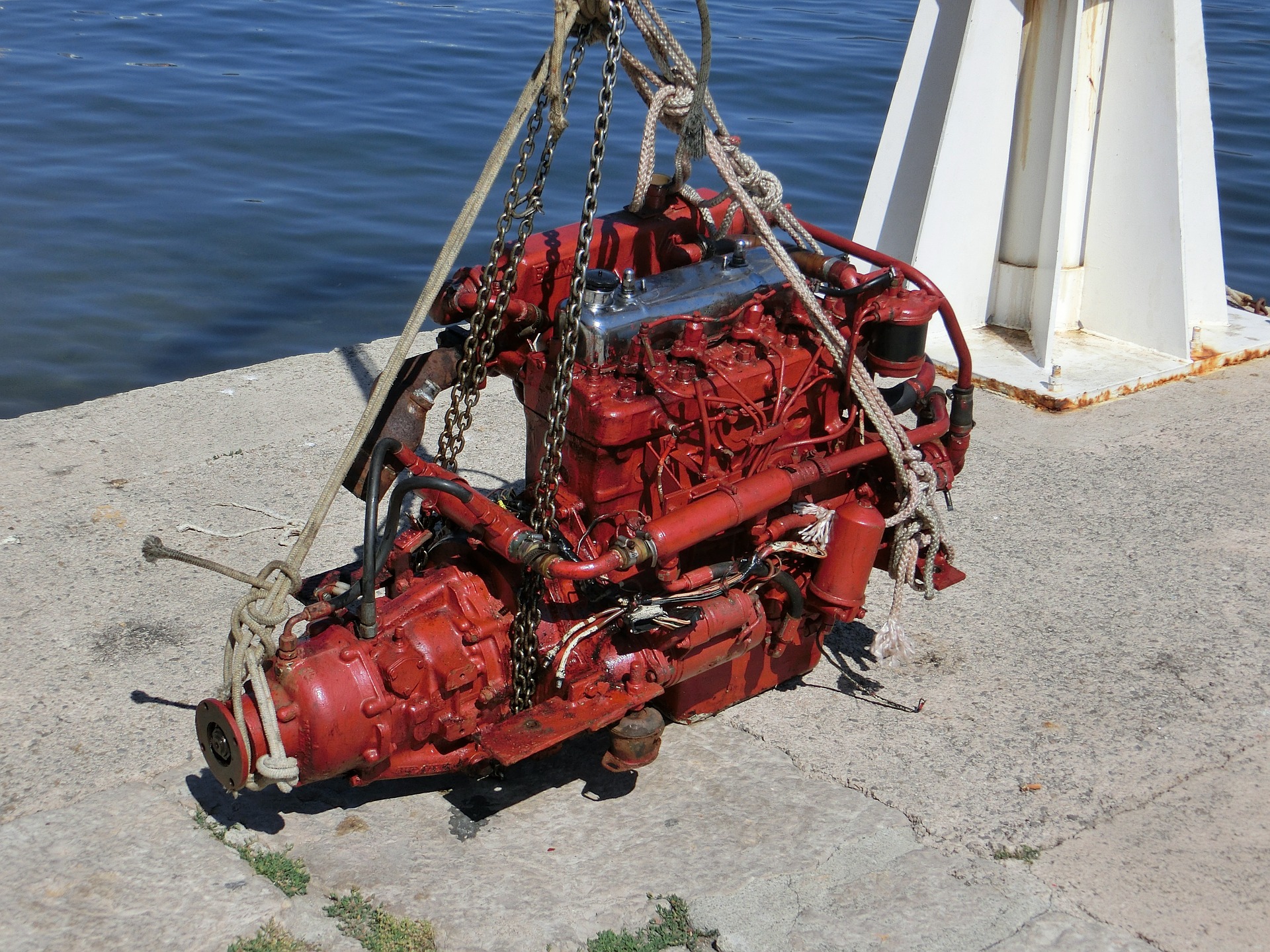
    Some people like working with engines, taking them apart to see how they work and then putting them back together. These machines come in many different types, including marine engines. Working with these engines can be a rewarding career for people who enjoy mechanical work. If that describes you, why not consider becoming a marine engine technician?

    Engines have many connected parts that help the machine to work properly, but these can also break or wear out. They need people to inspect, service, and repair them. Marine engines might be slightly different from other engines, but they have the same basic structure. Learning to build and repair other engines can help people deal with the types of issues they might face in working with marine engines.

    Normally, marine engine technicians need at least a high school education with courses in topics like mathematics and English. For trade certification, people need a three- or four-year apprenticeship, or five years of work experience with some courses in machine repair or millwright work. In some parts of Canada, official certification is necessary. For that designation, people should be able to work with gasoline and diesel engines, electrical systems, steering systems, and other aspects of engine maintenance.

    Since marine engines are for boats and ships, most of the work in this trade is close to the water on the east and west coasts of the country. Cargo ships and other large boats can provide work for many people in this trade. However, some work might be available near lakes and rivers, where people ride small boats for pleasure. Being willing to work with other types of engines can help provide a steady income, especially in winter when lakes and rivers are frozen and only the large ships can sail.

    Attention to detail is an important quality for marine engine technicians. Making even small mistakes can cause an engine to break down, and technicians need to be careful. Good eyesight with or without glasses and steady hands can help people avoid making errors, and curiosity about machines can make the job interesting. Since machines can change over the years, marine engine technicians should be sure to keep up with the latest developments.

    Like with most trades, people who work as marine engine mechanics can increase their pay and level of responsibility as they develop their skills. Wages usually begin at $24 per hour or $50,000 per year and can rise to $32 per hour or $63,000 per year with experience. People can specialize in a certain type of marine engine or work more generally with whatever is available. Choosing to specialize is easier for mechanics who work with mechanics who can take over other tasks, but it can be possible even for people who work alone.

    The work of a marine engine technician can be tiring and sometimes stressful, especially if a job needs to be finished quickly. Sometimes, clients have tight deadlines, and mechanics have to get the work done before the ship has to leave the harbour. However, it can also be a very good job for people who enjoy working with their hands and solving problems. If this career sounds good, you can already start to prepare for a career as a marine engine mechanic through your schooling or work experience.


    Bibliography:

    Boating Industry in Canada. “Careers.” https://boatingindustry.ca/careers.

    Georgian College. “Inspect, service and repair marine engines as a marine mechanic.” https://www.georgiancollege.ca/academics/programs/mechanical-techniques-marine-engine-mechanic/.

    Job Bank. “Marine Engine Mechanic in Canada.” https://www.jobbank.gc.ca/marketreport/requirements/17112/ca

    Payscale Canada. “Marine Mechanic: Hourly Rate.” https://www.payscale.com/research/CA/Job=Marine_Mechanic/Hourly_Rate.


  • Dress Code Red: My Big Interview Is Coming Up! How to Know How to Dress for an Interview or First Impression (French version available)

    Dress Code Red: My Big Interview Is Coming Up! How to Know How to Dress for an Interview or First Impression (French version available)

    Jobs People Do | JobsPeopleDo.com

    By Olivia Condlln-Wilby

    It can be stressful to figure out what to wear to a job interview, especially if you’ve never attended one before. Dressing professionally can help you leave a good first impression and feel more confident as you enter the workforce. You want to show hiring managers that you’re responsible, mature, and ready to adapt to their work environment. Overly casual outfits and distracting accessories can overshadow your accomplishments; you could be remembered as “the candidate with the ripped jeans” rather than for your skills and qualifications.

    As you prepare for your interview, use this article as a guide. Remember, the most important thing is to be confident and comfortable in whatever you wear!

    1. Research the Dress Code

    Different workplaces have different expectations. For example, the cashier at your local grocery store probably dresses more casually than a branch manager at the bank. Before your interview, it’s a good idea to familiarize yourself with the organization’s dress code and prepare to match their preferred style. You may be able to find this information on their website, or you can ask the hiring manager for more information. You can also search for the organization on social media and try to assess the level of formality they expect from employees based on their images and posts.

    As a general rule, business casual attire includes slacks, knee-length skirts, tailored jackets, cardigans, and dress shoes. If you wear make-up, consider a natural look for the interview – for example, use a neutral colour palette that day. Avoid jeans, shorts, sundresses, and athletic wear.

    1. Consider the Little Things

    It’s important to pay attention to the details. Your outfit should be neat and professional from head to toe, as you want to look respectable and prepared. Ask yourself the following questions:

    • Are my clothes clean, ironed, and free of rips or stains?
    • Are my shoes polished and free of marks?
    • Have I groomed my hair and nails?
    • Is my jewelry professional? Have I removed my facial piercings?
    • Are my tattoos covered?

    You want the employer to focus on you – your ideas, abilities, and talents. Try to avoid potential distractions such as flashy jewelry, bold designs, and bright colours.

    1. Respect the Setting

    Even a casual workplace, such as a coffee shop, summer camp, or community centre, will expect you to look professional and put-together for the interview. You might be able to get away with a nice pair of jeans if they’re clean, neutral, and free of rips and tears. But you should still avoid streetwear like hoodies, sandals, athletic shorts, track pants, cropped shirts, or tank tops. When in doubt, assume that business casual is the norm. You should also dress more conservatively for a job interview. Your stomach, shoulders, and back should be covered. Ensure that your clothes fit properly.

    4. Be Comfortable and Confident

    While it’s important to dress professionally, it’s equally essential that you feel good in whatever you’re wearing. Prepare your outfit ahead of time and make sure you feel comfortable walking, sitting, and standing in it. Ensure that you can wear your shoes for long periods of time without feeling pain. If you’re unsure about an element of your outfit, ask a friend or family member for their advice. At the end of the day, employers want to know that you can do the work and be successful. Stay calm and don’t be afraid to smile!


    Sources

    Parent, J. (2022). How to Dress for a Job Interview: 3 Tips for Teens. Your Teen for Parents. https://yourteenmag.com/teenager-school/teens-high-school/what-to-wear-to-an-interview-for-teens

  • Conflict Resolutions: Handling Disagreements Smoothly (French version available)

    Conflict Resolutions: Handling Disagreements Smoothly (French version available)

    Jobs People Do | JobsPeopleDo.com

    There is no “I” in teamwork, so goes the adage. And as much as you want to believe that everything will go smoothly in group tasks or projects that require your participation, one way or another, there’s always a possibility that you’ll encounter a team member, or members, whose ideas will differ from yours.

    Reaching a compromise to reach an end goal is the best strategy, of course; however, that tends to be easier to say than do. However, consider these four approaches to work through differences to accomplish your mission.

    1. Take time to listen.

    As COVID forced most of us to conduct meetings and discussion in an online setting, it’s been much easier to talk over someone else or monopolize conversations, without being fully aware of it. And if you don’t agree with the views being presented, you may become easily frustrated. As a result, you tend to shut off and don’t make an effort to pay attention to what’s being said. However, keep in mind that listening to what others have to say is the first step in handling conflicts.

    1. Be empathetic and understanding.

    When you want to make a point, sometimes you get carried away and become too self-involved that you fail to recognize emotional cues from the other participants in your meeting. They may be having a tough time following the topic at hand, or they may be having issues at home that they’re not ready to talk about and are affecting their current disposition. Do all you can to drive your point home, but be sensitive in your tone and manner of speaking if you notice someone seems to be having inner turmoil.

    1. Don’t underestimate the theory of democracy.

    Everyone has their own plan to accomplish a task. Sometimes, certain factors come into play, like personal preferences or tastes. For instance, if you were assigned to do a group outing to build team rapport, and you prefer to head to a museum because you love the arts, but others have suggested a picnic at the park, then put it to a vote. This way, you and your team members come to a decision that’s fair to all.

    1. Be open to compromise.

    The skill to learn how to compromise with your peers can’t be developed overnight. However, if you open your mind to it, in due time, you’ll be a master at this. Remember, collaboration skills take practice, and they require a mindset of taking into consideration other people’s needs and working around them to meet your own needs as well.

    No matter what setting you’re in or how old you are, you’ll likely find yourself in a situation that requires you to put your conflict resolution skills in full gear. During these times, always take things in stride and remember that team effort overpowers individual effort.


    Sources

    MindTools. “Managing Conflict in Meetings.” https://www.mindtools.com/pages/article/newTMM_65.htm.

    Morreaux, Angelique de la. “How to Lead a Conflict-Resolution Meeting.” Chron. https://smallbusiness.chron.com/lead-conflictresolution-meeting-10665.html.

    Neely,  Joe. “10 Most Effective Conflict Resolution Tips for the Workplace.” Toggl. https://toggl.com/blog/conflict-resolution-tips.

  • Getting Dirty May Be Healthy (French version available)

    Getting Dirty May Be Healthy (French version available)

    Jobs People Do | JobsPeopleDo.com

    For much of human history, we lived close to the natural world. As civilization evolved, we became increasingly urbanized, and most of us now live in cities. As we’ve moved away from nature, we’ve seen a decline in other forms of life. Biodiversity is disappearing. The current rate of loss is perhaps as high as 10,000 times the natural rate. The International Union for Conservation of Nature’s 2008 Red List of Threatened Species shows that 16,928 plant and animal species are threatened with extinction. This includes a quarter of all mammal species, a third of amphibian species and an eighth of bird species. And that’s only among those we know about; scientists say we may have identified just 10 to 15 per cent of existing species.

    It can be a challenge to communicate why this loss is important. We know species diversity is critical to the healthy functioning of ecosystems that provide services on which humans depend. But could we live with fewer? Some would argue we could do without mosquitoes and other annoying critters. We could keep the ones we want and those that are useful to us. Do we need biodiversity to keep humans healthy?

    According to an article in Conservation magazine, there is a link between biodiversity and human health. Ilkka Hanski and his colleagues at the University of Helsinki compared allergies of adolescents living in houses surrounded by biodiverse natural areas to those living in landscapes of lawns and concrete. They found people surrounded by a greater diversity of life were themselves covered with a wider range of different kinds of microbes than those in less diverse surroundings. They were also less likely to exhibit allergies.

    What’s going on? Discussion of the relationship between biodiversity and human health is not new. Many have theorized that our disconnection from nature is leading to a myriad of ailments. Richard Louv, author of Last Child in the Woods, says people who spend too little time outdoors experience a range of behavioural problems, which he calls “nature deficit disorder”. It fits with theories of modern ecology, which show systems lacking in biodiversity are less resilient, whether they’re forests or microbial communities in our stomachs or on our skin. Less resilient systems are more subject to invasion by pathogens or invasive species.

    Hanski studied a region in Finland where few people move far. He randomly selected 118 adolescents in an equal number of homes. Some were in the city, and others were in the woods or on farms. The team collected skin swabs from subjects and then measured the biodiversity of plants around each house. Their data revealed a clear pattern: higher native-plant diversity appeared to be associated with altered microbial composition on the participants’ skin, which led in turn to lower risk of allergies.

    Hanski and his colleagues found that one group of microbes, gammaproteobacteria, appears to be associated both with plant diversity and allergies. And it didn’t matter whether they considered allergies to cats, dogs, horses, birch pollen or timothy grass. People with more diverse kinds of gammaproteobacteria on their bodies were less likely to have allergies.

    The immune system’s primary role is to distinguish deadly species from beneficial and beneficial from simply innocent. To work effectively, our immune system needs to be “primed” by exposure to a diverse range of organisms at an early age. In this way, it learns to distinguish between good, bad and harmless. If not exposed to a wide array of species, it may mistakenly see a harmless pollen grain as something dangerous and trigger an allergic reaction. We also know that bacteria and fungi compete. Fungi are often associated with allergies, and it could be that the high diversity of bacteria keeps the fungi in check.

    A conclusive explanation for Hanski’s observations is not yet available. More research is needed. But we know we evolved in a world full of diverse species and now inhabit one where human activity is altering and destroying an increasing number of plants, animals and habitats. We need to support conservation of natural areas and the diverse forms of life they contain, plant a variety of species in our yards, avoid antibacterial cleaning products and go outside in nature and get dirty — especially kids. Our lives and immune systems will be richer for it.

  • Your post-secondary goals may change, and that is okay. (French version available)

    Your post-secondary goals may change, and that is okay. (French version available)

    Jobs People Do | JobsPeopleDo.com

    I wanted to be an accountant. I figured I’d complete my mandatory year of prerequisite arts at the University of Alberta, transfer to the Faculty of Business, and major in accounting. I’m now a writer. So what happened?

    During my first semester, I found myself enthralled with my writing-focused English courses instead of the Business calculus, statistics, and economics prerequisites. I spent hours perfecting my essays, and my professors encouraged me to pursue the arts. I always enjoyed writing; however, I never considered it as something that I could monetize. I went on to work at my University’s writing center, instruct introductory English courses, and get a job writing marketing content for local businesses.

    As a disclaimer, there is nothing wrong with sticking to your original plan; dedication is a wonderful trait to possess. If you’re sure of what you want and how to get it, then you should be proud. However, if while studying you stumble upon something better suited to your aptitude and passions, shouldn’t you reaccess your original goal and make sure you will still feel fulfilled when you, after the hard work, reach it?

    I frequently encounter people who, while in University, were exposed to a career path that they regret not following. Among them are engineers who wanted to be teachers, scientists who wanted to go into marketing, pharmacists who wanted to be nurses, and the list goes on.

    Their reasons for not pursuing these alternate goals are varied, but they often focus on “even though I would have rather done y, I already put so much effort into x” – this is called the sunk cost fallacy and sometimes makes us act silly.

    I fell victim just last week: I was watching a series on Netflix, and halfway through, I determined that I didn’t like it. Instead of choosing something else, I told myself, “I’ve already watched half of this, so I might as well finish.” I knew that I had already wasted hours of my life on this series, yet I used that poor investment as a reason to continue watching. I’m sure if you reflect on some of your decisions, you can catch yourself doing this, too!

    Sticking to your goals is paramount to success, but make sure your goals are evolving with you. If you find yourself bored or depressed from dedicating your time to studying something you no longer enjoy, you may benefit from reconsidering your options. Of course, following your heart may not always be viable, and there are reasons to stick with an imperfect situation, such as financial limitations. However, if you see a viable, more fulfilling, alternate plan, remember that the time, money, and other resources you invested into your original goal are in themselves not a logical reason to continue something you no longer want. It’d be a shame to work hard at studying a discipline you are no longer passionate about just to get a job dealing with more of the same!

  • The Pros and Cons of Starting a Business with a Friend (French version available)

    The Pros and Cons of Starting a Business with a Friend (French version available)

    Jobs People Do | JobsPeopleDo.com

    Starting a business with a friend may seem like a fun and exciting idea. Although it may be a great idea, it also has its disadvantages. If you are curious about whether starting a business with a friend is a good idea or not, this article is just for you!

    Pros

    • You Know Each Other’s Strengths and Weaknesses

    If you start a business with a friend whom you have known for a long time, you probably know their strengths and weaknesses. They also probably know yours. This will help both of you decide which duties are best for each of you. There will also be fewer surprises when you are working with someone you already know.

    • You Can Spend More Time with Your Friend

    Working with your friends can make you excited to go to work each day. You get to talk about more than just business throughout the day. A large amount of your life is spent at work, so it is important to work with people you get along with.

    • You Can Freely and Comfortably Communicate

    If you’re starting a business with a friend, it’s most likely going to be with someone you can freely and comfortably speak to. When running a business, it is very important to communicate and remain on the same page as your partners. Working with a friend can help you comfortably communicate your thoughts.

    • You are Each Other’s Support System

    Starting a business is not easy, but doing it with a friend can help make it a little less overwhelming. You and your friend will be sharing this amazing experience and will go through all the highs and lows together. You could give each other the confidence and support needed to continue running the business.

    Cons

    • It May Be Difficult to Be Straightforward

    When communicating with a close friend, it may be difficult to be straightforward. This could be because you may not want to hurt your friend’s feelings. You may also be afraid of losing your friendship over a disagreement. For these reasons, you may not always be as honest as you would like to be.

    • It Can Be Difficult to Know Who Is in Charge

    If you start a business with a friend, it may be difficult to know who the boss is, especially if the business is equally divided between you both. There may be times when one of you works more than the other, making you feel like you deserve a larger part of the business. If there is a lack of communication, it can lead to bigger issues and could also lead to your business failing.

    • You Could Lose Your Friendships

    When working with a friend, you should keep in mind that there is a possibility that you could lose your friendship. You may not know what your friend is like in a business setting. You two could also have different goals, which can cause conflicts. These conflicts could potentially lead you two to part ways. This is why it is important for you and your friend to always openly communicate with each other.

    • Drama Could Get in the Way

    When doing business with a friend, drama can get in the way. It could make it difficult for you to separate your professional life from your personal life. For this reason, it is important to set boundaries when you first begin working together.

    Starting a business with a friend has many pros and cons. Whether or not one should start a business with a friend is very personal. It is something that should be carefully thought through and reflected upon.


    Resources

    Desmarais, Christina. “11 Pros and Cons of Building a Business With Friends.” Inc. https://www.inc.com/christina-desmarais/11-pros-and-cons-of-building-a-business-with-friends.html.

    Kelly, Marsha. “The Pros and Cons of Starting a Business with Your Friends.” Zen Business. https://www.zenbusiness.com/blog/pros-cons-starting-business-friends/.

    Litonjua, Eduardo. “Should you start a business with a friend? Pros, cons and key questions.” Keap. https://keap.com/business-success-blog/networking/should-you-start-a-business-with-a-friend-pros-cons-and-key-questions.

    Scribaceous. “The Pros & Cons of Starting a Business with a Friend.” https://scribaceous.com/pros-cons-of-starting-business-with-friend/.

    Susman, Aron. “The Pros and Cons of Starting a Business With Friends.” Business Collective. https://businesscollective.com/the-pros-and-cons-of-starting-a-business-with-friends/?syndicate.

  • How to Deal with a Failing Grade (French version available)

    How to Deal with a Failing Grade (French version available)

    Jobs People Do | JobsPeopleDo.com

    No one is perfect, especially when it comes to school; after all, we’re all still learning.  Part of the learning process means that you might not completely understand everything you’re taught the very first time.  Practice is necessary, which is why we do homework, group projects, in-class assignments, and tests.  These are all ways to learn, understand, and apply the things we’re taught.

    Because these are part of the learning process, it means that sometimes, you might get a failing grade.

    What a bad grade doesn’t mean is that you’re a bad student, can’t be taught, or shouldn’t be trying to learn a certain subject.

    Getting a bad grade can be disappointing and discouraging, and you’re allowed to be upset.  However, it’s important not to let being upset make it harder for you to keep trying to learn and understand.

    There are a few key things to keep in mind when you’re dealing with a bad grade.

    Try and Keep Calm While Your Process the Grade

    Being upset is okay, but try not to let these feelings overwhelm you or become a storm of anger and frustration.  Everyone gets a bad grade at some point in their education; it’s not the end of the world.  Take some time away from thinking about your grades to help yourself calm down.  You can spend time with friends and family, enjoy a hobby, do some physical activity, or simply focus on something that isn’t school.

    Talking about the grade and your upset feelings can also help.  Find a friend, teacher, or family member you trust and share how you’re feeling.  Chances are good that they will be able to help you understand and deal with the situation.

    Ask Your Teacher for Feedback

    Your teacher’s job is to help you learn, and they don’t give out bad grades to be mean.  They are simply showing you what you still need to learn.  When you get a bad grade, talk to your teacher and ask them to show you where you made mistakes and how to fix these mistakes.  Sometimes all you need is a bit of an explanation or seeing a different way to work through a problem, in order to understand.

    Your teacher will also be able to point you toward resources that will help you learn, such as study guides, online resources, and practice questions or practice tests.  They may also be able to offer a make-up assignment or test that you can complete in order to get a better grade.

    Find New Study Strategies

    Not every student is equally good at all subjects, but because of the way a classroom is structured, usually, the teacher spends most of their time teaching everyone the same way.  Everyone learns slightly differently, and if you get a bad grade, it might simply be that you need to find a new way of studying the material that works better for you.

    This could be as simple as spending more time studying and doing practice questions for subjects you have trouble with, asking your teacher to explain it a different way, or studying with a friend and helping each other learn the material.

    Or, it could be as intensive as finding a tutor, or seeking out hands-on extra-curricular programs that can help you learn.  Your teachers, guidance counsellors, family members, and local libraries are all good resources to speak with when you are looking for new ways to study a subject.

    The most important thing to remember is that sometimes a bad grade is just part of the learning process.  All it means is that you still have some learning to do.


    Sources

    Dolin, Ann. “How To Handle Bad Grades: A Practical Guide For Parents.” Educational Connections. https://ectutoring.com/bad-grades.

    Ekkanath, Shivani. “6 Smart Tips for Dealing With a Bad Grade.” CollegeXpress. https://www.collegexpress.com/articles-and-advice/majors-and-academics/blog/6-tips-dealing-bad-grade/.

    Pritchard, Ashley. “How to Deal With a Bad Grade.” WikiHow. https://www.wikihow.com/Deal-With-a-Bad-Grade.

  • The Health Benefits of Swimming and Tips for Practicing Swimming (French version available)

    The Health Benefits of Swimming and Tips for Practicing Swimming (French version available)

    Jobs People Do | JobsPeopleDo.com

    Swimming is an activity that people of all ages can do. It has many health benefits, and it is great for your body as well as your mind.  If you don’t swim regularly, maybe this article will convince you to hop in the pool more often!

    So, what are some of the benefits of making swimming a habit?

    It Can Reduce Stress

    Like other exercises, swimming can reduce your stress. It can help you keep your mind off of things that could be stressing you. When you exercise, your body reduces the stress hormones and releases endorphins. Endorphins are natural “feel-good” chemicals that help boost your mood. If you’re feeling stressed, go for a swim and you will feel better by the time you get out.

    It Works Out Your Entire Body

    Swimming works out your entire body. It may seem like your arms and legs do most of the work, but that is not the case. Swimming can strengthen your core, tone muscles, build strength and endurance, and also increase your heart rate. When swimming, you will feel a burn in your body in as little as 20 minutes. There are many different strokes you could do. Each of these strokes focuses on different muscle groups. These strokes include breaststroke, backstroke, sidestroke, butterfly, and more.

    It Has a Lower Impact on Your Joints

    Most workouts are either high intensity and hard on your joints or low intensity and easy on your joints. Swimming has a lower impact than other cardio exercises. This is because water holds you up and will reduce the stress and the impact on your joints. Since you are being held up by the water, your chances of injury are reduced.

    Tips for Practicing Swimming

    • Don’t Waste Your Breath

    You may end up inhaling water if you gasp for air every time your head reaches the surface. Instead, you should exhale all the air from your lungs before taking another breath. Beginners usually need to take a breath more often, but as you build endurance, you’ll be able to control your breath much better. When taking a breath, make sure to alternate sides. This will reduce the strain on your neck and shoulders.

    • Keep Practicing

    When you watch professional swimmers swim, you may think that they make it look easy and relaxed. This is because they have been practicing for a very long time and still continue practicing. In order to improve your swimming skills, it is important to keep practicing.

    • Get Feedback

    Receiving and listening to feedback is a good way to know what you are great at doing and what you need to work on. If you can, try to get a coach or a friend to watch you swim and later give you feedback. Another option is to record yourself swimming. The next time you swim, make sure to keep the feedback in mind.

    If you’re looking for a low-impact, stress-reducing workout for your entire body, then go hit the pool!


    Resources

    Bean, Matt. “Seven Steps To Better Swimming Technique.” Runner’s World. https://www.runnersworld.com/uk/training/triathlon/a764520/seven-steps-to-better-swimming-technique/.

    Berry, Jennifer. “Endorphins: Effects and how to increase levels.” Medical News Today. https://www.medicalnewstoday.com/articles/320839.

    House, Lydia and Morgan Fargo. “12 major benefits of swimming that’ll convince you to take it up, from better sleep to weight loss.” Women’sHealth. https://www.womenshealthmag.com/uk/fitness/g27268961/benefits-of-swimming/.

    Marcin, Ashley. “What Are the Top 12 Benefits of Swimming?” Healthline. https://www.healthline.com/health/benefits-of-swimming#get-started.

    Petty, Amber. “13 Reasons to Just Keep Swimming.” Greatist. https://greatist.com/health/benefits-of-swimming.

    Poirier-Leroy, Olivier. “Swimming Tips: The 7 Fundamentals of Faster Swimming.” YourSwimBook. https://www.yourswimlog.com/swimming-tips/.

  • Careers & Jobs That Keep You Close to Nature (French version available)

    Careers & Jobs That Keep You Close to Nature (French version available)

    Jobs People Do | JobsPeopleDo.com

    Do you enjoy spending time in nature? Are you curious about which jobs or careers keep you close to nature? If so, the following are a few jobs and careers that may interest you, along with a short description of each. If any of these jobs interest you, do not hesitate to research them some more!

    Marine Biologist

    Marine biologists study the ocean and its relationship with the many organisms living within it. This includes coral reefs. They collect specimens and examine them, and conduct experiments in laboratories.

    Park Ranger

    Park rangers manage parks. These parks could be local parks or even national parks. They are responsible for protecting the wildlife in the park as well as those that are visiting. Park rangers also give tours and guide people throughout the park. They show the many beautiful parts of the park during their tours. A majority of their day is spent outside in nature.

    Nature Photographer

    Nature photographers do exactly what it sounds like. They are photographers who observe and photograph nature without disrupting it. They often travel and spend their time outdoors in nature. Their photos can be used for educational purposes or just to show off the beautiful environment.

    Wildlife Biologist

    Wildlife biologists study wildlife and different animals to understand how they interact with their environment. They study animals’ physical characteristics and behaviours. They also research the impact humans have on wildlife and their natural habitats. Wildlife biologists collect specimens to later analyze in laboratories.

    Environmental Geologist

    Environmental geologists research solutions to issues in the environment. They closely observe and study floods, earthquakes, pollution, and natural hazards. Human interactions with the Earth are also studied. Environmental geologists have to collect samples of soil and rock, conduct surveys, and record information from reports.

    Agriculture and Food Scientists

    Agriculture and food scientists look into crops and farm animals. They find ways to improve the safety and quality of our food. This could be by developing better methods to process, package, and deliver food in ways that won’t negatively affect our health.

    Conservation Scientist

    Conservation scientists work with farmers, foresters and mining companies to determine the safest way to extract natural resources from the Earth without causing damage to the environment. They also analyze damaged forests, usually caused by forest fires and the area’s soil quality.

    Meteorologist

    Meteorologists study the weather. They look into how the weather changes and how it affects everyone on Earth. They spend time in nature collecting data and afterwards analyze the data to understand the weather.

    Wildlife Forensics Specialist

    Wildlife forensics specialists are scientists who investigate wildlife crimes. They collect evidence from animals and their environment to later investigate in laboratories. The evidence collected and examined will help identify crimes that were committed.

    Environmental Engineer

    Environmental engineers use their engineering principles, biology, chemistry, and soil science to evaluate and find solutions to environmental problems. They can work on improving recycling, waste disposal, controlling air pollution, and even climate change. Environmental engineers are often consulted to advise agencies on procedures to clean up contaminated areas.


    Resources

    CareerExplorer. “What does a conservation scientist do?” https://www.careerexplorer.com/careers/conservation-scientist/.

    CareerExplorer. “What does a geologist do?” https://www.careerexplorer.com/careers/geologist/.

    Environmental Science. “What is a Wildlife Forensics Specialist?” https://www.environmentalscience.org/career/wildlife-forensics.

    Kolmar, Chris. “10 Best Jobs for People Who Love Nature.” Zippia. https://www.zippia.com/advice/jobs-nature-lovers/.

    NewScientist. “What Does a Marine Biologist Do?” https://jobs.newscientist.com/article/what-does-a-marine-biologist-do-/.

    Renzulli, Kerri Anne. “15 high-paying jobs for people who love to be outside.” CNBC. https://www.cnbc.com/2019/04/18/15-high-paying-jobs-for-people-who-love-to-be-outside.html.

  • Farm Equipment Mechanic Career Profile (French version available)

    Farm Equipment Mechanic Career Profile (French version available)

    Jobs People Do | JobsPeopleDo.com

    Every machine breaks down at some point, whether from frequent use or from being badly made. When that equipment is essential, such as on a farm, a person who can repair the machinery becomes very important. Working as a farm equipment mechanic can help keep farmers working and ensure that people have a reliable source of food.

    Most farms have a variety of equipment, depending on the type of work being done. Grain farms have tractors, harvesters, and other large machinery useful for working on large fields and digging up soil. Dairy farms might have equipment for milking cattle, and egg farms would have different types of equipment. For each of them, however, having equipment that functions well is important.

    Farm equipment mechanics work to make sure that the equipment works as well as possible. They inspect the machinery and maintain it by cleaning it, oiling the moving parts, and doing whatever else is necessary. At least once a season, many farm equipment mechanics do a thorough overhaul of everything to find any issues that might cause problems in the future. They might tighten bolts and deal with rusty parts or any other potential problems.

    Sometimes, farm equipment mechanics need to take machines apart to find the problem. Then they can replace or repair faulty parts, using welding machines, hand tools, or other equipment. Being able to put the machine together again is also very important so that the farm workers can use it again. Having a good memory and being methodical can help avoid the problem of having an extra piece left over at the end. Mechanics might also need to drive large machines to a barn or other repair facility. Having expert driving skills is helpful for this task.

    A high school diploma or equivalent is normally the minimum requirement for farm equipment mechanics. Being able to communicate is important, and so English classes are helpful. Any courses in mechanics or even in physics could also be helpful. Taking classes at a technical college could give workers an advantage in looking for work.

    Jobs for farm equipment mechanics are normally located in the country or in small towns near farms. Wages for people in this trade start at about $15 per hour or $33,000 per year and can rise to $34 per hour or $68,000 per year. Some people might choose to become experts in certain types of equipment, but others might prefer to deal with any type of machine that they can.

    Like many other trades, the job of a farm equipment mechanic can be physically demanding, especially when people bend over machines for hours at a time. The work can be dirty, as moving parts in machines require oil to keep them moving properly. Testing the machines to see if they are working can also be loud, and the repair shops can be dusty and hot. However, the work can be rewarding for people who enjoy putting machines together or finding solutions for mechanical problems they encounter.

    A career as a farm equipment mechanic can be the right choice for people who are detail-oriented and good with their hands. If that describes you, why not consider this important trade?


    Bibliography:

    Career Planner.com. “Farm Equipment Mechanic.” https://job-descriptions.careerplanner.com/Farm-Equipment-Mechanics.cfm.

    Job Bank. “Agricultural Equipment Technician in Canada.” https://www.jobbank.gc.ca/marketreport/occupation/26452/ca;jsessionid=44CBD3300650D70B70C4EFAB1589BF53.jobsearch74

    Payscale Canada. “Farm Equipment Mechanic Hourly Rate.” https://www.payscale.com/research/CA/Job=Farm_Equipment_Mechanic/Hourly_Rate.

    Salary.com. “Farm Equipment Mechanic.” https://www.salary.com/research/job-description/benchmark/farm-equipment-mechanic-job-description.