Author: Mara Hurst

  • Learning on the Job: Waiting Tables (French version available)

    Learning on the Job: Waiting Tables (French version available)

    With the COVID pandemic, finding jobs was extremely difficult. One of the few jobs I found was at a local restaurant. They were looking for a hostess, and I thought to myself, I would be perfect for the job! I enjoy talking to people, and doing small tasks to make everyone’s job easier. The interview went very well, and I was hired by the end of the week.

    After a few shifts, I felt comfortable in the environment and felt like I fit in with the rest of the staff! However, as the days progressed, problems began to arise. One of the first issues I faced was with one of the waitresses. She ignored many of my questions and would not respond to me if I tried to make small talk. I brushed it off quickly; it is impossible to be friends with everyone you work with. And from that, I learned to work around her and kept everything running smoothly. One small problem, or not-so-friendly person won’t stop me from getting a job done!

    But after I moved past that, I ran into another issue. Being a hostess, you need to be able to speak to all sorts of customers and maintain a professional persona. No matter what they say, you need to remain polite. Or so I was told during my time as a hostess. I ran into multiple customers who had issues with their tables, their food, their drinks, or wait times. As much as I tried to solve every problem, that was not good enough for some people. And again, you can’t be friends with everybody. I learned to adapt to the customer I was talking to and try to solve the issue in a way they see suitable. It’s a tough job to bite your tongue sometimes and let them speak, but it is a good skill to learn. Sometimes it is better to listen and step away to calm down, than it is to interrupt and elevate the situation.

    Now I didn’t last very long at this job. It wasn’t because of one coworker, and it wasn’t because of a handful of rude customers. The thing that gave me the push to quit was the manager. In customer service, you can only handle so much. And when you are new to the business, and are still trying to find your footing, the best thing is for there to be a manager who has your back. That was something I did not have. No matter what course of action I took, I was either too slow, too fast, or just not doing it right. If a customer had a wild complaint and shouted derogatory things at me, the manager couldn’t care less. One day, I had enough of being treated so poorly by the manager, and I just left in the middle of my shift. Why? I was dealing with some heavy family issues and my manager decided to yell at me for being overwhelmed.

    If you’ve made it this far, you probably have some questions swirling around. One of them probably being, “Well, what did you learn?” From all of this, I learned a few different things. First, sometimes people are just not going to like you – and that is okay. Some people just do not mesh well together, and it isn’t because one of you is an awful person. It could just be a difference of opinion or personality. Being liked is not the most important thing when working, and the sooner that is learned, the easier customer service can be. Next, I learned how to keep my cool in intense situations. Remaining calm often helped with de-escalation, and made everyone’s lives a bit easier.  Finally, I learned that you do not have to sit down and take treatment you do not like. If you are being berated and feel unsafe somewhere, you have every right to just leave. Feeling terrible every time you go into work makes for a sad life. You should work somewhere you feel safe, accepted, and happy. And if you are not receiving these things, walk away and don’t feel bad about it. You are allowed to prioritize yourself and your well-being.

    Everyone learns something from a new job, and it is important to remember these lessons and try to apply them to your everyday life.


  • Tips and strategies for setting goals for 2023

    Tips and strategies for setting goals for 2023

    By Rabia Khan

    These past several years were like a rocket with feathers. It passed by slower than we expected. Now fast forward through the pandemic and beyond it, and it’s 2026.

    Goals and dreams are like a North Star. We need to follow the shining light that is within us. That is what we dream about achieving. Focusing and not losing sight of that ultimate reality are important. Here are some tips and strategies for setting goals for 2026.

    Make plans and never give up.

    We need to prioritize our time and effort to achieve the task at hand. Never go for short-term solutions or benefits. Taking the hard road will turn lucrative and fruitful in the end. Some hard knocks are never going to knock you down. Pick yourself up even if there is an unpredictable or unprecedented fall. It never hurts to fall. It’s a jittery experience and makes us all the more determined.

    Pursuing one’s goal is wonderful. It’s a wonderful way of taking hold of yourself and prospects that can ultimately culminate in achievement.

    Know your strengths.

    Know not only your strengths but also listen to your weaknesses and work on them. Do not be deterred or discouraged. Nothing happens overnight. It’s always a long process or a long road to wherever you are heading, but enjoy the journey because you make it on your own strengths.

    Self-evaluation is vital. There is plenty of room for improvement, and opportunities present themselves that we should never ignore and never fail to utilize for the betterment of the goal at hand.

    Analysis is a true king (or queen)!

    Analyze the situation, weigh the pros and cons, and take the necessary actions with a very level-headed approach. Keep yourself open to all avenues and chances that may come one way. Never say never. Nothing is impossible. Nothing is unattainable.

    Construct your best shot!

    Build on your strengths. You should never underestimate your strengths. Make them your forte. Use them to the best of your potential. Strategize with your resources and carry them forward. You never know, your weaknesses may turn out to be your biggest challenge and your best chance at your future. Turn what you think are your weaknesses into yourstrengthsh and ward off any doubt about going about and forward in your career.

    Think positive.

    Never listen to negative advice from anyone. You are your best bet. No one knows you as well as you know yourself. So push the bar. Come out of your comfort zone. Let no one confuse you. Be very focused.

    Keep in mind that what you have set out to achieve will be achieved no matter what, no matter how long it takes, but you are going to get there.

    You can touch the stars. You can fly in the sky. It’s all in the mind. With a little bit of imagination and hard work, you can get there.

    Bravo and cheers!

  • What is Blue Monday? (French version available)

    What is Blue Monday? (French version available)

    Some months of the year tend to be easier than others. When the sun is shining and the weather is warm, people tend to feel happier than they do in the cold and darkness. A feeling of depression and sadness is so common in winter that the third Monday in January has become known as Blue Monday. Although it was originally a marketing idea, Blue Monday expresses what many people feel.

    In much of Canada, January is a cold and dark month when many people want to get away to a warmer place. Many of them become depressed and gloomy. During the pandemic, the problem became even worse, with almost twice as many adults feeling depressed than in normal years. Younger people can also feel depressed, especially when they are unable to participate in their usual activities.

    Even without a pandemic, people can become very sad at times, especially in winter. Scientists have even come up with a term for winter sadness: “seasonal affective disorder.” This term is used for people who have more than the usual sadness, often to the point where they become seriously depressed. In some cases, they have to use special lamps to give themselves extra light, especially in the north, where darkness can sometimes last all day during the winter.

    In other areas of North America, people can still find winter very difficult. In 2005, a life coach and psychologist named Dr. Cliff Arnall came up with the idea of Blue Monday when he was trying to create a formula to decide on the saddest day of the year. He published his theory as part of an announcement for a company called Sky Travel, using the term “Blue Monday” to refer to the sense of “blue” to mean “depressed” or “sad.”

    The choice of Monday was also related to how people tend to feel. Mondays can also be difficult for people because it is the beginning of the work week. They might also feel anxious about their financial situation if they have spent a lot of money over Christmas. With all of these factors, January is a natural time to feel depressed.

    Many factors can contribute to feelings of sadness. The holidays are over by the third week of January, and many people have already failed at following their New Year’s resolutions. Much of Canada has only about nine hours of daylight at that time of the year, and the weather can be very cold. People cannot spend much time outside in that case, and they might not see the sun for days at a time.

    Even knowing about a day named Blue Monday might make people even more sad because it reminds them of the difficulties they are having. For the travel company, that kind of feeling was a good way to encourage people to get away from the cold and to travel to warm destinations like Hawaii or the Caribbean. Even if people are unable to get away on holiday, however, they can still do something about their feelings of sadness.

    You might have some ways of dealing with sadness in the cold and dark months. Maybe you go for brisk walks or play games with your family or friends. You might go to visit elderly relatives. Spending more time outside and taking Vitamin D can help. Whatever you do, you can make this winter’s Blue Monday a pleasant and happy day instead of a sad occasion.


    Bibliography:

    The Centre for Addiction and Mental Health. “Blue Monday Survival Guide.” https://camh.ca/en/camh-news-and-stories/blue-monday-survival-guide.

    Cleveland Clinic. “Seasonal Depression.” https://my.clevelandclinic.org/health/diseases/9293-seasonal-depression.

    Matti, Mariam. “Blue Monday: How to Overcome the ‘Saddest Day’ of the Year.” https://www.ctvnews.ca/lifestyle/blue-monday-how-to-overcome-the-saddest-day-of-the-year-1.4774442.

    Paul, Anna. “What is Blue Monday and Why Is It Considered the Most Depressing Day of the Year?” https://metro.co.uk/2020/01/20/blue-monday-saddest-day-year-12087919/.

  • Endangered Species Highlight: The Burrowing Owl

    Endangered Species Highlight: The Burrowing Owl

    Since European settlers first arrived in Canada, over 100 animal species have disappeared. Those animals have become extinct, meaning that none of those animals live in Canada anymore. When an animal species is close to becoming extinct, they are usually called “endangered.” This tells people that they should take steps to protect these animals. Without people’s help, an animal species can be gone forever.

    In fact, knowing about endangered species is so important that there is a day for them – Endangered Species Day is taking place this year on May 20, 2022. Like many places in the world, Canada has endangered species that people should know about. In honour of the 17th Endangered Species Day, I would like to focus on an endangered animal species in Canada: The Burrowing Owl.

    What is the Burrowing Owl?

    Burrowing Owls are small owls that can be found in Canada, but they also fly to America and Mexico in the winter. Within Canada, Burrowing Owls are usually found in prairie areas such as Alberta and Saskatchewan. Burrowing Owls tend to have opposite behaviours compared to other owls.

    While many other owls live in trees and are active during the night, Burrowing Owls live in the ground and are active during the day. They spend their days looking for prey such as insects and mice. Their habit of living in burrows, small holes in the ground, is where their name comes from. While “burrowing” is in the Burrowing Owl’s name, Burrowing Owls do not actually do this action: they depend on other animals, such as foxes, squirrels, and pocket gophers, to make their homes.

    Why Are Burrowing Owls Endangered?

    As of 2015, there were only 270 Burrowing Owls living in the Canadian prairies, and fewer will be found if they are not protected. There are two big reasons as to why Burrowing Owls are endangered: their homes are being destroyed by land development, and farming techniques are hurting them.

    Over 75% of original Canadian grassland has been turned into land for farming. This leaves Burrowing Owls with less space for homes. On farmland, farmers use chemicals called pesticides to protect their crops. The pesticides might protect crops, but can hurt (and even kill) Burrowing Owls if they eat them. Pesticides are not only bad for Burrowing Owls, but also the other animals that Burrowing Owls depend on.

    How Can Burrowing Owls Be Protected?

    The easiest thing to do is spread the word about Burrowing Owls. Making people more aware of these animals and the dangers that they face will help them in the future. The amount of construction and the amount of pesticide usage happening in Burrowing Owls’ homes cannot be ignored.

    Canadian programs such as the Manitoba Burrowing Owl Recovery Program and Saskatchewan’s Operation Burrowing Owl are helping protect Burrowing Owls. There is still a lot to learn about Burrowing Owls that can be key to helping them survive. The exact number of Burrowing Owls in the Canadian prairies is unknown, so reporting any Burrowing Owl sightings will help organizations.


    Sources:

    Atter, Heidi. “Operation Burrowing Owl Asks People to Report Sightings of At-Risk Species.” CBC News, 9 June 2020, https://www.cbc.ca/news/canada/saskatchewan/burrowing-owl-sightings-saskatchewan-1.5604935.

    “Burrowing Owl.” Hinterland’s Who’s Who, https://www.hww.ca/en/wildlife/birds/burrowing-owl.html.

    “Burrowing Owl – Grasslands National Park.” Parks Canada, Government of Canada, 13 Apr. 2018, https://www.pc.gc.ca/en/pn-np/sk/grasslands/nature/faune-wildlife/cheveche-owl.

    “Endangered Species Day.” Endangered Species Coalition, https://www.endangered.org/campaigns/endangered-species-day/.

    “Home.” Manitoba Burrowing Owl Recovery Program, http://www.mborp.ca/.

    Kraus, Dan. “Stopping Habitat Loss Is the Key to Saving Canada’s Endangered Species.” The Hamilton Spectator, 16 Nov. 2020, https://www.thespec.com/opinion/contributors/2020/11/16/stopping-habitat-loss-is-the-key-to-saving-canadas-endangered-species.html.

  • Pipefitters (French version available)

    Pipefitters (French version available)

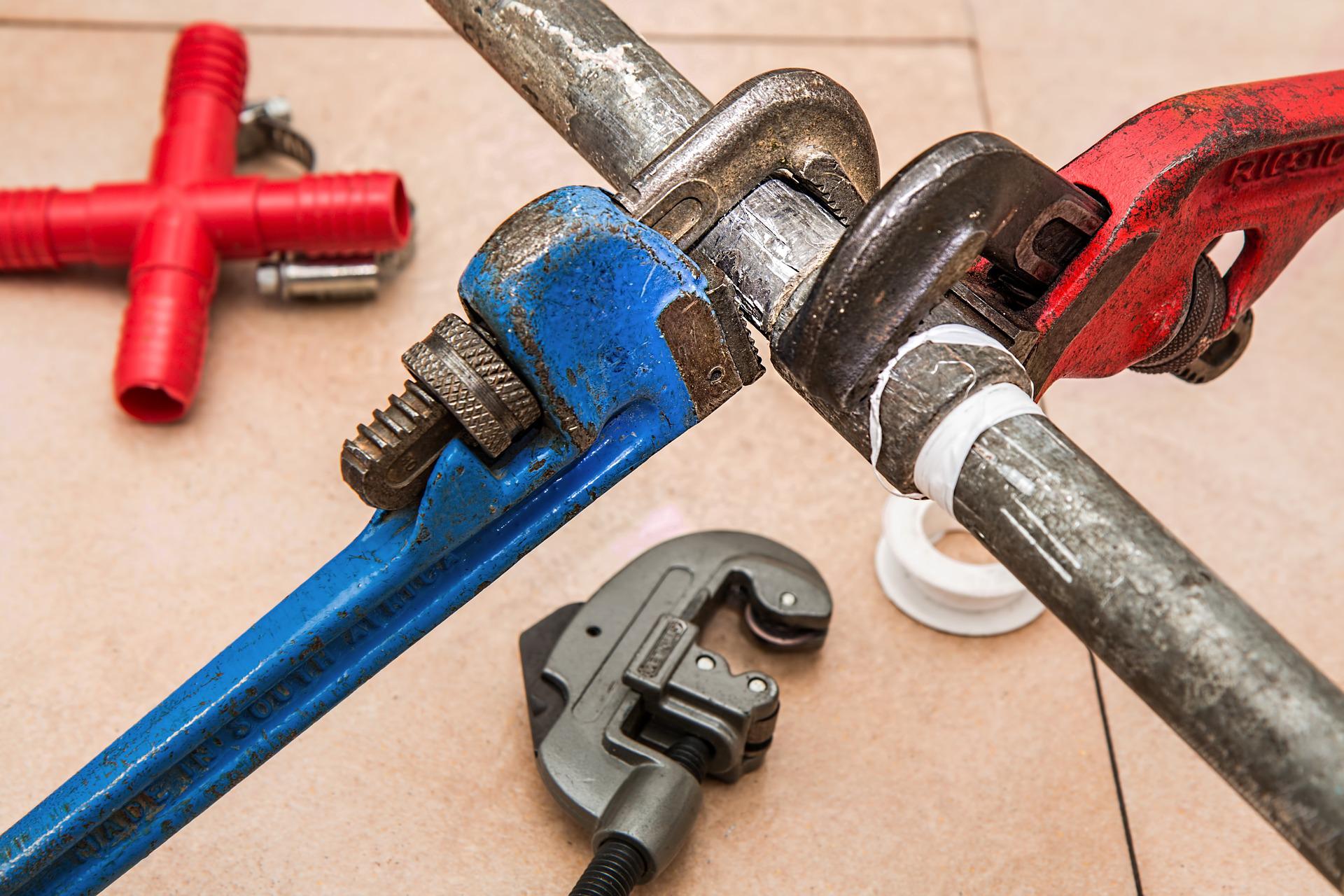
    Pipes are everywhere in our cities and towns, carrying water, fuels, or other substances to and from buildings or across the country. When these pipes work well, they are barely noticeable. However, people need to put the pipes in place before they can be useful. If you are precise and like to work with your hands, the trade of pipefitting might suit you.

    Pipefitters, also known as steamfitters, work mainly as contractors in the construction industry, but some also work in manufacturing. Basically, people in this trade build and maintain systems of piping to carry water, steam, fuel, and other materials from one place to another. The water in the pipes can be used for people’s daily needs, but many of the other contents of pipes might be used for heating or cooling buildings or for other processes.

    Pipefitting is very precise work requiring steady hands, good manual dexterity, and reasonably good vision. An ability to crawl into small spaces is also important. The work can be either indoors or outdoors, depending on the job. Like in many trades, the work can be physically demanding, and being in good health is important. Many people in this trade might want to move into a supervisory role as they age, although others can stay in the work until retirement. Wages start at about $22 per hour or $44,000 per year and can rise to $50 per hour or $121,000 per year.

    If a pipe is made and installed well, it can last for many years. However, cracks or rust can develop and cause a pipe to leak, spilling its contents. The ability to repair pipes is a very important skill for people in this trade. Sometimes, this may involve applying sealants to the pipes or closing small gaps in the line, but often it means replacing parts of the pipe.

    Knowing how to repair piping can give people extra work in seasons when little other work is available. In a cold winter, for example, dealing with frozen or burst pipes could keep a good pipefitter busy.

    Requirements for this job can vary, depending on the employer, but a high school diploma and an apprenticeship are normally the minimum level. A high school education with courses in mathematics and English is a good basis for the job. Mathematics can help with calculating the amounts of pipe necessary for the work, and English courses help the tradesperson read instructions and study new techniques for the work.

    Most employers also require pipefitters to complete an apprenticeship of four terms, which includes both classroom learning and practical experience. These apprenticeships are often available through individual employers, but it is also good to check with local trade schools. This trade is also part of the Red Seal program. Pipefitters who have passed the Red Seal test can more easily move from one province or territory to another without having to retrain or gain new qualifications.

    Like in many other trades, job opportunities are likely to be easier to find in cities than in towns, but even small villages are likely to need pipefitters. Since much of the work depends on the construction industry, downturns in the economy can greatly affect this job. However, being willing to move for a job can help people find work in this trade. Having another skill to use in the slow times can also help people to find enough work, even when jobs are scarce.

    Every building has pipes, making the job of pipefitter a good choice for the future. If you like the idea of this work, you can already begin to prepare for this career.


    Bibliography:

    ALIS. “Steamfitter-Pipefitter.” https://alis.alberta.ca/occinfo/occupations-in-alberta/occupation-profiles/steamfitter-pipefitter/.

    Job Bank. “Steamfitter/pipefitter (Non-Construction) in Ontario.” https://www.jobbank.gc.ca/marketreport/outlook-occupation/21490/ON.

    Payscale Canada. “Pipefitter: Hourly Rate.” https://www.payscale.com/research/CA/Job=Pipefitter/Hourly_Rate.

    Skills Competences Canada. “Steamfitter Pipefitter.” https://www.skillscompetencescanada.com/en/skill_area/steamfitter-pipefitter/.

  • The Indigenous History of Maple Syrup

    The Indigenous History of Maple Syrup

    By Maryam Sheikh

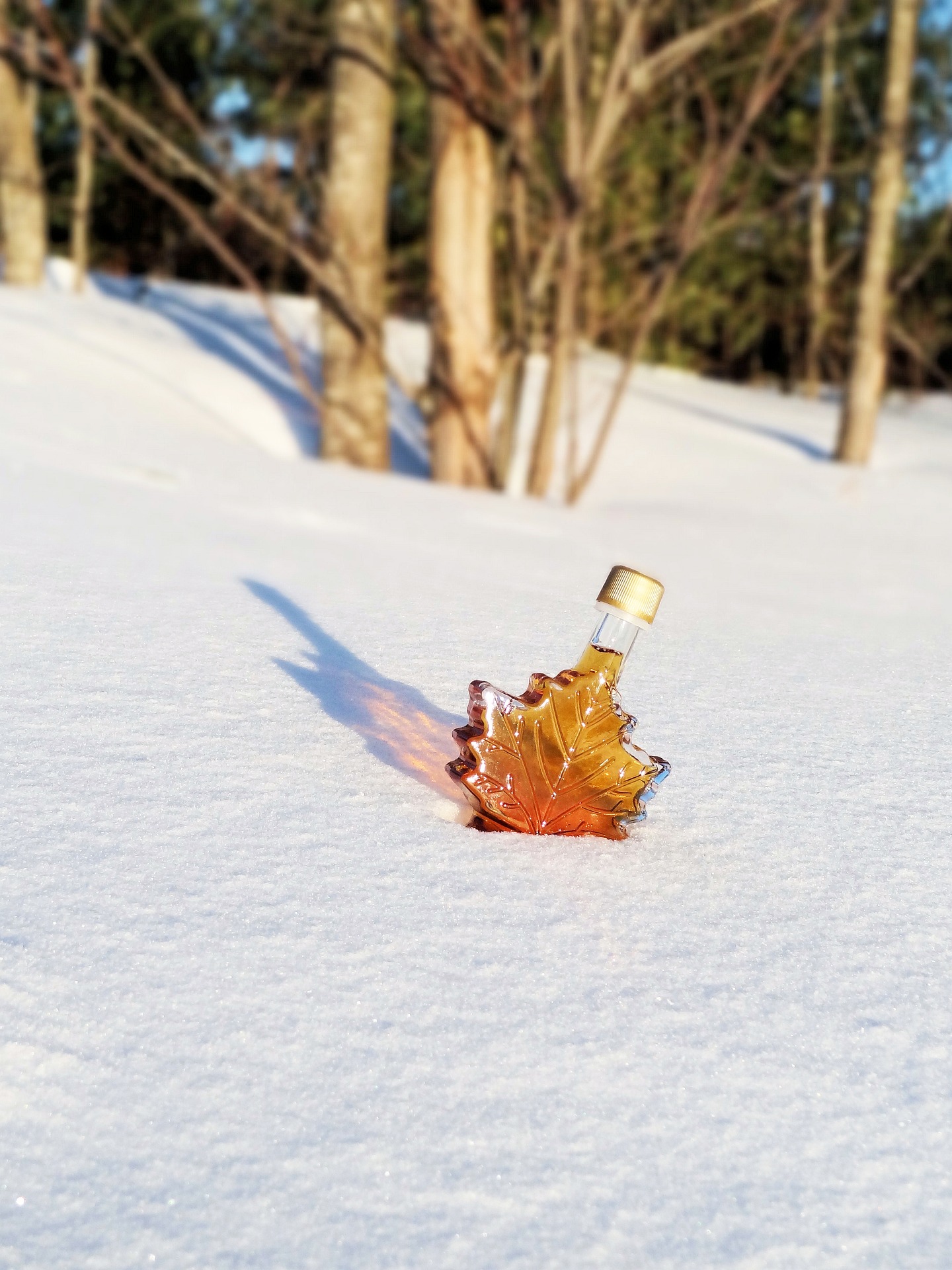
    What’s your pancake topping of choice? Whipped cream, butter, or perhaps…smooth and sweet maple syrup? December 17th marked National Maple Syrup Day, and in honour of this delicacy, we’re sharing more about the little-known history of maple syrup and how you can celebrate.

    From the tree to the table – How did maple syrup come to be?

    The history of maple syrup is one that is not often highlighted. Maple sap extraction originated from Indigenous practices. Indigenous peoples, including the Abenaki, Haudenosaunee, and Mi’kmaq peoples, prized maple syrup for its sweet flavour, medicinal properties, and ability to preserve meat and food. The “sweet water” was used in ceremonies, cooking, and as a cleansing medicine. According to the Canadian Encyclopedia, the Anishinaabe called the sap collection period the “maple moon” or “sugar month”. This time served as a way for community members to join together, create memories, and pass on traditions. The medicine from the maple trees brought people together, kept them together, and ensured that community members grew together and set a strong foundation for youth to be good Elders. The maple harvest has held special significance in many Indigenous communities as it coincides with the end of winter and the onset of spring. Indigenous communities such as the Ojibwe and Haudenosaunee celebrated through festivals, thanking the land, and community gatherings.

    However, the Indian Act of 1876 forced traditional ceremonies and festivals to disappear due to the impact of colonization. Maple syrup production was heavily impacted and later capitalized on by non-Indigenous people as a source of economic benefit. Settlers adopted these practices, and now, holes are drilled into the trunk of sugar maple trees and metal spouts are tapped into these holes to collect sap. The clear sap drips into a bucket and is collected in a pail to start the creation of maple syrup. It is boiled down and turned into maple syrup and maple sugar products. Many traditional Indigenous practices have been altered or undermined, and though there are smaller, Indigenous-run businesses, the industry is dominated by larger manufacturers. Producing maple syrup is expensive and requires a lot of equipment and maple trees. Funding is a challenge faced by some Indigenous entrepreneurs such as Jolene Laskey, the owner of Wabanaki Maple, a Tobique First Nation-based company. 

    So, what can you do with this information? National Maple Syrup Day is an opportunity for us to learn about the Indigenous history of maple syrup, amplify Indigenous voices, and be reminded of the importance of protecting, respecting, and appreciating the environment and Indigenous traditions. You can celebrate this day by sharing your learnings with others and trying out new recipes. Lastly, try to support Indigenous businesses that are reclaiming their traditional practices and advocate for more education and awareness from larger companies.

    Maple syrup recipes to try at home

    1. Maple-Baked Sweet Potatoes
    2. 3-Ingredient Maple-Pecan Fudge
    3. Maple Brown Sugar Cookies

    Resources

    • Braiding Sweetgrass – Learn more about Indigenous wisdom, knowledge, and teachings with this non-fiction book by Potawatomi professor Robin Wall Kimmerer.
  • Role of Trades in Post-Disaster Reconstruction

    Role of Trades in Post-Disaster Reconstruction

    Disasters can come suddenly or build slowly over a long time. However, they all require reconstruction once they are over, and the trades can be an important part of the recovery.

    Suppose that a fire or flood happened in your area. People would have to clean up everything that had been destroyed and decide what can be repaired. Restoration companies work directly with this stage of reconstruction. People from these companies go into a building after a disaster has occurred and assess the level of damage to walls, furniture, and even clothes and other personal items.

    People in the restoration trade often come in after many other tradespeople have already done their work. Restoring basic services is usually the first job after a disaster, so that people have water to drink and electricity to light their homes and cook their food. Plumbers, electricians, and other tradespeople are very important at this stage.

    Many disasters can weaken buildings from the force of water, earthquakes, or other events. Tradespeople like builders check the structure of homes and office buildings affected by disasters to make sure that the structure is still strong enough to stay upright. If the building is too badly damaged for people to use, tradespeople might need to pull it down and rebuild it entirely. If possible, they can make repairs to strengthen the building.

    Once buildings are safe to use, tradespeople are necessary for many small jobs. Insulation installers help to prepare buildings for winter, and painters make rooms look nice while helping to protect walls from water or snow damage. Bricklayers, pipefitters, and all kinds of tradespeople are necessary for reconstructing buildings after a disaster. A certificate or diploma from a trade school is normally necessary for this type of work.

    Clean energy can be another area where tradespeople are needed. Often, powerlines and fuel sources are damaged in disasters, but this situation can give a chance for people to switch to clean energy. People who have skills in alternate forms of energy can help to move communities away from fossil fuels towards other options such as solar or geothermal energy.

    Cleaning up and rebuilding after a disaster can be difficult and dangerous work. People in the trades working with these types of jobs need to know and follow safety procedures and to be able to instruct other people in how to keep themselves from being hurt. A knowledge of First Aid is also useful in case of an accident.

    Danger after a disaster is not only from rusty nails or weak buildings. Sometimes, gas leaks or other hazards might put tradespeople and other reconstruction workers at risk. Knowing how to repair leaky pipes or how to contain dangerous fuels and gases can help make the job of reconstruction much safer. Knowing how to use safety equipment is also essential for people working with hazardous materials. Often, training for this kind of work is available as short courses at community colleges or trade schools.

    No one wants to be in a disaster, but it is important to be prepared. With the right training, tradespeople can be a major part of post-disaster reconstruction.


    Bibliography:

    Government of Canada. “Follow Your Passion. Find Your Skilled Trade.” https://www.canada.ca/en/employment-social-development/campaigns/skilled-trades.html.

    Morrish, Sussie C. “Post-Disaster Business Recovery: An Entrepreneurial Marketing Perspective.” https://www.sciencedirect.com/science/article/pii/S0148296319302243.

    People Ready Skilled Trades. “The Importance of Skilled Trades.” https://skilled.peopleready.com/the-importance-of-skilled-trades/.

    Skilled Trades College https://www.skilledtradescollege.ca/blog/skilled-trades-jobs-in-demand-canada.

  • Your Mental Health: Seasonal Depression

    Your Mental Health: Seasonal Depression

    In the summer, it is time for parties, cottage country, club life, and refreshments by the pool. The sun shines, birds squawk away in the morning (some are kinder by calling this “chirping”), and everything is in full bloom. So, why do some people prefer to stay indoors? Avoid seeing their friends? Are agitated? Have trouble sleeping?

    Seasonal depression may be something that several of us are still in the dark about understanding fully. After all, there are still a number of stigmas associated with mental illnesses. Some people might find it hard to believe that there are indeed people, students even, who get depressed during a time when everyone seems to be having the time of their lives.

    The Canadian Mental Health Association defines seasonal affective disorder as a type of clinical depression that occurs during the winter months or, less commonly, during the summer.

    The research is still ongoing. However, research tells us that it has existed for the past 150 years. The risk of experiencing SAD is more common in people over the age of 20, but has also been discovered in teenagers as well.

    CMHA warns us that SAD may be difficult to treat, given that the symptoms are often found in patients with bipolar disorder or depression. “Generally, symptoms that recur for at least 2 consecutive winters, without any other explanation for the changes in mood and behaviour, indicate the presence of SAD.”

    The symptoms will differ depending on when you suffer from the illness. For example, if you suffer during the winter months, symptoms include weight gain, low energy, avoidance of social situations, irritability, and the tendency to sleep a lot. Whereas if you suffer in the summer, you’re more susceptible to weight loss, and trouble sleeping.

    Only 2 – 3% of the general population suffers from SAD, while about 15% suffer from something a little less severe called “winter blues”.

    However, don’t let the title “winter blues” stop you from seeing the potential of having SAD. Depression, in any form, is something very serious, and regardless of whether or not SAD is spoken about or treated often, you deserve to talk to someone about how you’re feeling. And there is treatment for this kind of depression.

    The aforementioned link provides several helpful tips on how to receive treatment, such as spending time outdoors, exercising, or vacationing.

    Whichever route you’ve decided to take, it’s always worth mentioning that there are people to speak to about what you’re going through. Your family doctor is available for consultation, but also remember that your university or college has doctors and counsellors for you to speak with. Don’t convince yourself that it’s just “winter blues” because at the end of the day, you’re still suffering. You deserve to be happy. If you suspect that you or someone close to you is showing symptoms of SAD, talk to someone. We wash away ignorance by talking about our illnesses and there’s no shame in acknowledging that you’re on a road to recovery.

  • Pros and Cons of Online Courses in Post-Secondary Education

    Pros and Cons of Online Courses in Post-Secondary Education

    During the pandemic, students were unable to go to in-person classes for weeks or months at a time because of the risk of infection. In post-secondary studies, students often choose to study online. This type of study is not right for everyone, but it can be a good choice for people who can deal with both the pros and cons of this type of learning.

    One of the main points in favour of online learning is flexibility. Regular courses require students to be at the school or university at a particular time each week. While this requirement might work for some people, it can also be a problem for people with busy schedules or responsibilities, including looking after family members or working at a job. Although some online courses might require students to log onto group discussions or lectures at specific times, students have much more flexibility than with in-person courses.

    Travelling to and from a class can also take time. People need to drive or take the bus to the university or college and then back home after class, besides the time for the actual course and assignments. In winter, bad weather can make it very difficult to get to class. However, going to an online course involves only moving to the computer from elsewhere in the house, allowing students to save money and time on transportation.

    With the flexibility and time saving of online learning, people can more easily fit their studies into their lives and are thus more likely to continue with their courses instead of dropping out. Some instructors might require students to join group discussions or listen to lectures at certain times, but normally students can choose their own study schedules. That way, they can fit in doctor’s appointments, shopping trips, cooking, or other tasks. People with busy lives and many responsibilities could benefit from online courses.

    Despite the advantages of online learning, this type of course is not always a good choice. For certain classes, online learning might be difficult or impossible. For example, a chemistry course might be impossible to do entirely online because of the need to conduct experiments with potentially dangerous chemicals. Language courses can also be difficult to complete online, depending on how much opportunity for conversation the course gives.

    One of the most challenging aspects of online learning is getting the work done. With in-person classes, instructors can remind students to complete their assignments, students can form study groups, and people can keep each other on schedule. Although the same help can be available with online courses, the connections can be more difficult to make over the computer. Without this kind of help, students can have trouble completing their work.

    For people who are self-disciplined, online learning can be a good choice. However, living conditions can also make a difference. People who live alone are likely to have quieter homes with fewer interruptions than people who live with family or roommates. Even then, these people still need to cook, clean, and earn a living. They might also find it difficult to keep to a schedule and get the work done.

    Online learning can be a good choice for post-secondary students. If you have the right home conditions and are self-disciplined, you might want to consider including online courses in your post-secondary education.


    Bibliography:

    BC Campus. “Pros and Cons of Online Learning.” https://opentextbc.ca/studentsuccess/chapter/pros-and-cons-of-online-learning/.

    eLearning Industry. “Advantages and Disadvantages of Online Learning.” https://elearningindustry.com/advantages-and-disadvantages-online-learning

    MIT Open Learning. “The Pros and Cons of Online Learning.” https://openlearning.mit.edu/news/pros-and-cons-online-learning.

    Western Governors University. Distance Learning vs. Traditional Learning: Pros and Cons. https://www.wgu.edu/blog/distance-learning-traditional-learning-pros-cons2210.html

  • Alternative Agriculture: Permaculture Farming in Canada

    Alternative Agriculture: Permaculture Farming in Canada

    Agriculture is a significant part of the foundation of Canada’s culture and economy, with large areas of the country devoted to agricultural practices, especially food production.  While for over a century many agricultural methods have remained the same, with modern environmental movements and education, the agricultural industry in Canada is seeing new ideas and new methods taking hold–as well as old ideas made new again.

    One of these is the concept of permaculture farming, which is an approach to farming at both the large scale and small scale that emphasizes designing agriculture to work with and alongside natural areas and patterns to enhance sustainability, rather than the industrialized monoculture method of commercial farming that is most common.  Permaculture agriculture examines the farm as an entire system jointly with the natural world around it and the resources available, taking into account geography, climate, ecology, culture, and the economy of the area.

    The three central concepts to permaculture farming include:

    • Caring for the earth, by ensuring the natural life systems can both maintain and multiply so that people can flourish in a healthy world.
    • Caring for the people, by ensuring that people have access to the resources they need to exist and thrive.
    • Fair sharing, by managing our needs in order to provide resources for the first two concepts, and to recycle waste and reinvest surplus resources back into the system.

    Permaculture is growing in popularity on small working farms in Canada, but it’s not just a new way of growing vegetables — it’s a new way of designing farms.  Where most commercial monoculture farms are designed for the convenience of chemical fertilization and mechanical planting and harvesting, permaculture farms are instead designed in a way that emphasizes diversity of crops and arrangements defined by where crops will perform best or where they are most conveniently maintained.  For example, high-maintenance crops such as annual vegetables are planted close to the irrigation and human resources needed to care for them, while low-maintenance crops such as orchards are located further away.

    Permanent crops are also popular for permaculture farms, such as fruit trees and nut trees, and other perennials such as berry bushes.  Often these perennials are used as a base permanent crop, with diverse annual crops such as vegetables rotated in on a yearly basis.  This can make for a much less effort-intensive way of farming, as the backbone of the farm is a permanent thing, with only part of the crops being planted and harvested on a seasonal cycle.

    Having a diverse selection of crops sharing space also encourages sustainability and resilience, as yearly and seasonal variations in weather will see certain crops flourish at different times, and making it less likely a farm will suffer a catastrophic outcome from a bad season or disease.

    Currently, permaculture is still a growing movement in Canada, somewhat hampered by the seasonal extremes across most of the country.  Between hot summers and long, often very cold winters, permaculture farms can have difficulties maintaining a diverse set of crops that can withstand both ends of the temperature range.  But the number of permaculture farms is growing, and while this is unlikely to replace commercial monoculture farming, it offers a unique alternative for smaller farms aiming for a more environmentally friendly and sustainable agricultural model.

    Sources:

    https://www.smallfarmcanada.ca/features/permaculture-comes-of-age/

    https://en.wikipedia.org/wiki/Permaculture

    http://www.theurbanfarmer.ca/permaculture-design