Author: Meghan Brown

  • Career Profile: Chemical Engineer – Plastics Moulds

    Career Profile: Chemical Engineer – Plastics Moulds

    Chemical engineering is a field of engineering that encompasses aspects of the physical sciences such as physics and chemistry, along with applied mathematics and production economics, to design products and processes that change chemicals, raw materials and energy into useful things.

    People working as chemical engineers can participate in the research, design and development of chemical processes and equipment, or they can operate and maintain industrial processing plants for chemical, plastics, pharmaceutical, pulp and paper, or food production.

    One common career for chemical engineers is in the plastic injection moulding manufacturing industry. Plastic injection moulding is a manufacturing process where a melted plastic material is forced into hollow moulds, where it takes the shape of the mould as it cools. This process is used to make many common products including toys, plastic parts, bottle caps, and almost any other plastic product that requires large volumes of parts that are all exactly the same.

    Chemical engineers play many roles in this industry. They can help design the product itself, or work to create the specific type of plastic material that will be injected into a mould. Their knowledge of chemical interactions, chemical processes, and the characteristics of various materials mean that chemical engineers are valuable in ensuring that the product being moulded will have the right properties; for example, that the plastic product is strong enough, can resist temperature changes, or will last a long time.

    To work as a chemical engineer for plastic moulding, you will need a minimum education of a bachelor’s degree in chemical engineering, or a closely related engineering discipline. There are also opportunities to specialize in plastics engineering during your undergraduate schooling, or through post-graduate studies. Depending on where you want to work, or how far you want to advance your career, you may also require a master’s degree or even a Ph.D. in chemical, plastics or another related engineering discipline.

    Not all jobs related to plastic moulding will require a degree specifically in chemical engineering, however. In many cases, engineers from the environmental, biochemical or mechanical fields will also pursue this occupation.
    Also, since engineering is a regulated profession in Canada, you may also be required to pass the Professional Engineering (P. Eng.) licensing exam.

    Wages for engineers in this field span from approximately $20-25 per hour at the low end, such as for apprentices, engineers-in-training for their P.Eng. designation, and entry level positions. Compensation can range as high as about $60-80 per hour for experienced positions, or for those people willing to work in more remote areas of the country.

    Sources:

    https://en.wikipedia.org/wiki/Injection_moulding
    https://en.wikipedia.org/wiki/Chemical_engineering
    http://www.jobbank.gc.ca/report-eng.do?area=9219&lang=eng&noc=2134&action=final&ln=n&s=1&source=2&titleKeyword=chemical+process+engineer#report_tabs_container2


  • Career Profile: Civil Engineer – Water Reclamation

    Career Profile: Civil Engineer – Water Reclamation

    Reclaimed water, also known as recycled water, is water that has been taken from an impure or contaminated source such as drainage runoff or sewage water and treated through various physical and biological processes to once more be safe to use or drink. Reclaimed water is essential to environmental concerns for municipalities who wish to have less of an effect on their local resources, and can be used to water crops, resupply underground aquifers, and even supply potable drinking water to houses.

    Some of the people who work to ensure that this waste water will be properly treated for reuse are civil engineers who work to design and build water treatment plants and other related infrastructure and systems. These engineers can plan and manage projects to design or construct treatment facilities, water transportation systems and municipal planning for wastewater infrastructure.

    If helping to create water treatment solutions that can help municipalities and the environment is something that interests you, then it’s best to start early on in your education. Try to take classes in high school such as physics and math, and then look at going to university or university for a civil engineering program. Working in a co-op or internship position during high school or university can also be a good way to gain relevant experience and help you get a job in the field later in your career.

    Most careers for civil engineers involved in water reclamation projects will require a minimum of a college engineering technician diploma, or a university engineering degree in civil engineering. More advanced career positions, such as those in management, may also require a master’s degree in civil, wastewater, or systems engineering. Engineering professions are regulated in Canada, so you will also need to complete the requirements to register as a Professional Engineer (P. Eng.)

    Engineers working on water reclamation projects will need to know aspects of mechanical and environmental engineering, and skills such as the ability to perform complex problem solving, system analyses, and project management, as well as the ability to use computer-aided design programs to design the construction of facilities, or water supply and collection systems.

    Wages for water reclamation engineers can range from $20/hour at the entry-level, to around $65/hour for more experienced workers and positions. Wages will also vary depending on what part of the province or country you are working in. Employment is typically for municipalities, government agencies, or with engineering consulting and construction firms.

  • HOW to search for scholarships- where to begin?

    HOW to search for scholarships- where to begin?

    In this day and age it can be hard to escape debt, especially if one has strong academic ambitions and little family aid. So scholarships are obviously of high importance, and with all the different kinds available in Canada narrowing down your search can seem overwhelming at first. There are many and it will take a great deal of time. Before you buckle down and hit the search hard, keep these few things in mind:

    • BRAG. When applying for scholarships DO NOT shy away from this. Now is the time to let people know how good you are at what you do and the kind of potential you have. Get ready to talk about yourself a lot.
    • Ask for advice and help from teachers, parents, school councilors and advisors…use every resource at your disposal. There is a lot of free money out there and you have to work hard to get it.
    • Apply for as many scholarships as possible. Just keep doing it. Modify your letters of intent when needed and make searching for scholarships a number one priority; a job.

    Here are some tools for your financial quest:

    Canadian scholarship websites and information on scholarships and financial aid:

    • www.scholarshipscanada.com
    • www.universitystudy.ca
    • www.studentawards.com
    • www.schoolfinder.com
    • jobspeopledo.com (of course!)

    Narrow down your school of choice

    Typically students start searching for scholarships after they find out where they are going. Some scholarships require this, and knowing what province you will be in will help with the hunt. Many sites have drop-down school lists and will provide you with a complete list of scholarships and awards available to students of the school. If you would like a specific recommendation for what to apply for, meet up with one of your new university’s academic advisors. Their job is to make your transition more relaxed, so pick their brain!

    Keywords and Advanced Searches

    What are your major/minor interests? Are any members of your family a part of any union, club or company that hands out scholarships? Does your job have a scholarship fund? Do you have a learning or physical disability? What are your extra curricular credits and strengths? Are you of aboriginal decent? What province were you born in or where will you graduate from? All these points and more generate hits on Canada’s best scholarship websites. Sift through the ones that apply to you. Don’t forget to search by grade point average, particularly if yours is high.

    After you are done the searches you wish, sort the result lists by deadlines (do you have enough time to gather references and write the necessary application criteria etc.?), award names and the amount offered. Some scholarships can be as small as $500, and some can be as large as $10,000 and beyond.

  • Defining and Finding Value

    Defining and Finding Value

    What is value? The word is tossed around economically, religiously, culturally, and in just about every arena of human thought. It carries such colossal weight despite its vagueness. This lack of clarity means it can be easily construed and misconstrued. So many of us deal with low self-esteem and struggle to find value in ourselves and what we do, and this is often because we do not tackle the word head-on.

    The one word that most closely matches the aforementioned one would be importance. You must tune out all the other ideas of what matters, no matter what you may hear from friends, the media, and more, and tune in to yourself. Make a list of the things of all that is significant for you. Add notes on how each item affects you and how it affects others. What you want to look out for are the actions and behaviours that have a positive result in both of those fields. It is in those that you will find your value.

    An important matter to keep in mind is self-value versus self-esteem. You have likely heard plenty about the latter. Self-esteem has everything to do with emotion – it triggers reactions in your brain to make you feel good. Too much self-esteem leads to arrogance, and more importantly, it only paints part of the picture. Self-value, on the other hand, focuses less on emotion and more on actions. When you do things that are positive for yourself and others, you add value to yourself. This is why showing compassion and care for people of great significance in your life offers more happiness than staying at home and watching Netflix.

    Actions of value are critical particularly when you fall into the habit of devaluing yourself. Studies have shown that when you feel powerless or lower your opinion of yourself, the negative emotion secretes a huge amount of cortisol and is hard to balance if not fought within twenty minutes. In order to continue valuing yourself, focus on those items on your list that meet both criteria and continue to study your environment. Seek out the opportunities at school, at home, in your city, and beyond that correlate with those items.

    At the end of the day, value remains a vague term. Many people will try to define it for you. If you feel powerless and have a low opinion of yourself, you will be more likely to let others make that major decision. Take action immediately to remind yourself of the things you do that add value, and seek out what other actions you could be taking. It is never too late to act, but the longer you wait, the harder value is to attain. Define it and find it.

    Sources:

    Stosny, Steven. How Much Do You Value Yourself? https://www.psychologytoday.com/blog/anger-in-the-age-entitlement/201406/how-much-do-you-value-yourself

  • The Truth about Debt: How Debt Can Bring You Down in the Future

    The Truth about Debt: How Debt Can Bring You Down in the Future

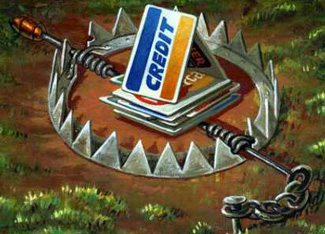
    If your family is like many in Canada, it is probably in debt. Your parents might owe money on the house or car, and you or your brothers and sisters might already have credit card debts or owe money to friends in school. Credit card use is a common way of buying products in Canada, but it can have negative effects on your future if you don’t pay it off.

    You might hear people talk about good and bad debt. Basically, “good debt” refers to something that the person has a good chance of repaying. For example, if someone has a high-paying, stable job, and they buy a house; unless something unexpected happens, like a major accident or job loss, the person can make regular payments on the mortgage, thus paying of the debt of the house.

    “Bad debt” is different. Bad debt refers to a debt that the person has little or no chance of paying off because of the size of the debt, a low-paying job, or other factors. This kind of debt could last a lifetime and affect the person’s ability to buy a house or a car, get insurance, or even to get a loan for a small project. If you have bad debt, you likely have a low credit score. A credit score is something banks, insurers and lenders look at to determine your financial position and how reliable you are in paying off things like your credit card or student loan.

    According to recent statistics, people who were born between 1980 and 1984 already have over five thousand dollars’ worth of credit card debt than their parents did at the same age. Unless they get very high-paying jobs in the future, that debt could follow them throughout their lives. If you do possesses that much debt at a young age (college and university students), the most important thing to do is always make your minimum payments. Also, you can notify your lender about your situation and arrange later payments.

    Being in debt can cause serious problems for people. They might not be able to go to university, and they risk losing their homes if they are unable to make the payments. Their wages might be taken to pay the debt, and they might have bill collectors calling to ask for the money. All of these things can cause a lot of stress.

    Buying everything with cash is probably the best way of avoiding any kind of debt. However, very few people actually have that kind of money, especially for large purchases like a house or car. However, other kinds of debt can be relatively easy to avoid or manage. For example, if you want to avoid credit card debt, you can start by paying off the entire balance every month. If you have cash with you when you go shopping, use that instead of credit or debit cards as much as possible. Staying out of debt can be difficult, but owing a lot of money is worse. Living within your means can be hard, however, very necessary when preparing for a healthy financial future.

    Sources:

    Kay, Michael F. The Truth About Debt. https://www.psychologytoday.com/blog/financial-life-focus/201602/the-truth-about-debt.

    Loans Canada. “How Your Debt Affects Your Credit Score.” https://loanscanada.ca/debt/how-your-debt-affects-your-credit-score/.

    White, Martha C. Today’s Young Adults Will Never Pay Off Their Credit Card Debts.”
    http://business.time.com/2013/01/17/todays-young-adults-will-never-pay-off-their-credit-card-debts/.

    Wolfe, Michael. “Problems That Personal Debt Could Cause.” http://www.ehow.com/list_7333636_problems-personal-debt-could-cause.html.

  • Cooking and Grocery Tips for Post-Secondary Living

    Cooking and Grocery Tips for Post-Secondary Living

    At times, student life can be so stressful that you often skimp on the things you should do to take care of yourself. Unfortunately, when juggling multiple responsibilities, maintaining a healthy diet often takes a hit. Moreover, by ordering Chinese food one too many nights a week, you’re hurting your wallet as well as your body. It’s important to prioritize your health as well as your finances by developing healthy routines, and making wise decisions about your groceries and meals is one place to start.

    Here are some cooking and grocery tips for student living. The following ideas will help you stay healthy and on track.

    Groceries

    Make it a routine. Set a reminder to grocery shop on a weekly basis. You should schedule a time when it’s most convenient for you to go shopping, when produce is the freshest, or when the grocery store has discounts for students. Even if it seems like you don’t need much at the time, this will prevent you from putting groceries on the back burner, and winding up with an empty fridge.

    Necessities first.
    When compiling your grocery lists, start with the bare bones. Include fruit, vegetables, and the basic components of future meals before you go crazy with the cookies and candy. Plus, if you organize your groceries in this way and you’re short on cash, you can start at the top of your list when you’re shopping and leave the more indulgent items for a later date.

    Sharing is caring. If you have roommates, consider collaborating with them and buying groceries together. You’ll save money and waste less when you avoid buying duplicate items. If you live alone, consider working out a similar arrangement with a friend who lives nearby—for example, if you live near a bakery and they live near a fruit market, you can divide and conquer and take care of one another’s shopping in those specific areas.

    Cooking

    Keep recipes on file.
    Take an hour out of your weekend and look up easy, quick, and healthy lunches or dinners that you can whip up whenever you’re out of culinary inspiration. Print the recipes out or keep the files on your hard drive for later perusal—you’ll be thanking yourself when you’re hungry and studying for midterms.

    Consult nutrition guides. Ensure you’re cooking healthy meals by looking up nutritional information about the ingredients beforehand. It’s definitely okay to treat yourself every once in a while, but you probably shouldn’t be eating ramen for dinner every night. When in doubt, make a side salad.

    Be practical. If you know you aren’t the greatest chef, you don’t need to go to great lengths to make elaborate meals. Sometimes, the simplest meals are also the most nutritious. Furthermore, consult your fridge before you start cooking: if you have ingredients you need to use up (or leftovers you should probably get rid of), let that guide your process before you get cracking.

  • Confessions of a Procrastination Junkie

    Confessions of a Procrastination Junkie

    You may be reading this as the clock ticks down on the deadline for that essay. Here you are again, desperately typing away to reach the minimum word count, while frequently taking short breaks to keep your mind from frazzling. Rest assured that many others face similar plights daily. So many, have fallen into the trap of putting things off until tomorrow again and again until there is no tomorrow and the midnight deadline fast approaches.

    As a teacher, I have spoken with many students who waited until the night before, morning of, or even the minutes prior to class in order to complete their assignment. On multiple occasions, I have watched students on one end of the classroom scurry to complete their work as I start collecting papers from the other side. It is a habit, and a widespread one. I think the only way to beat it is to take the wording a step further. Procrastination is an addiction.

    We are addicted to the immediate gains of putting off work. It means we get to relax in the immediate moment, and that gives us a short-term pleasure boost. Giving in to short-term gain for long-term suffering is not all that different from drug use. Eventually, habits become subconscious and we act without fully realizing our actions. In order to beat any problem, we have to accept it as a problem. Yet we also have to accept the reasons why we do it – we have to find the good in our addiction.

    Aside from that short-term burst of endorphins, students often speak of their love of pressure. Many of us think that the pressure of a deadline pushes us to work harder and produce a better end product. Time and time again, experiments have shown that humans make worse decisions when under pressure. Many people think that pressure drives results, but it does so at a cost.

    This ties into one last cause of procrastination I have seen, not only in students but in myself. After much deliberation, I realized that I put things off as a protective measure. By waiting until the last minute, you are physically incapable of giving a task your all. I realized I gave myself no choice but to rush. If the task ultimately failed, I could put the blame on my procrastination. I preferred thinking I could have done better over giving it my all, failing, and discovering my limits. I became addicted to this safety net which coddled me.

    Beating an addiction means fully analyzing it. You need to make sense of why you procrastinate, and from there determine the value and damage that results from it. Only then can you see its addictive nature, its misleading positives, and the hindrance it places on your potential. By facing those realities instead of a clock ticking down to midnight, you can take action now.

    Sources:

    Pychyl, Tomothy. I’ll Feel More Like It Tomorrow. https://www.psychologytoday.com/blog/dont-delay/201203/ill-feel-more-it-tomorrow

  • Career Profile: Baker

    Career Profile: Baker

    For some people, baking is a favourite weekend activity. When they have a few free hours, they go to the kitchen and produce cookies, bread, and buns to last for the next week or two for themselves, their families, and possibly guests. For others, however, baking is a job that gives them the chance to earn a living whilst supplying people with fresh food. If you enjoy baking bread, cakes, and cookies now, why not consider becoming a baker?

    If you bake at home, you might have an idea of what the job is like. It involves measuring and mixing ingredients like flour, sugar, baking soda, and cocoa to make all kinds of breads, cookies, and other foods. Some of them require very exact measurements, but others are more flexible. Bakers learn to work with these different ingredients to find the best recipes. This involves the ability to follow directions but also to be creative. Many bakers develop special recipes that they become known for making, but they also have to be able to adapt to what people want.

    Many people in this trade work in established bakeries, but they might also set up stores on their own. Depending on where they work and how much experience they have, bakers earn between about ten and twenty dollars per hour, but having special skills with particular foods can help. Besides being able to cook, bakers should also know a lot about the equipment that they use and be able to fix small problems if necessary.

    The size of the bakery and other factors can affect what kind of training bakers need. Some bakers might be able to learn all they need to know just by working at a job. An apprenticeship is a good way for many people to learn from experienced bakers while they develop their own skills. Getting a diploma or certificate from a training school can also help prepare bakers for whatever they might need to do, but it is not always necessary.

    If you want to work in a small bakery, you might not need a lot of formal education, but you need to know about many different kinds of baking. In a larger business, you might be able to specialize in a particular type, such as pastry or bread. However, having a wide knowledge is good for whatever you intend to do. There is also baking for a large manufacturer- this might be a place to get your feet wet.

    One of the most difficult parts of being a baker is the hours. Most stores have fresh baking on the shelves every morning, which means that bakers have to be up very early to prepare the food. They might start their days in the middle of the night so that the bread, pies, and cookies are ready by the time customers come in on their way to work.

    Do you like baking? Why not choose this trade for your future?

    Bibliography:

    Indeed.com. “Lead Cook/Baker.” http://ca.indeed.com/cmp/South-Stables-Coffee-House/jobs/Lead-Cook-Baker-07b1061182e39069?sjdu=vQIlM60yK_PwYat7ToXhk6FiWTC_cw5Paj_ZYTy0G5svhJbw6soMSZtKOcrBnV_bPDNZ_3nyNz7P68uFraGVWA.

    Living in Canada. “Baker Salary: Canada.” http://www.livingin-canada.com/salaries-for-bakers-canada.html.

    Monster.ca. “Baker.” http://my.monster.ca/job-profiles/Baker.aspx.

    Payscle.com. “Baker Salary (Canada).” http://www.payscale.com/research/CA/Job=Baker/Hourly_Rate

  • Are you a Leader or an Assistant?

    Are you a Leader or an Assistant?

    A good leader possesses the ability to motivate a group of people to complete a task or reach a goal. They need to know how to inspire others to work toward a common goal. Leadership is more about action then title. Good leaders have social influence, not just power garnered from holding a specific position.

    John Quincy Adams, the sixth President of the United States once said, “If your actions inspire others to dream more, learn more, do more and become more, you are a leader.”

    A good assistant is an indispensable and invaluable member of the team. Assistants are not less able or important than their bosses. In fact they are often referred to as their bosses “right hand.” Good assistants provide unconditional support whenever needed.

    Everyone has a different skill set and different aspirations. The best way to decide if you are a leader or an assistant is to ask yourself a few questions and take a look at the skill set that is unique to you. Take a look at the qualities listed below, which do you pose more of? Which would you like to pose more of?

    Leadership Qualities:

    • Ability to delegate
    • Good communicator
    • Motivational
    • Confident
    • Ability to read people
    • Trusts intuition
    • Inspirational
    • Positive attitude/ optimism
    • Accountability
    • Focus/ drive
    • Decisiveness
    • Responsible
    • Honest
    • Integrity

    Assistant Qualities:

    • Follows direction well
    • Organized
    • Teamwork
    • Time management
    • Adaptability
    • Willing to do any job big or small
    • Anticipating the needs of others
    • Ability to prioritize
    • Strong listening skills
    • Interpersonal skills
    • High energy
    • Multi-tasking
    • Self-management
    • Problem solving

    Depending on your skills and personality you may choose to be an assistant or a leader. These skills can be applied to your career choices, sports and extracurricular activities and relationships. Of course, you can still possess integrity and be an assistant, and vice versa.

    Some career choices common for people with strong leadership skills are: politics, coaching, managers (of an office, marketing, sales, construction etc.), lawyer, judge, detective, therapist, social worker, public relations, TV producer, motivational speaker, CEO, or school counselor.

    Some good career choices for those with strong assistant skills are: administration (school, office, medical, legal etc.), dental hygienist, executive assistant, paralegal, teacher’s aide, personal assistant, and research assistant or veterinary assistant.

    Sometimes it may seem like leaders get more glory, while assistants are working behind the scenes making sure all the necessary day to day tasks get done on time and on schedule. But it’s important to remember whatever your strengths and regardless of which category you fall into both leaders and assistants are invaluable members of any team.

  • Got Weird? A Look into Unusual Scholarships

    Got Weird? A Look into Unusual Scholarships

    Are you closing in toward the end of your high school years and looking into the options of getting into college or university? One important thing you can’t overlook is your finances. Sure, you might have explored the possibilities of scholarships, and you believe you only have a shot at one if you’re truly a braniac or a future superstar athlete or a Van Gogh in the making. Don’t hold on to that thought too much- there are actually a few unusual scholarships where you don’t necessarily have to be a straight A student or possess the common qualifications.

    Frank J. Richter Scholarship

    This one is something that will catch the attention of train fanatics ala The Big Bang Theory’s Sheldon Cooper. This scholarship amounting to $1,000 and available through the American Association of Railroad Superintendents (AARS) is open to college or university students currently enrolled at an accredited college or university in the United States or Canada. Those enrolled in the transportation field are preferred. Applicants should have accumulated enough credits from their respective accredited schools in time for the Fall Semester that are equivalent to at least a sophomore level standing at the college or university of enrolment.

    The AARS Scholarship Committee evaluate applicants based on the materials submitted. Points are assigned for the narrative, recommendations, activities, and honours and the applicant’s overall abilities.

    Duck Brand Duct Tape “Stuck at Prom” Contest

    Ever played one Toilet Paper Dress Up? Well, this scholarship is, surprise, similar to that except that you would have to show your Project Runway skills by using duct tape and create a “His and Hers” prom attire. The scholarship amounts to $10,000 and is open to couples who are legal residents of the United States and Canada except the Province of Quebec. Along with the photograph of the couple in the duct tape prom attire, they should also submit the name, address, and telephone number of the high school, or home school association, which holds the prom, and the date the prom was held. Yes, this means they actually have to wear the outfits in public.

    Swann Foundation Caricature & Cartoon Fellowship

    Think comic artists never amount to anything? Think again! After all, the likes of Charles Schultz and Jim Davis practically built an empire with their comics. So if you like doodling, you might want to consider this scholarship. The award amount is $15,000 and is available to graduate students who are working toward the completion of a dissertation or thesis for scholarly research and writing projects within the field of caricature and cartoon or be engaged in postgraduate research within three years of receiving an M.A. or Ph.D.

    Annual Pasta Tales Essay Contest

    Is your love of pasta is getting out of hand? Why not take advantage and take a shot of this scholarship of $2,500 which is sponsored by Olive Garden. The main qualification is to write an essay (maximum of 250 words) about what you would help your local community if you have $5,000 on hand. The themes do change annually, but it usually fall along the lines about community.

    Are you ready to take a stab at these scholarships? All is fair in love and war, as they say—and maybe that goes for scholarships too.

    Sources:
    http://yescollege.com/2013/04/100-unique-and-weird-scholarships-worth-applying-for-2013/

    http://www.railroadsuperintendents.org/FrankJRichter

    https://www.scholarships.com/financial-aid/college-scholarships/scholarships-by-type/unusual-scholarships/duck-brand-stuck-at-prom-scholarship-contest/

    http://www.fastweb.com/college-scholarships/articles/unique-silly-fun-scholarships

    http://www.financialaidfinder.com/student-scholarship-search/college-scholarship-contests/olive-garden-pasta-tales-essay-contest-scholarships/