Author: Anthony Teles

  • À travers les médias naît l’ennui: Comment puis-je rester concentré quand les actualités mondiales sont si horribles?

    Quand vous passer une nuit blanche pour terminer ce compte rendu à la dernière minute, vous passez probablement la majorité des secondes de cette minute à regarder des messages sur Facebook et des communiqués de presse. On se met au courant des actualités quotidiennes, mais nous ne nous rendons pas toujours compte de l’impact que ceci pourrait avoir sur nous. L’effet le plus important est que cela nous fait croire que notre monde est un lieu pas mal terrible.

    Il semblerait que nous vivons dans une période assez troublante. Il est trop tard pour arrêter les dommages causés par l’échauffement de la planète. Les attaques terroristes et les fusillades de masse apparaissent sur notre flux RSS quotidiennement. Comment pouvez-vous possiblement terminer ce compte rendu quand le monde tombe en lambeaux?

    Il est important de se rappeler que la menace de l’apocalypse n’est rien de nouveau. De discours sur l’Enlèvement lors de la Rome antique, à la menace du 21 décembre 2012 ces derniers temps, la fin du monde semble cogner à notre porte encore et encore. C’est presque comme si ça nous donnait du plaisir. Pour les gens religieux, il y a un sentiment de soulagement de savoir que Dieu se chargera des problèmes qui semblent être hors de notre contrôle. Pour de nombreuses personnes, l’idée de savoir quand le monde finira et de se préparer pour celui-ci leur donne un sentiment de confort et de satisfaction. Cela fait du sens que les médias aimeraient remplir ses reportages avec des idées qui nous donnent un sentiment de bien-être. Toutefois, ces genres d’histoires mènent à un autre problème: elles nous font croire que les individus n’ont aucun pouvoir.

    Il y a un grand sentiment de découragement qui vient du fait de regarder guerre après guerre, ou bataille politique après bataille politique. Par contre, si nous réduisons l’éventail de nos sources médiatiques, nous avons tendance à voir le monde d’une lumière plus positive. Les gens voient généralement leurs voisins comme étant des personnes gentilles, et nous sentons que nous avons un grand impact sur les vies de nos amis et sur celle de notre famille. Même leurs comportements négatifs peuvent être analysés, et comme ça nous pouvons comprendre pourquoi ils peuvent faire des choses blessantes.

    Lorsque l’éventail de nos sources médiatiques s’élargit, nous sommes exposés aux horreurs de la guerre et aux souffrances des pays pauvres. Nous ne voyons pas les impacts des individus. Le comportement des gens devient généralisé et n’est pas analysé. Pourtant, dans le grand ordre des choses, il s’agit simplement d’un groupe gigantesque d’individus comme vous et moi. C’est un groupe gigantesque remplie de gentils voisins et d’impacts individuels qui s’additionnent tous. Sans toutes ces choses d’apparence toute petite, il n’y aurait pas de grand ordre des choses.

    En fin de compte, l’actualité peut essayer d’être objectif, mais il est important de se rappeler que tout est subjectif. C’est incontournable. Nous voyons la vie à travers notre propre perspective, remplie de tous nos petits préjugés. L’actualité n’est pas une sorte d’entité magique qui existe en dehors de cette vérité. L’actualité est une entreprise, et nous sommes les clients. Cela ne veut pas dire que c’est tous des mensonges, mais le sensationnalisme est bon pour les affaires.

    Les actualités peuvent être bonnes et mauvaises. La bonne nouvelle est que la fin du monde n’est encore pas arrivée. La mauvaise nouvelle est que vous avez encore à terminer ce compte rendu.

    Sources:

    Pappas, Stephanie. The Draw of Doomsday: Why People Look Forward to the End.
    http://www.livescience.com/14179-doomsday-psychology-21-judgment-day-apocalypse.html

    Singal, Jesse. What All This Bad News Is Doing to Us.
    http://nymag.com/scienceofus/2014/08/what-all-this-bad-news-is-doing-to-us.html

  • Breaking it Down: Dialogues on Removing Barriers for People With Disabilities in the Workplace

    Breaking it Down: Dialogues on Removing Barriers for People With Disabilities in the Workplace

    The National Educational Association of Disabled Students (NEADS) invites post-secondary students and graduates with disabilities, career educators and representatives from federally regulated private sector employers to a one day innovative and interactive workshop “Breaking it Down (BID): Dialogues on removing barriers for people with disabilities in the workplace”, to be held in Regina, Saskatchewan on Friday, January 22, 2016 from 8:00 a.m. – 4:30 p.m. at the University of Regina, Main Campus, Room LI 215, 2nd Floor, Language Institute.

    Register online now: • https://secure.neads.ca/register/en.php?id=15SK

    The BID workshop is part of “Breaking Through Barriers”: An Employment Project To Support Persons With Disabilities, a national two–and-a-half year project funded by Labour Canada through its Workplace Opportunities: Removing Barriers to Equity program. The initiative is aimed at connecting recent graduates with disabilities and employers in the federally regulated sector, through in-person workshops and a unique web portal designed to create on-going relationships and resource sharing between disabled graduates and employers.

    For more information visit www.neads.ca

  • The Abilities Connect Fund: Grants for Hiring and Accommodating People with Disabilities in Ontario

    The Abilities Connect Fund: Grants for Hiring and Accommodating People with Disabilities in Ontario

    The Abilities Connect Fund offers grants for hiring and accommodating people with disabilities. Are you a business or not-for-profit organization that employs between five to 500 people? If so, through the Abilities Connect Fund you may qualify for:

    • Up to $20,000 for the employment (co-ops, internships, part-time, full-time) of persons with a disability with preferences given to college/university students or recent graduates with disabilities; and

    • Up to $3,000 for the purchase of assistive devices, training, and assessments for ANY employee(s) with a disability.

     The Abilities Connect Fund, administered by the Ontario Chamber of Commerce, seeks to encourage employers to leverage an untapped talent pool to meet their skills requirements and raise awareness about the benefits of hiring, training and integrating people with disabilities in the workplace.

    Visit ABILITIESCONNECT.CA and apply today!

    www.occ.ca/programs/accessibility-works/abilities-connect/

    The program is supported and funded by the Province of Ontario.

    Via www.neads.ca

  • NEADS Event Calendar: January 2016

    NEADS Event Calendar: January 2016

    Event Calendar listings from www.neads.ca –  Vist NEADS.ca for more information on upcoming events!


    Organizer: Canadian Council on Rehabilitation and Work (CCRW)
    Title: Workplace Essential Skills Partnership (WESP) Workshop
    Category: Employment
    Location: Toronto, Ontario
    Date: January 11, 2016 – January 29, 2016
    Telephone: 416-260-3060 ext. 232
    E-mail: cmacdiarmid@ccrw.org
    Web site: http://www.ccrw.org/wesp
    Description: WESP is a pre-employment workshop for job seekers with disabilities. Topics focus on the enhancement of job search skills: cover letter and resume writing, networking, accessing the hidden job market, job interviewing, disclosing workplace accommodation requirements, etc.


    Organizer: Reach Canada
    Title: The Diversity of Post-Traumatic Stress Disorder: Broadening the Conversation
    Category: Education
    Location: Ottawa, Ontario
    Date: January 13, 2016
    Telephone: 613-236-6636
    E-mail: joannesilkauskas@reac.ca
    Web site: http://www.reach.ca
    Description: What are the issues around Post-Traumatic Stress Disorder (PTSD) and why is dealing with PTSD so important for the health and being of families, employers and our communities? This seminar is valuable to persons with disabilities, family members, employers and service/health providers.

    Presenters:

    Michel Drapeau: Lawyer, Michel Drapeau Law Office and Professor, Faculty of Law at the University of Ottawa

    Fiona Gilligan, MSW, RSW: Author, Speaker & Trauma Specialist; Clinical Services, Ottawa Anxiety and Trauma Clinic

    Welcome to bring your lunch! This event takes place from 12:00 to 2:00 p.m.


    Organizer: Mitacs
    Title: Mitacs – Career Showcase in Vancouver
    Category: Education
    Location: Vancouver, British Columbia
    Date: January 18, 2016 – January 19, 2016
    Web site: https://www.mitacs.ca/en/events
    Description: Career Showcase – #BCTECH Summit

    Event Date: 01/18/2016

    Students and recent graduates: don’t miss the Career Showcase at #BCTECH Summit in Vancouver on January 18–19, 2016. Attendance is free.

    The Career Showcase offers activities and resources to help students and recent graduates learn about career opportunities in BC’s growing tech industry. The #BCTECH Summit will explore how technology is transforming our economy — and our lives.


    Organizer: National Educational Association of Disabled Students (NEADS)
    Title: Breaking it Down: Dialogues on Removing Barriers for People With Disabilities in the Workplace – University of Regina
    Category: Employment
    Location: Regina, Saskatchewan
    Date: January 22, 2016
    Telephone: 613-380-8065, ext. 201
    Web site: http://www.neads.ca/en/about/media/index.php?id=327
    Description: Breaking it Down: Dialogues on Removing Barriers for People With Disabilities in the Workplace (Regina, Saskatchewan, Friday, January 22, 2016)

    The National Educational Association of Disabled Students (NEADS) invites post-secondary students and graduates with disabilities, career educators and representatives from federally regulated private sector employers to a one day innovative and interactive workshop “Breaking it Down (BID): Dialogues on removing barriers for people with disabilities in the workplace”, to be held in Regina, Saskatchewan on Friday, January 22, 2016 from 8:00am – 4:30pm at the University of Regina, Main Campus, Room LI 215, 2nd Floor, Language Institute.

    Register online now: • https://secure.neads.ca/register/en.php?id=15SK


    Organizer: Cannexus – Career Development Conference
    Title: Cannexus – Career Development Conference 2016 – Ottawa
    Category: Employment
    Location: Ottawa, Ontario
    Date: January 25, 2016 – January 27, 2016
    Web site: http://cannexus.ca/
    Description: About Cannexus

    CERIC, the Canadian Education and Research Institute for Counselling, presents Cannexus — a bilingual National Career Development Conference designed to promote the exchange of information and explore innovative approaches in the areas of career counselling and career development. The 2016 conference will be in Ottawa from January 25-27, 2016 at the Shaw Centre.


    Organizer: National Educational Association of Disabled Students (NEADS)/Saint Mary’s University Career Services
    Title: Breaking It Down: Dialogues on Removing Barriers for People With Disabilities In The Workplace (Halifax, Nova Scotia, Friday, January 29, 2016)
    Category: Employment
    Location: Halifax, Nova Scotia
    Date: January 29, 2016
    Telephone: 613-380-8065, ext. 201
    E-mail: frank.smith@neads.ca
    Web site: http://www.neads.ca/en/about/media/index.php?id=330
    Description: Saint Mary’s University Career Services presents: A National Educational Association of Disabled Students’ event – Breaking It Down: Dialogues on Removing Barriers for People With Disabilities In The Workplace (Halifax, Nova Scotia, Friday, January 29, 2016)


    Organizer: Athabasca University
    Title: Impact – Universal Design for Learning conference at Athabasca University (January 29 – 30, 2016)
    Category: Accessibility
    Location: Edmonton, Alberta
    Date: January 29, 2016 – January 30, 2016
    E-mail: Reg_udlevent@athabascau.ca
    Web site: http://udl.athabascau.ca/about/index.php
    Description: Athabasca University is hosting a conference that will empower a range of stakeholders in the application of Universal Design for Learning (UDL) and Accessibility principles in post-secondary education.
    Attendees will gain cutting edge knowledge via informative presentations, practical workshops and create networks with others who research, promote and implement UDL and web accessibility in on-line or blended learning environments, in post-secondary education.

    This event will be held on January 29 & 30, 2016 at the Chateau Louis Conference Center in Edmonton, Alberta.

  • De-Myth-tifying Skilled Trades

    De-Myth-tifying Skilled Trades

    You hear it all the time. To get a good job, you need to get a degree from a University and that those who cannot get into a school have to fall back on trades like plumbing or carpentry. A university degree will be useful to you for certain careers, but the myths surrounding the skilled trades should be examined when deciding on which path to take after high school. Here are five common myths, and the realities behind them:

    Myth: Skilled trades are for the uneducated, or unintelligent.

    Reality: Skilled tradespeople apprentice for years and have numerous certifications under their belts. While it’s true that many trades don’t require a university or college degree, the certification process for each trade can take years. Often, the education is paid for by an employer, and while studying apprentices are paid for the work they do, leaving very little student debt to carry into later life.

    Myth: Women can’t do skilled trades.

    Reality: Many skilled trades don’t rely on sheer physical strength; what they do require is dexterity, stamina, good hand-eye coordination and balance, all traits women possess. Technology has changed the tenor of this industry also, allowing many tradespeople to work with computers and advanced electronics.

    Myth: Going into a skilled trade makes you a failure. University is the only path for success.

    Reality: A degree from a University is a prerequisite for careers like medicine, law, or education. However, tradespeople have so many opportunities for success. These include entrepreneurship, mastering the trade, and generally being in high demand. Anyone who has ever needed a plumber in the middle of the night can attest to this. These days the definition of success is changing. A degree will not always guarantee job security, or even work within your chosen field. Education is important, but the way we attain it has become less elite over time.

    Myth: Skilled trades offer very few choices in careers.

    Reality: The trades are always in demand, in every sector of business. A plumber could be called upon to work in a basement, a movie set, or even a cruise ship! The sky is the limit when you think outside the box. In addition, many skilled tradespeople own their own business, becoming an entrepreneur. This opens a lot of doors for different opportunities, but is also a lot of work. Being independent is something a lot of trade-oriented people take pride in.

    Myth: Skilled trades do not pay very well.

    Reality: The average salary for a plumber in Ontario is $26/hour (2009 Labour Force Survey). Considering minimum wage is $11/hour this is more than double! In addition, as a plumber gains certifications and experience, her wage will only increase. Also in economic downturns, skilled trades are always in demand, so layoffs are very rare. People always need toilets fixed! Many skilled trades are also unionized, providing another layer of job security. However, some industries like welding pipeline and oil-related trades have economic downturn periods. The oil industry goes up and down and tradesmen and women may be laid off for months at a time. Some don’t mind taking the risk of entering this particular field for it pays well once you have received all your certifications ( 60-120,000 per year).

    Hopefully this shows that thinking of a skilled trade as less valuable than a university degree, is flawed. Take a look at the Jobs People Do Trade listing and see if anything strikes you as a possible path for a career. Talk to your Guidance Counselor for more info!

  • Job Shadowing for a Day with a Skilled Trade

    Job Shadowing for a Day with a Skilled Trade

    So, you are getting close to the end of your schooling, and you have decided to go into one of the skilled trades for your career. You may even already have an idea of what trade industry you want to work in – that’s great!
    Whether you have already decided on a career path, or are still looking at options, a great way to learn more about what it’s like working in a specific trade is to do a job shadow with someone in that field.

    Job shadowing is when you accompany a professional during their workday, to see what sort of tasks and activities their job involves. When you are learning about a prospective career, internet research, books, and other resources are very useful, but there are always some aspects of a job that need to be seen and experienced in person to give you a real sense of what it would be like to work in a specific trade.

    Spending time with a working professional makes it easier to get accurate, first-hand information about the job responsibilities, and the industry itself. You also have the opportunity to ask questions one-on-one with someone who is an expert in the field. As well, even though you will be shadowing with one person, you will have the opportunity to meet other people working other positions and in other departments. This is a great chance to network and make connections in the company and trade industry, which can be valuable contacts later on when you are looking for an internship or other career opportunity. Seeing how the employees of a company interact will also give you an idea of the company culture and dynamics.

    Not sure how to find and arrange a job shadow opportunity? Your first option is to check with your school guidance counselor or careers teacher, as they likely have a good idea of people or companies suitable to hosting a student job shadow. You can also ask someone you know personally, such as a family member or family acquaintance, if they or someone they work with would be interested in taking a job shadow with them for a day. You may also feel more comfortable spending the time with someone you are familiar with, and therefore be more relaxed and willing to ask questions or participate in work activities.

    Lastly, you can approach someone at the company directly, such as through their human resources department, to inquire if they have done job shadowing opportunities before. Many companies in the trades also have co-op and youth apprenticeship programs, and so are likely to have someone willing to take you as a job shadow- don’t be afraid to ask!

    Most importantly, when you are out on your job shadow, remember to be enthusiastic and interested. Whomever you shadow with, they are willing to spend valuable time in order to share their job, their experience, and their interest with you, so be sure to return the favour. Have fun shadowing!

  • Career Profile: Locksmith

    Career Profile: Locksmith

    Locks and keys have been around for thousands of years, almost as long as people have had belongings they wanted to protect. Ancient Egyptians and Assyrians had locks, and many wealthy Romans would wear key rings around their fingers as a sign of wealth. Locks have changed a lot over the centuries, and electronic locks are adding new challenges to the task of keeping belongings safe. Throughout all of these changes, however, the locksmith trade has been essential.

    Whenever people have locks, they need a locksmith to keep everything working the way that it should. Some locksmiths in Canada learn the necessary skills by studying at a school like the Academy of Locksmithing in Ontario. They learn about different types of locks and about the hardware (doorknobs, etc.) that goes along with a lock. They learn how to duplicate and cut keys and find out how to fix problems, such as when a key breaks off in a lock. Through an official program like this one, students learn the basics of what they need to know to get work in their field.

    Getting experience on the job can be just as important as learning in a classroom. Many people work as apprentices with experienced locksmiths so that they can learn on the job and see what it is really like. That can be especially important for locksmiths who install security systems or other complicated devices.

    Once they learn the necessary skills and become known to their clients, locksmiths can make quite a good living. In Canada, the median (middle) wage is $32,000 per year, but some people can make a lot more or a lot less. If you want to become a locksmith, it is important to develop your skills as much as possible so that you can advance in your trade.

    Besides the basic knowledge of how locks work, locksmiths need to develop other skills. Because they work with their hands on very small objects, they need to have good coordination and abilities with their fingers. They should be able to work alone but also to be able to communicate well with customers. They should be prepared to work all kinds of hours, sometimes even at night when there are emergencies and people need to get through locked doors.

    Locksmithing is very detailed work, and people in this trade have to be able to make sure that every part of each lock is in place. Keeping detailed records of customers is also essential, especially for locksmiths who run their own businesses. Problem-solving is a good skill to have for repairing locks, and patience is important for taking the time to make sure that everything is working properly.

    Working with locks can be a good job for people who have the types of skills and personal characteristics that the job requires. Do you think that you would have enough patience and attention to detail? If so, maybe you should consider becoming a locksmith.

    Bibliography:

    Canadian Universities.net. Profile of Academy of Lockmithing.” http://www.canadian-universities.net/Career-Colleges/Academy_of_Locksmithing.html

    Careers.org. “Occupation Profile for Locksmiths and Safe Repairers.”
    http://www.careers.org/occupations/49-9094.00/locksmiths-and-safe-repairers.
    Government of Alberta. “Occupational Profile: Locksmith.” http://occinfo.alis.alberta.ca/occinfopreview/info/browse-occupations/occupation-profile.html?id=71003092.
    Joblense.com. “Career Profile: Locksmith.” http://www.joblense.com/career-description/technical-careers/career-profile-locksmith-2/.
    Monster.ca. “Locksmith.” http://jobview.monster.ca/Locksmith-Job-Oshawa-ON-CA-151563375.aspx?jobPosition=1.
    Wikipedia.org. “Lock (security device).” https://en.wikipedia.org/wiki/Lock_%28security_device%29

  • Red Seal Trades Certification

    Red Seal Trades Certification

    Red Seal Trades Certification; what does it mean? Obtaining a Red Seal Endorsement is a process in which trade apprentices take the provincial Red Seal exam in order to become certified journeyman. What is a journeyman? For review, a journeyman is described as a person who has completed an apprenticeship program and all its requirements in that specific trade (plumber, welder, electrician, carpenter, etc.) Not all trades have certified apprenticeships, however, and do not acquire the journeyman title.

    The Red Seal endorsement is known nationally in Canada and each test varies from province to province. There is an exam for each listed trade (examine our Trades section for more information). The exams are based on the NOA (National Occupational Analysis). This is a key document that will outline everything about your trade and will include safety information, tasks, names of tools and equipment and technical terms.

    An apprentice is an individual who works alongside a more qualified person (usually called a journeyman, or maybe even a master) to lean a specific skill like plumbing, carpentry or tile setting. Apprenticeships are based strictly on the job training; there is little paper work involved. While students may choose to have in class theory on a trade, it isn’t necessary to become a tradesman. The apprentice is required to keep track of their own hours. You may take the Red Seal Exam after so many hours of on the job training.

    The exam is not only for apprentices, it is also available to trade qualifiers (individuals who have experience, but never took an apprenticeship; or a journey person (someone who has a provincial or territorial certificate of qualification.) Although the Red Seal Certification isn’t essential, it will make you stand out more to employers and customers if you choose to become self-employed. Some say the certification is equivalent to college training. It is definitely worth the time and effort to get a Red Seal Endorsement if you imagine yourself moving up in your career and, eventually gaining a higher salary.

    References:

    http://www.horteducationbc.com/node/37
    http://www.red-seal.ca/resources/wh.1t.3sn.4.1-eng.html
    http://www.red-seal.ca/resources/g.2tr.2.1dy-eng.html


  • Career Profile: Heavy Equipment Operator

    Career Profile: Heavy Equipment Operator

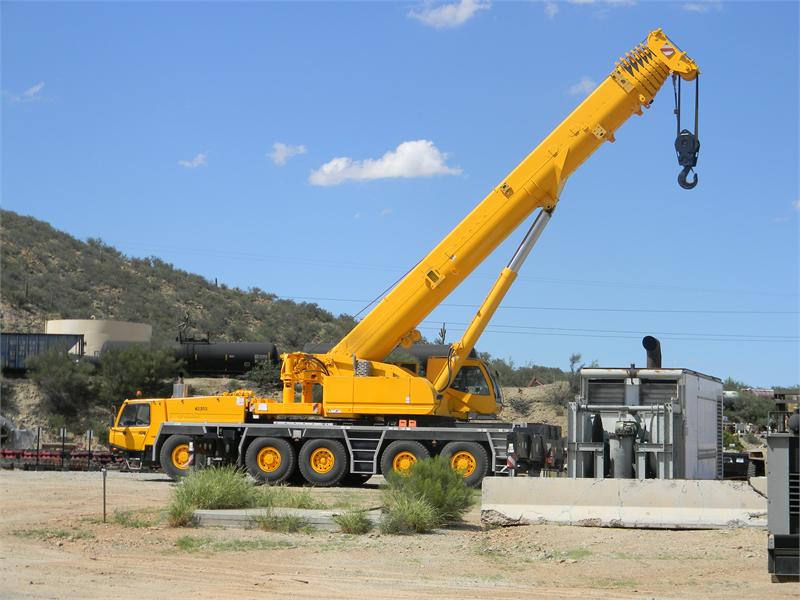
    As a Heavy Equipment Operator, you’ll operate large, expensive equipment such as backhoes, loaders, graders, dozers and excavators to build and maintain roads, bridges, airports, gas and oil pipelines, tunnels, buildings and other structures. You may also operate this equipment to excavate rock, ore or other materials from open-pit mines, strip mines, quarries or construction pits or to move, load, unload cargo or material. These are just a few out of the many opportunities that are available.

    Your typical day may start with performing pre-operational checks to make sure the equipment is working properly and safely. Duties may also include regularly maintaining the track or rubber tire undercarriage, buckets and attachments, refilling the equipment and lubricating the components and attachments to prepare it for service. You may complete log sheets and reports when testing or maintaining the equipment.

    Since safety is #1 in construction careers, you may have to wear Personal Protection Equipment or PPE and take special precautions to protect yourself and others from injury. You may even have to take safety training either through your company or from a construction safety training facility.

    To prepare for a Heavy Equipment Operator career, you’ll need a minimum of a grade 10 education, but with competition getting stiffer for jobs, you’ll be better off if you finish high school. Certification varies based on where you live. In Quebec, it’s mandatory that you get certified as a journeyman or apprentice to work on a construction site, but in some provinces certification is voluntary. Some provinces may not have certification; and if this is the case where you live, you may be able to study as an apprentice through your local labour organization.

    The typical work week is 40 hours per week (8 hours a day, Monday till Friday), but you may have to work overtime during the busy construction season. Heavy Equipment Operators make on average $24.00 per hour or $58,000 per year, but your salary depends on where you live, your experience and skills, and the employer.

    The employment outlook is fair with job prospects increasing slightly over the next few years. Employment opportunities open up when operators retire, get promoted to management positions or become contractors. Operators are typically hired at heavy equipment contractors, public works departments and pipeline, logging, cargo-handling, mining and construction companies.

    Before becoming a Heavy Equipment Operator, ask yourself …

    • Can you operate heavy, industrial machinery?
    • Can you work outside even when it’s icy, rainy, snowy, windy or very hot?
    • Do you have good reading, writing, analytical and problem-solving skills?
    • Are you an excellent communicator, able to listen and take direction from others? This is critical as you may have to use hand signals or radio communication to operate the equipment safely.
    • Can you bend, stretch, kneel, stand, mount and dismount equipment easily?
    • Do you have good eye-hand coordination?
    • Are you mechanically inclined, able to maintain or check equipment?
    If you can answer “yes” to these questions, a heavy equipment operator career may be for you.

    ____________
    Giselle Mazurat is a resume writer living in Winnipeg, Manitoba. She also writes technical and business content for government and private companies.

    References:

    7421 Heavy Equipment Operators (Except Crane)
    http://www30.rhdcc.gc.ca/CNP/English/NOC/2006/Profile.aspx?val=0&val1=7421
    Careers In Construction Heavy Equipment Operator
    http://www.careersinconstruction.ca/en/career/heavy-equipment-operator
    Heavy Equipment Operators (Except Crane)
    http://www.servicecanada.gc.ca/eng/qc/job_futures/statistics/7421.shtml
    Pay Scale – Heavy Equipment Operator Salary (Canada)
    http://www.payscale.com/research/CA/Job=Heavy_Equipment_Operator/Hourly_Rate
    What Does a Heavy Equipment Operator Do?
    http://www.apprenticesearch.com/AboutTrades/GetTradeDetails?tradeId=78

  • Careers in the Trades: A List

    Careers in the Trades: A List

    The trades sector in Canada is constantly growing and changing. So how do you know which career path is right for you? Here at Jobs People Do, we’ve assembled a list of some of the hottest jobs in the trades industry that will be in high demand for years to come. Take a look at just some of your options and then click on the link to be taken directly to career information. Find out what kind of education you will need and how much you can expect to be paid.

    Aboriginal Child Development Practitioner
    Agricultural – Dairy Herdsperson
    Agricultural – Fruit Grower
    Agricultural – Swine Herdsperson
    Agricultural Equipment Technician
    Alignment and Brakes Technician
    Appliance Service Technician
    Arborist
    Architectural Glass and Metal Technician
    Assistant Cook
    Auto Body and Collision Damage Repairer
    Auto Body Repairer
    Automotive Electronic Accessory Technician
    Automotive Glass Technician
    Automotive Painter
    Automotive Service Technician
    Baker
    Baker-Patissier
    Bearings Mechanic
    Blacksmith
    Brick and Stone Mason
    Cabinetmaker
    Cement (Concrete) Finisher
    Chef
    Child and Youth Worker
    Child Development Practitioner
    Composite Structures Technician
    Computer Numerical Control (CNC) Programmer
    Concrete Pump Operator
    Construction Boilermaker
    Construction Craft Worker
    Construction Millwright
    Cook
    Developmental Services Worker
    Die Designer
    Draftsperson – Mechanical
    Draftsperson – Plastic Mould Design
    Draftsperson – Tool and Die Design
    Drywall Acoustic and Lathing Applicator
    Drywall Finisher and Plasterer
    Educational Assistant
    Electric Motor System Technician
    Electrical Control (Machine) Builder
    Electrician – Construction and Maintenance
    Electrician – Domestic and Rural
    Electrician (Signal Maintenance)
    Electronic Service Technician
    Elevating Devices Mechanic
    Entertainment Industry Power Technician
    Exterior Insulated Finish Systems Mechanic
    Facilities Mechanic
    Facilities Technician
    Fitter – Assembler (Motor Assembly)
    Floor Covering Installer
    Fuel and Electrical Systems Technician
    Gemsetter / Goldsmith
    General Carpenter
    General Machinist
    Hairstylist
    Hardware, Lumber and Building Materials Retailer
    Hazardous Materials Worker
    Heat and Frost Insulator
    Heavy Duty Equipment Technician
    Heavy Equipment Operator – Dozer
    Heavy Equipment Operator – Excavator
    Heavy Equipment Operator – Tractor Loader Backhoe
    Hoisting Engineer – Mobile Crane Operator 1
    Hoisting Engineer – Mobile Crane Operator 2
    Hoisting Engineer – Tower Crane Operator
    Horse Groomer
    Horse Harness Maker
    Horticultural Technician
    Hydraulic / Pneumatic Mechanic
    Industrial Electrician
    Industrial Mechanic Millwright
    Information Technology – Contact Centre Customer Service Agent
    Information Technology – Contact Centre Sales Agent
    Information Technology – Contact Centre Technical Support Agent
    Information Technology – Hardware Technician
    Information Technology – Network Technician
    Institutional Cook
    Instrumentation and Control Technician
    Ironworker – Generalist
    Ironworker – Structural and Ornamental
    Light Rail Overhead Contact Systems Lineperson
    Locksmith
    Machine Tool Builder and Integrator
    Marine Engine Technician
    Metal Fabricator (Fitter)
    Micro Electronics Manufacturer
    Motive Power Machinist
    Motorcycle Technician
    Mould Designer
    Mould Maker
    Mould or Die Finisher
    Native Clothing and Crafts Artisan
    Native Residential Construction Worker
    Network Cabling Specialist
    Optics Technician (Lens and Prism Maker)
    Packaging Machine Mechanic
    Painter and Decorator – Commercial and Residential
    Painter and Decorator – Industrial
    Parts Technician
    Pattern Maker
    Plumber
    Pool, Hot Tub and Spa – Installer
    Pool, Hot Tub and Spa – Service Technician
    Powered Lift Truck Technician
    Powerline Technician
    Precast Concrete Erector
    Precast Concrete Finisher
    Precision Metal Fabricator
    Pressure Systems Welder
    Process Operator – Food Manufacturing
    Process Operator – Power
    Process Operator – Refinery, Chemical, and Liquid Processes
    Process Operator – Wood Products
    Pump Systems Installer
    Railway Car Technician
    Recreation Vehicle Technician
    Refractory Mason
    Refrigeration and Air Conditioning Systems Mechanic
    Reinforcing Rodworker
    Relay and Instrumentation Technician
    Residential (Low Rise) Sheet Metal Installer
    Residential Air Conditioning Systems Mechanic
    Restoration Mason
    Retail Meat Cutter
    Roll Grinder / Turner
    Roofer
    Saddlery
    Saw Filer / Fitter
    Sheet Metal Worker
    Ski Lift Mechanic
    Small Engine Technician
    Special Events Coordinator
    Sprinkler and Fire Protection Installer
    Steamfitter
    Surface Blaster
    Surface Mount Assembler
    Terrazzo, Tile, and Marble Setter
    Thin Film Technician
    Tire, Wheel and Rim Mechanic
    Tool / Tooling Maker
    Tool and Cutter Grinder
    Tool and Die Maker
    Tool and Gauge Inspector
    Tractor-Trailer Commercial Driver
    Transmission Technician
    Truck and Coach Technician
    Truck-Trailer Service Technician
    Turf Equipment Technician
    Utility Arborist
    Water Well Driller
    Welder
    Wooden Boat Rebuilder