Author: EricaReid

  • The Outdoor Adventure Industry: Not Your Typical Day at the Office

    The Outdoor Adventure Industry: Not Your Typical Day at the Office

    A brief window into the thrill based and skill based world of adventure sport.

    The vast array of dangerous jobs out there has started to receive more exposure, especially with reality TV recognizing our love to experience these jobs from the comforts of our couch. From coal mining to deep sea fishing, television seems to cover it all. However, a less exposed but speedily growing industry falling into the “dangerous jobs” category is outdoor adventure. Whether it is rock climbing instructors, heli-ski guiding, white water kayak or raft guiding, Canada’s adventure sport scene is booming. An interview with Trevor Cardozo, who has rafted for Canadian Rockies Rafting in the Canmore/Banff area of Alberta, provides some insight on what it takes to work in a job so vastly different from the typical nine-to-five/sit at your desk kind of job that many of us will likely end up in.

    What made you decide to enter the outdoor adventure industry?

    I had done a ten day canoe trip in Quebec when I was in high school, and that was kind of my crash course into the outdoor adventure world. I got accepted into university for a computer related program, but decided to rethink what I wanted to do, and to instead attend Algonquin College’s Outdoor Adventure diploma program, because of my experience on that canoe trip. The Algonquin program became my springboard into a career of climbing, paddling and eventually water raft guiding. Many people enter the industry because of the adrenaline rush, but for me it was more the ability to not be stuck in an office and be in the outdoors all the time.

    How do you deal with the “danger” aspect of the job?

    Always be on your toes, thinking about risk management and minimization. Know the difference between perceived risk and inherent risk, especially in rafting, as people often have a misconceived idea of it, often assuming it may be safer than it actually is.

    What are the some of the skills needed to succeed as a raft guide?

    You have to be really personable, loud and assertive. It is your job to make sure people have a great trip, so you almost need to be an entertainer. Between rapids there can often be quite a bit of time spent on flat water, and you want make sure your customers are not bored.

    What advice would you give to someone who wants to get into the outdoor adventure industry?

    Do it! There are basically two routes to go through. The first being broad outdoor adventure and education training, through companies like NOLS and Outward Bound, or college programs like the one at Algonquin (at the Pembroke ON campus) or Thompson Rivers University (in Kamloops BC). The second way to get into the industry would be to go directly to the company you are interested in working for, with no experience and work your way up.. if you take that route, you need to pay your dues.. work hard, work a lot and maybe even work for free.. but it will be a great learning experience. Specifically with white water rafting, most companies offer a guide training program. Some companies charge for this or others will pay you for it, but not until the end of the season, to ensure guides do not skip out after training and work for another company. A great certification to get that most companies will require is Wilderness First Responder.




  • Too Cool for School !

    Too Cool for School !

    “A human being is not attaining his full heights until he is educated.” – Horrace Mann

    It is important to remember messages such as these when the pressure of high school really sets in. Will I make friends? Will I fit in? Will my teachers be too strict? – It takes a few years and a couple life lessons to really understand the insignificance of these questions. High school isn’t a popularity contest or a soap opera, it’s a learning institution that will help to mold you into the person that you one day hope to be. It’s a stepping stone on the path to a life that you can be proud of.

    Statistics Canada reports that 191,000 young people aged 20 to 24 had not completed a high school diploma and were not attending school in 2009-2010, though this is a significant drop from the 340,000 in 1990-1991, it is still a cause for concern. Too many high school students are not taking their education seriously and are putting their futures on the back burner.

    It may seem cool to work in a fast food restaurant or a trendy clothing store for now, while you are living at home with your parents or guardians, and your income is solely for partying or material things. But eventually that roof with no longer be over your head, and your free ride will be over. Suddenly, those 32 hours a week and that minimum wage job won’t seem so glamorous anymore. You’re faced with the reality of bill payments and rent cheques and that bank account is getting smaller and smaller every month. This is when it hits you… “I should have just toughed it out and stayed in school.”

    It takes a lot of hard work and motivation to succeed in this world. A cushy, high paying job won’t just be handed to you on a silver platter (unless you are one of the lucky few, but let’s face it… if you were, you wouldn’t need us.) and every dollar in that bank account will have been earned with pride.

    Whether you’re bullied, burdened or just plain lazy, a high school diploma is an accomplishment that is recognized all over the world, and there is nothing that should keep you from it. Keep your eye on the prize and before you know it, you’ll be throwing your hat in the air, anxiously awaiting what comes next…


  • 1st Hand Knowledge on 2nd Hand Shopping

    1st Hand Knowledge on 2nd Hand Shopping

    The benefits of shopping vintage and the best ways to go about it.


    At a younger age, I had a fear of purchasing second hand (other people had touched them..which apparently to my younger self, was “gross”). And then, one fateful day, I went to a second hand store to pick a piece for a costume party and have never looked back since. Not only is it a great deal from a monetary perspective, but it allowed me to take fashion risks I may not have otherwise took, as my investment was lower, so if it turned out to be a fashion dud that I never wore again, guilt feelings were minimal.

    Purchasing second hand furniture has even more savings capabilities. A brand new living room set can cost you thousands, where as purchasing one second hand can be anywhere from $10-$100. I have furnished an entire apartment for under $200. It certainly did not resemble a page out of Martha Stewart Living, but for a student apartment, it looked pretty good (in my books). While you can head to any second hand store to purchase furniture, an even better bet is hitting up sites like Kijiji and Craigslist. Not only can you often get stuff for free on there, but if it is not free, most people are open to negotiation.

    As a student, the purchase of second hand books can be another great money saver. Your on-campus bookstore will likely have used books to purchase, and while this does save you money, you can save even more by buying directly from other students. Keep an eye on flyers on the wall, but if your specific books aren’t being sold by other students, check out sites like Amazon and Ebay. If you are willing to go one edition back (example: you are supposed to buy the 6th edition but instead you buy the 5th), the cost often goes from $150 for a new text book down to $5. Talk about huge savings. Usually differences between editions are minimal, but a great way to check, is on sites like Amazon, you can look at the Table of Contents for a book. Look at the contents of the newest edition versus the one you want.. chapters look similar? Done deal. Often, for reasons beyond me, professors get you to buy an expensive text book, and then never refer to it the entire semester, and then you wind up crying yourself to sleep over the costly book that has never been opened. But, if you got it 2nd hand, super cheap, you are laughing.. literally.. at your other classmates who were not as wise as you.

    The great thing about getting into the second-hand groove is that when you are done with your stuff, you can sell them for likely almost the same amount you bought them for. Or you can give them away knowing it is ok, as you did not spend much on it anyways. Keep in mind that when both buying and giving items away, research into the organization you are giving it to. Look into the causes different stores support, and base your decision on that. Not only will you being doing good for your wallet, but also for society and the environment (recycled goods means less items in landfills!).


  • Debt: Your New BFF

    Debt: Your New BFF

    Debt is a four letter word that should not be feared.

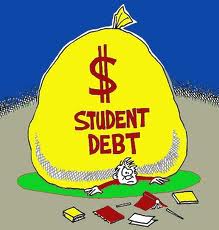
    Students who learn how to manage debt during university are paying themselves a great investment. You may be hearing horror stories of friends of friends who are paying off student loans years after graduation. Even the media pitches in and tells tales of students with debt so large that it seems unlikely they will ever pay off.

    No one wants to start out in life saddled with debt, but this could really be the best thing you do for yourself.

    Good Debt vs. Bad Debt

    A $1000 handbag or watch from your favourite designer is bad debt. $1000 towards books and supplies is good debt. Debt that goes towards something that will benefit you in the future is fine. Using borrowed money to earn your degree will only guarantee yourself a chance to earn much more than someone without a degree or diploma.

    Dr. Richard Settersten and Barbara E. Ray’s book Not Quite Adults highlights this fact, “taking on a little debt for a bigger payoff down the road is smart”. Settersten and Ray also shared Nobel laureate, Milton Friedman’s advice: people should borrow the most early on when their earnings are the smallest, save a lot when they are in their highest earning years in midlife, and then start spending all those savings after they retire.

    Be Realistic

    BMO Financial Group surveyed students across Canada and found that half believe that they will graduate with zero or less than $10,000 debt. This doesn’t quite match up with the findings from Statistics Canada, which states the average student graduates with $18,800. Be realistic when you’re borrowing money and always know how much you’ve taken out and how much you’re spending.

    Be Strategic

    Arthur Chan, who took out Canada Student Loans for fives years at Carleton University to complete his engineering degree, graduated with a debt of $21,000. He wasn’t able to find a job in his field until 8 months after graduation. Now, 2 years in a full time position with the government of Canada, that massive loan is all but a distant memory. How did he do it?

    Just because you’re able to borrow a large amount of money, doesn’t mean you have to spend all of it. Arthur lived at home during university and took public transportation everyday to keep costs low. He also worked part time retail jobs during summer vacations. When he wasn’t able to find a job right away, he applied for interest relief on his student loans. Once he was able to secure a job, he used his earnings to get rid of the debt as quickly as possible. The key is to learn how to save as much as you’re able to borrow.

    With tuition costs rising across Canada, sometimes adding everything up really discourages prospective students. Don’t let debt deter you from getting the education you want. Remember: education is a right, not a privilege.


  • Summer School: Why it’s Worth Your Time

    Summer School: Why it’s Worth Your Time

    Although the thought of spending a beautiful summer’s day inside a dark classroom while others are lounging at the beach may sound less than appealing, in the long run taking summer school may actually prove to be one of the best decisions you will make while at college or university. Here’s why:

    1.) Finish your degree in less time

    On average, it takes four years to complete a bachelor’s degree. However, many students are now taking an extra year to finish their degree, which allows for a less stressful and demanding course load each semester. Having said this, there is a way to keep the stress level down without taking an extra year to complete your degree. By taking two courses per summer, you can complete your bachelor’s degree in just four years, while taking a manageable four courses per semester during the school year. By opting to cut your course load by just one class a semester (and instead take these classes during the summer), you can increase your free time while at the same time decreasing your stress. In addition, taking just two classes each summer means that you will still have extra time to get a part-time summer job, go on vacation, or just relax!

    2.) Smaller class sizes

    If you’ve ever been one of four hundred students in an introductory psychology class, you know that quality one-on-one time with the professor is hard to come by. Although teaching assistants are usually made available via email and office hours in larger classes, it simply doesn’t compare to the valuable one-on-one direction and assistance of the professor which is usually an integral part of smaller classes. The smaller size of summer school classes also provides greater opportunity for group work and interaction with fellow students. Depending on whether you prefer to brainstorm in groups or to work solo, this may or may not be seen as a benefit. Furthermore, professors are generally more lenient with due dates and the formalities of the class, and lectures are much more laid-back in summer school. With a more relaxed atmosphere, classes are less daunting and more enjoyable.

    3.) Shorter course durations

    Many summer school classes are concentrated into four or eight week sessions, making it the perfect time to get the more tedious classes over and done with in a relatively short amount of time. Or, on the other hand, if you want to take a class that you have a greater interest in, summer school allows for an intense focus on the subject matter. This may seem slightly paradoxical given the shorter duration of summer classes, but the greater amount of group work and one-on-one time with the professor means that you can discuss the subject matter in greater depth and hopefully gain a better understanding of the material. And, as stated before, taking fewer courses of shorter duration means that you can still have a fun and relaxing summer while at the same time working towards finishing your degree in less time!


  • Get Hooked on Summer Journaling

    Get Hooked on Summer Journaling

    School is out for the summer and for most students, summer journaling is the last thing on their minds. Sure it is fun to hang out with family and friends, watch TV, go online; or just lay back and relax, but how can these experiences be enjoyed and reflected upon later after this summer becomes just a memory?  You can capture these special moments through summer journaling.

    Some may be wondering why they should bother to keep a journal, and what is to be gained from doing so. It has been proven through scientific research that “the mindless summer movies, books and television you’re enjoying may be harmful to your intellectual health”; but once critical and active thinking is involved in these activities, intelligence is found considerable better ¹.  Writing each day through the summer will keep your mind busy. The brain is a muscle, the more you work it  the stronger it will become. However, do not get too bogged down with writing; in order to have something to write about you need to experience summer.

    Journaling can be whatever you make it out to be. Now is the time to write whatever you want – the key is to let yourself go and embrace the freedom writing grants you!  During school, students are often confined to write in a certain style, and given a specific topic; the aim is to instruct students in important writing skills and to encourage critical thinking. Although these tools are necessary, they are only the spring board into a deeper realm of writing. There are so many things to write about, and different ways to express yourself through writing.

    Summer journaling does not have to be limited to an essay format, or personal response however, you can follow these styles if you so desire. There are many other ways to write, such as writing: a song, poem (rhyme, free verse, haiku etc), paragraph, or any other way you come up with – the possibilities are endless! It is a good idea to set a minimum of how much to write per day (i.e. 3 lines, a paragraph etc), but do not set a maximum. By setting a limit you confine yourself; writing without limitations allows room to grow and mature. It is up to you to decide what to write about, ideas may include what you did that day; what you would like to do this summer, what you did past summers, favorite things (sports, hobbies, places), or what you see yourself doing in 5 years. If you are stuck for creative ideas, there are resources such as Lorraine M. Dahlstrom’s Writing Down the Days: 365 Creative Journaling Ideas For Young People ². Dahlstrom lists historical events throughout her book, and suggests ideas to write and expand on. If you are unable to find this book at your local library, or purchase it from a bookstore or online, you could do your own search for special events or people that are connected to the day you are writing on.


    Write to enjoy yourself. It can be a reflection on your day, or you could begin your day by writing – it is up to you. If you miss a day, do not worry. Some of you may not be used to writing daily, but over time it will become a habit, and maybe you will even continue keeping a journal after this summer is over. While you are having fun, you are also exercising your mind and improving your writing skills. By keeping a journal, you will be able to reflect back once you are older, and relive these special moments. So what are you waiting for? Create and preserve these memories through summer journaling!

    ¹ Harris, Misty. “Stupidity seems to be contagious, study finds Mindless fluff may harm you intellectually.” Calgary Herald. 16 June 2011. Print.
    ² Dahlstrom, Lorraine M. Writing Down the Days: 365 Creative Journaling Ideas For Young People. Minneapolis: Free Spirit Publising Inc. 1990. Print.


  • Rewarding Careers: ESL Teacher

    Rewarding Careers: ESL Teacher

    Language teaching offers opportunities for students and teachers to learn together.

    The musical rhythms of Spanish dance alongside the sharp glides of Mandarin; bold sounding Arabic is heard not too far away either. This is the typical language classroom. The students are all new immigrants to Canada and are all beginning to find their voice in English. Some are doctors or engineers, others may be stay-at-home moms or recent refugees. Every class is always a little different and no lesson plan is ever identical.

    According to the latest census results, Canada is currently seeing the highest levels of foreign-born individuals in 75 years. This means that one in five people are newcomers! Toronto, Vancouver and Montreal remains the favored cities for settlement, but other cities across Canada (Halifax, Edmonton, and Winnipeg) are seeing a drastic rise within the last decade as well. With over 70% of the foreign-born population speaking a language other than English or French, ESL is becoming a field of great demand.

    A Typical Day

    Grammar lessons can’t be avoided, but it shouldn’t make up the entire class. There is great freedom for the teacher since the curriculum allows flexibility and creativity. In my class we may do an hour of grammar review followed by a class discussion about different cultural taboos or what the heck “double double” means. Students range in age from 18 to 60 and bring with them a lifetime of experiences to share. An Ethiopian student introduced me to delicious injera; a Vietnamese student wore a beautiful ao dai to show her classmates.

    Every autumn I prepare the students for their first Canadian winter and I always smile when I see how fascinated and delighted they are with the first snowfall. Being an ESL teacher really means becoming their first Canadian friend. It is my responsibility to help the students prepare for all the obstacles they didn’t expect. Finding a job means writing a resume and not submitting a picture with it (which is common practice in parts of Asia). Going onto higher education at a Canadian university or college means applying for student loans and bursaries, (which isn’t common practice in parts of Europe and the Middle East). Even everyday tasks like using the ATM or making an appointment can be daunting. My job is to make this a little easier.

    How to Become an ESL Teacher

    In order to teach ESL in Canada you need to apply and be certified with Teachers of English as a Second Language (TESL). To do this you first need to complete a one year Certificate to Teach English as a Second Language (CTESL) program at a recognized university or college. Part of the program will be theory, and the other part will be a practicum. It is entirely up to the student whether they want to teach (under the guidance of a teacher) during their practicum or simply observe. Every province has slightly different requirements (TESL Ontario requires 50 hours of teaching experience in British Columbia it’s 20), so be sure to check it carefully. The CTESL program will only accept students who hold a university degree (you don’t need to be an English major), but are also known to accommodate students with previous teaching and training experiences.

    If you would rather teach children than adults, you won’t need a CTESL or be accredited with TESL. Instead, you would need to complete your Bachelor of Education with specific courses in ESL methodology. If you’re thinking of traveling outside of Canada to teach, a CTESL isn’t normally required overseas, but you can demand a higher salary because you have it. Not to mention that you’ll also be more prepared than those without.

    A career as an ESL teacher is beyond rewarding from the difference you’re making in the students’ lives to the difference they are making in yours.

  • Fun (Almost Free) Activities for Summer

    Fun (Almost Free) Activities for Summer

    Fun for Summer

    Having an incredible summer doesn’t mean you need to break the bank.

    There’s never a shortage of things to do in the summer, but if you’re saving up for school in September, fun can be quite costly. While it would be great to backpack through Europe or spend the weekend at Wonderland, it’s much more important to save the money now so you won’t be eating 6 months of ramen noodles in the fall. Here are a few ideas to help you make the most of your summer and keep all your change in your pocket.

    1) Volunteer for Festivals

    You know it’s officially summer when those loud, all night, outdoor festivals are pitching their tents. There’s the always popular music festivals, the quirky comedy or fringe festivals, and the laid back art events too. The options are endless, but a festival pass to rock out to your favourite bands could easily cost you $80 or more. How about volunteering a few hours of your time and see the exact same band for free?

    You’ll be meeting new people and putting experience down on your resume at the same time. You can even volunteer with a group of friends. The application process is easy and straightforward. Even if the festival is already under way, ask a volunteer coordinator if they need replacements or an extra hand. The answer is rarely no.

    2) Gallery hop and Museum Tours

    Most galleries and museums charge a student rate for entry, but save the cash and check it out on a free night. Depending on where you live, nearly all galleries and museums offers one evening a week where the public is allowed entry for free from 5pm to closing. This is also an excellent way to escape the heat while you’re checking out Picasso or comparing yourself to a T-Rex.

    3) Shakespeare in the Park

    Romeo and Juliet feels much more romantic under the trees than it does in a high school class. Go online and find the summer schedule for your local playhouse that produces plays in the park. At the end of the performance, pay what you can when the hat gets to you.

    Some communities in Toronto, Montreal and Ottawa arrange movie nights at the park. The municipality pays for the gigantic screen and all you have to bring is a lawn chair and popcorn!

    4) Camp in your Backyard

    Fire up a bbq, invite your closest friends and tell them to each bring something to nibble on. Pitch a tent, use lots of bug spray and have one of the most memorable nights of the summer.

    It may not be the real wilderness experience, but at least you’ll have easy access to a toilet.

    Canadian winters are long and harsh, which is why everyone needs to get out there and enjoy the few months of summer. Doing something outside of your normal routine may surprise you. What other fun, almost-free summer activities do you do?

  • Ignore that “beep”

    Ignore that “beep”

    “Ignore that “beep” until your car is turned off and you are safe to check your text message!”

    As Teena is driving, she hears that familiar “beep” from her cell phone and guesses that it must be her friend responding back to the text she had just sent her, asking if she wants to meet up for a coffee.  Teena had sent that text just before she left her last class for the day and now she needs to check the message, as that will determine whether she is going to go home now or drive straight to Tim Hortons.  Finally, a red light, so Teena presses the brake and quickly checks her phone which has been sitting right in her lap.  She knows she has about two minutes at this light, so she reads the message “sure, lets meet up at Timmy’s but are you okay for 5:30P bc I have 2 go 2 store first, quick stop”.  Now Teena has to respond, but just as she is about to initiate the keypad on her phone, she hears a horn behind her..Oops, she says to herself, the light is now green, and she is feeling irritated as she had wanted to text back, but will wait for the next light.  But even waiting until the car stops to text message with your phone, is against the law.  Teena is aware of the law that the use of hand held electronic devices while driving, is banned in Ontario, but continues to take the risk of texting while driving as many drivers do.

    This law came into effect on April 22, 2009.  “This law is about keeping your eyes on the road and your hands on the wheel” Transportation Minister Jim Bradley stated at a new conference in Toronto on June 22nd.  Ontario’s distracted driving law prohibits drivers to talk, text, type, dial, or email using hand-held devices. Calls to 911 are an exception. It is also illegal for drivers to use electronic devices such as a laptop or a portable DVD player while driving.  The use of hands-free cell phone talking is allowed and drivers can purchase a Bluetooth kit or a hands free device to use in their car.

    The practice of texting while driving has been viewed by many people and authorities as dangerous. Texting while driving leads to increased distraction behind the wheel. In 2006, Liberty Mutual Group, conducted a survey of more than 900 teens from more than 26 high schools nationwide. The results showed that 37% of students found texting to be “very” or “extremely” distracting. A study by the American Automobile Association discovered that 46% of teens admitted to being distracted behind the wheel because of texting.

    If caught texting while driving, Teena can receive a fine of up to $500.  In addition to this fine, she will receive a ticket from the Police for “distracted driving” and this can cause her insurance rate to increase significantly.  Teena is not only risking getting a fine, but she is risking her life and the life of other drivers on the road.  Sergeant Cam Woolley, of the Ontario Provincial Police Highway Safety Division which processes about 22,000 traffic accidents a year in the Greater Toronto Area, says that his division is seeing more collisions involving younger drivers using wireless devices. “They’re brought up on text messaging and they don’t recognize the risks as much,” Sgt. Woolley said. “There is the perception that they can multitask safely when they can’t. Combine the overconfidence with inexperience…and it kind of spells disaster.”

    Hopefully, Teena will not be another statistic under the dangers of text driving.  There are too many Teena’s out on the road, that still continue to text message while driving, and the law around the dangers of “texting while driving” needs to be strongly enforced just like the message of “do not drink and drive”.  Texting is a great tool but when used responsibly and safely, and this does not mean that you should stop at a light and then use your phone, as Teena did, as your eyes are on your phone in those moments when they should be on the road at all times! “Beep”…it must be your phone, but that’s okay, when you get to your destination, then turn off your car and check your phone.  The few seconds of checking while driving is not worth your life.

  • See You in September!

    See You in September!

    Have a Great Summer!


    As seen on our Facebook and Twitter page...If  you send in a video from your cell or PC answering the question  ” Knowing what you know today, what do you wish you would have known coming from grade 12? ( in hindsight ) ...or...What you would like to know about entering post secondary?  We will send you FREE PIZZA gift certificates from the great tasting Domino’s Pizza. Canada.

    We’d love to see your summer photos, and some of the funniest things you got yourself into.

    Watch for our summer contests to win lots of fun prizes! (They will be posted on Twitter, Facebook and on site)

    If you have any comments, ideas, or would like to submit your writings,  just send them in to info@jobspeopledo.com

    While you’re away, we’ll be in development of new and exciting additions to JobsPeopleDo.com

    We will be publishing July 1, August 1, and back to twice monthly beginning Sept 1.

    Have a great summer! Be Safe!

    JPD Team!