Author: Susan Huebert

  • High School Graduation Requirements in BC

    High School Graduation Requirements in BC

    Getting into high school can be an exciting time, with more independence than in earlier years and the idea of planning for future work or studies. Even with extra freedom to choose their path, however, students in British Columbia should remember to keep the province’s graduation requirements in mind.

    Schools in British Columbia, like in other provinces, can vary widely. Some offer mainly academic subjects like history and mathematics while others offer courses in subjects like electronics or construction. However, all high school students must complete eighty credits to graduate, including fifty-two credits for required courses and at least twenty-eight credits for elective (optional) courses.

    In high school, a credit is the value of a course in counting towards graduation. For example, a language arts or mathematics course counts as four credits towards the eighty that students must reach, and many other courses count for the same amount. Students can choose to work very hard in the first part of high school so that their final year can be easier. However, at least sixteen credits must be at the Grade 12 level. One course must be in language arts, and another must be a career-life connections course.

    High school students are supposed to learn about a variety of subjects so that they can have a balanced education. The required courses include language arts, mathematics, social studies (which might be divided into geography and history), science (including biology, chemistry, or physics), physical and health education, arts or applied design, career life education, and at least four credits in an Indigenous-related course.

    Elective courses vary, depending on the school’s ability to offer courses beyond the basics. Many schools have courses in music, whether in singing or in learning to play an instrument. Some places might offer theatre courses or classes in public speaking or debating. Others might have computer programming classes or automotive topics. Most schools offer courses in at least one language such as French or German, and some might offer classes in languages such as Tagalog or Swahili, depending on what the people in the neighbourhood want.

    Besides the coursework, students are required to pass at least three standardized tests that the province has developed, the Grade 10 Literacy Assessment, the Grade 10 Numeracy Assessment, and the Grade 12 Literacy Assessment. These tests are designed to show that students can read well and that they are able to do basic mathematical calculations such as adding and subtracting. These are important skills for almost any job. Career courses also help to prepare students for finding work when they graduate.

    The requirements for graduation are designed to ensure that every student finishes high school with basically the same level of education, but this does not always work. Some schools have trouble offering more than the basics, while others might have so many electives that students can become overwhelmed.

    When choosing high school courses in BC, as anywhere else, it is important to keep long-term goals in mind. If possible, students should also consider the job market and try to take courses that fit with what employers are likely to need. Meeting the high school graduation requirements can help students meet their own needs and prepare for the future.


    Bibliography

    BC for High School. “Graduation Program.” https://bcforhighschool.gov.bc.ca/offshore/bc-curriculum-assessment-overview/graduation-program/.

    North Delta Secondary. “Graduation Requirements.” https://nd.deltasd.bc.ca/course-selection/bc-graduation-requirements/.

    Province of British Columbia. “Graduation Requirements.” https://www2.gov.bc.ca/gov/content/education-training/k-12/administration/legislation-policy/public-schools/graduation-requirements.

    Vancouver School Board. “BC Secondary School 80 Credit Graduation Program Requirements.” https://media.vsb.bc.ca/media/Default/medialib/bc-grad-requirements.b897c761003.pdf.


  • Benefits and Drawbacks of Ontario’s Co-op Programs

    Benefits and Drawbacks of Ontario’s Co-op Programs

    Traditional forms of education can be good, but sometimes students need a different style of learning. Ontario’s co-op programs can be a good choice for students who know the benefits and drawbacks of this option.

    Co-op programs are good ways of learning important skills while preparing for paid employment. In some ways, co-op programs are like apprenticeships. Students take courses but then have the chance to gain practical experience, including learning how to apply for co-op programs or gaining interview skills that could help make the process of getting work easier.

    Learning through a co-op program can be a good choice, but students should be aware of the benefits and drawbacks. Co-op programs can be very competitive, and it can be difficult to get a spot. For people who get in, the work can be quite demanding. Even students who get into the program might not be able to find extra work so that they can get the experience they need. Sometimes, the volunteer work included in the program can also cause stress.

    Despite these possible disadvantages, many students find co-op programs useful. Many of these programs have a break every four months. Students get experience in the interview process and learn how to communicate with employers, other employees, and customers. Knowing how to deal with issues at work can help people find and keep good jobs after they finish the program.

    The main idea behind a co-op program is to show what a career in a certain field is like. Students learn how to apply for jobs, including creating resumes geared towards the type of job the student wants. A resume for a teaching position, for example, would be different from a resume for a job as an electrician. Through a co-op program, students get practical experience in the skills that they will need for the future.

    Ontario has various co-op programs in different fields. Co-op programs should be at an academic institution that the provincial government has authorized to offer diplomas and degrees. Work experience must be part of the program, and the university or college must allow students to be paid for the work. The students in these programs should also have full-time status, even if they are not taking full time courses.

    Co-op programs can be very useful for students who are able to balance work and studies. Being well organized is important since instructors generally expect students to keep track of their assignments and to hand them in when they are due. Getting to class or work on time is also important.

    Students who want to enroll in a co-op program should first decide if the program fits with their goals. For many people, one of the main benefits is the chance to get practical experience before they try to find a regular job. This way, they can discover the areas where they still need to learn more and then focus on improving in those areas. Connections that people make with potential employers through co-op programs can also be very helpful for the future.

    Co-op programs are not for everyone, but they can be a good choice. If you consider the benefits and drawbacks of these programs, you might decide that this style of education is right for you.


    Bibliography

    Campbell, Tess. “Everything You Need to Know About Co-op Programs as an International Student.” https://www.studyincanada.com/Discover/Article/1/5577/Everything-You-Need-to-Know-About-Co-op-Programs-as-an-International-Student.

    Government of Canada. “Post-Secondary/Internship Programs.” https://www.canada.ca/en/public-service-commission/jobs/services/recruitment/students/coop-internship.html.

    LaValle, Javier. “What Is a Co-op Program in Canada?”  https://www.thrivve.ca/blog/what-is-a-co-op-program-in-canada.

    University of Waterloo. “Advantages and Challenges of the Co-op System of Study.” https://uwaterloo.ca/psychology/current-undergraduate-students/experiential-learning/psychology-co-op/advantages-and-challenges-co-op-system-study.

  • Work-Life Balance: Implementing Work Boundaries in a Remote Setting

    Work-Life Balance: Implementing Work Boundaries in a Remote Setting

    The world had changed in many ways since 2020 and the pandemic – especially in the working world.  For young people who are now entering the workforce for the first time, you’re joining a working world vastly different than that of your parent’s generation.  Hybrid and remote workplaces abound; some companies that went fully remote in 2020 remain so, while others are beginning to create hybrid office/work-from-home structures that can offer appealing flexibility and convenience.

    But remote work has its own challenges, especially when it comes to separating your work life from your home life when both are taking place inside the same house or apartment.  It may be nice to have a 30-second commute to your desk, and the flexibility to shift the hours you work or step away for an errand or appointment.  But the danger here is that your personal time and work time will all blend together, leading to less efficient work and less relaxing life.

    This is why setting boundaries is important, especially for young workers who are eager to impress at a new job.  While it’s important to be present and productive in a remote work job, having appropriate boundaries will help maintain a healthy work-life balance.

    While there are lots of ways to set boundaries around remote working, two of the broader ways to do this are establishing your work hours and defining your workspace.

    Clearly Establish Your Working Hours

    One important way to set boundaries while working remotely is to clearly establish your working hours.  Speak with your boss about your schedule and settle on working hours that work for you – and then stick to them.  This means being available and responsive within your established workday, and notifying your boss or teammates if you will be unavailable unexpectedly (such as stepping out for an appointment).

    Establishing clear working hours also means resisting the urge to work “after hours” during what should be your personal time.  While emergencies can happen in any job which may require working late once in a while, both you and your coworkers should respect your off-hours and leave any non-emergency work until the next workday.

    It can be difficult, especially for young adults new to the workforce, to say “no” when it comes to work tasks, but learning to do so politely and professionally is important to maintaining your boundaries and your work-life balance.

    Define Your Workspace

    This one can be tricky, especially if you’re living in a small apartment or sharing a house with other people.  When working remotely, it is a good idea to clearly define your workspace within your home, and then keep your work time and work activities there.

    While having a separate room with a door that you can use as an office is ideal, not everyone has that option.  Even if you’re a bit strapped for space, try to set up a desk or table as your workspace.  Having a designated workspace makes it easier to separate “work time” from “personal time” by whether you’re sitting at your workspace or not – similar to how in a traditional workplace, when you leave your desk at the end of the day, you’re no longer on “work time.”

    This also helps with productivity, as it will be easier to get into a work-mode mindset when you have a specific place to work, and makes it easier for your mind to relax on your off-hours because you’re not sitting at your workspace.

  • Building Resilience in Children: Strategies for Teachers and Parents

    Building Resilience in Children: Strategies for Teachers and Parents

    Without question, having resilience remains necessary as working through challenges is a part of life. It’s best to begin building resilience early on, meaning during childhood, so that more opportunities to build are seized and individuals will likely end up better equipped for these inevitable challenges. Teachers as well as parents have this responsibility since they’re usually the most influential figures in children’s lives. However, it can be a feat that’s tricky to approach. If you’ve been thinking about this and you’re a teacher or parent looking for advice on building resilience in your children, here are some strategies:

    Help Them Improve Their Self-Esteem

    Self-esteem can be linked to resilience. If children have confidence in themselves, there’s a better chance of them believing that they’re able to overcome the obstacles they encounter.

    Introduce Healthy Ways of Handling Disappointment/Negative Emotions

    One effective way is changing their perspective. For instance, if/when they’re initially disappointed by a certain outcome, such as losing a game or getting lower grades than expected, encourage them to see the positive side(s) of it.

    Some questions that could be asked in cases like these are:

    • What did you learn?
    • What would you do next time for a better result? (If applicable)
    • Could the outcome have been worse?

    When building resilience in children, also ensuring that they learn how to process negative emotions so they’re more knowledgeable about navigating them going forward is crucial. Using outlets including journalling, drawing, and discussing the experience with someone remain good options for expressing themselves as well as making sense of what they’re feeling. Overall, children shouldn’t stifle their feelings to build resilience. It should encompass gaining proper tools for coping with these feelings in order to not only successfully continue on, but also do so in a healthier way.

    Provide Continuous Guidance And Support

    Building resilience may look/seem different depending on the child, but providing continuous guidance and support when engaging with what’s stated above regardless is important. This process will likely be ongoing due to the various types of difficult experiences they’ll face, so even if you’re seeing desired results your job may not necessarily be done. Being available to guide at any time during these moments definitely makes a difference.

    Ideal as well as reasonable goals to work toward as a parent or teacher include:

    • Finding a balance between remaining supportive and not providing too much intervention when the child faces certain challenges.
    • Establishing that there is (or will be) an expectation for them to manage some difficult emotions, experiences, setbacks, etc. responsibly but also them understanding that they’re not alone in it.

    Building resilience in children is a very important and at times difficult task that teachers and parents must take on. A good combination of strategies to tackle it includes improving their self-esteem, determining what healthy methods of coping with their negative emotions work best, and providing support and guidance throughout the process while having feasible goals in this respect. All in all, if you consider using these suggested strategies, you’re on your way to effectively building resilience in the children you teach or your own.

  • The Concerning Trend B.C. of Apprenticeship Completion Rates: Future Improvements

    The Concerning Trend B.C. of Apprenticeship Completion Rates: Future Improvements

    For those looking for work in the trades, they benefit from proper certification. Individuals need to complete a trades apprenticeship, where they gain on-the-job experience under an employer. While certification offers advantages such as more job opportunities, larger wages, greater job security, and greater career advancement, not every apprentice completes their program. A Statistics Canada dataset reveals that B.C. apprentice certification rates have struggled to reach over 50 per cent in the last decade.

    Besides 2023, whose numbers are yet to be released, these rates have fluctuated between 44 to 51 per cent from 2013 to 2022. B.C. only recently started to require certification in some trades under its new Skilled Trades Certification. Until 2023, B.C. was the only province to allow non-certified individuals to work in trades.

    Explaining Apprentice Certification

    Apprenticeships combine job experience with classroom training. These programs range from one to five-years and most last four years. At the end of their apprenticeship, apprentices take an exam for their Certification of Qualification (CoQ) or Interprovincial Red Seal.

    All apprentices need to take the CoQ exam, which is needed to take a Red Seal exam. CoQs certify B.C. tradespeople to work within the province. There are 54 trades classified as Red Seal, which certify individuals to work across Canada.

    Job Outlooks for Apprentices in B.C.

    A survey conducted by BC student outcomes in 2022 said that 98 per cent of apprenticeship students were employed full-time. In the previous year, 99 per cent of apprenticeship students were working full-time. In both years, most of those respondents enrolled in electrician programs compared to other trades.

    Construction is another field that sees great promise. Apprenticeship certification saw a country-wide drop during the pandemic but a few “construction-related trades” saw stable and slightly increased certification between 2020 to 2021. Statistics Canada credits this stability to construction’s designation as essential during the pandemic, meaning many restrictions did not impact the field as significantly. B.C. sees value in the construction sector as well. WorkBC’s Labour Market Outlook for 2022-2032 forecasted approximately 72,700 construction job openings, the third-highest within major industries.

    Factors of Low Certification

    Despite the positive employment rates and outlooks, this fails to explain the low certification rates. The B.C. Chamber of Commerce in 2021 looked at ways to improve these apprenticeship completion rates. They recommended that the province should reintroduce mandatory certification, which is now in progress. Among the Chamber’s findings, they outlined circumstances around these low numbers:

    • Program registrations and certifications have increased, but these rises applied to a “small number of trades and a subset of newly established subtrades” that do not grant workers the same benefits as Red Seal trades, which require country-wide certifications.
    • The rates implied the lack of mandatory certification decreased motivation for apprenticeship completion.
    • C. faced the largest decline in Real Seal certification when comparing 2001-2004 rates with 2011-2014.
    • C. tradespeople suffered four times the amount on injuries on the job compared to those in Ontario. This implies that the BC system did not ensure the same amount of workplace safety.

    With more mandatory B.C. certification increasing its reach this year, this implementation will help push certification within the province. Though the past trend indicated low numbers, more mandatory certification seeks to equip tradespeople with the necessary training and expertise expected within the B.C. labour force. There is a future in the trades.

  • Missing and Murdered Indigenous Women: Addressing the Crisis

    Missing and Murdered Indigenous Women: Addressing the Crisis

    By Avreet Jagdev

    Across Canada, Indigenous communities continue to face many ongoing injustices, including overrepresentation in the criminal justice system, higher rates of unemployment, and poorer health conditions. One issue that impacts Indigenous women, girls, and LGBTQI+ people in particular is experiencing a disproportionate rate of violence, including kidnapping and homicide. This is such a large issue that the term MMIWG2S (Missing and Murdered Indigenous Women, Girls, and Two-Spirit People) has been coined to refer to it.

    As the Assembly of First Nations reports, Indigenous women are four times more likely to be victims of violence than women who are not Indigenous. Although they only make up 4.3% of the Canadian population, they represent 16% of all female murder victims and 11% of missing women. Indigenous women are also more likely to experience physical and sexual assault, compared to non-Indigenous women. Despite these shocking statistics, the Canadian Government has failed to adequately address the issue. In 2016, a national inquiry into the issue was put in place. It resulted in 231 calls to justice directed at the government, institutions, social services, and Canadian individuals, which tackled areas requiring reform including education, justice, and health. As of June 2023, only two of these 231 calls to justice were complete. In 2014, Prime Minister Stephen Harper even stated that MMIWG2s was not “high on their radar”.

    These examples showcase that the MMIWG2S crisis is not just an issue about the violence that Indigenous women and girls experience, but government and institutional inaction regarding the violence.

    The MMIWG2S crisis is rooted in the longstanding oppression of Indigenous people in Canada. The high level of violence faced by Indigenous women, girls, and 2-spirit people is due to their identity as both Indigenous and as gendered, so MMIWG2S is an Indigenous and Gender justice issue.

    Amnesty International Canada has declared this violence against Indigenous women an issue of human rights and launched a campaign called “No More Stolen Sisters” in response to the issue of MMIWG2S. They cite a number of factors which contribute to the ongoing crisis, including racist and sexist stereotypes towards Indigenous women, which causes perpetrators to believe that their acts of violence against Indigenous women will not be met with justice. Additionally, the ongoing legacies of colonialism of Indigenous communities lead to the risk of Indigenous women experiencing violence, due to impoverishment, the lasting harm of residential schools, lack of access to resources, and disempowerment within their very communities. Lastly, a key factor is the decades of inaction by governments and law enforcement, which has allowed the violence against Indigenous women, girls, and two-spirit people to continue.

    There are several things that young people across the country can do to help address the crisis. The most important step is to be educated about MMIWG2S, as well as other ongoing injustices that Indigenous communities face. Here are a few places to learn more:

    Lakota People’s Law Project: MMIW Resource Guide

    We R Native: What is the MMIW Movement?

    Additionally, it is important to use your voice to amplify the issue. You can do this by talking about it with your friends, doing a project on the issue in school, or circulating information on social media.

  • Loneliness in the Age of the Internet

    Loneliness in the Age of the Internet

    By Bhargavi Venkataraman

    With access to millions of people’s thoughts, likes, dislikes, interests, and lives at your fingertips, it seems like this age of humanity should give rise to the most connected population since the beginning of mankind. However, research and conversations around loneliness with social media tell a very different story.

    Since its invention in the 1900s, the Internet has played a crucial role in education, work, and leisure. While it has had numerous beneficial effects such as improving efficiency and communication across professions, in the 1990s it sparked debate on whether Internet use harms participation in community life and social relationships and increases loneliness. Loneliness can be defined as an unpleasant sensation arising from lack of adequate social contact and relationships. It can have detrimental effects on health by elevating stress levels, causing mental health disorders and contributing to physical health issues as a result.

    Studies have shown that greater internet use is associated with lowered communication with family, a reduction in the size of social circles, and depression and loneliness. This may be due to people investing too much time online and as a result, too little time with their real life relationships or contrarily, lonely people find themself online more as they are seeking connectedness, companionship, and community membership. This is a phenomenon that has been exacerbated with the onset of the COVID-19 pandemic, to the extent that loneliness was considered as a major public health issue during this time.

    My personal experience with social media is that it has the potential to both be a boon and a curse. I am grateful for it in times like when long distance from friends and family or when connecting with communities you would never otherwise have a chance to meet. However, the problems arise when it starts inciting feelings of FOMO and loneliness after prolonged use and when it preoccupies me to the point that I start losing contact with my real-life connections. At times like this, it seems like my only choice is to completely rid myself of the issue and get off social media.

    To begin, I only really use 3 forms of social media: Facebook, Instagram and TikTok. Of these, I find that I predominantly use Facebook for its messaging capabilities, Instagram to stay updated with friends and TikTok for entertainment. As such, the first platform that I shut off is TikTok. I thoroughly enjoy scrolling on TikTok and have found so many accounts that connect me to things I am not always able to access in real life such as videos of my homeland. However, when I notice that I’m spending too much time online, I think I could afford to lose those connections and replace them with conversations with my family. Next, I shut off Instagram. I find that this is especially necessary to limit FOMO from seeing everyone’s stories and posts. While it does restrict my interactions with friends, sometimes it is necessary to ask them to message me on a dedicated messages app like through iMessage. I only close Facebook when I am doing a full social media cleanse as I don’t find that it creates many negative feelings in me. It mostly acts as a tool to connect with friends. However, during a cleanse, it might be beneficial to delete it just to prevent any temptations.

    Considering all this information, an important question that arises is, what can you do about this issue? The most obvious solution is limiting use of social media, much as I had done previously. While the extent of the limitation might differ according to individual preferences and capabilities, research evidence backs up the fact that cutting back on social media use can have a positive impact on wellbeing. One study looked at cutting back on Facebook use for a month in 3,000 regular Facebook users. The results showed that people missed the online interaction on the platform but observed benefits such as lowered online activity (including in other social media platforms) and increased offline activities such as spending time with loved ones or watching TV alone.

    Overall, deactivating Facebook seemed to improve subjective well-being by about 25-40% as much as regular psychological interventions. Another study was done in the University of Pennsylvania with 143 undergraduate students who were asked to follow their regular social media use for 3 weeks or limit Facebook, Instagram, and Snapchat use to 10 minutes each per day. Results showed that the group with limited use had reductions in loneliness and depression compared to the control group and that both groups experienced less FOMO and anxiety than their baseline.

    As such, in this age of technology and social media, loneliness is an unfortunate side effect of extensive online activity. While it may not be realistic for everyone to do a complete social media cleanse, I highly recommend giving moderated social media use a try. You can do this through self-monitoring, try it out with a friend to keep you accountable or download apps like AppBlock, Flipd, Focus, etc. to help you stay on track. No matter the method, it is sure to have some benefits to your wellbeing!

  • Understanding the Impact of Standardized Testing

    Understanding the Impact of Standardized Testing

    Standardized tests are a common aspect of the education system, offering a mix of benefits and drawbacks. It’s important for high school students to understand these to form their own opinions on the matter.

    Advantages of Standardized Testing

    1. Accountability in Education: One of the key advantages of standardized testing is that it holds educators and institutions accountable. These tests ensure that teachers impart the necessary knowledge as the results are public, bringing attention to schools and teachers who may not meet the expected standards.
    2. Guidance for Teachers: Standardized tests offer a clear framework for teachers, helping them understand what and when to teach, leading to more efficient use of class time.
    3. Performance Insights for Parents: These tests provide parents with a clear idea of how their children are performing compared to peers locally and nationally, offering a broader perspective on their child’s academic standing.
    4. Comparative Analysis: Standardized testing enables the comparison of student performance across different schools, districts, and states, which would be challenging without a common testing system.
    5. Structured Learning: They ensure a consistent learning framework, preventing overlaps in content across different grades and aiding students who transfer schools by providing a consistent curriculum.
    6. Objective Assessment: These tests are generally marked impartially, often by computers or external graders, reducing subjective bias that might occur in classroom grading.
    7. Identifying Needs in Sub-groups: Standardized tests can highlight performance trends in various demographic groups, aiding in the creation of targeted educational programs.

    Disadvantages of Standardized Testing

    1. Performance Pressure: These tests assess students’ abilities on a specific day, not taking into account external factors or test anxiety, which can affect performance.
    2. Narrow Focus in Teaching: With high stakes involved, some teachers may focus solely on test preparation, potentially limiting students’ broader educational experience.
    3. Lack of Emphasis on Growth: Standardized tests measure student proficiency at a specific time, not considering their academic growth over the year, which might undervalue both student effort and teacher effectiveness.
    4. Stress on Educators and Students: The pressure to perform well in these tests can lead to stress and burnout among teachers and students, impacting their overall well-being.
    5. Potential Bias Issues: The concern is that test questions might reflect the cultural or educational biases of their creators, which could lead to unequal performance among different student groups.
    6. Pressure on Schools: Schools’ success and funding are often tied to standardized test results, leading to intense competition and possibly neglecting other important aspects of education.
    7. Misconceptions About Learning Disabilities: There’s a common belief that students with learning disabilities generally underperform in these tests, which isn’t always the case, especially with the right support.
    8. Impact on Other School Activities: In an effort to improve test scores, some schools have reduced time for recess and other activities, which can affect students’ social, emotional, and academic development.
    9. Health and Attitude Impacts: The stress associated with these tests can lead to negative health consequences and can create a negative attitude toward school and learning.

    Understanding these pros and cons is crucial for students, parents, and educators in navigating and improving the educational landscape.

  • Ontario’s Sex Education Curriculum: A Deep Dive

    Ontario’s Sex Education Curriculum: A Deep Dive

    In Ontario, Sexual Education is a mandated part of the curriculum. Contrary to belief, sex education happens all through elementary school and high school. It covers a wide range of topics that may not be previously discussed in the home environment. It can be an uncomfortable discussion to have, but it is a good idea to learn what to expect from sexual education.Listed below are the Ministry of Education’s current guidelines on sex education.

    Grade One

    Sex Education starts in grade one and covers a few different subjects. The children in grade one will learn the proper names of their body parts and how to speak in a positive manner about their bodies. Additionally, they will learn about their five senses. The children will also discuss proper hygiene practices which may include frequent bathing, washing their hands, using tissues, and covering their mouth when they cough.

    Grade Two

    Moving up to second grade, the children will continue to figure out positive language when discussing their bodies and finding appreciation for all their body can do. The children will begin to learn about the various changes happening in their bodies like losing their baby teeth. Speaking of teeth, this is the age where they will learn all about proper oral hygiene. Teachers will discuss more changes the children may experience in the future and remind them they can reach out to a trusted adult if they ever feel confused or scared.

    Grade Three

    In grade three, children will begin to discuss healthy relationships. This will cover all relationships, friendships, familial, and romantic. Teachers will discuss consent, setting healthy boundaries, communicating, and respect. Children will also learn about visual differences between them and how it is important to respect and appreciate these differences. They will also learn about invisible differences, like culture or religion, and to respect those as well. From this, children will discuss bullying and how to respond to it.

    Grade Four

    In recent years, children have started going through puberty earlier. The average age for girls is between 8 and 13, and the average age for boys is between 9 and 14. Because of this, discussions of puberty must happen sooner so they are prepared. The sexual education classes will start discussing specific physical changes and what to expect from them as well as how hygiene habits should adapt with these changes.

    Grade Five

    In grade five, the discussion of puberty gets more specific. Sexual education will specifically mention how sperm is produced and the menstrual cycle. They will then discuss reproductive systems and the changes the systems will face during puberty. Additionally, they will discuss aspects of a person’s understanding of themselves such as sexual orientation and body image.

    Grade Six

    By sixth grade, children have grown both physically and mentally. They understand cause and effect and that certain choices will impact their life. Similarly to grade three, they will discuss healthy relationships through consent and respect. They will learn about stereotypes, homophobia, and racism. Also, they will learn about making good choices for themselves and not give into peer pressure. In this grade, there will be some more discussion about sex including the impacts of watching sexually explicit material.

    Grade Seven

    When discussing sexual education, most of us have a preconceived idea of what it entails. Grade seven is where these assumptions take place. Now, the students will discuss sex and all that comes with it. They will dive into sexually transmitted diseases and pregnancy as well as the physical and emotional impacts of engaging in sex and sexual activities. Students will review consent, understanding, and healthy relationships and how sex fits into these topics.

    Grade Eight

    As of the eighth grade, students will continue to learn about all previously mentioned subjects. On top of that they will learn about contraception and abstinence and what may drive a person to make certain sexual decisions. Gender identity and sexual orientation will be explored as a subject with special consideration of how to take these things and shape a positive self-image. The benefits, risks and consequences of sexual activities will be discussed as well.

    Sexual education can be a worrisome, confusing, and sometimes avoided part of the Ontario Curriculum. However, it is important to educate everyone in this subject to create a positive, healthy society that makes informed decisions about themselves and their reproductive health. Sexual education is not something that should end after elementary and high school, it is something that should be continued throughout life.


    Resources

    https://www.ontario.ca/document/health-and-physical-education-grades-1-8/human-development-and-sexual-health-education-grade

  • Safety Measures in High-Risk Trades

    Safety Measures in High-Risk Trades

    Every job has its challenges, but some careers have higher risks than others. In high-risk trades, workers and managers should be sure to implement safety measures to help keep people from being injured on the job.

    Knowing which jobs are the most dangerous is the first step. One of the best examples of a high-risk job is construction. People in this trade can fall off high places, be crushed under building materials, or receive serious injuries while using tools such as power saws or blowtorches. Chemicals can burn people’s skin or harm their eyes, and fires can break out, especially if electrical wiring is not working properly. Some of these risks are also issues in other trades, but construction sites are especially vulnerable.

    Statistics show that construction continues to be a dangerous trade. More than 40,000 construction workers are injured across Canada every year. In 2020, 924 construction workers were killed on the job. Besides accidents, a substance called asbestos that is found in many old buildings can cause deadly diseases.

    Other trades also have their own dangers. For example, people working in tight spaces can become trapped. In November 2023, forty-one workers in India were rescued after being trapped in a collapsed tunnel for seventeen days. Thirty-three miners in Chile spent sixty-nine days underground when part of the mine collapsed and blocked the entrance to the areas where they were working.

    Taking precautions to avoid situations like these is important. No one can prevent all possible accidents, but conducting regular safety checks can help people be prepared. For mining or tunnel construction, propping up weak sections of the surrounding area can help. Having clear guidelines about what to do in an emergency can help workers react quickly to get out of danger when necessary.

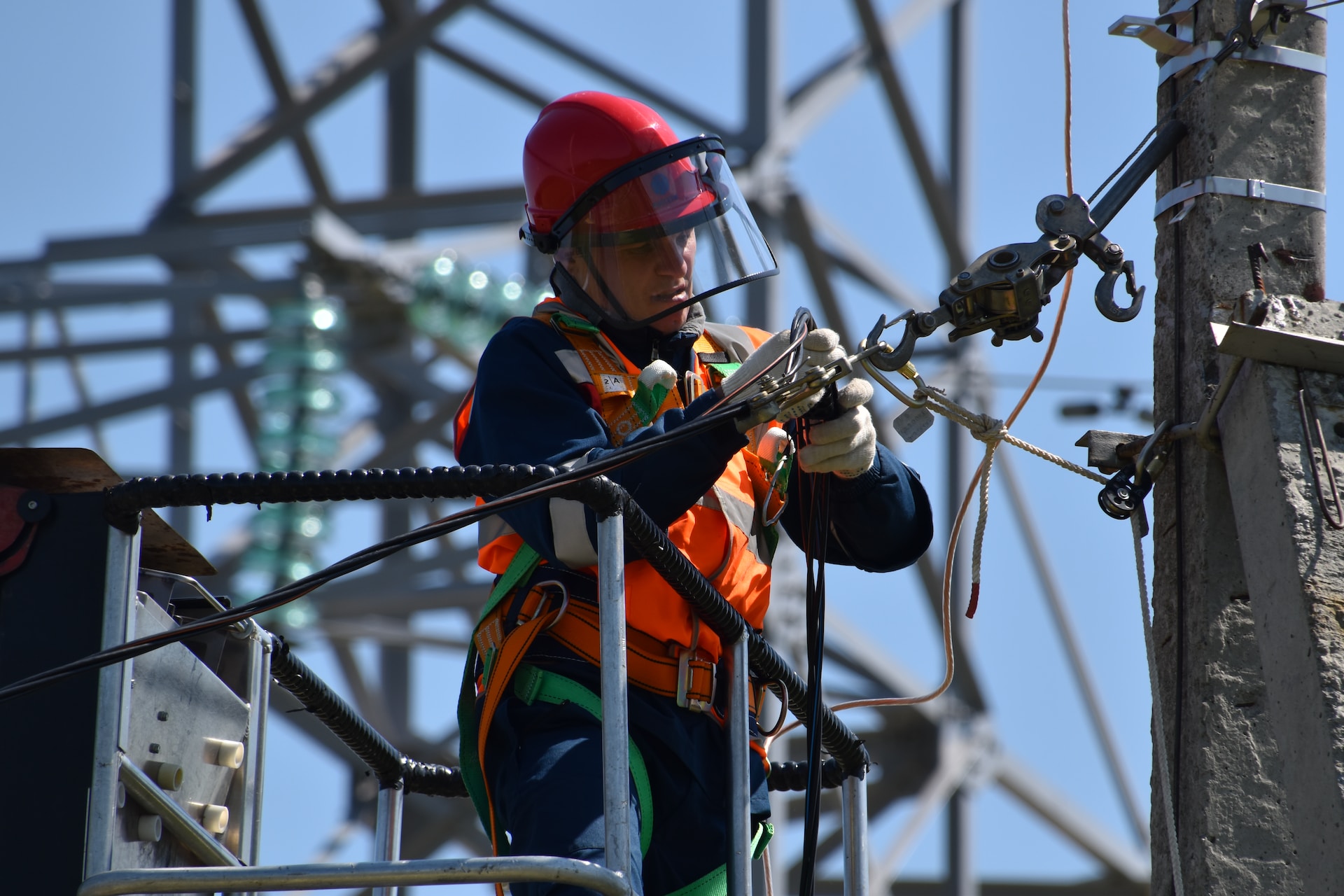
    Even in less dangerous trades, safety measures are important. Personal protective equipment such as safety goggles can help keep people safe, but it must fit properly to be effective. Since much of that kind of equipment is designed to fit men, women might need to have their own equipment made or find ways to make sure that it protects the way it should.

    Other precautions can also help. In a factory or other building, workers should always be sure that the exits are clear and free of clutter. Someone who is trying to get out quickly might not have time to move objects like boxes, books, or even papers aside. Some of these items can also be fire hazards. Extension cords in the wrong places can also trip people as they are trying to escape from danger. Making sure that extension cords are not in anyone’s way can help to make factories and other workplaces safer.

    Another danger in many workplaces is being injured by a forklift. These machines have two large metal pieces sticking out the front. A careless forklift driver could run into other people and possibly cause major injuries. Regular training in forklift use can help.

    Factories, mines, construction sites, and other places where tradespeople work can be dangerous places. Taking safety measures is very important for avoiding injuries that can happen easily while people are working in construction, mining, and other high-risk trades.


    Bibliography

    Canadian Occupational Safety. “Safety and PPE in the Workplace.” https://www.thesafetymag.com/ca/topics/safety-and-ppe/workplace.

    Fung, Ivan W. H. “Developing a Risk Assessment Model for Construction Safety.”

    https://www.sciencedirect.com/science/article/abs/pii/S0263786309001082.

    Iacono, Greg. “9 Injury Statistics in Canada: 23 Updated.” https://housegrail.com/construction-injury-statistics-canada/.

    Jackson, Kathy. “5 Most Important Safety Guidelines for Skilled Trades Workers.” https://pksafety.com/blog/5-most-important-safety-guidelines-for-skilled-trades-workers.

    Mogul, Rhea, et al. “All 41 Workers Rescued from Collapsed Tunnel in India after 17-Day Ordeal.” https://www.ctvnews.ca/mobile/world/all-41-workers-rescued-from-collapsed-tunnel-in-india-after-17-day-ordeal-1.6663553?clipId=68597.

    Morrison, Kyle W. “7 Common Workplace Safety Hazards.” https://www.safetyandhealthmagazine.com/articles/14054-common-workplace-safety-hazards.

    Ontario.ca. “Asbestos in the Workplace.” https://www.ontario.ca/page/asbestos-workplace.

    Wikipedia.org. “2010 Copiapó Mining Accident.” https://en.wikipedia.org/wiki/2010_Copiapó_mining_accident.

    Worksite Safety. “Consultants.” https://worksitesafety.ca/ohs-consultants/.