Author: Susan Huebert

  • How a Hybrid Office Benefits People with Disabilities (French version available)

    How a Hybrid Office Benefits People with Disabilities (French version available)

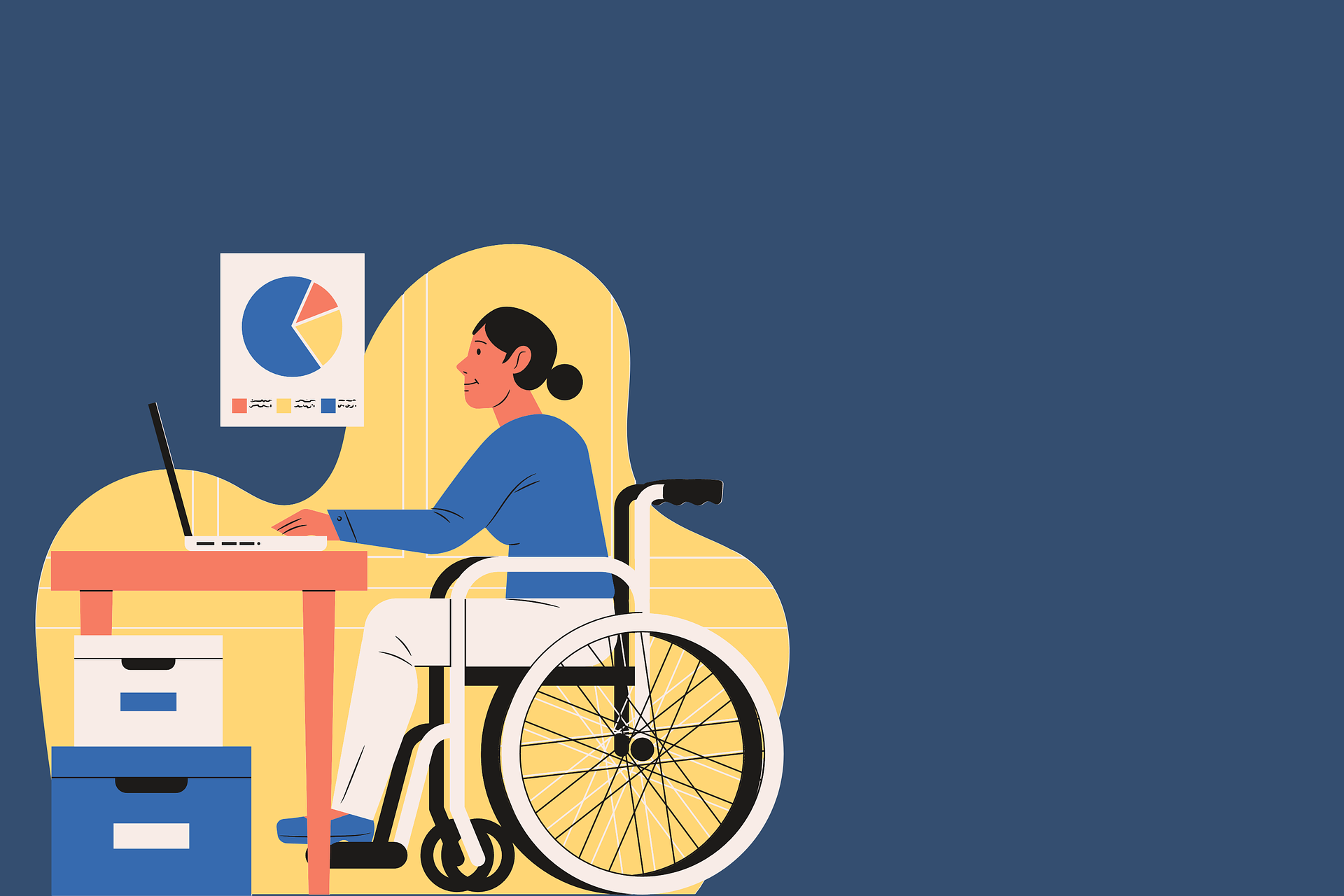
    When the pandemic began, thousands of workers switched from working in an office to working from home. Although many people are returning to office work, other employers and employees are choosing a hybrid model of working both from home and from the office. For many disabled workers, a good hybrid model could be the best system for giving both the flexibility and the support they need.

    The pandemic forced many people to change the way they did their jobs. Sometimes, they worked entirely from home, but at other times, they would have a hybrid schedule of going to the office for a day or two each week. Over half of knowledge workers like writers and researchers have worked this way for years, but a hybrid arrangement was new to many people. Some of them found the adjustment difficult.

    For people with disabilities, a hybrid office arrangement can be helpful. In some cases, chronic conditions can make it difficult to get to work. For example, certain conditions like anemia or migraines drain people’s energy and make it hard for them to concentrate. If they can work from home instead of going to the office, they are less likely to miss work because of their condition. They can choose when and where to work, matching their schedule to their energy level.

    Other disabilities can also make a hybrid work schedule beneficial. Someone who has trouble walking, for example, might prefer not to go to the office for a day or two after a snowstorm to make sure that the roads and sidewalks are as clear as possible. A person with arm or wrist troubles might have voice activation software at home to make it easier to write long reports and prefer to work from there rather than the office.

    Back trouble can make it difficult to sit for hours. At home, people can use their own chairs and cushions to make the day as comfortable as possible. They might even choose to work longer hours but take breaks to stretch their backs whenever necessary. In a traditional office setting, this could be very difficult to do if the office closes at a set time. Working from home, people can take the time they need to avoid pain.

    Other disabilities can also make office work difficult. Someone with social anxiety, for example, might find it stressful to be among people all day and need time alone to help with concentration. Mental health problems can become much worse if people are forced to be among others all the time.

    Even with the advantages of working from home, many people still need some time in the office. Sometimes, their home life makes it difficult to get work done, such as when family members are noisy, when cooking or cleaning needs to be done, or when a television program is on. Learning the discipline to keep on working despite distractions at home takes time.

    A hybrid work arrangement can help. With a well-organized hybrid job, people with disabilities can work from home when they need the time away from the office but still get help from their colleagues when necessary. Hybrid offices can be a good solution for many workplaces.


    Bibliography:

    Caldwell, Andrew James. “Remote Work vs Hybrid Work: The Complete Pros & Cons List.” https://peninsulacanada.com/blog/employer-advice/return-to-work-should-you-consider-a-hybrid-work-model/.

    Farrer, Laurel. “Accommodating Disabilities in Remote And Hybrid Work.” https://www.forbes.com/sites/laurelfarrer/2022/03/30/accommodating-disabilities-in-remote–hybrid-work/?sh=42bb00f32c17.

    Lightfoot, Diane. “Are Your Hybrid Working Plans Inclusive of Disabled People?” https://www.hrzone.com/lead/strategy/are-your-hybrid-working-plans-inclusive-of-disabled-people.

    Siddall, Kim. “Expert Panel: Considerations for Disability Management in a Hybrid Work Environment.” https://www.benefitscanada.com/expertpanel_/kim-siddall/expert-panel-considerations-for-managing-disabilities-in-a-hybrid-work-environment/.
  • How to Get a Great Start to the Day

    How to Get a Great Start to the Day

    Your days can begin in several different ways. It can begin fast-paced and stressful, or even slow and calm. Your mornings depend on you. You don’t have to rush your morning routine and dash out the door every morning. With these five tips, you can learn how to change your routine for you to get a great start to the day; every day!

    Wake Up Early

    Waking up early, especially when you have somewhere to be, can help you start your day in high spirits. There are several benefits to waking up early. These benefits include: being able to get through your morning routine without being rushed, the ability to enjoy the quiet morning hours, and getting a head start on your daily goals and tasks. One tip to get yourself out of bed earlier is to set your time about 5 minutes behind. This tricks you into thinking that you have less time to get ready.

    Drink Water

    It is important to drink water at all times of the day, but it is also very important to start your day with a glass of water. If you’d like, you can add some lemon into your water to change it up a bit. Adding some lemon to your water can cleanse and stimulate the liver and kidneys, provide you with some Vitamin C, and keep your skin looking healthy!

    Complete a Quick Exercise

    Completing a quick exercise can help get your blood flowing. Exercise helps release chemicals called endorphins (happy hormones) and will help you feel happy and prepared for the day. Doing a stretching routine can help you loosen your muscles after sleeping and increase blood flow to your muscles. If you’d like to do something more calming, you can take that time to meditate. Meditating can help you reduce stress and feel calmer.

    Have a Good Breakfast

    Breakfast is known as the most important meal of the day but not all of us have breakfast every morning. When you eat a well-balanced breakfast daily, it benefits you in many ways. You will be less hungry throughout the day, you’ll be able to concentrate better, and have much more energy! A healthy breakfast consists of all four food groups. Try to include all of the four food groups in your breakfast daily.

    Plan and Prepare the Night Before

    To reduce the stress during the morning, planning and preparing the night before is a good option. The night before, you could write a to-do list, pack your bags, pack your lunch, and keep your belongings in a spot where you can quickly get them before you leave. This is very helpful if you have somewhere to be the next morning.

    Now that you’ve discovered 5 ways to help you get a great start to the day, all you have to do is include them into your routine! Doesn’t that seem easy? It may not be at first, but as you stick to your new routine, it’ll become much easier. Begin your new routine tomorrow morning if you want to wake up with a smile and get a great start to the day from now on!

    Resources

    https://www.themuse.com/advice/16-better-ways-to-start-your-day-that-have-nothing-to-do-with-breakfast

    https://www.twinings.co.uk/about-twinings/latest-news-and-articles/top-10-tips-for-a-great-start-to-your-day

    https://www.positivityblog.com/great-start-to-your-day/

    https://daringtolivefully.com/morning-habits

  • Staying Positive When Everything Seems Negative

    Staying Positive When Everything Seems Negative

    By Erin Rebello

    It’s pretty clear that we’re in an increasingly unusual situation and that nothing seems to be normal at all. What is normal? As a result, it can be easy to allow negative thoughts to creep in and control the way you think. One way to forget about everything that’s going on is to focus on the positive side, and to help others see the positive too. How can you do that? Well, listed below are several examples of how to brighten someone else’s day during this dark time.

    1. Plan a fun event with your family. An easy way to brighten your family’s day is to set up a fun event that everyone can enjoy. For example, you might want to plan a family game night with all the board games in your closet. Another great idea is a dance party, with all your favourite tunes. One thing that my family did during quarantine that really made everyone happier was a family movie night. My sister and I set up a tent in our basement and the entire family spent the night watching movies and eating popcorn!
    2. Treat someone. If anyone in your family is an essential worker, and has been working a lot lately, think of ways you can treat them. Chances are, they’re extremely stressed out, and have to work long and weird hours due to the recent furloughs and layoffs. You could give them a spa day to help them relax, or cook a delicious meal for them after work. Even something as simple as making them breakfast could make all the difference.
    3. Cook or bake together. One thing that always makes a situation better is bonding with your family. A great way to do this is by cooking or baking a dish together. There’s no better time than the quarantine to break out your mom’s cookbook and get to work on the home recipes! Chances are that you’ll already have most (if not all) the ingredients that you need to cook/bake something.
    4. Donate money or supplies. In this hectic time, a lot of hospitals are running out of crucial supplies, and are in desperate need of sterile medical supplies. Although on your own you may not be able to mass produce supplies like gowns and n95 masks, you can still do your part to help the situation. A lot of hospitals are accepting donations of hand sewn supplies. In my area, hospitals are accepting scrub bags, caps, and ear savers to give to staff to prevent the spread of infection. Hospitals are also accepting monetary donations, so if you’re a business-minded person, consider starting a fundraiser to help  a good cause!
    5. Be kinder. Although some of the previously mentioned ideas require a lot of work and planning, there are a lot of little things you can to improve the lives of others. Something as simple as smiling at a stranger, or holding a door open for someone else can do a lot. Regardless of how you contribute, making an effort (no matter how small) makes all the difference!

    Whatever you do to brighten the lives of others, no matter how big or small, is an act of kindness. During these difficult times, it’s important that we show our love and support for one another, and make an effort to make the world a better place.

  • How to Research a Subject You Know Little About: Writing A Curriculum for a Driving School

    How to Research a Subject You Know Little About: Writing A Curriculum for a Driving School

    In high school and university, students often have at least some control over the topics that they write about in their papers and assignments. Still, writing about an unfamiliar subject might sometimes be necessary. When students graduate and find a job, they might find themselves writing almost entirely on subjects they know little about. Although this can be difficult, it is often a necessary task.

    Online guides from colleges and universities often have valuable advice for students looking for a topic to write about for their assignments. For research and writing at that level, students are still learning to find credible sources of information and to organize their thoughts into research papers that meets the instructor’s requirements. In many cases, finding a topic that they already know and enjoy is good advice.

    Outside the classroom, however, people are more often required to research the subjects that they are assigned, regardless of their own interests. For example, as a writer for a driving curriculum business, I have been writing articles on various topics outside my normal set of interests, including parking brakes, sun visors, and steering wheels. Although I have had a driver’s license for years, I know little about the actual functioning of the different vehicle parts. Writing a thousand words on each of these subjects can be a struggle.

    Despite my lack of knowledge or interest in this subject area, I have been able to write over twenty driving-related articles already, with many more to come. To receive my paycheque, I have had to find ways of learning how vehicles work, even though I would much prefer to write about other subjects. Yet even writing about (to me) uninteresting topics can be a fun challenge, to see how much I can learn along the way.

    Online writing guides suggest different methods of approaching unfamiliar subjects. Avoiding panic and beginning by looking up unfamiliar words can help in the process. The next step is research. For me, this often means finding sources that seem to be reliable, such as the Ontario Ministry of Transportation, or even websites like Popular Mechanics. Although the writers on these sites may make mistakes, their work is likely to have gone through an editing process that would catch some of these errors.

    Once the research is done, it is time to start writing. One of the first considerations is the audience. In school, you write for your teachers or classmates, but later in life, you might have a far wider audience for your writing.

    For the driving school material, the audience could be almost anyone, but it is likely to be people between the ages of fifteen and about forty who are studying for their driving test. They likely already have a basic knowledge of the different vehicle parts, but they might not know some of the details. Since my articles are for driver education rather than for training mechanics, I tend to focus on how the information affects the rules of the road and safe driving.

    Researching an unfamiliar subject can be challenging but rewarding. With research and keeping the audience in mind, writers can help make the task easier.

    Bibliography:

    Adams, Kristina. “How to Write About Something You Know Nothing About.” https://www.writerscookbook.com/12-steps-writing-something-know-nothing-about/.

    Algonquin College. “Research Guide.” https://algonquincollege.libguides.com/research/define.

  • How Can Anger Tell a Bigger Story About You; What is Hidden Underneath?

    We all know what anger is and what it feels like. Although we all know what anger is and may know some of our triggers, you may not know that when you feel anger, there is something underneath it . This hidden reason can tell a bigger story about you and unlock your true emotions behind that anger.

    Why Do We Feel Anger?

    Anger is a normal feeling that everyone can have, mostly as a response to emotional or physical pain. Whenever we feel angry, there is a hidden meaning underneath that feeling. We don’t always want to show our true feelings, therefore it is much easier to hide those feelings and cover them up with anger. You may not even know yourself, sometimes.

    Think of anger like an iceberg. Most of an iceberg is hidden underwater. Anger is the part of the iceberg that we see above the water and the hidden part could be emotions such as embarrassment, fear, grief, loneliness, trauma, disgust, envy, and more, down below.

    Why Do People Hide Their Feelings?

    Many people hide their true feelings behind their anger. This could be done for several different reasons. These reasons include:

    To cover up their weaknesses. Some people are afraid of showing emotion. They may not want others to see their vulnerabilities. They could be afraid that others will judge them and use their feelings against them.

    To avoid getting their feelings hurt. It is very common for someone to hide their emotions to protect the relationships they have. They may not want to react or speak out about something that bothers them to avoid triggering other topics that may eventually lead to more conflicts.

    To mask their lack of confidence. Some people grow up being told that their feelings are not valid or are criticized for expressing their emotions. Therefore, they begin to mask their emotions from an early age to prevent any more criticism in the future.

    How Does Excessive Anger Affect You?

    Excessive anger and masking your emotions too often can negatively affect your physical and emotional wellbeing. If can lead to the following things:

    A buildup of emotions. Holding back emotions can intensify them. You will eventually have a burst of emotions that may affect anyone who is around you during that time. It is best to let yourself feel the emotion you are feeling at that moment.

    Strained relationships. When you hide your feelings from others, you may think you are protecting the relationships in your life. Although you may tell people you are fine and that nothing is wrong, those who know you can sense that something isn’t right. If they notice that you aren’t telling them the truth, they might feel hurt and can begin to lose trust in you.

    Early death. Suppressing emotions can cause stress that may linger in your body. With time, all the stress can contribute to diabetes, sleep issues, high blood pressure, and heart problems.

    How Can You Stop Suppressing Your Emotions?

    Learning how to stop suppressing your emotions can be difficult, especially when you have been doing it for the majority of your life. It takes time and effort. These strategies can help you to learn to share your feelings openly.

    Practice mindfulness! Mindfulness is an exercise in which the person learns to focus only on what they are doing in the present moment. Sitting with emotions allows you to fully experience and deeply understand them.

    Talk to a therapist! Talking to a therapist can help you learn how to express your emotions, offer strategies to cope with intense emotions, and address any mental health symptoms linked to your hidden emotions.

    Remember that your emotions are valid and it is perfectly okay to feel show vulnerability. As long as you can eventually calm yourself down and resolve any issues, then you will be okay. If you need any help dealing with your emotions, don’t be ashamed to seek help!

    Resources:

    https://www.gottman.com/blog/the-anger-iceberg/

    https://www.healthline.com/health/mental-health/hiding-feelings

    https://www.mentalhelp.net/anger/

  • Why Should You Do Something That Scares You a Little?

    Why Should You Do Something That Scares You a Little?

    You have probably heard the saying “face your fears” several times in your life. To achieve your dreams, you will need to get past any fears. When afraid we can respond with fight, flight, or freeze. How we respond to fear is very important. If it is safe, it is important to learn how to tackle your fears. Do something that scares you a little. Start small then work your way up to something bigger.

    Here are five reasons why you should try something that scares you a little:

    Our Dreams Never Die

    We all have dreams. Sometimes our fears get in the way of achieving those dreams. Just because we are afraid of things that keep us from having our dreams come true, doesn’t mean that our dreams just disappear. They will stay in the back of our minds reminding us that it is still not achieved. If we don’t try to get past our fears, we won’t be able to achieve that dream.

    Grow as a Person and Gain New Experiences

    Fears exist to protect us. It can also hold us back from certain events that help us grow as a person and experience new things. By doing new things, you can gain a new perspective on yourself, others, and the world.

    Scary Things in Life Aren’t Always as Scary as You May Think

    Were you ever afraid of something and as time went by, you noticed that it isn’t as scary as it once seemed? Maybe you were afraid of the monsters on TV as a child and as you grew older you realized that there was nothing to be afraid of. Our imaginations are capable of making things appear much scarier than they are. The more you do things that scare you, the easier and less scary they’ll be.

    Live a Life With No Regrets

    Don’t wait until it is too late to do what you want to do just because you gave fear the power. When you are no longer able to do that certain thing anymore, you may have to deal with regret. Regret is a terrible feeling. It doesn’t feel good when you look back at certain memories and all you can wonder is “what if?”. You can avoid having that thought by not listening to fear. When you listen to fear, you are giving it power.

    You Can’t Succeed Without Failing

    It is common for people to have a fear of failure. The thing people forget is that without failing you can’t succeed. Failure helps us grow and learn what is it that we need or don’t need to do the next time. Without failure, we can’t learn how to improve for us to succeed.

    Sometimes fear makes us do the opposite of the things that are best for us. Don’t let fear drag you down. If you ever need some motivation, remember this quote by Eleanor Roosevelt:

    “You gain strength, courage, and confidence by every experience in which you really stop to look fear in the face. You are able to say to yourself, ‘I have lived through this horror. I can take the next thing that comes along.’ You must do the thing you think you cannot do.”

    Resources

    https://www.psychologytoday.com/us/blog/dont-try-harder-try-different/201202/do-something-scares-you

    https://medium.com/@LollyDaskal/this-is-why-you-should-do-one-thing-every-day-that-scares-you-f5d486056eb3

  • History Is Fun!

    History Is Fun!

    Not only can we learn from history, but history makes us who we are!

    There are people who think history is boring – and sometimes it is.  For some people, history is just about remembering a lot of dates.  What happened on the 10th of July in 2003?  Who knows?  But history is more than just a bunch of dates.  History is also the story of the world. How do we know who we are without it?

    Think about it: what would your answer be if someone asked you,“who are you?”  Would you tell them you are a human who lives in North America on the planet Earth?  Or would it be a little more personal?  Maybe you would say, “I’m Anna.  I’m Brad and Janet Duffy’s daughter.  I am in the 6th grade at Sir John A. MacDonald Elementary School.”  I think most people would say something like that if they were asked who they were – and that is history!  History is simply a story and it can be as short as what you did last night or as long as all the books in the library combined.

    Now that we know what history is, the next thing we need to figure out is: why is history important?  Well, just like how knowing your own history tells you who you are, the history of a country tells us who the people of that country are and world history tells us who the people of Earth are. History gives people a shared story, one they can gather around and celebrate.  For example, your family may have its own traditions and heritage, but on Canada Day we are all celebrating the same thing.

    You may still be wondering, however, why history is an important subject to study in school.  Along with teaching us who we (and others) are, history also teaches us many important lessons.  You have probably heard the old saying that we learn from our mistakes and it is true – everyone learns from their mistakes!  Well, you can consider history a record of some of the greatest mistakes and successes ever made.  Imagine if your parents never taught you to look both ways before you crossed the road?  I bet you’re glad they did!

    Humanity has come as far as it has thanks to our unique ability to learn from the past.  And that is not just from our mistakes, but from the mistakes of others, too. This is something we should never stop doing!  So whether it is the story of your summer or ancient history, remember that history is our story and we can learn from it.

  • Water: Is the glass half empty or half full?

    We can’t live without water. We need it to stay hydrated and grow food. We use it to generate electricity. Water is in us and all around us. It makes up about 65 per cent of our bodies. Thanks to the hydrologic cycle, it circulates constantly, as liquid, gas, and solid, evaporating from oceans and fresh water, moving through air, raining onto Earth, flowing through plants and animals, into the ground, and back to the oceans through rivers, streams, and sewage outflows.

    Water covers 70 per cent of the Earth’s surface, but 97.5 per cent is saltwater. Of the 2.5 per cent that’s fresh, 68.7 per cent is locked in the ice and snow of the Arctic, Antarctic, and mountains, leaving about one per cent for our use. More than a billion people lack adequate access to clean water.

    Just as human activity is upsetting Earth’s carbon cycle, our actions are altering the water cycle. Water is our most precious resource, but we waste it, just as we waste other resources, including oil and gas. When we use so much that the system can’t renew itself, we create shortages and drought. When we pollute it, we make matters worse.

    More than a billion people in the world survive on just five litres a day, less than the amount of a typical North American toilet flush. The average Canadian uses 335 litres a day, more than double the average for similar industrialized countries. In fact, we use more in Canada than in any country except the U.S.

    As individuals, we can reduce consumption and find ways to use water more efficiently. We also have to look at industrial use. Energy generation, including what’s required to extract fuels, is straining water resources more every day. According to a report on the EcoWatch website, “fracking” is particularly worrisome. This process involves injecting massive amounts of water and chemicals into the ground at high pressure to fracture underground shale and release gas deposits.

    Each frack can use up to 30-million litres of water, and a well can be “fracked” as many as 18 times. According to EcoWatch, “The water, usually drawn from natural resources such as lakes and rivers, is unrecoverable once it’s blasted into the earth, and out of the water cycle for good.”

    With record high temperatures and widespread drought in the U.S., oil and gas drillers and the energy industry have to compete with farmers for scarce water. There, the fastest-growing use of fresh water is by coal, nuclear, and natural gas power plants, according to a report by the River Network. Our reliance on fossil fuels is also contributing to global warming, making water even more scarce, as glaciers melt, rivers dry up, and droughts become increasingly common.

    Beyond reducing individual use, one of our top priorities must be to move from fossil fuels to energy that has fewer detrimental effects on water supplies and fewer environmental impacts overall.

    We can also get creative. A study in the journal Science (referenced in the EcoWatch article), “Taking the ‘Waste’ Out of ‘Wastewater’ for Human Water Security and Ecosystem Sustainability”, concludes that we can employ substitution, regeneration, and reduction to conserve water.

    Substitution involves using low-quality water instead of high-quality for many activities, such as sprinkling a garden with collected rainwater rather than drinkable tap water. In Hong Kong, most residents use seawater for toilets. Regeneration means treating low-quality water to make it usable rather than flushing it away. Using a waste-stabilization pond, some households could transform sewage into water for irrigation. Wastewater can also be treated and recycled for large-scale uses. People can reduce usage in many ways, from installing low-flow plumbing to repairing leaks in infrastructure.

    We can also keep water clean and plentiful by protecting and preserving our valuable natural capital, often for less money! Instead of spending $8 billion for a water-treatment plant, New York City officials spent $1 billion to buy land and protect habitat that filters and stores water.

    In Canada, we often take water for granted. With increasing pressure on the availability and cleanliness of our water, we have to start paying closer attention to what we do with it.

  • Why You Should Learn About Gardening

    Why You Should Learn About Gardening

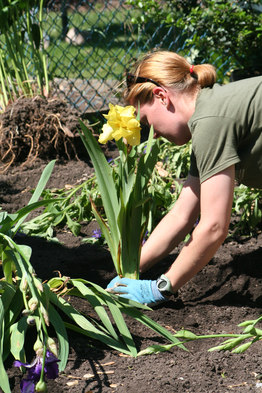
    Growing plants can be a rewarding and fun activity. Seeing a seed go into the ground and then come up a few weeks later as a flower or a vegetable or fruit plant often gives people a good feeling, but it also has many other benefits. If you have the chance to start your own garden this summer, why not try it and learn some valuable skills?

    If your family has a garden or a farm, you probably know a bit about where foods like apples or potatoes come from. People who grow up in cities with few plants around them, however, might have very little connection with the annual cycle of planting seeds, caring for the plants, and then picking the produce in fall. Learning about plants by working with them can give people a new understanding of the food they eat and the flowers they enjoy.

    Gardening is a good chance to learn about the different kinds of fruits and vegetables and their various growing seasons. Have you ever noticed that you tend to eat certain types of fruits and vegetables more often in spring than in fall? That’s because each type of produce has its own season. Even if it is available during other times of the year, it will probably be more expensive and not taste as good as in its own season. Also, it is a good note to add that not all produce from your supermarket comes from Canada. Fruits and vegetables that you buy at the store may come from places like California (oranges, strawberries) or Mexico (peppers). The reason for this is because these places have a consistent climate, unlike Canada’s 4 seasons.

    Through gardening, you can also learn about animals and how they help or harm plants. Bees, for example, are important for spreading pollen from one plant to another. Earthworms help break up the soil, but cutworms can kill plants by chewing through the stems. Each animal has a role that you can learn about.

    Gardening could also be a good chance to spend time with your family. If your parents or your brothers or sisters enjoy spending time outside, gardening could be a good chance to visit together as you weed and water the garden, pick the produce, or just enjoy looking at it.

    Being outside in a garden for a few minutes every day could be very good for your health. Even if you have many other activities every day, spending time outside with your plants will give you fresh air and exercise, which could help you feel much better than you would after spending the whole day inside. You can spend time with your hands in the earth, enjoying the sounds of the birds and watching the butterflies and other insects, and you’ll have some delicious food at the end.

    If you decide to start gardening, you should begin by choosing the plants that you want to grow and then learning as much as possible about them. Plants are often good in one climate but not another, and they might need more space than you have in your yard. If you choose well, learning to become a gardener can be a fun and rewarding activity.

    Bibliography:   

    Earth Easy.com. “Gardening with Children.” http://eartheasy.com/grow_gardening_children.htm.

    Miller, Susan. “How Gardening Teaches Kids to Grow.” http://www.scholastic.com/parents/resources/article/creativity-play/how-gardening-teaches-kids-to-grow.

    Seasonal Wisdom.com. “Five Reasons Why Kids Should Garden.” http://www.seasonalwisdom.com/2011/06/five-reasons-why-kids-should-garden/.


  • Working on a Farm

    Working on a Farm

    By Gavin Mercier

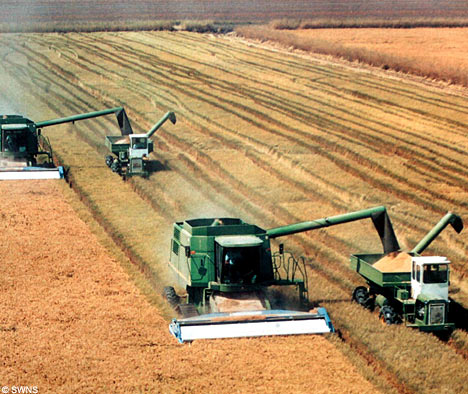
    Farm work is hard work- there’s no other way to say it. However, it is also some of the most valuable and rewarding work you can do. Farmers hold one of the most important jobs of our community, but they are also the most underappreciated. Working on a farm not only gives you a sense of what it’s like to be a farmer, but it also teaches you some real- life skills that will be valuable for your future.

    Hard Work, Fun Work, and Responsibility

    Yes, working on a farm is hard. But farming is the best example of the phrase “hard work pays off.” With farming, the harder you work the better the end result will be – in this case the end result is crop or cattle. Not only that, all the outdoor work is really great for great for your body. Working on a farm, you get to watch your work develop into something wonderful, whether it’s a crop of corn or a baby calf.

    While farming is hard work, it can also be a lot of fun. There is so much to do on farms you just can’t get bored. From feeding cows on a cattle farm to tending horses on a ranch, there are just so many fun things you can do on a farm – as long as you’re a little bit adventurous.

    Being on a farm isn’t all fun and games though. There is a lot of responsibility involved. Farmers are responsible for taking care of their animals and crops, and that can sometimes be a lot to handle. However, if you like being around animals and taking care of them, then this isn’t much of a chore at all.

    Appreciating Farmers

    Being a farmer is an underrated job – not many people choose to become a farmer anymore. There are also a lot of false facts about farming nowadays that put people off. Working on a farm, you get to see firsthand just how much they really do for us and what it’s really like. You will get a better appreciation for your food and how much work people really put into it. Seeing how your food is produced and being a part of that process gives a better understanding of the world we live in and how it all works for us.

    Appreciating Our Earth

    Not only will working on a farm help you appreciate all that farmers do for us, but it will also teach how to appreciate our planet more. Almost everything about farming is controlled by the weather and the landscape – crops are planted in the best soil around and watered by the rain. If there is no good soil, the crops can’t be planted, and if there is no rain then they cannot be watered. If we can’t take care of the earth, then it becomes harder for it to take care of us. Working on a farm is a great way to learn about the earth and how you can help take care of it.

    Working on a farm is great for so many reasons. I actually used to work on a cattle farm, and I still think it was one of the best experiences of my life. I had so much fun working there and learned so much, from the value of hard work to how I can help our earth. Working on a farm was one of the best things I ever did, and I hope it will be the best thing you ever do, as well.