
Category: Advice

  • How to Write a Scholarship Application Essay

    How to Write a Scholarship Application Essay

    Getting a scholarship at any leading college or university requires immense preparation for students. One of the most challenging jobs is to submit a well articulated scholarship essay. Admission officers consider this as an integral part of the scholarship grant process. However, things have changed for the better with many websites being launched which publish numerous sample essays which can be used as a baseline for students who are applying for scholarships. Let us quickly see what these websites have to offer and how we can use the services to come out with world class scholarship essay.

    For starters, these websites ask students to create their profile. After the profile is created, students can submit any number of essays that they want. At any given point, website visitors vote for the essays after which the best five essays are shortlisted. The best among the five essays get a prize of varying amounts depending upon the website’s policies.

    Students are diligently using the services of these websites. They can read essays which they feel are closely related to their requirements and use these as a baseline to write their own original scholarship essay. Some of the websites have video tips which help the students to get better ideas of how to write a scholarship essay. Many sites also have message boards where students can come together to provide tips to each other.

    The essays which are submitted to the site are stored in the database for future reference. The concept is new and, as a result, finding lots of acceptance among students. Most of these websites have different sections which highlight the recently submitted essays and also the most popular sample scholarship essays. As we move forward we will see that there will be many more websites which will offer essay scholarships. Students are expressing their happiness at the launch of these sites. Different sections of the education fraternity have also expressed their support for many of the leading websites.

  • Campus Disability Services

    Campus Disability Services

    If you’re a student with a disability looking at your post-secondary options, we’ve provided a handy link to the NEADS website where you can access information about campus disability services all across Canada.

    NEADS EdLink is the most comprehensive Canadian directory of college and university disability service providers and links to service centre websites, with listings from coast to coast. Each entry provides current contact information for service providers at Canadian post-secondary institutions. The links to disability centre websites allow access to detailed information on accommodations, physical access, services and supports.

    Access the Campus Disability Services search engine via NEADS on their website.

  • Organization for Dummies

    Organization for Dummies

    We all lose things from time to time. It’s understandable, and oftentimes it’s forgivable. Yet it’s when disorganization starts to become a pattern that it can actually start interfering with your life.

    Consider making some organizational improvements to your lifestyle. It takes work, but you’ll be thanking yourself the next time you find yourself in a jam (and the next time you can’t find anything else). Here are some tips to help you stay organized.

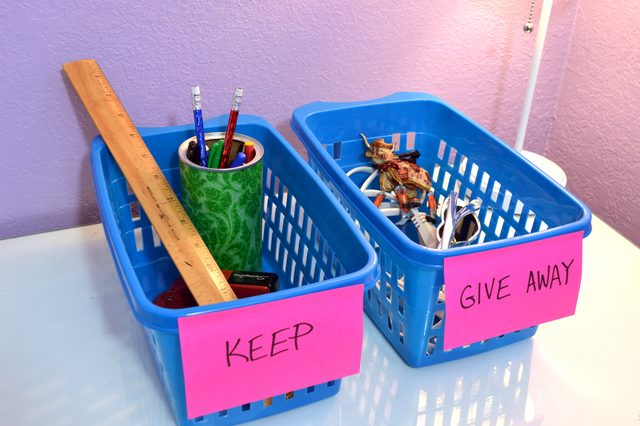
    De-clutter. Having to weed your way through clothes and piled-up dishes every time you want to enter your bedroom gets old pretty fast. To maintain a tidy living or work space, clear off surfaces, recycle/throw out what you don’t need anymore, and use cupboards or drawers to put away things that don’t belong. The best way to keep your space organized is to make de-cluttering a habit: take half an hour out of your week to clear up the accumulated mess, and you’ll notice a difference in no time.

    Label. Make sure you know where everything belongs by labeling file folders, drawers, and cabinets. That way, instead of rummaging through a massive pile of miscellaneous stuff, you’ll know where to look for something the next time it gets lost. This is also a good strategy for students who want to stay academically organized (for example, write the date and course code on every note you take, so you can file it away in the correct—and maybe colour-coded—folder at the end of the day).

    Trace your steps. Cell phones, bobby pins, house keys… If there are certain things you put down and just seem to never be able to find again, make it a point to put them in the same place each time. You can keep a list of “drop zones” (typical spots where you tend to leave things) so you know where to look the next time you absentmindedly put something down.

    Keep a “junk” drawer. This may seem counterintuitive, but when you’re in a rush, what can you do? There’s nothing wrong with tucking things away momentarily, to be revisited later—as long as you have one distinct place where you know you can find them again. The flip side to that, though, is that you have to clean out that junk drawer every once in a while. Once you get home and you have some time, make sure everything’s back in its proper place.

    Plan ahead. Before you go to bed, be proactive or “pre-organized”: try to get a jump-start on your morning routine. If you know you’re going to be up early the next morning, for example, you can prepare a lunch, pack your bag in advance, and set out the important things you’ll need (like your bus pass) in plain view, ready for you to grab on your way out the door. A little planning can save you a lot of scrambling!

  • The Importance of Being Early: Punctuality and You

    The Importance of Being Early: Punctuality and You

    Coming from a person who is predictably early, lateness can be incredibly unprofessional. I’m not just talking job interviews—this applies to meeting friends for coffee, extra-curricular meetings, and pretty much anything you sign up for. If you make a habit of being on time, it shows that you respect the commitments you’re making. In turn, people are going to respect you.

    Lateness can also have repercussions, especially in a professional environment. Showing up late to meetings or handing in projects days past the deadline sends the message that you don’t care about your job. When it comes time for a promotion or bonus, that reputation isn’t going to play well with your boss. Moreover, there are some things you just can’t hand in late—projects that meet urgent deadlines, or collaborative projects in which co-workers depend on one another to do their jobs. If you can’t fulfill those kinds of expectations, expect reprimand. Unfortunately, in fact, you might lose that job altogether.

    That’s why it’s so important to be early. The benefits of punctuality (developing a good reputation and avoiding some serious repercussions) far outweigh the drawbacks (getting up a little earlier in the morning). That being said, some people have trouble with punctuality, so it’s important to develop strategies that can help you be on time. If you get an early start on those habits—ha!—it will save you a lot of trouble in the long run.

    If you need help being on time, here are some general tips.

    1)      Do the math. Figure out how long it takes you to get ready in the morning, how long your bus ride is, etc. As a general rule, you should add 10-15 minutes of extra time for external variables, like traffic. According to that formula, set your alarm.

    2)      Have a game plan. If you can take 5 minutes the night before to lay out exactly where you have to be (and when), your routine will run more smoothly in the morning. You can also “cheat” by doing some things the night before, like laying out your outfit or packing your lunch.

    3)      Call ahead. If something does happen to hold you up, make sure you give as much notice as possible. That way, the person you’re meeting—a friend, a coworker, an employer—can be prepared for a 10- or 20-minute delay, and adjust their schedule accordingly.

    4)      Trick yourself (for a good cause). The classic strategy is setting your watch 10 minutes early: even if you plan your day perfectly and everything goes right, you’ll have some wiggle room. Another way to do this is overestimate how long it’s going to take you to do things. It’s better to have extra time than no time at all.

  • University Mythbusters

    University Mythbusters

    We get the majority of our information about universities from family and friends, the media, and (if you’re in upper years in high school) even the universities themselves. These sources can provide a lot of useful information, but take them with a grain of salt: you won’t know what it’s like until you actually get there.

    If you’re curious about what university might actually be like, take the following information into account. Here are some common university myths, debunked by an undergraduate student at the University of Toronto.

    University is a non-stop party.

    We’ve all seen college movies with ridiculous frat parties, campus-wide parades, and non-stop (and underage) drinking. Don’t be fooled by that image (or the image many schools try to solidify during orientation week). It’s important to have fun, but you shouldn’t do so at the expense of your education. Plus, chances are, by mid-semester you’re going to be faced with too steep a workload to be going out every night.

    If you did well in high school, you’ll do well in university.

    For most students, university classes are much more difficult than their high school counterparts. The expectations are higher, the assignments are more difficult, and sometimes even the marking can throw you off. That being said, high school students that do become successful university students likely adjust well because of the skills they picked up along the way—time management, independence, resourcefulness, etc. Focus on developing those skills before you get here.

    It’s impossible (or at least mind-blowingly difficult) to do well.

    It’s true that expectations in university are high, and to be fair, some programs are more difficult or demanding than others. However, if you develop a solid routine (frequent study sessions, a good sleep schedule, planning in advance for due dates), and pay attention to what’s asked of you, your grades are bound to go up. It may be more difficult to handle than what you’re used to, but work hard at developing good habits and you’ll be set for the whole year.

    You have to have a concrete plan for your future.

    It’s good to keep some long-term goals in mind, but you shouldn’t go into your first year of university with a rigid conception of what life is going to be like after you graduate. A lot of students end up changing their majors or pursuing other studies after they finish their degrees. This isn’t a bad thing at all: university is a place for you to discover your strengths and weaknesses, as well as what you’re really passionate about. Don’t be discouraged if it takes you a little bit longer to come to those conclusions.

    Remember that regardless of what you hear, university is what you make it. Don’t feel the need to fit the image of the stereotypical student (whatever that may look like to you). Come to university with an open mind, and be prepared to work hard: you’ll find your place in no time.

  • Workspace “Feng-Shui”

    Workspace “Feng-Shui”

    Ever wonder why you can’t get any work done? It’s possible that your environment is contributing to your lack of productivity. Everyone has different preferences for their ideal study space. If you’ve got a big test or paper coming up, it’s best if you adjust your surroundings to help your brain function at its optimal level.

    Here are some things to consider if you’re looking to “feng-shui” your workspace.

    Space yourself.

    A lot of projects require a large amount of space. Plus, sometimes it helps to have your work laid out all around you (like when you’re doing research). To prepare for this, make sure to keep your desk clear and clutter-free. If you constantly find yourself buried in piles of books and random papers—all of which have nothing to do with your work—you’re going to find it harder to focus. If you live in a small area or can’t spare the space, relocate to the library or a café with large tables when you need to spread out.

    Sound (or silence) it out.

    Some people need absolute silence to focus, while others thrive in the midst of noise. You can save appropriate soundscapes on your computer or phone to help you focus. Create a study playlist of “working songs” (depending on the person, that could feature hard rock, dubstep, classical piano sonatas, etc.). If music isn’t your thing, check out ambient or white noise generators, which create background noise to fit your preferences (like rainfall or “coffeeshop” sounds). And if you really like your silence… A pair of earplugs is your best friend!

    Eliminate distractions.

    Next time you’re finding it hard to concentrate, try and figure out what exactly is stopping you from getting your work done—and get rid of it. If Facebook updates or texts are constantly distracting you, disable those features on your devices (or put them away altogether). If you’re in a spot where people won’t stop talking, pack up your things and grab an individual study room. If you’re working near a window and can’t stop people-watching, close the curtains. It’s for your own good!

    Make it your own.

    The image of a cramped gray cubicle in a dimly lit office strikes panic in many of our hearts. Your workspace doesn’t have to be synonymous with a jail cell. You can actually form positive associations with your work if you personalize your environment a little. This can take on many forms: an inspiring desktop background, a mug of your favourite tea, a scented candle, a cat on your lap, etc. When work gets stressful, having familiar and comforting objects around can help you calm down.

  • School vs. Life

    School vs. Life

    When you  make the move to junior high and high school, everyone seems to think that there is no way to balance both having a social life and excelling in you academics. However, there is always a way – as long as there is a will!

    The way I see it, you need to earn your breaks, vacations and time off; That is what used to drive me to finish up my last essays and my final projects. I would look at the calendar and mutter to myself, “It’s almost March Break – I got to work hard now so that I can fully enjoy my time off school”. Then I would put all of my effort into my work until the very last class and forget about (almost) everything! Essentially, you want to be able to relax during your breaks and long weekends, so you just have to think of this as a “crunch time”.  Even now, in university, I do this to myself – I work and study hard and once I finish the exam, I shop! Sounds odd to some people, but I call it a “Celebratory Spree Day”, the day when I get to relax after pushing myself to study so hard for my exam period.

    One can also practice time management by planning when you will study and setting aside a few hours for fun with friends, too. For example, give yourself some hours to hang out with your friends before heading home to finish assignments and study.  It’s possible to have great academic standing and a social life, you just need to have the determination and the planning.

    Always remember to enjoy life!

  • Reasons to Use Kids Help Phone

    Reasons to Use Kids Help Phone

    Kids Help Phone is a free, anonymous resource that is there for you 24/7. Its purpose is to give young people someone to talk to when they feel they have no one who will listen to them. It is important to know that there are people who care and want to help you with any problems you may have. Kids Help Phone has many uses – here are just a few.

    1) You need an objective opinion or want to ask questions anonymously.
    If you need to talk with someone who will listen to what you’re going through, and you don’t trust or want to speak to friends or family, then the Kids Help Phone is a great resource for you. Sometimes you don’t want the people closest to you to know what it is that you are feeling or thinking about. It may be because of a fear of losing their respect or simply of changing the image that they have of you. Whatever your reason, speaking with someone who is trained and knowledgeable on how to handle the information you will share with them is often a good option. When you call the Kids Help Phone you can rest assured that the information will remain confidential, unless it involves information that must be reported to the police (such as reporting a threat to your own or someone else’s life).

    2) You are undergoing a traumatic period in your life and would like support.
    Sometimes we suffer because of life’s circumstances, and in this case it is really important to talk with people about what you are going through. You may not want to talk with friends or family because you feel they may not understand, but with Kids Help Phone you can talk to a person who has been trained in dealing with emotional crises. They will be able to talk to you about relationships, sexuality, drugs and alcohol, eating disorders or anything else that you feel is affecting you.

    3) You want to speak with someone who will listen to you.
    Often in the hustle and bustle of everyday life, there is so much going on that we can feel ignored or that we don’t matter. It can be very hard to find someone who will just listen to what it is that you are going through. The time rarely comes up where you feel it is okay to pour out your soul, and because of this you can be left with some important issues bubbling just under the surface. It is important to “vent” and to talk about your life and what sorts of challenges you are facing.

    4) You need to report an incident.
    If you don’t feel comfortable speaking directly to the police or don’t know what to do after an incident, the people at Kids Help Phone will listen and help you to deal with the situation. This can range from bullying, an incident of physical or sexual abuse or a crime like theft.

    5) You are in a crisis and need to talk to someone as soon as possible.
    If you are feeling that you are in a crisis and are having thoughts of suicide, a counsellor at the Kids Help Phone will be a great person for you to speak with. They can help to “talk out” your problem and ensure that you get the assistance you require. Remember that you are never alone! Suicide is not the answer. Reach out to someone at Kids Help Phone and they will be there for you when you feel no one else is.

  • Paying It Forward

    Paying It Forward

    I recently heard about someone in a Tim Horton’s drive-thru paying for the coffee of the driver behind them. I thought it was such a nice thing to do for a complete stranger. I also couldn’t help but think about how great it would be if more people did kind things for others without expectations of owing them back.

    Couldn’t our society use a couple more acts of kindness? It all starts with one person, and that person could be you. Small acts of kindness can make a huge difference, even if it may seem like they aren’t. Something as simple as smiling at someone accompanied by a good morning greeting can really make someone’s day.

    On a larger scale, volunteering for different charitable causes can contribute to a larger issue. Many organizations rely on volunteers to bring about social change. You will be helping others who really need it and doing it out of the goodness of your heart.

    Paying it forward with kindness is a wonderful, selfless thing to do. It doesn’t have to require any money and doesn’t have to take a lot of time. There is no reward greater than doing nice things for others and making others happy. Although the reward isn’t in the form of money or recognition, the way you will feel about yourself after you pay it forward with kindness will be a reward in it itself. The key to paying it forward is that it comes from a genuine and sincere place within you. You should want to do kind things for others not because you think you will get something out of it, but for the betterment of the other person.

    The last time somebody held the door open for you, you probably felt gratitude. Maybe you made sure to hold the door open for the person that was behind you. Even a small gesture of kindness can make you feel great and make the world seem like a better place. Often kindness works in a chain reaction effect. It can start with one person doing something kind for another person and then that person wanting do to something kind for another, and so on and so forth. It can be almost infectious, in a good way.

    Doing kind things for others can also help strengthen the community. It allows you to connect with another person even if only for a short period of time. It brings people closer together and allows them to co-operate. People begin to act as a support system to one another and look out for each other’s best interests. So, today, why not try paying it forward and doing something kind for someone else? I guarantee that you will feel awesome after!

  • Why Canada Needs More STEM Students

    Why Canada Needs More STEM Students

    As a wealthy, diverse and constantly growing nation, Canada needs students and workers going into the valuable fields of engineering, technology, science and mathematics. While these can be some of the most challenging career paths, they can also be some of the most rewarding. The acronym STEM stands for science, technology, engineering, and mathematics.

    There are many other subcategories within the STEM fields like biology, geology, psychology, robotic engineering, aerospace engineering, industrial engineering, software design, computer hardware design, anthropology, sociology and a whole lot more! STEM fields are the backbone of society and new students are always needed to design, improve, innovate and create.

    Graduates of STEM programs are extremely valuable to Canada and make great contributions to the Canadian economy and culture. The achievements of Canadians in STEM fields are known worldwide and it’s up to the next generation of students to continue that legacy of greatness. Engineers are responsible for buildings and structures and are required for just about any major project, from bridges to houses to high rise condominiums. Scientists and mathematicians are needed for a huge variety of jobs, from biologists and chemists to the robotics experts that created the world famous Canadarm or some of our leading bio medical doctors and researchers.

    STEM graduates are needed in almost every field, be it politics, conservation, law enforcement, architecture or military. Former STEM graduates create and plan the roads we drive on, the planes in the sky, the computer programs we use, and they even helped to design your home or school. This wide variety of STEM-based careers is integral to the functioning of society. Simply put, if there were no more STEM students the world would be a much more chaotic place to live!

    Not only do STEM graduates benefit their country, they also benefit themselves. They can open the doors to a wide variety of jobs and careers that put your intellect and creativity to the test as well as paying out steady incomes. Unfortunately, Canada currently isn’t producing as many STEM students as it once did, according to data from the Conference Board of Canada’s website.

    Now more than ever, Canada needs students to step up and study STEM programs and career paths. Take a look at STEM today!