Category: Advice

  • Study Help: The Best Websites for English Literature

    Study Help: The Best Websites for English Literature

    Studying English literature might seem like a very easy thing, with nothing complicated about it. You just pick up a book and read it, right? Reading is a large part of the work, but it can often be more complicated than it seems. Students often need help with understanding what the texts really mean and sometimes even with just finding the texts. A library is always a good source of information in this area, but sometimes students want the convenience of looking online. But how do you find the best and most helpful websites?

    When you study English literature, the first thing to do is to read the texts. You might read modern books by authors like Margaret Atwood or you might read ancient texts by authors like the Greek writer Sophocles. Most of the modern books are easy to find in bookstores and libraries, but the older ones might be a bit more difficult to find. You also might not want to spend a lot of money on buying books that you expect to read only for your classes. In many cases, you can solve this problem by finding the books online. If the book was written over seventy-five years ago, you can likely find the full text on websites like Project Gutenberg (http://www.gutenberg.org/), the Literature Network (http://www.literature.org/) or Adelaide e-books (http://ebooks.adelaide.edu.au/meta/titles/A.html).

    Why are only older books available on websites like these ones? It’s because as long as the authors are alive, they or their relatives own the copyright to the work. No one is allowed to reprint it without the author’s or publisher’s permission for at least fifty or seventy-five years after the author’s death. After that, however, the literary works are normally in the public domain, which means that they can be freely republished anywhere, including on the Internet.

    Finding places to read literature is the first step, but students sometimes need a bit more help. The Literature Network (http://www.online-literature.com) gives the full texts of many books and poems, but it also includes biographical and historical information. Do you need to know what Renaissance or Victorian literature was like? You can find out about these eras on the Literature Network. The site also includes quotations and many different kinds of information that can help people understand how literature reflects the history and culture of each time period.

    Understanding the background to literature is essential to understanding what it is about, but sometimes readers need an even more basic level of help. Writers from previous centuries often used a vocabulary and writing style that modern readers might find difficult to understand. Sometimes, the meanings of words change from one century to another. At other times, writers from different eras wrote very complicated works with advanced vocabulary. However, there is help for people reading difficult texts. The Visual Thesaurus VocabGrabber (http://www.visualthesaurus.com/vocabgrabber) can help translate sections of text into something more manageable for modern readers.

    If studying English literature is difficult for you, you might want to check some of these websites for information that can help you.

  • High School Exam Prep

    High School Exam Prep

    Are you ready for your exams? High school exam periods can vary, but they typically occur either at the end of the year (for non-semestered schools), or at the end of both January and June (for semestered schools; winter and spring exams, respectively).

    Whether your evaluations have just passed, are coming up soon, or aren’t for a while, it’s always important to know how to prepare. An exam not only has a significant impact on your final grade, but it can also be a way to measure how much you’ve learned throughout the course. You should take every exam seriously, and make sure you allot enough time to get ready. It never hurts to do well!

    Here are three tips for high school exam preparation:

    Know the structure. Aside from obviously just studying the material, preparing for the format of the exam can be very valuable. Teachers usually release information related to the structure well in advance. As well, many exams are combined-format, so you might need different study strategies for each section. Let’s say an exam has 50 multiple-choice questions and an essay. You can create flashcards of key terms, concepts and definitions, as well as brainstorm potential questions and arguments.

    Play your strengths and weaknesses. If you know a certain part of the curriculum inside out, there’s no point in reviewing it in great detail. When you’re studying, focus on what you don’t know so well and make sure you understand it before moving on. This way, you’ll at least have general knowledge of all the material, instead of only studying what you’re good at. If you focus only on what you’re good at, there’s always the chance that those topics may not even appear on the exam anyway!

    Choose wisely. Sometimes exams offer students a choice (between short answer topics, for example), and this can be a great way to showcase your strengths. That being said, if you have to choose, pick the option that is easiest for you. Students sometimes try to write about what they think the teacher prefer, even if they don’t know what that specific topic is about. Take advantage of the opportunity and write about what you know. You’ll be able to provide more accurate information and concrete examples instead of “speculating” about something you don’t fully understand.

    Following the above guidelines will help you out, but ultimately you still have to put in the work. Make sure you make time to study properly before the exam (and preferably not the night before the exam). And remember, there’s no reason exam preparation can’t be fun—as long as you’re still being productive, studying with friends or classmates can actually be a great way to prepare. Good luck!

  • Struggling Students under Stress: My Personal and Professional Perspectives

    Struggling Students under Stress: My Personal and Professional Perspectives

    As a student I struggled significantly with a reading and processing-related learning disability (LD) and, as a result, stress was a big part of my elementary and secondary school experiences. So it’s no coincidence that I’ve spent most of my professional life trying to understand how emotion affects children who struggle in school. Students with LD experience more negative emotion, depressed mood, physical complaints (like upset stomach), anxiety, and stress compared to their peers without disabilities. This is the cumulative impact of a student’s repeated experiences of failure in “one-size-fits-all” schools designed to meet the needs of the mythical “average” student and not adapted to the vast diversity among students in our education system.

    Emotion, motivation, and stress contribute greatly to students’ success or failure in school. How, then, did I — and others like me — become successful in school and in our careers? I’d estimate that seventy percent of my job involves reading and writing. Is it torture? Sometimes it is, but most of the time I love it because I find my work deeply interesting and personally meaningful. I still struggle with my weaknesses, but I work hard to leverage my strengths. You and your child can do the same.

    Noted stress physiologist and Stanford professor Robert Sapolsky points out that the mind can be an incredibly powerful tool for de-stressing the body. We feel stress when we perceive the environment to be bad or threatening. To decrease stress and negative emotion we have to either change our environment or change our perception of the environment. Most of us can learn to use coping skills to overcome stress. That said, sometimes a little stress can go a long way toward improving performance. Memory, flexibility in thinking, and goal-directed behavior can be enhanced by stress. But chronic stress can have devastating consequences on our health, happiness, and ability to be productive in learning and in life. Whatever strategies you and your child adopt to manage and leverage stress, success will ultimately depend on being consistent.

    You can start by making it a habit to ask your child how he or she feels about school. At the dinner table at my house we take turns telling each other about the “best” and “toughest” parts of our day. My husband and I model how to talk about our feelings and then our daughter follows suit. You can help your child build this skill through practice. Try asking questions like: • Why do you think that happened? • How did you feel? • What did you do when it happened? • What do you think you should do if something like this happens again?

    Most importantly, be a good listener. It’s less important to propose solutions than to be a sounding board and a safe outlet for your child to express his or her feelings about school.

    Successful adults with LD often describe having a passionate personal interest that propelled them emotionally through the stresses of formal education. For example, although I struggled with reading, I was deeply interested in science (especially neuroscience) and read everything I could find on the subject! Help your child find ways to pursue his or her interests and to develop self-understanding. Self-understanding allows children to gain control over their environment — leveraging support when they need it and monitoring their progress so that they can become happier and more deeply engaged in school. Certainly, individuals respond to stress in many varied ways, but we can all learn strategies that will help us manage and even prevent stress. And, for children with LD, having supportive adults can make all the difference.

  • The Worst Ten Words to Stress Over

    The Worst Ten Words to Stress Over

    “What do you want to be when you grow up?”

    To some people, that is the worst combination of ten words in the English language. The question never really stops being asked, not even in adulthood: it simply changes form. “Where do you see yourself in ten years?” is the adult version, and it will haunt you forever if you let it. The key phrase there is “let it,” because you do have a choice.

    Many kids believe that adults have it all figured out: doctors are doctors because they were basically born as such, and teachers knew that they’d be teachers as soon as they started school. But as we transcend adolescence, we realize that our adult selves are simply our adolescent selves with more responsibility. We are who we are and it’s important not to ignore that by arbitrarily picking a career because it simply sounds good. Rather, we should find out what we like to spend time doing, and work from there to find a way to make a living doing it.

    You don’t need to decide exactly what you want to do, or to be. It’s interesting that we so often use the verb “to be” when describing a particular career, because you aren’t your career; you’re a person. You have a whole host of likes and dislikes, and a personality that isn’t restricted to whatever job you decide to choose. Finding out what these likes and dislikes are will help you figure out what skills you should develop so that your occupational choices are left open.

    What do you enjoy spending time doing? Make a list. Many people do this backwards; they pick a job, and then try to develop the skills they need to do it. Instead, make another list of things you’re good at. Are you patient with kids? Good with animals? Do you write really well, or sing, or dance, or act? Maybe you’re a math or computer whiz, or you spend your free time conducting science experiments. Whatever it is, write it down. These lists will help you come up with another list of jobs you might like to do.

    Don’t forget that once you’ve found a job you like, and you’re doing it – you’re an “adult” – you aren’t locked in. You might work a whole host of jobs for different companies before you find one that you really love – or, you might find that you really love changing jobs every few years. Regardless, practice cultivating your skills and developing your strengths so that you’re prepared for the family of jobs that really is right for you.

  • Escaping Negativity: Maintaining a Positive Lifestyle

    Escaping Negativity: Maintaining a Positive Lifestyle

    Negativity can seem like a losing battle. One thing goes wrong, then another, and then another, and you eventually wind up trapped in your own web of bad thoughts. An optimistic outlook on the world is also a healthy one; you’d be surprised how much of a difference a positive change in attitude makes. If you’re just having a bad day (or week, or month), don’t be discouraged. Keep the following things in mind and consider making some positive changes to your mindset and lifestyle.

    Begin with a positive environment, both physically and socially. Firstly, you should feel comfortable and confident around your group of friends, since they are the people you see day-to-day. If you constantly feel bogged down by their negativity—and especially if they disrespect you or put you down—maybe it’s time to reconsider who you spend your time with. Your physical environment is also important, especially if it’s a place that you spend a lot of time in (e.g. your work area). Even the simplest changes to a space (your favourite music, natural lighting or a comfortable chair) can improve your mood.

    Being positive doesn’t necessarily equate to having a perfect day; rather, it’s not letting the little things that go wrong completely ruin it. If you keep going back to the one “terrible” thing that happened to you in the morning, you’re going to feel sour throughout the entire day. Instead, it helps to have something to look forward to, even if it doesn’t seem like much at first—even something like looking forward to the weekend can do wonders for your motivation. Focus on that positive goal, and you’ll be able to handle all the wrenches in your plans with ease.

    Self-improvement is important. Often it can be helpful to evaluate what you did wrong (what part of that test you messed up, or what you said to your parents that made them angry). However, there is a fine line between self-improvement and negativity, and always focusing on your mistakes can make you forget all about the good parts of your life. When you’re giving yourself constructive criticism, treat it as a positive learning experience, not as an excuse to hate on yourself. You’ll learn more in the process and feel better about yourself, too.

    Finally, be thankful for what you have. Are you struggling under exam pressure? Did your professors assign too many readings? Somewhere out there, there’s an individual who can’t afford school at all—and would love to be in your shoes. There are lots of issues that seem huge in the moment, but in due time you realize how insignificant or silly they actually are. This is in no way an attempt to devalue your problems: everyone has problems! Just remember there’s definitely someone out there who not only shares your feelings, but might have a more serious issue on their hands.

    Stay positive and stay happy.

  • Credit Cards: The Good, The Bad and The Ugly

    Credit Cards: The Good, The Bad and The Ugly

    “Charge it!”  It may feel great to just swipe a plastic card and that brand new shiny Michael Kors purse is now yours to enjoy.  But by the time you are at the next party  showing off your purse, the credit card bill is in the mail and soon you will have to pay for the purse.  You have following options; to pay your bill in full, make a partial payment or  pay the “minimum” payment.  But beware – once you start paying only a portion of your credit card bill, you will be charged interest the next month and this is where financial hardships can begin! The word “debt” is one that many students are familiar with because often they are already dealing with student loans due to high tuition costs.  Once students get into a habit of “charging” their purchases, they can easily fall into the debt trap and this is one of the risks associated with carrying a credit card.

    Risks:
    -may damage your credit score if your payments are late or you don’t pay the balance owing.
    -high interest rates.
    -you may carry an on-going debt that you find difficult to pay off.

    However, there are many benefits of credit card usage if the card is used for the right reasons and in a responsible manner!

    Benefits:
    -lets you borrow money instantly to make purchases.
    -allows you to carry less cash.
    -helps you establish a good credit history and earn a good credit score.
    -provides a free form of credit if you pay the balance in full and on time.
    -the card may provide a rewards program which can be used towards free travel or other items.

    In summary, it is beneficial to get a student credit card only if you plan to use it responsibly by not letting the risks outweigh the benefits. Try to find a card in which you obtain points on every purchase made.  This may lead you to a free trip of your choice! Think of being on the sunny beach forgetting about the books, all thanks to redeeming the points on your credit card. But remember that you won’t be able to enjoy that beach trip if your debt load and interest charges are accruing. Credit cards are the ultimate test in your new adult responsibilities.

  • The Importance of Being True to Yourself

    The Importance of Being True to Yourself

    Each and every single one of us has a unique set of values, beliefs, and even inspirations that make us who we are as individuals. Naturally, as we progress through life, these very important elements that lie at the very core of our existence will slightly alter and adjust in a manner to allow for the new experiences and situations that we have endured. Life is much like a sea… at one time; we may drift peacefully and quietly atop the glistening waters. Then, there will be situations in which we must work to keep ourselves afloat waters that are ferocious and ominous in nature.

    Yes, it is true, there will be treacherous waters and frightening and intimidating clouds that linger among us throughout life, but it is essential that we each realize the importance of being true to ourselves. Is it not true that in the roughest of seas men learn to survive? Is it not among the violent waves that men learn to welcome and appreciate the calm surfaces of the water? Is it not true that when men face the evil of the storm that they relish in the calm that occurs after the thunders and treacherous waves have passed? If you are searching for the importance of being true to yourself, consider the man that was consumed by something much larger than he.

    In order to be true to yourself in the midst of peace and calmness, you must stand firm in your beliefs when staring opposition in the face. This is what assists in developing who you are, this is what defines you… your ability to overcome and learn.

    Many times in life, we will be faced with temptations that may defy who we are as individuals. It is so much easier to go with the natural flow of the tide than to push against it. It is human nature to want to experience as little complications as possible. What you must consider is if you are denying yourself of some important lesson, of something much bigger than you or you ever imagined. If floating with the direction of the tide defies you as an individual, and you feel as if you will not gain any type of insight as to who you are, or it does not allow you to stand alongside of your personal beliefs and convictions, turn that boat around and push with all of your might against the tide.

    It is better for a man to be true to who he is, rather than deny himself of all the rewards he will experience as standing alone in his personal convictions and beliefs.

    Being true to yourself is a very rewarding experience. Many experiences and situations will come your way and threaten the very existence of your unique stand in life. We pass over many different waves in life, many ships come in, and many ships pass us by. In many cases, animals of the wild such as sharks will want to engulf us in order to define their existence. Stormy skies will sometimes linger over us, and violent wars sometimes rest on the banks of life. In all of these things, you must stand strong in who you are. Allowing these situations to overcome you, violate you, and even control you in any way, just may be the point in which you lose sight of the horizon, sight of who you truly are.

  • Be Internet Smart

    Be Internet Smart

    The internet plays a vital role in most of our lives. We use it to communicate with one another, research and educate ourselves and create things. But the dangers of the internet are always there and carelessness and misuse of it can result in some serious consequences.

    We have all heard of computer viruses. They aren’t limited to harming just a single computer, they can attack multiple computers within seconds. Viruses are used to spy on random targets and collect confidential information such as bank or credit card information. It is important to make sure your computer has its firewall set up as well as anti-virus. Before playing on the Internet, ask your parents or a teacher if the computer you are using is protected. Also be aware of deceiving ads that often unknowingly install software on your computer to steal personal information.

    As the Internet offers an array of entertaining activities, such as movies, television and games, it can be very addictive. It may sound funny, but there is a medical condition known as IAD (Internet Addiction Disorder). Symptoms may include excessive or compulsive use of websites used for social media and online purchasing.  It is a good idea to take consistent breaks from the internet every so often.

    We know the Internet is a great place to interact. You meet people through chat rooms and games. However, it can be very dangerous as we cannot always put a face behind the person on the other side. Individuals may become victims of cyberbullying or may be coerced into sending photos or sharing personal information. So be aware of who you are chatting with and only chat with people you personally know, such as classmates and your friends, on a safer platform like Skype. And NEVER go into random Internet chat rooms.

    Although the Internet offers a variety of activities, it also poses a major threat in many ways. Always be cautious of viruses, personal usage and potential predators online. Be safe and have fun.

  • Dealing With Failure: Recovering from a Bad Grade

    Dealing With Failure: Recovering from a Bad Grade

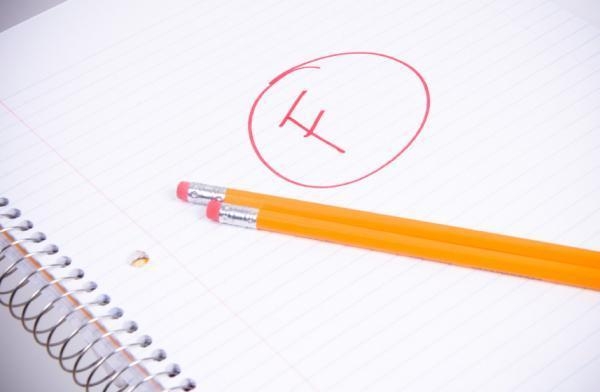
    We’ve all made mistakes in our academic careers. Whether it’s a test we just weren’t prepared for or an assignment that didn’t go as planned, a poor grade or two—or even a failure—is a normal part of being a student. That being said, it’s important to get into the right mindset when confronting your mistakes. In fact, this will actually allow you to do better in the future.

    It may seem silly to say this, but if you do poorly, it’s not the end of the world. There will be other exams and projects; you have ample opportunity to improve. If there’s no longer a way to boost your mark in one course, maybe doing well in your other courses will make up for it. In any case, school is very important, but your grades shouldn’t define who you are. When you look back on your school days in the future, you’re likely going to think about the great things you learned and the memories you made—not that one test you bombed.

    It’s only when you stop beating yourself up over your mistakes that you finally get an opportunity to learn from them. Stay positive, but consider why exactly you didn’t do well so that hopefully you improve next time. Did you not study properly for that exam and were caught unprepared? Did you leave that essay to the last minute? If you correct those mistakes early on, it’s unlikely you’re going to make them again. Treat each failure as a learning situation, and a positive opportunity for you to continue improving yourself.

    Then there’s the possibility that you have no idea what went wrong. We all have flukes—assignments that were marked “mysteriously”, guidelines we didn’t understand, tests that we just dropped the ball on for some reason. Luckily, these types of situations don’t happen very often, so one bad grade isn’t going to set the tone for the rest of your academic record. However, if you notice a recurring pattern in being surprised by your low grades, consider looking at your work more critically or speak to your teacher or professor for clarification and advice.

    Finally, it’s important to learn from failure, but you can also learn from what you did right. Chances are there are courses you’re doing much better in than others. Maybe you like the material more, so you work harder; maybe the course overall is easier to do well in. Considering these things, evaluate what you can take from one course in order to recover from a poor grade in another. If worst comes to worst and you’re really struggling, you always have options—drop the course, take an alternative credit, or look into peer tutoring or office hours.

    The next time you’re faced with a bad grade, take some of this advice into consideration. By staying positive and learning from your past experiences, you’ll see an improvement not only in your grades, but in your attitude towards learning overall.

  • Turning a Hobby into a Small Business

    Turning a Hobby into a Small Business

    Everyone’s got something they’re good at—and there might be a way for you to turn your weekend hobby into pocket money. More and more people are starting their own businesses from scratch, with some hard work and just a little help from the Internet. Wondering how to get your own skills out on the market? Here are some things to consider.

    First of all, think about what you have to offer. Once you’ve pinned down a unique (and marketable) talent, you can brainstorm ways to apply it in order to win over your customers. This is a good opportunity to combine your interests with your skills: if you’re into fashion and you’re good with your hands, for example, jewelry-making, sewing or dyeing might be a good place to start. The best part about launching your own business is that no talent is too “out there”. In fact, having an original, unconventional talent can make you stand out in a positive way.

    By connecting to your audience early on, you can quickly think of ways to adapt your concept to fit your potential clients. Don’t shy away from networking tools like YouTube, Instagram or Etsy: the Internet is a great way to connect supply to demand. Considering you’re taking on a new initiative, though, the support (and probably help) of your family, friends and community is invaluable to get the word out about your new idea. You might want to start locally and branch out from there.

    If your idea gets off the ground, building a team is a fantastic way to expand your franchise. Recruiting friends (AKA newfound business partners) to take over branches of your small business has great potential for new epiphanies. Plus, there undoubtedly will be ways that a talented friend or two could take your business to the next level—a people-person (to network, find opportunities and spread the word), a graphic designer (to promote you with posters and flyers), or an organizer (to make sure you’re staying on top of things and under budget) are just some examples of teamwork at its finest.

    If you’re serious about turning your hobby into a small business, take it from someone who’s been there: seek more advice from business professionals, whether they’re individuals in your community or those who have managed to make it big (if you can get a hold of them!). They were once in your shoes, and they’ll definitely have some insight to offer.

    Most importantly, don’t be afraid to take a risk. Many successful businesses started very small (and took ages to get off the ground), so don’t get discouraged if your idea doesn’t stick right away. Reflect, revise and reinvent your initiative as time goes on, and keep a positive attitude throughout. Think of it this way: if you don’t keep trying, you’re definitely not going to succeed. You can do it!