Category: Advice

  • Getting a Head Start on Your Future Career

    Getting a Head Start on Your Future Career

    The concept of career planning can send some students into nervous fits, rocking in the corner, curled into the fetal position. It isn’t pretty. For others, it means spending countless happy hours on the Internet, excitedly researching every job they’ve ever been interested in. Regardless of which category you fall under, it’s always a good idea to weigh your options early. Getting a head start will not only help you build experience, but it’ll help you make a solid decision when it comes to planning your career.

    1. Make a list of potential career options. Base them on things that you’re already good at and enjoy. Do you like to write? You could consider journalism or creative writing. Are you good at math? You could investigate engineering or maybe finance. Do you love sports? Think about coaching or even teaching physical education. Don’t limit yourself to one “type” of job; keep the ideas flowing and options open.

    2. Investigate your options. Google is your friend; a wealth of information is literally at your fingertips. Research job descriptions to get a general idea of what your career options involve. Do they still appeal to you? Take a look at job postings. Do the lists of responsibilities make you excited or do they make you cringe?

    3. Work on your skills. If writing is your objective, work on it. If math is your goal, work on it. If sports are your aim – you guessed it – work on it. Now is the time to hone your skills so that later you’ll be that much farther ahead in the race for professional positions.

    4. Test the waters. If you still aren’t sure what you’d like to do, try a few different things. Start volunteering or even working part-time. If you volunteer for just one hour each week, you can try several different things without eating up too much of your time. This will help you to decide which options to eliminate and which you should explore further.

    5. Try new things. Don’t limit yourself to one particular career option, especially if you aren’t sure what you’d like to do. Get involved in a few different areas – for example, you could volunteer at an animal shelter, an environmental non-profit organization and a municipal government office at the same time. The best part about volunteering is that you aren’t signed up for life; you’re free to explore and find out what working feels like.

    Don’t feel pressured to pick a career right away; instead, think of high school as an opportunity to explore your options. Without the obligations of a full-time job, you have time to try different “jobs” in a relaxed and fun way.
  • Student Debt: Your New BFF

    Student Debt: Your New BFF

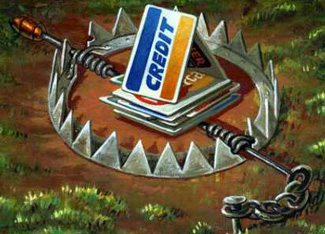
    Debt is a four letter word that should not be feared.

    Students who learn how to manage debt during university are paying themselves a great investment. You may be hearing horror stories of friends of friends who are paying off student loans years after graduation. Even the media pitches in and tells tales of students with debt so large that it seems unlikely they will ever pay off.

    No one wants to start out in life saddled with debt, but this could really be the best thing you do for yourself.

    Good Debt vs. Bad Debt
    A $1000 handbag or watch from your favourite designer is bad debt. $1000 towards books and supplies is good debt. Debt that goes towards something that will benefit you in the future is fine. Using borrowed money to earn your degree will only guarantee yourself a chance to earn much more than someone without a degree or diploma.

    Dr. Richard Settersten and Barbara E. Ray’s book Not Quite Adults highlights this fact – Taking on a little debt for a bigger payoff down the road is smart. Settersten and Ray also shared Nobel Laureate Milton Friedman’s advice: people should borrow the most early on when their earnings are the smallest, save a lot when they are in their highest earning years in mid-life and then start spending all those savings after they retire.

    Be Realistic
    BMO Financial Group surveyed students across Canada and found that half believe that they will graduate with zero or less than $10,000 debt. This doesn’t quite match up with the findings from Statistics Canada, which states the average student graduates with $18,800 in debt. Be realistic when you’re borrowing money and always know how much you’ve taken out and how much you’re spending.

    Be Strategic
    Arthur Chan, who took out Canada Student Loans for fives years at Carleton University to complete his engineering degree, graduated with a debt of $21,000. He wasn’t able to find a job in his field until 8 months after graduation. Now, 2 years into in a full-time position with the Government of Canada, that massive loan is all but a distant memory. How did he do it?

    Just because you’re able to borrow a large amount of money doesn’t mean you have to spend all of it. Arthur lived at home during university and took public transportation everyday to keep costs low. He also worked part-time retail jobs during summer vacations. When he wasn’t able to find a job right away, he applied for interest relief on his student loans. Once he was able to secure a job, he used his earnings to get rid of the debt as quickly as possible. The key is to learn how to save as much as you’re able to borrow.

    With tuition costs rising across Canada, sometimes adding everything up really discourages prospective students. Don’t let debt deter you from getting the education you want.

    Remember: education is a right, not a privilege.

  • Work Safety Risks and Tips for Tree Planters

    Work Safety Risks and Tips for Tree Planters

    What does a tree planter do?
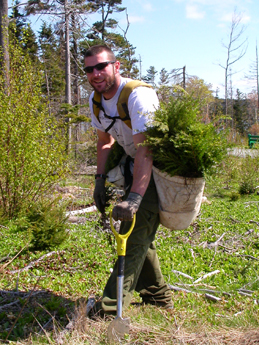
    Tree planters and other forestry workers perform physically demanding work. Some of their main duties are to:
    – Clear brush.
    – Carry and plant trees using manual tools.
    – Feed machines manually.
    – Prepare a site for planting.
    – Use, clean and maintain various equipment.
    – Work with chemicals for growth, or for weed and pest control.
    – Supervise other workers.

    What are some health and safety issues for tree planters?
    Tree planters face a variety of physical, biological, chemical, ergonomic and safety hazards. These include:
    – Insect bites or stings.
    – West Nile virus (mosquitoes).
    – Lyme disease or rocky mountain spotted fever.
    – Rabies.
    – Allergic reaction to plants.
    – Exposure to bird or rodent droppings:
    – Histoplasmosis
    – Psittacosis
    – Hantavirus
    – Exposure to chemicals.
    – Risk of pain or injury from working in awkward positions, performing repetitive tasks or lifting.
    – Risk of injury from hitting a hidden rock with a shovel.
    – Exposure to extreme temperatures or other extreme weather conditions.
    – Driving – vehicle safety hazards.
    – Slips, trips and falls.
    – Working with chainsaws and other tools/equipment.
    – Stress.
    – Working alone.
    – Extended work days.

    What are some preventive measures for tree planters?
    – Learn safe lifting procedures.
    – Keep tools and equipment in good working order.
    – Use appropriate personal protective equipment (PPE) for the task.
    – Wear appropriate footwear.
    – Avoid awkward postures and repetitive manual tasks, or take frequent breaks.
    – In the warmer months, cover up for protection from sun, heat and insects.
    – Stay hydrated.
    – In vehicles, always wear a seatbelt.

    What are some good general safe work practices?
    Use safety procedures for:
    – Safe lifting
    – Selection, use, maintenance and storage of PPE
    – Working with pesticides and other substances
    – Using chainsaws and other tools or equipment
    – Follow company safety rules.
    – Learn about chemical safety, WHMIS and MSDSs.
    – Know how to report a hazard.
    – Follow good housekeeping procedures.

  • Discover What You Love To Do

    Discover What You Love To Do

    Do what you love. You’ve probably already heard this advice plenty of times before. But what if you don’t know what you love doing? What if the question, “what do you love to do?” results in a blank stare on your face? Don’t worry, you aren’t alone. There are a lot of people (young and old) who don’t know what they love to do. The irony is that the answer is already within you. You just have to pay attention to the clues to find out what it is.

    Here is a little exercise which might help you gain some clarity on what you love doing or what your interests are. First, find a quiet spot away from all distractions. Turn off the TV, your phone and any other thing that could distract you when completing this exercise.

    Next, take out a blank sheet of paper and write the title Interests. Write down anything and everything you are interested in. For instance, if you are interested in bugs, write bugs. If you are interested in fashion, write fashion. If you are interested in plants, write plants. If you are stumped for things to write, try to think of activities you currently do which you completely get lost in — where time just seems to fly by! (The clock seems to be extra slow when doing activities you don’t enjoy!) For example, if you get completely absorbed fixing a car, then writing fixing cars as one of your interests. Or if you get completely engrossed baking a cake, then put down baking as one of you interests.

    Once you feel you have made a thorough list of your interests, look over the list you just wrote. Do you notice any similarities between the different items on your list? Does one interest seem to pop up several times on your list? If it helps, highlight similar interests in the same colour.

    Now, if you had to pick three interests from your list, which three would you choose? Be honest with yourself. Consider which things you truly enjoy. Could you see yourself doing one or more of these things for many years to come? Does this thought excite you or fill you with dread? If it fills you with excitement, then you know you are on the right track.

    Remember, do what you love. Those four words are the most important words to keep in mind when choosing a career path. If you choose a career path or job that involves something you love doing, you will be much happier and fulfilled than if you choose one in which you don’t. So discover what you love to do, and pursue a career path which reflects that. Good luck!

  • Exploring Careers in Your Field of Interest

    Exploring Careers in Your Field of Interest

    You may already know what you love to do. Great! So what’s the next step? The next step would be figuring out what kinds of jobs are available within your field of interest. Did you know that there are many career paths you can take for any one thing you love to do and are interested in? For example:

    • If you love to write, you could consider a job that involves writing. There are many jobs that would be a perfect fit for a person who loves to write. For instance, you could be a newspaper or magazine columnist, you could work as a copywriter for an advertising agency or you could even be an author!
    • If you love to dance, you could be a dancer. But you could also be a dance teacher or even choreographer!
    • If you love to work with animals, you may be interested in being a veterinarian, animal trainer, zoo keeper or even biologist.
    • If you love to work with your hands, then you may want to consider carpentry, auto mechanics, engineering, dentistry or even massage therapy.
    • If you are an outdoorsy person, then sitting at a desk job is definitely not your thing. Instead, consider jobs in which people primarily work outdoors, such as construction workers, landscapers, forest rangers or even adventure travel guides.
    • If you love to work with children, professions such as teacher, pediatrician, child psychologist or early childhood education assistant would be right up your alley!

    As the above examples show, there are many different career paths available within a certain area of interest. Do a little bit of research to discover what career opportunities align with your interests. Try to determine which of these various careers you would be interested in pursuing and why. Read profiles of various jobs to get a sense of what they involve. And finally, if possible, talk to people who work in these jobs. After all, the best way to find out what a job is all about is to talk to someone who is already doing it!

  • Choosing Your Perfect Post-Secondary Program

    Choosing Your Perfect Post-Secondary Program

    No more writing poetry or reading and interpreting novels for the math enthusiasts, no more complex scientific equations for the creative writers, no more arts or drama classes for the scientists. The time has come to pick a college or university program geared toward your interests and future goals.

    In high school you were given the opportunity to pick elective courses. Perhaps you took philosophy or sociology, a language course, physical education, music, culinary arts, or history to satisfy your need for something more exciting than interpreting a symbol in a novel or solving for ‘x.’ 


    College and university allow students to choose a program suited to their interests, strengths and career goals, allowing much more enjoyment than a couple of elective courses. For students interested in science, they have an opportunity to specialize and expand on their high school studies by developing hands-on skills or theoretical knowledge to succeed in a specific area of scientific study.

    There are opportunities to study social work, child studies, journalism or advertising, film and media, culinary arts, business, engineering, architecture, dental, law, event planning and countless more.

    Finding programs that are of interest to you likely won’t be an issue. To help narrow down the list of programs you will apply to, investigate career opportunities and the likelihood of finding employment in your fields of interest. For example, you wouldn’t want to pursue a Bachelor of Arts and major in English without first knowing how many career opportunities it affords.

    Ensuring that you graduate from college prepared to enter the workforce is essential. Is there a demand for the position you’re interested in taking? Do you meet the admission requirements? Are you content with your potential income? If you choose to pursue additional education, are there opportunities?

    Choosing a program is an exciting part of post-secondary education. Look for a program that interests you, builds on your current strengths, has exciting career opportunities you’re interested in pursuing and promises a future you’re excited about working toward.

  • Recognize Your Skills and Talents – and Use Them!

    Recognize Your Skills and Talents – and Use Them!

    Do you know yet what you want to do with the rest of your life? If you have a talent for singing or playing an instrument, you might want to be a professional musician. Maybe you love to work with your hands and want to become a mechanic or a carpenter. Whatever you want to do, it’s never too early to start working on your skills and talents. You can enjoy what you’re doing now and also prepare for the future.

    Everyone has some kind of talent, but it needs to be developed to be useful. If you have a talent for working with your hands, you’ll still need to learn building and repair skills. Even if you have a talent in music or art, you’ll need to develop it. You’ll have to learn skills like teamwork, leadership, and commitment so that you can work well with others. Your skills can help you turn the things you love to do into a job that can support your lifestyle.

    Skills fall into two main categories: hard or soft skills. Soft skills can usually be transferred from one type of job to another, and they include personal skills like the ability to listen to others or to get along with people at work or school. Communication skills, a strong commitment to the job, and self-confidence are other important soft skills that can help you work well.

    Hard skills are more likely than soft skills to lead directly to a job. Knowing how to design a bridge that doesn’t fall down will help you get a job as an engineer and knowing how to use machinery will help with finding work in construction or mining. For some jobs, having these hard skills is the best way to find work.

    Almost every job is a combination of hard and soft skills. Even if you get a job as a welder, you’ll need interpersonal and problem-solving skills to be able to work with other people and to deal with equipment failures or sudden increases in the workload. If you get work at a television station, you might need to have many different hard and soft skills to use the equipment and maybe edit the stories.

    Career-related training programs are often the best places to learn hard skills, but you can work on your soft skills anywhere. Developing your ability to work with others or to complete assignments on time, for example, will always be useful no matter what career you choose.

    How you learn these skills depends on your talents and interests. You could develop your artistic and leadership skills by volunteering to lead art sessions at a summer camp. You could develop your ability to work with others by being part of a sports team or develop your ability to listen by volunteering at a seniors’ home. You can also improve your management skills by organizing a sports event, art show, or concert, even if only your family attends the event.

    Whatever you decide to do in the future, you can already start developing your skills and talents now.

  • How To Successfully Write An Essay

    How To Successfully Write An Essay

    Writing essays shouldn’t seem like a massive burden. Just try to follow these five simple steps.

    Step 1: Think
    Ask yourself, “What is the purpose of this assignment? Why is my teacher making me do this particular assignment?” No matter how stressed you feel, he or she is not intentionally trying to punish you. The assignment is meant to assess how much you have learned in class. Keep this in mind constantly from when you begin to write to when you revise your final draft.

    Step 2: Brainstorm
    Depending on the assignment’s requirements, decide what you want to say in the essay. Make a list of what you want to write about and don’t hesitate to write down any and all ideas that enter your mind. The more ideas, the better.

    Step 3: Plan
    Planning your essay might be the most important step. Once you have determined what it is you want to say, you will now need to map out how you’re going to say it. A typical essay format might look something like this:

    Introduction with a thesis statement that says your essay will be about topics A, B and C
    Body paragraph that describes topic A
    Body paragraph that describes topic B
    Body paragraph that describes topic C
    Conclusion that restates the introduction (but does not repeat it verbatim)

    Step 4: Write
    Choose the items on your brainstorm list that you want to use in the essay and write a full sentence for each. These sentences might become the topic sentences for your body paragraphs. It doesn’t matter (yet) exactly how you will say it, but rather that you have included everything your teacher has asked for. Don’t worry about writing formally or even completely logically – just write. You can improve your work later. Sometimes it is helpful to say what you want to write out loud. Tell a sibling, parent or friend about what you are trying to say and then work what you have said to them into sentences in your essay.

    Step 5: Edit
    Edit your work at least three times. Every essay you write should go through several drafts. If you have done a good job of editing, your final draft will likely be significantly different from the first (hopefully you will have completed the first draft early enough to edit and not the night before the assignment is due!) Read your work through once from the beginning to end without stopping to make sure the sentences flow and the paragraphs are logically connected by transition sentences. Read your work through twice to make sure the thesis statement, which explains what your essay is about and which is usually the last sentence of your introduction, describes what you have written in the body paragraphs and vice versa. Read your work through a third time very slowly to check for spelling and grammar mistakes. Then ask someone else to read your work through in case they spot anything you might have missed.

  • Regarding Bullying

    Regarding Bullying

    In high school, people undergo changes and are developing themselves in different ways. Due to the pressures of growing up, some people learn to adapt and cope in successful ways – such as by finding an outlet for their emotions in activities like competitive sports, clubs, individual pursuits like running or writing, or even just seeking friendship and support from others. Unfortunately, some people have negative coping mechanisms that lead them to find more destructive outlets for their emotions. Sometimes a negative coping mechanism will reveal itself as bullying. This bullying can take many forms, from verbal abuse of other people to stealing from people to physically abusing others. Bullying is a problem that needs to be addressed both with the bully and with the victim because the consequences can present themselves in different ways.

    When people are bullied they can feel sad and left out, as well as feel that they have something wrong with them that caused the bullying. These emotional wounds can take years to heal, and so it is very important to try to resolve the bullying situation as soon as possible. If you are being bullied, the most important thing to remember is that it is not your fault and that you can stand up and speak out. It may not be safe to confront the bully themselves, but by informing your principal, teachers, parents and friends, you can create a support network to protect yourself from the person or people that are harassing you. Remember that the law is on your side when it comes to bullying and any evidence that you can get for proving that the person or people are harassing you will be invaluable if you need to confront the issue with others. Try to have a friend present with you at all times so that you have a witness and a protector, or learn how to use your phone as a recording device so that you can audio record any verbal or physical abuse.

    The person or people who do the bullying have emotional wounds themselves that need to be addressed by a counselor or other qualified professional. Many times bullies have problems at home or problems with other aspects of their life that is causing them to act out in negative ways. These people may be viewed as “bad people” but the reality is that they probably have a serious insecurity or deep emotional wounding that is preventing them from growing up in a healthy way.

    By reporting a bully, you are doing everyone a favor because that person is probably bullying more people than just you. This negative situation may be painful for you, but don’t worry – bullying is becoming more and more of an important issue in schools. When you speak out, it will be received by a well-prepared and receptive audience. The issue of bullying is being covered by the media and there are more and more campaigns against it every day.

    You are not alone and your voice will be heard.

  • Waiting To Choose Your Major

    Waiting To Choose Your Major

    Your first year of university or college is going to be stressful for a lot of reasons. It’s a time when many of your life skills will be put to the test. You’ll break boundaries and rebuild, only to break them down again. Your academic life will probably demand most of your time with course work, lectures, labs, research projects and more. It will all seem overwhelming at first, and to combat that feeling you might feel pressured to be proactive – to get things done and get them out of the way as soon as you can. Caught up in the confusing whirlwind that is school, new friends and living on your own, you might feel like you need to make your decisions right away without taking the time to ask questions and really consider what those decisions might lead to in the future. One of those decisions is choosing a major or minor.

    When applying to universities, most will offer the option of applying to a specific degree program. The decision you make there isn’t set in stone and it’s important not to treat it that way. Most universities will give you until your third or fourth year to change your major or minor if you need to.

    In your first year, you’ll be taking some of the courses required in the major you chose initially. This is a good time to get a feel of what the coursework in your program will be like in the future. That said, most first year courses will barely scratch the surface as far as what that program is really about. Taking a couple of second year courses in your second semester of first year will give you a clearer picture. If you find your original program isn’t something you’re interested in anymore, it might be time to change your major. However, you should hold off on that decision until you have a better idea of what you do want to learn. Remember: most universities will give students at least until third year to declare a major.

    Most programs will allow taking courses from other disciplines provided you still meet the requirements of your original program. Keep in mind the suggested course schedules for first year tend to have a large amount of open spots which you can use to take courses outside your program that you might be interested in while still staying on track to complete your current major.

    If, while at university, you find yourself doubting your academic path, make an appointment with an academic program counsellor. Ask them about taking courses outside your major and figure out where your academic boundaries are set. You’ll be paying thousands of dollars for higher learning, so you might as well learn the skills you’re most interested in.