Category: Advice

  • Getting Organized

    Getting Organized

    As we face another semester, the importance of getting organized is hugely evident. Whether you’re in Grade 9 or Grade 12, you are going to want to be sure that you know at least 4 pieces of information going in to this semester:

    1. What classes are you taking this semester? This question is really important for being able to prepare mentally for what is coming. If you know that you have five intensive classes, you are going to want to be sure to organize your social and extracurricular activities so that you have enough time to do homework. If you are also going to be working, you will want to be sure that you have organized your schedule to accommodate the extra stress of the difficult classes. This works the opposite way as well – if you have a lighter school schedule, you can pack more extracurricular and volunteer activities in to your schedule.

    2. Do you have all of the school supplies that you will need for the level of classes that you will be taking?
    Depending on what your semester has in store for you, you will need to make sure that you have at least the basics when it comes to school supplies, and you can wait until the first week of school to pick up any specialty supplies that you may need for an art or math class.

    3. Do you have a study spot that will be useful to you once the semester starts?
    Clearing off the holiday clutter from your desk will help you to start getting into “school mode”. You want to be somewhat mentally prepared for going back to school after the holiday break so that when your first assignment is due, you are ready to succeed. Feng Shui is the Japanese art of meditation and stress relief that says that having a calm environment helps to create calm in one’s mind. This is a useful tip to employ for your study area; try to keep it clean and organized so that your mind is less distracted when you need to focus.

    4. What are your rewards and landmarks along the way that will help you to keep going?
    School days can be tiring, especially if you are loaded down with courses that are heavy or difficult. You are still going to need to take some time off and make sure you allow time to have fun. Maybe your family is planning a vacation for spring break, or maybe you’ll go on a weekend shopping trip with friends. Whatever it is that you are looking forward to, be sure that you have those dates firmly implanted in your mind.When you are starting to feel stressed out, you will be able to persist because you know that you have something good to look forward to. If you don’t have anything planned, then plan something now!

  • Confidence Boosting Tips

    Confidence Boosting Tips

    Imagine for a second a world where you truly believe you can do anything; where the words “I can’t” no longer exist as part of your vocabulary. A place where you are as great as you always dreamed you could be. Now imagine that as your reality. Sounds great, doesn’t it?

    As great as it sounds, many of us have a hard time when it comes to self-confidence and self-esteem. Maybe it’s because from an early age we are taught not to “toot our own horn” too much or we will seem arrogant or egotistical. Doctor Bobbe Sommers, a world-renowned psychologist, said, “Having a low opinion of yourself is not ‘modesty’. It’s self-destruction. Holding your uniqueness in high regard is not ‘egotism’. It’s a necessary precondition to happiness and success.”

    But what does that mean and how do we hold our uniqueness in high regard?

    I have compiled a list of confidence boosting tips that may help you gain the happiness and success you want from life.

    –Discover yourself: Get to know you. Listen to what you are thinking and feeling. Know what you want and why you want it. If it helps, keep a journal to help you understand yourself better.

    –Make a list every day: On the list write at least three things you really like about yourself. For instance, “I like how I can make people laugh even in uncomfortable situations” or “I like my eye colour.” It can be absolutely anything you like about yourself. This will help remind you why it’s great being you.

    –“Dress for the job you want, not the one you have”: This may be an old cliché, but it’s stuck around for a reason. One of the best ways to feel good about yourself and to boost your self-confidence is to look good. Have a shower, do your hair, brush your teeth, wear nice clean clothes and comfy shoes and head out in the world with your head held high. This will surely get you noticed and get people to take you seriously.

    –Remove the word can’t: Stop saying “I can’t do that” before you even try. Fear of failure is common and sadly it prevents most of us from doing things we’ve always wanted to do. To overcome this, think positively – don’t think of the worst possible scenario. Picture yourself succeeding. Some of the greatest experiences you will have in this life will come from overcoming things you thought you couldn’t do.

    –Treat others the way you want to be treated: It’s karma, baby; the idea you get back what you send out into the world. So send out the good, and always remember to treat others fairly and kindly.

    –Be prepared: One of the best ways to improve your self-confidence is by being prepared. Whether it’s a test you need to study for, a university application you need to complete or a big basketball game coming up, make sure you are ready. Stop putting stuff off and get to it already. You will feel more confident if you are ready to face what’s ahead.

    –Be grateful: Don’t dwell on what you don’t have. Be thankful for all you do have.

    –Exercise: It’s a great way to immediately boost your mood. It also helps in the long term to boost self-confidence. You will be healthier, happier and more sure of yourself.

    –Listen to your favorite song: Nothing gives me an instant boost of confidence and energy, especially in the morning, as my favorite song. It really helps me have the right attitude to face the day with.

    The most important thing to remember is to think positively. If you believe you are good enough, the world will see you that way.

  • It’s Only Hard Until It’s Not

    It’s Only Hard Until It’s Not

    Walking, tying your shoes, reading, riding a bike, solving equations…they all seem hard to do at first. But suddenly, one day – it’s not.

    We generally enjoy doing things we are good at because they are easiest. But when it comes to post-secondary education, this would be the wrong mentality to have. College is not easy and requires a lot of dedication. Be sure to pick a course you’re passionate about, but don’t be discouraged if it gets hard. You’re definitely not the only one feeling that way! There IS help. Find out what services your school offers and use them. Most schools have tutors, counselors and other friendly staff who are there to help you succeed.

    Do not let the difficulty of a particular course effect you personally. Accept that it will be hard and devote yourself to getting through it. Remember – no program is made to be impossible. The best part of learning is surprising yourself about how much you can do. The more you do it, the easier it will become. Giving up is easy, but generally the easy choice is never the right one.

    Never say you can’t do anything. The ones who quit so easily without giving it their all are the ones who never really intended to stay. If you are someone with low self-confidence, try saying or writing down some daily affirmations. It may seem silly, but there’s magic in it. Say, “I am strong enough, I am smart enough, I can do it,” over and over again. Looking into the mirror is the best way to do your affirmations because you are confronting yourself. Motivational speaker Tony Robbins said, “People who fail focus on what they will have to go through; people who succeed focus on what it will feel like at the end.” This is what you should focus on, not the obstacles. Think back at other goals you have never accomplished; goals you had set for yourself a year of more ago but gave up on. Now think about what you could have accomplished had you not given up on that goal. Before you submit your application to the program of your choice, go see a counselor and talk to them about it. They know what the courses consist of and can help you make the right decision for you.

    It’s your life, it’s your time, it’s your future!

  • Following (and Loving!) Your Path

    Following (and Loving!) Your Path

    Education, much like a career, means different things to different people. In school we each have unique study habits, subject preferences and academic goals while maintaining different ideals regarding our own career paths.

    Some prefer the humanities while others lean toward the sciences. Some are interested in the computer sciences while others advocate the visual arts. Everyone has his or her own interests and that is important. As a student, it is your responsibility to pursue and practice something that you are passionate about or follow an academic path that will allow you to best achieve the career objectives you have set out for yourself.

    This can, however, be difficult. Many of us do not have a clear idea of what we want to pursue or do with our lives, let alone what classes we want to take. As such, our education becomes something of a trial and error until we manage to find a particular subject, skill or topic that we can be confident in pursuing.

    Joining clubs, choosing classes or attending lectures based on what you are passionate about or feel naturally drawn to will prove to be your means to this end. You can’t go wrong by pursuing your interests! University and college is a place for self-discovery, personal development and academic growth. It helps you to figure out who you want to be and what you want to study.

    Try not to stress too much. The decisions you make are important, but if you follow your passions and try to keep your options open you won’t stray too far. Over the course of your degree you’ll be spending countless hours in the library, lab and lectures so you might as well enjoy what you study.
    Always choose your classes carefully, but if you navigate your options successfully you will end up do what you love. Keep your options open, listen to your heart and you will soon be on YOUR path to the perfect career for you!

  • Gossip Is Bad For You

    Gossip Is Bad For You

    Gossip is something that is very prevalent in high school, generally due to all of the changes that people are going through. With any luck, gossiping will diminish as you grow up and move on with your life. It is a type of conversation that is not very productive in terms of creating positive change in communities, and in fact is often the source of a lot of unnecessary harm and pain.

    An interesting quote I read recently said: “Great minds discuss ideas, average minds discuss events, and small minds gossip about people. Life is much too short to be lived talking about people, gossiping, and stirring up trouble that has no substance. If you don’t understand someone, ask questions. If you don’t agree with them, tell them. But don’t judge them behind their back to everyone else” –Entrepreneur Secrets 2012.

    This quote draws attention to the fact that there are often conversations that you would rather avoid, because they are nothing but mean-spirited and a waste of time. I disagree with the quote because I think that there is a time and a place for gossip. Often talking about other people is a way of understanding the social world that we live in, which is just as important as understanding anything else. Sometimes not talking about other people is a mistake because you don’t have an opportunity to digest what another person is about. People are interesting, and talking about them is not always a waste of time. The linchpin is the intention that you have when talking about other people. If you are attacking someone out of mean-spiritedness and to gain power over that individual, you must be bored or looking to “stir trouble” like the quote above says.

    I agree with the above mentioned quote in how they draw attention to the fact that not understanding someone should bring you to asking more questions. This is really true, because most of the time other people are misunderstood simply for lack of information. This is not something to capitalize on with gossip, but rather an opportunity to learn more about something that you don’t understand. A popular old adage states “don’t hate what you don’t understand”.

    In school and work situations, there will always be times when people will say or do things that you don’t agree with. It is during these situations that it is healthy to vent about the outcome of a certain conversation or event. The distinction to be made, however, is between attacking someone’s character and attacking their words or behaviours. There are relevant points and there are irrelevant points when talking about other people. If you are trying to capture them as an individual with pros and cons, this is usually a better approach than trying to twist them into a character with only cons. Most people are not evil, so spreading rumors and creating a monster out of someone else is simply mean and counter-productive.

    So resolve to stop the bad gossip in 2013!

  • Myth: I Don’t Need Money – My Parents Pay For Everything!

    Myth: I Don’t Need Money – My Parents Pay For Everything!

    Many young students might think that having their parents pay for their school tuition, shelter, transportation, food, clothing, hygiene products, entertainment and anything else would provide them with enough money to survive university. But this is a myth! The reality is that money is more than something that is used to purchase the things you want and need. Making money is more than just having money in your pocket, it is building your path to independence and self-sufficiency. Making your own money on top of whatever amount your parents are giving you is a great way of creating independence for yourself. This is hugely important because when you are not dependent on others for every aspect of your material survival, you can feel empowered and able to make your own choices. Having the feeling that you control your own life and are not dependent on your parents will inevitably allow you to see your life more clearly and to see exactly how your own decisions affect your life.

    Working is valuable for gaining money and for experience that can be used in different areas of your life. When you work you are taking on responsibility and people are depending on you to do the job. Having people depend on you instead of constantly depending on others is empowering and reinforces your independence. Additionally, building your work experience looks great on a resume and will help you later in life when looking for a job and for getting through your day-to-day life tasks that inevitably require some taking on of responsibility.

    Having your own money also allows you to have a little fun and minimize the guilt you feel when you spend the money your parents give you. If you want to go on a trip to Wonderland with your friends, get your nails done or even buy some new shoes, having your own source of income will allow you to make these little trips and purchases that make life worthwhile. When you have your own money, you are more in charge of the direction that your life will take. Overall, money enables you to be independent and to make choices better suited to you than you would if you were dependent on your parents.

  • Follow Your Instincts

    Follow Your Instincts

    There is pressure to know what career you ought to settle on for the rest of your life, even well before you are finished high school. Students are guided toward a career at a young age and are expected to follow the direct path counselors and parents present to them. Decisions about the future can be made for a variety of reasons including salary, job availability and aptitude, but there is no better reason than natural inclination and passion to help you determine your future employment.

    When it comes to how to choose what to do for the rest of your life, it is most important to take your time and really consider what it is that you enjoy. Is there something you love to do and learn about? Why not consider investing in education to make it your profession? If you follow your passion and interests you will find yourself working in a field that allows you to build continuing joy in your life. Take a closer look at your hobbies and investigate whether or not you could see yourself making a living in a relatable field. Work does not need to be mere labour; it has the potential to be a labour of love.

    The next step is confirmation. Can you turn your interests into a profession? Investigate, research and do your homework. What kinds of jobs are available in your area of interest? Is it really feasible or should you continue to search other avenues?

    Now that you have found something you think you would love to do, take the next step and offer your time as a volunteer. Be bold and assertive. Talk yourself into a place of business that you can learn from and experience the tangible reality of your choice. If you do this and discover you are not suited to the trade or craft, do not be afraid to change paths. Perhaps a pivot rather than a jump is in order. You may not need to change directions completely but simply tweak the dream a little to suit your needs.

    It is important to lean on your intuition when it comes to your future. Do not decide on a career solely based on numbers. To do that is a potential set up for burn out and early disenchantment. Take the time to understand what you really enjoy and trust that you have the skill set to see your dreams realized. It takes more than hard work to be successful – there is a necessary component of happiness and contentment that not only sets the course, but helps define just what success means to you.

    When you follow your instincts and choose a career path based on something you enjoy, life becomes an exploration of your interests and the anticipation of each new day lingers well into the future.

  • Can I Change My Major?

    Can I Change My Major?

    If this is your first year in university or college, you will have now made it through your first semester. At this point, you may be questioning if you made the right decision in regards to the major you selected. It can be a confusing time and you may find yourself asking endless questions; the chief of which will be if you can change your major.

    The answer? Of course you can change your major. University is a time of change as you discover and/or reaffirm what you are interested in, what you want to study and the career path you would like to pursue following your education. Many go in looking to study politics to find themselves in the midst of a history degree by their third year, while some change faculties completely and move from an English major in their first year to a biology major in their second.

    Sometimes it can be difficult and, in some instances, it may set you back and force you take a few extra credits. But it is a common occurrence in post-secondary education and you are not alone! That being said, you have to be careful when switching majors or minors as it’s a big decision.

    Unless you are in a specialized program, students generally don’t have to declare their major until second year. So take advantage of your time! Many will tell you to take a variety of courses in your first year and they’re completely right. Take courses that you think may lead into your major, but don’t be afraid to take some random courses also. Roman history? Sociology? Applied chemistry? Who knows, you may just find your new passion!

    Keep in mind that at some universities you will have to complete some first year pre-requisites to continue your studies in a particular field of study. So don’t forget to sign up for those first year art history seminars if that’s a subject you may want to pursue as a major, minor or just for fun.

    Hopefully by your second year you’ll have a better idea of the direction you want to take your education. Though the option to switch majors is always available later in your post-secondary career, the later you wait the more backtracking you’ll have to do to catch up to your fellow students. Many who switch later potentially face losing those extra credits usually reserved for niche electives, have to take extra summer courses or, in some cases, may even have to tack an additional year or two onto their degree.

    It can be more work, but sometimes that’s what it takes. This is your post-secondary education, which will hopefully shape your own outlook and your future career path. If you feel like you need to make a change – go for it! Sometimes it means a few extra classes, but if it is what you want, it’ll be worth it.

  • Try Courses That Seem Interesting To You

    Try Courses That Seem Interesting To You

    With a new semester almost upon us, it may be time for you to choose specific classes that can help you get where you want to go. Choosing a major is one of the hardest parts of applying to university. Whatever you decide to study, try some courses that seem interesting to you whether they’re in your major or not. If you’re drawn towards philosophy and you don’t know why, try out a class anyway. See what it is and whether you see a place for yourself in it.

    Remember – university is basically the start of your career, even though it can be difficult to decide so early in life what you want to do. That’s why it’s designed to let you experiment with electives. It could be that you’ve always wanted to take a sculpture class, or it could be that, while registering for your classes, film history to 1940 somehow just jumps out at you. Try it. Find out why. You might find a new passion!

    Plenty of people end up switching their majors part of the way through university. Someone might start in biology only to realize, after taking a photography class, that they have a great passion for cameras.

    Lots of people also like to try out a minor. Just because you’re a biology major, it doesn’t mean you have to take all science courses. You can have a minor in theatre if that’s what interests you. Who knows – maybe some day your interests will intersect in a spectacular theatrical production explaining the process of digestion!

    The work involved in doing well at university is more than a full-time job. When it comes time to read 50 pages from the textbook every week or write that final essay, it will be painful to do if you’re not interested in the material. You’ll learn plenty of fascinating stuff in pretty much any class, but if the subject interests you, you can have a lot of fun while you’re at it.

    University is also the time when most people start taking charge of their own lives. Many people move out for the first time and start paying rent or working at part-time jobs. In the end, you’re the only one responsible for whether you succeed or fail. Keep in mind that taking responsibility for yourself means more than meeting deadlines and paying rent. You have to start putting your life in motion, which means learning about what interests you, what you’re good at and where you can go with it.

    A career isn’t the only thing that defines you. The famous author Vladimir Nabokov studied butterflies and made up chess problems in his spare time. A successful salesman may be part of an amateur radio club or a hockey team. It’s good to know what you want out of life and to have a career plan, but don’t forget about all those things that make you who you are.

    In the end, following your interests is the practical thing to do. Even for a doctor, there are so many specializations that you are able to go in any direction you want. What area you choose to focus on is going to be the thing that helps you to stand out and helps to define your life. In the meantime, it will make your education a lot more fun.

  • The Power of the W’s

    The Power of the W’s

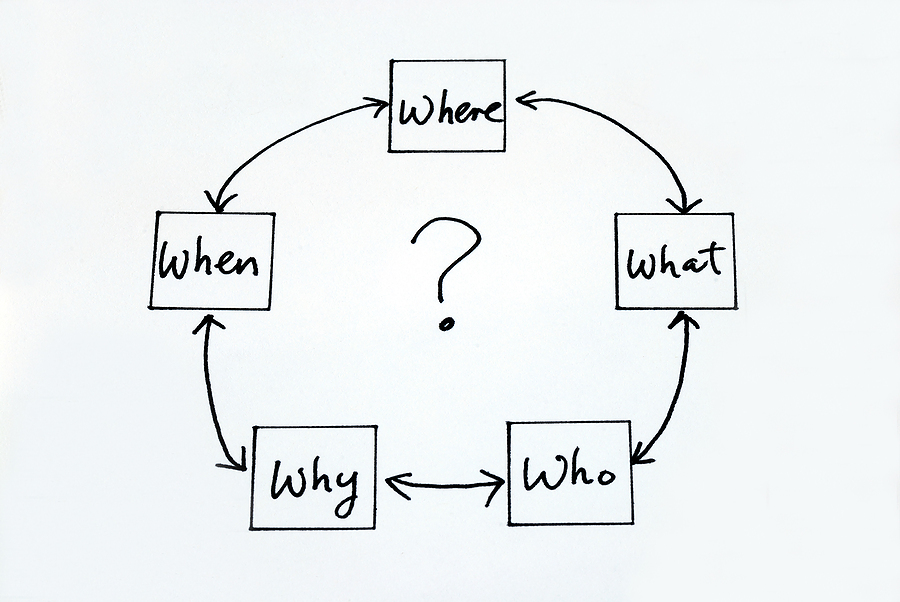
    You’ve probably heard of the five W’s a million times in class. This little family of questions – “Who, what, where, when, why” and their cousin “how” – are memorized by every student who ever has to put together a presentation. But their true power in everyday conversation is never really explained.

    No two people in the world agree on everything. You’re bound to talk to people on a daily basis who think differently than you do. Whether you like it or not, this will be the case for your entire life (unless you want to live alone in a cave in Antarctica!) So you might as well take what you can from these little disagreements.

    If someone tells you that aliens were in the neighbourhood last night, you can say, “You’re crazy” and walk away. Or, instead, you can use those W’s. Ask them “What do you mean?” or “Why do you think that?” or “How did aliens get here?” Your neighbour will tell you about all the evidence they collected. You’ll find out that there’s a thought process behind their opinion. People don’t just come up with wild ideas out of nowhere and fixate on them. They take the evidence around them and put together a case, the same way you or I do. Whether or not you agree, you are learning about your neighbour’s view of the world and giving yourself a broader perspective.

    Maybe you think peanut butter M&Ms are the best candy ever and your friend disagrees. If you just ask why, you might find out he’s allergic to peanuts – which is a great reason not to like peanut butter M&Ms! Or maybe he won’t remember why he thinks that and he’ll give it a second thought.

    So if you’re talking about global warming and someone else tells you it’s a myth, don’t call them an idiot. Ask them, “Why? What’s the point of the myth?” Maybe they’ll have a worthwhile answer or maybe they won’t. But it doesn’t hurt you to ask.

    A conversation is not a chance to prove you’re right. It’s a chance to inform yourself. Two people can sit and fight all day over which hockey player is the best or which prime minister is the best person to lead Canada, but arguing gets you nowhere if you don’t listen to what the other person is saying.

    So just ask questions. It’s easy and it takes you away from an argument and into the world of discussion. Just because all us humans live together, it doesn’t mean we feel the same things.

    Often, after asking these questions, you’ll find that even if you still don’t agree, at least you’ll have a better understanding of the issue as a whole and not just the side you see. Plus, you’ll have more respect for the person you’re talking to, who will be a normal, respectable person you happen to disagree with and not just a lunatic sent here to drive you crazy.

    If you really love asking these questions of other people, it might even lead you down an exciting career path! Journalists, writers, editors and reporters all ask these questions on a daily basis. Even people who work in marketing and advertising ask themselves these questions to determine the wants and needs of their target audience.