Category: Campus Life

  • What is the Labour Board?

    What is the Labour Board?

    Recently in Winnipeg, people working for the city government came close to going on strike because their union and the government had trouble coming to an agreement about wages and other issues. The issue was resolved, but situations involving work often need an independent opinion to help resolve them. Canada’s Labour Board works to keep relationships between employers and employees as positive as possible and works to resolve any problems that people encounter.

    Each province in Canada has its own labour board with a federal board dealing with national issues. The Federal Public Sector Labour Relations and Employment Board handles issues between employers and employees, helping to resolve disputes and deal with complaints. Provincial labour boards do the same kind of work in their own regions.

    Labour disputes can happen for many reasons. Sometimes, workplaces are unsafe, or employees are not given the salaries or holiday time that they were promised. Often, employers and employees need to agree on a new contract when the old one is about to expire. If the two sides fail to agree on holiday time, paid breaks, and other matters, the labour board might need to help the two sides come to a decision.

    Each labour board is supposed to be independent, not favouring either the employers or employees. The idea is that the board can make decisions that benefit both sides, as well as the people who depend on that service. If garbage collectors go on strike, for example, the labour board might be able to help the two sides come to an agreement before the garbage begins to pile up and starts to smell.

    The labour board is useful for more than just renewing contracts. Sometimes, an employee might have a serious complaint against an employer. For example, the employee might be forced to work long hours without being paid for overtime work. The employee can go to the labour board to complain about unfair treatment. If the board investigates and finds that the accusation is true, the employee might receive extra compensation for the work and the employer might have to pay a fine.

    Unfair layoffs or firings are also part of the labour board’s work. Suppose that the managers of a company told the employees that they were laid off because the company had no money to pay them. If the managers immediately went out and hired other people for a lower wage, the employees might have a cause for complaint. Any employees who are fired unfairly, such as for being younger than the other employees or having a loud voice, could also complain to the labour board.

    When a complaint comes to the labour board, a tribunal of board members decides which of the two sides is right and what should be done about the situation. Sometimes the labour board decides in favour of the employer and sometimes the employee. The cases include personal complaints but also matters that affect groups, such as inadequate safety precautions or a lack of time off for medical appointments or other important activities.

    Many people can go their entire lives without dealing directly with the labour board. However, the board is still important in the lives of all workers.


    Bibliography:

    Federal Public Sector Labour Relations and Employment Board. “Labour Relations Boards Across Canada.” https://www.fpslreb-crtespf.gc.ca/en/about-us/lrb-across-canada.html.

    Federal Public Sector Labour Relations and Employment Board. “Mandate.” https://pslreb-crtefp.gc.ca/en/about-us/mandate.html

    Federal Public Sector Labour Relations and Employment Board. “What is the Mandate of the Board?” https://www.fpslreb-crtespf.gc.ca/en/resources/faq.html#q2-1.

    Government of Canada. “Labour Program.” https://www.canada.ca/en/employment-social-development/corporate/portfolio/labour.html.

    Ontario Labour Relations Board. “Notices to Community.” http://www.olrb.gov.on.ca/.
  • Cruising through the Post-Covid World: Maskless Faces vs. Anxiety (French version available)

    Cruising through the Post-Covid World: Maskless Faces vs. Anxiety (French version available)

    Adjusting to the post Covid-19 world is a challenge that none of us ever saw coming. Right now, it appears that for most of us, life has reached a sense of normalcy. When you look around, most people don’t wear masks anymore. In some way, life looks exactly how it used to. However, this cannot be said for all of us. Some of us are still wearing our masks, pockets heavy with bottles of hand sanitizer. This can be for any number of reasons: being immunocompromised, living with someone who is, or even just for one’s own comfort levels. For many people wearing masks, it sometimes feels like we’ve gotten nowhere in the pandemic. Covid still feels like such an active threat, and that’s terrifying. Therefore, being around people who are no longer wearing masks can feel just as scary. This causes a great amount of additional anxiety to foster in one’s mind, making even the most casual of tasks feel daunting.

    I still wear a mask when I’m out. At one point, there was a cold going around my campus. I can’t tell you how many times people specified that they weren’t positive for Covid, they just had a cough. Maskless or not, many of our minds are so fixated on Covid that we forget that colds and coughs are extremely common, especially with the changing weather. Nowadays, hearing that one cough or sneeze is enough to cause you to stiffen up in your seat. So, how do we go about this new world? How do we ease that anxiety? I’ve included a few simple tips that may be the answer. 

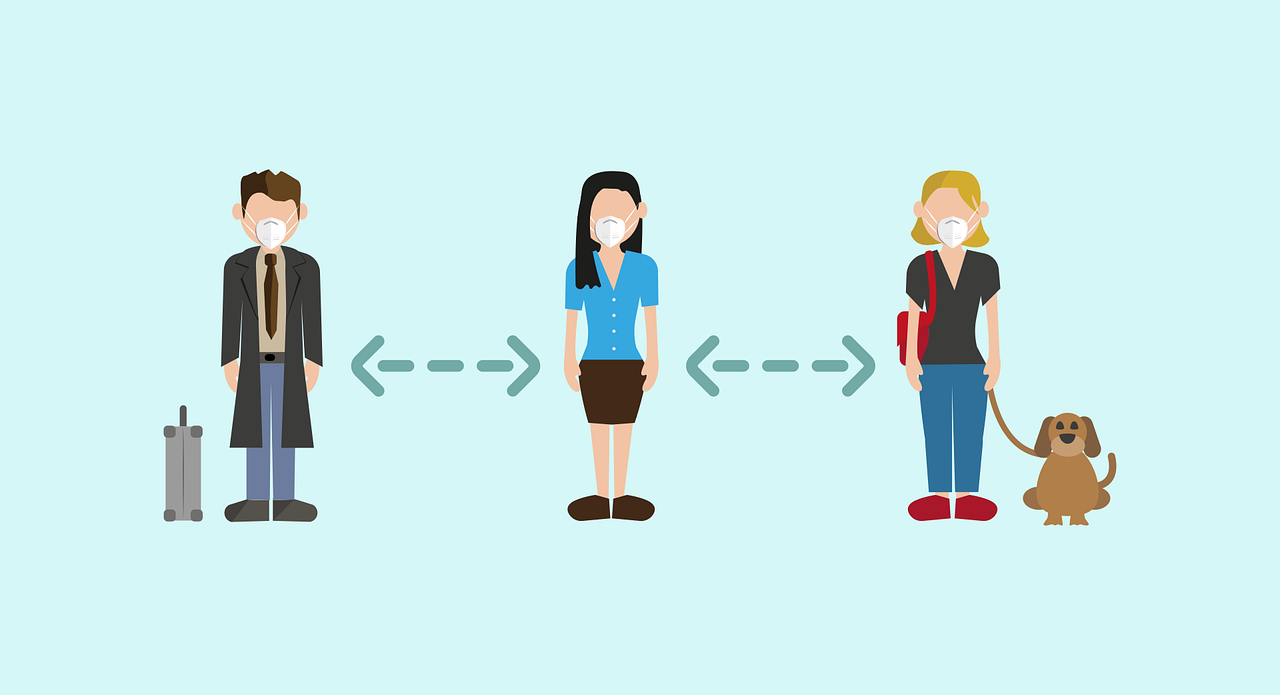
    Practice Social Distancing: No matter what someone is doing, mask or not, you should always remain respectful of their choices. It’s still okay to keep your distance from others if that is what keeps you at ease. If you’re sitting in a lecture hall, you can try and keep a seat or two away from those around you. When standing in line, stand as far from others as you feel comfortable. However, let’s say it’s busy and you can’t social distance as well. Keep your faith in your mask and in your peers, so long as you keep the mask on and keep your hands clean, you should be fine. Try not to overthink these things, or you’ll get lost inside yourself and begin to spiral.

    Talk to Someone: Any kind of anxiety can feel terribly isolating. It’s likely that you’re not the only one feeling anxious about the decrease in mask usage. When you’re struggling, it’s never bad to reach out and talk to someone. This could be a friend, a parent, or even a professional, namely, a therapist. If you’re a student in post-secondary, there are tons of counselling services available for you. We’re all navigating this new world together, so know that you’re not alone in learning how to do so.

    Keep up with your Vaccines: Other than the masks, our main line of defence is vaccines. Keeping up with the booster vaccines will help keep your overall immunity up, keeping you and those around you as safe as possible. Something that may also help in this area is watching the news for updates in Covid hotspots. If your area is one, then at least you will be aware of it and be able to act accordingly.

    Don’t be Hard on Yourself: It’s so easy to criticize yourself. In my case (in the context of low comfort levels), I beat myself up a bit for feeling so out of place in school. Everyone else looked so casual, they weren’t wearing masks, sitting close to each other. Something I’ve learned is that comparing your comfort levels and situation to someone else’s is never productive. Not even a little. We all have different factors to consider when we decide to wear a mask or not. For example, I live with an old person, one who did not do well at all when they had Covid. I also live with many people who are immunocompromised. Some people live alone, and some know that even if they got Covid it would feel like a cold due to past experience. We’re all in a different place, so comparing yourself to others or critiquing yourself will achieve nothing.


    Works Cited

    Herman, Dr. Jaclyn. “5 tips to a safe, healthy fall season.” Brampton Guardian, 27 October 2022, https://www.bramptonguardian.com/opinion-story/10748871-5-tips-to-a-safe-healthy-fall-season/. Accessed 27 October 2022.

    “Unmasking anxiety: How to cope as mask mandates lift.” IndigoHealth, MultiCare Indigo Urgent Care, 17 March 2022, https://www.indigohealth.com/blog/un-masking-anxiety-how-to-cope-as-mask-mandates-lift/. Accessed 13 October 2022.

  • Navigating Post-Secondary: The Campus Experience

    Navigating Post-Secondary: The Campus Experience

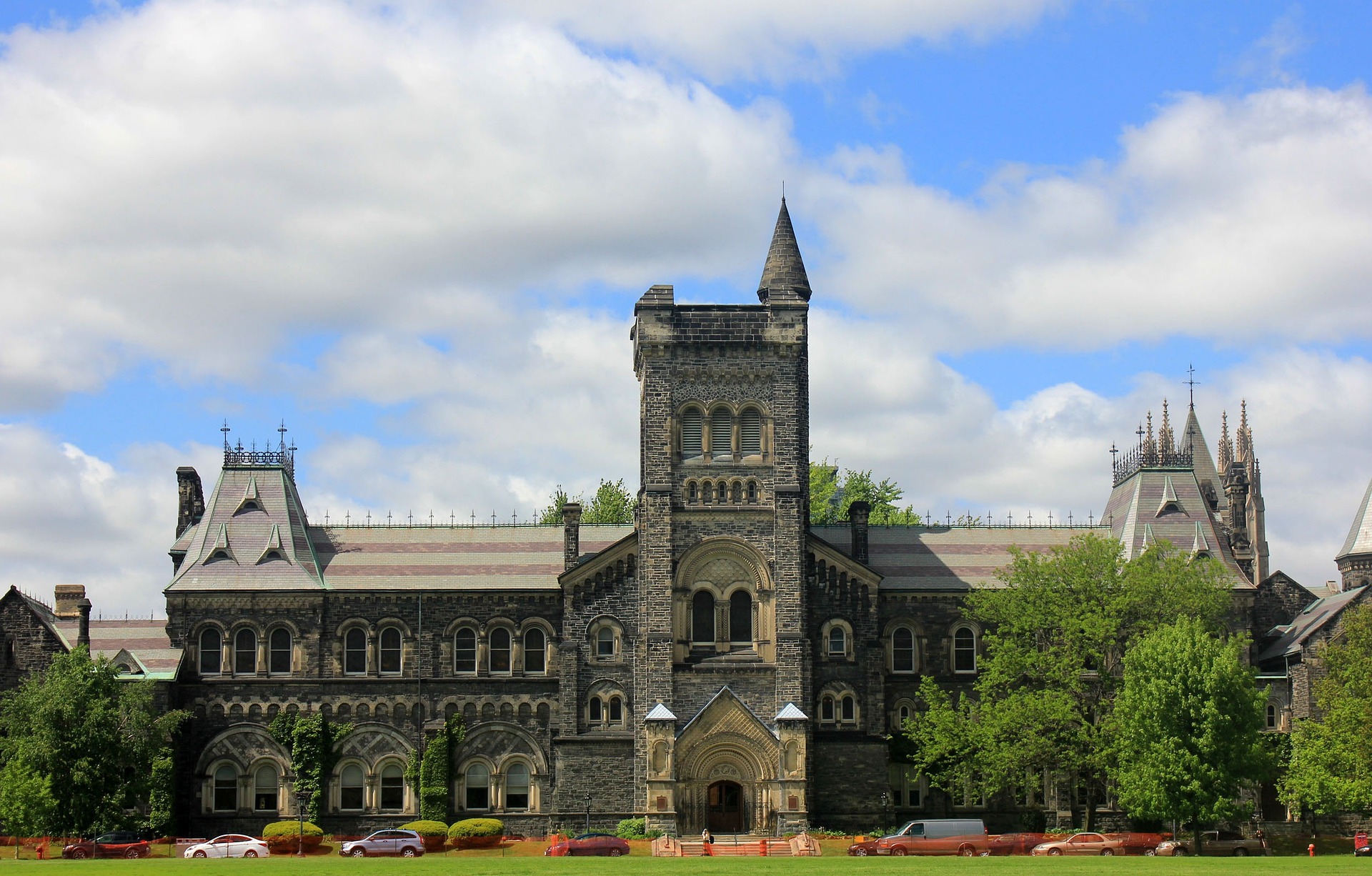
    Transitions are some of the most difficult, yet inevitable parts of being young. When you’re young, everything is constantly changing. One of the most difficult aspects of transition is new environments; university is a staple of the unknown. Unlike most high schools, universities are made up of multiple buildings, filled with a bunch of people who you don’t know. In hindsight, that sounds terrifying. Not only are you thrusted into an environment where you know no one, but you are expected to do some work there too! It’s all incredibly overwhelming, and difficult to map out and understand.

    Not gonna lie, I used to be terribly anxious before heading to my campus at University of Toronto, especially after the pandemic. This new generation of college students not only has to deal with the transition from high school to post-secondary, but the transition from remote to in-person learning. That said, our lives lately have been filled to the brim with transitions and things that we have to adjust to. I’m not even going to sugarcoat it, at first, going to campus was like getting a root canal done. It was terrifying to me. My campus is about 15 to 20 minutes from home by car, and I’ve never actually been in a school that wasn’t five minutes away from home. Plus, I had not made many friends over remote learning; the one close friend I had was on a different campus. The first week was the most difficult, as I tried to familiarize myself with the campus and all of the faces on it. It wasn’t like I hadn’t been prepared; I’d been to campus a handful of times before. A week before classes started, I toured the campus to find all my lecture halls and classrooms.

    I knew where I was going, but I felt like such an amateur despite being in second year. I remember after one of my classes was over, I decided to take a little walk in hopes of calming myself down. It was a cloudy day, and it seemed the world reflected how I felt on the inside: grey. Everything looked so lifeless and unknown; the buildings loomed over me, and all of my fellow students looked like they knew exactly what they were doing and where they were going. Everyone seemed to know each other, making me feel like I was constantly missing out. Campus was lonely in those first few weeks, the kind of loneliness that swallows you from the inside. You may feel small, sitting in that huge lecture hall filled with unknown faces. That kind of loneliness can be hard to shake, but if you’re experiencing something similar, you will get through it. Below, I have included my main tips for making yourself at home on campus, and how you can soften this transition even in the simplest of ways.

    Find Those Windows of Opportunity: There are little windows of opportunity that allow you to meet people, and I would highly suggest taking advantage of them. Think of those few minutes before class when everyone’s waiting for the room to clear out, as well as group work and when you’re sitting in class. Even just being brave enough to say hi to someone can be the little seed that a friendship needs to grow. Sometimes it’s not even about making friends, but putting names to the faces. When I got to my in-person classes, I saw many people who’d had their cameras on during online class. I said hi, and we made some small talk in the classes we had together. Slowly but surely, that sense of community began to grow.

    Know That It’s Okay to Be Alone: If you’re having a hard time making friends, it can be easy to blame yourself or assume that something is wrong with you. Believe me, nothing is wrong on your part. Keep in mind that everyone else around you is also trying to navigate this transition to campus. Plus, many people have become used to the isolated nature of online learning; no one’s used to socializing like they did before Covid. Take it day by day; be gentle and kind to yourself.

    Join a Club: This one may sound typical, but hear me out. A club is a place where people who have common interests gather together. If you’re having a hard time connecting to people, try joining a club. Plus, clubs aren’t like classes. It’s not like attendance is mandatory, and there is not necessarily homework. In fact, some people have clubs solely to help each other with homework. Look at it this way: it wouldn’t hurt to try. If you’re worried about clubs taking time out of homework or studying time, remember that it is highly important that you set aside time for yourself.

    Don’t be Afraid to Explore: Something that makes campuses too intimidating is the thought of getting lost. In my case, I’d built my campus up as a big building, almost like a labyrinth that was filled with twists and turns down hallways I’d never been in. I was scared it would swallow me, that I’d never familiarize myself with it.  That said, the more you know something, the less afraid of it you are. In between classes, don’t be afraid to take a stroll through the buildings and have a little tour. That way, you can find some good study spots and food places! Or take a day to do this, perhaps during your reading week or when you have a day off.

  • My New Normal: My own personal experience of how my life has changed since 2020

    My New Normal: My own personal experience of how my life has changed since 2020

    By Rabia Khan

    Since 2020, my life has become more disciplined. Initially, I was sleeping most of the time but then I began to feel the unhealthy side effects of staying in bed for too long. It was an effort initially to wake up at dawn, but my eyes never opened. I decided to start yoga exercises in the morning because I had time. I did not have to rush to college or work, or do other errands. I began to also plan a proper menu for breakfast, lunch, and dinner. I tried to avoid fatty foods and carbohydrates. Ordering outside food was out of the question, which was good in a way because I always cribbed about how unhealthy and oily takeaways were.

    The best thing for me was the mode of payment became cashless. So there was no rushing about trying to go to the ATM or bank. Online payment became the way, and it felt like a breather. All you needed was money in your account. Google Pay was the best option. The internet became our biggest source of information and help.

    We all became more conscious about hygiene. I made it a point to wash all vegetables and fruits and any other stuff bought from outside thoroughly.

    It meant cleaning and cleaning. We wore masks. Refrained from shaking hands, even if we had to shake hands, we would come home and wash our hands with renewed zest. Shopping for sanitizers became second nature. I kept buying food and storing it. It became a thing with everyone. It wasn’t as if there was a famine but there seemed to be a sort of panic.

    We also became more aware of people dying; friends lost loved ones, and people known to us were losing their lives, so it was very depressing. So I began to value friendships. I called up people, friends, and relatives I had not spoken to in a long time. I felt better doing that. Otherwise, I would have felt cut off from humanity because no one was able to meet anyone.

    I took up playing indoor games. I started reading more. I watched more television, but it was a nice change because I got a chance to sit back and relax, and think about where my life was heading. Things got back into a proper perspective.

    Basically, I reinvented myself.

    One thing I noticed is that men learned how to manage their homes. They helped with the cooking, the laundry, and cleaning, and fathers helped with their kid’s education. It was all so sudden but we all somehow managed to get our lives together, living cooped up under the same roof for months on end. Nerves were, of course, frayed but everybody finally realized that throwing tantrums didn’t help at all so everyone got their act together because this was the only way they could not get on each other’s nerves.

    Living together was like literally breathing down each other’s necks initially. There were heated exchanges but eventually, one got resigned to what was happening and took the peaceful route, since that was the most mature way of living. Fights would only make living with each other worse. There was nowhere to go so folks learned a lot of self-control and tolerance and then it became easier. Now it has carried into day-to-day life, this kind of temperament that has sympathy and empathy. Well, at least we learned to be more careful of other people’s feelings.

  • Lifting Mask Mandates and Returning to in-Person Learning: Managing Stress (French version available)

    Lifting Mask Mandates and Returning to in-Person Learning: Managing Stress (French version available)

    It’s back to school season, one of the busiest times of the year for students all around the world. During the start of anything new, I find that there’s always that added layer of anticipation as you pack your school bag and lay out your clothing. This year, however, anticipation is even higher as we delve into a completely new era in the COVID-19 world. We’re in something of a gray area; mask mandates have lifted, and most in-person courses and activities are back in full swing. From a bird’s eye view, things almost appear to be reaching this newfound yet nostalgic sense of normalcy. That said, for many of us, there’s still a heavy feeling of anxiety or stress lingering in the backs of our minds as we go about our day. Our brains start picking at us with all of the ‘what if’s’, like “what if I get the virus?” and “what if most people aren’t wearing masks, what do I do?” As such, for most students heading back to school, they are not just wrestling with the stress of school, but the lingering effects of the virus.

    Firstly, if you’re feeling extra stress or anxious about going back to school, know that you are definitely not alone. Personally, I had some in-person classes when the mask mandates were still in place, and even then it still felt scary to get back out there. In fact, I always find that I have this moment when leaving the house where I think about how I am risking my own health and my family’s health.

    That said, masks have become the largest source of reassurance and safety for many of us. Every time you remember the risks of leaving the house, you should also keep in mind that staying inside of your house all the time may keep you safe, but it doesn’t allow for the greatest quality of life. Eventually, there will come a day when you’re going to have to start leaving the house and living again; the virus is not going to disappear overnight, and life may never feel the same again, but we have to make the most of what we have. At the end of the day, everything will be ok. You will be ok.

    Do what makes You Comfortable: Keep in mind that it’s completely normal to feel on edge when you’re surrounded by people who are no longer wearing masks. If you do not feel comfortable around them, social distance as much as possible. Remember to always remain respectful and mindful of those around you. Everyone has their own level of comfort, and theirs may differ from yours. Carry some hand sanitizer with you, or if you want, some gloves. Do whatever it takes to make your day have this sense of normalcy to it. The more you get out of the house, the more used to the world you will be. So remember, do what makes yourself comfortable, but it is always good to push yourself from time to time.

    Get To Know Your Environment: Going back to in person-learning after two years doing primarily online school makes the physical environment outside seem quite intimidating altogether. One tip that I have is to visit your school or campus before classes begin. Even if it’s just to catch a glimpse of the surrounding area and familiarize yourself with it. That way, you’ll gain a sense of what you should be expecting and the environment that you are heading into as you return to in-person learning. Plus, if you’re returning to an environment that you’ve been in before, this may be nostalgic and a nice refresher for you!

    Talk About It: Like I said, you’re not alone in your struggles. Bottling up how you feel does not have any benefits to it. Therefore, I’d fully recommend talking to someone close to you about your feelings and anxieties. We’re all navigating this new world and adjusting to everything together; no one is entirely sure of what they’re doing. Not even if they seem like it.

    Take Care of Yourself: Any kind of stress and anxiety will get worse if left untreated or ignored, regardless of what it may be centered around. As a student, it is crucial that you set aside some down time for yourself every day. Make self-care or down-time part of your schedule; integrate it into your everyday life. This can look different for all of us – maybe your version of self-care is reading a chapter of your book every day, or journaling. Maybe it’s going for a walk and getting some exercise in. Personally, I have found that walking has especially helped me in my pandemic anxiety as it helped me slowly begin to familiarize myself with the outside world and my neighbours again.

  • Pandemic Passages: Navigating the Before and After of Life with Covid (French version available)

    Pandemic Passages: Navigating the Before and After of Life with Covid (French version available)

    If someone were to tell me that in 2022 I’d be living in a world where there’s a new virus, I’d think they were absolutely insane. It would be an understatement to say that none of us ever saw a worldwide pandemic melting into our everyday lives; we didn’t see the masks, the vaccines, we didn’t see the absolute fear and panic that would become the world. Most importantly, we did not see the people that we would become after the pandemic. When something big happens, life seemingly splits into two halves. There’s the before half, and the after.

    In some ways, my before does not look that different from my after, but in others, they couldn’t be more different. Initially, I refused to accept the pandemic as something that was a normal part of my life. Like everybody else, I thought we’d be going back to school after the two weeks were up. Back then, I was in grade 11, and a lot of what I wanted to do was based on other people. If I’m being honest, I had a difficult time trusting myself and having confidence in my decisions and abilities.  For instance, I wanted to take classes such as biology and math, because that’s what all of my friends were good at. Naturally, I expected that I was supposed to be good at the same. However, through doing online school, I was exposed to a wider range of classes: Writer’s Craft, Ancient Civilizations, and History. I realized that my path fell through the humanities path, and that was completely fine. Through being away from my friends, I learnt about independence and doing what I felt was right. I learnt to think for myself and make decisions based on my own best interest.

    Currently, in my “after pandemic” life, I am going into my second year of university. That said, a lot of time has passed since the first lockdowns were announced. Navigating first year wasn’t easy at all; a lot of bad things (besides COVID) happened: my father had a heart attack a week before my midterms, I had to manage going back and forth between in person and online classes, and I ended up having a COVID outbreak in my house during my final exams. Basically, there were times where I felt like absolutely nothing was going right. It felt like I was constantly trying to get through a rough patch. However, through this, I learnt that bad, unexpected things are inevitable. There’s nothing you can do to stop them from happening because they’re just a part of the journey and you can’t control that. With that in mind, what you do have some control over is how you react to the bad things. It’s ok to have a negative reaction, and it’s ok to be weak. The problem begins if you plan to stay that way. If you find yourself in the darkness, keep walking through it, even if you can’t yet see a way out of it. There’s always a way out. Eventually you’ll get back up again. You should not want your life or who you are to be centered around the worst obstacles. It doesn’t do any good to dwell on the bad parts and forget to live or to grow as a person.

    In short, who you were before the pandemic may look very different from who you are now. Who knows, maybe you think you’re the same. Growth does not always make itself obvious, sometimes it’s subtle, waiting for you to recognize it.

  • Career Profile: Conservation Scientist

    Career Profile: Conservation Scientist

    During the pandemic, the condition of the environment might have seem relatively unimportant, but conserving the plants, animals, and air is still essential. If you want to help preserve the environment for the future, you might want to become a conservation scientist. This career is a good choice for people who enjoy collecting and analyzing information to help solve problems.

    Conservation scientists can work in various specialties, depending on their location and interests. Some might work with trees and other plants, while others might choose to work with fish or mammals like bears or beavers. The first step is to learn about the subject. Conservation scientists often spend time out in the forests or marshes, collecting information. They might also train other people to look for the type of information they need.

    For example, suppose that conservation scientists wanted to know why honeybees are disappearing. They might want to go out or send someone else to observe bees on farms and to look at the environment around them. Then they would take the information back to a lab to analyze it.

    Depending on their area of specialization, conservation scientists might work mainly outdoors, gathering information, or mainly inside a lab, analyzing data. Some of them might teach students or give talks at conferences. Being able to organize information and to present it clearly is an important skill for people in this field.

    The basic requirement for working as a conservation scientist is a bachelor’s degree in a subject such as biology, chemistry, or agriculture. A master’s degree is usually necessary to get past entry level jobs, and a Ph.D. is required for teaching. For most people, these requirements mean at least three or four years of university education, and possibly ten or more years. Taking science courses in high school can help.

    Jobs are usually at universities, research centres, and in government departments. Salaries start at about $44,000 per year and can rise to $58,000.

    Working as a conservation scientist is not generally physically difficult, although it can involve long hours of walking or sitting. People in this field need to be very precise and make exact measurements, keeping careful records to be able to determine how the environment has changed over the years.

    Being observant and patient is important for people in this field. Results can be slow to come, and scientists might have to work for many weeks and months before they find the information they need. Sometimes, they may have to start all over again. Being able to rethink old ideas is an important part of being a conservation scientist.

    Career prospects in this field depend on factors like the specialty and people’s willingness to move. Conservation scientists working in fields related to oceans should live near the coast, while people working in fields related to prairies should live close to those areas. Jobs are likely to be somewhat limited for the next few years, but there will always be some opportunities. If you love nature, you should consider becoming a conservation scientist.


    Bibliography:

    Eco Canada. “Conservation Biologist.” https://www.eco.ca/training/career-profiles/conservation-biologist/.

    Indeed.com. “Conservation Biology Jobs.” https://ca.indeed.com/Conservation-Biology-jobs.

    Payscale Canada. “Conservation Scientist: Salary.” https://www.payscale.com/research/CA/Job=Conservation_Scientist/Salary.

    University of Manitoba. “Environmental Scientist.” https://umanitoba.ca/student/careerservices/careerplan/occupations/environmental-scientist.html

  • Career Profile: Marine Engine Technician

    Career Profile: Marine Engine Technician

    Do you like boats, ships, or watercraft systems? Do you like being by the water? If so, a career as a Marine Engine Technician may interest you.

    What Do You Do?

    As a highly-skilled mechanic, your day can be filled with many challenges like inspecting, diagnosing, and repairing marine and watercraft systems including gasoline and diesel engines, fuel management systems, engine electrical systems, marine electrical, electronic and navigation systems, steering and hydraulic systems, and drives and propulsion systems. Testing is also an important part of the job to ensure the system’s effective use and safe operation.

    School and On the Job Training

    You’ll get training through an apprentice training program that consists of 4280 hours (or 90% of your training) of on-the-job training and 720 hours of in-school training. For your on-the-job training, you’ll receive practical training from an experienced worker or a trainer. Industry recognized skills and competencies you need to develop are specified in an apprenticeship training standard. As you develop these skills, your sponsor or trainer signs off the relevant sections of your training standard to indicate that you met the training objectives. During your in-school training, you’ll receive three levels of theoretical training. Depending on your sponsor or trainer, you can receive your in-school training fulltime, one day per week, part-time, or through an alternative method such as online or correspondence.

     Skills and What You Should Know

    To be successful, you should have extensive knowledge of motorboat engines or be a very quick learner. Being adaptable is a great asset as well because you’ll have to be able to work on land and at sea. Strong problems solving skills are a must to diagnose and fix problems with complex electrical and mechanical systems.

    To prepare for this interesting career, you need a secondary school diploma or equivalent with a strong understanding of math, physics, and English. The math and physics will not only help you with problem solving but also with performing highly mechanical functions like using and maintaining measuring devices including micrometers, calipers, gauges, straight edges, and dial indicators. Good writing skills are a must to excel at documenting work activities and writing operational reports.

    Another skill that shouldn’t be overlooked is excellent customer service skills. You’ll need to provide honest feedback regarding vehicle condition, explain repairs and costs, write statements of work performed, and resolve complaints in a timely, effective manner.

    Financial Outlook and Employment

    Marine Engine Technician jobs are often advertised as Marine Mechanic or Marine Diesel Mechanic. The average salary in Canada is $58,500 per year or $30 per hour. An entry level worker starts at an average of $45,825 per year, and highly experienced workers can make up to $70,000 per year.

    Employers include marine dealers, marine engine manufacturers, and independent repair shops. Work tends to be seasonal with the summer being the busiest season. You can increase year-round employability by seeking employment in winter recreational businesses as a ski lift mechanic or snowmobile engine technician.

    If you’re mechanically inclined, love to problem solve, and enjoy working with people, a career as a Marine Engine Technician may be a step in the right direction.

    Giselle Mazurat received her designation as a Certified Resume Strategist from the Career Professionals of Canada. She also writes technical and business content for government and private companies.

    Bibliography:

    Marine Mechanic Job Description

    Marine Mechanic Salary in Canada

    Online Marine Engine Mechanic Courses and Classes

    What does a Marine Engine Technician do?

  • I’m just one person! Juggling work, school, chores, cooking, and more.

    I’m just one person! Juggling work, school, chores, cooking, and more.

    By Bhargavi Venkataraman

    Whether you are a high schooler, a university student, or a working professional, these days, it seems that there is always something to do. From juggling work to making time for family and friends to practicing self-care, it seems like our to-do lists are never-ending, and it can be extremely overwhelming to find a way to balance everything. Thankfully, with the help of social media and technology, there are many ways to make our lives a little easier. It just requires planning and organization so that with enough practice, juggling these tasks will be a built-in skill.

    1. Identify your priorities.

    You are just one person, and no matter how much you may want to, it is impossible to do every single thing you want in a day. You must portion the 24 hours in a day between all the activities you have to complete to be physically healthy and the ones you want to do for good mental health. Start by making a list of these activities and write down how long they take. Then, see if you have left enough time for essentials like sleeping for 7 to 8 hours, eating a proper breakfast, lunch, and dinner, getting some exercise, etc. Keep in mind that you don’t have to commit to everything and that it is okay to let go of commitments if you feel like you have taken on too much.

    1. Organize activities.

    Now that you know what you must do, remember that organization is the key to not getting too overwhelmed about completing these activities. Our mind is often scattered with the millions of things we have to think about every day. Utilizing technology to lay out everything we want to accomplish visually, instead of just trying to remember them, can help us be more productive. There are numerous platforms we can use to do this. I will list some of the ones which I use.

    First, Notion is an all-encompassing organizational platform that allows you to take notes, create a calendar, make to-do lists and even collaborate with others. I use it for extracurricular notes, listing important recipes I want to revisit, tracking my budget and noting down essential assignments/exams in university. There are a lot of productivity apps that can do these things individually, but I love the convenience of having all this info in one place. Second, Microsoft To Do allows you to organize your activities into named lists and refreshes your daily to-do list automatically. I love using this to keep track of everyday, short-term tasks I need to accomplish and generally start my workday by sorting through my lists to add specific tasks to my daily to-do list. Third, Google Calendar is an online-based scheduling service that gives you regular reminders of events and activities that you have inputted. I like using this for scheduling my class times, extracurricular meetings, and calls with friends. I like setting multiple reminders (one 20 minutes before, another 5 minutes before, and finally 1 minute before) to have enough time to prepare and log on (if online) or leave home.

    Together, these services allow me to be much more productive daily and maximize what I can do in 24 hours. Hopefully, either through these same services or other similar ones, you will also be able to make the most of your day.

    1. Plan in advance.

    Once you know what activities you have to do, the next step is to make it easier to do them. When we are swamped and feeling overwhelmed, any obstacle in completing the task seems daunting and encourages us to give up more quickly. So, to better ensure our productivity, we can use some of our free time to prepare things so that when we are busy, we have fewer steps to go through to complete tasks. For example, many people eat unhealthy takeout meals regularly because they are too tired or lazy to cook after a long workday. To make cooking easier during this time, you can meal prep by cutting vegetables, pre-making salad dressings, or even boiling pasta whenever you have a bit of free time. There are also numerous creators on social media that help with meal prepping to make a healthy, homemade meal in a matter of minutes. This kind of organization can be implemented for other aspects of your life as well. You can try not to look at your phone before you sleep to be maximally rested and effective in the day. You can try setting out your clothes the night before to not be stressed and rushed in the morning. You can wash dirty dishes right after eating, so they don’t pile up. Over time, you will feel a lot calmer, and your productivity will be at an all-time high!

    1. Find ways to cope with stress.

    Lastly, even if you implement every one of the suggestions I have outlined in this article, it is crucial to remember that it is entirely normal to feel stressed from time to time. You just have to know how to manage this stress in a way that works for you so that your mental and physical health don’t deteriorate. I recommend finding hobbies you can turn to when you want to take your mind off of work, spend time with family and friends, and take part in some kind of reflection (e.g. journaling, meditation) to remember what is really important. When life gets busy, it might be hard to keep up but believe in yourself, try out these strategies, and witness the change in your life!

  • Canada’s Prideful and Historic 2021 Census (French version available)

    Canada’s Prideful and Historic 2021 Census (French version available)

    What is a Census?

    A census is a survey that helps governments know who lives in their communities: it provides a detailed snapshot of citizens, with information such as age, gender, ethnicity, income, occupation, and other important data.

    What makes up one community varies from one to another. Without a census, governments cannot help communities with their distinct needs.

    Canada holds a Census of Population, a survey of the entire country, every five years. The last Census of Population happened in 2021, with the results released in April 2022.

    What is Different About Canada’s 2021 Census?

    On April 27, 2022, Statistics Canada unveiled the data from Canada’s 2021 Census of Population. For the first time, Canada’s census included its “two-step approach”: where citizens were asked about their gender and sex assigned at birth.

    For some people, their gender and sex assigned at birth are not the same. Previous censuses only included one question about sex, but nothing about gender.

    Gender is how someone feels and presents; sex is how someone was labelled at birth as either male or female.

    For people whose gender matches with their sex assigned at birth, they identify as cisgender. For people whose gender does not match with their sex assigned at birth, they do not identify as cisgender. Many of these people who do not identify as cisgender consider themselves transgender and/or non-binary.

    Why is This Change Significant?

    Since 2003, Statistics Canada has collected data on lesbians, gay men, and bisexual individuals within Canada. Unfortunately, transgender and non-binary individuals were never included in this data until now.

    There are cases where a transgender and/or non-binary individual can identify as lesbian, gay, or bisexual. However, previous censuses did not provide statistics solely on transgender and non-binary communities.

    Statistics Canada recognizes Canadians who are not cisgender by integrating its new two-step approach. Canada’s 2021 Census of Population revealed that 0.33% of Canadians do not identify as cisgender: this percentage includes 100,815 people.

    While the percentage appears small, there are almost 101,000 Canadians within this category. Without the addition of the two-step approach, a lot of people would have been excluded from the census.

    What Else Needs to Change?

    While the 2021 Census of Population creates more support, there is room for improvement.

    The terminology used in this article is “sex assigned at birth,” but the actual census uses “sex at birth.”

    “Sex at birth” implies that gender is something suggested by how someone’s body appears, rather than something given meaning from society. “Sex assigned at birth” is the preferred term.

    Furthermore, in some sections of the census, there are categories of “men+” and “women+.” The addition of these categories still misgenders (calling people a gender that they do not identify with) non-binary people. They are not men nor women.

    What is the Future for LGBTQ+ Canadians?

    The distinction between sex and gender will continue to grow in significance in future years.

    Judging by trends in the census, there will be more people identifying as LGBTQ+ in the future. The 2021 results showed that the amount of transgender and non-binary people within Generation Z — those born between 1997 and 2006 — were three to seven times greater than those born in 1996 and before.

    The increasing acceptance of LGBTQ+ peoples within Canada likely played a large role in these numbers. Recognizing transgender and non-binary people within the census will add to this show of support.


    Sources:

    Boisvert, Nick. “Canada’s LGBTQ Population Now 1 Million — but Hate Crimes Are Rising Too: Statistics Canada.” CBC News, 15 June 2021, https://www.cbc.ca/news/politics/statistics-canada-lgbtq-pride-report-1.6066638. Accessed 4 May 2022.

    Statistics Canada. Census of Population. Government of Canada. 25 Feb. 2022. https://www.statcan.gc.ca/en/survey/household/3901. Accessed 6 May 2022.

    Statistics Canada. Gender of Person. Government of Canada, 18 Oct. 2021, https://www23.statcan.gc.ca/imdb/p3Var.pl?Function=DEC&Id=410445. Accessed 4 May 2022.

    Statistics Canada. The Daily — A Statistical Portrait of Canada’s Diverse LGBTQ2+ Communities. Government of Canada, 15 June 2021, https://www150.statcan.gc.ca/n1/daily-quotidien/210615/dq210615a-eng.htm. Accessed 4 May 2022.

    Statistics Canada. The Daily — Canada is the First Country to Provide Census Data on Transgender and Non-binary People. Government of Canada, 27 Apr. 2022. https://www150.statcan.gc.ca/n1/daily-quotidien/220427/dq220427b-eng.htm. Accessed 4 May 2022.

    Thompson, Nicole. “Census Offers Snapshot of Canada’s Transgender Population for First Time.” CTV News, 27 Apr. 2022, https://www.ctvnews.ca/canada/census-offers-snapshot-of-canada-s-transgender-population-for-first-time-1.5878130. Accessed 4 May 2022.