Category: Campus Life

  • Introvert on Campus

    Introvert on Campus

    My first few months on a university campus were surreal. The cozier class sizes of high school gave way to the massive behemoths that are lecture halls. Not only were there a plethora of pupils sitting beside me, but I also did not know a single one of them.  The naturally sociable have an easier time navigating this labyrinth. The notion of an introvert in such a situation brings about images of a lonely soul on the side, awkward hellos, and excessive alone time filled with sorrow. There is far more to introversion than there seems, and it is far from a life sentence of solitude.

    Introversion is often lumped together with social anxiety. The latter comes with its unique challenges to be overcome. Introverts, on the other hand, often enjoy socializing and do not necessarily experience significant society in situations such as large classrooms or parties. Whereas extraverts feel energized from spending time with others, introverts often need alone time in order to recharge. This can be difficult for other people to understand, but it is by no means a reason to feel ashamed.

    Social events can be a great place to make new friends and connections, have good times with current ones, and relieve some stress. This is true for both introverts and extraverts. Even if you are one of the former and find these gatherings can be exhausting, a few simple parameters can help you get the most out of them. If you are feeling reluctant to go, agree with yourself to stay for at least one hour. If after that hour you are still having a good time, promise yourself that you will remain for another hour, and so on. You can also decide on a set time to leave, and simply let others know you are heading off to get some work done. Going with a good friend can make it easier to not only make the most of the event, and but also leave early if you depart together.

    Finding good friends is crucial for study partners, emotional support, and the building of long-term connections. Discard any preconceived notions that we all should have hundreds of friends. Seeing social media profiles with thousands of connections and pictures with hundreds of likes have set up expectations that simply do not align with real life. A few close friends will always offer much more fulfillment than a few dozen acquaintances.

    A campus can be filled with events of many sizes, as well as volunteer and work opportunities. Colleges and universities are brimming with activities that you can sign up for and participate in. These can include more solitary group activities, such as yoga classes, as well as creative art endeavours that you can explore during your alone time. It is definitely possible to utilize your introversion to allot for more study time and practice. In doing so, you will excel in more strengths and graduate with an enriched skillset. Regardless of what others think, be proud of who you are and do not look at your introversion as a weakness.

    It is not only okay to be an introvert on campus, but it can often be a very wonderful thing. By utilizing your existing positive attributes, while also ensuring you do not stray too far into seclusion, you can achieve a very healthy and rewarding balance. You do not have to be the life of the party; instead, make socializing a part of a fulfilling life.

    Sources:

    Acquaviva, Allison. “An Introvert’s Guide to Succeeding in College.” Utica College. http://www.utica.edu/student-blogs/an-introverts-guide-to-succeeding-in-college-2/

    O’Halleron, Lauren. “How to survive college as an introvert.” Campus.ie. http://campus.ie/surviving-college/personal/how-survive-college-introvert


  • Majors and Minors: How Do I Choose What is Right for Me?

    Majors and Minors: How Do I Choose What is Right for Me?

    Choosing your undergraduate major can feel like a major decision. Majors and minors are programs of study that determine what courses you will take during your four years of university. For example, a student majoring in astronomy would be required to take a certain number of courses (both introductory and upper-level) in this field and ultimately, he or she will graduate with a Bachelor’s degree in astronomy.

    On the other hand, a student wishing to complete a minor in astronomy will take only a few courses in astronomy. Another crucial difference is that you must declare a major while minors are optional. This statement comes with an asterisk though: different schools will have different rules. For example, University of Toronto undergraduates must be enrolled in either two majors or one major and two minors.

    I would be doing you a disservice if I did not mention that the University of Toronto offers a third program option called specialists. This is like a more specialized major. The chart below indicates how many credits a student needs in order to fulfill each type of program. (A credit is earned after passing a course, but note that some courses earn you one full credit while others earn you half a credit.) As you can see, enrolling in a specialist program in astronomy means that over half of all your courses will be in astronomy.

    Minor Major Specialist Number of credits needed to graduate
    4.0 credits 6.0 to 8.5 credits 9.0 to 16.0 credits 20.0


    Now that you have a better of idea of what majors and minors are, the next question is naturally how to choose. Here are some things to keep in mind:

    1. Start with your interests and strengths.

    The first thing you should do is read through the list of undergraduate fields of study, from A to Z. Make sure to read through the program descriptions. The goal of this step is to create a long-list of possibilities based on your interests and strengths. If the list is really long, divide this list into two lists: subjects you are passionately interested in and subjects that you have a more passing interest in.

    1. Familiarize yourself with your school’s selection instructions.

    Not every field of study will be offered as a major or minor (or specialist). Some subjects are only offered as a specialist, while others may only be offered as a minor. For every subject on your list above, indicate if they are offered as a major, a minor, and/or a specialist. A subject you are really interested in, you will probably want to major in it.

    Prerequisites are something else to research. Do not assume there are none. If you are interested in a particularly competitive major, you may even be required to complete an application. This is something you need to take into consideration, and it is naturally a good idea to have back-up choices for your major.

    1. Consider what you will do with your major after graduation.

    This is a really complex issue. Because the workplace now may be quite different in four years when you graduate, it is difficult to say that a certain major will lead to a more promising career than another. It definitely helps to speak to third- and fourth-year students in a major you’re interested in—ask them what they feel their job prospects are like.

    Or you may be considering graduate studies after your undergraduate degree, so you’re not immediately heading into the workplace. When selecting your major, you may want to meet with an academic advisor or mentor. These individuals have a wealth of experience and expertise in these matters.

    Choosing your major is not an easy task. For some students, the choice is easy; for others, you can be stressing over this for months. The good news is that nothing is set in stone, you can change your major later. Also remember that you can probably double-major, so if you’re agonizing between computer science and zoology, why not major in both?

    References:

    1. https://www.utm.utoronto.ca/registrar/academic-support/how-choose-minor-major-or-specialist-subject-post
    2. https://www.washington.edu/uaa/advising/academic-planning/majors-and-minors/choosing-a-major/


  • Cover Letters: do you need them?

    Cover Letters: do you need them?

    Every day employers everywhere receive resumes. With such a volume of hopeful applicants, how does one stand apart from the pack? The answer—besides a professional and thorough looking resume and a great professional appearance—is a cover letter. This tells the employer about you personally, as well as your objections and intentions. Suddenly, you are not simply a faceless resume. Cover letters give applicants a personality and a quality that singles them out. A cover letter can mean getting you from a walk-in applicant to an up-and-coming employee.

    Highlight what makes you different

    Let your potential employer know about all your skills, attributes, experiences and talents because chances are you will have plenty of opportunities to display these in the job if you get hired. Think of your cover letter as a little movie trailer or a teaser for what you would be like as an employee. Have you never called in sick before? Are you punctual to a fault? Have you made a difference at a previous job that actually has a percentage statistic? Bring all this up!

    Do not be negative

    We repeat…do not be negative! Never, ever include personality conflicts with previous coworkers or employers in your cover letter or any legal issues or sarcastic remarks. You want to project all the positivity you can onto the page. If you are speaking ill about a current or previous place of employment, an interviewer may fear a similar situation if he or she hires you. You want to seem like a financially and emotionally sound decision.

    Do you talk about salary?

    If a prospective employer requests you to or the ad mentions it, then yes you may mention salary requirements and/or history. But if you are showing up to a business with no previous research into the role do not include it in the cover letter. This may be something you discuss later on in the interview.

    Be direct

    The more professional a cover letter or resume the more likely that an employer will deem you qualified to climb within the company. No matter what you are applying for, always approach the cover letter like you are applying for the highest level within the business; by that we mean attitude, manner and grammatical fluidity. Be as direct as possible, and mention your desire to grow with the business and as an employee in general. The best applicants are those that have all the potential to become the boss one day.

  • Getting Rid of Toxic People for your Health

    Getting Rid of Toxic People for your Health

    For some reason, we all end up spending time with people we shouldn’t. Some would consider these people “toxic” to our mental health. Or maybe you are that toxic person for some people. But for the time being let’s focus on those in your life who mess with your bliss. Toxic individuals can distract you from your wants and needs, goals and ambitions, and challenge your health. This keeps you in a cycle of unhappiness and stress and that can have serious mental, emotional and physical ramifications. So how do we kick those toxic folks to the curb?

    Narrow down who is actually toxic in your life

    Toxic people are not those who are simply a bit of a drag and depressive. These people may just be generally undesirable to you. You may want to create a bit of distance with those people too, but there isn’t an urgency to cut them out of your life, exactly. In general, truly toxic people exhibit the following: they try to control and manipulate you, disregard and disrespect your boundaries, take a lot and give very little or not at all, insist that they are always right no matter what, have a general air of dishonesty, enjoy and even savor being the victim, and they never take responsibility for their actions.

    Why getting rid of toxic people is so important

    Have a few people popped up in your mind now that you have gone through the above list? If so, these people are draining you and are making it difficult for you to focus on what you need. In truth, very rarely do toxic people totally ruin your chances for self-improvement. But they make it so hard and no one likes to progress slowly. In the end, you want someone who is going to make your life better not harder. Toxicity is contagious; that kind of mentality and behaviour can spread and you do not want to catch it. Negativity is way more infectious than positivity. Therefore removing toxic people from your life is crucial.

    How to remove toxic people

    This should always be done with a lot of thought and finesse. Accept that it might be a process and understand that distancing yourself from a toxic person is a gradual process. Never feel like you owe them a big explanation. Keep it simple and tell them kindly how you feel and why you are doing what you’re doing. Talk to them in a public place so that they do not get physically angry or act out and block them on social media. This last part might seem harsh, but it is necessary for you to clean out the toxins in your life and be able to think more freely. Try not to argue and simply restate your boundaries and distance your self from the person. In the end, distance instead of separation may be all you need, but trust your feelings (as the Jedi would say), and go with what you know your heart and mind need.

  • The Mental Illness Fight

    The Mental Illness Fight

    As it diminishes in its status as a taboo topic, the conversation surrounding mental health is gaining momentum. Struggles faced by people of all ages are in the spotlight. The ever-increasing pressures and troubles of teenagers and young adults are more and more apparent. Anxiety and depression are on the rise. Thoughts of suicide abound. Futures appear increasingly dire. Yet as mental health becomes an alarming concern, so too has the response become a more powerful force.

    Many disorders first become apparent for youth aged 18 to 24, and approximately 80 percent of Ontario residents in that age bracket are enrolled in universities or colleges. A recent study by the Ontario University and College Health Association (OUCHA) found that 65 percent of students felt overwhelmed by anxiety and 46 percent were so depressed that they had difficulty functioning. These numbers are noticeably higher from 2013, when there were at 57 and 40 percent respectively. More alarmingly, there were three percent and 0.7 percent increases in suicidal thoughts and suicide attempts.

    Increasing tuition costs and tougher job markets have created mounting pressures on teenagers embarking on their post-secondary journeys. There have been additional calls to increase the number of therapists and psychiatrists on campuses. Ontario provided a significant investment to aid post-secondary institutions in 2013. The OUCHA is also looking to work with campuses to improve mental health services.

    Institutions are finding more and more ways to provide help. Carleton University houses the Bounce Back program, which provides mentors to undergrads struggling with their grades. The Carleton University Students’ Association is investing in programs such as a mental health awareness week and a health and wellness program that includes peer-counselling. The University of Ontario Institute of Technology features an “Are You Okay” link on their website for struggling students.

    In addition, mental health programs operated by students are a valuable resource. King’s Mental Health Awareness Collective, part of the University of King’s College in Halifax, uses posters featuring real students afflicted with mental health issues along with the statement “I am not my mental illness.” The goal is to encourage those with similar afflictions to be open with others about it and take steps to receive help.

    For teens and students with anxiety and depression, it is crucial to balance external aides with internal steps to cope and improve. Anxiety and depression can often be exacerbated by specific factors, such as stress over grades or employment. Being able to pinpoint these triggers in your own situation is an important step. Yet mental illness also often appears seemingly without rhyme or reason, and in those cases it takes even more self-initiative to realize it and take steps to fight it.

    Accepting the harsher employment and school conditions compared to the previous generation can be difficult for many teenagers and young adults. These factors, coupled with increasing acceptance of mental illness concerns, have brought mental health to the forefront of many conversations. The increase in stressors comes at a time where there is also an increase in help. Focusing on the latter is extremely important in overcoming your own situation. Fighting back against mental health is never easy, but it is always possible.

    Sources:

    Lunau, Kate. “The mental health crisis on campus.” Maclean’s. http://www.macleans.ca/education/uniandcollege/the-mental-health-crisis-on-campus/

    Pfeffer, Amanda. “Ontario campus counsellors say they’re drowning in mental health needs.” CBC News. http://www.cbc.ca/news/canada/ottawa/mental-health-ontario-campus-crisis-1.3771682

  • How to Get Your 40 Hours of Community Service

    How to Get Your 40 Hours of Community Service

    At first, getting your 40 hours of community service might seem like a chore. But over the course of 4 years, 40 hours might just be achieved from your everyday life: helping siblings at their sports practices, participating in school events, helping out your neighbours, or even just by working with your parents. If you portion it out over the course of your entire high school career, this shouldn’t be a challenge. Even if you put it off until your last year, getting 40 hours shouldn’t be too hard. There are always places looking for volunteers, and some of them can actually be a lot of fun.

    Animal Shelters

    Animal shelters take in stray or lost dogs from the community and take care of them until a more suitable home is found. Oftentimes, this includes rescuing dogs from the street or even unfit homes. If you love animals, this is the perfect way to get your hours in. Animal shelters are always looking for volunteers, as they are typically non-profit. Take a look around your community for any local animal shelters or rescues and see if they need help. Chances are, they do. Working at an animal shelter is a great way to give back to your community and help out some animals at the same time.

    Homeless Shelters

    Homeless shelters provide a safe haven for the less fortunate on our streets. These shelters often open up their doors every day and offer a hot meal to those that may be unable to get one otherwise. Another great way to help out your community is by volunteering at homeless shelters or soup kitchens. These places are almost always looking for volunteers. Also, these places are likely to give longer shifts, meaning that you can finish your hours in a shorter period of time.

    Check Online

    There are plenty of resources online to help you get your 40 hours. If you are in Ontario, check out “Youthconnect.ca”. It is a government website that lists all sorts of other websites and opportunities that are available to students in Ontario. Each province should have a similar website that lists what sort of volunteerism is available in the area.

    Help Out Your School

    Another easy way to get your hours is to simply volunteer at your school. Helping out events or teachers is an easy and sure-fire way to pick up some hours. Especially if your school has lots of clubs and events, you could use this method to get all 40 hours. Ask your teacher and principals if there is anything you can do to get some volunteer hours – chances are, they’ll help you.

    Getting your 40 hours can be a chore, but only if you put it off until the last minute. If you take a little bit of time, you should be able to get those 40 hours no problem.

  • Career Profile: Cardiovascular Perfusion

    Cardiovascular perfusion is probably one of those health care professions you have never heard of. These individuals are an integral member of open-heart and thoracic surgery teams. Now let’s dive into the details of what cardiovascular perfusionists do and how to become one.

    What is the role of a cardiovascular perfusionist?

    The primary responsibility of cardiovascular perfusionists is to operate a heart-lung machine (1). In open-heart and thoracic surgeries, these machines take over breathing and blood pumping for the patient, whose heart needs to be stopped in order to be operated on. In addition, cardiovascular perfusionists monitor the patient’s breathing and circulation. If anything is irregular, they must take the necessary corrective actions. The scope of practice of cardiovascular perfusionists also include administering intravenous fluids, blood products, and anesthetic drugs.

    Where do cardiovascular perfusionists work?

    Cardiovascular perfusionists work in hospitals, specifically ones that perform open-heart and thoracic surgeries.

    How do you become a cardiovascular perfusionist?

    This is a rather specialized health care profession, so currently Canada only has three training programs, offered by the Michener Institute of Education at UHN, the University of Montreal, and the British Columbia Institute of Technology. You should check the specific details of each program, but generally, they last two years and require applicants to have at minimum a Bachelors of Science degree. Registered nurses and respiratory therapists can also upgrade their skills using one of these programs.

    Now that you know more about this health care profession, you should consider the field of cardiovascular perfusion if you are interested in health care, especially surgery, cardiology, and physiology.

    References:

    1. http://www.uhn.ca/healthcareprofessionals/Meet_Professions/Cardiovascular_Perfusionists
    2. http://michener.ca/program/cardiovascular-perfusion/
    3. http://www.bcit.ca/study/programs/6820ascert
  • Millennial Madness

    Millennial Madness

    Do you feel overwhelmed? Growing up is, and always has been, a stressful experience. The culmination of technological advancements, economical circumstances, and societal evolution has resulted in a very unique situation for millennials. If university and the road ahead are overwhelming you, you are far from alone.

    The American Psychological Association has found that financial concerns have remained the top stressor for young people for over a decade. According to the Canadian Federation of Students, student loans across the nation totalled $15 billion in 2013, while the youth unemployment rate was at 14%. Pressures exist to excel at school and in the career to follow. Coupled with ever-rising post-secondary expenses and a job market flooded with high-quality applicants, those pressures are skyrocketing. This has led to a slew of physical and mental repercussions, from high blood pressure to anxiety and depression.

    This has been evident not just in Canada. The National Alliance on Mental Health found that over five million college students in the United States struggled with mental health, with more than a quarter having a diagnosable condition and receiving treatment. Dr. Gordon Flett of York University has noted this is a result of the “epidemic of perfectionism.” Millennials feel pressure to keep their grades up, engage in many extra-curricular activities, and emerge from school ready to change the world.

    Unhealthy coping mechanisms abound. Millennials are more likely to binge watch entire seasons of a series, browse the Internet aimlessly, and sleep longer hours than other generations. The advent of social media allows for connectivity unlike never before. But it comes at a price. We scrub out negativity in our social media profiles and present our best selves to friends and colleagues, resulting in our instinctual desire to compare ourselves to one another to be conducted through false lenses. We compound external stressors with self-driven pressure.

    As technology creates new opportunities while making many old jobs obsolete, and as income inequality stretches well beyond reason, millennials face challenges unlike those of previous eras. There may not be a World War or famine. If you go back three or four generations, it is likely your ancestors were struggling to farm the land in brutal conditions. Many immigrants came to North America to escape that harshness, and in doing so removed many of obstacles for their offspring. Like them, however, millennials are tasked with coping with the circumstances dealt to them and forging ahead.

    There are hints around us of what that entails. More and more young people are eschewing mortgages and embracing the freedom and cost-effectiveness of renting. Universal basic income is gaining traction as an offset to the jobs that will be lost to automation. Depression and anxiety are losing their social stigma, with treatment options such as therapy and medication gaining acceptance. Youth are protesting, engaging in activism for many causes, and taking more and more interest in preserving the planet for future generations.

    There is hope amidst the madness.

    Sources:

    Chai, Carmen and Allison Vuchnich. “Young Minds: Millennials facing increased rates of stress compared to other generations.” Global News. http://globalnews.ca/news/548478/young-minds-millennials-facing-increased-rates-of-stress-compared-to-other-generations/

    Heck, Laura. “A generation on edge: A look at millennials and mental health.” Vox Magazine. http://www.voxmagazine.com/news/features/a-generation-on-edge-a-look-at-millennials-and-mental/article_533c1384-fe5b-5321-84ae-8070ec158f17.html

    Loria, Kevin. “It’s official: millennials are the most stressed-out generation.” Business Insider. http://www.businessinsider.com/millennials-are-the-most-stressed-out-2015-2

  • Frosh Week 101

    Frosh Week 101

    Frosh week can also be known as orientation week, and it is a universal rite of passage for all incoming post-secondary students. As the name suggests, it is a week of events organized by upper-year students, with the aim of introducing you to the school, the campus, and your future classmates. During the week, you will likely be in the same small group of students, led by one or two really enthusiastic orientation facilitators.

    From personal experience, frosh week is one of those experiences that the uninitiated look forward to (I blame movies)—but once you’ve experienced it, it becomes rather bleh. I went through two frosh weeks, one at a major Canadian university and one at a small college. Here are my major takeaways on the experience:

    1. There will be a lot of awkward conversations.

    At some point in your heavily scheduled frosh week, there will be an awkward ice-breaker. If you’re particularly (un)lucky, there will be multiple such experiences. Any extrovert will thrive in these situations, while an introvert may find these situations excruciating. My advice to you is to embrace the awkward! Who knows, maybe you’ll meet your future spouse during frosh week.

    1. Frosh week is not free.

    That T-shirt and goodie bag? Not free. Pizza lunch and bubble tea? Not free. One way or another, you are paying for these events and giveaways. Some colleges and universities add the cost of frosh week to your tuition and ancillary costs bill, but other schools will ask you to pay separately. Look for an email from your registrar’s office in early summer. The ticket to frosh week can be surprisingly expensive. If you cannot afford the cost of frosh week, speak to your registrar’s office or financial aid office to see what options you have.

    1. Familiarize yourself with the campus and surrounding neighbourhood.

    Both weeks I attended included an urban walk. The organizers usually make it into a fun competition, but it essentially meant your group leader would take you around the campus and neighbourhood. This point is especially important for any students who are living on residence and/or not familiar with the area, such as international students. Even if you don’t fall into these categories, it is important for all students to be aware of where the gym and library are, as well as where are the best places to eat and drink. This kind of info is best from an upper-year student.

    Frosh week is an inescapable universal in universities and colleges across Canada. Rather than dreading it, take advantage of what benefits it can provide you. You will have multiple opportunities to meet and befriend new people. You will get what amounts to insider information from your orientation group leaders. These pros are worth it!

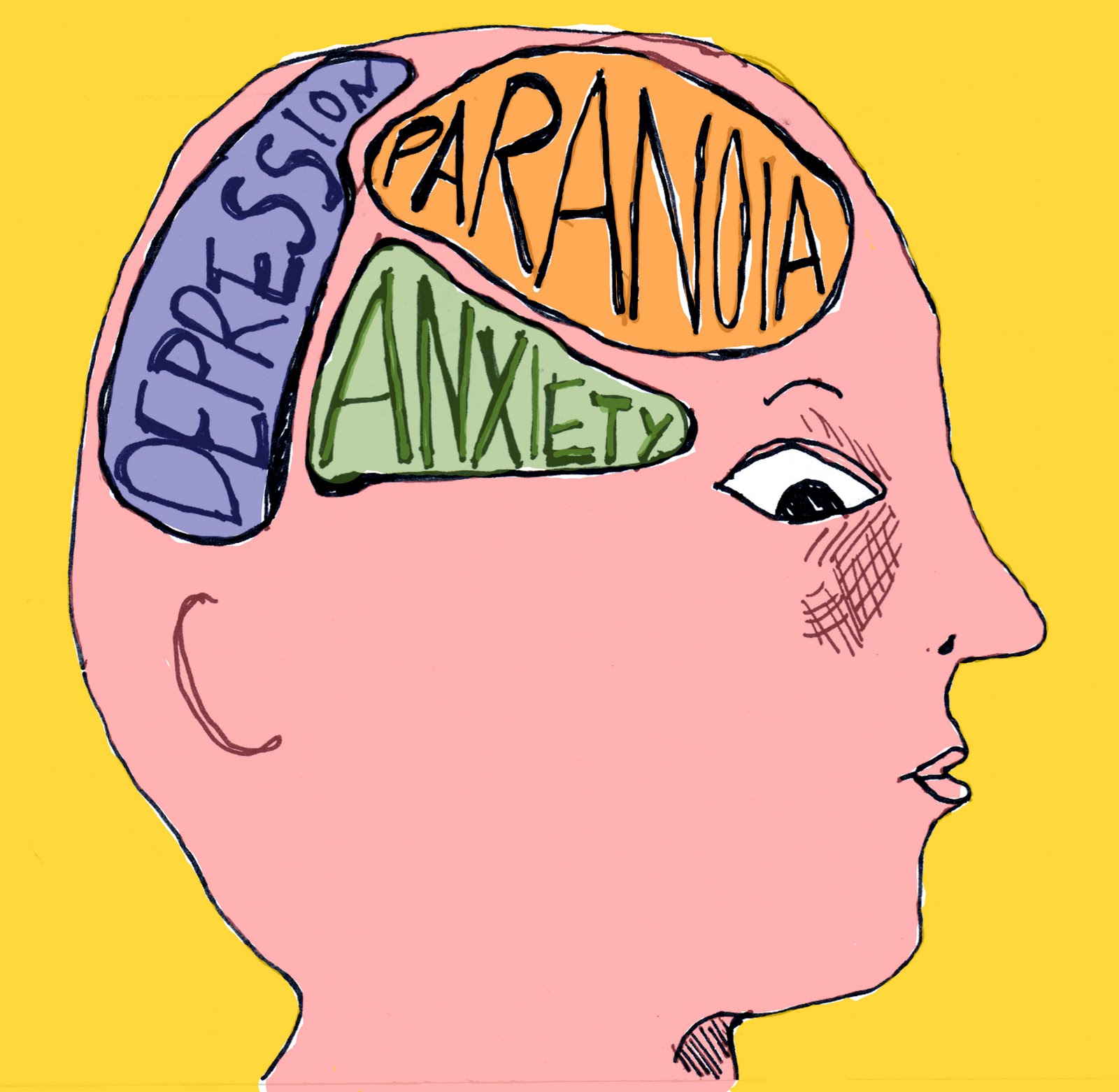
  • Raindrops keep falling on my head—why do I feel like the world is out to get me?

    Raindrops keep falling on my head—why do I feel like the world is out to get me?

    It goes without saying that university can be a very stressful time. And true to the old saying…when it rains it pours. Problems never seem to come one at a time, but rather all at once. Being under academic pressure comes with side effects that can reach out to your personal and professional life. But other times, nothing seems to be connected and yet numerous things are wrong. So why is the world out to get you? The truth is, it’s not. But your attitude and the campus setting can seriously affect the results of day-to-day life. So what can you do?

    Ask for help

    You never have to be alone. Even if one of the problems is that you feel lonely and like it is just you against the world. Every school provides free counselling services and there are support groups. If it is a problem with studies and getting assignments completed your professors are there for you. In fact, it’s their job to give you advice and help. Use them. When the problems pile up, you have to put aside your pride and reach out to friends and family and anyone else that can help you. In the end, you will realize who is there for you.

    Focus on one problem at a time

    Yes the problems are piling up—but the truth is that there is no possible way they can all be handled at once. Make a list of everything that is going wrong from smallest to largest (or easiest to hardest), and try to tackle the more important of these first. If that is too daunting and you just cannot bring yourself to do it, pick the one you can solve the soonest and that will get the ball rolling. The success of solving a problem will feel amazing.

    Wait

    If what is wrong right now requires no action but rather time…wait. This too shall pass, and sometimes waiting is not being passive but rather being patient. Sometimes all you need to do is wait out the storm. In the meantime, find ways to envision a good outcome and calm yourself down through exercise, meditation and friendship.

    Tackle your anxiety

    Does the world feel like it’s out to get you because you’re anxious and constantly expecting the worst? Identify what makes you anxious and research ways to fight it. Envision your worst fears and then understand that your worst fears truly never often happen. Oftentimes it is our own insecurities and fears that contribute to the chaotic state of our lives, not outside events.

    When you look back

    The truth of the matter is that when you look back on these hard times, you may actually forget what caused them or what was happening. Oftentimes all these disasters that make university a hell at the time actually seem mundane down the road. Again, this too shall pass.