Category: Campus Life

  • Recognize Your Skills and Talents – and Use Them!

    Recognize Your Skills and Talents – and Use Them!

    Do you know yet what you want to do with the rest of your life? If you have a talent for singing or playing an instrument, you might want to be a professional musician. Maybe you love to work with your hands and want to become a mechanic or a carpenter. Whatever you want to do, it’s never too early to start working on your skills and talents. You can enjoy what you’re doing now and also prepare for the future.

    Everyone has some kind of talent, but it needs to be developed to be useful. If you have a talent for working with your hands, you’ll still need to learn building and repair skills. Even if you have a talent in music or art, you’ll need to develop it. You’ll have to learn skills like teamwork, leadership, and commitment so that you can work well with others. Your skills can help you turn the things you love to do into a job that can support your lifestyle.

    Skills fall into two main categories: hard or soft skills. Soft skills can usually be transferred from one type of job to another, and they include personal skills like the ability to listen to others or to get along with people at work or school. Communication skills, a strong commitment to the job, and self-confidence are other important soft skills that can help you work well.

    Hard skills are more likely than soft skills to lead directly to a job. Knowing how to design a bridge that doesn’t fall down will help you get a job as an engineer and knowing how to use machinery will help with finding work in construction or mining. For some jobs, having these hard skills is the best way to find work.

    Almost every job is a combination of hard and soft skills. Even if you get a job as a welder, you’ll need interpersonal and problem-solving skills to be able to work with other people and to deal with equipment failures or sudden increases in the workload. If you get work at a television station, you might need to have many different hard and soft skills to use the equipment and maybe edit the stories.

    Career-related training programs are often the best places to learn hard skills, but you can work on your soft skills anywhere. Developing your ability to work with others or to complete assignments on time, for example, will always be useful no matter what career you choose.

    How you learn these skills depends on your talents and interests. You could develop your artistic and leadership skills by volunteering to lead art sessions at a summer camp. You could develop your ability to work with others by being part of a sports team or develop your ability to listen by volunteering at a seniors’ home. You can also improve your management skills by organizing a sports event, art show, or concert, even if only your family attends the event.

    Whatever you decide to do in the future, you can already start developing your skills and talents now.


  • How To Successfully Write An Essay

    How To Successfully Write An Essay

    Writing essays shouldn’t seem like a massive burden. Just try to follow these five simple steps.

    Step 1: Think
    Ask yourself, “What is the purpose of this assignment? Why is my teacher making me do this particular assignment?” No matter how stressed you feel, he or she is not intentionally trying to punish you. The assignment is meant to assess how much you have learned in class. Keep this in mind constantly from when you begin to write to when you revise your final draft.

    Step 2: Brainstorm
    Depending on the assignment’s requirements, decide what you want to say in the essay. Make a list of what you want to write about and don’t hesitate to write down any and all ideas that enter your mind. The more ideas, the better.

    Step 3: Plan
    Planning your essay might be the most important step. Once you have determined what it is you want to say, you will now need to map out how you’re going to say it. A typical essay format might look something like this:

    Introduction with a thesis statement that says your essay will be about topics A, B and C
    Body paragraph that describes topic A
    Body paragraph that describes topic B
    Body paragraph that describes topic C
    Conclusion that restates the introduction (but does not repeat it verbatim)

    Step 4: Write
    Choose the items on your brainstorm list that you want to use in the essay and write a full sentence for each. These sentences might become the topic sentences for your body paragraphs. It doesn’t matter (yet) exactly how you will say it, but rather that you have included everything your teacher has asked for. Don’t worry about writing formally or even completely logically – just write. You can improve your work later. Sometimes it is helpful to say what you want to write out loud. Tell a sibling, parent or friend about what you are trying to say and then work what you have said to them into sentences in your essay.

    Step 5: Edit
    Edit your work at least three times. Every essay you write should go through several drafts. If you have done a good job of editing, your final draft will likely be significantly different from the first (hopefully you will have completed the first draft early enough to edit and not the night before the assignment is due!) Read your work through once from the beginning to end without stopping to make sure the sentences flow and the paragraphs are logically connected by transition sentences. Read your work through twice to make sure the thesis statement, which explains what your essay is about and which is usually the last sentence of your introduction, describes what you have written in the body paragraphs and vice versa. Read your work through a third time very slowly to check for spelling and grammar mistakes. Then ask someone else to read your work through in case they spot anything you might have missed.

  • Regarding Bullying

    Regarding Bullying

    In high school, people undergo changes and are developing themselves in different ways. Due to the pressures of growing up, some people learn to adapt and cope in successful ways – such as by finding an outlet for their emotions in activities like competitive sports, clubs, individual pursuits like running or writing, or even just seeking friendship and support from others. Unfortunately, some people have negative coping mechanisms that lead them to find more destructive outlets for their emotions. Sometimes a negative coping mechanism will reveal itself as bullying. This bullying can take many forms, from verbal abuse of other people to stealing from people to physically abusing others. Bullying is a problem that needs to be addressed both with the bully and with the victim because the consequences can present themselves in different ways.

    When people are bullied they can feel sad and left out, as well as feel that they have something wrong with them that caused the bullying. These emotional wounds can take years to heal, and so it is very important to try to resolve the bullying situation as soon as possible. If you are being bullied, the most important thing to remember is that it is not your fault and that you can stand up and speak out. It may not be safe to confront the bully themselves, but by informing your principal, teachers, parents and friends, you can create a support network to protect yourself from the person or people that are harassing you. Remember that the law is on your side when it comes to bullying and any evidence that you can get for proving that the person or people are harassing you will be invaluable if you need to confront the issue with others. Try to have a friend present with you at all times so that you have a witness and a protector, or learn how to use your phone as a recording device so that you can audio record any verbal or physical abuse.

    The person or people who do the bullying have emotional wounds themselves that need to be addressed by a counselor or other qualified professional. Many times bullies have problems at home or problems with other aspects of their life that is causing them to act out in negative ways. These people may be viewed as “bad people” but the reality is that they probably have a serious insecurity or deep emotional wounding that is preventing them from growing up in a healthy way.

    By reporting a bully, you are doing everyone a favor because that person is probably bullying more people than just you. This negative situation may be painful for you, but don’t worry – bullying is becoming more and more of an important issue in schools. When you speak out, it will be received by a well-prepared and receptive audience. The issue of bullying is being covered by the media and there are more and more campaigns against it every day.

    You are not alone and your voice will be heard.

  • Waiting To Choose Your Major

    Waiting To Choose Your Major

    Your first year of university or college is going to be stressful for a lot of reasons. It’s a time when many of your life skills will be put to the test. You’ll break boundaries and rebuild, only to break them down again. Your academic life will probably demand most of your time with course work, lectures, labs, research projects and more. It will all seem overwhelming at first, and to combat that feeling you might feel pressured to be proactive – to get things done and get them out of the way as soon as you can. Caught up in the confusing whirlwind that is school, new friends and living on your own, you might feel like you need to make your decisions right away without taking the time to ask questions and really consider what those decisions might lead to in the future. One of those decisions is choosing a major or minor.

    When applying to universities, most will offer the option of applying to a specific degree program. The decision you make there isn’t set in stone and it’s important not to treat it that way. Most universities will give you until your third or fourth year to change your major or minor if you need to.

    In your first year, you’ll be taking some of the courses required in the major you chose initially. This is a good time to get a feel of what the coursework in your program will be like in the future. That said, most first year courses will barely scratch the surface as far as what that program is really about. Taking a couple of second year courses in your second semester of first year will give you a clearer picture. If you find your original program isn’t something you’re interested in anymore, it might be time to change your major. However, you should hold off on that decision until you have a better idea of what you do want to learn. Remember: most universities will give students at least until third year to declare a major.

    Most programs will allow taking courses from other disciplines provided you still meet the requirements of your original program. Keep in mind the suggested course schedules for first year tend to have a large amount of open spots which you can use to take courses outside your program that you might be interested in while still staying on track to complete your current major.

    If, while at university, you find yourself doubting your academic path, make an appointment with an academic program counsellor. Ask them about taking courses outside your major and figure out where your academic boundaries are set. You’ll be paying thousands of dollars for higher learning, so you might as well learn the skills you’re most interested in.

  • Taking A Year Off

    Taking A Year Off

    If You’re Not Ready, It’s OK

    Post-secondary education costs a lot of money and most students leave with a hefty debt to pay off as they start their professional careers. This debt is harder to deal with if a student chooses to leave their program or is forced to drop out.

    While continuing your education is a great way to guarantee future career success and open the door to higher paying jobs, not everyone is prepared to go immediately following high school.

    Many students experience nervousness as they try to plan for their future and choose an educational institution and program suited to their wants and future goals, but some students have greater concern and need more time to discover themselves and decide what they want from life before they enrol. 


    There is no harm in taking time off to ensure you take the program best suited to your wants and needs. Perhaps after taking a year off to work and reflect, you’ll take the program you thought you’d take in high school – but it’s still better to take the time and ensure you’re prepared to invest the effort needed for success.

    Some students take a year off and work to earn money to pay for their education. Others travel and develop worldly experience, while others upgrade a course or two. There are plenty of options available. Going to school for thirteen to fourteen years straight does not always allow time to reflect on future goals and fully explore the options available. Taking some needed time off, even short-term, can help afford those thoughts.

    Remember that taking a year off does not mean leaving forever. There are always opportunities to return to school. If you’re looking for time off but a year seems like too long, look into January or May-start programs to return to school in less time.

  • A Career In Writing

    A Career In Writing

    Do you enjoy writing? Have you spent years recording your thoughts in a journal? Is that enough to have a career in writing? Many people have dreams of becoming a famous author who is read by the masses, but how achievable is that goal? It all depends on what kind of writer you want to be.

    Print journalism requires a degree, preferably one in media, or writing. However, it is important to note that print journalism is a somewhat archaic career. There are so many changes that have taken place in the field in the last decade involving technology and the internet that it is worth taking a hard look at what these changes mean to the up-and-coming writer.

    Magazine writing is still a viable option, though it is very difficult to break into. Entering contests is a good way to get your name out there and to add something credible to add to a resume. The key to being a successful magazine writer is to continually submit material. Find a topic that you are interested in and that has potential to interest others and go for it!

    Writing a novel is entirely different than any other form of writing. Can anyone do it? Does it require skill or innate talent? The answer is a little of both with a whole lot of perseverance. The only thing holding back someone from being a published novelist is time and patience. It takes a long time to learn the ropes of novel writing and depending on the path you wish to go down, a lot of hard work.

    The online writing market is exploding – it is the future of writing. While the new writer must maneuver through a minefield of scams, there are more and more opportunities for the savvy writer with legitimate skills.

    Becoming a social media expert can also benefit you as a writer. Many potential clients are looking for that writer who can navigate the layers of social platforms. Knowing how to use contacts, how to build a following on Twitter and how to find your way around the multitude of other social media sites is now considered a valuable asset to your resume.

    So if you enjoy writing, keep doing it! Build your resume as much as you can and keep your eyes (and ears) peeled for writing opportunities.

  • Focusing On Your Mental Health

    Focusing On Your Mental Health

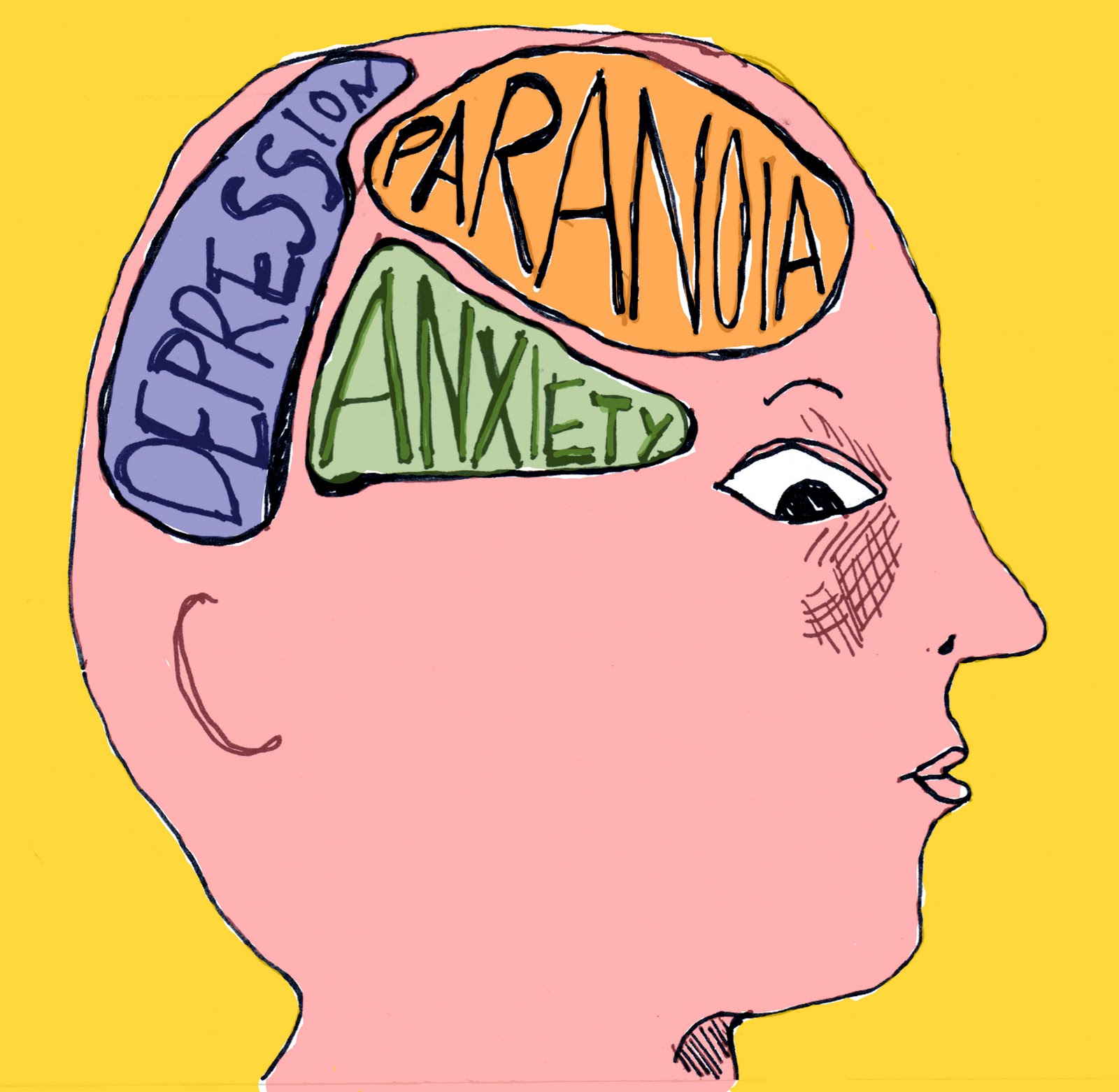
    Life can be busy, and it can be difficult to take care of your health. Caring for your physical health can be hard enough, but what about your mental health? Mental health essentially relates to how you think and feel about yourself and other people and how you act in everyday life. How do you keep your mind and emotions healthy so that you can go to school, have fun with your friends and family, and live a normal life? Looking after your mental health can be a very important part of your daily routine.

    Sometimes, people experience major mental health problems which require medication or regular conversations with a counselor. Even when mental health issues aren’t that bad, they can be very hard to live with. The feelings of sadness and hopelessness that come with depression, for example, can make people stop caring about life. Often these problems are related to what happens to people in their lives, but they come from a combination of factors. One of the most common mental health problems, stress, is a good example.

    Stress happens when something puts pressure on another so that the second one is in danger of breaking. In mental health terms, this could be when school or work becomes so busy that people can no longer manage or when they are dealing with a difficult situation, such as a death or divorce in the family. It can also come through physical factors, such as ongoing pain from an injury or illness. If you are like most people, stress is a part of your daily life.

    How can you deal with the problems like stress that affect your mental health? In some cases, you might be able to change the situations that cause stress, such as how busy you are. If your schedule is causing you stress, you can try to reduce the number of things you do and take more time to relax. You might need to ask for more help with your work so that others can help reduce the stress you feel. Basically, you might have to concentrate on the activities that are most important in your life.

    You might not be able to change everything that you find stressful, but you can try to find ways of making the situation easier. If you have a large and noisy family and you prefer quiet, for instance, there might be little that you can do about it. You might also have to live with a health problem or other difficult situation. However, you can find ways to relieve your stress by spending time on activities you enjoy or by talking with people you trust. If you can deal with mental health issues like stress before they become major problems, you will find it easier to cope with life.

    You need to be aware of the things that affect your mental health and to get help if necessary. Whatever issues you may face, it’s important to see mental health as an essential part of what keeps you going every day.

  • Why Young Workers Fall Behind for a Decade or More

    Why Young Workers Fall Behind for a Decade or More

    Michelle Bucek thought she would be working full-time in her chosen career by now.

    The 24-year-old from Brantford, Ontario, who has a degree in radio and television broadcasting from Ryerson University, recently returned from a one-year stint teaching English in South Korea.

    She subscribes to five different job boards, checks social media, and sends out resumes for three to five postings each day.

    “Over the next couple of months I’m going to do some volunteering and work some retail on the side to keep money coming in, keep pushing, sending out applications, making myself known, hoping something will come through,” Bucek said.

    “A job you get straight out of university doesn’t really exist anymore, and I find that really frustrating.”

    That’s not the only thing at stake, experts say.

    When young people can’t break into the labour market, the risks range from social unrest to mass migration to a wage gap that can persist for a decade, or even longer.

    Long-term unemployment, defined as joblessness that persists for a year or more, can scar young workers for the rest of their lives, the Organization for Economic Co-operation and Development warned Tuesday.

    “It is imperative that governments use every possible means at their disposal to help jobseekers, especially young people, by removing barriers to job creation and investing in their education and skills. The young are at most risk of long-term damage to their careers and livelihoods,” said OECD Secretary-General Angel Gurría, presenting the report in Paris.

    Across OECD countries, those ages 15 to 24 years old had an average unemployment rate of 16.1 per cent in April. That’s just over two times the rate for workers of all ages.

    The U.S., in particular, has recorded an unprecedented increase in the share of long-term unemployed, from around 10 per cent in 2007, to around 30 per cent in the first quarter of 2012.

    “These worrying figures emphasize that a growing number of people, the young in particular, are becoming disconnected from labour markets,” Gurria said. “We need to avoid the risk of a lost generation by all means.”

    It’s not surprising that social unrest is taking hold in Greece, where youth unemployment is running as high as 50 per cent, said Charles Beach, economics professor at Queen’s University.

    Frustrated young men in particular, who are unable to find gainful employment, “tend to get worked up about things and they have a lot of time on their hands,” Beach said.

    Unemployed young people are missing out on opportunities to gain practical work experience to go along with their education. That combination is crucial for eventually moving up the career ladder.

    “If youth aren’t getting that labour market experience, that has a scarring effect which can last a long time,” Beach said.

    Multiply that by thousands of young people, and there are implications for the wider economy, Beach said. “In the economy as a whole, there’s less skill that’s built up. That will have a long-term negative impact on the collective knowledge base and GDP growth.”

    Individuals who have lower income and not as many opportunities may delay marriage and starting a family. Many young people decide to go abroad to find jobs.

    “They have no opportunities as they see it at home. They have to pay higher taxes, and it’s because of nothing they did. Why should they stick around and pay higher taxes on infrequent jobs?” Beach said.

    In Canada, the rate for unemployed youth stands at about 15 per cent, just over twice the national average of 7.2 per cent.

    Professor Philip Oreopoulos, associate professor of economics at the University of Toronto has studied the long-term consequences of youth unemployment.

    Entry level wages tend to be about 10 to 15 per cent lower for a new graduate who finds a job during a recession rather than an economic boom, he said.
    On average, the wage gap persists for about 10 years. But for some people, particularly those in low-paying positions, it never closes.

    The most effective way to close the wage gap is job-hopping, moving from smaller firms to larger ones that offer more opportunities.

    “The good jobs are not there in recessions but if you are patient and wait eventually they become available and if you can grab onto to them, the wages will catch up,” Oreopoulos said.

    But that will likely take longer in the aftermath of the Great Recession, he said.

    “To the extent that we are in a more prolonged recession and it’s taking longer for those good jobs to come back, that would imply a longer time period to catch up,” Oreopoulos said.

  • Interview Do’s and Don’ts for 2013

    Welcome to your job interview 2013. As we all know, it is getting harder to get jobs and fighting for that position will make you feel like a gladiator. It is important you don’t sabotage your opportunities by saying or doing the wrong things during the interview process.

    Do’s

    Practice your greeting in the mirror and be realistic. This means friendly eye contact and a good hand shake. If you are not comfortable with eye contact, practice it. It shows confidence and attention and will make the difference between landing and losing the job.

    Use professional body language. It is 2013 and all fields are competitive – so sit up and show some interest. If this rings a bell for it’s probably because you’ve been asked to sit up before in school as it shows the teacher you are taking interest.

    Dress to impress! You may have heard the phrase, “Dress for the job you want – not the job you have”. This is definitely true in an interview situation! Dress well and pay attention to little details, like your hair and make-up. Do not go overboard on cologne or perfume as the interviewer may have an allergy to it.

    Be prepared to answer a variety of questions. “What makes you an asset to our company?”, “How do you handle stressful situations?”, “Why THIS company?”, “ What would you say your weaknesses are?” Some of these questions are hard to answer on the spot. Make sure not to advertise
    any insecurities or doubt. Research a bit about the company you’re applying with and prepare for some of these questions.

    Shake and smile as you leave and do a follow up. You can follow up through email or by phone 24 hours later, reinforcing your interest for the position. If you have worked through an employment agency it would be a good idea to call them and express you interest in the job as well.

    Don’ts

    Say” I don’t know”. “I don’t know” may just be the most unintelligent thing you could ever say after “whatever”. To not know implies that you are clueless or haven’t given it any thought.

    Blast former employers. We all have past employers who we don’t think fondly of but this interview is not the time to express it. Consider it a test. When asked why you left your last job be vague, if it was for negative reasons.

    Ask about sick days or days off. Whether you mean it or not, it will imply you are irresponsible and that the employer will expect you to call in sick within your first month of being hired. If you are sick, get a doctor’s note.

    Never look at your phone. To an employer it’s a smack in the face. If you can’t not look at your phone for ten minutes during an interview it shows lack of interest and that you are not taking the interview seriously. Turn the phone off.

    Have anything in your mouth. Gum, toothpick, attitude – none of these things should be in your mouth.

  • Practicing Time Management

    Practicing Time Management

    Time management is a problem for many people because there are so many distractions in our day-to-day lives that can interfere with whatever goals we have to accomplish that day, week or year. Often we can have a to-do list, but none of the items end up getting done because we get caught up in doing everything but what we are supposed to be doing. Sometimes, when there is too much to do, we feel especially challenged to make the most of our time. When we are short on time and have a lot to do, we must learn to prioritize.

    This means cutting off some of the less important things and focusing our energy on accomplishing what is the most important. Making lists that order your tasks from most important to least important is a really good trick that can save time and keep you on track. The worst scenario, when short on time, is wasting your energy worrying about everything that you have to do. What you want to do is get down to work as soon as possible, as soon as you are finished drawing out what it is that you are needing to get done.

    If, for example, you have 5 assignments that need to get done, focusing on the assignment that is due next week is more important than focusing on the assignment that is due in two months. You may want to create a short list of the tasks that you want to get done and order them by nearest date to farthest date. Think about how long it will take you to accomplish each one of the tasks, and jot this down next to the due date. Create a schedule for when you will start working on the task and how much time you will devote to it. By doing this, you are assuring that you will not forget about one project in favor of focusing on another or getting distracted entirely.

    If you are really crunched for time, you may also want to include what grade you are expecting to get on each one of the assignments so that you can put a little more time and care into the ones that will mean more to get a good mark on. In this way you will not be wasting your time doing too much research on an assignment for which a good grade will not mean much to you, or for which the overall weighting of the assignment is minimal.

    One last way of practicing good time management is to avoid procrastinating. Often, if we have a lot to do, we may be tempted to do anything but what it is that we are supposed to be doing. This is a natural tendency and we all do it at some point. The important thing to remember is that facing your challenge head on will actually facilitate the task and make it that much easier to complete. By making a list and prioritizing what is the most important (and the least important), we face the challenge head on and avoid procrastinating.