Category: Elementary

  • How to Handle No

    How to Handle No

    No.

    Nowhere else in the English language can two letters have such an impact. Your parents want you to stay home and not see your friends. That one university you wanted to attend does not feel you are a strong enough candidate. The attractive classmate from across the room does not want a date. Rejection manifests itself in many ways, yet the emotional result is always similar.

    From the big to the small, rejections happen to everybody. It is of utmost importance to remember you are not alone. You may not know anyone being told “no” in the same situation, but everyone you know is hearing “no” from somewhere.

    Rejection has always been a part of the human experience. In the late 1930s, Ted from Massachusetts struggled to get his first book published. It took rejections from over twenty different publishers before he finally got a yes. That is more than twenty no’s, more than twenty individual instances of a dream being crushed. At the end of the day, that one yes that got the book published was what mattered. After that one acceptance, all the prior rejections became irrelevant. Had he let those stop him, he never would have published And to Think I Saw It On Mulberry Street, along with all the other books he published under his more recognizable name, Dr. Seuss.

    The first thing to remember is persistence. We are not all Dr. Seuss, but we all have dreams and goals that we pursue. Those goals are not doomed after one, two, or even twenty rejections. In many cases, there is much to learn from the “no” we hear. The work you submitted can be tweaked using the feedback given. Every application and interview process helps to prepare you for future applications in the field.

    Secondly, do not lose your perspective. If you place all your focus on one goal to be accomplished one specific way, then it is no surprise that rejection will lead to devastation. Give yourself multiple goals to reach and multiple avenues to pursue each goal. Writers and artistic creators can find success in television, film, literature, games, and more. Post-secondary education offers many schools offering numerous programs in your field of interest. There is always a path to take.

    Finally, maintain your distance from each rejection. It is your work, a potential date, or a job that did not come to fruition. You as a person are not being rejected. Everyone is told “no” at one point or another, and often receive a “yes” for that same application or creative work when going elsewhere.
    Persistence, perspective, and distance are vital. There is only one vacancy for that job, only one significant other for that attractive classmate, only a limited quota of books that publisher can publish. You are one of many people pursuing those spots. Rejection is not the end of the world. It is a necessary part of it.

    Sources:
    Neuman, Frederic. How to Cope with Rejection. https://www.psychologytoday.com/blog/fighting-fear/201308/how-cope-rejection
    Teenshealth. Big or Small, Rejection Affects Us All. http://kidshealth.org/teen/school_jobs/jobs/rejection.htmlWikipedia. https://en.m.wikipedia.org/wiki/And_to_Think_That_I_Saw_It_on_Mulberry_Street

  • Career Profile: Dog Walker/Pet Sitter

    Career Profile: Dog Walker/Pet Sitter

    Do you like animals? You and your family might look after your pet if you have one. However, did you know that people can earn a living by walking dogs and looking after pets? When people go away, or just when they need extra help, they might want to call on a pet sitter or dog walker for help. It might even be the right job for you someday.

    Pets can be fun, helpful, and good company, but they can take a lot of work. They need to be fed every day, and dogs need to go out for walks several times during the day and maybe at night. Cats tend to need less care, but they also need to have food and water in their bowls and to have their litter boxes cleaned out. Other kinds of pets, like fish, hamsters, and birds all need different levels of care.

    Not everyone has the time to take care of their pets themselves. They might work or go to classes during the day and need someone to take their animals out. Many people who go away on holidays prefer to leave their pets at home instead of taking them to a kennel or other places where animals can stay. However, that means that someone has to take care of the pets while the owners are away.

    Almost anyone who likes animals and has the patience to look after them can become a dog walker or pet sitter. The first step is to get to know as much as possible about animals. Part of learning about pets comes from experience, but it can also be helpful to read books and websites about them. The first step is to decide what kinds of animals you want to look after. Once you know that, you can find the right sources of information to tell you what you need. If you have a pet and go to the Vet often, ask them questions about how you could provide the best care to pets.

    Anyone can look after a pet for a friend or a relative. However, many cities have rules about how many dogs that people can walk at one time. If you want to become a professional dog walker in the future, you should check to see what permits you might need to get. You should also try to find the parks where dogs can be off of their leashes for a while.

    Working as a pet sitter or dog walker can be a full-time job for anyone who is willing to work to get new clients. Payment can vary from minimum wage to twice as much or even more, but it depends on the employer and type of animal. You might not earn much money yet as a dog walker or pet sitter, but this is the type of job that can grow with you as you get older. If you enjoy looking after animals, the job of dog walker or pet sitter might be right for you.

    Bibliography:
    Canine Club Academy. “Dog Walker Salary — What Can You Make?.” http://canineclubacademy.com/careers-with-animals/dog-walker-salary-can-make/.
    Floofins & Co. “Job Description: Pet Care Specialist – Dog Walker.” http://www.floofinsandco.com/about-floofins-co/job-opportunities/dog-walker-job-description/.
    Newman, Alex. “For Dog Walkers, the Walk in the Park is Hard Work.” http://www.thestar.com/business/small_business/2010/03/08/for_dog_walkers_the_walk_in_the_park_is_hard_work.html.
    Pet Caretakers.com. “Pet Sitting and Profitability.” http://www.petcaretakers.com/business/pet-sitting-and-profitability/.

  • Don’t Cheat on that Test!

    Don’t Cheat on that Test!

    I will be the little voice in your mind that will tell/remind you to never, ever cheat on a test. Sure, there are many different reasons for not cheating, the biggest being that it is only ethical, there are other reasons you may have not considered. These factors may be such as confirming your accumulated knowledge, and how you can use that knowledge going forward in your career and personal life.

    Everybody has different ways of studying – and with the right strategy, information sticks so that you can write (and pass) that test. Facts can linger in your mind longer, if you need it – especially if you studied the night before the test. Therefore, your passing the test confirms that you do know and can use the material. Depending on your chosen career, this knowledge is necessary for success, and knowing the basic foundations of any subject (and sometimes the specifics) is essential. If you did cheat on a test, you have confirmed that you don’t know the material, and it won’t help you succeed in your chosen field- so what is the point?

    People know a lot of things that don’t necessarily relate to their careers. Despite working in a law office, I still have two different Shakespearean monologues stuck in my head because I had to memorize the lines – and because they’re particularly interesting in tone, theme, and actually carry some importance towards society in terms of inspiration.

    Returning to ethics; there is a reason why Edgar Allan Poe’s “The Tell-Tale Heart” sticks in the mind. You may know the story: the character is haunted by a metaphorical heart beating in the floorboards. It’s used often to represent the fact that secrets have a way of always coming out – and if you don’t wish them to be, they will haunt you. Your subconscious asks you all these questions, “but I could have studied and put forth my best effort,” “but the teacher will find out,” or even, “did the person I cheat off even study as well?” It is all a possibility.

    Either way, cheating on a test is not advised for so many reasons other than not being ethical, as I’ve written above. It may be tempting, particularly if you don’t know the topic well, or if your brain feels a little burnt out. You must ask yourself the question: what does it say of my character if I cheated on a test? If you didn’t, it proves that you know the information required, and most of all, that you’re an honest character that is determined to work well and is prepared to demonstrate that knowledge. Therefore, I recommend you go and study for that test you’ve been putting off.

  • I Love Nature…Can I Make That Into a Career?

    I Love Nature…Can I Make That Into a Career?

    Do you find yourself dreading having to be kept inside for hours at a time? Are you the one looking at bugs and rocks in the park while the other kids are on the playground? Does your Christmas list consist of ways to get around nature or study it? An early love of nature can lead to wide variety of outdoorsy and exciting careers; here are a few to get you thinking:

    Geologist

    Are you strong in sciences and math? If you love rocks and volcanoes, or perhaps have always been curious about the ocean floor—you might like geology! As a geologist, you would study the different materials that make up the earth. In order to study these things, companies who hire you will often send you traveling.

    Nature Photographer

    Do you love both art and nature? Nature photography is meticulous and exciting work involving either animals or plants. Take a look at the movie Planet Earth or read National Geographic to see the work of some of the world’s top nature photographers. Most of these artists are freelancers, and all of them focus on capturing images of what many of us have never seen.

    Conservation Scientist

    Conservation science means forestry. Trees and forest life are some of the earth’s coolest things to see, and as a conservation scientist you would be involved in protecting the land and taking care of its natural resources. It would be your job to help landowners and governments make the right decisions on how to protect our earth’s precious land and natural resources.

    Farmer

    Farmers who are particularly focused on food or raw materials make a living by growing field crops or working in orchards or vineyards. It is very hands-on work and requires a love of the outdoors and putting in that extra effort to make your product grow and be the best of its kind.

    Park Ranger

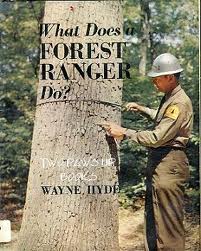
    As a park ranger it would be your job to protect and watch over park and forest area. Park rangers patrol the grounds and make sure visitors are following safety rules and that they do not disturb the natural environment. They are basically sheriffs of the woods.

    Botanist

    A botanist studies plants, from algae to mosses to flowering plants. Plants are so important because they convert sunlight into energy that we can eat and use for fuel. And most importantly, they release the oxygen we breathe! As a botanist, you would study plants to figure out how all of this works. Botanists research on how to power vehicles, clean up contaminated areas, make crops grow better and create medicines.

    Landscaper

    Raking, mowing, planting and digging…all these things to create art out of plants space. Do you love making things beautiful? Then this is the job for you.

    Archaeologist

    Want to be Indiana Jones? Archaeologists get to investigate and preserve physical proof and clues of ancient cultures. This is how we comprehend and learn more about our links to the past.

    *BONUS

    Tree planting is a great way to make money for college. Reforestation is extremely important—especially in British Columbia, which produces large quantities of lumber—and involves hard work and a sense of importance.

  • The Grammar of Emotion: Not Feeling Good Enough

    The Grammar of Emotion: Not Feeling Good Enough

    “I’m not good enough.” Those are words everyone has told themselves at some point. For some of us, these 15 letters weigh us down on a regular basis. They inevitably lead to other thoughts: My grades are not high enough. I do not have enough friends. I am not preparing enough for my future. My parents must be so disappointed. It feels like an inescapable trap!

    As weird as it sounds, part of the solution relates to grammar and language. Notice how those other thoughts are specific, relating to direct issues in your life. Now take a look at these daunting words again: “I’m not good enough.” The sentence is vague. We use the word “enough” as an adjective or adverb for nouns (enough friends) and attributes (prepared enough). “Enough” is used as a measurement, but measuring complicated ideas like acquaintances and preparation is vastly different from measuring length and width. This leads to the big question: When you say “I’m not good enough,” what exactly are you measuring?

    The statement is one coming from emotion, as opposed to rational thought. “I’m not good enough” is a powerful sounding statement, and therefore easy to believe without evidence. Yet just like you always measure distances in math class, you have to treat this statement the same way. Your thoughts can be deceptive. It is important to take time to sit down and write them out. Analyze them like you would a math problem, and figure out what is not adding up.

    Remember that everyone else is doing the same thing to themselves to some extent. We all question what we need to have enough and if we are living up to expectations. This is especially important to remember when you find yourself looking down at someone while wishing you were more like someone else. The more envy and derision you direct to others, the more likely you are to direct negative emotions towards yourself. We are all human beings, filled with virtues and flaws.

    We are also creatures of habit. Just like you learn math by practicing every day, your thoughts and emotions are learned very much the same way. Repeating the same negative thoughts is like answering a math question repeatedly with the wrong answer. You will not get anywhere. This change starts with small and simple steps. Take a moment to select a positive memory, one that makes you feel good about yourself and others. Use that memory as your response to the habitual phrase “I’m not good enough.” When you have free time, train yourself to ask, “Not good enough for what?” Find something quantifiable, such as not enough friends or not enough high marks. If it is an actual problem, prepare steps to fix the issue. You can join clubs to meet new friends or devote more time to studying. If it is still vague, the sentence is grammatically incorrect! It is a negative emotion that can be beat.

    Sources:

    Reynolds, Marcia. How to Feel Good Enough. https://www.psychologytoday.com/blog/wander-woman/201312/how-feel-good-enough

    Sonnier, Madison. 7 Things to Remember When You Think You’re Not Good Enough. http://tinybuddha.com/blog/7-things-to-remember-when-you-think-youre-not-good-enough/

  • Five Books to Have Under Your Belt by High School

    Five Books to Have Under Your Belt by High School

    Finding a book to read can feel daunting. It seems like there are countless choices. If you ask Google how many books there are in the world, the answer is close to 130 million. There may not be enough time to read them all, but the ones you do read can have a huge impact on your life. Here are five books you will want to have read before you start high school:

    1. Tuck Everlasting by Natalie Babbitt
    The age difference of 10-year-old Winnie and 17-year-old Jessie Tuck is more than what it appears to be. The Tucks are actually immortal, and the spring water that made them this way is not only available to Winnie to drink, but causes more problems than expected for everyone. Death and the restricted nature of life are difficult things for children to ponder about, and it does not get much easier as an adult. This book explores that idea through the gift of eternal life, and shows that it may not be such a gift after all.

    2. Where the Sidewalk Ends by Shel Silverstein
    A collection of absurd poems and drawings unlike any other, this is essential reading to blossom your imagination and hold onto the madcap creativity so many of us lose as we enter adulthood. From the craziness of dancing pants to the moral qualms related to not taking the garbage out, the book has inspired children of all ages for years.

    3. The Hobbit by J.R.R. Tolkien
    You probably know all about the epic movie trilogy about the small hobbit creature who helps a band of dwarves battle a daunting dragon. What you might not know is that the 1937 book it is based on is actually a much smaller and quirkier tale. Bilbo Baggins is plucked out of the peaceful Shire to take back the treasure stolen by Smaug, and the imaginative world Tolkien created has inspired children and creators for decades since.

    4. I Am Malala by Malala Yousafzai & Christina Lamb
    A more recent book, this inspiring true story talks about author Malala Yousafzai’s fight for education and equal rights for women. She was shot in the head while riding a school bus because of the Taliban’s beliefs about women’s education. Her miraculous survival and inspiring work since then makes this a must-read and a critical dose of optimism and hope in our modern age.

    5. To Kill a Mockingbird by Harper Lee
    Topical books are not necessarily just for their time. This 1960 novel is the timeless story told from the perspective of a young girl named Scout as she watches her heroic lawyer father, Atticus Finch, defends a black man on trial for rape in a heavily racist town. The issues of rape and racism are used to dive into human nature and the moral dilemmas we all face. Some people get away with horrible crimes, and some innocent people face undeserved punishments, but an individual’s actions can still have a huge impact.

    Sources:
    Goodreads. Popular Read Before High School Books. https://www.goodreads.com/shelf/show/read-before-high-school

    Parr, Ben. Google: There are 129,864,880 Books in the Entire World. http://mashable.com/2010/08/05/number-of-books-in-the-world/#RTvrwKODfEqz

  • The Storytelling of Science and the Science of Storytelling

    The Storytelling of Science and the Science of Storytelling

    In many ways, math and science are worlds apart from the creative arts. The first two rely on observation, testing, and rules. The creative arts, on the other hand, allow for greater freedom and subjectivity. Yet now more than ever, math and science can benefit from creativity.

    We live in an exciting time where technology is accelerating at an unprecedented rate. We have seen more change and discoveries in a hundred years than our ancestors saw in a thousand. With these great leaps come great technological progress and a much better understanding of the universe. We live in a time where so much information is available, but so few of us really understand all of it.

    The inner-workings of your smartphone and the latest research into quantum physics are integral to our lives and future progress. Yet you probably have little understanding of either, and your friends are likely in the same predicament. Now more than ever, we need something universal like storytelling in math and science to help us have a better understanding of those increasingly complex subjects.

    Storytelling is, after all, a science in itself. Stories are units made of elements, such as the beginning, middle, and end. You can break these elements down further into a three or five act structure, plot points, character motivations, and more. Even stories can be dissected like a science or math project.

    Consider this for your future school projects. Stories can make the ideas being learned more fun. By using stories to make ideas more relatable, they can be more easily understood and easier to remember.

    The Big Bang Theory and the development of galaxies tell an exciting story filled with characters such as elements, gases and stars. Your astronomy presentation can reflect this to help your fellow students and teacher better understand those ideas. The human body has many organs and elements working as an ensemble cast to tell the story of your life. Presenting them that way in biology class shows how these scientific principles relate to our everyday lives.

    You have encountered many word problems in math. Consider taking those a step further by creating story-like word problems to demonstrate the mathematical principles you are presenting that can make them more enjoyable for the class. Long algebra questions can be daunting, but they also tell a story from beginning to end. They also feature a conflict, an unsolved variable, and conflicts are essential to stories. Imagining them this way can make for exciting chalkboard presentations as you work through a problem.

    By bridging the academic world with the world of the creative arts, the two can help elevate one another. Storytelling can take on a greater purpose than just entertainment. Increasingly complex scientific and mathematical principles can be more easily understood and learned by future generations. The story of the human race can take a big step forward as we enter a new chapter of discovery and advancement.

    Sources:

    Kukaswadia, Atif. Science and Storytelling: The use of stories in science education. http://blogs.plos.org/scied/2013/06/24/science-and-storytelling-the-use-of-stories-in-science-education/
    Liljedahl, Peter and Rina Zazkis. Teaching Mathematics as Storytelling. https://www.sensepublishers.com/media/1019-teaching-mathematics-as-storytelling.pdf

  • The Importance of Breakfast!

    The Importance of Breakfast!

    I’m sure you’ve heard it many times in your life, “Make sure you eat your breakfast.” Especially when you’re a university, or even a high school or elementary student, having breakfast in the morning isn’t something that’s necessarily easy. But, when you’re rushing to class, it might be beneficial to hear about why breakfast is so important and why you shouldn’t skimp on it.

    Bottom line, you need to eat breakfast. If you’re busy spending time studying or cramming for a reading you didn’t finish, you need it even more than you think. Breakfast provides glucose levels, which is an essential carbohydrate for memory and concentration levels, according to shakeupyourwakeup.com’s report on results from several studies. They also reported that it can even make us happier and lower our stress levels. Consumer Reports also published an article in August of last year specifying the benefits of breakfast. Quoting James Betts, Ph.D., and lead researcher and senior lecturer in nutrition and metabolism, “eating breakfast seems to have a ‘second-meal effect.’ It primes your metabolism to maintain stable blood sugar levels after subsequent meals.” The article went on to say that, according to Eric Rimm, professor of epidemiology and nutrition at the Harvard School of Public Health, skipping out on breakfast will have such negative impacts as encouraging you to eat more during lunch, which will cause spikes in your glucose levels.

    Similarly, The Washington Post published an article in August of 2015 discussing how the Dietary Guidelines Advisory Committee discovered through their research that skipping breakfast may in fact lead to weight gain. Reported as being found in the committee’s 2010 Dietary Guidelines, The Washington Post quoted, “eat a nutrient-dense breakfast. Not eating breakfast has been associated with excess body weight, especially among children and adolescents. Consuming breakfast also has been associated with weight loss maintenance.”

    There are tons of things for you to eat that are healthy for you and can also help you in the morning- not only to wake up but also to keep moving with your busy schedule. Health.com recently released a list of the best breakfast foods to have, which include things like oatmeal, Greek yogurt, wheat germ, grapefruit, bananas, and almond butter, to name a few. Basically, you don’t really have any reason not to be eating breakfast and given all the benefits you can reap from it, would you really want to skip it?

  • The Science of Bullying

    The Science of Bullying

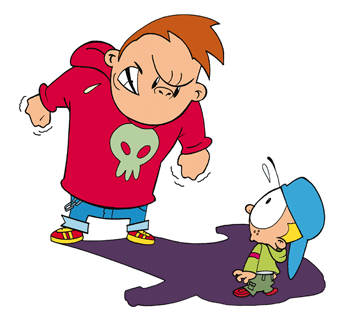
    You have seen bullies in action. You may have been on the receiving end, or maybe you yourself were the bully. We all know it happens, and how awful it can be. The real question is why it happens. It is important to remember that no two bullies are the same. It is even harder to remember that bullies are human too.

    Studies have shown a myriad of causes for bullying behavior. The bully may be redirecting the pains of a troubled family life or struggles in the classroom towards other students. Bullies might be trying to appear “cool” in front of their peers. They may have seen others get their way through bullying, and prey on individuals who appear weaker to gain control. In all these cases, a bully is someone in need of something and not getting it. There is an emotional void that they are trying desperately to fill, and in that desperation they are going about it in an extremely harmful way.

    This is important to remember, especially as a victim of bullying. It is far too easy to view the aggressor as a monster, as someone lacking in empathy and humanity. Adults do this too; simply take a look at any wartime propaganda to see how the opposition can be made to look like inhuman monsters. It is human nature to create a story-like quality to our everyday lives, to classify ourselves as the heroes and designate the villain role to someone else. The bully might be your villain, but in their life story they may see themselves as the tragic hero up against abusive parents or teachers.

    Victims of bullying deal with depression and self-esteem issues. They often struggle to find a sense of normalcy in their adulthood. Bullies are more likely to become dependent on drugs and alcohol as they grow older, or continue their habit of abusive behavior well into adulthood. It is in the best interest of both the bully and the victim to put a stop to the behavior. If you or someone you know is being bullied, some people will tell you to go to an adult. Others will say to fight back. What is the best course of action?

    Unfortunately, just like how no two bullies are alike, no two life stories are alike. There is no one-size-fits-all solution. If you are going to tell an adult, make sure it is someone you trust and who you believe will take strong action. Fighting back might be tempting, but it can lead to an escalation in violence that would make it hard to tell the bully and victim apart.

    However, doing something is far better than doing nothing. Reach out to a teacher, parent, or adult you admire. If they have earned your admiration, then they have the character and intelligence to take proper action. Ultimately, this will save the lives of all the victims – both the bullied and the bully, for maybe, years to come.

    Sources:

    eSchooltoday. Why do some people bully others?
    http://eschooltoday.com/bullying/Why-do-people-bully.html

  • Resume Basics: What is it?

    Resume Basics: What is it?

    So first of all, why do we need to know about resumes? It’s because resumes are one of the most important tools students like yourself can use to find your first job.

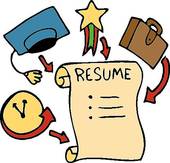
    But first, what is a resume? A resume is a short and to the point piece of paper that gives your dream company and future employers a better idea about whom you are. It will be a summary of your accomplishments, including but not limited to education, work experience, skills and talents. Before getting started on your resume, take the time to list out your strengths and skills.

    Depending on your goal, you can change the type of resume you create. If you’re applying for a job, talk about your relevant skills that pertain to that job; if it’s for a volunteer position, talk about why you’re passionate about the organization and cause. There are three general types of resumes you should be aware of:

    A functional resume is one that focuses on your skills and talents. As a young student, chances are you might not have a lot of work experience so a functional resume will be well suited for you. Focusing on your skills will help highlight why you will do a good job at a new workplace.

    A chronological resume is one that focuses on your experience. If you feel that over the years you’ve developed quite a few experiences, you can try this resume format and list your accomplishments in order of time they happened. More often than not, the experiences should be listed with the most recent experiences first. Remember to include who it is you worked for or volunteered with and where it was located.

    After you’ve mastered both the functional and chronological resume you can proceed to try the hybrid version of the two. This means you will be talking about your strengths, talents and listing out your past experiences. Important tips to note on your resume: Don’t forget to give the sections on your resume different headings. The last thing you want to do is confuse the reader! Make sure to include your personal information: this includes your full name, address and most importantly, your contact number and email address for employers to get in touch. It is important that your resume be clear and easy to read. When employers go through mountains of resumes, they need to be quick in understanding your skills and experiences.

    References:

    http://how-to-write-a-resume.org/
    http://career-advice.monster.com/resumes-cover-letters/resume-writing-tips/how-to-write-a-resume/article.aspx
    http://career-advice.monster.com/resumes-cover-letters/resume-writing-tips/how-to-write-a-resume/article.aspx