Category: Elementary

  • Career Profile: Meat Cutter

    Career Profile: Meat Cutter

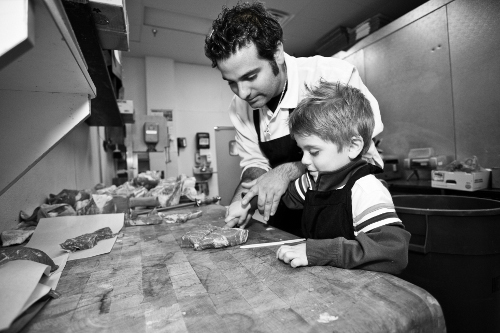
    If you eat lunch meat like bologna or salami, you might notice that it sometimes comes already sliced and sometimes not. Have you ever thought about who cuts the meat? In small shops, it might be the same person who sells the meat to you and your family. In many places, however, the job of meat cutter is a special one that requires a lot of skill and experience.

    Working as a meat cutter requires no special education other than a high school diploma. However, people in this trade need to know about mathematics to be able to weigh and measure the meat and to calculate prices. They need to be able to work with other people in the store or factory and to be skillful in dealing with customers. Depending on where they work, they might spend a lot of their time dealing with people or almost none at all.

    One of the most important aspects of being a meat cutter is to know a lot about the product. Sometimes, this might include knowing about the nutrition in a piece of sausage. At other times, this might include knowing about the different cuts of meat and how they are used. Do you know the different kind of steak or what kind of meat is best for using in soup? How long should a turkey be in the oven before it is done? These are the kinds of questions that a meat cutter might have to answer.

    Jobs for meat cutters can vary. They can work in processing plants, butcher shops, small grocery stores, large supermarkets, or anywhere else that deals with meat. Some of them might spend their days cutting up large chunks of meat in factories or feeding it into grinders to make sausages. Others might work in restaurants or small shops where they cut small amounts of meat for sandwiches.

    The special skills that meat cutters need and the working conditions depend a lot on the specific job. People working in factories or slaughterhouses might have to deal with very harsh conditions as they work with cold freezers, sharp tools, and heavy animals. However, people who work in small shops might be very busy dealing with customers but have much more comfortable working conditions. Wages vary from about $14 to about $30 per hour, depending on experience and the difficulty of the work.

    Like many other tradespeople, meat cutters have a special organization to help members. The Canadian Professional Meat Cutters Association Helps members develop their skills and to deal with any problems that they encounter. Becoming a member of an organization like this can help people find others in the same trade and can help with education and apprenticeships. If you are interested in becoming a meat cutter, you should find out about what the trade association is doing in your area.

    Do you like working with food? Maybe you should consider becoming a meat cutter.

    Bibliography:

    BC Tourism. “Meatcutter Program.” https://www.go2hr.ca/training/meatcutter-program.

    Canadian Professional Meat Cutters Association. Training & Education http://meatforce.ca/training-education/.

    Payscale.com. “Meat Cutter Salary (Canada).” http://www.payscale.com/research/CA/Job=Meat_Cutter/Hourly_Rate

    Sample Job Descriptions. “Meat Cutter Job Description.” http://www.samplejobdescriptions.org/meat-cutter.html.


  • What is Empathy?

    What is Empathy?

    You sit at your desk. Your nerves get to you. The teacher is handing back that major test. Whether the mark is a pass or fail, it hits with assurance when the paper lands in front of you. But you are not alone. There are two dozen other students also at their desk, also nervous, also about to get struck with a grade.

    The Dictionary of Obscure Sorrows (www.dictionaryofobscuresorrows.com ) features the word sonder: The realization that everyone around you is living a life just as full and complex as yours; you might only notice students in the hallway from the corner of your eye, but that is also exactly how they notice you.

    If you focus on the latter part, the thought is a somber one. However, by focusing on the notion that every life around you is just as complex as your own, you can work on a skill often sorely lacking and rarely taught: empathy.

    Part of empathy is to know what a certain person is feeling. When a fellow student misses the ball in gym class and everyone laughs, you can understand that they are embarrassed. You learned the word at a young age and have experienced it for yourself. However, because our emotions are so hardwired to our own experience, we need to go a step further to fully empathize with that student.

    The other part of empathy is to understand why a certain person is feeling the way they do. This requires trying to figure out their perspective. That student woke up that morning with hopes for the day just like you. They said goodbye to their parents just like you did, and have plans for after school just like you. They did not plan on this moment to arise and torment them.

    By putting this into practice, you will react better to the behaviours that affect you. When you are doing a group project, it is easy to get angry with the partner who is not doing their fair share of work. If you can figure out their perspective, and see how they are struggling with the material, or have personal issues at home distracting them, you can find more effective ways to work through the problem.

    Now, back to that major test; if it is a subject you excel at, the mark may make you want to brag. If it is not, you may want to cover it in shame. Meanwhile, the mark of the student next to you may evoke feelings of envy or mockery. Remember to challenge your perspective. You may dominate classic literature, but that student who failed next to you may dominate when measuring angles. The smartest person in the room always depends on what room you are in.

    By practicing empathy, you can feel better about your own faults, and more easily work through issues with others. By making it a habit, it will help you through school and beyond.

  • Becoming a Writer: Small Steps to a Big Career

    Becoming a Writer: Small Steps to a Big Career

    Humans have been writing words down for over five thousand years. Some seek a form of expression free of the anxieties and shyness of verbal communication, or are drawn to how far the written word can spread and its longevity. The question remains: How do you make it a career?

    An important thing to keep in mind is that writing can entail many different careers in many different industries. Authors, screenwriters, journalists, and playwrights all exist in different work spheres doing very different things.

    Ultimately, it all comes down to one principle: If you want to write, write. Make it a habit. Give yourself a goal to accomplish daily. It could be a journal entry, or perhaps 500 more words to the novel you are working on. If you have no idea whatsoever what to write, spend five minutes typing out a stream of consciousness. This is one of those rare cases where quantity is more important than quality. The vast majority of any writer’s work never sees the light of day.

    In school, and everywhere else, you can divide everything you do into two groups: writing opportunities and writing inspirations. All writing projects are opportunities to find your voice. If the task is a dry one, such as a history essay, ask your instructor if you could write it as a piece of historical fiction.

    Writing is fueled by experience. The challenges of math class and the situations in word problems could inspire a short story. Civics class is research for your political thriller. Everything you do either leads you towards a writing career, or inspires your writing career.

    Outside of school, seek out opportunities to get your work published. You need credits to your name, no matter how small, so hunt online for sites and contests to submit your work. Author Karen Krossing offers a great resource of such sites: karenkrossing.com/wp-content/uploads/2007/08/Where-Young-Authors-Can-Submit.pdf. Getting your work on sites and magazines builds a portfolio for people to get to know you and your writing style.

    As you get older, it will be important to network and meet people in the industry. Make friends with people who are also keen on a writing career or a career in the creative arts. They are not your competition – you can help edit each other’s works, and help each other seek out opportunities in the future. In university and beyond, meeting people in the industry is the best way to find paid writing work.

    A writing career will not happen overnight. You will likely start with small freelance opportunities and grow from there. By writing daily and being open to inspiration from anywhere, you will build a portfolio and the skills for writing. By submitting your work and meeting new people, you will have a better chance of discovering opportunities to write and actually get paid for it. If you are devoted to the craft, you will be ready for when those opportunities arise.

  • Career Profile: Makeup Artist

    Career Profile: Makeup Artist

    Makeup artists; what do they do? Generally, they cater to esthetic needs by doing people’s makeup and hair. Their clientele can vary from brides to working on models for fashion shows, to movie sets. Makeup artists are not only responsible for applying makeup and hairstyles. They are also responsible for the ideas and research involved in the makeup process.[1]

    Makeup artists don’t just focus on the face of subjects; they do makeup effects for the whole body. They can create fake cuts, wounds and lacerations that are applied with special make up kits. Gregory Nicotero, makeup artist for AMC’s The Walking Dead explains one of the key features of series:

    “One of the signature things in The Walking Dead are the teeth,” explains Nicotero. “For every character that we do, we make custom dentures.

    The more you expose their teeth, the more threatening they look.”[2]

    Areas of this industry are vast. A Makeup artist may work for news and media outlets, theatrical productions or in the fashion industry. [3]

    While some makeup artists work as independent contractors for film and theater companies, some work for production companies and travel on the road. Some even work for politicians and travel with them on foreign trips.[4]

    Colleges like Sheridan, offer makeup and special effects programs, which include 40 hours of placement. This course includes lectures on sketching, colour theory and the application of special effects makeup.

    Makeup artists are required to be very artistic and have a very good eye for detail. They are well respected in their industry. Some makeup artists can earn up to $30 an hour.

    If you enjoy working with people and makeup then this is the career for you!

    References:

    [1] https://nationalcareersservice.direct.gov.uk/advice/planning/jobprofiles/Pages/make-upartist.aspx

    [2] http://aplus.com/a/Walking-Dead-Zombie-Costumes-Making

    [3] http://study.com/make-up_artist.html

    [4] http://www.thestar.com/news/canada/2015/04/09/mike-duffy-trial-highlights-stephen-harpers-use-of-makeup-artist.html

  • How to Be Inclusive of Others

    How to Be Inclusive of Others

    We live in a world full of people of different genders, cultures, religions and economic backgrounds. Because of this, we all have a responsibility to make sure that any individual, regardless of who they are or where they come from, is included into everyday life.

    What does it mean to be inclusive?

    Sometimes, inclusivity takes the form of certain rights, which are granted to individuals who may not have those rights to begin with. For example, students who practice a religion (regardless of what religion it might be) can be given the right to take religious holidays off of school without penalty. Though it may seem like common sense to grant rights like these to others, the reality is that not everyone has access to them all the time.

    That being said, sometimes inclusivity means allowing for special circumstances in order to even the playing field. Individuals who belong to disadvantaged groups—groups that, throughout history, have been less privileged and continually oppressed compared to others—may receive extra attention because of their disadvantaged positions in society. For example, First Nations students may have special scholarships available to them, because they are statistically less likely to attend post-secondary education.

    Finally, inclusivity can mean a sense of fundamental respect for others. In other words, others are not judged by certain unchangeable traits, like their race or their gender. Instead, they are treated with respect because they are human beings. For example, students who were born in different countries can set their differences aside to work together within the classroom.

    Here are some ways you can be inclusive of others:

    • Don’t make assumptions. Assumptions about an individual based on things like their religion or gender are a form of prejudice, and they often result in that individual being treated unfairly.
    • Ask questions. Individuals who are different than you will probably have different perspectives and opinions about the world. Ask them not only about what they think, but about how they would like to be treated.
    • Embrace your differences. You don’t have to agree with everyone all the time, but you can often learn from others who are different than you. Try to be open-minded: your differences don’t have to lead to conflict.
    • Consider yourself. How are you different from those around you, and what makes you special? Are you proud of your heritage? Is religion important to you? Knowing the answers to these questions will familiarize you with your own values, and help others treat you with respect.
  • How to Pack Healthy Lunches for School

    How to Pack Healthy Lunches for School

    Getting to school and discovering you have a ham and cheese sandwich and an apple, yet again, can get tiring after the first few weeks. Change is good; especially when it comes to what you eat. It’s easy to get bored with the same old, same old, and when this happens it can be tempting to skip lunch altogether or binge on snacks like pop, chips and chocolate bars (for some reason they never get dull). In order to relieve the dullness of another standard lunch, you may want to try packing your own to ensure it will never be boring again. Lunches should be full of variety- a few healthy items, and maybe 1 or two treats.

    In order to pack a lunch you’ll need: a reusable lunch bag, a small ice pack, a water bottle, juice container, a small round storage container (for dips and sauces), a sectional container (with 2 or 3 sections) and a square container. Reusable plastic utensils and reusable cloth sandwich bags are also a great way to be environmentally friendly and save a little money.

    Before you start looting the kitchen for ingredients, first, you can brainstorm some ideas. A good time to do this is on the weekend so you have time to shop and plan a menu before the school week starts.

    You can go online to check out ideas; watch a few cooking shows; check out Pintrest or look at some cook books to help you get ideas.

    You will want to try and balance your lunches. Try picking a variety of foods from each of the four food groups. You can take a look at the Canadian Food Guide to find out more about the food groups and the amount of servings you require based on your age. The four food groups consist of: Fruits and Vegetables, Dairy, Grains and Meat/ Alternatives. Here are a few ideas to get you started:

    • (turkey bacon)BLT Wrap with grapes, pretzel sticks and a cheese string.
    •  Chicken Cesar wrap, yogurt, celery sticks and a banana.
    •  Baked potato with sour cream, feta cheese, rice cakes and rolled up turkey slices.
    •  English muffin pizzas with ham and pineapple, chocolate milk and a fruit cup

    Of course, you don’t always have to abide by what the Canadian Food Guide tells you. Many families eat different foods and come from different backgrounds. This may consist of many different foods not listed or mentioned in the food guide. There are many different types of cold curries you can make, for example. Maybe you like noodles? Click on the following link that will lead you to a simple recipe on how to make Cold Curry Peanut Noodles: http://www.foodnetwork.com/recipes/cold-curry-peanut-noodles-recipe.html

    An awesome snack to have in your lunch may be the left over Hummus your Mom or Dad made the day before; you can pair that with some carrot sticks and, voila- you have your afternoon recess snack.

    Everyone has different body types and different types of food may not agree with you. However, it is never a bad thing to try and make something new (maybe even spark your love for cooking).

    By preparing your own lunch you not only get to have something you actually want, you’ll learn a few things too, like, proper nutrition, how to help out around the house, pride, accomplishment and responsibility. It’s also fun. So get creative and get ready to be the envy of all your friends at the lunch table.


  • Getting Distracted in School

    Getting Distracted in School

    Distractions are everywhere. Even as I sit here and write this I can hear music blaring in the background, people talking at the table beside me, phones ringing and buzzing and the ventilation system humming at a constant, yet irritating pace. It’s hard to ignore disruptions and even harder to avoid them.

    Distractions are even more problematic when you are trying to focus in class or write an important paper or study for an exam. Constantly getting distracted can put you off balance and prevents you from attaining your goals.

    Distractions come in many forms:

    •   friends/ roommates
    •   family
    •   relationships (significant others)
    •   sports/ extra-curricular activities
    •   parties/ social life
    •   work
    •  day dreaming
    •   technology (TV, phone, internet, social media, music, video games etc.)
    •  poor/ insufficient diet and exercise
    •   anxiety, depression, ADD etc.

    All of these distractions can make it hard to focus. They can make you forget what you were doing, make you less ambitious and take up way too much time so you miss deadlines. The problem is most of these things are unavoidable. You can’t be expected to isolate yourself all of the time. You can’t ignore all technology, never work or participate in social activities and focus only on school. The thing is you don’t have to let them throw you completely off track. Balance and time management, are key.

    Here are some strategies you can try if you find yourself getting distracted easily:

    • If you are a day dreamer and trying to study at home try moving around while u study and repeat what you are reading out loud.
    • If you have ADD or are just a fidgety person try doing so quietly so you don’t break your concentration or someone else’s. Squeeze a squishy stress ball or fiddle with a piece of string, anything to keep you occupied so you can better focus on the work that needs to get done.
    • Schedule breaks so you have a chance to refresh. Set a timer so you make sure you don’t go past your allotted time.
    •  Establish a time to hang with friends/ family/ significant others etc.
    •  Disable pop up alerts on your phone, and turn the sound off, and only check voice mails, texts, social media and emails at certain times.
    •   Disconnect from the Internet while you work.
    •   Make sure to eat healthy meals and snacks a few times a day. Drink plenty of water. And get enough sleep and exercise. Good physical health will help you maintain better mental health.
    •  Learn to say no. You can’t do everything, and that’s okay.
    •   Give yourself a break. Make sure you leave time to do things you enjoy. That way you will be less likely to spend the entire time you are supposed to be studying dreaming of doing something else.

    Remember distractions can get the best of any of us. So it’s important to develop a schedule and stick to it- you can do this!


  • How to Become a Chef

    How to Become a Chef

    When you eat at a restaurant, order room service in a hotel, or enjoy the buffet at a party, do you ever wonder who makes all the food? The answer to this is a chef, a professional who is trained in food preparation and serving meals.

    So how do you become a chef?

    The first thing is that you need to love food. If you enjoy trying new kinds of food, learning how to make meals, creating your own recipes, and sharing your cooking with other people, you might be born to become a chef.

    There are several different types of chef, including the head chef, sous-chef or assistant chef, sauciers, line cooks, and pastry chefs. Depending on your role, you can be supervising the kitchen, managing other chefs, creating menus, cooking meals or desserts, or ordering kitchen equipment, supplies, and ingredients.

    Becoming a chef also requires some college education. Many Canadian colleges offer programs for Culinary Arts, Chef Training, and Restaurant Management. Most colleges can also help you arrange for an internship during summer vacation, or after graduation, in order to help you get on-the-job skills and experience.

    Canada also has optional certifications such as the Red Seal interprovincial trade certification that allows you to work in any province or territory, and the Chef de Cuisine certification from the Canadian Culinary Institute of the Canadian Federation of Chefs and Cooks (CFCC). You can also pursue training both within Canada, and internationally, in various types of international and multicultural foods.

    Depending on what type of chef you with to become, you can specialize during your college program, as well as going for extra schooling afterwards. For example, a pastry chef will take courses on baking, cake decorating, and bread making, and many others. A sommelier certification teaches you about wine and winemaking, and how to match wines with different foods and meals. A line cook will be responsible for a specific section of the kitchen, such as making the salads, or soups, or plating the meals to look nice.

    Many businesses employ chefs, including places such as restaurants, hotels, school cafeterias, hospitals and nursing homes, and catering companies. Depending on the location, and the type of chef you are, the job tasks will be a little different, but skills needed include good communication, time management and prioritizing skills, and leadership skills.

    If you are thinking about going to culinary school to be a chef, you can start early by learning to cook independently and trying new recipes in the kitchen. In high school or on summer break you may think about working in as restaurant or other food service industry to see how a professional kitchen operates. This will also let you meet professional chefs and cooks, and get advice or tips on working as a chef. You can also volunteer to help at soup kitchens, church suppers, and similar opportunities to connect with the local food service industry.

    Sources:

    Government of Canada Job Bank – Explore Careers by Occupation: “Chef”

    http://www.jobbank.gc.ca/occupation_search-eng.do

    CareerBear.com

    http://careerbear.com/chef


  • What is Fundraising?

    What is Fundraising?

    Fundraising is common in our society, but there can never be enough. It can include school events to multi-million dollar corporations advocating for causes such as poverty and homelessness. Although it often goes unnoticed, fundraising has many benefits to both the fundraisers and the beneficiaries. The act of giving, and the accomplishment of a desired goal play important roles in youth development; fundraising develops many skills, and enhances your sense of responsibility and awareness.[1]

    The main goal of a fundraiser is to generate profit in order to support certain events and causes. Fundraisers in schools can be for purchasing sporting equipment, hosting monthly book fairs, pizza parties, clubs and more. Sometimes they can be created in order to raise money for organizations like Kids Help Phone or the Terry Fox Foundation. All of these events produce positive results such as initiating social activities for the children and overall, creating a more amicable environment for the students, giving all an equal chance.[2]

    There are different ways to fundraise. Many schools host bake sales and barbeques. Parents and students bake goods and sell them to the public; the proceeds from the bake sale can go to various causes such as sports equipment and field trips for the school. Concerts are also very popular and can be hosted by schools, corporations or local businesses. This is a great way to give exposure to up and coming musicians as well as raising money for a good cause. Fundraising helps promote synergy as individuals will be working hand in hand to support a common goal.

    Strathona Composite High school, in Alberta set a world record by raising more than $360,000; more than any high school has raised in the country. They have coordinated fundraising events from HIV awareness to educating the public on water sanitation. The school has a leadership program that supports students’ academic growth.  Program coordinator Tom Younge believes the program will expose students to real life problems like stress and emotional management as well as time management, helping develop members of the program to reliable and responsible students.[3]

    Fundraising comes with a lot of valuable real life tasks. The strategic planning of the fundraiser and the management of the staff and individuals involved, pose a challenge to fundraisers, but there are great rewards in the end. Fundraising is a great way to meet people with common interests and passions- go out and raise some money!

    References:

    [1] http://www.fundraisingip.com/fundraising/why-fundraising-is-important/

    2 http://www.fundraiserinsight.org/ideas/

    3 http://www.theglobeandmail.com/news/national/education/how-to-break-a-high-school-fundraising-record/article24642767/


  • Is a Business Empire in Your Future?

    Is a Business Empire in Your Future?

    The world’s business landscape is changing. In the past, before people could be business moguls, they usually would have to work their way up the ladder or at least have several years of hard work tucked under their belt. However, as today’s successful young entrepreneurs like Facebook CEO Mark Zuckerberg and MyYearBook.com founder Catherine Cook have proven; you can have your own business empire even at the same time as you reach voting age. They have done it, so if there’s any shadow of a doubt that you can’t follow in their footsteps, always remember their stories to give you inspiration.

    The reality of kick- starting a business into commercial reality is not as easy as it sounds, and it is true that you may have to start small. The main trick is to pin down what your business idea is, and if it is viable. So, how exactly can you find that eureka moment?

    Know your passion.

    Figuring out where your true passion lies is a step in the right direction. For instance, Angelo Sotira had always been fascinated with graphic design, even dabbling in customizable WinAmp skins, before he founded DeviantArt, dubbed as the Facebook for digital artists everywhere. Michelle Phan, meanwhile, has always been passionate about creating different looks through makeup, and now she is a YouTube star and has her own makeup line.

    Find a need.

    You may pride yourself of being business-savvy, but you just don’t know where to put your skills to the test because you can’t seem to figure out what you are really passionate about. Don’t fret. What you can do is find a need instead. If you can make something that young people like you need, what would that be? For instance, it could be an app that can solve math problems in a matter of seconds.

    Build a network.

     Think networking is just for job search? Think again. You can also make use of this practice when you are in search of business ideas. Networking gives you access to people who have been there, done that—and these are the best people to look to for advice so you can get that inspiration and plan your business idea.

    Travel.

    This isn’t for everyone, but if you have tried the three above-mentioned suggestions, and you can’t still think of anything, consider traveling to find your eureka moment. According to an article in Scientific American, traveling allows people to be more receptive to new ideas, new rituals, and new perspectives. Maybe that business idea of yours is just waiting somewhere in exotic Bora-Bora or romantic Paris.

    SOURCES:

     http://www.scientificamerican.com/article/the-aha-moment/

     http://www.huffingtonpost.com/2014/10/22/photomath-app-solve-math-problems_n_6025948.html

    http://sbinfocanada.about.com/cs/startup/a/10startingtips.htm

    http://www.telegraph.co.uk/education/universityeducation/student-life/10420855/Students-top-tips-for-starting-your-own-business.html

     http://www.wsj.com/video/michelle-phan-youtube-star-to-business-maven/916A1AEA-1D8F-498C-A659-67A8583BDF6C.html

    http://www.fastcompany.com/59441/facebooks-mark-zuckerberg-hacker-dropout-ceo

    http://www.entrepreneur.com/article/217859

    http://www.incomediary.com/top-young-entrepreneurs