Category: Featured Articles

  • Career Profile: Network Cabling Specialist (French version available)

    Career Profile: Network Cabling Specialist (French version available)

    Suppose that your Internet connection or your phone suddenly stopped working. If unplugging the connection and plugging it back in failed, you might need the services of a network cabling specialist. These tradespeople are an important part of keeping people informed and connected.  If you are detail-oriented and good with your hands, this career might be right for you.

    Communications systems like the Internet and phones use cables and data networks to send messages from one place to another. Network cabling specialists install or repair these networks and keep them working properly. They might work in residential neighbourhoods, commercial businesses, and industrial buildings. These networks can include single lines, coaxial, and fibre optic cables for voice, video, and data transmission. People in this trade need to know the best type of cable to use in each situation.

    Becoming a network cabling specialist normally involves completing a program that includes theoretical work, practical experience, and a trade certification exam. Normally, this process takes about two and a half years, and training is available through career colleges like Herzing. Courses in the program teach basic skills like how to test cable connections, but also how to comply with safety standards, how to prepare cost estimates, and other skills that people in this trade need. As in many fields, high school courses in mathematics and English are useful, as well as anything related to electronics.

    Trade schools are good places to learn the skills necessary for becoming a network cabling specialist.  A typical program is twenty-four weeks long, including both practical experience and theoretical work. Other career colleges have similar programs that teach people what they need to know to work in this trade.

    In some cases, on-the-job training and apprenticeships can be good ways of learning the trade. The first step is to find an employer who is willing to train an apprentice. Once the apprenticeship is registered, the employer can start the process of training. This option could be a good choice for many people, since they can start on a job right away and get the experience they need.

    After completing the program, people in this trade can work with telecommunications or network installation companies, construction firms, data centres, and other companies that provide phone, Internet, or television services. Some of the work is indoors, but people in this trade might need to work outside to deal with underground cables and controls.

    Being detail-oriented and careful is important for network cabling specialists. Patience is an important part of the work since it can take time to find a problem and to solve it. Becoming an expert in this trade could be a good choice for people with these qualities, and job opportunities are likely to be steady in the next few years.

    Working as a network cabling specialist is not necessarily very physically difficult, but it can become harder as people age. Salaries in this trade generally begin at about $15 per hour, or about $47,000 per year and can rise to approximately $28 per hour or $79,000 per year. Jobs are likely to be more plentiful in cities than elsewhere, but almost every community has at least some need for people in this field.

    Network cabling specialists do important work for keeping people connected and informed. If the job appeals to you, it could be a good choice.


    Bibliography:

    Herzing College. “Network Cabling Specialist.” https://www.herzing.ca/programs/network-cabling-specialist#.

    Network Telecom. “Network Cabling Specialist: How to Become One.” https://network-telecom.com/what-do-network-cabling-specialists-do-how-to-become-one/.

    Payscale Canada. “Hourly Rate for Skill: Cabling.” https://www.payscale.com/research/CA/Skill=Cabling/Hourly_Rate.

    Skilled Trades Ontario. “Network Cabling Specialist.” https://www.skilledtradesontario.ca/trade-information/network-cabling-specialist/.

    Talent.ca. “Network Cabling Technician: Average Salary.” https://ca.talent.com/salary?job=cabling+technician.

  • Career Profile: Choreographer

    Career Profile: Choreographer

    Have you ever watched a movie, musical, or theatre production and wondered where the dancing or fight scenes come from?   This is the work of choreographers, entertainment industry professionals who use their love and passion for music and dance to create dance routines and other physical movement performances, then teach them to the actors, singers, dancers, and other people who will perform them.

    Choreographers can work on television or movie productions, live theatre and musicals, or for dance and stage productions, and can create routines for single or duet performances, as well as chorus dancers or large groups of performers.  They can also work as dance instructors at all levels of experience, and for all different types of dance, from formal ballet to ballroom to modern dance.  They take a script or musical score and develop a routine that matches the lyrics or song to tell a story, evoke emotions, or otherwise interpret the music into a physical performance.

    In many cases, formal education in choreography isn’t required; many choreographers begin their careers as dancers themselves, and over time begin to create routines for themselves and others.  However, it is common to participate in workshops or learn directly from a mentor in the industry to broaden one’s skillset and learn new techniques and movement styles.

    Besides a strong understanding of music and body movement, choreographers need a creative mind, a great sense of rhythm, and strong interpersonal skills to work with many unique creative individuals at all levels of a production.  Choreographers also need strong time management skills in order to manage instruction, practices, and performance schedules with multiple participants, so that everyone is ready by the time a performance goes live.

    There are choreographer jobs all across Canada, though the largest number and higher paying opportunities tend to be in larger towns and cities that have multiple theatre, dance, teaching, and performance businesses.  Cities with strong entertainment industries, such as Toronto, Vancouver, and Montreal, will have the greatest number and variety of job opportunities.

    While some choreographers can be employed full-time by a theatre or other entertainment company, in many cases choreographers are hired as contractors for individual shows or productions.  This means that along with their choreography skills, they need to know how to operate as an independent business person, market themselves and their work, and manage their own bookings and work schedule.  This includes creating and keeping current a portfolio showcasing their dance and choreography work – relatively easy to do with a website and social media featuring performance videos – as well as general accounting and business management.

    This is a great career path for those who love music, being creative, and creating art. Those who love working as part of a team will enjoy working with dancers to create dance routines. On the other hand, this is also a very physically demanding job. It can be very stressful to prepare performances, and freelance work can be very irregular.

    The salary for a choreographer will vary depending on the type of job and whether it is a large or local production, but average earnings are around $50,000 to $60,000 yearly for experienced people.  Early career choreographers can expect to start out earning around $40,000, or around the provincial minimum hourly wage.


    Sources

    CareerExplorer. “What does a choreographer do?” https://www.careerexplorer.com/careers/choreographer/

    Get Into Theatre. “What Does a Choreographer Do?” https://getintotheatre.org/blog/what-does-a-choreographer-do-in-theatre

    Glassdoor. “Choreographer Salaries in Canada.” https://www.glassdoor.ca/Salaries/choreographer-salary-SRCH_KO0,13.htm

    Job Bank. “Choreographer.” https://www.jobbank.gc.ca/marketreport/summary-occupation/5372/22437

  • Winter Woes: Student Tips for Surviving the Season (French version available)

    Winter Woes: Student Tips for Surviving the Season (French version available)

    Has the weather got you down? For many of you busy students, the cold couldn’t come at a worse time—either you’ve just begun a new semester, or your exam period’s coming up next! Don’t let the sub-zero temperatures keep you cooped up inside the house. A little (or a lot) of snow can try and slow you down, but you simply don’t have the time to spare.

    The key to beating the winter woes is being prepared for anything because, let’s face it, anything could happen. A lot is at stake around this time of year, so make sure the harsh weather doesn’t interfere with your day-to-day habits. Here are some suggestions for surviving the season as a student.

    Dress the part.
    It can be tough to figure out what to wear in the winter. How do you prepare for both a warm classroom and the freezing wind outside? You should invest in good outerwear: a coat and pair of boots will be your best friends throughout the next couple of months. Layering your clothes is another great, twofold solution to winter dressing. Multiple layers will keep you warm in the chilliest temperatures, not to mention you’ll be ready for a sudden increase in temperature when you duck inside a crowded school building.

    Pack smart.
    You may groan at the prospect of carrying more stuff in your backpack, but there are certain things you just can’t leave behind. Hand cream and lip balm will protect you from the elements, and keeping tissues and some cough drops in a side pocket is a great idea in case you feel a cold coming on. If you’re used to a hot lunch, a thermos will keep your food warm even when it’s frigid out—and in case you need a pick-me-up, having a couple of tea bags on you will save you the cost of a hot drink at a café. Most importantly, pack an extra pair of socks. You never know when you’re going to step in a puddle or get splashed by an incoming car.

    Plan your travels.
    There are ways to avoid winter delays on any commute (and save yourself the trouble of making excuses for your chronic lateness). If you walk, see if you can find shortcuts around icy sidewalks or streets that haven’t been plowed yet. If you drive, keep yourself updated on traffic with the radio or the Internet, and find alternate routes before you leave the house. If you’re taking transit, get to know your routes and schedules and bring something to do in case you get stuck in traffic. But regardless of how you get to school, make sure to leave early to account for any possible delays that could come up.

  • Fabulous Fall/ Winter Fashion Finds

    Fabulous Fall/ Winter Fashion Finds

    By Erin Rebello

    With the holidays just around the corner it’s about time to start bundling up with cozy sweaters and fuzzy slippers! Though it can be difficult to find that perfect blend between warm and stylish, the guide below is filled with winter and fall finds that are sure to appease your inner fashionista. Grab a steaming mug of hot cocoa as we review these top 8 winter must-haves!

    1. PUFFER JACKET- Many of the items on this list are classics, but the puffer jacket is an emerging trend. Though this piece of outerwear has been ignored for the past few years, it’s managed to fall into style this winter and is making waves across the nation. Jackets tend to cost a pretty penny but they also usually last for a couple of years. They are, however, a necessity when the sub-zero temperatures begin to roll in. With some savvy shopping, you might be able to snag yourself one of these snazzy jackets for under $25. Check the thrift stores!
    2. BOOTS- Similar to the jacket, boots are an investment piece and last for years. Most people own two types of boots- work boots and formal boots. Work boots are great for casual purposes in the winter, such as trips to the grocery store or winter yard work. These boots can–and should–be roughed up! Formal boots on the other hand, tend to be more stylistic and might include decorative clasps or tassels. Though they are less functional than work boots, formal boots are great for special occasions and work great for Christmas parties!
    3. PYJAMAS- Though these seem pretty basic, a great pair of pyjamas can make or break your holiday season. There is one–and only one– rule for pajamas: they must be comfortable! That’s… about it! Any piece of clothing can be pyjamas so long as they’re comfortable enough to sleep in. Though you can find really cute festive sleepwear sets, an old t-shirt from summer camp and a pair of paint-splattered sweatpants works just as well!
    4. FLANNEL- While it’s true that flannel isn’t really an article of clothing, this type of fabric embodies the spirit of Christmas so perfectly that it had to be included on this list! With its soft texture and cozy feel, flannel makes for great casual wear, pyjamas, and even accessories! Most of the time, you’ll find this plaid-printed fabric on pyjama bottoms, long-sleeved shirts, and the inner lining of jackets.
    5. JEANS- Ah denim, the perfect material for just about any season. I love wearing jeans for the winter because they pair well with just about anything! Fitted shirt? Check! Baggy sweater? Double-check! Comfy moccasins? Check, check, check! Jeans also come in a variety of different colours, cuts, and add-ons such as buttons and rips. I prefer to go with a classy boot-cut pair in a shade of darker blue. Acid wash skinny jeans are another one of my personal go-to pants!
    6. ACCESSORIES- No outfit is complete without the addition of a variety of accessories. From jewelry to scarves to a sturdy purse, accessorizing is crucial to a great look and also great functionality. For starters, it’s important to ensure that you have what you need to keep warm, including mittens, hats, and scarves. I believe that mittens are superior to gloves in nearly every way, but it really comes down to personal preference. Since my jackets are usually solid-coloured, I love to go out with a patterned hat and scarf set. Pom-poms also look super cute when sewn into the tops of hats or the tassels of mittens.
    7. SOCKS- Number 2 on my top list would have to be festive socks. Though normal socks can become boring and plain over time, Christmas-themed socks are perfect for the holiday season! With a variety of designs, from holiday wreaths to sledding penguins, you’ll never be bored (or cold) with a pair of Christmas socks to add some spice into your life. Many people also choose to wear their festive socks throughout the year, which is an ultra-win!
    8. SWEATERS- Although it took a while to come up with the perfect list of seasonal clothing, the very first style idea that came to mind was the classic sweater. Layers are crucial during Canadian winters, and sweaters provide just that! Not only that, but you can also find some great sweaters for really cheap if you head to your local thrift store and shop around for a while. With a variety of options, a sweater is arguably the most versatile piece of clothing and goes well with any outfit. Though hoodies and crewnecks never go out of style, the quarter-zip seems to be the most on-trend sweater this season.
  • Staying Connected During Those Cold Winter Months

    Staying Connected During Those Cold Winter Months

    The winter can be a difficult time for a lot of people with the events, stress, or perhaps you’re being reminded of old memories from past holidays. Whatever has you down this winter, here are a few ways to brighten up your spirit:

    Focus on your family and friends! Connections and relationships are a huge part of the holiday’s and by spending time with your loved ones, you are bound to be cheered up quickly. Rather than getting caught up in the stress of the season, remind yourself of the good things, like the people in your life. Even if you don’t have a lot of time to spare, take a few minutes to go for a walk in the snow, put up decorations or bake with someone you care about. It’s the little things that can mean the most and can become the most memorable parts of the winter. Being alone too often causes people to be more upset, so getting out of your house with your family or inviting a friend over is a sure way to make you feel happier this winter. Indulge in family traditions and allow yourself to be nostalgic! Happy memories create joy in your life now and let you realize how lucky you are to have had those times.

    Stay cozy! Take some time to relax; grab a book, a blanket, and sit by your fireplace. Get some warm hot chocolate or coffee and simply enjoy yourself. This is perhaps the best way to calm stress and can easily make you focus on the fact that the simple things are those of which make you feel the happiest. Even watching a winter or holiday-themed movie to make you feel grateful for this season.

    Depending on where you live, another great part of the wintertime is the snow! This wonderful, picturesque thing is difficult not to love. Children building snowmen, making snow angels, snowball fights, even romantic walks in the snow! Spending time outdoors with refreshing air can make you feel happier in no time. Go skating, tobogganing, or for a walk in the beautiful snow. According to Time magazine, “Spending time outdoors…is one of the fastest ways to improve your health and happiness.” There are endless positive benefits to taking as little as a minute out of your busy day to go outside. It’s a simple and quick way to be happier this winter. Some people find this weather a nuisance, but rather than being quick to judge, find the good in it, the things that you enjoy about the snow, and about Winter!

    If you’re a student, a teacher, or get anyone that gets a holiday break this season, there’s a great thing to look forward to! Getting a break from the chaos of school, work and the social aspects of them both is a great way to let go of your stress. You have lots of time to do the things that you love and time to rest before going back to work again, fully reset with lots of energy.

    The New Year is the perfect excuse to reset and bring your attention to yourself, your life and your goals. Whatever has you stressed this season, try to relax and put your focus on the things that bring you joy. It can be difficult to do this when feelings are overwhelming you, but it’s important to focus on the good to be happier. Try taking a moment to focus on your life and the things that are important to you. Write down your goals and resolutions for the upcoming year. While doing this, you will realize the things that make you truly grateful about your life now and about the things that you would like to alter to make you happier next year.

    There are countless good things in winter and easy ways to make you feel happy so long as you try. Try any one of these suggestions and you will no doubt feel happier this winter! Remember not to let yourself get caught up in the stress of the holidays and the weather but rather focus your attention on the things in your life that bring you joy.

    References:

    1. https://www.redfin.com/blog/26-things-that-make-winter-the-best-season-of-all/
    2. https://www.theodysseyonline.com/8-reasons-love-snow
  • Making your New Year’s Resolutions Stick (French version available)

    Making your New Year’s Resolutions Stick (French version available)

    The New Year brings with it a promise for greatness, and foreshadows the amazing times to come. Many of us make resolutions about goals, wishes, or dreams we hope to accomplish in the New Year. The problem is, all too many of these resolutions are sadly abandoned sometime in mid-January—and, though we try to fight the obstacles placed before us (or mere laziness), we slip back into our old habits soon enough.

    If you want to improve yourself or do something big in the New Year, here are some tips for making your resolutions stick.

    Be concrete. Figure out exactly what you want out of the new year, and be specific with your wishes. It’s extremely difficult to achieve, or even start to work towards vague or lofty goals. Instead of pledging to “have more fun”, for example, try “take an art class” or “learn a new sport”. (This will also make yourself more accountable, because those goals are actually in your reach!)

    Strategize. Many resolutions are abandoned just because they seem “impossible” to achieve. If you really want to accomplish something, make sure you’re being realistic and honest about the work you need to do. How long will it take you to reach your goal? What steps do you have to take to get there? Specifically, if you have a very ambitious goal in mind, you can set monthly strategies or steps for yourself to work your way towards success come December.

    Write it down. January is the perfect time to break out a new day planner (you can start at the beginning of the book!). Put those pages to good use and mark in reminders or specific goals at regular intervals throughout the months. It also helps to keep a master list of everything you wanted out of the year, and why, so you can go back to it if you ever need inspiration. (You can also record your thoughts electronically if you prefer.)

    Stay accountable. One of the best strategies for achieving your goals is to make them public—that way, you will feel more motivated and compelled to follow through! You can make resolutions with a friend on New Year’s Eve, and commit to supporting one another throughout the year. Alternatively, you can ask a friend or family member to check in with you or provide support when you need it.

    Re-evaluate. Don’t be afraid to rethink some of the goals you set (especially if they were unrealistic or vague in the first place). This doesn’t mean you’re being wishy-washy—maybe, throughout the year, you just figured out that you wanted something different altogether. The important thing is to replace your resolutions with new, productive, and meaningful goals so you can stay on track, even if your plans change a little bit. Don’t use this step as a cop-out or an excuse to not achieve anything all year long.

  • How to Make a Great New Year Goal List

    How to Make a Great New Year Goal List

    With the New Year coming up, it’s a good idea to start thinking about a list of goals. They don’t necessarily have to be career or academic focused; instead, a list should focus on what goals you want to achieve. Goals don’t have to be anything large, either – they can be steps towards a larger goal. By writing out such a list, it helps to re-enforce a goal in your mind and what you should do to achieve it by the end of next year.

    Here are some suggestions for how to visualize your goals:

    Career:

    1. Are you looking to advance your skill set? Try to think of strategies that will advance this – are there classes at a college that you can take over the weekend that you can use with personal interest or with a career? If you do enough research, this new skill can also help you in the job force – new requirements are being developed all the time.
    2. Are you looking to get a promotion? This can be difficult and requires some searching to ensure this is what you want to do; but if you have been at your job for a while, you can either decide if staying is worth it, or look for a comparable job that has a higher salary and more job responsibility.
    3. Want to make connections in the workplace? This is what networking is: making connections with people to learn of job opportunities that are not being advertised online. By doing so, you can learn how to interact with your co-workers as not just co-workers, but potential networking allies. Look for ideas – it can help you to participate more in the job environment.

    Academics:

    1. Do you want better grades? How can you best achieve them? Do you feel a lack of focus when it comes to your courses? Do you think you can benefit from additional help through tutoring with a teacher, peer tutoring (your classmates), or a private tutor? Do you need to find a better learning strategy because you think you are not retaining as much information when writing the test?
    2. Are you interested in extracurricular activities? Groups and sports are always good to list on the application to college or university. In addition, it means that you can make friends that you never had a chance to do in class – by exposing yourself to a different environment and a different group of people, you can make more friends, learn something new, and even consider making it a career.

    Personal:

    1. Do you feel healthy? This is a personal question, and can help both your physical and mental well-being. There are strategies that you can use to help yourself. Perhaps it’s taking exercise classes to help you feel better in shape (but don’t overdo it), or taking breaks from long homework time to give yourself a break. School can be incredibly stressful, and taking breaks can help – you can also get new ideas when you think of something completely unrelated to academics.
    2. Never enough time? Have you considered a personal calendar? Phones have calendars that use blocks of 15, 30 or 60 minutes, and by scheduling items that you cannot avoid, would like to go, or even skip, you have the ability to say ‘no’ to someone if it’s something you can avoid or if you are unavailable in that time. Don’t stretch yourself too thin – schedule breaks as well, especially around examination season.

    There are lots of questions you can ask yourself in order to best examine what problems you have, and what you can do about them. Set yourself a list of new goals list that you would like to achieve next!

  • Volunteer Gigs in Winter

    Volunteer Gigs in Winter

    In winter, many volunteer opportunities slow down or end completely, but others can continue or even start up for the season. You might already help with summer camp or community centre programs that end when students return to school, but some programs continue throughout the winter. You can also find your own way to help. Volunteering can be a year-round activity for people who think creatively.

    The type of volunteer gig you choose depends on many factors, including what is available, what you are able and willing to do, and more. If you live in a city, for example, your opportunities to help with anything involving farm animals will be few, while other types of volunteering will be limited if you live in the country. A community full of elderly people will have different needs from those in a neighbourhood with young families. If you can have a dependable ride or can take the bus to your volunteer work, you will have more opportunities than you otherwise might have.

    The first step in volunteering is to look at what is available. If a nearby seniors’ residence is open for visitors, for example, you could spend time every week visiting elderly people and talking with them. Opportunities might also be available to work with children at community centres, as long as these places have not closed due to pandemic restrictions.

    Helping to distribute food and other necessities to low-income people is another option. You could assist at a soup kitchen, serving food or handing out mittens and other gifts to the people who come for help. You could do this work with your family or a group of friends, on a regular basis or just occasionally. This type of work is good for people who are interested in helping but who might not have certain skills needed for other types of volunteering.

    If you have the opportunity and skills, you might want to consider options related to teaching. Tutoring online is a good choice for anyone who has knowledge to share. You might want to use your abilities in mathematics, writing, or other areas. Tutoring online may be your only option these days, but you might eventually be able to meet with your students in person.

    Writing is a good choice for any time of the year. You could volunteer to write for a local community paper or for another publication. If you want to write about your experiences in the pandemic or another topic that you know about, you might be able to build up enough experience to get paid work as a writer in the future.

    In winter, the opportunities for gardening are very limited, but you can consider volunteering at a greenhouse if one is in your area. That way, you can learn important techniques for growing plants and helping to keep them healthy. Even if no greenhouses are nearby, you could help out at a florist’s shop or other place where you could work with plants.

    Working with Habitat for Humanity’s winter activities or a sports event could be good if they are available in your area. Helping at a ReStore or volunteering at winter games can be rewarding.

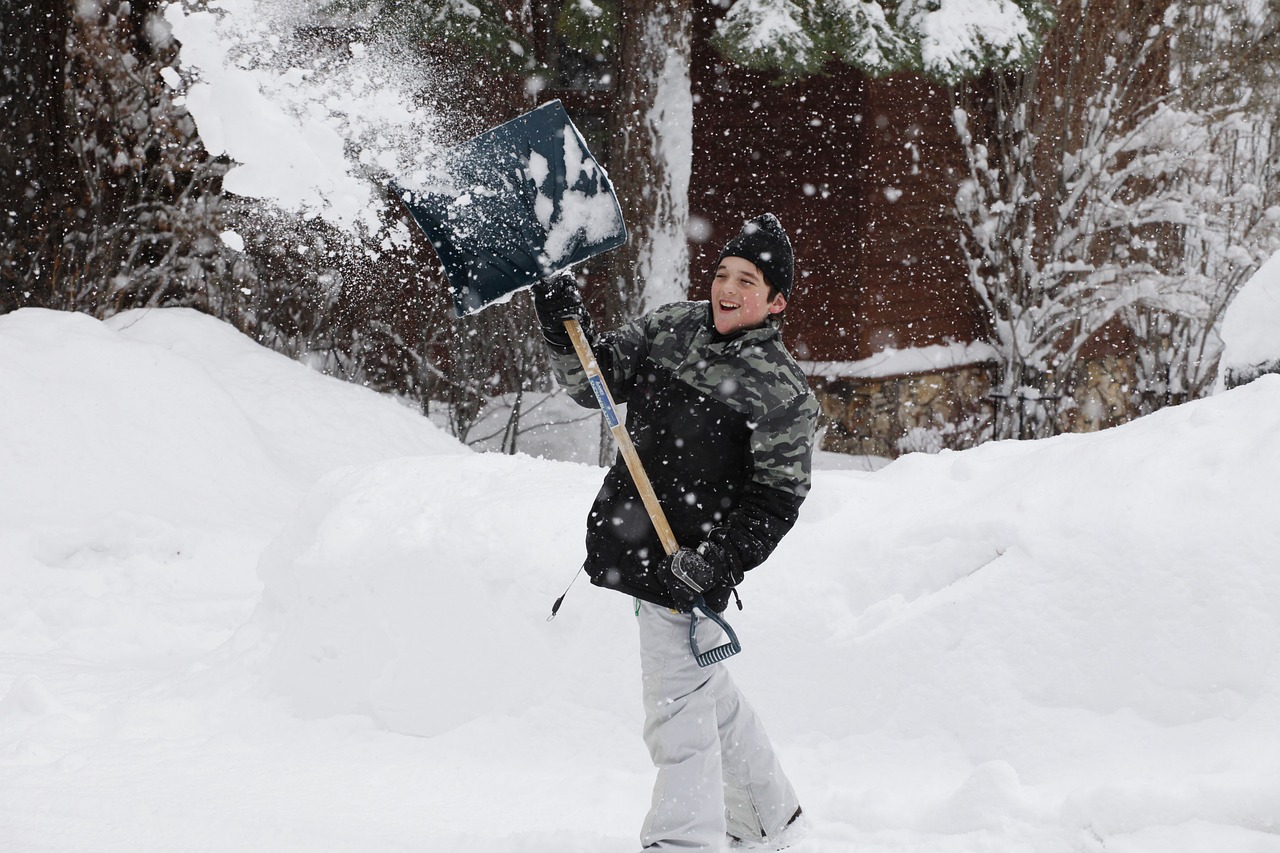
    A very necessary winter task in much of Canada is snow clearing. If you can handle cold temperatures and are strong enough to lift heavy loads of snow, you could consider volunteering to shovel snow for your neighbours, grandparents, or others. This work can be physically demanding but very useful, especially if you help people with health problems.

    Many volunteer opportunities are available for people who look for them, but you might need to do some research. Whether you want to make connections with others or just want to fill some of your time, finding a volunteer gig for winter can be a good decision.


    Bibliography:

    Habitat for Humanity. “Volunteer Opportunities.” https://habitat.ca/en/volunteeropportunities.

    Online ChristianColleges. “40 Creative Ways for Kids to Volunteer this Winter.” https://www.district205.net/cms/lib/IL01001003/Centricity/Domain/145/40_Creative_Ways_for_Kids_to_Volunteer_this_Winter.pdf

    Sport Manitoba. “Become a Manitoba Games Volunteer!” https://www.sportmanitoba.ca/become-a-manitoba-games-volunteer/

    Wells Fargo. “5 Ideas for Volunteering During the Winter Holidays. https://collegesteps.wf.com/ideas-volunteer-work-winter-holidays/.


  • The Holidays on a Budget (French version available)

    The Holidays on a Budget (French version available)

    We all want to get the special people in our lives the perfect gift for the holidays. But who says the perfect gift has to cost a lot of money? Most people appreciate the time and effort you put into the gift giving process. The old cliché is actually true – “it’s the thought that counts.” So with that in mind, here are a few holiday gift ideas you can buy or make that are sure to please your family and friends (and not break the bank):

    – Family Cook Books: Buy a nice hard covered notebook (you can usually get them for under $5.00). Use stickers, paint or markers to label the cover (e.g. “Hadland Family Recipes”) and write out all of your family’s past and present favourites. You can even go online and get some new recipes your family might like to try.

    – Use Photos: You can print them for free on your home computer or go to a retail store and print them there. You can use the photos to make a collage, family photo book or scrap book, or individual magnets of each family member (all you have to do is buy magnet paper at a craft store. Cut out a photo of each person, stick it to the paper and then carefully cut around it). You could also buy a wooden photo frame and paint and decorate it yourself.

    – Bookmark: Make bookmarks using photos of your family or characters from their favorite movie, TV show, book or singer. Print off the graphic you like and glue it to a piece of hard cardboard. Then cut the cardboard into whatever shape you want. Pierce the side with a small hole and string through ribbon or yarn.

    – Coupon Book: Make a homemade coupon book with personalized coupons. A few ideas are: One free house cleaning, a free coffee at your favorite coffee house, one free car wash, etc.

    – Memory Jar: Buy a large glass jar and then write down short memories or phrase that reminds you of your family on 365 pieces of paper (one for each day of the year) or, if you can’t think of that many, 52 pieces (one for each week of the year). Write a tag to hang off the jar stating the jar contains one memory for each day (or week) of the year. And instruct the receiver of the jar to take one at a time, read, remember and enjoy.

    – Baking: If you can, bake cookies, squares, breads etc. It is a yummy gift idea that is sure to please. And if you can’t bake, try making a trail mix or party mix instead.

    – Go to a Second Hand Shop: Look for books, DVD’s, CD’s or ornaments that are in good condition. Second hand shops are full of treasures. They are affordable and, even better, often times the money raised goes to a charity. So it’s like two gifts in one!

    – Wall Art: If you can paint, use your talents to create fun art for your family and friends. Paint something they like, like a beach scene, or try something abstract in colors that match their décor. If you have no artistic ability to speak of, find a second hand book or album cover that’s cool and frame it to create instant art.

    – Finally, if you have younger kids to buy for try making homemade crayons. First, find old broken pieces of crayons. Set the oven to 250 degrees. Place the crayon pieces in an old muffin pan, about an inch deep, and bake for 15-20 minutes. Let the new larger, multi-color crayons cool and pop them out. Make a homemade, personalized coloring book to go with the crayons printing off coloring pages online of their favorite things, place the pages in a report cover and label the front with their name (e.g. “Jamie’s Very Own Coloring Book”).

    Whatever you decide, remember the best gift you can give your family is the memory of a happy holiday. If you think back ten years, chances are you probably won’t remember what you got for Christmas but you will remember the little things…dancing in the living room while decorating the tree, the smell of simmering apple cider, the Christmas tree falling over in the living room, your whole family gathered around the table eating dinner and chattering all at the same time. These are the things that make the holiday season truly special. The gifts are just a nice added bonus.

  • Volunteering around the December Holidays

    Volunteering around the December Holidays

    During the December holidays, it is best to spend time with the ones you love. It’s surely one of the best times of the year! With all the delicious meals, thoughtful gifts, and time with loved ones, the holidays can be a splendid time for most.

    However, not everyone has an easy time. People right here in our own neighbourhoods sometimes don’t have enough to feed their families or give presents to their children.

    The holidays are a good time to reflect on our blessings. If you’ve never put yourself in someone else’s shoes, the holidays are a good time to do so. In December, it isn’t just the time for getting, it’s also the time to give back. What better way to give back than to volunteer your time?

    Why Should I Volunteer?

    Volunteering is wonderful for a lot of reasons. First and foremost, you’re helping out someone who needs it. Think of how far your gesture goes for families in need. Providing help to seniors, wrapping gifts, and helping at kitchens are all simple ways you can better someone’s life.

    Secondly, volunteering helps spread happiness. Take a moment and think about families in need. Parents might feel guilty that they can’t buy as many presents for their children. Some families may worry about basic necessities like keeping the heat on. When you help out, even with something small, you can enrich their holidays.

    Volunteering can also present you as a leader to others. After all, friends and family are more likely to volunteer if they see you doing it! You don’t need to force them into volunteering If they don’t want to. But seeing you do it may encourage them to help out others.

    When you donate your time, you also open the door to new friendships. Volunteering is a great way to meet new, likeminded people. Even if you only see them during the holidays, it’s always nice to see a friendly face when you’re out and about.

    How Do I Find Volunteer Opportunities?

    If you’re unsure where to look for volunteer opportunities, that’s okay. You can easily Google opportunities in your city or neighbourhood. If you’re a member of a community (like a church or club) you can easily check bulletin boards for options available throughout the holidays.

    Depending on where you’d like to volunteer, there may be certain requirements. You may need to provide references or go for small interviews to let people know why you’re interested. Most of the time, though, you’re more than welcome to volunteer without any hassle.

    Wrapping Up

    If you’ve never volunteered before, think about it this holiday season. You rarely need to spend more than an hour or so and you’ll be doing a great thing for someone in need. You may also meet new friends or appreciate more of what you have. Plus, if you get your family and friends involved, you’ll be able to spend more time together with loved ones.