Category: Featured Articles

  • High School Exam Prep

    High School Exam Prep

    Are you ready for your exams? High school exam periods can vary, but they typically occur either at the end of the year (for non-semestered schools), or at the end of both January and June (for semestered schools; winter and spring exams, respectively).

    Whether your evaluations have just passed, are coming up soon, or aren’t for a while, it’s always important to know how to prepare. An exam not only has a significant impact on your final grade, but it can also be a way to measure how much you’ve learned throughout the course. You should take every exam seriously, and make sure you allot enough time to get ready. It never hurts to do well!

    Here are three tips for high school exam preparation:

    Know the structure. Aside from obviously just studying the material, preparing for the format of the exam can be very valuable. Teachers usually release information related to the structure well in advance. As well, many exams are combined-format, so you might need different study strategies for each section. Let’s say an exam has 50 multiple-choice questions and an essay. You can create flashcards of key terms, concepts and definitions, as well as brainstorm potential questions and arguments.

    Play your strengths and weaknesses. If you know a certain part of the curriculum inside out, there’s no point in reviewing it in great detail. When you’re studying, focus on what you don’t know so well and make sure you understand it before moving on. This way, you’ll at least have general knowledge of all the material, instead of only studying what you’re good at. If you focus only on what you’re good at, there’s always the chance that those topics may not even appear on the exam anyway!

    Choose wisely. Sometimes exams offer students a choice (between short answer topics, for example), and this can be a great way to showcase your strengths. That being said, if you have to choose, pick the option that is easiest for you. Students sometimes try to write about what they think the teacher prefer, even if they don’t know what that specific topic is about. Take advantage of the opportunity and write about what you know. You’ll be able to provide more accurate information and concrete examples instead of “speculating” about something you don’t fully understand.

    Following the above guidelines will help you out, but ultimately you still have to put in the work. Make sure you make time to study properly before the exam (and preferably not the night before the exam). And remember, there’s no reason exam preparation can’t be fun—as long as you’re still being productive, studying with friends or classmates can actually be a great way to prepare. Good luck!

  • The Worst Ten Words to Stress Over

    The Worst Ten Words to Stress Over

    “What do you want to be when you grow up?”

    To some people, that is the worst combination of ten words in the English language. The question never really stops being asked, not even in adulthood: it simply changes form. “Where do you see yourself in ten years?” is the adult version, and it will haunt you forever if you let it. The key phrase there is “let it,” because you do have a choice.

    Many kids believe that adults have it all figured out: doctors are doctors because they were basically born as such, and teachers knew that they’d be teachers as soon as they started school. But as we transcend adolescence, we realize that our adult selves are simply our adolescent selves with more responsibility. We are who we are and it’s important not to ignore that by arbitrarily picking a career because it simply sounds good. Rather, we should find out what we like to spend time doing, and work from there to find a way to make a living doing it.

    You don’t need to decide exactly what you want to do, or to be. It’s interesting that we so often use the verb “to be” when describing a particular career, because you aren’t your career; you’re a person. You have a whole host of likes and dislikes, and a personality that isn’t restricted to whatever job you decide to choose. Finding out what these likes and dislikes are will help you figure out what skills you should develop so that your occupational choices are left open.

    What do you enjoy spending time doing? Make a list. Many people do this backwards; they pick a job, and then try to develop the skills they need to do it. Instead, make another list of things you’re good at. Are you patient with kids? Good with animals? Do you write really well, or sing, or dance, or act? Maybe you’re a math or computer whiz, or you spend your free time conducting science experiments. Whatever it is, write it down. These lists will help you come up with another list of jobs you might like to do.

    Don’t forget that once you’ve found a job you like, and you’re doing it – you’re an “adult” – you aren’t locked in. You might work a whole host of jobs for different companies before you find one that you really love – or, you might find that you really love changing jobs every few years. Regardless, practice cultivating your skills and developing your strengths so that you’re prepared for the family of jobs that really is right for you.

  • Escaping Negativity: Maintaining a Positive Lifestyle

    Escaping Negativity: Maintaining a Positive Lifestyle

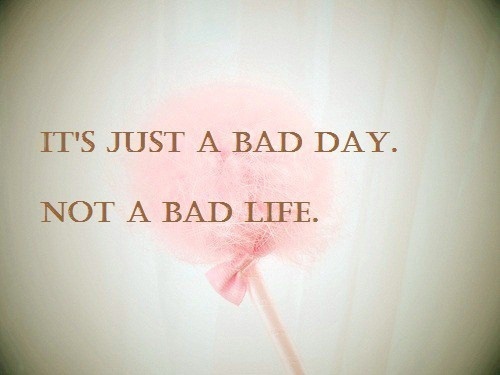
    Negativity can seem like a losing battle. One thing goes wrong, then another, and then another, and you eventually wind up trapped in your own web of bad thoughts. An optimistic outlook on the world is also a healthy one; you’d be surprised how much of a difference a positive change in attitude makes. If you’re just having a bad day (or week, or month), don’t be discouraged. Keep the following things in mind and consider making some positive changes to your mindset and lifestyle.

    Begin with a positive environment, both physically and socially. Firstly, you should feel comfortable and confident around your group of friends, since they are the people you see day-to-day. If you constantly feel bogged down by their negativity—and especially if they disrespect you or put you down—maybe it’s time to reconsider who you spend your time with. Your physical environment is also important, especially if it’s a place that you spend a lot of time in (e.g. your work area). Even the simplest changes to a space (your favourite music, natural lighting or a comfortable chair) can improve your mood.

    Being positive doesn’t necessarily equate to having a perfect day; rather, it’s not letting the little things that go wrong completely ruin it. If you keep going back to the one “terrible” thing that happened to you in the morning, you’re going to feel sour throughout the entire day. Instead, it helps to have something to look forward to, even if it doesn’t seem like much at first—even something like looking forward to the weekend can do wonders for your motivation. Focus on that positive goal, and you’ll be able to handle all the wrenches in your plans with ease.

    Self-improvement is important. Often it can be helpful to evaluate what you did wrong (what part of that test you messed up, or what you said to your parents that made them angry). However, there is a fine line between self-improvement and negativity, and always focusing on your mistakes can make you forget all about the good parts of your life. When you’re giving yourself constructive criticism, treat it as a positive learning experience, not as an excuse to hate on yourself. You’ll learn more in the process and feel better about yourself, too.

    Finally, be thankful for what you have. Are you struggling under exam pressure? Did your professors assign too many readings? Somewhere out there, there’s an individual who can’t afford school at all—and would love to be in your shoes. There are lots of issues that seem huge in the moment, but in due time you realize how insignificant or silly they actually are. This is in no way an attempt to devalue your problems: everyone has problems! Just remember there’s definitely someone out there who not only shares your feelings, but might have a more serious issue on their hands.

    Stay positive and stay happy.

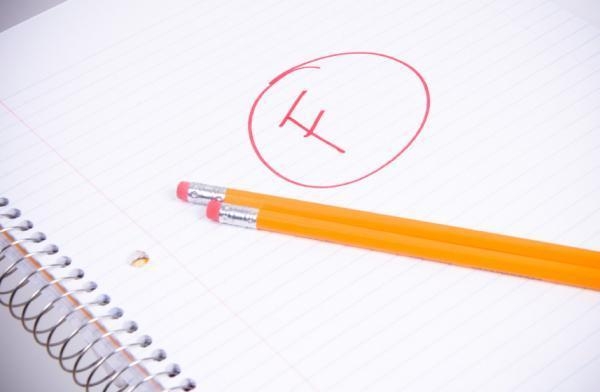
  • Dealing With Failure: Recovering from a Bad Grade

    Dealing With Failure: Recovering from a Bad Grade

    We’ve all made mistakes in our academic careers. Whether it’s a test we just weren’t prepared for or an assignment that didn’t go as planned, a poor grade or two—or even a failure—is a normal part of being a student. That being said, it’s important to get into the right mindset when confronting your mistakes. In fact, this will actually allow you to do better in the future.

    It may seem silly to say this, but if you do poorly, it’s not the end of the world. There will be other exams and projects; you have ample opportunity to improve. If there’s no longer a way to boost your mark in one course, maybe doing well in your other courses will make up for it. In any case, school is very important, but your grades shouldn’t define who you are. When you look back on your school days in the future, you’re likely going to think about the great things you learned and the memories you made—not that one test you bombed.

    It’s only when you stop beating yourself up over your mistakes that you finally get an opportunity to learn from them. Stay positive, but consider why exactly you didn’t do well so that hopefully you improve next time. Did you not study properly for that exam and were caught unprepared? Did you leave that essay to the last minute? If you correct those mistakes early on, it’s unlikely you’re going to make them again. Treat each failure as a learning situation, and a positive opportunity for you to continue improving yourself.

    Then there’s the possibility that you have no idea what went wrong. We all have flukes—assignments that were marked “mysteriously”, guidelines we didn’t understand, tests that we just dropped the ball on for some reason. Luckily, these types of situations don’t happen very often, so one bad grade isn’t going to set the tone for the rest of your academic record. However, if you notice a recurring pattern in being surprised by your low grades, consider looking at your work more critically or speak to your teacher or professor for clarification and advice.

    Finally, it’s important to learn from failure, but you can also learn from what you did right. Chances are there are courses you’re doing much better in than others. Maybe you like the material more, so you work harder; maybe the course overall is easier to do well in. Considering these things, evaluate what you can take from one course in order to recover from a poor grade in another. If worst comes to worst and you’re really struggling, you always have options—drop the course, take an alternative credit, or look into peer tutoring or office hours.

    The next time you’re faced with a bad grade, take some of this advice into consideration. By staying positive and learning from your past experiences, you’ll see an improvement not only in your grades, but in your attitude towards learning overall.

  • Career Profile: Museum Curator

    Career Profile: Museum Curator

    People often say that an interest in history has little relation to any kind of paying work. How can anyone get a job by knowing when King Henry VIII lived or what people ate in the fourteenth century? However, museum curators are different. They get to work with books, papers and objects that show a region’s history and culture. Do you love history? Are you good at organizing things? You might want to consider becoming a museum curator when you finish school.

    Curators work in many different places, from traditional museums and historic sites to zoos and botanical gardens. They might work with ancient Egyptian pottery or with recent videos and DVDs. Sometimes the objects they work with are tiny and light, such as rings and other pieces of jewelery. At other times, the exhibits are massive and heavy, such as ancient coffins or stone monuments.

    What curators do every day depends on where they work. Much of the work requires strong organizational skills as curators take in new exhibits, label them, and decide what to display and what to leave in storage. Sometimes curators have to arrange for travelling shows to come to the museum. If an exhibit of Leonardo Da Vinci’s inventions is moving from place to place, for example, a curator might want to arrange to have it as a temporary exhibit in the local museum.

    Curators have to make sure that items are properly displayed and stored. This is especially important for delicate exhibits that require special treatment, such as climate control or protection from insects. Curators have to be very careful to take good care of museum exhibits that are in their charge.

    Besides taking care of the exhibits, museum curators need to be able to talk to people. They need to keep the people on the museum boards and committees informed about what is happening in the museum. They also need to make sure that members of the public know about which exhibits are being shown. They might help arrange school trips or community visits. If curators do their job well, they help other people become excited about history.

    Most curators need more than just an interest in history to get a job in their field. A master’s degree in history or administration is helpful, but a university degree in museum and curatorial studies is even better. With that education, museum curators can make salaries between about $27,000 and $69,000 per year. Job prospects are often better in a big city than in a town, but a small, local museum might be a good place to gain experience.

    History can come alive when the curators of museums work together with the boards, committees, staff, and the public to display interesting and meaningful exhibits. Do you have an interest in history? Do you love to explain your love of the past to others? You might want to consider pursuing a career as a museum curator.

  • University Exam Prep

    University Exam Prep

    Before you can escape the stress of school and enjoy the winter break, you have to pass finals! You’re not alone. University students all over the country are cracking under the pressure of their exams. While this is an undeniably difficult and often exhausting time of year, it’s important to stay focused and motivated. You wouldn’t want all the hard work you’ve done over the course of the semester to go to waste over one bad test.

    When your exams are held depends on the university’s examination period. However, typically half-year courses taken in first semester have their exams in early- to mid- December. That being said, many full-year courses also have mid-term tests around this time of year, and while these may not be worth as much as final exams, it is nevertheless important to make sure you’re prepared for them.

    Here are some tips on how to get ready for a university exam.

    Summarize. Go through all your lectures and create a set of condensed exam notes. Write down all the important stuff, and paraphrase as much as possible in order to make the material more manageable. If you do this properly, eventually all you’ll need to do is glance at the key words and you’ll be able to explain the related material in detail.

    Draw connections. A subject can seem pointless if you don’t make the effort to connect it to your own life—instead of blindly memorizing, see if you can explain things through examples or anecdotes. Take a political theory and see if it’s manifested anywhere in world news, or do some more research on an experiment you found particularly interesting in biology. Get away from the word-for-word method of studying and think of ways to make what you’re studying relatable (and thus, memorable).

    Safety in numbers. Studying in groups is extremely valuable because you get to interact with the material instead of just reading alone in your room. Get together with a study group a few times before the exam. You should continue to study independently as well, but discussing concepts, quizzing, or even explaining things to someone else within a group will improve your knowledge and your memory.

    Get help. Don’t be intimidated by your professor or TA: they are really just there to help. If you have any questions about the course material, it is crucial that you clarify them before the end of the semester rolls around. Chances are, if you mention you’re stressing out about the exam, the prof or TA would be happy to give you some help on how to prepare.

    Take care of yourself. Get a good night’s sleep the day before the exam and make sure you’re keeping yourself healthy. Study hard, but make sure you keep well—otherwise, it could actually interfere with your focus. You wouldn’t want to compromise all of your hard work with one all-nighter or sick day, right when it matters the most.

  • Earnings of College Graduates Over 20 Years

    Earnings of College Graduates Over 20 Years

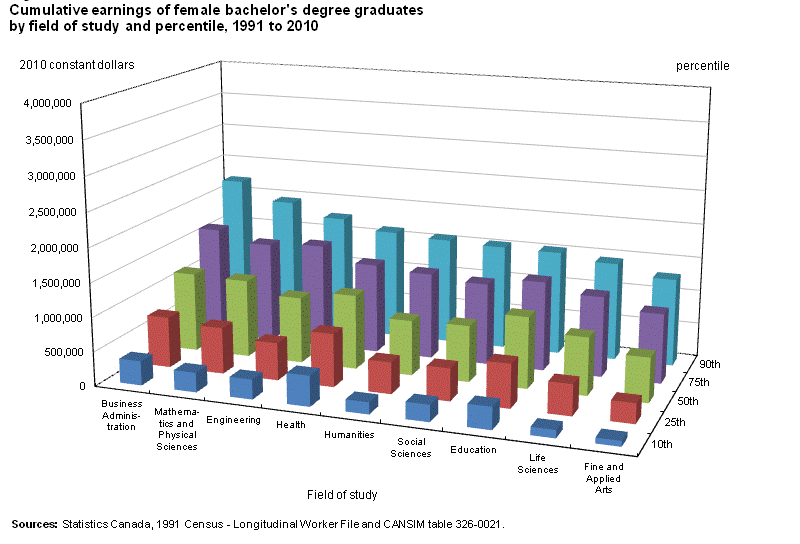
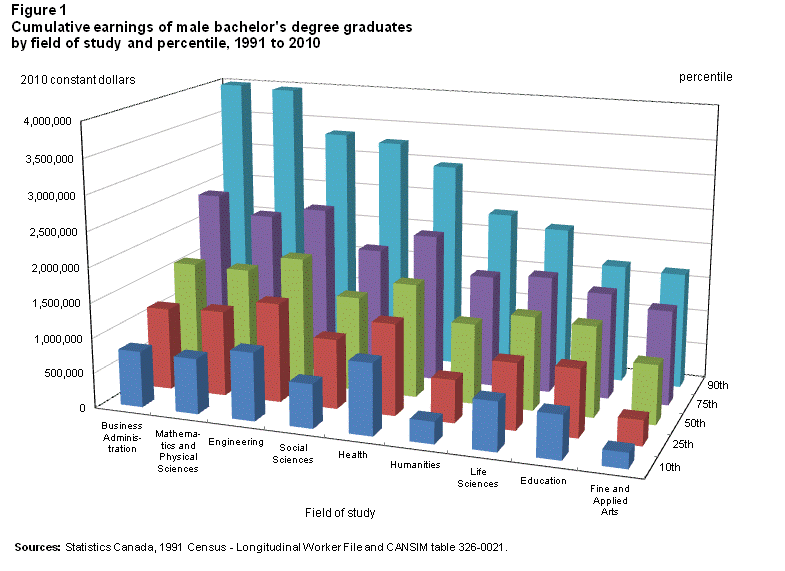
    Statistics Canada recently released a study that looked at earnings for college graduates  over a 20 year period. The study looked at the cumulative (total) earnings for both men and women, as well as earnings based on the degree they received from their college or university . Take a look at the charts below to see just how much money you can make in your career of choice over 20 years!

    earningsfemale


    earningsmale

  • Writing a Resume: The Basics

    Writing a Resume: The Basics

    An employer can shuffle through hundreds of job applications every day. How do you make sure yours stands out?

    Writing a resume is the first step to landing your dream job. In a work setting, it’s how you represent yourself—even before you speak to an employer, they often want to have a look at your qualifications. Not only is it important to advertise your best assets, but you have to tailor each application to fit the job you’re looking at.

    A standard resume consists of a Header (name, address, and contact information), Objective (a sentence explaining your career goal), and a variety of headings citing your Experience: education, past work and volunteer positions, skills, awards, and anything else you think is important to mention.

    Beyond that, the way you structure your resume is up to you. That being said, you should keep a couple of things in mind the next time you’re pulling together an application.

    Be adaptable. Imagine what your employer is looking for and think of skills you have that fulfill their expectations. Your resume should reflect the position you’re trying to obtain and why you’re the best candidate for the job. However, make sure you include only relevant information (e.g. if you’re applying for tutoring, you probably don’t need to mention that you can use a band saw).

    Be clear and concise. Your resume shouldn’t be longer than a page (beyond that, the employer’s likely to stop reading anyway). Requests for references often vary from job to job, but you can put these on a separate page if needed. And of course, make your resume easy to follow: avoid long sentences, embellished fonts, or extremely elaborate vocabulary.

    Be creative. Don’t be afraid to switch it up a little—especially in fields like art and design, which often leave their “resume” component open to interpretation. Sometimes a portfolio or even a video can impress an employer. For jobs with stricter requirements, you can still be flexible with your headings and layout if you want to make an impression. Just make sure you’re striking a balance between being imaginative and being understood.

    Be sincere. It might seem difficult to express your abilities through your resume. Be careful if you feel tempted to exaggerate your talents. Sometimes this works, but if you get called back for an interview, be prepared to justify all that you’ve written. More importantly, why would you want a job that you can only pretend to be good at? You should appear to be “the better version of yourself”, not someone else entirely.

    No application is perfect, but with practice you’ll find the resume style that works for you. Keep a copy with you the next time you’re going to school or running an errand: you never know where your next job will come from. Good luck!

  • Jobs of the Future: What to Expect When You Graduate

    Jobs of the Future: What to Expect When You Graduate

    Graduation is a major event for students; it’s a milestone in your life and an accomplishment that can’t be taken away. After you graduate you’ll be thrown into the adult world of jobs and careers.

    This is a major time of change and can be scary. That’s why it’s important to have a plan for what you want to do and what sort of education you need to do it. The path to personal success is a rough and bumpy ride, sometimes with many twists and turns.

    Don’t have any what you want to do? Don’t freak out. People change college and university programs multiple times. Most people will cycle through several jobs and careers in their lifetime. Education can help you discover what fits with your personality and what career path suits you the most. Working a job you don’t like, especially for many years, is not a fun experience and it’s important to find a comfortable balance between your working time and recreational time. Nobody likes to be stressed out all the time!

    We live in an exciting and rapidly changing world, and the job market reflects this. Many traditional careers are being changed or ended due to constantly evolving technology. This is why its important to research what sort of career path you want to take and keep up with new developments and changes in your chosen field. Statistics on the employability of certain graduates and the availability of jobs can be found in many online resources. In other words, keep informed!

    STEM, or science, technology, engineering and mathematics jobs, are very important. As technology improves so does the need for dedicated workers in these fields. There are a massive variety of STEM jobs, each field containing a huge variety of careers. A few examples include:

    Science: energy conservationist, agricultural worker, and industrial biotechnologist.

    Technology: construction, automotive manufacturing and economics.

    Engineering: civil engineers, structural engineers, and mechanical engineers.

    Mathematics: architect, high school mathematics teacher, and physicist.

    As you can see, STEM jobs are incredibly diverse and it’s up to you to find what suits you best. STEM jobs can be some of the toughest but also some of the most rewarding, both financially and personally. So keep an open mind and stay up to date on the evolving fields. Getting a STEM job isn’t for everyone, but they can be some of the most exciting and important jobs.

  • How to Prepare for a STEM Career

    How to Prepare for a STEM Career

    Ever wonder how Albert Einstein got started? How about Isaac Newton or even Steve Jobs? If you’re interested in learning about the world around you and how it works, STEM careers might be a good fit for you. Made up of the fields of Science, Technology, Engineering and Math, STEM careers are personally rewarding and a great outlet to explore your interests. You may not be at the stage where you have to set yourself on a career path (or you may have already decided to go down the STEM road), but there are things you can do to ensure you’re on the track to success in the field you choose.

    Almost every college and university out there offers a multitude of STEM programs for potential applicants. These programs often have rigorous requirements for admission (for example, in fields like Life Sciences), and the competition can be tough. To properly prepare for post-secondary education in STEM, make sure you take all the necessary prerequisites for the program you’re looking at—and make sure you study hard to meet the mark cut-offs.

    There are so many opportunities out there to get involved with STEM, even apart from post-secondary education. If you’re looking for some great job experience, you can investigate the opportunity for a STEM internship or apprenticeship, which could be a great way to put your practical skills to use. Volunteer positions with certain organizations can be very valuable as well, especially if they’re directly linked to your field of study (to continue the Life Sciences example, look into volunteering at a local hospital). Not only are these sorts of experiences good for your own personal fulfillment, but they look great on a resume, which can really set you apart.

    If you aren’t quite committed to a STEM field but want to learn more, a school club or organization is a fantastic place to start. This gives you the added bonus of being able to meet equally motivated students that share your interests without the serious responsibility of any of the above opportunities. STEM extra-curriculars also look good on post-secondary applications but, more importantly, they give you the chance to explore your options. You are considering pursuing a career that focuses on discovery, after all—why not take the opportunity to discover some of your own STEM-based interests?

    Though it may be a little early to start job-hunting, preparing for a STEM career can mean working on your academics, finding a volunteer or internship position, or even just joining a club. You may be surprised to see how truly valued these types of experiences turn out to be in the workforce. Good luck on your STEM path, whatever you decide it to be. Maybe you’ll be the one making all the discoveries one day!