Category: Fun

  • Teaching English as a Career

    Teaching English as a Career

    The English language has a lot of short, easy words. Just think of words like “run” — a short, three-letter word that is easy to spell and easy to learn. But are they really that easy? Think of how many meanings words like “run” have. You can run a race or get a home run in baseball. A newspaper has a run, and you can run out of time. How can non-English speakers ever learn such a complicated language? That’s where English as a Second Language (ESL) or English as a Foreign Language (EFL) teachers can help.

    Teaching the English language can be a good career option, especially for anyone who enjoys travel. Over 400 million people around the world use English as their first language, which is the main language that they are most comfortable using. However, over 700 million people use English as a second or third language, and the number is growing all the time.

    English is spoken all over the world and is the standard language used in many businesses, in technical and scientific studies, and for transportation on airplanes and ships. You might even hear a German-speaking airline pilot talking to a German-speaking airport employee, not in German, but in English. Most communication by computers and even traditional mail is in English, and use of the English language is still growing.

    As the need for English skills is increasing, the need for English teachers is growing as well. This kind of teaching goes by several different names which often reflect the needs of the students. Teaching English as a Second Language is often about teaching immigrants how to speak with their neighbours and co-workers. Practical vocabulary and grammar are important parts of each lesson.

    In other countries, English as a Foreign Language or English as an Additional Language (EAL) are often the terms people use. Without the chance to use English every day at home or at work, the students often have to work harder at getting a chance to practice their skills. The kind of help the students need is normally the focus of the classes. Lessons could focus on conversational skills or grammar or both.

    What does it take to work in TESOL (Teaching English as a Second or Other Language)? In North America and many other parts of the world, a Bachelor of Education with an emphasis on teaching language to non-English speakers is probably the best option. In some cases, a TESOL certificate or local training might be enough, especially if the school where you want to work has its own training program.

    Teaching English can be a good option if you love variety and adventure. You can teach in Japan, China, Mexico, or right in your own city. You can work with young children, university students, or retired people. You can teach in a classroom or tutor people at home. Wherever you go, teaching the English language can be a rewarding career for anyone.

  • Uncovering Life on Mars with the Curiosity Rover

    Uncovering Life on Mars with the Curiosity Rover

    The Curiosity Rover is a mobile laboratory built by NASA’s Mars Science Laboratory. Launched on November 26, 2011 from Cape Canaveral in Florida, Curiosity’s 23 month journey through outer space finally came to an end on August 6, 2012. On landing day, a live stream of NASA’s JPL (Jet Propulsion Laboratory) team gave the public a small glimpse into the landing process. Upon successfully reaching its destination, Gale Crater, Curiosity began its official mission to determine if that area of the Martian surface was ever able to sustain microbial life.

    Over the course of a two-year mission, Curiosity will deploy its 10 instruments to collect data on its surroundings. Curiosity will analyze samples of rocks, dust and minerals looking for any evidence of favourable conditions for life. In the first three weeks after arriving on Mars, NASA reported the rover had beamed back more data than all of the other rovers previously deployed to Mars.

    As of March 2013, Curiosity has uncovered considerable evidence that suggests ancient life existed on Mars. Samples from what is thought to be an ancient lake bed reveals the remnants of clay and minerals that could have only come into being with the presence of favourable conditions for microbes.

    Mount Sharp: The Key to a Martian History?
    Early on in its documentation of the Red Planet, Curiosity sent back various images of Gale Crater. One image, taken with a wide angle telephoto lens, revealed a “geological unconformity” in the layers of Mount Sharp, the 5km-high peak at the centre of Gale Crater. According to the New York Times, for planetary geologists, the layers of Mount Sharp are an archive of the planet’s history and could bring us closer to discovering if Mars sustained microbial life at one time.

    “Those layers are our ultimate objective,” says Mastcam (Master Camera) principal investigator Michael Malin. “The dark dune field is between us and those layers. In front of the dark sand you see redder sand, with a different composition suggested by its different color. The rocks in the foreground show diversity – some rounded, some angular, with different histories. This is a very rich geological site to look at and eventually to drive through.”

    Curiosity will take the better part of a year to make its journey towards Mount Sharp, making brief stops to take readings and test samples along the way.

  • What to Take Backpacking

    What to Take Backpacking

    So you’ve decided to take a trip backpacking. This is quite the adventure and you are going to have to be well prepared for such a time away from home and in the wilderness. You are going to want to make sure that you have covered all of your bases so that you will have the most easy and worry-free trip. The important thing to remember is to plan well and then follow the plan.

    Creating a good list is your first step. Think about where it is that you are going and what it is that you are going to need while backpacking. Are you going hiking? Are you staying overnight? Are you going with friends and sharing the burden of the food preparation? Knowing the general sweeps of your itinerary is a really good start, and then following this general formula will ensure success.

    1. Outdoor gear: Will you be sleeping in a tent and will you be needing warmer clothing for cooler weather? These considerations will be very important in order to ensure that you will have everything you need.

    2. Indoor gear: Will you be spending time indoors? You may need to pack lighter clothing for times that will be spent indoors or in restaurants along the way.

    3. Swimming gear: Will there be lakes or rivers along your route? If so, you will need to make sure that you are bringing a bathing suit and towel.

    4. Technical gear: Are you responsible for bringing a tent or for bringing a sleeping bag and mattress? If you are, you will have to be sure to pack that (if you are backpacking, be sure that it is compact).

    5. Food: Are you bringing food with you or eating along the way? Will you need to bring a stove to cook your food or will you need to bring materials to start and keep a fire going? These are all things to consider.

    Whatever your trip is, be sure to know exactly where it is that you are going, what kind of weather is expected, what your friends are bringing, what kind of terrain is expected and where you will be staying. Knowing these things in advance will help you to pack well and be efficient with your use of space.

    A last consideration is to remember that sharing space with your friends is essential. You need to communicate with them so that you don’t end up all bringing the same thing. If you need to bring a stove, one person should bring it – not everyone. If you need to bring pillows, you may need to decide that you will bring only one or two pillows and share them, alternating people who get the pillow each night to save space in your backpack. If you are bringing food, make sure that you have discussed who is bringing what and that you have enough for each day and night. Planning and communication with your fellow backpackers will be your keys to success.

    Above all, enjoy your trip and stay safe!

  • Healthy Kids Need Time In Nature

    Healthy Kids Need Time In Nature

    Ontario’s Healthy Kids Panel recently proposed a strategy to help kids get onto a path to health. The problem is that the path doesn’t lead them into nature. Though the report quotes parents’ comments and research showing kids spend dramatically less time outside than ever, it doesn’t encourage time in nature.

    That said, many of the report’s recommendations should be implemented and supported locally, provincially and nationally to reduce the risks of obesity. Encouraging parents and children to be more critical about dietary choices and requiring more information and labelling from restaurants and food producers is long overdue.

    Ontario isn’t the only province working to reduce obesity rates and support parents raising healthy children, particularly in the early years. Alberta released relevant reports in 2011 and Quebec has had a ban on advertising junk food to children since 1980. No one can argue against public awareness and education around the benefits of healthy eating and active living. But a provincial, patchwork approach to addressing these issues isn’t enough. We need a national strategy to get our kids eating healthy foods and being active in nature.

    Although it seems logical that much of the time spent being active will take place outside, the Ontario report acknowledges that “many communities are not designed to encourage kids to move or be physically active…and have few safe green spaces.” One parent in a focus group explains that the parks in his community are either gated or locked up once school is closed. So, even when there is green space, it’s not always accessible.

    Last year, the David Suzuki Foundation conducted a survey with young Canadians and found that 70 per cent spend an hour or less a day outdoors. The 2012 Active Healthy Kids Canada Report Card says they spend almost eight hours a day in front of screens. So it’s not that kids don’t have time to be outside. It’s just not part of their lifestyle.

    Much has been reported about a recommendation by the Ontario panel to ban junk food advertising that targets children under 12. This has worked in Quebec and is being discussed in Alberta. But the approach has invited criticism from those who argue that people should have the right to choose. It’s always tempting to focus on making bad things less accessible, but perhaps policy-makers should be more creative and focus on ways to make good things more accessible.

    Being in nature is good for all of us. People who get outside regularly are less stressed, have more resilient immune systems and are generally happier. And it’s good for our kids. Studies show spending time in nature or green spaces helps reduce the symptoms of ADHD. Even in built playgrounds, kids spend twice as much time playing, use their imaginations more and engage in more aerobic and strengthening activities when the space incorporates natural elements like logs, flowers and small streams, according to research from the University of Tennessee at Knoxville.

    Despite all the obvious health benefits of spending time outside, provincial and federal governments are failing to integrate a daily dose of nature into their policies. It’s also something we as a society are failing to make a priority in the lives of our children. This inexpensive and effective way to make our lives healthier and happier should be an obvious solution.

    We need to make sure our neighbourhoods have green spaces where people can explore their connections with nature. We need to ask teachers and school board representatives to take students outside so that nature becomes a classroom. And we need to stop making the outdoors seem like a scary place for children by helping parents understand that the benefits of playing outside outweigh the risks.

    It will take public education and awareness-building as well as changes to the way we build cities and live in our communities to bring nature back into our lives. Connecting kids to nature every day needs to be a priority policy objective in any strategy for healthy children and could easily have been integrated into the recommendations from the Ontario Healthy Kids Panel. Taking our kids by the hand and spending time outside with them will have the added benefit of making us healthier and happier adults.

  • Anti-Bullying Viral Video!

    Anti-Bullying Viral Video!

    We recently came across this video by poet Shane Koyczan and just had to share. It has gone viral in the past few weeks due to its powerful anti-bullying message. Shane was bullied growing up, too, so his message is even more powerful. As he told The Globe and Mail in 2011, “I got bullied a lot when I was a kid, and because of that I thought for the most part that I didn’t really have a childhood – I had to grow up so quick and there was no real enjoyment in that for me.”

    Unfortunately, bullying is still a major problem in schools all around the world. We can all make a difference by pledging to not bully and to speak up when you see that someone is.

    According to Wired Magazine, Shane kneads his experiences into powerful poetry. His piece about bullying is now a short animation. It rises above the bruises left by words and the hiding places pills can’t provide, all the way up to a place of beauty. The video is a collaborative piece, created using 20 second segments contributed by animators and artists. It will surely prompt reflection and discussion. It also promotes more formal anti-bullying efforts.

    In terms of what he hopes people take away from his video, Shane told the Huffington Post, “Just that sense of connectivity. As much as you may feel alone in this, you’re really not. There’s people who go through this every day. In a lot of ways, there’s more of us than there are of them.”

    Shane, born in Yellowknife and raised in Penticton, was even a part of the opening ceremonies of the Vancouver Winter Olympics in 2010! We love to see Canadians making a difference in the world. Watch this video and share it with your friends.

  • Enjoy Nature and De-Stress

    Enjoy Nature and De-Stress

    The man-made world is very much a world that is constructed of indoor environments. We are in our car, we are in our house, we are in the mall, we are at the movies. Indoors is our main environment. This is normal, but we must not forget the benefits of outdoor environments and fresh air. We are often so busy doing things that we don’t make time to go outdoors just for the pure pleasure of it. Maybe you have a river by your house, or a forest that you’ve always wondered about. Knowing that being around nature and just being out in the fresh air is actually good for you may provide extra incentive to get out there and explore.

    When we are in outdoor environments we are immersed in oxygen-rich air – much more oxygen-rich than the air in even the most ventilated of buildings. This oxygen will help your red blood cells’ ability to regenerate and will immediately help you to feel better. Newer buildings have higher standards for the quality of air, but older buildings may be very poorly ventilated, causing stuffy air to dominate. If you go to school in an old building that has air that will affect you day after day, fit in some time outside to help you to get the oxygen-rich air that your body craves.

    Not only is there more oxygen available in the fresh air, but the fresh air and being out from under a ceiling will give you a feeling of freedom and space that you don’t get from being in indoor environments. There is something mentally reassuring about being out in the fresh air that will help you to feel better. Being outside is also a great stress reliever because it gives you some time to simply relax and enjoy nature. Who knows what new ideas will come to you when you have time to let go and clear you mind. You might want to consider bringing a notepad with you to jot down anything that comes to you, or bring a friend who you can have some good quality conversation with. You also may want to leave your cellphone or any other connection to the “indoor world” behind. This will allow you to fully enjoy being in a new environment.

    So take 10 minutes to get out of your house or take the day to go hiking, bicycling or walking along a path. Removing yourself from being directly beside a roadway will mean that you are breathing fresher, less polluted air. If possible, surround yourself with trees because trees are reservoirs of carbon dioxide, improving the quality of the air.

    Wherever you are outside, enjoy the fresh air and breathe deeply!

  • Taking A Year Off

    Taking A Year Off

    If You’re Not Ready, It’s OK

    Post-secondary education costs a lot of money and most students leave with a hefty debt to pay off as they start their professional careers. This debt is harder to deal with if a student chooses to leave their program or is forced to drop out.

    While continuing your education is a great way to guarantee future career success and open the door to higher paying jobs, not everyone is prepared to go immediately following high school.

    Many students experience nervousness as they try to plan for their future and choose an educational institution and program suited to their wants and future goals, but some students have greater concern and need more time to discover themselves and decide what they want from life before they enrol. 


    There is no harm in taking time off to ensure you take the program best suited to your wants and needs. Perhaps after taking a year off to work and reflect, you’ll take the program you thought you’d take in high school – but it’s still better to take the time and ensure you’re prepared to invest the effort needed for success.

    Some students take a year off and work to earn money to pay for their education. Others travel and develop worldly experience, while others upgrade a course or two. There are plenty of options available. Going to school for thirteen to fourteen years straight does not always allow time to reflect on future goals and fully explore the options available. Taking some needed time off, even short-term, can help afford those thoughts.

    Remember that taking a year off does not mean leaving forever. There are always opportunities to return to school. If you’re looking for time off but a year seems like too long, look into January or May-start programs to return to school in less time.

  • Fall In Love With Nature

    Fall In Love With Nature

    A recent Ipsos Reid poll conducted for the Nature Conservancy of Canada (NCC) shows that more than 97 percent of Canadians believe that getting outdoors is important to their family’s well-being. The new findings complement an earlier poll that found Canadians are happier when they are connected to nature.

    We already know about the valuable health benefits (both mental and physical) of getting outside and talking a walk. But the recent research gives us more information on how Canadians feel about the importance of nature to their happiness and to their families.

    The study found:
    • 97% of Canadians agree that nature is important to their family’s well-being;
    • 90% felt that being outdoors in nature is an important element in their family’s recreational activities;
    • 87 % felt that given the choice, they would prefer to spend family time outdoors in nature, rather than indoors.

    What better way to spend a long weekend than to go and explore what nature has to offer? Nature is alive this time of year with many fun things to do in your backyard or local park. Winter bird identification, exploring the types of trees that may look vastly different in the summer, following tracks of animals in the snow or taking a meandering walk are perfect examples of winter activities that are fun for all ages and can offer an exhilarating day in the beauty of nature.

    Get happy, get outside.

    “Our mandate of protecting the land that brings so much joy to Canadians becomes even more important was we learn just how much Canadians depend on it for their own happiness and well-being,” said John Lounds, President and CEO of the Nature Conservancy of Canada. “We want to encourage Canadians to go outside and explore what nature has to offer in the winter.”

    The Nature Conservancy of Canada has accessible properties from coast-to-coast where Canadian families can visit for free. Check out www.natureconservancy.ca/timefornature for a starter list of places to see.

    The Nature Conservancy of Canada (NCC) is the nation’s leading land conservation organization, working to protect our most important natural areas and the species they sustain. Since 1962 NCC and its partners have helped to protect more than 2.6 million acres (more than 1 million hectares), coast to coast.

  • The Strange History of Money

    The Strange History of Money

    We all use money every day. It is essential because if we want to buy some food, clothes or services we have to pay money for them. Money is recognized as banknotes and coins. However, many years ago people couldn’t just go to the shop and buy what they wanted. They had to exchange some merchandise or services in order to receive other goods or services. This process is called barter trade. It was a really difficult procedure – the barter often depends on a coincidence of wants. Giving an illustration, the seller of grain has to find a buyer who wants to buy grain and who also could offer something the seller wants to buy. The solution is to trade the wheat indirectly through a third, “intermediate” commodity. An intermediate commodity has to be imperishable and attractive in demand. For example, it could be cattle, salt, shells, wine and so on. Intermediate commodities had their disadvantages; for example cattle, fur and precious stones couldn’t be cut into smaller pieces and it was uncomfortable to keep and transport.

    Due to the disadvantages of intermediate commodities, people had to invent a simpler way to continue trading. This is where monetary or specie commodities come in. At first, specie was in the shape of metal bars, wires, rings or powder. This money was uncomfortable because it was necessary to weigh and to hallmark it. Soon, the weight and hallmark of specie were embossed on the money directly.

    The earliest known coins in the western world came from Lydia in about 650 B.C. They were made of electrum, a natural alloy of gold and silver found locally. Greek cities, The Great Persian Empire and the Roman Empire quickly adopted the new useful technique of metal currency. By the end of the 6th century, coinage was common throughout the regions. However, coins also had many disadvantages. For instance, coins quickly show wear and they usually have small value. This makes it difficult to count lavish sums of coins. Because of these reasons, people invented paper money.

    At first, paper money was used in China in about 650 A.D. In Europe, paper money was first produced in the Netherlands in the 16th century and in the USA in the 17th century. Interestingly, paper money doesn’t have any value in and of itself. It is worthless and essentially just symbolic. In other words, paper money is just a note. It has a purchasing power because the government announces it as money and citizens accept it universally. Nowadays, we often don’t see real money (banknotes and coins) because we use credit cards and debit cards exclusively. Our money is placed into electronic space and it circulates just because of our imagination.

  • Could Hockey Become an Endangered Sport?

    Could Hockey Become an Endangered Sport?

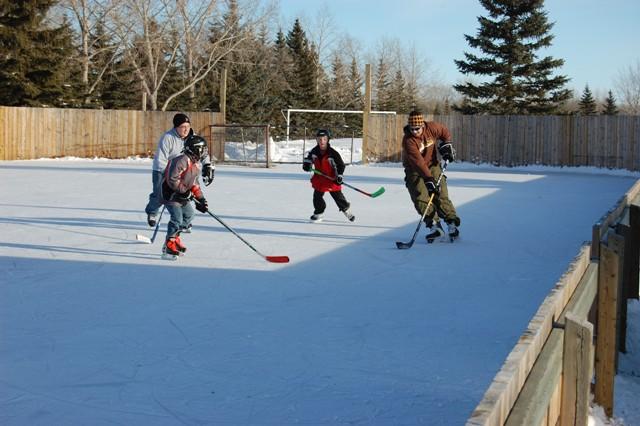
    One benefit of the National Hockey League strike: it gave people time to play outside on real ice! But outdoor skating could face the same difficulties as the NHL – a drastically shorter season or outright cancellation. Research from Montreal’s McGill and Concordia universities shows global warming is already having an effect on outdoor rinks in Canada.

    “Many locations across the country have seen significant decreases in the length of the OSS [outdoor skating season], as measured by the number of cold winter days conducive to the creation of rink ice,” their study states. “This is particularly true across the Prairies, and in Southwest Canada, which showed the largest (and most statistically significant) decreases in the calculated OSS length between 1951 and 2005.”

    This echoes a 2009 David Suzuki Foundation report, On Thin Ice: Winter Sports and Climate Change. The McGill investigation looks at constructed outdoor rinks while DSF’s focuses on frozen rivers, canals and lakes, but the conclusions are similar. Both predict that, unless we rein in greenhouse gas emissions, outdoor skating in parts of Canada could be history within the next 50 to 100 years (the McGill study’s authors now say it could happen within 20 to 30 years), and the length of the outdoor skating season will continue to decline across the country.

    Meanwhile, at Ontario’s Wilfrid Laurier University, geographers have launched www.RinkWatch.org, a website where people can record information about backyard or neighbourhood rink conditions over the winter.

    “Our hope is that Canadians from coast to coast will help us track changes in skating conditions, not just this year, but for many years to come,” associate professor Robert McLeman said in a release. “This data will help us determine the impact of climate change on winter in terms of length of season and average temperatures.”

    According to the DSF report, one of Canada’s best-loved outdoor skating venues, Ottawa’s Rideau Canal, provides an example of what to expect. It concludes that, with current emissions trends, the canal’s skating season could shrink from the previous average of nine weeks to 6.5 weeks by 2020, less than six weeks by 2050 and just one week by the end of the century. In fact, two winters ago, the season lasted 7.5 weeks, and last year it was down to four. The canal had yet to fully open for skating when this column was written.

    “On Thin Ice” notes that many of Canada’s hockey heroes got their start on outdoor rinks. “Without pond hockey, we probably wouldn’t have what has become the modern game of hockey,” the authors state. The DSF study says climate change could have a profound effect on many other winter sports, from skiing and snowboarding to winter mountaineering.

    With food and water problems caused by more frequent droughts and floods, property losses and high infrastructure costs from rising sea levels, and increasing illness and death from extreme weather and pollution, hockey may be the least of our worries. But losing winter recreation opportunities, let alone our ability to produce food and keep our homes warm and people healthy, needn’t happen. Solutions to our human-created problems exist. We just need our leaders to start taking this and other environmental issues seriously.

    That’s not likely as long as we keep electing people who show more concern for the future of the fossil fuel industry than the citizens they are supposed to represent. Politicians who only look ahead three or four years — until the next election — aren’t seeing the big picture.

    We need to consider every solution possible, now — from putting a price on emissions through carbon taxes and/or cap-and-trade to stopping the rapid exploitation of fossil fuels and switching to cleaner energy sources.

    A skate or hockey game outside is a good place to start!