Category: Jobs and Apprenticeships

  • When Should I Start Applying for Scholarships?

    When Should I Start Applying for Scholarships?

    Scholarships are a fantastic way to gain financial support during post-secondary. With all of the different kinds of scholarships available, how are you supposed to know when is the right time to start applying? Well, when it comes to scholarships the short answer is; as soon as possible. Quite often, scholarships have strict deadlines for applications, and if you miss the deadline you may miss out on that scholarship opportunity entirely. When applying for any scholarship, be sure to pay careful attention to the application opening date and deadline.

    “I’m not in post-secondary yet, so I don’t need to look into scholarships just yet, right?”

    A common misconception is that you only need to begin applying for post-secondary scholarships once you have actually started post-secondary. However, this is not always the case. There are some scholarships that recognize your high school accomplishments, such as the Alexander Rutherford Scholarship for Alberta students. With these types of scholarships, you can actually begin to submit your scholarship application once you have been accepted to your post-secondary institution. If you are unsure if you are able to apply for your scholarship before you begin post-secondary, ask your academic advisor at school, search in the scholarship section of your province’s learning information website, or search under the scholarship section of your post-secondary institution’s website.

    There are often also scholarships that are offered for recognizing your academic achievements once you have initially entered your first year of post-secondary. These are often called “Entrance Awards,” which are typically offered to outstanding students entering their specific faculty. These awards typically have a very early cut-off date once the school year begins. Be sure to check to see if a student application is required. (Please note that some entrance awards do not require a student’s formal application, as the post-secondary institution will apply on your behalf). If a student application is required, be sure to apply as soon as possible, as entrance awards are typically only awarded for a short period of time once the school year has begun. Be sure to always carefully check the application deadline for any scholarship application, and make sure you are giving yourself enough time to properly apply.

    For other scholarships that you may gain throughout the course of your post-secondary journey, the timeframe for when to apply may vary. Be sure to check your post-secondary institution’s website on a regular basis for scholarships that you may be eligible for. When applying for a scholarship, it is important to remember that the application process may take longer for some applications than others, depending on its requirements. It is best to begin the application process for any scholarship as soon as you are permitted to do so (each individual scholarship will note both the application opening and the application deadline). By applying as soon as the scholarship application becomes available, you prevent potentially missing the deadline, and allow yourself as much time as possible to complete all necessary application tasks. It is important to allow yourself as much time as possible, especially if the application requires something that may be time consuming, such as essay. This will ensure you are submitting your best work, giving you the best possible opportunity to receive the scholarship. So always remember, when applying for any scholarship, don’t delay! Check when the application date becomes open, and when the deadline is. Once acceptance for applications becomes available, begin the application process immediately!
  • Exploring the World of the Trades in High School

    Exploring the World of the Trades in High School

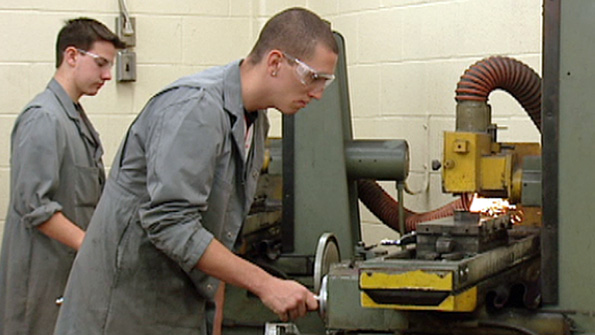
    High schoolers can explore a myriad of subjects and ideas before taking the next steps into adulthood. With so much focus placed on core academic subjects such as math, science, and English, other paths can fall by the wayside. For those looking to pursue the trades industry, there are multiple options to investigate. It is important to start early to ensure you expose yourself to as many opportunities as possible. In doing so, you can find the experiences, networking connections, and organizations that form the foundation of a successful career.

    For example, those in British Columbia may want to take a look at the many training partners within the province. Kwantlen Polytechnic University in Surrey offers the ACE-IT Transition Program. High school students have the opportunity to commence training in the trades before graduating from secondary school and beginning their post-secondary studies. In north-eastern British Columbia, students can turn to the Northern Opportunities organization for apprenticeships. These opportunities include work in the oil and gas fields, industrial instrumentation mechanics, automotive services, carpentry, and more. The South Island Partnership and Tru Start offer similar programs, and these types of organizations can be found elsewhere.

    Over in Orillia, Ontario, students can head to Patrick Fogarty Catholic Secondary School for a very unique trade show. “Explore the Trades” fills the gymnasium with displays by local manufacturers. Young people have the chance to talk to professionals and learn about the different career paths in the industry. The Ontario Youth Apprenticeship Program in Simcoe takes on approximately 150 students annually for apprenticeship programs, providing them hands-on experience before they even enter the workforce. Opportunities like these are open to students in different provinces, and although the industry is represented by men at a staggering 97%, opportunities abound for women as well.

    Co-Op & OYAP, the Ontario Youth Apprenticeship Program, helps girls in Niagara, Ontario find chances to succeed in the industry. These experiences includes the Skills Work for Women Networking Dinner with tradeswomen that also provides hands-on activities. There are also grants, such as one that offers free registration to the Southern Ontario VEX Robotics Championship. As youth become more knowledgeable and resourceful with technology and research, as well as less defined by outdated gender norms, that 3% of women in the trades is sure to grow. The District School Board of Niagara is just one organization looking to help young people find their way in the trades industry.

    If the industry intrigues you, then the best thing you can do is start researching. You may be surprised at all of the grants, apprenticeships, shows, and networking opportunities that exist near you. As you continue to pursue your high school diploma, you can combine that education with invaluable experience that will ensure you have a bright path forward in the trades industry.

    Sources:

    Bleasby, John. Explore the Trades event promotes our industry to high schoolers in Orillia, ON. http://www.canadiancontractor.ca/canadian-contractor/orillias-explore-trades-brings-business-education-communities-one-roof/1003278431/

    Co-Op & OYAP. Women in Trades. http://oyap.dsbn.org/skilled-trades/women-in-trades

    Discover Skills BC. Trades Training in High School. http://discoverskillsbc.ca/training/trades-training-in-high-school/

  • Why We Need Tradespersons

    Why We Need Tradespersons

    Can you imagine a world without tradespersons? Without electricians, there would be no electricity to light our homes at night and we would use candles like back in the Stonehenge days. Without plumbers, there would be no running water in our homes and we would bathe in rivers or lakes. Without HVAC people, we would have no heating, and for us who live in cold climates, I can’t imagine how uncomfortable that would be. Without tradespersons, the world would be a very different place.

    Opportunities are increasing in the trades. By 2020, we’ll be short of one million tradespersons, with the residential housing industry alone needing nearly 100,000 more by 2023. The average age of welders is 57, and many trade workers across all categories are also in their 50s. So, if you prepare yourself for a trades career with the proper schooling and training plus you’re willing to relocate, you would find a job more easily than people in non-trade occupations.

    Tradespersons will always be needed. How many times have you heard complaints from family or friends about not being able to find a reliable renovator, plumber or roofer? As a tradesperson, you’ll have less worry about boom-and-bust cycles, offshoring or automation. Not only homeowners need reliable trade workers, but you’ll also be needed in schools, offices, plants, factories and more.

    Increased freedom and mobility is another perk of being a trades worker. You can either work fulltime in a unionized or non-unionized environment or be your own boss. Although self-employment varies by trade, it has increased steadily and at a higher rate in the trades than in other occupations. In 1987, only 9% of tradespersons were self-employed compared with 15% in 2007. Today, it’s probably higher.

    For some trades, wages have increased steadily especially for those in unionized positions such as electricians, crane operators and plumbers. For employees in unionized trades, salaries averaged $22.36 per hour, 6% higher than the $21.02 in other occupations.

    A career in the trades is not just about being a carpenter, plumber or electrician. Service careers like hair stylists, chefs and painters also classify as skilled trades; and a lot of them make good money and enjoy a high standard of living. A hair stylist can make as much as $49K per year or $16.29 per hour, and even more if they have their own salon. A kitchen chef earns, on average, $14.97 per hour or $49K per year, and salaries increase if they move up the ladder to executive chef or head chef. And, if you have a bit of a flair for art and colour, as a painter you can make even more: $19.85 per hour or $61K per year, depending on your location.

    Like other careers, you need to be willing to work hard and do what it takes to succeed. If you want an interesting career where you can help build a better world and increase quality of life, a trades career may be the right path for you.

    ____________

    Giselle Mazurat received her designation as a Certified Resume Strategist from the Career Professionals of Canada. She also writes technical and business content for government and private companies. You can reach her at giselle@experttechnicalwriter.com.

    Bibliography:

    Apprenticeship competition aims to draw attention to looming shortage of skilled trades workers in Canada
    http://news.nationalpost.com/toronto/apprenticeship-competition-aims-to-draw-attention-to-looming-shortage-of-skilled-trades-workers-in-canada

    Five basics you need to join the skilled trades
    http://www.vancouversun.com/business/2035/Five+basics+need+join+skilled+trades/8452245/story.html

    PayScale – Hair Stylist
    http://www.payscale.com/research/CA/Job=Hair_Stylist/Hourly_Rate

    PayScale – Kitchen Chef
    http://www.payscale.com/research/CA/Job=Kitchen_Chef/Hourly_Rate

    PayScale – Painter
    http://www.payscale.com/research/CA/Job=Painter/Hourly_Rate

    Statistics Canada – Skilled Trades Employment
    http://www.statcan.gc.ca/pub/75-001-x/2008110/article/10710-eng.htm#a7

    The 5 Best Skilled Trades Jobs in Canada
    http://nacc.ca/the-5-best-skilled-trades-jobs-in-canada/

  • Skilled Trades Schools in Ontario

    Skilled Trades Schools in Ontario

    This article will highlight three Ontario schools that provide training in the skilled trades. Remember that in-school theoretical training is a mandatory part of your apprenticeship, and these schools are excellent options. They are well-known, established post-secondary education options for anyone interested in a career in the skilled trades.


    George Brown

    The School of Apprenticeship & Skilled Trades at George Brown offers apprenticeship programs in trades such as construction and maintenance electrician, general carpenter, industrial mechanic, plumber, residential air conditioning systems mechanic, and steamfitter. In addition, if you are not yet ready to start an apprenticeship, you may look into programs that teach you foundational techniques. Examples include construction trades techniques, electrical techniques, and plumbing techniques.

    Humber College

    The School of Applied Technology at Humber College—like George Brown—offers the necessary classroom component for the following trades: arborist, cabinetmaker, electrician, heating, refrigeration and air conditioning technician, industrial woodworking technician, plumber, and welder. These programs expose students to in-school training and practical job experience. Humber also offers Skilled Trades Certificates: these 11 continuing education programs equip you with the skills you need to become a home inspector, project manager, or gas technician among others. Note that these programs are stand-alone—when you graduate, you can start working.

    Sheridan College

    Sheridan College’s Apprenticeship Training Programs are offered for the following skilled trades: construction and maintenance electrician, industrial electrician, construction millwright, tool and die maker, and general machinist. Note that a student must be sponsored by the tradesperson they will be working with during their apprenticeship in order to take these programs.

    These three schools are all excellent options for anyone considering a career in the skilled trades who live in or will live in Ontario. To decide between the three, consider location, tuition, and faculty—as well as program availability.

    References:

    http://www.tcu.gov.on.ca/eng/apprentices/faq.html

    http://www.georgebrown.ca/apprenticeshipskilledtrades/

    https://www.humber.ca/appliedtechnology/skilled-trades

    https://www.humber.ca/appliedtechnology/continuing-education/certificates/skilled-trades

    https://academics.sheridancollege.ca/programs/apprenticeship-training-programs

  • Atlantic Canada Trade Schools and Programs

    Atlantic Canada Trade Schools and Programs

    Do you live in Newfoundland, New Brunswick, Nova Scotia or PEI? Are you interested in moving to the East Coast? Are you interested in a career in the trades industry? It can be overwhelming when trying to decide on a career path, but seeking out as many options as possible is the best way to start. Atlantic Canada has some great training and apprenticeship programs and finding the best program for you is just around the corner.

    Below are some great schools that will help and train you on the path to a great career in the trades:

    Newfoundland:

    Ashworth College

    Trades & Technical:

    Basic Electronics

    Carpentry

    Electrician Training

    Gunsmithing

    Heating & Air Conditioning

    Home Inspection

    Locksmithing

    Motorcycle Repair

    Plumbing

    http://www.trade-schools.ca/ashworth-college/form.aspx

    Academy College

    Faculty of Construction, Trades & Mining:

    Automotive Service Technician (Entry)

    Baker

    Carpenter (Pre-Employment)

    Computer Aided Drafting

    Construction/Industrial Electrician (Entry)

    Cook (Pre-Employment)

    Geological Engineering Studies

    Insulator (Heat & Frost) (Entry)

    Motor Vehicle Body Repairer (Entry)*

    Occupational Health and Safety

    Plumber (Entry)

    Renovation Technician*

    Scaffolding*

    Steamfitter/Pipefitter (Entry)

    Supply Chain & Logistics

    Welder (Pre-Employment)

    https://www.academycanada.com/faculty-of-construction-trades-mining/


    Prince Edward Island:

    Holland College

    Trades and Industrial Technology:

    Aircraft Gas Turbine Engine Repair and Overhaul Technology

    Automotive Technology

    Carpentry

    Commercial Diving

    Construction Electrical

    Electromechanical Technology

    Energy Systems Engineering Technology

    Heating Ventilation and Air Conditioning Technology

    Heritage Retrofit Carpentry

    Industrial Electrical

    Plumbing

    Power Engineering

    Precision Machinist

    Steamfitting Pipefitting

    Welding Fabrication

    Welding Level 1

    Wind Turbine Technician

    Wood Manufacturing Cabinetmaking

    http://www.hollandcollege.com/programs/

    Eastern College

    Programs:

    Construction Electrician

    Industrial Electrician

    Plumber

    Steamfitter / Pipefitter

    Welder / Metal Fabricator

    http://easterncollege.ca/?Section=trades&campaignid=2068


    New Brunswick:

    Eastern College

    https://www.easterncollege.ca/?Section=trades

    New Brunswick Community College

    Career Possibilities:

    Bricklayer

    Maintenance Person

    Carpenter

    Electrician

    Fuels Technician

    Plumber

    Refrigeration and Air Conditioning Technician

    Gas Fitter

    Oil Burner Mechanic

    Oil Heat System Technician

    Steamfitter/Pipefitter

    Sprinkler System Installer

    http://www.nbcc.ca/programs-courses/program-areas/trades-building-and-construction


    Nova Scotia:

    Nova Scotia Community College

    Programs: School of Trades & Technology ( list)

    Eastern College

    (Eastern College has campuses and programs across Atlantic Canada)

    http://easterncollege.ca/?Section=trades&campaignid=2068

  • Trades in Western Canada and How to Get Started: Alberta and British Columbia

    Trades in Western Canada and How to Get Started: Alberta and British Columbia

    Do you live in Alberta or British Columbia and dream of a career in the Trades? Maybe you don’t know much about careers in the trades but want to learn more? Figuring out your career path all starts with interest and curiosity; this leads to trying new things and learning more about different types of careers. Working in the trades can mean anything from being a professional baker to a welder in the oil sands.  One thing all trades have in common is their never-ending learning curve.  In a trade career, the learning never stops- there are always new challenges.

    So, you’ve decided you want to learn more about the different types of careers in the trades industry; what now? Your guidance counselor can give you some direction if you have an idea of what particular trade you want to explore, but you should check out these great Alberta and BC online resources, first:

    Alberta:

    Trade Secrets- Apprenticeship and Industry Training

    http://tradesecrets.alberta.ca/trades-occupations/trades-occupations-list/

    This is a great website to look through if you want to explore all the types of trades offered in Alberta. It lists the registered trades in alphabetical order so you can find them easily. The registered trades that are listed are recognized all across Canada. This site gives you general information about how to seek financial assistance for programs, apprenticeships, and how to become an experienced and successful trade worker.

    British Columbia:

    ITA- Industry Training Authority- BC

    http://www.itabc.ca/youth/trades/

    This is a great website. It allows you to explore different trades and the apprenticeship programs offered in BC. You can search all the trades listed, or search through categories like: Fixer, Outdoorist, Artisan, Builder, Operator and Analyzer. By separating the trades into categories, you can decide whether you are more attracted to being a builder (very physical) or if you want to work outside in nature (agriculture), for example. The site has tips on how to get started and how you can gain an apprenticeship and have an employer sponsor you.

    Great thought and preparation goes into choosing a career path. Always make sure you have all the information you need in order to make an informed decision about your career. Ask your guidance counselor for advice along with exploring these great resources!

    Sources:

    http://tradesecrets.alberta.ca/trades-occupations/trades-occupations-list/

    http://www.itabc.ca/youth/trades/

  • Sub-Trade and Sub-Contractor

    Sub-Trade and Sub-Contractor

    Any construction project, including renovations and maintenance, will involve many different trades. You need an electrician, a plumber, a roofer, a painter. Who is going to manage all these people?

    Typically, the owner of the property under construction hires a general contractor. This individual or company is responsible for hiring, coordinating, and supervising sub-contractors (also called specialty trade contractors and sub-trade contractors). In other words, the general contractor sub-contracts out work to other tradespeople.

    Sub-contractors perform specific work on one aspect of the construction project, such as the electrical wiring or the painting. A sub-trade is thus the trade a particular sub-contractor specializes in.

    Note that the terms “sub-trade” and “sub-contractor” are more relevant in construction projects because of the involvement of a general contractor. Without a general contractor, there is no need for the term sub-contractor.

    For example, an electrician working on a construction project is considered a sub-contractor, but the same person working outside of a construction project would not be called a sub-contractor, just an electrician.

    It follows then that any construction-related trade could be a sub-trade. These activities begin from the initial preparation of the property for construction to foundational work to the actual building.

    References:

    http://www.canadabusiness.ca/eng/page/4875/

    https://www.ic.gc.ca/app/scr/sbms/sbb/cis/definition.html?code=238&lang=eng

  • Skilled Trades Schools in Western Canada: Part 1

    Skilled Trades Schools in Western Canada: Part 1

    Western Canada comprises four provinces: Alberta, British Columbia, Manitoba, and Saskatchewan. There are many skilled trades schools in Western Canada that one article cannot cover them all. This article will feature two schools per province, with information on which skilled trades are taught at those schools.

    In Alberta:

     Southern Alberta Institute of Technology

    The Southern Alberta Institute of Technology offers pre-apprenticeship and apprenticeship programs in over 30 skilled trades, including auto body technician, baker, bricklayer, cook, ironworker, materials technician, plumber, and welder. This school also offers online apprenticeship learning, where theoretical learning is completed online instead of in-class.

    Northern Alberta Institute of Technology

    The Northern Alberta Institute of Technology’s School of Trades offers diploma programs, certificate programs, and apprenticeship programs. Examples of skilled trades students of this school may undertake include auto body technician, boilermaker, carpenter, gasfitter, ironworker, painter, plumber, roofer, and welder.

    In British Columbia:

    British Columbia Institute of Technology

    The British Columbia Institute of Technology offers a long list of trades and apprenticeship programs. The 96 programs encompass trades in four categories: construction, electrical, mechanical, and transportation. Construction programs include boilermaker, carpenter, construction craft worker, gasfitter, plumber, and welder. Electrical programs include industrial electrician, telecommunications technician, and wireless communications technician. Mechanical programs include machinist, millwright, and refrigeration mechanic. Transportation programs include aircraft gas turbine technician, automotive service technician, and railway conductor.

    University of the Fraser Valley

    The University of the Fraser Valley offers a shorter list of programs than the British Columbia Institute of Technology, but it includes offerings like agriculture and horticulture, architectural drafting, culinary arts, and hospitality event planning. Both schools offer programs in automotive service, plumbing, and welding.

    In Manitoba:

    Manitoba Institute of Trades and Technology

    The Manitoba Institute of Trades and Technology offers 9 skilled trade programs: auto mechanics, carpentry, industrial welding, motorsport technician, graphic and print technician, electrical applications, industrial electronics, millwright, and computer-aided design technician.

    Red River College

    Red River College offers programs in four categories of skilled trades: industrial, transportation, construction, and service. Industrial skilled trades programs available include boilermaker, machinist, and tool and die maker. Transportation skilled trades programs available diesel engine mechanic, motor vehicle mechanic, and railway car technician. Construction skilled trades programs available include bricklayer, carpenter, plumber, roofer, and steamfitter. Service skilled trades programs available include cook and landscape technician.

    In Saskatchewan:

    Saskatchewan Polytechnic

    Saskatchewan Polytechnic’s technical training programs allow you to complete the theory portion of 20 skilled trades in four cities: Regina, Moose Jaw, Saskatoon, and Prince Albert. Programs available include agricultural machinery technician, cook, ironworker, plumber, refrigeration mechanic, and steel fabricator.

    Regina Trades & Skills Centre

    The Regina Trades & Skills Centre offers a limited number of adult courses. Currently, only three are available: plumbing, culinary arts, and parts technician. More courses may be added in the future. The website advises potential students to check back regularly for new information.

    If you don’t see your skilled trade of interest listed in the school descriptions above, head over to the school’s website for the entire list of programs ( or check our school database in the Education tab of JPD). You might see your program there. Stay tuned for part 2 of this series of articles on schools in Western Canada offering skilled trades programs!

    References:

    http://www.sait.ca/programs-and-courses/apprenticeships-and-trades/apprenticeships.php

    http://www.sait.ca/programs-and-courses/apprenticeships-and-trades.php

    http://www.nait.ca/35971.htm

    http://www.bcit.ca/path/trades/programs/

    https://www.ufv.ca/trades/find-your-trade/

    http://mitt.ca/programs/post-secondary-programs?studyoptionname=Post+Secondary&IsSearch=True&aoi=96&regiontypeid=1&chkstudytypes=90&chkstudytypes=83

    http://www.rrc.ca/index.php?pid=5699

    http://saskpolytech.ca/programs-and-courses/browse-programs/apprenticeship/

    http://rtsc.org/index.php/programs/current-courses

  • Pros and Cons of Apprenticeship

    Pros and Cons of Apprenticeship

    If you are interested in becoming a skilled tradesperson in Canada, apprenticeship is a necessary step. This period of training allows you to gain the skills you need and consists mostly of learning on the job with some theory coursework. Before you undertake this career choice, make sure you read up on the pros and cons of the apprenticeship:

    What are the pros of an apprenticeship?

    The ability to earn while you learn

    Pursuing a college or university education can mean heavy student loans and little or no income from a part-time job; an apprenticeship allows you to earn money while you learn. From a financial standpoint, an apprenticeship wins over other means of post-secondary education. Where else will you be paid to learn?

    Greater networking opportunities

    The majority of your apprenticeship time will be spent working in the industry. This means you have opportunities every day to interact with prospective future clients, employers and coworkers. The earlier in your career that you make these professional connections, the better your career prospects will be.

    What are the cons of apprenticeship?

    A potentially steep learning curve at first

    When you start your apprenticeship, you are basically diving into the deep end. Your mentor has their own work responsibilities and pressures on top of training and looking after you, the apprentice. Do not expect a lot of coddling. The learning curve may be steep, but how you react and handle yourself will make an impression—either positive or negative—on your mentor.

    Length of apprenticeship too long

    The length of your apprenticeship depends on the skilled trade you are learning, but the training can take anywhere between 2 to 5 years. Apprenticeship is not a faster option than college or university. The time commitment per year may be greater for apprentices who work for roughly 10 months per year in addition to 6 to 8 weeks of in-class training. In colleges and universities, students typically attend school for 8 months per year.

    Now that you have looked over the pros and cons of apprenticeship, you may have a better idea of the career path you are considering. If you have questions, look through the references for this article for more information.

    References:

    http://www.careersintrades.ca/whats-an-apprenticeship/

    http://www.trade-schools.ca/programs/skilled-trades-schools.asp

    http://www.canadagovernmentgrants.org/blog/small-business-2/the-pros-and-cons-of-apprenticeships/

    http://www.careersintrades.ca/whats-an-apprenticeship/

  • Which Skilled Trades are Most in Demand in Canada?

    Which Skilled Trades are Most in Demand in Canada?

    The skilled trade industry in Canada could be facing a shortage of skilled tradespeople, especially as the Baby Boomer generation retires . This shortage may apply to all the hundreds of skilled trades, but below are some of the most in demand trades.

    Industrial Technician

    Canadian Business lists industrial technician as one of the best jobs in 2015. According to the article, this role experienced a 17% increase in salary and a 19% increase in employment growth from 2008 to 2014. The role of the industrial technician can focus on either the manufacturing process or the individual machines and equipment necessary for manufacturing.

    Truck and Diesel Mechanics

    Huffington Post describes truck and diesel mechanics as one of the jobs that trended upwards most in 2015. The number of job postings for this trade increased 80% in 2014-2015. These individuals inspect and repair all vehicles with a diesel engine, such as buses and trucks. It is also worthwhile to note that the more general role of mechanic experienced a similar growth of 64% in the same amount of time.

    Tool and Die Makers

    Huffington Post lists tool and die makers as another job that trended upwards most in 2015. The number of job postings for this trade increased a whopping 305% in 2014-2015. Tool and Die makers professionals create and repair special tools, dies, jigs, fixtures, and gauges. The vast majority of tool and die makers work in the manufacturing industry, manufacturing transportation equipment, machinery, and fabricated metal products.

    If you are considering a career in the skilled trades, you have many to choose from. You should choose a trade based on your personal interests—but it is smart to look at which ones are most in demand.  This article describes three that are currently in high demand.

    References:

    http://www.careersintrades.ca/why-the-trades/

    http://www.canadianbusiness.com/lists-and-rankings/best-jobs/2015-industrial-technician/

    http://www.huffingtonpost.ca/2015/12/23/most-in-demand-jobs-canada-2015_n_8807024.html

    http://www.truity.com/career-profile/diesel-service-technician-or-mechanic

    http://www.servicecanada.gc.ca/eng/qc/job_futures/statistics/7232.shtml