
Category: Jobs and Apprenticeships

  • Being an Entrepreneur

    Being an Entrepreneur

    When people are young, they might dream of the freedom that they will have as adults. For some of them, part of that dream might be to become an entrepreneur, living a risky but exciting life with a lot of freedom but also responsibility. Although entrepreneurship can be very satisfying, it involves risks that people should consider before they begin that life.

    The first thing to consider is the difference between an entrepreneur and a freelancer. Working as a freelancer can often lead people to become entrepreneurs, but they can be two very different things. Basically, a freelancer has no official employer but instead works for many different people, whether the work is pet care, house painting, or something completely different.

    An entrepreneur builds a company and often employs other people to work there. A freelance dog walker, for example, would go to different places and take the dogs out, but an entrepreneur might organize the schedule but hire others to do the actual pet care. Often, entrepreneurs ask people to invest money in the company, and they get a portion of the profits.

    People can be entrepreneurs in almost any area of work. They might help others buy and sell houses, start a restaurant, or even run a dental office. The hours can be very long, and the amount of money they make depends on how successful they are. If you want a regular schedule and dependable pay, the life of an entrepreneur is probably not for you.

    Being an entrepreneur can also be very stressful. There can be tight deadlines to finish projects, and other people’s jobs often depend on the entrepreneur’s abilities. As the business becomes established, entrepreneurs can take more time off, but the first few years or even longer can be very busy.

    Why would anyone become an entrepreneur with all of the stress and hard work that it involves? This type of work can be very exciting, and it can pay well for people with good ideas and the ability to work hard. Entrepreneurs generally have a lot of freedom to choose their own hours, and once the business is going well, they can decide how much of the work they want to do themselves. They can take holidays whenever it works for them, and they can move on to another project when they want.

    Some people are well suited to being entrepreneurs. The ability to talk with other people and to persuade them to invest in the company is essential to entrepreneurs, making this type of work very difficult for shy people. However, almost anyone can learn to give presentations and to talk to investors, as long as they can manage the stress.

    Two very important aspects of being an entrepreneur are patience and persistence. Starting a business can be a very slow process, and it can take years before an entrepreneur will really be successful. If you want to be an entrepreneur, the best place to start might be freelancing in an area that you would like to pursue later. Then, if you have a great idea for a new business, you’ll already be a step ahead of others.

    Bibliography:

    Entrepreneur.com. “Entrepreneurship vs. Freelancing: What’s the Difference?” https://www.entrepreneur.com/article/285804.

    Future of Working.co. “8 Advantages and Disadvantages of Entrepreneurship.” https://futureofworking.com/8-advantages-and-disadvantages-of-entrepreneurship/.

    First Institute. “The Good and Bad of Being an Entrepreneur: The Pros and Cons Explained.” https://www.first.edu/the-good-and-bad-of-being-an-entrepreneur-pros-and-cons-explained/.

    South University.edu. “Pros and Cons of Being an Entrepreneur.” http://source.southuniversity.edu/pros-and-cons-of-being-an-entrepreneur-96101.aspx.

  • Career Profile: Mobile Crane Operator

    Career Profile: Mobile Crane Operator

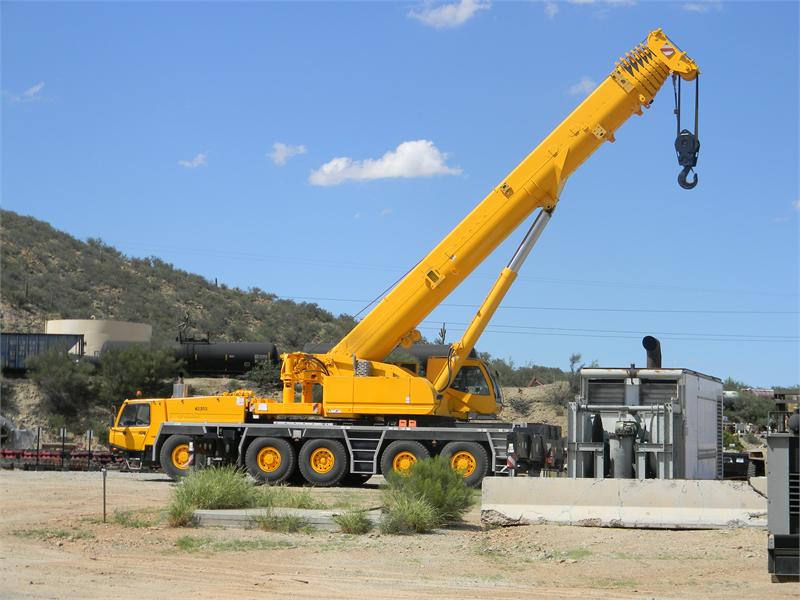
    Mobile Crane Operator is a career within the trades that is not talked about much. If you like to use tools and equipment, this could be a career for you!

    Description

    A mobile crane operator operates mobile cranes and moves large materials. They calculate the weight load and adjust the crane accordingly. A mobile crane operator will also clean the cranes and perform maintenance. Mobile cranes are often used at construction sites, shipyards, mines, and warehouses to name a few. Some cranes have specialized functions such as wrecking-balls and magnets. The conditions of this career includes working outside, mostly. Someone interested in this career should have good hand-eye coordination, good communication skills and math skills. As well, this career typically works 40 hours a week with overtime depending on the job.

    Education and Training

    To become a mobile crane operator, you must complete an apprenticeship ( or at least it is recommended). Through this, there are both in-class training and working under the supervision of a journeyperson. Wages begin at half of the journeyperson’s wage and increase from there until full wage is reached. In order to enter the apprenticeship program, it is required by most provinces and countries to complete grade ten education. There are also high schools that allow you to work towards an apprenticeship while in high school. This program length varies because it depends on the type of equipment being trained. It can take anywhere between one and three years. Certification is required in some provinces, but not all. Certification requires completion of apprenticeship. As a certified crane operator, you can work anywhere in Canada.

    Salary

    Salary depends on the contract, company, location, etc. As well as experience. Salary can vary anywhere between $34,000-$77,000.


    Overall, a career as a mobile crane operator is a very interesting and great choice if you are interested in working at heights and working with your hands.

    Sources:

    http://www.careersinconstruction.ca/en/career/crane-operator

    https://bc.tradesinfo.ca/trade-information/mobile-crane-operator/description?at=4330844

    https://bc.tradesinfo.ca/trade-information/mobile-crane-operator/description?at=306786

  • Career Profile: Elevator Inspector

    Career Profile: Elevator Inspector

    No one wants to be stuck in an elevator for hours or to have to walk up a broken escalator. Tall buildings would be difficult to use without an easy way to get from one floor to another. Elevator inspectors help to keep people moving by making sure that these machines for moving up and down are working properly.

    Working as an elevator inspector involves a lot of responsibility for people’s safety and comfort but not necessarily a lot of education. Some positions require a bachelor’s degree, but many elevator inspectors learn their trade on the job after finishing high school. In many parts of Canada, official certification through workshops and other training programs is also necessary.

    Elevator inspectors normally leave the actual repairs and upgrading to other people, but they should know enough about the repair process to tell what needs to be done. Suppose that the cables at the top of an elevator are starting to wear out, for example. Elevator inspectors have to know what is normal wear and tear and what is dangerous, because people could be seriously injured if the cables break.

    On escalators, inspectors have to make sure that the stairs and the railings move at the same speed or people could lose their balance and fall down, and they have to make sure that the stairs move evenly. Both old and new elevators and escalators need regular inspections, and knowing what problems can occur at each stage can be important.

    Many jobs related to construction are seasonal in cold countries because the winters are too cold to pour concrete or do many of the other tasks. Inspecting elevators, however, is a year-round job because once an elevator or escalator is in place, it needs to be maintained. Especially in big cities, elevator inspectors can be busy throughout the year, but even small towns could have enough work.

    Depending on their education and level of experience, elevator inspectors can earn between $47,000 and about $90,000 per year. Working conditions are normally quite good, but depending on how they like to function, these tradespeople might have to deal with oil and grease from the machines they are inspecting, and they could injure themselves on sharp metal. The job can also be stressful, especially when the work needs to be finished quickly.

    If you enjoy finding problems with mechanical objects, the job of elevator inspector might be worth

    exploring.

    Bibliography:

    Careers.org. “Career Occupational Profile for: Elevator Inspector.” Http://www.careers.org/occupations/25633/elevator-inspector.

    NAESA International. “News and Information.” https://www.naesai.org/.

    Salary.com. “Elevator Inspector Salaries.” http://www1.salary.com/Elevator-Inspector-Salary.html.

    Study.com. “Elevator Inspector: Job Description, Outlook, Duties and Requirements.” http://study.com/articles/Elevator_Inspector_Job_Description_Outlook_Duties_and_Requirements.html.

  • Trade Career Profile: Bricklayer

    Trade Career Profile: Bricklayer

    If you are good with your hands and can work with precision using tools, being a bricklayer, also known as a stonemason, may be the career for you.

    Description

    Bricklayers build and repair a variety of different things from building floors to fireplaces to chimneys. They use a variety of different materials such as bricks, blocks, stones, mortar, and more. They use levels to measure for accuracy and to keep everything in line. It is said, “A good bricklayer can lay around 750 bricks in a single day.” (careersinconstruction.ca).

    Typical working day

    Like most other careers, bricklayers work 40 hours a week. They work 8 hours a day, 5 days a week. However, depending on the season, there may be the requirement to work overtime. This career is mostly outdoors, dependent on the project. This includes hot summers and cold winters where there are protective enclosures or heaters used to continue working despite the weather conditions. This career is physically demanding and requires team-work as a group even when working on a single project. Luckily, people in this career are properly trained and must wear personal protective equipment (PPE) because of the potential danger on the job.

    Education and Training

    Unlike common schooling where you go to school to study, bricklaying does not require this type of education. Rather, you must go through an apprenticeship. This includes being both in the classroom and working under supervision. As you go through apprenticeship, you earn money while working. You begin earning 50% of what your journeyperson (supervisor) earns per hour; your rate increases as you work until you reach the full wage. To enter an apprenticeship, you must be at least 16 and have your grade 10 education. Some provinces and territories offer apprenticeship programs to allow you to work towards your career.

    The apprenticeship program is usually three, twelve-month periods but it varies across Canada. As well, you must achieve at least 1,600 hours of training, three, eight-week blocks of technical training and a final certification exam. You must complete the apprenticeship program and the requirements to become a certified bricklayer.

    Salary

    The salary for a bricklayer depends on a variety of different factors such as experience-level, contract, company and location, to name a few. Salary can be anywhere between $32,000 and $75,000.

    Overall

    A career as a bricklayer is physically-demanding but with a good outlook for jobs of 15% growth rate between 2014 and 2024. If this job appeals to you, it is an excellent career to consider.

  • What are the Benefits of Participating in High School Co-op Programs?

    What are the Benefits of Participating in High School Co-op Programs?

    Looking back on my high school experience, one of my biggest regrets was not participating in a co-op program. Short for cooperative education, co-op programs are essentially opportunities for students to gain work experience while still in high school. At the time, my reasoning against co-op programs was that they took up too much time in my schedule: for two to three days a week, half of those days (either the morning or the afternoon) would be spent at my co-op placement. (Please note: this was the arrangement for my Toronto, Ontario high school; yours may have a different schedule.) I am writing this article because I want to explain why I have changed my mind.

    Exploring career choices early

    For some students in high school, they already have an idea of their future career path. For others, they are still deciding. Co-op programs are an early opportunity to try out a career and see if it will suit you. For example, if you are contemplating a career in finance, try to get a placement in a bank, where you will get a behind-the-scenes look at what it’s like to work in finance. There are two possible outcomes at the end of your placement: either you will be more committed of your career choice or you will realize this is not for you. Either way, you leave your co-op placement with a clearer idea of your career suitability.

    Gaining employability skills

    Co-op placements are set in a variety of places—hospitals, banks, the police force, hotels, restaurants, just to name a few—and all of these are real places of employment, with real expectations of employee performance. A co-op student is technically not an employee and may be given a little leeway, but you will need to quickly develop important employability skills. These skills include communication, punctuality, professionalism, networking, and teamwork. These skills are important not only for your success as a co-op student, but also in your future workplaces because they are transferable and universally desired.

    Earn high school credits

    In Toronto, high school students require 18 compulsory credits in order to graduate and earn their diploma. The Toronto District School Board does not set a limit on the number of co-op programs you can take and the number of credits you can therefore earn from your placements—but only two co-op credits may count towards your 18 compulsory ones. The requirements may be different for your high school and school district, so make sure you ask your teacher or guidance counselor for the details.

    Now that you have learned about some benefits of participating in high school co-op programs, I strongly suggest you do some research. Does your school offer co-op programs? If so, what are the application requirements and process? A meeting with your high school guidance counsellor or career advisor can help you tailor your application to your specific skills and interests.

    References:

    1. https://myblueprint.ca/benefits-of-co-op-and-work-experience-in-high-school/
    2. https://www.wrdsb.ca/learning/programs/secondary-school-information/cooperative-education/student-benefits/
    3. http://www.tvdsb.ca/webpages/langleyc/resources.cfm?subpage=131976
    4. https://www.theglobeandmail.com/report-on-business/rob-commentary/for-students-and-employers-co-op-education-is-a-bridge-to-a-wider-world/article24316976/
    5. http://www.tdsb.on.ca/HighSchool/YourSchoolDay/Curriculum/ExperientialLearning.aspx
  • Job Shadowing to Decide on a Trades Career

    Job Shadowing to Decide on a Trades Career

    Before you even finish high school, you might already know that you want to go into a trades career, and which trade you are interested in.  On the other hand, you may still be unsure about which career path or specific trade will be a good fit for you.

    There are lots of resources online that will tell you about the different trades, what’s involved and what you need to know.  Doing your research is essential – but getting up close and personal is even better.

    Job shadowing offers students who are thinking about a career in the trades some valuable opportunities to learn about prospective jobs. You will get the chance to experience what it’s like to work in a trade before you commit yourself to a college program, trade school, or apprenticeship.

    There are some specific benefits you can get from job shadowing while you decide on your trades career.

    Learn From an Expert

    One of the main benefits to a job shadow is the fact that you get to learn from an expert in that trade.  They can share their experiences, how they got into the trade, and can tell you about the pros and cons to watch out for in this career path.

    Hearing this information directly from an experienced professional, and having the opportunity to ask questions, means you can gain a deeper understanding of the expectations and responsibilities that come with a career in that trade.

    See What’s Involved in the Day-to-Day

    It can be hard to know each and every task involved in a specific job, especially in the trades where there is often lots of variety depending on the jobsite or project you’re working on. Participating in some job shadowing can help you learn about the different daily tasks involved in a specific job or trade.

    You can also see a bit of what is involved in other roles and areas of the trade, because you will meet other tradespeople who work at different aspects of the job – and most people are more than willing to answer any questions you may have.

    Try Several Trades to Find the Perfect Fit

    Many trades are very different, which means job shadow opportunities can let you experience several different potential careers to find a trade that suits you best, before you make your final decision on what trade to pursue.

    Job shadowing is probably the best way to make sure you like and are interested in what the trade entails, before you commit your time and money to school or an apprenticeship, only to discover that you are bored or uninterested.

    Sources:

    https://www.livecareer.com/quintessential/job-shadowing

    https://www.thebalance.com/job-shadowing-is-effective-on-the-job-training-1919285

    https://content.wisestep.com/top-advantages-disadvantages-job-shadowing

  • Community and Social Service Workers

    Community and Social Service Workers

    Community and social service workers administer and implement a variety of social assistance programs and community services, and assist clients to deal with personal and social problems.

    Outlook
    Over the past few years, the number of community and social service workers has risen very sharply. This growth is attributable to the large increase in the range and intensity of social service needs, and the handling of a growing proportion of these needs by community organizations. Since the community network is now well established, higher government spending in the health and social services sector should be more conducive to the hiring of members of other occupations and the number of income security claimants should continue, the number of community and social service workers is expected to grow sharply over the next few years, but at a more moderate pace than before.

    Sources of employment
    Openings will arise first from employment increase and from the need to replace community and social service workers who will be retiring or entering jobs in other occupations. In fact, with appropriate training, quite a large number of them will find positions in other occupations, for instance as social workers. Turnover is actually quite frequent within the occupation. For instance, many community and social service workers start their careers in community organizations, and move on after a few years to better paid positions in the public and parapublic sectors.

    Industries
    According to census data, in 2006 approximately 62% of community and social service workers worked in the health care and social assistance sector. About 15% worked in public administration, primarily as income security program administrators, mainly in the provincial civil service, but also in municipal government. Another 14% worked in associations, especially civil and social organizations (8%) and social advocacy organizations (4%).

    Education and Training
    To enter this occupation, it is generally necessary to have a diploma of college studies (DEC) in social work technology, special care counselling or correctional intervention, or a Bachelor’s degree in a field related to social services, such as social work, social service, psychoeducation, psychology, criminology or sexology. Experience of the social services sector as a volunteer or even as a former beneficiary, such as a former drug addict, alcoholic or pathological gambler, may in some cases be accepted in lieu of the academic requirements.

  • Financial Aid for Ontario Students in the Skilled Trades

    Financial Aid for Ontario Students in the Skilled Trades

    Education is increasingly expensive. It is well worth the time you spend researching and applying to scholarships, grants, and other financial aid. If you are a student in Ontario and studying a skilled trade, you should definitely look into the following scholarships.

    Apprenticeship Grants

    The federal government offers two Apprenticeship Grants: an Apprenticeship Incentive Grant and an Apprenticeship Completion Grant. Apprentices have many expenses: tuition, travel, and tools—these grants can help you cover any of these costs. The AIG is a maximum $2000 grant to help apprentices get started, while the ACG is a $2000 grant that helps apprentices transition into the next stage of their career, as journeypersons. Note that these grants are only for Red Seal trades.

    Apprenticeship Completion Bonus in Non-Red Seal Trades

    After reading about the federal Apprenticeship Grants, you may be wondering: well, what if the trade I’m interested in pursuing is not a Red Seal trade? You’re in luck! The Ontario government offers an Apprenticeship Completion Bonus in Non-Red Seal Trades. As the name implies, you are eligible for this bonus of $2000 if you have completed your apprenticeship training and received the corresponding Certificate of Apprenticeship and if available, Certificate of Qualification.

    Apprenticeship Scholarship

    The Ontario government offers a $1000 Apprenticeship Scholarship. This is intended to assist aspiring apprentices, who may use the money to help them attain the necessary academic credentials to start their apprenticeship. The successful scholarship applicant will receive the first $500 when registered in the courses necessary for upgrading. The remaining $500 will be released when the student has become a registered apprentice.

    Women in Skilled Trades and Information Technology Training

    This Ontario grant aims to increase the number of women entering the skilled trades and information technology fields. The Ontario Women’s Directorate funds unemployed or underemployed women, giving them the opportunity to gain pre-apprenticeship training. Completing this program in the skilled trades stream allows these women to enter various apprenticeships in this industry.

    Note that the above grants and scholarships do not need to be paid back. That is like free money! Every dollar of financial aid will help you succeed as you embark on or continue your career in the skilled trades.

    References:
    ⦁ http://www.servicecanada.gc.ca/eng/goc/apprenticeship/index.shtml
    ⦁ http://www.tcu.gov.on.ca/eng/employmentontario/employers/apprenticeship_bonus.html
    ⦁ http://www.tcu.gov.on.ca/eng/apprentices/app_schol.html
    ⦁ https://www.conestogac.on.ca/trades/apprentices/appincentive.jsp
    ⦁ http://www.grants.gov.on.ca/GrantsPortal/en/OntarioGrants/GrantOpportunities/OSAPQA005168

  • Career Profile: Retail

    Career Profile: Retail

    So you love clothes. Or you love electronics. You get excited about new products in sports, or gardening or books and film. As soon as it’s time to get your first job, there will be a lot available to you. Many of your peers with go to service and retail when it’s time to join the work force, and staying in those genres of employment may be a long-term thing. In truth, retail in particular can become not only a tong term career choice, but also a high paying one as well. Here are some careers in retail that take place on a higher level:

    Supply chain management

    Getting products from the suppliers through distribution centers and getting the products into the hands of the customers. This is an especially difficult job the bigger the retailer is. It’s one of the highest-level jobs you can have in the retail industry without being an owner. It is your job to plan supply routes, find affordable ways to transport goods and make sure that the stores always have the right amount of product.

    Merchandising and marketing

    Making things look pretty! Well, specifically organizing items that your store (or stores if you’re in charge of a chain’s marketing strategies) in a way that is appealing to the customer. In other words, customers are often convinced to buy things based on presentation and the presentation is up to you. This job can also include inventory analysis, planning, buying, loss prevention (preventing stealing) and designing. It’s a very packed job that is creatively rewarding.

    Entrepreneurial

    Create your own store! There is always a demand for products. Humans are—after all—a generally materialistic species. Become your own boss and get out there competing with people that are passionate about the same kinds of things as you. Everyone has something to prove and you could be the best!

    Store management

    The great thing about retail is that there is always somewhere to move up. There is always a higher position out there—you could start as a part-time employee at a clothing store, eventually become full-time, then key holder, then assistant manager and then next thing you know….you’re in charge. But then there’s more! A sign of a good employee is someone who is not going to stay put in one position. Loyalty to a particular company is important if you want to move up in your career—but higher-ups love knowing that an employee on a retail level respects the company enough to want to expand their career within it. Reach for the top! There’s a lot of money and opportunity up there.

  • The Loss of Jobs in The Trade Industry – How the Economy Affected the Trade Industry

    The Loss of Jobs in The Trade Industry – How the Economy Affected the Trade Industry

    After a boom that lasted over a decade, thousands of trade jobs disappeared from across Canada with Alberta being the epicenter. Trades such as carpenters, electricians, ironworkers, labourers, millwrights, operating engineers, pipefitters and sheet-metal workers are feeling the effects of the bad economy. Along with the oil and gas industry, construction was hit very hard.

    BuildForce, the construction industry association, projected that the number of construction jobs in the oil sands could fall by 15 per cent or more with most of the losses tied to engineering jobs with the losses also occurring in residential construction. The association also forecasted that construction hiring won’t start to rebound in Alberta until 2018 and will grow by just six percent over the next decade.

    In the past 10 years, the construction industry created over 62,000 jobs across Canada in the past three years; but with the slowdown, it is only expected to add 81,000 jobs over the next decade. Construction work is expected to shift from the resource sector toward infrastructure projects with British Columbia leading the country with 22,000 non-residential construction jobs over the next 10 years due to hydroelectric and LNG projects. Manitoba and Saskatchewan are projected to follow with mining, pipelines and utilities projects, and Ontario with transportation projects such as Toronto’s subway expansion.

    Some experts believe the job losses are caused by the North American Free Trade Agreement (NAFTA) and The Canada-EU Comprehensive Economic and Trade Agreement (CETA). Under NAFTA, the manufacturing sector has suffered in both Canada and the US, with Canada losing more than 23 per cent of its factory jobs since 2000 or 500,000 manufacturing jobs. With CETA expected to be NAFTA on steroids, over 100,000 people demonstrated in Europe due to fears of job cuts, lower wages and worse inequality. The Global Development and Environment Institute (GDEI) at Tufts University’s projection for Canada was not so bright. They forecasted a net loss of 23,000 jobs in the first seven years of CETA and a fall in the average income by up to $2,650 by 2023.

    Other experts blame job losses on technology improvements, robots and automation. The Oxford University Carl Frey and Michael Osborne 2013 study estimated that 47% of US jobs could be replaced by robots and automation in the next 10 to 20 years. In 2016, the World Bank estimated that about two-thirds of jobs in developing nations, including Canada, are at risk of being replaced by automated technology. While new technologies eliminate some jobs, it creates new ones – but this transition takes time. Technological advances disrupt labour markets and hurt people whose skills become obsolete. Even if workers remain in their occupation, new technologies demand new skills due to the transformation of their jobs.

    So what can you do to prepare for such a disruptive market? Watch the trends and learn about emerging economies. As the world changes, the types of jobs will change and the skills required for these jobs will also change. One new trend is the green economy where electricians will be in demand. If you’re interested in becoming an electrician, you may do well to learn about solar PV, wind turbines, energy auditing and Building Management Systems (BMSs) or becoming Leadership in Energy and Environmental Design (LEED) certified. By getting prepared and understanding changes in the labour market, you can still have a promising career despite global economic disruptions.

    Giselle Mazurat received her designation as a Certified Resume Strategist from the Career Professionals of Canada. She also writes technical and business content for government and private companies.

    References:

    Alberta building trades to get paid less for maintenance work due to bad economy
    http://www.cbc.ca/news/business/alberta-building-trades-to-get-paid-less-for-maintenance-work-due-to-bad-economy-1.3780820

    Alberta’s construction industry facing three years of job losses
    http://www.theglobeandmail.com/report-on-business/economy/jobs/albertas-construction-industry-facing-three-years-of-job-losses/article23469238/

    Canada-EU trade deal will result in job losses, lower wages, and worse inequality
    http://behindthenumbers.ca/2016/09/16/canada-eu-trade-deal-will-result-job-losses-lower-wages-worse-inequality/

    Do Trade Agreements Kill Jobs?
    https://www.forbes.com/sites/stevedenning/2016/03/08/should-we-blame-trade-agreements-for-loss-of-jobs/#2949f16210d6

    In the Green Economy, Electricians Are in Demand
    http://globalwarmingisreal.com/2012/07/26/in-the-green-economy-electricians-are-in-demand/

    Manufacturing in Canada Fading Much Faster Than In U.S. Since NAFTA
    http://www.huffingtonpost.ca/2016/11/22/manufacturing-canada-usa-nafta_n_13151136.html

    Some jobs are going but it’s automation, not free trade, that’s the problem
    https://www.theguardian.com/business/grogonomics/2016/nov/24/some-jobs-are-going-but-its-automation-not-free-trade-thats-the-problem

    The real reason for disappearing jobs isn’t trade—it’s robots
    http://www.cnbc.com/2016/11/21/the-real-reason-for-disappearing-jobs-isnt-trade-its-robots.html