
Category: Jobs and Apprenticeships

  • Career Profile: Sales Representative

    Career Profile: Sales Representative

    Suppose that you wanted to buy something like a chocolate bar or even a computer. You would probably just go to a store, look at the different types that are available, and then buy one. What about something that isn’t available in stores like a database for library computers? You would need the help of a sales representative.

    We all live in a capitalist based society.Salespeople work in many different fields, such as medical supplies, library programs, and insurance. Some of them might even work with not-for-profit organizations as fundraisers for different projects. Much of the work involves meeting with people or calling them on the telephone to encourage them to buy a specific product or to donate to a project. This work can involve a lot of travel, but some sales representatives might find that they can do their work through e-mail or other electronic means.

    Sales representatives have to be friendly and excel at working with people. It is also useful for a Sales Rep to know how a business is run. Many people in this field study to get a degree in business management or administration, and later they learn about the specific requirements of their jobs. Being flexible and ready to learn can help sales representatives succeed in their work.

    An important characteristic that sales representatives require is self-discipline. Most of the time, people in these jobs work alone or in pairs, visiting various offices or other locations. They need to be able to organize their time well and get from one place to another without being late for appointments.

    Normally, sales representatives work only in certain areas of a city or province. A sales representative might work in parts of Toronto or Vancouver, where there are many people, or in all of northern Manitoba, where the population is low. Some representatives have to travel far away from home for their work, but others can go home every night.

    Trade shows are an important part of a sales representative’s work. These shows happen at convention centres, hotels, and many other places where customers are likely to go. Sales representatives might also spend a lot of time answering their customers’ questions about the product and dealing with any problems that they discover.

    Sales representatives should know their products well and be able to keep up with any new developments that come. Demonstrating the product to customers is an important part of the job, but that requires knowledge. Imagine that you worked for a company that produces vacuum cleaners. You would have to know how the machine works before you could show it to customers.

    Salaries for sales representatives can vary from company to company. The average salary is about $56,000 per year, but earnings can vary between about $33,000 and $86,000. There is also the added factor of commission sales. Commission earnings are usually based on each individual sale. If you are a Real Estate Sales Representative, you may earn thousands more dollars a year, besides the basic salary with your company.

    Working as a sales representative can be very busy and high pressure, but it can be a rewarding career for anyone who likes being with people and working with various products. If that describes you, a career as a sales representative might be a good thing to consider.

    Bibliography:

    Glass Door.com. “Sales Representative Salaries in Canada.” http://www.glassdoor.com/Salaries/canada-sales-representative-salary-SRCH_IL.0,6_IN3_KO7,27.htm.

    Halvorsen, Rob. “Sales Representative Job Description.”

    http://www.salescareersonline.com/articles/article_09082006.html.

    Payscale.com. “Outside Sales Representative Salary (Canada).” http://www.payscale.com/research/CA/Job=Outside_Sales_Representative/Salary.

    Richardson, Melvin. “Sales Rep Job Description.” http://www.ehow.com/facts_5192766_sales-rep-job-description.html.

    Root, George N. “Sales Rep Requirements.” http://www.ehow.com/list_6686272_sales-rep-requirements.html.

    Simply Hired.com. “Sales Representative- Entry Level- Training and Growth Opportunities Available.” http://www.simplyhired.com/job-post/58669.41725

     

  • Career Profile: Drywall Finisher

    Career Profile: Drywall Finisher

    Before there was drywall, entire walls were finished with lathe and plaster; a labor and time intensive process. During WW2 when labour was hard to come by on the home front, they began manufacturing drywall. Drywall, or gypsum board , alleviated the need for using hand powered manual tools to create a smooth, fire resistant, acoustically sealed, and durable wall surface. So plasterers are out a job, right? Wrong. In today’s construction industry a plasterer usually refers to someone who does exterior coatings (stucco, etc.) but it could also refer to what is more commonly known as “tapers” or drywall finishers.

    Being a drywall finisher is like being a magician to other trades within interior construction. Although it technically falls under the trade of ISM (interior System Mechanic) there is no formal training provided in the curriculum. Most people learn the trade by studying under someone who has many years of experience on the job, or through an unofficial apprenticeship. Because of this ambiguous learning and certification process, drywall finishers that produce a quality finished product at a consistently fast pace, are greatly valued.

    The pros of working in this trade include: working inside and in a climate controlled environment (the materials you work with require it); not a tremendous amount of heavy exertion on your body, and because of the lack of quality people in your trade, you will always have work if you commit yourself. The cons are: potential repetitive motion strains, some days are dusty (especially when you are first learning), and it can be difficult to find resources to learn the trade.

    There are many things to consider when entering into any trade. My suggestion is for you to roll up your sleeves and try the ones that interest you until you find the one that feels the best. Unlike many career paths, when you learn this trade you will be trained on the job. That means you can skip the high tuition costs and put some cash into your pocket. In western Canada, a 1st year drywall finisher should bring home no less than $40,000 per year. After 4 years of working, the same person could potentially earn $90,000, and that by no means is a ceiling; many drywall finishers start their own small businesses and can make much more than that.

    Drywall finishing is a trade that requires a strong attention to detail and a determination for quality. It can be a messy job at times, but that’s part of the fun! If you’re interested in a career in drywall finishing, try reaching out to some local contractors and give it a go.

  • Career Profile: Welder

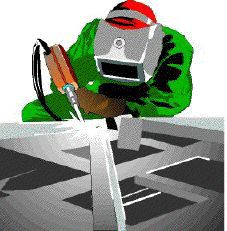
    Career Profile: Welder

    Welding is a growing trade with many opportunities across both construction and manufacturing industries. In Canada welding is a certified trade with a three year registered apprenticeship.

    With Canada’s oil based economy, welders are in high demand in the western provinces. Some of the highest paid welders in the world work in pipeline construction. Working in pipeline construction as a welder requires you to have your Journeyman certification as well as a B pressure certificate. There are many opportunities when you enter the trade, to partner up with a seasoned welder as a helper to gain experience and hours towards your apprenticeship. Following this career path (pipeline welder) you can expect to make $200,000+ per year. You must have your own tools for this profession, and also your own vehicle to carry them (they can be heavy and road access can be rough). A pipeline welder usually works at remote sites and can spend 30+ days away from home. In this case, temporary accommodations are provided by your employer.

    The construction of buildings now relies greatly on qualified welders. As the future progresses, this will be needed more and more because of fast development growth and the economy. Almost every part of the construction process now requires welding on commercial and even some residential projects, from structure to plumbing. A journeyman welder working for a union plumbing contract can expect to make approximately $100,000 per year plus benefits and pension. Generally, working in building construction, you do not have to work out of town to stay busy.

    Other opportunities in welding can be in manufacturing. Many things, you may notice, are made of metal; all of those items require a welder at some point on the production line.

    A welder must have a steady hand and an attention to detail; some welder’s work is under much scrutiny especially when dealing with high pressure gas or liquids. A pipeline welder’s works is regularly X-rayed to ensure its quality. Hazards of the trade include toxic gases that can be very harmful over prolonged exposure. If you have steady hands, don’t mind hard work and feel welding may be a good fit, join the many welders in Canada for your electrifying future!


    Resource:

    https://www.cwa-acs.org/ 

  • The Importance of STEM Education

    The Importance of STEM Education

    STEM education. What is it? STEM is an acronym for Science, Technology, Engineering and Math. It is applied to academic fields that use these studies. This type of education implements both hands on and problem based approaches.[1] So why STEM? What is its significance? It is a guide line to help further grow our engineering and innovation industry. It helps students apply these skills both to profession based and everyday problems. With the ever growing technology industry, we need to help individuals recognize the importance of STEM and encourage them to follow this path.

    The STEM Education Coalition[2] is a non-profit organization that advocates the importance of STEM education. They raise awareness throughout the United States to schools and other organizations. Scouts Canada[3], the country’s leading youth organization has a STEM program that allows youth to play and experiment with science and technology through a hands-on interactive approach. The programs are collaborations of Scouts Canada, Imperial Oil Foundation and Exxon Mobile Canada. These major energy companies depend heavily on engineers of many kinds.[4]

    Major tech companies such as Google, Cisco and Microsoft have made generous contributions to programs in Canada regarding STEM.[5] A major part of these programs is programming and creating software. This will allow future students to be comfortable with modern day technology while it gives them the skill and confidence to create it. As other nations continue to invest in STEM, Canada must also follow suit in order to stay ahead of the times. As a developed country, Canada cannot afford to fall behind in educating our youth about STEM.

    Research shows that the majority of STEM participants are male.[6] The University of Waterloo has signed on to the HeForShe campaign[7] which is a gender equality campaign that raises awareness for the equal treatment of women. In part, this campaign hopes to encourage females to join STEM fields. STEM education should be supported by both governments and families. All Children should be encouraged from a young age to engage in science-related activities as we will always depend on engineers and scientists to evolve our technological world.

    Footnotes & Resources:

    [1] http://www.cslnet.org/our-agenda/what-is-stem/

    [2] http://www.stemedcoalition.org/

    [3] http://www.scouts.ca/ca/about-scouts-canada

    [4] http://talentegg.ca/incubator/2010/11/22/careers-in-the-oil-and-gas-industry-from-start-to-finish/

    [5] http://www.theglobeandmail.com/news/national/education/why-tech-giants-are-investing-in-stem-programs-for-students/article21329798/

    [6] http://www.forbes.com/sites/work-in-progress/2012/06/20/stem-fields-and-the-gender-gap-where-are-the-women/

    [7] http://www.theglobeandmail.com/news/national/education/waterloo-joins-un-program-promoting-women-at-universities/article24250455/

  • Career Profile: Optician

    Career Profile: Optician

    For many people with bad vision, glasses or contact lenses are an essential part of daily life. Without help from these lenses, short-sighted people might be tripping over everything and far-sighted people would be unable to read. Ophthalmologists or optometrists can help by giving people the right prescriptions, but opticians are the people who actually make the glasses and fit them to people’s faces. If you want to help people see better and to get more out of life, the job of optician might be a good choice.

    Being an optician normally means working in a store and dealing with people all day. They sell glasses or contact lenses to customers and might even work with artificial eyes for people who have lost eyes through accidents or disease.

    When people have vision problems, they normally get their eyes tested and then go to the opticians with prescriptions for glasses or contacts. The prescriptions might tell the optician that one eye is better than the other or that the person has a common condition called astigmatism. When they make glasses or contacts, opticians have to grind the lenses just enough to match what the prescription says. They have to know how to make all kinds of lenses and to detect problems if they occur.

    Another task that most opticians do is to advise people about the style of frames that suit their faces best. Many stores have hundreds of different frames in various shapes and sizes for children and adults. Finding the right pair of glasses for different shapes and sizes of face can be difficult for people, especially if they are too short-sighted to see what they look like in different frames. However, it can be fun to work with them to find the right frames!

    Customers coming into the store might have no idea of where to start looking for something that will suit them and also have the right shape and size for their prescriptions. If they have trouble making decisions or if they have specific preferences or financial limitations, the optician might need to give them advice about different options that will still look and feel good. Having a strong sense of style is important in this part of the job.

    People can become opticians after finishing high school and two years of training in their field, although they might feel the need for more education. All across Canada, trained opticians need to obtain licenses from the government before they can start working. Job prospects are not very good right now, but they might improve in the next few years as people retire. Salaries vary across the country, between about $17 per hour in the Saskatoon area to $23 per hour in Winnipeg. Overall, opticians earn between $32,000 and $42,000 per year.

    Would you like to help people see? Why not become an optician?


    Bibliography:

    Alberta Learning Information Service. “Occupational Profile: Optician.” http://occinfo.alis.alberta.ca/occinfopreview/info/browse-occupations/occupation-profile.html?id=71002674.

    Living in Canada.com. “Optician Salary Canada.” http://www.livingin-canada.com/salaries-for-opticians.html.

    Opticians Association of Canada. “What is an Optician?” https://opticians.ca/page.asp?id=3

    Opticians Council of Canada. “What’s an Optician?” http://www.licensedoptician.ca/Whats_an_Optician.aspx.


  • Career Profile: Community News Manager

    Career Profile: Community News Manager

    Many people dream of someday being on the radio or television. They imagine how exciting life could be if they could be like the stars they see in movies, or at least the people they hear talking on the radio every week. Sometimes, the managers of community radio stations can give them that chance.

    Most radio stations have staff members who look after the technical aspects of the broadcasts, as well as the people who actually interview guests, play music, and give weather and news reports. They also have production managers who make sure that everything is working well, and who deal with hiring and firing people.

    A community radio station is a bit different. Most of the people working at these stations are volunteers who have ideas about what they would like to broadcast but who might have little or no formal training. They might stay for years, or they might try being on radio for a few months and then move on to something else.

    Managers in community radio stations have to make sure that they have enough people to cover all of the timeslots, or they have to find helpers who can do that work. Volunteers tend to come and go, but managers can help ease the process by finding one or two good employees who can help.

    Besides working with the day-to-day running of radio stations, managers have to make sure that the financial and business aspects are in place. In Canada, all radio stations need approval from the CRTC (Canadian Radio-Television and Telecommunications Commission), which also sets guidelines for aspects of broadcasting such as the amount of Canadian content. Managers need to make sure that volunteers know and meet these standards.

    Another task is fundraising. Many community radio stations, especially in colleges and universities, have some funding from sources like student fees, but these fees normally cover only part of the money necessary to keep the station going. Many other people help with finding donations, but managers need to take responsibility for ensuring that enough fundraising happens to keep the station alive.

    Managers for commercial radio stations normally need at least a Bachelor’s degree, and they might earn close to $100,000 per year. At community radio stations, the pay is likely to be much lower, and the educational requirements might not be very high. However, getting a bachelor’s degree is still a good idea for learning about the various topics that hosts and guests might discuss and for working with people in the community.

    Because community radio stations normally run with only a few paid staff, managers might need to work in several different areas, such as hosting shows or conducting training. They need to be flexible and be willing to work at whatever needs to be done.

    Being a community radio station manager can be a lot of fun when the volunteers and staff work well together and find a good way to connect with their audience. However, you must be a well- rounded person that adapts well to change and real time problem solving. If you enjoy working with people and expressing your ideas on the radio, this job might be the one for you!


  • Career Profile: Apartment Manager

    Career Profile: Apartment Manager

    Everyone needs a place to live and, if they don’t own a home, they might live in an apartment. When so many different people live in the same building, they need someone to manage things like rent, maintenance and other tasks that keep the building working well. Resident managers are people who do all kinds of jobs like these that help keep apartment buildings looking nice and working well.

    Working as a resident manager can involve many different tasks, depending on the situation. Most resident managers do at least some of the cleaning of public areas like the hallways and lobby. In small places with limited staff, they might also do repairs and general maintenance of people’s showers, sinks, cupboards and anything else that needs work.

    Much of the work of resident managers involves dealing with the people who live in the apartments. They collect rent every month, make arrangements for people moving in or out, answer questions and respond to emergencies such as frozen water pipes or keys that don’t work.

    Resident managers live in the buildings where they work, which might mean that tenants come to them with problems at any time of the day. Because their work is often unpredictable, resident managers might work evenings or weekends, and possibly even at night. However, they can usually take extra time off at a later point if necessary.

    Resident manager jobs usually have no special educational requirements beyond a high school diploma. However, managers should know how to use basic computer programs and be able to communicate well with people. They might need to hold meetings when tenants need extra information, and they need to walk around the property regularly to look for any problems that need to be fixed.

    Looking after the grounds of the building is an important part of the resident manager’s job. This might involve shovelling snow in winter, raking leaves in fall, and mowing the lawn in winter. The building’s caretaker is often in charge of doing these jobs, but the resident manager should be prepared to do them as well, if necessary.

    Salaries for resident managers can vary a lot, from about $25,000 to about $75,000 per year. Most of them, however, earn about $45,000, depending on their education and experience. One way to earn higher salaries is to get official qualifications from real estate management institutes or from other places that train people in that kind of work.

    Another benefit to being a resident manager is receiving a free apartment. They might still have to pay for their telephones, television connections, and other things, but normally the cost of the apartment is included in their salaries and benefits.

    All kinds of people, young, middle aged or elderly, can work as resident managers. If you enjoy organizing things and working with people, it might be the right job for you.

  • Becoming a 911 Operator

    Becoming a 911 Operator

    You and your friends probably know that when someone is injured or in danger or otherwise needing assistance, they can call 911 and someone will come to help. It might be the police, paramedics in an ambulance or firefighters in a fire truck. The people who answered the phone and sent the help will not be there, however. Emergency operators for the 911 system don’t respond to crises themselves, but they work in call centres to help organize help for whatever people need.

    Imagine dealing with emergencies without a 911 system. If you saw a fire, you would have to call the fire department, but if you saw a store being robbed, you would have to call the police. A bad accident might require a call for an ambulance, and other situations might need all three. That could be very confusing and waste time as people tried to decide what number to call. The job of 911 operators helps to make the process easier.

    Basically, 911 operators take emergency calls and pass on the information to the right people. Sending the best help involves finding out as much as possible about the situation before doing anything else. The response for a fire, for example, will not be the same as the response to a heart attack.

    Before they send out help, operators need to find out what they can about the type and seriousness of a situation. They have to remain very calm, even when people are upset. If someone’s life is in danger, 911 operators have to be sure to send out the right type of help as quickly as possible.

    In Canada, most 911 operators work with the RCMP, although they work from call centres rather than in police stations. Canada has twenty-two federal or provincial call centres spread out around the country. They are the connection between people in need and the places that can send help.

    If you love to help people, you might want to become a 911 operator when you grow up!


  • Career Profile: Special Effects Technician

    Career Profile: Special Effects Technician

    Think of a movie or television program that has good special effects. They might be fires, explosions, or something less dramatic like breaking a table apart or creating a scar on someone’s face. Special effects technicians help to make these kinds of effects look real and help make movies and television programs better.

    Special effects technicians work with almost every stage of a production. They begin by looking at the script of a show, which says what the actors do and what they say. For each part of the show, they decide what special effects are needed and how to create them.

    Some special effects technicians work in companies that specialize in that kind of thing. Others work in television and film companies, but most work as freelancers. The work depends mainly on the location of the movie and television industry, although some people work in small theatres. Most special effects technicians in North America work in Vancouver, Toronto, New York, Chicago, and San Francisco.

    Becoming a special effects technician generally does not require any special education. However, taking courses in welding, lighting and other techniques can help special effects technicians to advance in their work.

    Special effects technicians can become specialists in working with fire or with other types of materials. Technicians also have to know about safety and how to keep people from being injured. When something goes wrong with the special effects, technicians also need to check all of the equipment and anything else that might have gone wrong.

    Keeping detailed records is important for special effects technicians. They write down what works and what they need to change the next time. These records can also be very valuable for other special effects technicians, who can learn new techniques for making everything work together.

    One of the benefits of working as a special effects technician is being able to think creatively and to solve problems as they work. Suppose that you had to find a way to make it look like a character flies through the air. How would you do that? If you can find ways to make something like that look real and natural, you might have the skills to be a special effects technician.

    Computers have helped to change the way that special effects technicians work. In the past, all special effects had to be done manually. Designing the effects and making them work could be a very complicated and time-consuming. With computers, however, special effects technicians can do many things that were impossible in the early years of the profession.

    Working as a special effects technician can involve long days during times of filming. Some technicians work regular hours and can earn over $21.00 per hour. Others work only when they can find short-term jobs, but often they can earn more money during those periods than others can earn at a full-time job.

    If you have a creative mind and enjoy movies and television, the job of special effects technician might be right for you.

  • What Is An Epidemiologist?

    What Is An Epidemiologist?

    Every year, millions of people become sick with all kinds of diseases. Sometimes the diseases are isolated, affecting only a few people at a time. When one person breaks a leg or has appendicitis, for example, the illness will not spread to other people in the area. An orthopedic surgeon can take care of the leg, and general surgeon can look after the appendix. However, what happens if an epidemic breaks out? That’s when an epidemiologist can help.

    Most people get food poisoning or the flu at some point in their lives. In many cases, they recover within a week or two, often with only limited medical help. However, when a large number of people in a community suddenly get sick with the same disease, it becomes an epidemic.

    When this happens, the epidemiologists start to investigate the causes of the outbreak to see if there are any ways to treat the disease and to prevent future occurrences, whether the illness is very dangerous or not. Epidemiologists study the source of illness so that they can let people know what they need to do to stay healthy.

    Epidemiologists work closely with doctors and nurses, but their training is different. Having a medical background is very helpful, but not always necessary, depending on many factors, such as geographical location and the extent of other supports. An epidemiologist working in an African village, for example, might be required to have qualifications that are not necessary for someone working in a bigger city. Normally, a degree in epidemiology or public health is the basic requirement for people working in this field.

    Besides knowing about diseases, epidemiologists need to have mathematical and statistical skills. They need to be able to follow the progress of a disease and to make charts and graphs that will help other people understand the information. Epidemiologists might have to give presentations to the public or to government officials and to conduct research on various diseases. They sometimes advise the nurses and doctors who work with those kinds of illnesses.

    Some epidemiologists work mainly in hospitals and laboratories, but most of them spend a lot of their time working with the public. Some of them travel to schools to give immunizations for diseases like measles and others go to seniors’ homes to help the residents deal with diseases there.

    Working in remote areas or in other countries with little hospital care is also a good option for epidemiologists. If you have watched the news recently, you know about how much trouble the Ebola outbreak has caused in Africa. Epidemiologists have been hard at work over there, trying to find an answer.

    Depending on where they work, epidemiologists might make between about $49,000 and $86,000 per year. Although the salary increases slightly with experience, it generally does not rise rapidly. However, with the number of diseases in the world, epidemiologists will never be out of work. If you decide to become an epidemiologist, you can expect to have an interesting and rewarding career.