Category: Jobs and Apprenticeships

  • Career Profile: Power Line Technician

    Career Profile: Power Line Technician

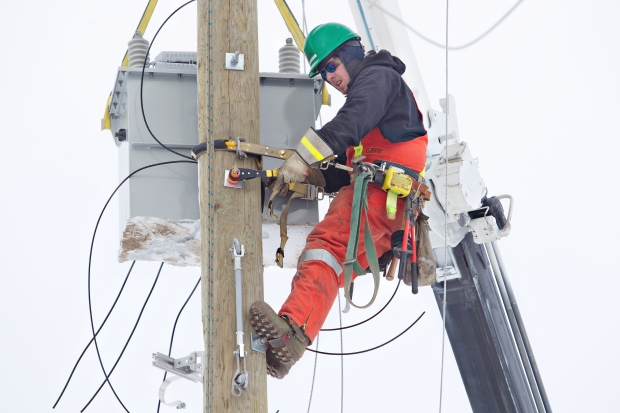
    As a power line technician, what would you do? Well, their tasks range from working with high and low voltage cabling to operating and maintaining structures associated with electrical equipment, such as switches and transformers. They work in all types of weather conditions and it’s a job that offers great benefits and flexibility.

    Most power line technicians have some sort of post-secondary education in the trade itself or experience in a related field, such as a construction line  or cable technician. In general, these type of courses last 2 or more years. Both math and English prerequisites are essential, and selection is very competitive.

    Power line technicians are often present after storms that have caused power outages. They normally work in aerial devices and in trees. It is important that candidates looking to get into the field do not have acrophobia (fear of heights) or claustrophobia (fear of confined spaces.) Candidates should enjoy working with their hands and constantly moving around.

    Wages for power line technicians vary, but as an apprentice they usually receive 50% of the regular earnings of a journeyman. In this case, as an apprentice, one would earn $27/hour and eventually earn $49/hour.

    Potential candidates should be aware that employers will require a clean driving record and may want you to have a valid CPR certification.

    If you’re looking for an exciting career that involves constant mobility and excellent dexterity, then this might be the career for you!

     

  • Real Jobs: Comedian

    Real Jobs: Comedian

    Knock, knock. Who’s there? It’s a comedian.

    Do you like to tell jokes? Do your friends and family tell you that you’re funny? If so, you might want to consider becoming a comedian when you grow up.

    Telling jokes to make people laugh is only part of what it takes to be a comedian. Finding humour in everyday life is also important. Comedians observe people and try to understand why they act the way they do. Often, they begin by looking at their own lives and finding the humour in what they do and then seeing how it applies to other people. A joke about how the comedian eats popcorn, for example, might make other people think about the funny ways that they eat. All comedians find ways to laugh about everyday life, but some comedians do even more.

    Satire is a special kind of comedy that points out people’s weaknesses, usually in a funny way. Often, satire is about politicians, business leaders, or other well-known people. The idea of satire is not just to laugh, but also to change the way people think and act. Rick Mercer is a good example of a Canadian satirist. He began his comedy career in 1994 with This Hour Has 22 Minutes, and he later became known for his own program, the Rick Mercer Report. The program is about current events, political leaders and the ways that people work together.

    Not all comedians have their own television programs. Some of them play small parts on other people’s shows, but others perform in clubs, at parties or even restaurants. Most comedians start slowly, maybe by telling a joke or two at a special event and then working their way up to presenting their jokes at a comedy club.

    Becoming a comedian basically takes a lot of practice and a sense of humour. Although some comedians take classes to learn the skills they need, most prefer to learn from other entertainers as they work. The main quality that these people need is an ability to talk in front of large groups of people. If you love to be with people and you love to be funny, a career as a comedian might be right for you.

  • Construction Millwright

    Construction Millwright

    Construction millwrights keep industrial machinery running smoothly. They dismantle, move, install, adjust, and maintain power shafting, pulleys, conveyors, and hoists. Millwrights often work from plans and blueprints. They must make sure equipment meets safety and quality standards. They sometimes use grinders and lathes to make customized parts.

    Certification Requirements
    The Construction Millwright apprenticeship consists of 8,000 hours of combined on-the-job and in-class technical training.

    Apprentices must complete three 8-week in-class technical training sessions.

    Once you have successfully completed the apprenticeship requirements, you receive a Certificate of Apprenticeship and are considered a journeyperson candidate. If you choose to challenge the Certificate of Qualification exam and pass, you become certified as a journeyperson in the trade.

    A person with at least 8,000 hours of related work experience is eligible to apply for a Trade Equivalency Assessment (TEA) and challenge the Certificate of Qualification exam to become certified as a journeyperson in this trade.

    Educational Prerequisites
    Grade 10 or equivalent. Note: High school graduation is recommended. Employers often require more than the minimum educational requirements set by the province. They may also prefer apprentices who have taken certain courses related to their program.

  • Refrigeration and Air Conditioning Mechanic

    Refrigeration and Air Conditioning Mechanic

    Refrigeration and air conditioning mechanics install, maintain and service residential, commercial, industrial and institutional heating, ventilation, air conditioning and refrigeration units and systems. Their duties include laying out reference points for installation, assembling and installing components, installing wiring to connect components to an electric power supply and calibrating related controls. They also measure, cut, bend, thread and connect pipe to functional components and utilities.

    Refrigeration and air conditioning mechanics maintain and service systems by testing components, brazing or soldering parts to repair defective joints, adjusting and replacing worn or defective components and reassembling repaired components and systems. As part of commissioning, refrigeration and air conditioning mechanics start-up, test and charge systems.

    In addition to their regular duties, some mechanics may also prepare work estimates and plan systems for clients.

    Refrigeration and air conditioning mechanics work with a range of tools and equipment including hand, power, charging, diagnostic and measuring, and recovery and recycling tools and equipment.

    They may be employed by heating, ventilation, air conditioning and refrigeration contractors and manufacturers, property owners, retail establishments, and institutional and public sector employers. They also may be self-employed. Refrigeration and air conditioning mechanics may work on systems and units in office buildings, restaurants, food processing plants, ice arenas, supermarkets, hospitals and ships. They may also work on refrigerated trucks, automotive air conditioning systems, box cars and appliances.

    Refrigeration and air conditioning mechanics work in various locations such as rooftops, mechanical rooms and computer rooms. The work may be performed indoors or outdoors year round and may require extensive traveling. Much of the work is performed independently.

    Inherent risks in this trade include working at heights and in confined spaces, and working with compressed gases, utilities such as electrical, and hazardous chemicals.

    Key attributes for people entering this trade are strong customer service, writing, oral communication and problem solving skills, and an eye for detail. Coordination and manual dexterity are also important, as are mechanical and mathematical abilities. Good physical condition and the strength to lift heavy components are also valuable.

    This analysis recognizes similarities and overlaps with the work of steamfitters/pipefitters, plumbers, gasfitters, sheet metal workers, industrial mechanics (millwrights) and electricians.

    With experience, refrigeration and air conditioning mechanics may act as mentors and trainers of apprentices in the trade. They may also become specialized in one area of the trade, advance to supervisory positions or become instructors.

  • Careers in Trades

    Careers in Trades

    The trades sector in Canada is constantly growing and changing. So how do you know which career path is right for you? Here at Jobs People Do, we’ve assembled a list of some of the hottest jobs in the trades industry that will be in high demand for years to come. Take a look at just some of your options and then click on the link to be taken directly to career information. Find out what kind of education you will need and how much you can expect to be paid.

    Aboriginal Child Development Practitioner
    Agricultural – Dairy Herdsperson
    Agricultural – Fruit Grower
    Agricultural – Swine Herdsperson
    Agricultural Equipment Technician
    Alignment and Brakes Technician
    Appliance Service Technician
    Arborist
    Architectural Glass and Metal Technician
    Assistant Cook
    Auto Body and Collision Damage Repairer
    Auto Body Repairer
    Automotive Electronic Accessory Technician
    Automotive Glass Technician
    Automotive Painter
    Automotive Service Technician
    Baker
    Baker-Patissier
    Bearings Mechanic
    Blacksmith
    Brick and Stone Mason
    Cabinetmaker
    Cement (Concrete) Finisher
    Chef
    Child and Youth Worker
    Child Development Practitioner
    Composite Structures Technician
    Computer Numerical Control (CNC) Programmer
    Concrete Pump Operator
    Construction Boilermaker
    Construction Craft Worker
    Construction Millwright
    Cook
    Developmental Services Worker
    Die Designer
    Draftsperson – Mechanical
    Draftsperson – Plastic Mould Design
    Draftsperson – Tool and Die Design
    Drywall Acoustic and Lathing Applicator
    Drywall Finisher and Plasterer
    Educational Assistant
    Electric Motor System Technician
    Electrical Control (Machine) Builder
    Electrician – Construction and Maintenance
    Electrician – Domestic and Rural
    Electrician (Signal Maintenance)
    Electronic Service Technician
    Elevating Devices Mechanic
    Entertainment Industry Power Technician
    Exterior Insulated Finish Systems Mechanic
    Facilities Mechanic
    Facilities Technician
    Fitter – Assembler (Motor Assembly)
    Floor Covering Installer
    Fuel and Electrical Systems Technician
    Gemsetter / Goldsmith
    General Carpenter
    General Machinist
    Hairstylist
    Hardware, Lumber and Building Materials Retailer
    Hazardous Materials Worker
    Heat and Frost Insulator
    Heavy Duty Equipment Technician
    Heavy Equipment Operator – Dozer
    Heavy Equipment Operator – Excavator
    Heavy Equipment Operator – Tractor Loader Backhoe
    Hoisting Engineer – Mobile Crane Operator 1
    Hoisting Engineer – Mobile Crane Operator 2
    Hoisting Engineer – Tower Crane Operator
    Horse Groomer
    Horse Harness Maker
    Horticultural Technician
    Hydraulic / Pneumatic Mechanic
    Industrial Electrician
    Industrial Mechanic Millwright
    Information Technology – Contact Centre Customer Service Agent
    Information Technology – Contact Centre Sales Agent
    Information Technology – Contact Centre Technical Support Agent
    Information Technology – Hardware Technician
    Information Technology – Network Technician
    Institutional Cook
    Instrumentation and Control Technician
    Ironworker – Generalist
    Ironworker – Structural and Ornamental
    Light Rail Overhead Contact Systems Lineperson
    Locksmith
    Machine Tool Builder and Integrator
    Marine Engine Technician
    Metal Fabricator (Fitter)
    Micro Electronics Manufacturer
    Motive Power Machinist
    Motorcycle Technician
    Mould Designer
    Mould Maker
    Mould or Die Finisher
    Native Clothing and Crafts Artisan
    Native Residential Construction Worker
    Network Cabling Specialist
    Optics Technician (Lens and Prism Maker)
    Packaging Machine Mechanic
    Painter and Decorator – Commercial and Residential
    Painter and Decorator – Industrial
    Parts Technician
    Pattern Maker
    Plumber
    Pool, Hot Tub and Spa – Installer
    Pool, Hot Tub and Spa – Service Technician
    Powered Lift Truck Technician
    Powerline Technician
    Precast Concrete Erector
    Precast Concrete Finisher
    Precision Metal Fabricator
    Pressure Systems Welder
    Process Operator – Food Manufacturing
    Process Operator – Power
    Process Operator – Refinery, Chemical, and Liquid Processes
    Process Operator – Wood Products
    Pump Systems Installer
    Railway Car Technician
    Recreation Vehicle Technician
    Refractory Mason
    Refrigeration and Air Conditioning Systems Mechanic
    Reinforcing Rodworker
    Relay and Instrumentation Technician
    Residential (Low Rise) Sheet Metal Installer
    Residential Air Conditioning Systems Mechanic
    Restoration Mason
    Retail Meat Cutter
    Roll Grinder / Turner
    Roofer
    Saddlery
    Saw Filer / Fitter
    Sheet Metal Worker
    Ski Lift Mechanic
    Small Engine Technician
    Special Events Coordinator
    Sprinkler and Fire Protection Installer
    Steamfitter
    Surface Blaster
    Surface Mount Assembler
    Terrazzo, Tile, and Marble Setter
    Thin Film Technician
    Tire, Wheel and Rim Mechanic
    Tool / Tooling Maker
    Tool and Cutter Grinder
    Tool and Die Maker
    Tool and Gauge Inspector
    Tractor-Trailer Commercial Driver
    Transmission Technician
    Truck and Coach Technician
    Truck-Trailer Service Technician
    Turf Equipment Technician
    Utility Arborist
    Water Well Driller
    Welder
    Wooden Boat Rebuilder
  • Career Profile: Economist

    Career Profile: Economist

    You might sometimes wonder why you have to study mathematics at school. What’s the use of all of those percentages and averages that you have to calculate? These concepts might not be useful in many jobs, but they are essential for economists. Every day, economists use complex mathematical skills to help governments and businesses plan for the future.

    In 2011, Canada had about 15,000 economists working in a variety of places, including government offices, businesses, and other organizations. In some ways, economists do the same kinds of work as accountants often do. They work with budgets, prices, and how to make money. However, economists tend to work on bigger issues than these.

    For economists, the issue that people face is not just how much money to charge for a product or service but also how that fee might affect other aspects of the economy. For example, an economist might analyze how an increase in fuel prices can affect the cost of transporting food from farms to the cities and how that might affect food bank usage and other parts of society.

    Economists work with the trends that influence how people spend money and what affects factors such as prices and resource use. They use statistics to analyze trends in society and to predict what might happen in the future. They also have to know how laws might change various aspects of the economy. Economists might study public transit usage before and after a price increase or analyze how salaries in certain jobs affect house purchases. Economists need to understand numbers, but they also have to be able to see the larger trends.

    Becoming an economist involves knowing a lot about mathematics but also about how people and the economy work together. Most economists have at least a bachelor’s degree in their field, but most have a master’s or Ph.D. Even after they graduate, economists have to keep on learning. They read magazines and other publications related to their work and they find out what other economist think. Reading statistics on how Canadians live is an important part of their work, since that gives them the information they need to make accurate predictions about the future. This can sometimes be a challenge, especially when the information is difficult to find or is unavailable.

    Many economists work for the government, but they also work for large businesses to help the owners plan for the future. The average salary for an economist in Canada is $80,000 to $100,000, but most jobs start at a lower level and some can rise to a higher level. Experience is very important in this field, since it can be very important to learn about how different factors work together. Job prospects in this profession are limited, but there will likely be some openings in the next few years.

    If you love numbers but you also enjoy seeing how everything works together, you might want to consider becoming an economist. Your work might affect Canadians for years to come.

  • Career Profile: Software Developer

    Career Profile: Software Developer

    Every time you use a computer, you use software. Each game and program for writing or doing budgets has software that allows the computer to work and to respond to what people tell it to do. If you like to work with small details and to see how your work translates into something that everyone can use, becoming a software developer might be a good choice.

    Working as a software developer might sound like a very exciting job. You could imagine that you could spend the day playing games and learning new things, and it might include some of those kinds of activities. However, working as a software developer is mostly about working at the coding behind what people see. It takes creativity but also the ability to focus on small details and to see how different elements fit together.

    You might know a bit about the mechanics behind computer programs. Have you ever done any programming yourself? The end result can be very interesting, but getting to that point usually takes a lot of work that can sometimes be somewhat dull and time-consuming. Many software developers have degrees in computer science, but formal training is not always necessary. If you have talent as a software developer, you have a good chance of getting work in this area even if you have only a high school education.

    Software developers use many of the same skills as computer programmers. The know how to use the coding behind the programs to produce certain effects on the computer, such as a special sound or colour. If you want to be a software developer, you can already start to learn the technology behind what you see. Learn the codes that tell the computer what to do and become familiar with what happens when there are mistakes in the coding.

    Software developers have to know all of the technical aspects of how computers work, including computer languages. However, they also need to be creative. Most computer programs, such as word processing software, are designed to solve a problem or to fill a need, even if the need is only for entertainment. Some of the main areas where people in this field work are new technologies, healthcare, and security. However, software developers can work in almost any place where computers are important.

    Research is an important part of being a software developer. People in this field might spend a lot of time reading about what other people have done and thinking about how they can improve on old technology. Learning from other people and from books, magazines, and other sources of information can help to keep a software developer’s skills current.

    Depending on where they work, software developers can earn between $44,000 and $81,000, but the average is about $59,000. Experience can sometimes help people to earn the higher salaries, but most software developers move into other fields within about twenty years.

    Do you love computers and enjoy finding out how they work? You might want to consider becoming a software developer.

  • Job Profile: Book Publisher

    Job Profile: Book Publisher

    Books are amazing things. You can pick one up and travel to a world of elves, fairies, and exciting adventures. Or you can pick up another one to find out about the history of ancient Rome or about how beavers live and what part they play in the natural world. You can read a long novel or a short magazine article. Most of the time, the stories and information you read have gone through a publisher before they came to you.

    What actually happens when an author wants to get a book published? Sometimes they publish the books themselves, but often they want the skills and knowledge of a publisher to help them with the process. Most publishing companies have different people who each focus on one part of the process. In smaller companies, one or two people might do all of the different steps.

    The first step is usually deciding which books to publish. Sometimes, this means that an acquisitions editor will spend a lot of time reading books that people have sent in to the publisher.  The next step is editing for any problems with the book. These problems could be about the book’s contents, such as incorrect information or a confusing story line. The problems could also be much simpler issues of proofreading, such as writing “pan” instead of “pane” in a story.

    Once the editing is done, the book will go to the design department where people will decide what picture to have on the cover, the size of the type font, and anything else that affects the appearance or design of the book. Even electronic (online) books need this kind of work before they are ready for sale.

    Publishers are good at taking care of the many small jobs that are part of getting books ready for sale. One of these jobs is getting the ISBN (International Standard Book Number) and the Cataloguing in Publication information, which helps librarians to organize the books they buy. Another task is deciding what the price should be.

    After all of these small jobs are done, the book is ready to be printed and marketed.  Marketing is what happens when a publisher lets people know about a new book or magazine. They might put up posters, pay for advertisements, or go on tours to talk about what they have to sell. They might set up tables at special events and have some of the books and magazines for sale.

    How do people become publishers? Sometimes all it takes is knowledge of how to sell books and the money to set up a small company. At other times, it might mean getting a low-level job at a publishing company and then learning enough to get a higher-level job. Sometimes an education in business or literature is helpful. People can work in small, local companies or in big, international ones. If you love books and you also love to organize events and keep schedules, work as a publisher might be the right thing for you.

  • Real Jobs: Hot Dog Vendor

    Real Jobs: Hot Dog Vendor

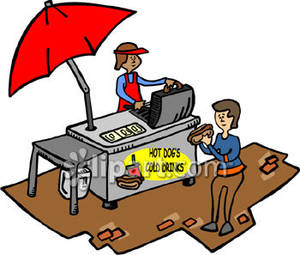
    Some jobs seem like they can’t be real – just think of being a hot dog vendor.  Everyone loves hot dogs, and it seems like a dream that you could even work with them. Work in this field can be very good for independent people who enjoy being with people and dealing with food.

    You and your family might sometimes eat food from street vendors. You go to a food cart and ask the person for a hot dog with mustard or ketchup, and then the vendor puts the food together and gives it to you. Hot dog vendors spend much of their time selling food to people on the street or in office buildings.

    The first step in becoming a hot dog vendor is to learn about how to handle the food. Wieners are easy to cook, but they have to be stored properly. Buns also have to be fresh, and the condiments (like ketchup and mustard) also require care. Before they start to work, hot dog vendors need to know about handling food safely and about cooking meat properly.

    Some hot dog vendors learn all that they need to know by working with others on the job. Others, however, might decide to take classes at a college or cooking school. A small percentage of hot dog vendors might even get a degree in a subject related to food or even something completely different. Education has little effect on a hot dog vendor’s salary, but it can help to provide background information that can be useful for the work.

    Besides learning about how to handle food, hot dog vendors need to learn about their equipment. They have to use fuel tanks, cooking utensils, and anything else that they need to run the business.

    Do you love food and being with people? Why not consider working as a hot dog vendor?

  • Dream Job: Hockey Player

    Dream Job: Hockey Player

    Many people dream of being a famous sports star when they grow up, but not everyone achieves that dream. Have you ever wanted to become a star in a sport like hockey? A Canadian athlete named Hayley Wickenheiser has become well known for her amazing athletic abilities and for her work in helping others. Like other hockey players, she has worked hard at her sport while also balancing it with the rest of her life.

    Becoming a professional hockey player takes a combination of talent and hard work. Hayley Wickenheiser discovered her athletic abilities early. She grew up in Shaunavon, Saskatchewan, where she became skillful at several different sports, including hockey and softball. When she was fifteen years old she started playing hockey at the Women’s World Championships as part of the Canadian National Women’s Team. The team won seven gold medals over the next years. Hayley later played on men’s teams in Finland and Sweden, and she has won gold and silver medals at several Olympic Games. She is now known as one of the best athletes in the world.

    For most athletes, the time they spend on playing their sport every year is fairly short because the work is seasonal. However, they spend a lot of time during the rest of the year on training and keeping themselves healthy. They run, lift weights, swim, cycle, and continue to practice their skills. They try to keep themselves healthy by eating good food and avoiding anything that might make them sick. They keep themselves strong so that they can play well.

    A career in sports is not usually very long, and most athletes move on to other jobs by the time they are about thirty years old. Some athletes have to leave sports because of injuries, but most of them leave because of age, when they no longer have the energy to keep up with the demands of the sport. Hayley Wickenheiser has continued in professional sports longer than many other athletes, but she is also preparing for a different career after she finishes playing hockey. In 2013, she received a science degree in kinesiology from the University of Calgary, which will help her if she works to help other athletes play better.

    Besides her sports and her studies, Hayley has been working in several other areas. She works with several groups that encourage girls to get into sports, and she also works with a group that buys mosquito nets for people in countries that have trouble with a deadly disease called malaria. Hayley has traveled to Africa to work with the charity that she started, Right to Play. Her personal life is also busy, since she is looking after her son in addition to everything else that she does. She is already well known for her hockey skills, but people also recognize her for this charitable work.

    Are you good at playing hockey?  If you practice your skills and become part of local teams, you might someday be able to make hockey your career.