Category: Jobs and Apprenticeships

  • Creative Careers: Photojournalism

    Creative Careers: Photojournalism

    In your house, you probably have a lot of family pictures. You might have formal school or graduation pictures and your parents might have their wedding picture up on the wall. Maybe there are pictures of your relatives, of places that you have visited, and maybe pictures of your pets. These pictures tell the story of your life and the lives of your family members. Photojournalists are professional photographers who do the same kind of thing. Instead of telling their own stories, however, they tell other people’s stories through pictures. Whether they are telling the story of pleasant or unpleasant occasions, photojournalists help to let other people know about the events that are taking place around the world.

    If you take pictures with your phone or camera, you are helping to record what has happened throughout your day. You might record ordinary events, such as a rabbit running across your path, or major events such as your brother or sister’s graduation. Photojournalists take pictures of all kinds of things, including cultural festivals, political events and even wars. Sometimes photojournalists work in very dangerous situations where they have to be very careful to keep safe, but at other times they work in very quiet places.

    Working locations can also vary a lot for photojournalists. They might travel overseas to take pictures of a royal wedding. During that time, they would probably stay in a nice hotel and be well dressed to fit in with the crowd. They might also record a canoe trip across the country, spending their nights in tents and wearing jeans or shorts. Some people do photojournalism as a full-time career, but many of them are freelancers and might work at another job to earn money for their photography work.

    Being able to take good pictures of various places and events is the most important requirement for photojournalists, but they also need much more. Depending on what kinds of pictures they take, they might need to be quite physically fit so that they can walk long distances and carry everything they need for their work. They need to be able to use different cameras and other equipment and to have the technical knowledge to set everything up for taking pictures. Most photojournalists need to know about darkrooms and different techniques for developing film. Although there is no standard educational requirement for photojournalists, some courses or a degree in photojournalism or in the fine arts could be useful.

    Photojournalists work in many different places, but the most common employers are newspapers or magazines. Salaries vary between about $20,000 and $52,000 per year. Experience is the most important factor in becoming a photojournalist. If you like the idea of this type of work, you can already start taking pictures that you can put in your portfolio of samples that show your best work. You can start experimenting with different cameras and type of equipment. If you love telling stories through pictures, you can already start now on a future career as a photojournalist.


  • STEM Job Profile: Sociologist

    STEM Job Profile: Sociologist

    The field of sociology is a major one and it is one of the fastest growing of the STEM career paths. Sociology has been growing in size and importance since it began to be studied in the early 1900’s. A degree in sociology can take you down a large variety of career paths and it is up to you to decide which one most suits and benefits you personally.

    The first step towards becoming a sociologist is being accepted into a sociology major program at a university. These programs generally take about four years to complete, but universities are flexible and it’s possible to complete the program faster (or slower) depending on your learning style, financial situation and other factors that might affect your education situation.

    Once you graduate from your sociology bachelor’s program there are a number of options available to you. You can decide to take further schooling and apply for a masters of sociology, or even achieve a doctorate if you decide to put in the serious dedication to the science of sociology. Many people don’t wish to take that path for a variety of reasons, and it isn’t necessary to hold a doctorate to be a sociologist.

    Some of the career fields open to sociology bachelor’s graduates can include the following: human relations, development, marketing, industrial relations, or as a personal support worker (PSW). PSWs are an integral part of the community and perform a number of important functions.

    PSWs can include youth support workers, whose function is to work with troubled young people in the community and reach out to those in need of support, especially youths with troubled home lives and legal issues. Community PSWs can also work with drug addicts and alcoholics in the community, helping them to find shelter, direct them to rehabilitation centres, find employment or hand out supplies such as sterile needles, clean pipes and pamphlets on addiction. Many PSWs will work with those most disadvantaged in society. It’s a difficult yet very emotionally rewarding job.

    Community social workers work with those in extreme poverty as well as the homeless. They help to provide support and direct them to services that can help them such as shelters, food banks, and navigating the complex welfare and disability system. Often PSWs work with the disabled or mentally ill as well, giving support to people that have no one else. Social workers can aid these people in finding affordable housing, work, or treatment.

    Community social workers can have a major benefit on the area in which they work, and they can often improve or even save people’s lives. It is not an easy job, requiring odd hours and being able to handle diverse situations. Patience and good people skills are essential for this line of work. All in all, being a community social worker can be an extremely rewarding job. Each day you work to improve people’s lives.

  • Let’s Take a Trip to the Vet

    Let’s Take a Trip to the Vet

    Just like people, sometimes animals get sick or injured and need to see a doctor. A doctor that specializes in taking care of animals is called a veterinarian, or a vet for short.

    Most vets work in clinical practices, meaning they work directly with animals. However, some vets work doing research, teaching or work for the government.

    Dr. Jaime Buchanan is a veterinarian at the Kingston Veterinary Clinic in Kingston, Ontario. Her job is to treat animals for diseases and injuries and to inform owners of how to prevent their animals from getting sick.

    Doctor Buchanan says animals go to the vet most often because they are sick or injured. She says, “the most common problems are vomiting, diarrhea and skin problems. And some of the common injuries include: lameness (limping) and wounds or cuts.” She also says, like people, many animals have regular check-ups to make sure they are healthy. They have vaccinations, which are needles with medicine that help prevent diseases, flea treatments and de-worming.

    However, unlike people, animals can’t tell someone when they aren’t feeling well. Doctor Buchanan says, “it can be very difficult to diagnose animals because they can’t tell you how they are feeling or where they are hurt.”

    In order to figure out exactly what the problem is, she says the vet, “starts by taking a thorough history of the problem from the owner. They do a physical exam, checking the animal from head to tail. This includes looking at their teeth and gums, listening to their heart, taking their temperature and feeling their abdomen, among other things.” If the problem is not obvious, the vet may need to do further tests like blood work or X-rays to determine why the patient is sick.

    Depending on what is wrong, treatment for the animal may include going home and taking medication, like pain pills or antibiotics. Or, if they are very sick, they may need to stay in the hospital and have an IV (intravenous fluids) and be closely watched to ensure the treatment is working.
    Doctor Buchanan says some of the symptoms pet owners should watch out for are, “vomiting, diarrhea, breathing problems, skin and ear problems, and changes in water intake or urination.” She says if your animal is not eating or drinking or if they seem to have less energy than usual, call your veterinarian.

    When you take your pet to the vet, Doctor Buchanan says you can expect to see “other animals and people in the clinic. You may also see the receptionist and veterinary technician in the waiting room. In the exam room, you can watch while your pet is examined. And you may even get to listen to the animals’ heart with the stethoscope or help hold and comfort your pet.”

    The vet will explain everything step by step while they are completing your animals check-up, and Dr. Buchanan says don’t be afraid to ask questions because the Doctor will be more than happy to answer them.

    If you love animals, maybe becoming a veterinarian would be your dream job!

  • Why Canada Needs More STEM Students

    Why Canada Needs More STEM Students

    As a wealthy, diverse and constantly growing nation, Canada needs students and workers going into the valuable fields of engineering, technology, science and mathematics. While these can be some of the most challenging career paths, they can also be some of the most rewarding. The acronym STEM stands for science, technology, engineering, and mathematics.

    There are many other subcategories within the STEM fields like biology, geology, psychology, robotic engineering, aerospace engineering, industrial engineering, software design, computer hardware design, anthropology, sociology and a whole lot more! STEM fields are the backbone of society and new students are always needed to design, improve, innovate and create.

    Graduates of STEM programs are extremely valuable to Canada and make great contributions to the Canadian economy and culture. The achievements of Canadians in STEM fields are known worldwide and it’s up to the next generation of students to continue that legacy of greatness. Engineers are responsible for buildings and structures and are required for just about any major project, from bridges to houses to high rise condominiums. Scientists and mathematicians are needed for a huge variety of jobs, from biologists and chemists to the robotics experts that created the world famous Canadarm or some of our leading bio medical doctors and researchers.

    STEM graduates are needed in almost every field, be it politics, conservation, law enforcement, architecture or military. Former STEM graduates create and plan the roads we drive on, the planes in the sky, the computer programs we use, and they even helped to design your home or school. This wide variety of STEM-based careers is integral to the functioning of society. Simply put, if there were no more STEM students the world would be a much more chaotic place to live!

    Not only do STEM graduates benefit their country, they also benefit themselves. They can open the doors to a wide variety of jobs and careers that put your intellect and creativity to the test as well as paying out steady incomes. Unfortunately, Canada currently isn’t producing as many STEM students as it once did, according to data from the Conference Board of Canada’s website.

    Now more than ever, Canada needs students to step up and study STEM programs and career paths. Take a look at STEM today!

  • Jobs of the Future: What to Expect When You Graduate

    Jobs of the Future: What to Expect When You Graduate

    Graduation is a major event for students; it’s a milestone in your life and an accomplishment that can’t be taken away. After you graduate you’ll be thrown into the adult world of jobs and careers.

    This is a major time of change and can be scary. That’s why it’s important to have a plan for what you want to do and what sort of education you need to do it. The path to personal success is a rough and bumpy ride, sometimes with many twists and turns.

    Don’t have any what you want to do? Don’t freak out. People change college and university programs multiple times. Most people will cycle through several jobs and careers in their lifetime. Education can help you discover what fits with your personality and what career path suits you the most. Working a job you don’t like, especially for many years, is not a fun experience and it’s important to find a comfortable balance between your working time and recreational time. Nobody likes to be stressed out all the time!

    We live in an exciting and rapidly changing world, and the job market reflects this. Many traditional careers are being changed or ended due to constantly evolving technology. This is why its important to research what sort of career path you want to take and keep up with new developments and changes in your chosen field. Statistics on the employability of certain graduates and the availability of jobs can be found in many online resources. In other words, keep informed!

    STEM, or science, technology, engineering and mathematics jobs, are very important. As technology improves so does the need for dedicated workers in these fields. There are a massive variety of STEM jobs, each field containing a huge variety of careers. A few examples include:

    Science: energy conservationist, agricultural worker, and industrial biotechnologist.

    Technology: construction, automotive manufacturing and economics.

    Engineering: civil engineers, structural engineers, and mechanical engineers.

    Mathematics: architect, high school mathematics teacher, and physicist.

    As you can see, STEM jobs are incredibly diverse and it’s up to you to find what suits you best. STEM jobs can be some of the toughest but also some of the most rewarding, both financially and personally. So keep an open mind and stay up to date on the evolving fields. Getting a STEM job isn’t for everyone, but they can be some of the most exciting and important jobs.

  • Why Should Girls Get Involved with STEM?

    Why Should Girls Get Involved with STEM?

    In our society, girls seem to be underrepresented in fields related to science, technology, engineering, and mathematics. Even more interesting is that in contrast to girls, boys seem to be actively involved in all of these fields. So what’s the deal? Why are girls not participating in these fields as much as boys? These are questions that are stumping researchers and other experts.

    There is a stereotype that has been circulating around, that maybe girls just aren’t as good at these subjects as their male counterparts. However, research suggests that there isn’t any evidence to support this claim. We all know girls are just as capable and smart as boys. Researchers have found that, when tested, girls are equally as successful in any of these subjects as boys. However, as long as this negative stereotype continues to persist it can cause real harm. It can actually cause girls to believe that they aren’t good at these subjects before even trying them. There is a natural bias for people to assume that science and math are fields best suited to males and that the arts are better suited to females. Why not disprove this theory?

    People also believe that maybe girls aren’t involved in STEM because there aren’t enough female role models in these fields to look up to. Seeing women who are thriving and successful in these fields could make them more enticing to younger females. People like Bill Gates and Mark Zuckerberg have made their fortunes in fields related to STEM. However, there still seems to be lacking female equivalents. It would be great to see females who have invented or developed ideas related to STEM in our society. The women that are contributing and involved in STEM should be given more visibility in order to promote these fields.

    There are many reasons why girls should get involved in STEM. Firstly, positions related to these fields are abundant. Why not make contributions to them and stand out from others? Scientists are trying to solve some of the most difficult questions in our time. Engineers are designing different things that we can use to better our lives and make things easier. With the internet and other forms of communication becoming more popular, there are a wide variety of job opportunities relating to technology.  People in these professions are doing creative and innovative things. In addition to this, these positions provide a person with a really great income (who doesn’t like money?). Helping the world and making great money doesn’t sound like a bad thing to me!

  • Career Profile: Locksmith

    When people need help, they have to call the right person. If they need to go somewhere, they might call a taxi service or get a ride from a friend. When they lose their keys or lock themselves out of the house, they call a locksmith for help. Locksmiths or lock technicians are tradespeople who are experts on everything related to locks, keys, and security. Becoming a locksmith is a good career choice for people who enjoy puzzles and working with their hands.

    Have you ever thought about the many different skills that go into working with locks? Becoming a locksmith involves learning about how to make keys that fit only one lock and how to repair broken locks or doors. Sometimes this might also mean that people have to learn how to replace doors and hinges as well as installing new locks. These days, working as a locksmith also requires some knowledge of electronic and keyless locks that use number or letter codes. As technology changes, locksmiths need to learn new techniques to keep up with what customers might want.

    Learning all of these techniques takes a combination of education and experience. Some people attend classes at locksmith academies, where they learn about key cutting, lock types, and other topics related to their work. Others go straight to an apprenticeship for the trade. Being an apprentice allows them to learn from people who are experienced in the work while also practicing their skills. Locksmith work can require a lot of delicate manipulation of small metal parts, and being able to practice this work is essential for learning the necessary skills. Many locksmiths also need to know basic accounting or bookkeeping skills and learn how to run a business. Receiving a certificate in the trade is also necessary in many parts of Canada.

    Keeping up with the latest locksmithing information is important, and many working locksmiths participate in workshops and seminars, as well as reading magazines related to their trade. Some locksmiths work as employees of companies, but many of them have their own businesses or work together with one or two other people. Generally, they work regular hours, but they might need to work evenings or weekends in case of emergency.

    Depending on where and how much they work, locksmiths make between about $24,000 and $55,000 per year. Most locksmiths stay in the job for under twenty years. Locksmiths work in a wide variety of conditions, often in small, confined spaces. The ability to use tools to work with very small moving parts of a lock is important, and good vision (with or without glasses) for close-up work is helpful.

    Almost every building has locks that need the services of a locksmith at some point. Jobs availability can depend on many factors, such as the number of older workers who are retiring and the size of the town or city where the locksmith lives. If you have the patience and skills to work with locks, you might eventually become part of this trade.

  • How to Prepare for a STEM Career

    How to Prepare for a STEM Career

    Ever wonder how Albert Einstein got started? How about Isaac Newton or even Steve Jobs? If you’re interested in learning about the world around you and how it works, STEM careers might be a good fit for you. Made up of the fields of Science, Technology, Engineering and Math, STEM careers are personally rewarding and a great outlet to explore your interests. You may not be at the stage where you have to set yourself on a career path (or you may have already decided to go down the STEM road), but there are things you can do to ensure you’re on the track to success in the field you choose.

    Almost every college and university out there offers a multitude of STEM programs for potential applicants. These programs often have rigorous requirements for admission (for example, in fields like Life Sciences), and the competition can be tough. To properly prepare for post-secondary education in STEM, make sure you take all the necessary prerequisites for the program you’re looking at—and make sure you study hard to meet the mark cut-offs.

    There are so many opportunities out there to get involved with STEM, even apart from post-secondary education. If you’re looking for some great job experience, you can investigate the opportunity for a STEM internship or apprenticeship, which could be a great way to put your practical skills to use. Volunteer positions with certain organizations can be very valuable as well, especially if they’re directly linked to your field of study (to continue the Life Sciences example, look into volunteering at a local hospital). Not only are these sorts of experiences good for your own personal fulfillment, but they look great on a resume, which can really set you apart.

    If you aren’t quite committed to a STEM field but want to learn more, a school club or organization is a fantastic place to start. This gives you the added bonus of being able to meet equally motivated students that share your interests without the serious responsibility of any of the above opportunities. STEM extra-curriculars also look good on post-secondary applications but, more importantly, they give you the chance to explore your options. You are considering pursuing a career that focuses on discovery, after all—why not take the opportunity to discover some of your own STEM-based interests?

    Though it may be a little early to start job-hunting, preparing for a STEM career can mean working on your academics, finding a volunteer or internship position, or even just joining a club. You may be surprised to see how truly valued these types of experiences turn out to be in the workforce. Good luck on your STEM path, whatever you decide it to be. Maybe you’ll be the one making all the discoveries one day!

  • Mobile Crane Operator

    Mobile Crane Operator

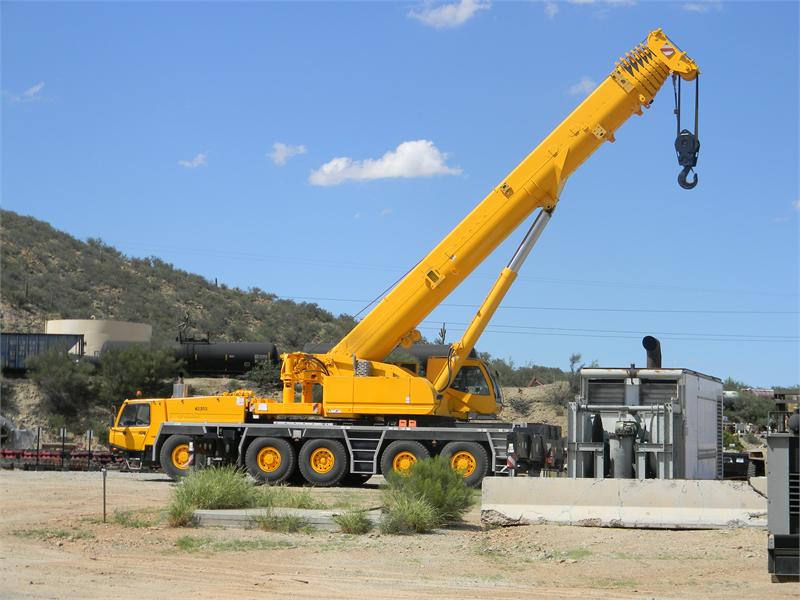
    Mobile crane operators operate mobile cranes to lift, move, position and place materials and equipment. They perform pre‐operational inspections. They calculate crane capacities, determine load weight, and set up, position and stabilize the crane before the lift. Mobile crane operators have the additional responsibilities of disassembling, traveling and transporting mobile cranes. They may also participate in rigging procedures. They also perform some routine maintenance and housekeeping of the crane equipment such as lubricating and cleaning.

    Mobile cranes are used in many industry sectors. They are very commonly used in the construction of buildings and the assembly of large equipment. They are used in locations such as construction sites, warehouses, factories, mines, oil rigs, refineries, railway yards, ships, windmill farms and ports. Mobile crane operators may be employed by rental companies, construction firms, manufacturers, public utilities, transport sector companies, ship builders, cargo-handlers, airports, railways and mines.

    Mobile cranes come in different types such as crawlers, truck-mounted, rough-terrain and all‑terrain. The boom of the crane may be lattice or telescopic. Some mobile cranes are fitted with equipment, including piledriver, clamshell, dragline, wrecking ball, magnet and personnel basket, which can perform specialized functions. They may be outfitted with heavy lift attachments, tower attachments and luffing jibs.

    Some mobile crane operators specialize in different crane functions. In some cases, an operator may work for years on a single large site, operating a single type and size of mobile crane. Mobile crane operators working for rental companies may rarely work on the same site more than once and may routinely perform a variety of tasks with different types and sizes of mobile cranes.

    The majority of the work in this trade is outdoors. Key attributes for people entering the trade are strong communication skills, mechanical aptitude, mathematical ability, excellent visual and depth perception and a high degree of hand-foot-eye coordination. The operation of some mobile cranes is physically demanding as is the handling of accessories.

    Mobile crane operators interact with other tradespeople, contractors and customers.

    The skills of mobile crane operators are transferable to operating other heavy equipment. With experience, mobile crane operators may move into careers such as business owners, supervisors, trainers and job coordinators.

  • Industrial Electrician

    Industrial Electrician

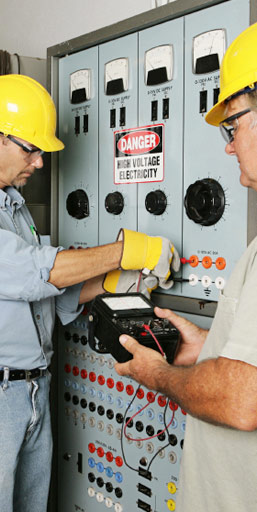
    Industrial electricians install, maintain, test, troubleshoot, service and repair industrial electrical equipment and associated electrical controls. These include equipment or components directly or indirectly exposed to electrical power such as motors, generators, pumps and lighting systems. Industrial electricians are employed by electrical contractors and maintenance departments of factories, plants, mines, fabrication facilities and government, and other industrial establishments.

    Industrial electricians must read and interpret prints, drawings and code specifications for layout and installation of electrical equipment. They install, service and maintain electrical components such as lighting fixtures, switches, conduit and electrical controls. They test electrical systems and continuity of circuits using test equipment to ensure system safety and compatibility. They conduct preventative and predictive maintenance programs and keep maintenance records. Some industrial electricians specialize in maintenance functions in areas such as high voltage and process controls.

    Industrial electricians must possess manual dexterity, and good planning, organizational and communication skills. They also require strong analytical, mathematical and problem-solving skills in order to read and interpret schematics, drawings and specifications. They should have good mechanical aptitude to install, troubleshoot and repair equipment. They must also have good vision and hearing, the ability to distinguish colours and a willingness to keep up with new developments in the trade.

    The work environment of industrial electricians can expose them to hazards. Their work is performed indoors or outdoors in extreme climate conditions, and may be at variable heights or in confined spaces. Other occupational risks include electrical shocks, arc flashes, falls, and injury from lifting and kneeling.

    This analysis recognizes similarities or overlaps with the work of construction electricians, powerline technicians, instrumentation and control technicians, electric motor systems technicians, heating, ventilation and air conditioning (HVAC) technicians, telecommunications technicians and industrial mechanics (millwrights). Industrial electricians also work with process operators, engineers and inspectors.

    With experience, industrial electricians may act as mentors and trainers to apprentices in the trade. They may also advance to managerial, inspection or teaching positions.