
The trades sector in Canada is constantly growing and changing. So how do you know which career path is right for you? Here at Jobs People Do, we’ve assembled a list of some of the hottest jobs in the trades industry that will be in high demand for years to come. Take a look at just some of your options and then click on the link to be taken directly to career information. Find out what kind of education you will need and how much you can expect to be paid.
Category: Jobs and Apprenticeships
-

Utilizing Guidance and Career Counselors
Whether you’re in grade 9 or grade 12, it is never too soon to meet with a guidance or a career counselor. If you’re like many people in high school, you have a vague idea of what you might be good at, but you haven’t nailed down exactly what it is that you would like to do. Or maybe you might know what you want to do, in which case it is still a good idea to speak with your guidance counselor about the proper steps you should be taking.
Learning what careers are out there and what you are good at are the two most important subjects that your counselor will help you with. Sometimes we limit our job search to traditional jobs that we have heard about from friends and our family members. When you broaden your search to what jobs are really out there, you might discover that there are jobs that you have never heard of before that could suit you perfectly. Asking your guidance counselor to help you identify your gifts and skills is another good tool to help you while navigating careers. There are a ton of resources available to help you discover what it is that you are good at and what you should capitalize on in terms of your strengths.
If you know what you want to do with your career, you are already ahead of the game. That is the first step in the process of building a career, however there are many more steps that need to be taken depending on what it is that you are choosing to do. At the point when you know what you want to do, then you can start setting some goals for the coming years. Make sure to follow the SMART goal setting formula, setting Specific, Measurable, Achievable, Realistic and Timed goals. For example, if I want to be a doctor, I will set a goal related to having high marks and having a range of extracurricular activities to round out my application. Two SMART goals related to this could be: I want to have an average of 90% in grade 11 and 12 so that I can get a scholarship and I want to be on the basketball team, amnesty club and chess team for grade 11 and 12. These goals identify exactly what is to be achieved, they are realistic because I do well in academics and have an interest in the activities that I want to participate in, and I have identified when they need to be achieved by.
The important thing to remember, whether you know what you want to be or not, is that talking about your career will help you to start thinking about your future – and that is the first step towards starting a successful career path. Doing some research and talking to a counselor will help you to know what is a realistic career for you. Take the first step today and contact your guidance counselor!
-
Choosing To Work In A Trade
Times have changed in the world of jobs. You might have heard from your parents or teachers that the best way to get a high-paid, reliable job is through a university education. Sometimes that still holds true. These days, however, a better choice for both men and women might be a skilled trade, where there are many opportunities for a rewarding career.
What comes to your mind when you hear the term “trade”? Do you think of low-paid labourers, barely making enough money to pay their bills and never sure how much longer their jobs will last? Many unskilled labourers work under these conditions, but the situation is different for skilled tradespeople. They are often well-educated, with diplomas or certificates in their fields.
Tradespeople might have as much education as university graduates. Unlike many university programs, however, training in the trades is geared specifically to learning the practical skills needed on the job. Tradespeople might be trained as carpenters, auto mechanics, electricians or any of the other trades. Through practical work and classroom studies, they learn everything they need to know to work in their trades. Another important part of the training process in the trades is an apprenticeship, in which students work together with an experienced person to learn practical skills for the job. For some trades they might also need to get an official license or certificate.
Becoming qualified in a trade can take from one to three years of classroom education, between two and four years of apprenticeship, and two or three years of on-the-job training. Many university programs are just as long or even longer and more expensive. Graduates can also have trouble finding work in their field. In contrast, tradespeople can usually find work soon after they finish their studies and can easily pay off any loans they received for their school tuition.
Almost anyone can become qualified to work in a trade. Most tradespeople, about 97 % in 2007, are men. However, more women are joining the trades and becoming qualified to work in carpentry, welding and other skilled trades. Possibly up to 320,000 people in Canada currently working in construction alone will be retiring in the next few years and that could open up good opportunities for both men and women. Becoming a journeyperson (someone with official qualifications in a skilled trade) could be a wise career move.
How do you know if you could be successful in skilled trade? Natural ability and interest are important places to start. If you love to take things apart to see how they work, you might want to choose to be a mechanic or electrician. If you have a fear of heights, on the other hand, you might not want to choose the construction industry. The best way to decide whether or not a trade would suit you is to research it and to talk with people about it. Then, if you decide to pursue a trade, you’ll have a good basis for a stable and rewarding lifelong career.
-
Career Profile: Horticulturist
Horticulture. What is it? In its simplest form we can define it as the cultivation of plants. But there’s a lot more to it than that.
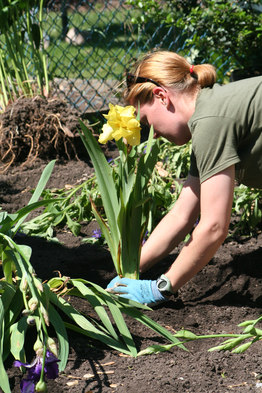
An individual who works in the horticulture field is called a horticulturist. Their duties consist of managing and coordinating anything that involves cultivating and breeding plant life. From working with landscape companies, to advising provincial ministries on proper techniques and maintenance of plants and landscapes; a horticulturist’s job often takes them from one job site to another and seldom leaves them standing in the same place.
An ideal candidate for the horticulturist career path is an individual who enjoys working outdoors, nature, travelling and, well, getting dirty!
Horticulturists may act as technicians or advisors for agriculture companies and provide information on techniques to yield a higher crop growth and impart pesticide-related info to both commercial and independent farmers. They may also work with landscaping companies to help them determine which plants will grow the most plentifully based on its required needs, like climate and precipitation.Horticulturists may choose to work as independent contractors or work directly for natural resource ministries to ensure soil levels are not contaminated and pose no threat to its vegetation or animals in the area.
The career path of a horticulturist typically only requires some post secondary education as an apprentice. The individual could start out as a landscaper and gradually make their way to a horticulturist. If desired, university degrees are offered in the field of horticulture. These degrees may lead into other agricultural fields such as forestry and biology.
So if you have always loved learning about plant life and even planting your own garden or flowerbeds at home, a career in horticulture could be perfect for you!
-

Career Profile: Hairstylist
Hairstylists shampoo, cut, style and chemically treat hair. They may also provide other services such as scalp treatments and hairpiece services. In some jurisdictions, hairstylists may also provide additional services such as basic natural nail services, basic facial care and ear piercing.
To be a successful hairstylist, one must incorporate technical and interpersonal skills. Continuous personal and professional development and client retention are crucial for long-term success. Hairstylists may recommend styles based on trends, clients’ physical features and lifestyle. Critical thinking, questioning and listening skills are important to serve their clientele. Depending on the workplace, recommending and selling hair and skin products may be done by the hairstylist.
Hairstylists may work in hair salons, spas, barber shops, schools, hair replacement clinics, health care establishments, hotels, and in the cruise, fashion and entertainment industries. With experience, hairstylists may move into other positions such as salon managers, owners, fashion consultants, educators, platform artists and product sales representatives. Salons may specialize in services to either women or men, or both. Hairstylists may be remunerated through salary, commission, a combination of salary and commission or chair rental agreements. Some hairstylists work out of their residences where by-laws allow.
Hairstylists work with various tools and equipment including brushes, combs, shears, clippers, razors, hair dryers and thermal irons. They own most of their tools and must keep them sanitized, disinfected and maintained.
Some hairstylists specialize in areas such as cutting, hair extensions and chemical services. In addition, diversity across Canada requires specialization in ethnic specific services.
Hairstylists work in clean environments, though the chemicals that they use may irritate their skin and produce strong odours and fumes. Some physical considerations of this trade are long periods of standing, posture fatigue and repetitive motion. This may result in repetitive strain injury, back and foot pain, although ergonomic considerations may reduce these effects.
Key attributes for people entering this trade are: communication skills, personal interaction, coordination and manual dexterity, stamina, colour vision and depth perception. Respect, professionalism, teamwork, tact, discretion and creativity are important personal qualities. To keep current with trends and styles, hairstylists need to update their skills through trade shows and other educational venues. They must also understand and implement personal and public hygiene procedures to maintain workplace health and safety.
-
Career Profile: Tailor/Dressmaker
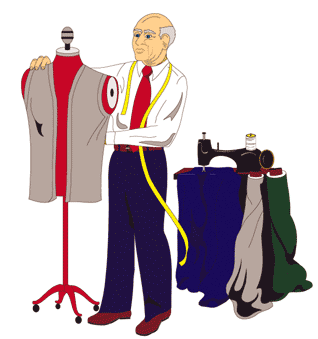
When people go to a formal event like a banquet, they usually wear a nice suit or a dress. When they go to the lake, they put on swimsuits and wear shorts and t-shirts. What do all of these clothes have in common? They were all made by someone. In many places, some of the nicest clothes come from tailors or dressmakers. These experts in clothing make new suits, dresses, and other clothes or make alterations to customers’ clothes to make them as nice as possible. The job of tailor or dressmaker allows people to work with their hands and to be creative as they help people to get the kinds of clothes they want.
Many of the clothes that people wear come from factories where workers make hundreds of the same types of clothes to sell around the world. These clothes come in standard sizes and colours, and they are generally fairly inexpensive and casual. However, what about special clothes, like wedding dresses, graduation suits, or bridesmaids’ outfits? When people need something they can’t find in a store, they might go to get their outfits specially made.
Normally, tailors and dressmakers are not the people who design clothes. Instead, they follow premade patterns that they adapt to fit the person buying the clothes. They might also do alterations on clothes that people have bought elsewhere, such as raising or lowering the hems of pant legs or changing the size of a waistband. Whatever makes clothes more wearable is part of what tailors and dressmakers do. They often work with sewing machines but also have to know how to make clothes by hand. They have to be able to follow directions on patterns but also be flexible and creative to give customers the clothes they want.
Tailors and dressmakers need to know a lot about how clothes are designed. They need good skills in reading and mathematics to read and understand patterns and to make calculations to alter clothes. Generally, a high school diploma is enough to get into the work, although courses in home economics are useful. The most important thing is practice. With practice, people learn the different sewing terms and learn all kinds of techniques, such as making special stitches or working with different kinds of fabric. Generally, tailors work with men’s and boys’ clothes and dressmakers work with women’s and girls’ clothes, but not always.
Once they have the skills they need, tailors and dressmakers can work in all kinds of places. Some of them set up their own businesses in shops or in their homes. Others work in factories or in department stores. Some tailors and dressmakers work regular hours but make low wages, but experienced people in this field can often choose their own hours and make a lot of money. Getting to know the clients well and doing good work can help tailors and dressmakers succeed. If you like people and enjoy working with your hands, it could be the right job for you.
-

Trades Profile: Welder
Welders permanently join pieces of metal by applying heat, using filler metal or fusion process. They join parts being manufactured, build structures and repair damaged or worn parts. They also fabricate parts, tools, machines and equipment used in the construction and manufacturing industries.
Welders may specialize in certain types of welding such as custom fabrication, ship building and repair, aerospace, pressure vessel, pipeline, structural welding, and machinery and equipment repair.
They work for employers such as fabrication shops, steel and platform manufacturers, petrochemical refineries, mechanical contractors, transportation contractors (heavy machinery, aircraft, shipbuilding), and specialized welding shops. They can also be self-employed. Their work may be performed outdoors or indoors, and travel may be required to jobs in remote locations.
Welders require attributes such as good mechanical ability, manual dexterity, good vision, excellent eye-hand coordination, the ability to concentrate on detail work and work as part of a team. They also require the ability to work quickly and accurately, to visualize a finished product, to reason logically and to understand metallurgy.
Occupational hazards in this trade include: sparks, gases, hazardous fumes, burns, heavy lifting, exposure to ultra-violet light and infra-red rays, working at heights, in confined spaces and in trenches.
With experience, welders may advance to positions such as welding inspector, lead hand or welding supervisor. Some welders open their own repair shops or work as rig welders, contracting out their services.
-

Career Profile: Veterinarian
When people get sick, they go to a doctor. Do you know where they take animals that are sick? The doctors who look after animals, whether they are pets like cats and dogs or farm animals like sheep, are called veterinarians, or vets. Just like doctors for humans, veterinarians are experts in health and diseases for their patients. Becoming a veterinarian takes a lot of hard work, but it can be an enjoyable and rewarding profession for people who like helping animals.
Taking care of animals can be complicated, especially since, unlike human patients, animals are unable to tell their doctors about any problems they are having. Veterinarians have to be able to diagnose problems just by doing tests and by looking at the animals for signs of illness or injury. They need verbal skills to be able to talk with the animals’ owners, but they also need to know about animal behavior, such as what it means when a horse lies down on the ground or a dog hides under the furniture. Problem-solving is an important part of the work. Veterinarians have to look at how the animal is acting and use their knowledge of diseases to determine the issue and decide on treatment. Someone who loves animals and spends time with them is likely to have some of these necessary skills for veterinary work.
Besides an understanding of animals, veterinarians need formal education. Usually people start out with at least two years of studies in an area such as agriculture or general science. Next, they take about four years of studies at a university to get a Doctor of Veterinary Medicine degree. This degree teaches them about illnesses, medications, regular care, and anything else they need to know. Once they finish, they have to take an exam to receive a certificate of qualification.
Veterinarians can follow one of two basic streams. Many veterinarians work with pets, such as dogs, cats, and hamsters. Others work with farm animals, where they might have to deal with large animals like cows and horses or small animals like chickens. Veterinarians for pets can often work out of offices since the animals they treat are small enough to bring into buildings. However, veterinarians who work with large animals normally have to travel to see the animals in barns or stables. Some veterinarians work in government departments, teaching, or research.
Working as a veterinarian can be a stressful job. The animals can be difficult to handle, especially when they are in pain or are afraid of what is happening to them. For people who really love animals, it can also be difficult to give their patients painful treatments or vaccinations. Because of stresses like these, many veterinarians change professions after about twenty years, although some stay in their work for an entire career. On average, veterinarians make about $70,000 per year, although the salary varies according to where they work and the types of animals they treat.
Do you want to help animals? Maybe you should consider becoming a veterinarian.
-

Hot Jobs: Careers in Trades
The trades sector in Canada is constantly growing and changing. So how do you know which career path is right for you? Here at Jobs People Do, we’ve assembled a list of some of the hottest jobs in the trades industry that will be in high demand for years to come. Take a look at just some of your options and then click on the link to be taken directly to career information. Find out what kind of education you will need and how much you can expect to be paid.
-
Career Profile: Glazier
Every building has windows, and almost every room in a building has windows with glass in them. Some windows have fancy stained glass and others have plain glass, but they all have one thing in common. All of these windows required the work of a glazier – a specialist in glass. Glaziers are tradespeople who cut glass and fit it into various shapes and sizes of window. They work in new buildings, but they also help to repair breaks and to restore windows to their best condition. Being a glazier involves a combination of knowledge and skills in a trade that many people can enjoy.
Windows come in many different forms. They can be the small ones in car doors, the glass in kitchen windows, large storefront windows, or even skylights on the roofs of buildings. Some glass even comes in several different colours for making stained glass windows. Glaziers install and repair all of these different types of glass. They have to be able to measure spaces where the glass will go and know how to use power tools with breakable material.
Working as a glazier can be somewhat difficult. Sometimes glaziers get cuts from either the metal edges or from broken glass, and they have to be careful how they work. They might work with poisonous chemicals or be injured from lifting heavy pieces of glass. Glaziers work together with others to lift the glass into place, but they still need a certain amount of physical strength and an ability to climb ladders and manage heights. Although the job does not normally require great strength, it requires some physical ability and stamina.
People become glaziers through a combination of education and experience. Besides being able to cut glass and fit it into metal, they often need to be able to read blueprints and to estimate costs for projects. Vocational training or an apprenticeship can be useful to teach people the skills they need to know for the work, such as the mathematical calculations for estimating costs. Learning from other people on the job is also an important part of training.
Wages for glaziers in Canada are highest in areas of southern Alberta around Calgary and Banff and lowest in the Montreal area, but the average is about $20 per hour. Some glaziers work mainly in people’s homes, but others work in factories, stores or offices. They might work with all types of glass or specialize in one type, such as stained glass. Wherever there are windows that need glass, glaziers are at work.
Does a job as a glazier sound like the kind of job you would enjoy? Maybe you should consider it as a career option.