Category: Jobs and Apprenticeships

  • A Career as an Agricultural Engineer

    A Career as an Agricultural Engineer

    Agricultural engineering might sound like complicated work, but the nature of the job is really quite straightforward. It’s a collision of two worlds – bringing engineering solutions to agricultural projects, particularly concerning crop production and raising livestock.

    What is an Agricultural Engineer?
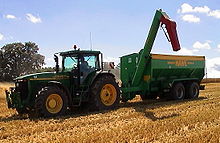
    An agricultural engineer designs the machines and tools used in farming including tractors, planters, animal housing facilities, harvesting machinery, drainage and soil conservation systems, water and flooding systems and much more. They are responsible for maintaining the efficiency of these machines and systems, making improvements to those that fail in order to meet the appropriate standards.

    Who do They Work for?
    Many work as consultants for large production companies or engineering firms that manufacture agricultural machinery and storage facilities. There are also teaching and research opportunities at colleges and universities and with branches of the federal government that deal with the farming industry. In some instances, they also work as sales representatives by selling products and engineering solutions to farmers and breeders in need.

    What Education Do I Need?
    If agricultural engineering is a field that piques your interest, it’s a good idea to focus on developing problem solving and critical thinking skills that enable you to think outside the box, so to speak. Typically, engineers will face problems with malfunctioning equipment and out-of-date practices that create time sensitive issues. Engineers must be able to think on their feet and discover solutions within the parameters given to them in the most efficient way possible.

    In high school, it is recommended that students take advantage of all available courses in mathematics, physics, chemistry and biology. In university, these courses are further explored with the addition of computer science, crop science, leadership, design and engineering courses.

  • Career Profile: City Planner

    Career Profile: City Planner

    Urban planning can make a huge difference to how people live and how visitors experience the city. Streets set in squares or rectangles, for example, are easier for visitors to follow but can be boring for the city’s residents. The number of parks and other green spaces can make a huge difference in how people feel about a city, and the organization of public transit or other methods of transportation can make a difference to the health and happiness of people in the city.

    Sometimes, good urban planning can even help transform a city. This happened in the South American city of Bogota, Colombia, several years ago. Even when the results are less dramatic, the role of city planners is very important. Becoming a city planner is a good career choice for anyone with the imagination and insight to find the best possible ways to use land in urban areas.

    Planning a city can be a lot like putting a puzzle together. Basically, the role of urban planners is to make the city as liveable and efficient as possible so that people can go to work, go home, and enjoy their lives as much as possible. Finding places for people to live is an important part of urban life. Planners need to find space for apartments, houses of different sizes, seniors’ homes, and other places for people to live. Making room for roads and public transportation systems like buses or subways is also an important part of urban planning. People also need places to shop and room for community centres, schools, churches, and many other buildings.

    Another very important part of city life is its parks and green spaces where people can spend time outdoors. When Enrique Peñalosa became the mayor of Bogota, Colombia in 1998, he wanted to do something about the crime and the huge economic differences in his city. He limited car usage in the city but also set up one of the best city bus systems in the world. He also realized the importance of green spaces. Part of his plan was to build new parks, walkways, and bicycle lanes so that rich and poor people could all get out and meet each other in public places. These ideas have not solved all of Bogota’s problems, but they have made a huge difference.

    This kind of creative thinking is essential for urban planners. Becoming a city planner normally requires at least a bachelor’s degree and often a master’s in urban planning recognized by the Canadian Institute of Planners. Many universities across Canada offer degrees in this field. City planners spend a lot of time gathering information, analyzing it, and trying to fit the information into plans that help the people in urban areas. For this work, city planners generally get paid between about $40,000 and $87,000 per year.

  • How to Prepare for an Interview

    How to Prepare for an Interview

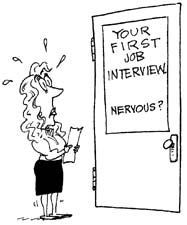
    You’ve found a company you think you’d like to work for, you’ve sent in your resume and they’ve called back, excited to interview you. You’ve got an interview set up in a week or a few days. What do you do until then?

    If you’re serious about the job, and you want to land it, there are a few things you can do to prepare leading up to the big day.

    Research the company

    You already know you want to work there. Maybe it’s cool or they pay more than other places for similar work, but if you want to get in, it helps to have an edge.

    Check out the company’s website. Find out what the company prides itself in and who they see as their customers. The more you know about a company and the position you’re applying for, the better you can respond to their needs and show why you’re the best fit for the job.

    Showing that you’re familiar with the company demonstrates that you’re serious about wanting the position and that this isn’t just a random job application (even if it may have started out that way).

    Practice

    It may sound hokey, but if you haven’t interviewed much before, preparing practice questions with a friend or family member can help you get over your nervousness and ensure you have smart, relatable answers at the ready.

    Prepare concrete examples

    Interviewers want to see that you can think on your feet and they’ll often ask, “Tell me a time when…” questions. Things like, “Tell me a time when you weren’t able to meet a deadline.” Saying you’ve never had trouble with this will sound disingenuous – everyone’s handed in an assignment late at some point.

    Be honest and talk about how you let your boss or teacher know as soon as you knew you were in trouble, and how you negotiated an extension or workaround. Interviewers want to know that you know how to act professionally, even if this is your first job.

    Prepare your wardrobe

    Plan your clothes the night before and remember that it’s better to dress smart rather than casual. Even if the job is a jeans and t-shirt kind of place, it’s a sign of respect to dress well for an interview.

    Ensure anything that needs ironing has been ironed and that you have everything at the ready. You don’t want to make yourself late searching for your dress shoes  five minutes before you’re supposed to be there.

    Plan your route

    Use Google Maps to plan how long it will take you to get to the interview and aim to be at least fifteen minutes early. Plan for traffic and check road closures.

    Be calm

    It’s easy to get nervous before an interview, especially if you haven’t interviewed much. Take a few deep breaths before going in and smile. It really will relax you. Just be yourself.

    Remember that each interview is practice for your next one, whether you get this job or go on to something else. It gets easier each time.

    Good luck!

  • Interview with a Hairdresser

    Interview with a Hairdresser

    Fashion is a huge industry worldwide. People care about how they look, so they turn to professionals to give them exactly what they’re asking for. One such profession that benefits from making people look good is that of hairdressing. I interviewed a local hairdresser, Sarah Hearsey, about her schooling, professional opportunities, and how it feels to be in the business.

    M: When did you decide to become a hairdresser?
    S: I decided to become a hairdresser in the middle of my aesthetics training. I saw what the girls in the hairstyling class were doing, and I figured that since I was there already, why not do hairdressing as well? It turned out to be just what I wanted to do in the end. I do cuts and colours more than I do anything else now.

    M: How much schooling did you go through before becoming certified?
    S: Well, I was about five months into my aesthetics course as I mentioned before. I took my teachers aside to discuss doing the hairstyling course and they agreed that it was an excellent idea. The total time that I was in school was nearly two years because I had to make up lost time due to illness.

    M: With your qualifications, where are you able to get hired?
    S: With all of the qualifications I have, I can work in salons, kid’s salons, barber shops, makeup stores, and makeup counters.

    M: Would you say that getting a job in a salon is the best way to go, or can a freelancer make just as much?
    S: I think that it depends on if you want to do hair every single day. I find freelancing better for me because you can make up your own hours and wages, and you aren’t really under a time restriction like you would be in a salon. It depends on the individual.

    M: What are some other benefits of freelancing over working in a salon?
    S: Another perk of freelancing is that anything you make goes into your pocket. Honesty is important in this respect because you have to write down everything you make if freelancing is the way you are going to go.

    M: How do years of experience relate to the amount a hairdresser can charge for their services?
    S: I think that because they [experienced hairdressers] have been in business longer than those who are newer, they become more trusted with their employers and clients. They will get more clients so I believe that raising their wage by year seems fair.

    M: What is the best thing about having this trade under your belt?
    S: The best thing about being a hairdresser is all the types of people you work with. You make them feel good about themselves. They leave with a smile on their faces and they play with their hair and say, “I love it and I can’t stop touching it!” It’s a good feeling.

  • Writing Effective Cover Letters

    Writing Effective Cover Letters

    A cover letter is the first thing a potential employer sees, even before they look at your resume. Without a strong cover letter, they may not even get that far.

    Cover letters are more often sent by email these days, with your resume sent as an attachment. But, whether print or paper, the anatomy of a cover letter is essentially the same. You open with a greeting, state the position you’re applying for, outline your qualifications, and sign off.

    It may sound like a lot, but your cover letter should only be about one page long.

    Greeting
    Start it as you would a letter, “Dear So-and-So.” Using “Hi” or “Hello” in place of “Dear” may come across as too casual.

    If possible, your letter should be addressed to the specific person doing the hiring, and lead “Dear First Name Surname.” You can find this out from the ad, through a contact who already works there, or by calling up the human resources department and asking. But if not, “Dear Hiring Manager” works in a pinch. However, going the extra step will help your cover letter stand out.

    In the past, you’d preface the name with Ms or Mr, but these days it seems a little fussy and can quickly become confusing for gender neutral names.

    Position You’re Applying For
    Following the greeting should be a short statement about the position you’re applying for – “Please consider my application for [position title] at [company].” You may want to include a note about how you heard about the position. If a friend or family member who already works for the company recommended that you apply, the hiring manager will take a closer look at what you have to offer.

    Your Qualifications
    This is the most important part. It’s what gets them to flip to your resume and call to arrange an interview. Depending on your level of experience, this section may be one to three paragraphs long.

    The focus should be on showing how your skills meet the employer’s needs. Highlight the work, volunteer, or personal experience you have that demonstrates you’re a perfect fit for the position. Don’t just give a bald work history – they can read that in your resume. Instead list your professional skills, soft skills or interests, how you won employee of the month, or had the highest sales during the holidays. If you’ve taken any certified courses relevant to the position, be sure to include them here.

    Closing Remarks
    Close with something courteous like, “Thank you for your time and consideration. I look forward to hearing from you.” On another line, your valediction, “Sincerely,” or “Regards,” another line break, your name, phone number, and email address.

    Look It Over
    Once it’s finished, look it over and make sure it flows. Don’t solely rely on spell check to catch spelling and grammar errors. “Deer” may be spelled correctly, but if you write “Deer Jane Smith,” you’re going to look pretty silly – and even sillier if it’s actually “Jayne Smyth.” Triple check the spelling – there’s nothing more embarrassing than getting someone’s name wrong.

    It’s a good idea to have another pair of eyes go over it. Have a friend or family member who may be able to offer suggestions or catch any typos or omitted words you might have missed.

    Good luck!

  • Not Your Typical Welder

    Not Your Typical Welder

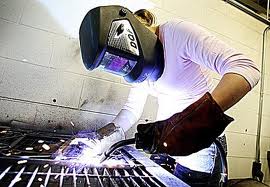
    Let’s be honest- how many of us girls grew up dreaming of being a mechanic or a welder? The answer is probably not many, and if you did you probably didn’t tell anybody because of the possibility of them thinking you were weird. When I was little I first wanted to be a marine biologist, I loved animals and wanted to work with them very badly. Then my life goal changed from a stunt car driver, to a photographer, to a mechanic and finally a welder.

    One of the things I was most excited about going to high school was that I was now able to take the auto mechanics and construction classes. I took them all through high school and loved every minute of it. I learned, fixed and made things that a lot of people didn’t, how many of you can honestly say you are comfortable with changing a flat tire on your own? I can say with all honesty I am and that’s because of my awesome auto teacher. My technology teachers not only gave me the skills and knowledge about their trades but also the courage to love the trades. To not be scared of trying something totally out of my comfort zone and to not care about what people think.

    I got the smart remarks in class “Girls can’t do that” and the classic “Don’t break a nail!” Taking those courses gave me the courage to pick something not many girls pick for a college program, Welding Technician. I knew two things that I wanted for sure out of what I picked for a program, I wanted to be able to get a job and I wanted to make money. I know those are not the best driving reasons for someone to pick a program, but they were honest. I had originally wanted to be a mechanic because of how much I loved my auto class but I soon realized there were a lot of mechanics and not a lot of jobs. So I had cut up an exhaust pipe about two times in auto with an old oxy-acetylene torch and I knew welding was an in demand job, so I decided on being a welder. The only knowledge I had on welding was what I learned from those two experiences using the torch, so not a whole lot.

    I remember showing up for my first welding class and them telling me that I would need safety boots, safety glasses and a welding helmet for tomorrow. The first thing I thought to myself is, “What have I done?! I have gotten myself into something I can’t handle, I know nothing about welding this is a horrible idea”. Then it got worse after I got all my equipment and they asked me to actually weld something, I don’t think I have ever sweated that much for a school assignment and it wasn’t from the heat of my torch. But with practice, some really great teachers and perseverance I got the hang of it and now I am actually a good welder. I am able to weld in shielded metal arc welding in flat, horizontal and vertical positions. I can use gas metal arc and flux core arc welding machines and I am learning tungsten arc welding at the moment.

    For those of you out there wondering what kind of woman I am, I would say I am not your typical looking welder, but then again isn’t that what we are trying to change? The notion of what the “typical” welder looks like? So this is what the typical welder looks like, a petite 19 year old woman, who stands at five feet and 2 inches, has a boyfriend and loves to go shopping just as much as anyone. The moral of the story is look at trades when you are deciding on college programs, any trade, believe me it’s a rewarding experience, that is challenging.

    If I can do it, you can do it.

  • Career Profile: Ship’s Agent

    Career Profile: Ship’s Agent

    Before he heads to the office, the ship agent boards the vessel as it arrives in the port. He walks up a steep gangway with people from the federal government who work for the Canadian Food Inspection Agency (CFIA) and Transport Canada. As the latter inspects the ship, the agent finds the captain and assists him as he signs various documents that are required before the ship is allowed to enter the port.

    It is the ship agent’s job to coordinate the arrival of all vessels that enter Canadian waters. He is thus a vital link between all the imports and exports that come in and out of the country.

    Once back at the office, the agent performs a variety of duties. When a ship plans to arrive, the agent gathers information about the vessel such as: how many members are on the crew and where they are each from, how much the ship weighs and when it was built, and what kind of cargo it is carrying or picking up. He then sends the information to Canadian Customs and Immigration. When Customs clears the ship, it is free to enter Canadian waters.

    However, a ship cannot enter Canadian ports until the federal public servants have inspected the entire ship and cleared it for loading or unloading its cargo. It is the ship agent’s role to coordinate with members of CFIA and Transport Canada. He also organizes – with the ship’s owners, charterers and stevedores – when and where the ship will be loaded with cargo.

    The agent must also host the captain while he and his crew are anchored in the port. He brings the captain cash for the crew to use while they are anchored and he coordinates with ship chandlers who supply the crew with groceries and other necessary supplies. He also arranges for crew members to be picked up and taken to the airport when they are ready to return home if a new crew is taking over the ship.

    The ship agent links Canadian ports to the rest of the world.

    He coordinates much of the activity that sees that items like steel, sugar and electronics arrive safely in the country’s ports while grain, canola, lentils, yellow peas, barley, wheat, oats and other products are loaded into the vessels and shipped to places all over the world.

  • Becoming a Pharmacist

    Becoming a Pharmacist

    Contrary to popular belief, there is more to pharmacy than just prescribing medication and administrating drugs. Pharmacists have a variety of responsibilities that range from providing dietary advice to patients and helping insurance companies develop pharmacy benefit packages. Pharmacists also need to provide information on the safe use of the drug as well as any side effects related to it. They are responsible for keeping detailed records of patients’ drug use and purchases. With this information, they can inform patients on any risks related to using multiple drugs at once. Beyond this, a pharmacist has the duty of closely monitoring their patients’ responses to certain drugs to see if the prescriptions are effective. Their background in chemical and biological science gives them excellent product knowledge and allows them to see if drugs are having their desired effects.

    One of the most crucial tasks performed by pharmacists is filling prescriptions. They are responsible for crushing, mixing, measuring, and bottling drugs for customer use. This process is called compounding and is unique for different types of drugs. This part of the job requires great accuracy and precision. Small mistakes can have a big effect on unsuspecting patients.

    Working Conditions
    Pharmacists are generally found working for retail stores, grocery stores, hospitals, pharmaceutical manufacturers, and nursing homes. It is not as common but they may also work for government agencies and militaries. Research institutions also hire pharmacists for developing and testing potential drugs.

    Pharmacists generally work regular shifts due to the fact that they tend to work in places that have established hours of operation. These pharmacists work an average of 40 hours a week. However, those who work in hospitals may experience irregular, long hours and may be called in for nights, weekends, and holidays.

    Personal Characteristics Required
    Pharmacists require certain personal characteristics in order to be successful in their work. It is absolutely essential that they are accurate and precise. Minimal mistakes can have large impacts on patients and the reputation of the pharmacy. It is also very important that prospective pharmacists have excellent communicational skills. They must be able to clearly convey information on the recommended dosage of drugs as well as their side effects and risk factors. They must possess good teamwork skills due to the fact that they seldom work alone. Lastly, all pharmacists need to be incredibly organized to prevent a mix up in prescriptions or ingredients for certain drugs.

    Future Growth Prospects
    Within a pharmacy, there is plenty of room to move up to superior positions and to get promoted. The pharmacists who work in retail and grocery stores tend to start at staff level but can potentially become store managers and supervisors. After multiple years of experience within the same company, a pharmacist could even obtain an executive position at their company’s headquarters.

    Salary
    The salary of a pharmacist ultimately depends in their place of work and experience. The average salary for pharmacists is between $70,000 and $100,000. However, many pharmacists who have worked in the field for a while find themselves making more than $100,000 a year. People involved in private practice have a greater chance of surpassing $100,000 than those who work for retail and grocery stores.

  • The Human War with Technology

    The Human War with Technology

    Technology has become the essence of our everyday lifestyle. A life without our Blackberry’s or iPhone’s is a life that cannot be lived. Imagine how everyday tasks that have been simplified to suit our preference have been altered by technology to get the job done faster. Whether at school, work, or home, technology has made life easier by replacing everyday tasks with machines that process the work efficiently, saving you time and energy. However, one thing to be wary about is the replacement of, well, human beings. You see, with this booming techno-era becoming so dependent on machinery tools to operate us, they will soon operate without us. Technological innovation is so consistent and rapid that every day a couple of new items enter the market for competition and since every company is aware of this massive command, they go to extreme measures. For instance, the need to save time, reduce costs, and improve the safety and reliability of their product, companies will lay off and downsize their staff to hire professionals in the same field located overseas for cheaper labour, but who possess the same credibility and education level (if not more).

    According to Career Planner, some of the jobs that will witness a reduction from North America and Europe in the near future are data entry, programming, technical support, and customer service jobs. Even accounting will be done in countries unfamiliar to our roots; yet have perfectly mastered our education and language. Talent and expertise are no longer suited with a job offer and great pay; the willingness for companies to pay high prices for local contenders will soon be obsolete, and lower cost labour will move to other countries.

    However, students can surpass these challenges by choosing wisely their career path today. By picking a profession that cannot be performed remotely by someone else overseas, you can guarantee security. Here are some of the secure jobs of the future (to list a few) that will still be in demand, cannot be replaced, and require face-to-face interaction, speed, and are complex in their nature. When searching for the right career, make sure it requires physical energy, high level of skills and creativity (so it is not easily completed by someone else), and are hands on. Do not panic if the career you really love is technology based; do your homework and make sure you get familiar with onshore/offshore jobs for the future. No job is ever guaranteed, therefore to secure your position for tomorrow you must be aware of the fluctuation of the economy, along with its unexpected changes.  Plan it right today!

    High Demand Jobs for the Next 10 Years
    1.    Carpentry
    2.    Plumbing
    3.    Electrician
    4.    Hair Stylist
    5.    Construction Contractors
    6.    Auto Mechanics
    7.    Dental Hygienist
    8.    Truck Drivers for delivery service (UPS, FEDEX, Postal Service)
    9.    Airplane Mechanics
    10.  Entertainment (Actor, Singer)
    11.  Writer
    12.  Marketing Strategist
    13.  Lawyers
    14.  Doctors
    15.  Nurses (particularly home healthcare and nursing homes)
    16.  Politician
    17. Security and Financial Service Rep
    18. Real Estate Agent
    19. Teachers
    20. Emergency Medical Technicians
    21. Surgeon
    22. Chiropractor
    23. Therapists
    24. Medical Lab Technician

  • Joining the Trades: What Can I Be?

    Joining the Trades: What Can I Be?

    Are you wondering what types of careers are available to you in the trades sector? There is literally thousands to choose from. Check out just a few of the careers we found on CareersInTrades.ca!

    Construction
    Construction and Maintenance is the best known skilled trades sector. These jobs are available across Canada in both urban and rural areas. Some of its apprenticeable trades are:
    – Bricklayer
    – Heavy equipment operator
    – Painter and decorator
    – Ironworker
    – Mechanic
    – Plumber
    – Welder

    Transportation
    Transportation trades cover vehicles ranging from automobiles and motorcycles to airplanes and cranes. These jobs are anywhere vehicles can be found, which can be a farm, an airport, a harbour or any street! Some of the apprenticeship trades include:
    – Agricultural Equipment Technician
    – Aircraft Maintenance Mechanic
    – Auto Body Repairer
    – Motorcycle Mechanic
    – Transport Trailer Technician

    Manufacturing
    Manufacturing trades can lead to careers in many different sectors, including cars, textiles and even food production. These careers can secure a job in many manufacturers and bring you to the root of product development. Some of the apprenticeable trades include:
    – Automotive Machinist
    – Graphic Arts (Pre-Press, Press and Bindery)
    – Industrial Electrician
    – Power System Operator
    – Sawfiler/Fitter
    – Tool and Die Maker

    Service
    The service sector offers jobs for those interested in working more closely with the public. From chefs to hairstyling, this sector offers many career opportunities. Some of the apprenticeable trades include:
    – Arboriculturist
    – Baker
    – Barber
    – Graphic Arts Technician
    – Hairstylist
    – Jeweler and Goldsmith
    – Upholsterer