Category: Jobs and Apprenticeships

  • Teaching English Abroad

    Teaching English Abroad

    Do you love adventure? Do you love teaching? Do you long to strike out on your own and see the world? And do you want to be paid while doing it? If so, teaching English abroad may be for you!

    What will I need?
    At the very least you will need a four year Bachelors Degree (BA). Your degree can be in anything from art history to zoology, but obviously a degree in English, education, or linguistics will provide you an edge.

    With just a BA you will have a handful of options available to you including, but not limited to, teaching in Japan, South Korea, China, and parts of Eastern Europe and South America. With additional courses and training, more options in more countries with better income, perks and stability become available. What is better is that many of these courses offer help finding positions, with some even guaranteeing to help you find one – or your money back!

    Aside from that you will need citizenship from an English-speaking country, a passport valid for at least one year, a clean bill of health, and no criminal background.

    Is teaching overseas for me?
    Teaching isn’t for everyone and teaching English in a foreign country is doubly so. Unless you have a Master of Arts in English Language Teaching, chances are you will not be prepared for what awaits you. However, you shouldn’t despair as no employer will be expecting an amazing performance from day one.

    The three most important qualities a teacher can possess are: strong communication skills, adaptability and patience. Communication skills may seem like a given, but you must keep in mind that your students, co-workers and boss will not speak English as their first language (and some not at all). This means that you can’t always depend on others simply understanding your words; sometimes it will be necessary to simplify your expressions or approach what you are trying to communicate from another direction. Sometimes it may require the use of body language or even drawing abilities!

    Adaptability is also crucial as you must adjust everything about what you expect. In most cases the people you will encounter overseas will not only speak a different language then yourself, they will also have a different culture, set of ethics, and expectations for you. You must be able to “go with the flow” and learn to understand and appreciate their differences, not judge them as being wrong or worse than what you might be used to.

    Finally, patience is important because, as mentioned above, you will be working with individuals who may speak little to no English. This means a lot of repeating yourself and a lot of asking them to repeat themselves, too. Remember that they are learningEnglish, meaning they will need to first translate what you say into their language, then translate what they need to say back into English. Take your time and never take out your frustration on your students; remember – they are there to learn and you are there to teach!

    Final Words
    It goes without saying that an aptitude for teaching is crucial! You can volunteer at any elementary school to see if teaching is for you and, if it is, the experience will look very good to prospective employers. Good luck and bon voyage!

  • Choosing To Work In A Trade

    Choosing To Work In A Trade

    Times have changed in the world of jobs. You might have heard from your parents or teachers that the best way to get a high-paid, reliable job is through a university education. Sometimes that still holds true. These days, however, a better choice for both men and women might be a skilled trade, where there are many opportunities for a rewarding career.

    What comes to your mind when you hear the term “trade”? Do you think of low-paid labourers, barely making enough money to pay their bills and never sure how much longer their jobs will last? Many unskilled labourers work under these conditions, but the situation is different for skilled tradespeople. They are often well-educated, with diplomas or certificates in their fields.

    Tradespeople might have as much education as university graduates. Unlike many university programs, however, training in the trades is geared specifically to learning the practical skills needed on the job. Tradespeople might be trained as carpenters, auto mechanics, electricians or any of the other trades. Through practical work and classroom studies, they learn everything they need to know to work in their trades. Another important part of the training process in the trades is an apprenticeship, in which students work together with an experienced person to learn practical skills for the job. For some trades they might also need to get an official license or certificate.

    Becoming qualified in a trade can take from one to three years of classroom education, between two and four years of apprenticeship, and two or three years of on-the-job training. Many university programs are just as long or even longer and more expensive. Graduates can also have trouble finding work in their field. In contrast, tradespeople can usually find work soon after they finish their studies and can easily pay off any loans they received for their school tuition.

    Almost anyone can become qualified to work in a trade. Most tradespeople, about 97 % in 2007, are men. However, more women are joining the trades and becoming qualified to work in carpentry, welding and other skilled trades. Possibly up to 320,000 people in Canada currently working in construction alone will be retiring in the next few years and that could open up good opportunities for both men and women. Becoming a journeyperson (someone with official qualifications in a skilled trade) could be a wise career move.

    How do you know if you could be successful in skilled trade? Natural ability and interest are important places to start. If you love to take things apart to see how they work, you might want to choose to be a mechanic or electrician. If you have a fear of heights, on the other hand, you might not want to choose the construction industry. The best way to decide whether or not a trade would suit you is to research it and to talk with people about it. Then, if you decide to pursue a trade, you’ll have a good basis for a stable and rewarding lifelong career.

  • What Does A Ship’s Agent Do?

    What Does A Ship’s Agent Do?

    Before he heads to the office, the ship agent boards the vessel as it arrives in the port. He walks up a steep gangway with people from the federal government who work for the Canadian Food Inspection Agency (CFIA) and Transport Canada. As the latter inspects the ship, the agent finds the captain and assists him as he signs various documents that are required before the ship is allowed to enter the port.

    It is the ship agent’s job to coordinate the arrival of all vessels that enter Canadian waters. He is thus a vital link between all the imports and exports that come in and out of the country.

    Once back at the office, the agent performs a variety of duties. When a ship plans to arrive, the agent gathers information about the vessel such as: how many members are on the crew and where they are each from, how much the ship weighs and when it was built, and what kind of cargo it is carrying or picking up. He then sends the information to Canadian Customs and Immigration. When Customs clears the ship, it is free to enter Canadian waters.

    However, a ship cannot enter Canadian ports until the federal public servants have inspected the entire ship and cleared it for loading or unloading its cargo. It is the ship agent’s role to coordinate with members of CFIA and Transport Canada. He also organizes – with the ship’s owners, charterers and stevedores – when and where the ship will be loaded with cargo.

    The agent must also host the captain while he and his crew are anchored in the port. He brings the captain cash for the crew to use while they are anchored and he coordinates with ship chandlers who supply the crew with groceries and other necessary supplies. He also arranges for crew members to be picked up and taken to the airport when they are ready to return home if a new crew is taking over the ship.

    The ship agent links Canadian ports to the rest of the world.

    He coordinates much of the activity that sees that items like steel, sugar and electronics arrive safely in the country’s ports while grain, canola, lentils, yellow peas, barley, wheat, oats and other products are loaded into the vessels and shipped to places all over the world.

  • Working As A Vet Tech

    Working As A Vet Tech

    Nature of the Work
    Pet owners, zoos and aquariums expect excellent care from their veterinarians and thus to provide the optimal services, veterinarians use veterinary technicians and technologists to assist them, much as doctors use nurses in the medical field. Job duties vary depending on the employer, but generally technicians and technologists complete similar tasks for their employers even though there are differences in the formal education and training of the two titles. Most technicians work in private veterinary practices; but because of their additional education and training, technologists can choose to work in jobs that are more advanced research related.

    Job Description of a Veterinary Technician and Technologist
    Veterinary technicians and technologists usually work under the supervision of a licensed veterinarian. They are often required to perform skills such as venipuncture, or skin scrapings to treat and diagnose health concerns of the animals as well as performing various medical tests. Tests they conduct include blood work ups, urinalysis, and taking tissue samples. They may assist in dental care and surgeries and may be required to perform and maintain anesthesia. Other duties might include taking patient histories, expose and develop X-rays and radiographs, dressing wounds, applying splints, and taking vital signs. There are a variety of diagnostic tests which the veterinarian may rely on the technician or technologist to conduct. Experienced veterinary technicians may be expected to train new personnel in the clinic or discuss a health issue with a pet’s owner. In some practices they may be required to assist in administrative tasks such as maintaining treatment records and inventory records of supplies, equipment and pharmaceuticals.

    In most clinical private practices, the technician and technologist will assist in the care of small animals such as cats and dogs, but also may perform duties with animals such as cattle, horses, sheep, birds, mice and lizards. It is rare for a technologist to work in practices that care for both small pets and large wild animals.

    Another area of work for technologists and technicians is research facilities. In these facilities veterinary technicians and technologists work under the supervision of veterinarians as well, but they may also be supervised by a physician. The job duties in this area of the field may include administering medications, and recording information about the animals such as diet, genealogy, food intake, and weight. They may be required to monitor and record signs of pain and distress in animals, sterilize surgical equipment and provide postoperative care. Veterinary technologists may be required to give an animal a vaccination or euthanize an animal.

    In some instances, veterinary technologists assist in research projects that involve other scientists in medical-related fields. They can work in biomedical research, livestock management, pharmaceutical sales or wildlife medicine. There are increasing opportunities for technologists in the biosecurity and disaster preparedness jobs.

    Job Outlook
    The job outlook for veterinary technicians and technologists is excellent as there is a need to replace those leaving the field and there are limited numbers of qualified technicians graduating The demand for the positions is not expected to be met in the period of 2008-2018 as the field is expected to grow at a much faster rate than the average.

    The biggest factor in the expected growth rate of 36 percent is the attitude of pet owners. Pets are often considered part of the family and pet owners are becoming more affluent, knowledgeable and more willing to pay for advanced veterinary services for their pets. This is expected to continue to increase the demand for veterinary services and thus the increase in veterinary clinical practices that will need assistants.

    It is expected for the number of pet owners utilizing veterinary services to grow and increase job opportunities. Advanced services such as surgical procedures or preventive dental care will provide more opportunities for those technicians and technologists who specialize in those areas. Demands for feline services and medicine are expected to rise as the number of cats as companions is steadily growing. It is expected animal shelters, humane societies, animal control facilities, boarding kennels, animal hospitals and clinics will want to replace veterinary assistants with highly skilled technicians which will further the demand for workers who are specialized in specific areas.

  • Professional Associations: Editors and More

    Professional Associations: Editors and More

    What kind of job do you want after you finish your education? Do you want to work in a profession like teaching, law or editing? If so, you can already start to find out more about how you can prepare for your future job. One way of doing that is by joining a professional association. Through the association you might be able to find good contacts, learn what you need to know to work in your field, and gain many good insights into your chosen profession.

    Most jobs have some kind of group that helps to connect people with each other and to give them the information on improving their work. In some professions, membership in these associations is required before people can begin their careers. These associations help to make sure their members work at a high standard and often offer training courses to help keep each member’s knowledge is as up-to-date as possible. Doctors’ and nurses’ associations are some examples. In other professions, membership is voluntary.

    Whether membership in a professional association is voluntary or required, it can be worth the time and effort to join as soon as possible. Meeting with others and having the chance to discuss professional questions can be a very valuable experience. Editors, for example, frequently work alone and often need people in a professional association for support and information.

    Many professional associations provide courses and short workshops on topics related to the work for people to maintain their skills and to learn new techniques. The Editors’ Association of Canada and the Manitoba Editors’ Association, for example, offer a variety of seminars and workshops on writing, editing, and computer skills. Many associations also give members a chance to discuss specific questions they have regarding their work.
    Through a professional association, you can learn a lot about what it takes to work in that field. Do you think you might want to be a lawyer or an engineer someday? Before you commit to a long and expensive university program, it might be a good idea to learn as much as you can about the work. A professional association is also a good place to start to make contacts with people who might be able to help you find work in the future. In some cases, what you learn about the advantages and disadvantages of the profession might even help you decide between two different careers.

    How soon can you join a professional association? It depends on the group, but you’ll probably need to finish high school and maybe even a few years of university before you can become a member. However, you can probably still attend some of the association’s events, such as the annual general meeting, before becoming a member. Another thing to consider is the association’s membership fees. Most associations require payment for membership, but these are usually lower for students than for other members.

    Being part of a professional association might seem expensive, but the experience can be very rewarding!

  • Career Profile: Architectural Technician

    Career Profile: Architectural Technician

    Job Summary
    Preparing documents in construction and architectural design and constructional standard. Strong emphasis is placed on protecting the environment, energy conservation, sustainable design and construction strategies.

    Is it for me?
    This program is for those who like to be challenged and to be creative. If you like to design things or enjoyed building houses in the popular game “Sims”, this may the right path for you! A job as an Architectural Technician would guarantee you an exciting and rewarding career in the construction and design field.

    Summary of Duties
    Architectural technicians are responsible for:
    – The working of drawings
    – Construction design
    – Construction methods
    – Construction materials
    – Building science
    – Computer assisted design
    – Drafting and building information modeling
    – Protecting the environment and energy conservation through design

    General Information about the Position
    As an architectural technician, you will have career in the construction industry, working with architects, engineers, builders, contractors and municipal building departments. Using state of the art computer technology, you will prepare designs, construction drawings and specifications needed to communicate with the clients, construction professionals and approving authorities.

    The challenges of being an Architectural Technician
    Challenges vary from having tight deadlines (although you always manage to find a way to get there!) and coming up against unforeseen problems on site, which can vary from minor to major redesigns of a building. You will also be tasked with keeping up-to-date with the latest and most current legislation.

    If this sounds interesting to you, why not check out some of the career colleges and universities that offer this program? You can find them on our Education tab right here on JobsPeopleDo.com!

  • Why Companies Hire Recent Graduates

    Why Companies Hire Recent Graduates

    There are many reasons to hire a university or college graduate. Employers often seek out recent grads because they are fresh and up-to-date on the most recent information available in a chosen field. Depending on the field of work, this is more or less important. In business and medicine, this is hugely important because business practices are constantly evolving and medical discoveries are always happening. The difference between a well informed employee and a poorly informed employee is enormous. There is no doubt that someone who is educated will serve a company better than someone who is less educated. Someone who is educated will contribute to the company by offering fresh ideas and by being aware of the most recent information. People who have not graduated from college or university may cost the organization in the long run by requiring more training and by making more mistakes.

    People with a university or college degree are also often hard working and determined to succeed. Finishing a university or college degree requires a lot of tenacity and some serious work ethic. This is a huge asset to any organization that is looking for its employees to be able to tolerate stress and be able to produce results. Recent grads are ready and able to learn, they are like sponges and are really keen to gain work experience. If an employer is determining between someone with several years of experience and a recent grad, they will often decide that someone who is fresh and keen to learn would be a huge asset to the team.

    On the other hand, an important thing to consider is that not every company will hire recent grads because they are looking for people with experience. To ensure that you have the best chance of success, you will need to have a great resume and build up your jobs skills and volunteer experience. Remember that you will be competing against people with years of experience, which can sometimes prove to be very tough.

    The best bet is to seek out organizations that are specifically looking to hire recent grads. The government often hires recent grads, and companies that are on the front edge of technology will also be looking for them. If you are in high school, it is not a bad idea to take a look at which companies may be accessible to you after you graduate from your university or college program. Look at what requirements they expect and, if you want to work there, start finding ways to fulfill those requirements; This is especially important if you are undertaking a difficult program for which competition for jobs is fierce. You will put yourself ahead of the game by being informed on what is currently expected of grads. Remember that planning is your best bet, and don’t assume that because you are a grad you will get hired right away. Just be well prepared and willing to learn!

  • The Power of the W’s

    The Power of the W’s

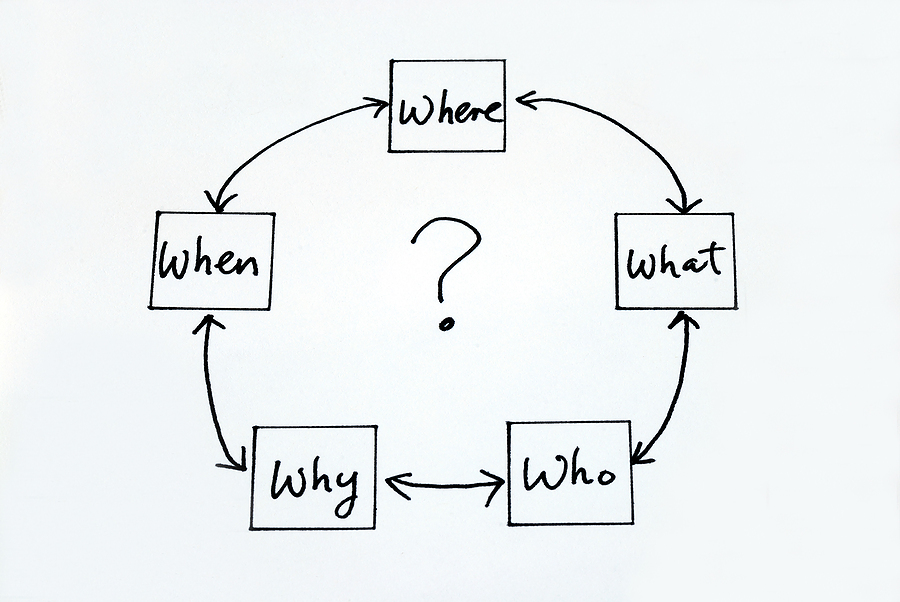
    You’ve probably heard of the five W’s a million times in class. This little family of questions – “Who, what, where, when, why” and their cousin “how” – are memorized by every student who ever has to put together a presentation. But their true power in everyday conversation is never really explained.

    No two people in the world agree on everything. You’re bound to talk to people on a daily basis who think differently than you do. Whether you like it or not, this will be the case for your entire life (unless you want to live alone in a cave in Antarctica!) So you might as well take what you can from these little disagreements.

    If someone tells you that aliens were in the neighbourhood last night, you can say, “You’re crazy” and walk away. Or, instead, you can use those W’s. Ask them “What do you mean?” or “Why do you think that?” or “How did aliens get here?” Your neighbour will tell you about all the evidence they collected. You’ll find out that there’s a thought process behind their opinion. People don’t just come up with wild ideas out of nowhere and fixate on them. They take the evidence around them and put together a case, the same way you or I do. Whether or not you agree, you are learning about your neighbour’s view of the world and giving yourself a broader perspective.

    Maybe you think peanut butter M&Ms are the best candy ever and your friend disagrees. If you just ask why, you might find out he’s allergic to peanuts – which is a great reason not to like peanut butter M&Ms! Or maybe he won’t remember why he thinks that and he’ll give it a second thought.

    So if you’re talking about global warming and someone else tells you it’s a myth, don’t call them an idiot. Ask them, “Why? What’s the point of the myth?” Maybe they’ll have a worthwhile answer or maybe they won’t. But it doesn’t hurt you to ask.

    A conversation is not a chance to prove you’re right. It’s a chance to inform yourself. Two people can sit and fight all day over which hockey player is the best or which prime minister is the best person to lead Canada, but arguing gets you nowhere if you don’t listen to what the other person is saying.

    So just ask questions. It’s easy and it takes you away from an argument and into the world of discussion. Just because all us humans live together, it doesn’t mean we feel the same things.

    Often, after asking these questions, you’ll find that even if you still don’t agree, at least you’ll have a better understanding of the issue as a whole and not just the side you see. Plus, you’ll have more respect for the person you’re talking to, who will be a normal, respectable person you happen to disagree with and not just a lunatic sent here to drive you crazy.

    If you really love asking these questions of other people, it might even lead you down an exciting career path! Journalists, writers, editors and reporters all ask these questions on a daily basis. Even people who work in marketing and advertising ask themselves these questions to determine the wants and needs of their target audience.

  • Choosing A Career Path

    Choosing A Career Path

    Whether you are in grade 8 or grade 12, there is always pressure to choose a career. While the pressure increases as you get closer to graduation, it’s never a bad time to think about your future. The key to choosing a career is to follow the SMART goals formula. Always remember to set goals that are Specific, Measurable, Achievable, Realistic and Timed. This is a formula that is hugely useful when setting career goals.

    To begin, start thinking about some hobbies, interests and/or school subjects that you enjoy. Ask yourself – what am I good at? What kinds of things do I like to do? Are you a people person or a person who prefers to work with machines and technology? Especially important is to know your preferences in terms of work environment. You are trying to set a specific goal, so think about if you would like to have an office job, be on your feet, or be outdoors doing work in the field. Whatever specific subject you choose to pursue, remember that there will be variety within each of them in terms of what kind of jobs are available.

    Next, is to make the goal measurable. What time landmarks will be important to you? The first step could be choosing a subject of interest, then researching careers, then choosing a few careers of interest with similar requirements. Setting dates for each step is hugely important. Remember that your interests change, so some subjects can be ruled out very easily.

    The next question is to ask yourself if the goal is achievable, and why not hit two birds with one stone and ask yourself if the goal is realistic at the same time. In other words, is the career you are choosing something that you really think you can do and achieve? Is the career compatible with the subjects you are able to succeed at?

    The last step is to ensure that your career goal is timed, in terms of setting realistic targets for completing each required step. If you want to be a lawyer, you will have to complete high school, university and law school. This is a considerable amount of time, so breaking it down into sizable chunks is your best shot at success. Remember that your interests might change as time goes by, but it’s better to be caught with a sketch of a plan than to be caught without any plan at all!

  • Finding a Career in Words: Editing as a Profession

    Finding a Career in Words: Editing as a Profession

    What would you do if you found a mistake in something you’d read, like a menu in a restaurant, an online blog or a newspaper? Would you just try to ignore it or would you try to tell someone about it? If you chose the second option, you might want to consider working as an editor someday. Editors are people who love words and writing, and who want writers’ thoughts to be communicated as clearly and effectively as possible, whether on paper or online. Editors are the link between writers and readers.

    Many different jobs can be part of an editor’s work. Some editors work as managers of newspapers, magazines or publishing companies. They decide what materials to publish and what to reject or to send back to the author for rewriting. Others work directly with authors to help them improve their work by making suggestions about the style or content. If a novel has far too many characters for readers to remember or is written in a very difficult style, stylistic or substantive editors can help.

    Near the end of the process, some editors work with the layout of the book or article, deciding how to fit it onto the page and make it look presentable. Others check names, dates and facts to ensure they’re correct. Just before the book or article goes to be printed or put on a website, a proofreader or copy-editor might look at it to check for mistakes in word usage, grammar, punctuation and spelling. If all of these parts work together, the result is a well-written and accurate document.

    To some extent, almost everyone is an editor. Have you ever checked your friend’s school assignment for mistakes? You were acting as an editor then. Have you ever stopped in the middle of a sentence to think of a better way of saying something? You were editing your own words. Professional editors do that kind of thing for a living.

    Generally, editors are not required to have any particular education in order to work. However, a Bachelor’s degree in English literature, creative writing or communications is very helpful. Some editors might also be required to obtain professional certification in areas such as technical communication. They might need to take courses on a variety of topics to keep their knowledge current. For many editors, a good knowledge of grammar is essential. Nouns, verbs, and prepositions are daily concerns for many editors. Reading all kinds of fiction, non-fiction and poetry is another form of training for editors. The more they read, the better prepared they’ll be to work with other people’s writing.

    In some cases, becoming an editor means a steady job with a regular paycheque. In most cases, however, the work is far more uncertain. Freelance editors who work with many different people have to be comfortable with an uncertain income. They have to be willing to work long hours and often to find another job to support themselves. For many editors, however, the enjoyment they get from the work is worth the trouble.

    So if you love words, why not consider becoming an editor?