Category: Jobs and Apprenticeships

  • Job Skills: Get Factual

    Have you ever seen someone who has the skills to juggle knives or walk on a tightrope? How about someone who can remember large amounts of information? The first two skills are unlikely to lead to a job, except for perhaps entertainers and circus performers. The third one, however, could lead to a job in many different areas, such as acting, teaching and working as a doctor or nurse. That’s because all of these jobs require a lot of information that people can remember in an instant. Almost any kind of ability can lead to a job, but you need to know how to translate the things you can do into skills that can help you find a job.

    When employment experts talk about job skills, they often talk about hard skills, soft skills and personal branding. Personal branding could include what people do at work or school, but also who they talk to and what they do in their spare time. Volunteer work, writing blogs and other daily activities can help develop both your personal brand and skills that will help you find work in the future.

    Soft skills are a lot like personal branding. These skills include things like an ability to get along well with people or to organize information. If you can easily get a lot of different people to work together to get projects done on time, that is a soft skill you can use in many different jobs. You could eventually manage a store or an office with a skill like this. Often these skills will help you get and keep good jobs.

    Hard skills are practical, measurable skills that people use every day at work. They could be things like an ability to type at one hundred words a minute or to use a welding torch. They could include the ability to speak French or to drive a large truck. These skills relate directly to whatever the job is about. They help people get interviews and to do the work if they get the job.

    Almost every job requires a combination of hard and soft skills. If you want to work as a teacher, you will need soft skills such as an ability to communicate with others and to lead groups. However, you will also have to know the subject matter you are teaching, whether that is English literature or addition and subtraction. When you apply for jobs, hard skills will probably be the ones you should emphasize, but they are not the only ones you should develop.

    Hard skills are important, but your soft skills might be just as necessary. If you can show how soft skills like getting to work on time will help you get the job done well, that might be all you need to land the job. Almost any skill you have can lead to work. They key is to find out what employers want and to match your hard and soft skills to the practical, everyday requirements of the job.

  • Working With Disabilities

    Working With Disabilities

    Approximately 4.2 million Canadians have disabilities, while 13% of those are working aged adults. Persons with disability are not so uncommon in the workplace. Not all disabilities are evident; someone may be hearing impaired and you will not be able to tell. Other may have trouble with their vision, movement or comprehension.

    No one but you and your doctor can tell you you are unable to do a job. Employers are often unaware that they can not express any doubt of your ability to fill a position or complete a task – to do so is considered discrimination. You know your strengths and weaknesses and it is up to you to communicate any weaknesses you may have if you need help. I, for example, have dyslexia and though many do not consider this to be a disability, it certainly can be difficult to deal with in the workplace. It causes me stress and I make mistakes that others wouldn’t make, such as superimposing numbers. Even something like this is important to inform your employer and co-workers about – creating an open dialogue is vital to both your success and the success of the company you work for.

    Do not tolerate any abuse or harassment from co-workers, your employer or even clients. Do not let anyone address you in any way you find insulting. Correct them to be sure it doesn’t happen again. If you are physically disabled, your employer is responsible to make any changes to the working environment in order to allow you to work safely. Make sure you know your rights.

    It is important not to treat a disabled co-worker any different from how you treat anyone else. Chances are they are not new to their disability and have mastered other ways of doing things that many even be more efficient than your own. It is likely a disabled person will tell you if they can’t do something or if they need help. Imagine how insulted you would be if someone insisted on helping you with something you could very well do on your own. Allow them to let you know their abilities and limitations.

    People with disabilities deserve to be treated with the same respect and given the same opportunities as those who do not have disabilities. Together we can make all Canadian workplaces a friendly environment for everyone!

  • Becoming A Registered Nurse

    Thinking about a career? Think registered nurse! It’s more than a job, it’s a growing profession offering an astonishing range of choices and opportunities.

    You believe in a healthy lifestyle? Janet has been talking to teenagers about how to deal with sex and drugs. “These kids have their whole lives before them and I feel it’s so important to help them now when they need it. With some groups I get into fitness and diet, too. They really want the information and someone to talk to.”

    You want excitement? So does Robin, so she works in the emergency department of a city hospital. “When people burst through those doors, they need help, fast and our ER team gives it. I have to think on my feet here, make immediate decisions about what a person needs. No other job could give me the same challenge – or satisfaction.”

    Intrigued by health questions? So is Nicole, and she’s finding the answers. Nicole is the head of a research team studying the care needs of AIDS patients. “I used to give nursing care to people in their homes and then a great AIDS patient I had motivated me to move into research. I was shocked by how little knowledge and how few resources there seemed to be to care for people like Ted, so I decided to do something about it.”

    More interested in helping people over the long term? That’s what Michael wants, so he’s head nurse at a rehabilitation centre. “A lot of rehab patients start out fighting against our care; they’re depressed, angry, and worried about their future. Helping them work through that is as important as their physical therapy. It’s an incredible feeling to help a person go through the whole process back to health.”

    Michael, Janet, Robin and Nicole became registered nurses because they wanted to work with people in a career that offers challenges and the independence to make decisions. Nursing involves caring for the whole person – the physical, intellectual and social needs. Nurses also plan and deliver health programs for groups or communities.

    Nurses are the heart of care. As a registered nurse, you can make a difference in one person’s life through one-on-one, and in the health of all Canadians through research and leadership.

    Jobs, the real story

    This is an excellent time to enter nursing as there is a shortage. At some point in their life, every Canadian will require the services of a nurse. Since many nurses will soon retire, Canada needs bright young men and women to choose nursing as a career. Changes in the health care system continue to broaden the opportunities for nurses. An especially important trend is the increasing number of services that emphasize illness prevention and health promotion programs. Many of these are planned and staffed by registered nurses.

    Registered nurses earn salaries that compare with other professionals with a similar amount of education. Health care is offered 24 hours a day, so expect to work some nights and weekends, like doctors, law enforcement officers and others who provide essential services.

    As in any profession, salaries vary across the country, and people make more as they gain experience and responsibility. Graduates of degree programs usually have more opportunities for advancement, and in some provinces, make more money than graduates of diploma programs. Your provincial or territorial nurses’ association can provide current salary ranges.

    To see nursing jobs across Canada, visit NursingCareersCanada.ca, The National job board of the Canadian Nurses Association.

    Choices… lots!

    Nursing is full of opportunities to grow, to advance and to change your career direction. Whatever your interest – working with children, scientific procedures and high tech equipment, teaching and promoting healthy practices, developing your management skills – nursing has something for you. Here are just a few examples:

    In the Community

    • health clinics
    • schools
    • wellness programs in the workplace
    • doctors’ offices
    • home care
    • family planning clinics
    • poison control centres
    • prenatal and well-baby clinics
    • rehabilitation centres
    • sexually transmitted disease units
    • AIDS hospices

    IN A HOSPITAL:

    • emergency
    • intensive care
    • operating room
    • post-surgery
    • maternity
    • cardiovascular (heart)
    • oncology (cancer)
    • psychiatry
    • pediatrics (children)
    • palliative (dying people)
    • geriatrics (seniors)

    One of the most exciting opportunities for nurses in Canada is Northern nursing. Often, community health centres in Canada’s North are run completely by the nurse – independent and in charge. Many Aboriginal nurses return home to help their communities, other nurses find they enjoy learning about a different culture.

    The great thing about nursing is that your choices never end. With some years of experience and further studies you could branch out in almost any direction imaginable. After a few years in practice you might decide to become an advanced practice nurse. An expert nurse with a master’s degree, an advanced practice nurse provides direct care to clients and serves as a role model and consultant to other practising nurses. There are currently two types of ANPs in Canada, clinical nurse specialist and nurse practitioner.

    Or you might decide, like Nicole, that you want to investigate current issues in health care. On the leading edge of health care discoveries, nurse researchers design studies, collect data and analyze results. Their findings contribute to the vast body of scientific knowledge that supports and improves nursing.

    Leadership

    All nurses are teachers, helping people learn to prevent illness and manage health problems. But you might want to become a nurse educator, preparing future nurses to enter practice. You could work at a community college or a university, and research would be part of what you do.

    A nurse administrator coordinates nursing services in a hospital or community health centre. Handling large budgets, supervising staff and setting the standards for excellent care takes strength and good management skills.

    The sky is the limit

    And any of these choices could lead you still further. Nurses’ ideas and opinions are sought after by the media, politicians, and national and international groups. Imagine being a consultant to Health Canada, or the World Health Organization.

    Or you could travel. Northern Canada is a close-to-home example, but Canadian nurses are so highly regarded that other countries – both developing and developed – actively recruit them. Your skills and knowledge could take you places. The possibilities are endless!

    Degree or diploma?

    If you’re thinking about a career in nursing, you should seriously consider studying for a degree (BN or BNSc). More career opportunities and the possibility of graduate study will be open to nurses with university degrees. Most provinces already require a baccalaureate in nursing (BN or BScN) to enter the profession.

    Degree programs take four years. Besides learning social and physical sciences, and nursing, as in the diploma program, university programs generally offer additional studies in leadership, health teaching, research and other disciplines.

    Diploma programs take three years. Graduates generally work in hospitals, nursing homes or other structured settings. Many colleges now offer their diploma courses in collaboration with a university with the option of continuing on after graduation to obtain a degree. However, getting a diploma and then a degree generally takes longer, and costs more, than enrolling in a degree program from the beginning.

    Nursing students in both university and diploma schools of nursing will study psychology, child development, sociology, anatomy and physiology. The nursing courses include theory and clinical practice. You will be supervised and supported in the clinical setting to ensure the safety of patients and your own safety.

    If you are interested in continuing your education, master’s and doctoral programs in nursing are available in many places in Canada.

    Get ready

    Entrance requirements differ from one school to another. Generally, the admission requirements are high school graduation with senior level English or French, mathematics, chemistry, physics and biology. You can contact your provincial nurses’ association or individual schools for their specific requirements and information on funding.

    Caring for people, the independence to make decisions, the challenge and excitement of being on the leading edge of health care. Sound interesting? Then ask today for more information about a career as a registered nurse!

    Provincial associations

    • * Association of Registered Nurses of Newfoundland and Labrador
    • * Association of Registered Nurses of Prince Edward Island
    • * College of Registered Nurses of Nova Scotia
    • * Nurses Association of New Brunswick
    • * Ordre des infirmières et infirmiers du Québec
    • * Registered Nurses Association of Ontario
    • * College of Registered Nurses of Manitoba
    • * Saskatchewan Registered Nurses’ Association
    • * College and Association of Registered Nurses of Alberta
    • * College of Registered Nurses of British Columbia
    • * Registered Nurses Association of the Northwest Territories and Nunavut
    • * Yukon Registered Nurses Association
    • * Native Access Program to Nursing

  • Work Safety Risks and Tips for Tree Planters

    Work Safety Risks and Tips for Tree Planters

    What does a tree planter do?
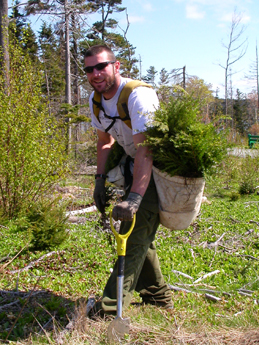
    Tree planters and other forestry workers perform physically demanding work. Some of their main duties are to:
    – Clear brush.
    – Carry and plant trees using manual tools.
    – Feed machines manually.
    – Prepare a site for planting.
    – Use, clean and maintain various equipment.
    – Work with chemicals for growth, or for weed and pest control.
    – Supervise other workers.

    What are some health and safety issues for tree planters?
    Tree planters face a variety of physical, biological, chemical, ergonomic and safety hazards. These include:
    – Insect bites or stings.
    – West Nile virus (mosquitoes).
    – Lyme disease or rocky mountain spotted fever.
    – Rabies.
    – Allergic reaction to plants.
    – Exposure to bird or rodent droppings:
    – Histoplasmosis
    – Psittacosis
    – Hantavirus
    – Exposure to chemicals.
    – Risk of pain or injury from working in awkward positions, performing repetitive tasks or lifting.
    – Risk of injury from hitting a hidden rock with a shovel.
    – Exposure to extreme temperatures or other extreme weather conditions.
    – Driving – vehicle safety hazards.
    – Slips, trips and falls.
    – Working with chainsaws and other tools/equipment.
    – Stress.
    – Working alone.
    – Extended work days.

    What are some preventive measures for tree planters?
    – Learn safe lifting procedures.
    – Keep tools and equipment in good working order.
    – Use appropriate personal protective equipment (PPE) for the task.
    – Wear appropriate footwear.
    – Avoid awkward postures and repetitive manual tasks, or take frequent breaks.
    – In the warmer months, cover up for protection from sun, heat and insects.
    – Stay hydrated.
    – In vehicles, always wear a seatbelt.

    What are some good general safe work practices?
    Use safety procedures for:
    – Safe lifting
    – Selection, use, maintenance and storage of PPE
    – Working with pesticides and other substances
    – Using chainsaws and other tools or equipment
    – Follow company safety rules.
    – Learn about chemical safety, WHMIS and MSDSs.
    – Know how to report a hazard.
    – Follow good housekeeping procedures.

  • Youth Apprenticeship Programs

    Youth Apprenticeship Programs

    Youth apprenticeship programs are available in most provinces and territories. Check out the programs available in your area.

    Alberta
    The Registered Apprenticeship Program (RAP) allows high school students to participate in an apprenticeship program while they are still attending school. RAP apprentices earn income as well as hours of on-the-job training and work experience as credit towards their apprenticeship program, and their high school diploma. Scholarships are also available for RAP students.

    British Columbia
    The Secondary School Apprenticeship (SSA) is a career program that provides students with the opportunity to begin an apprenticeship while still in high school, and to earn high school credits for doing so. It provides a smoother road from school to work, and a head start to an apprenticeship.
    ACE IT is an industry training program for high school students, with trade classes offered at colleges and sometimes at a high school. ACE IT programs involve a partnership of schools, employers and industry and provides funding for the first level of schooling. Local employers get involved in the development of ACE IT programs, leading to a higher employment rate following completion of the program.

    Manitoba
    The High School Apprenticeship Program (HSAP) combines regular high school instruction with paid, part-time, on-the-job training. Students can earn up to 8 supplemental academic credits for graduation based on 110 working/practical hours per credit.
    Youth Build is a job training and pre-apprenticeship program whereby young people are working under the supervision of a journeyperson to renovate homes and develop building skills. Young people can attend the Youth Build Program full time, as an alternative to school. In Manitoba, there is a 30 hour per week paid vocational component and a 10 hour per week unpaid academic component.

    New Brunswick
    The Career Connections Program (CCP) offers students experience, hands-on paid work experience, and expands their essential employability skills.

    Newfoundland and Labrador
    Youth apprenticeship courses are available for high school students through Skilled Trades Jump Start Your Life.

    Northwest Territories
    The Schools North Apprenticeship Program (SNAP) is an opportunity for high school students to earn credit and pursue a career in the trades.

    Nova Scotia
    The Workit Youth Apprenticeship Initiative is open to youth between the ages of 16 and 19.
    Options and Opportunities (O2) offers students more hands-on learning experiences with a career focus. It’s designed to prepare students for successful transitions from high school to work, a career path, or a post-secondary program.

    Ontario
    The Ontario Youth Apprenticeship Program (OYAP) is a School to Work program that opens the door for students to explore and work in apprenticeship occupations starting in Grade 11 or Grade 12 through the Cooperative Education program.

    Prince Edward Island
    Youth Apprenticeship or Accelerated Secondary Youth Apprenticeship Program (ASAP)Youth Apprenticeship is for students wanting to explore their trade career options and gain a head-start on the post-secondary apprenticeship training program while working toward their Grade 12 diploma.

    Québec
    Québec offers vocational and technical education programs under the apprenticeship system, which are run jointly by Emploi-Québec and the Ministère de l’Éducation, du Loisir et du Sport.

    Saskatchewan
    Saskatchewan Youth Apprenticeship (SYA) raises awareness of apprenticeship in Saskatchewan schools by helping young people discover what rewards come with being a Youth Apprentice and working in the skilled trades.

    Yukon
    The Yukon Secondary School Apprenticeship Training program is open to Yukon secondary school students who would like to explore a skilled trade and complete high school at the same time.

  • Career Profile: Horticulturist

    Career Profile: Horticulturist

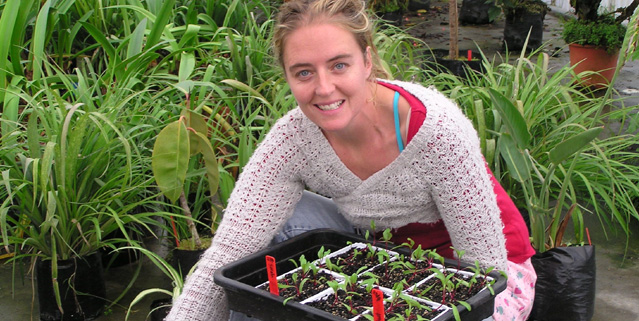
    Horticulture. What is it? In its simplest form we can define it as the cultivation of plants. But there’s a lot more to it than that.

    An individual who works in the horticulture field is called a horticulturist. Their duties consist of managing and coordinating anything that involves cultivating and breeding plant life. From working with landscape companies, to advising provincial ministries on proper techniques and maintenance of plants and landscapes; a horticulturist’s job often takes them from one job site to another and seldom leaves them standing in the same place.

    An ideal candidate for the horticulturist career path is an individual who enjoys working outdoors, nature, travelling and, well, getting dirty!
    Horticulturists may act as technicians or advisors for agriculture companies and provide information on techniques to yield a higher crop growth and impart pesticide-related info to both commercial and independent farmers. They may also work with landscaping companies to help them determine which plants will grow the most plentifully based on its required needs, like climate and precipitation.

    Horticulturists may choose to work as independent contractors or work directly for natural resource ministries to ensure soil levels are not contaminated and pose no threat to its vegetation or animals in the area.

    The career path of a horticulturist typically only requires some post secondary education as an apprentice. The individual could start out as a landscaper and gradually make their way to a horticulturist. If desired, university degrees are offered in the field of horticulture. These degrees may lead into other agricultural fields such as forestry and biology.

    So if you have always loved learning about plant life and even planting your own garden or flowerbeds at home, a career in horticulture could be perfect for you!

  • Career Profile: Librarian

    Career Profile: Librarian

    Imagine a stern-looking middle-aged woman wearing half-glasses at the end of her nose. What kind of job do you think she would have? Many people would say that she was a librarian. For them, librarianship is a job for plain, quiet people who enjoy spending all day with dusty books. These days, however, librarians and library technicians do much more than that. They can be important sources of information and research help for people of all ages and backgrounds.

    If you visit libraries, you probably know that libraries are about far more than just books. Most of them also have computers, videos, DVDs, and online catalogues where people can find information on what’s available in the library. Working in a library usually requires knowledge of many different computer programs and Internet sites. Library staff members might also need to know how to find information in special computer databases on medicine, law or other subjects. Helping people use and understand library materials like these is a large part of what librarians and library technicians do.

    Besides helping people find information or books and DVDs, library staff members do many other jobs. Some of them catalogue new materials by recording information such as the author and title and by choosing a number like 398.2 that tells people where to find the books or other materials. Some of them work with children’s programs or help organize events for adults, such as information sessions on job searching or on retirement. Others choose new materials and decide when to get rid of the old ones. Others hire and train new employees or work with budgets to decide what to buy and when to spend money. Even putting books and other materials back onto the shelves is a job for librarians, library technicians or library clerks.

    What education do you need to work in a library? That really depends on where you want to work and what you want to do. In the past, people needed a Master’s degree in librarianship to be put in charge of a library or to work in other areas such as the reference desk where they would answer people’s questions. Library technicians would get a certificate or diploma and learn to do jobs such as cataloguing. Library clerks would put materials back on the shelves and do other jobs requiring only a small amount of library knowledge. In many cases that has now changed, and people with different levels of education can work in almost any role. This is true especially in small libraries.

    If working in a library sounds interesting to you, you can already get started on preparing for your career. You can read different types of books and get to know how to use databases and other resources. If your school or public library has volunteer opportunities, you can begin to learn more about what a job in librarianship is like. That will help you decide what training to get and how to find the best library job for your skills and interests.

  • Exploring Careers in Your Field of Interest

    Exploring Careers in Your Field of Interest

    You may already know what you love to do. Great! So what’s the next step? The next step would be figuring out what kinds of jobs are available within your field of interest. Did you know that there are many career paths you can take for any one thing you love to do and are interested in? For example:

    • If you love to write, you could consider a job that involves writing. There are many jobs that would be a perfect fit for a person who loves to write. For instance, you could be a newspaper or magazine columnist, you could work as a copywriter for an advertising agency or you could even be an author!
    • If you love to dance, you could be a dancer. But you could also be a dance teacher or even choreographer!
    • If you love to work with animals, you may be interested in being a veterinarian, animal trainer, zoo keeper or even biologist.
    • If you love to work with your hands, then you may want to consider carpentry, auto mechanics, engineering, dentistry or even massage therapy.
    • If you are an outdoorsy person, then sitting at a desk job is definitely not your thing. Instead, consider jobs in which people primarily work outdoors, such as construction workers, landscapers, forest rangers or even adventure travel guides.
    • If you love to work with children, professions such as teacher, pediatrician, child psychologist or early childhood education assistant would be right up your alley!

    As the above examples show, there are many different career paths available within a certain area of interest. Do a little bit of research to discover what career opportunities align with your interests. Try to determine which of these various careers you would be interested in pursuing and why. Read profiles of various jobs to get a sense of what they involve. And finally, if possible, talk to people who work in these jobs. After all, the best way to find out what a job is all about is to talk to someone who is already doing it!

  • Types of Careers in Trades

    Types of Careers in Trades

    Are you wondering what types of careers are available to you in the trades sector? There is literally thousands to choose from. Check out just a few of the careers we found on CareersInTrades.ca!

    Construction
    Construction and Maintenance is the best known skilled trades sector. These jobs are available across Canada in both urban and rural areas. Some of its apprenticeable trades are:
    – Bricklayer
    – Heavy equipment operator
    – Painter and decorator
    – Ironworker
    – Mechanic
    – Plumber
    – Welder

    Transportation
    Transportation trades cover vehicles ranging from automobiles and motorcycles to airplanes and cranes. These jobs are anywhere vehicles can be found, which can be a farm, an airport, a harbour or any street! Some of the apprenticeship trades include:
    – Agricultural Equipment Technician
    – Aircraft Maintenance Mechanic
    – Auto Body Repairer
    – Motorcycle Mechanic
    – Transport Trailer Technician

    Manufacturing
    Manufacturing trades can lead to careers in many different sectors, including cars, textiles and even food production. These careers can secure a job in many manufacturers and bring you to the root of product development. Some of the apprenticeable trades include:
    – Automotive Machinist
    – Graphic Arts (Pre-Press, Press and Bindery)
    – Industrial Electrician
    – Power System Operator
    – Sawfiler/Fitter
    – Tool and Die Maker

    Service
    The service sector offers jobs for those interested in working more closely with the public. From chefs to hairstyling, this sector offers many career opportunities. Some of the apprenticeable trades include:
    – Arboriculturist
    – Baker
    – Barber
    – Graphic Arts Technician
    – Hairstylist
    – Jeweler and Goldsmith
    – Upholsterer

  • Career Profile: Agricultural Engineer

    Career Profile: Agricultural Engineer

    Agricultural engineering might sound like complicated work, but the nature of the job is really quite straightforward. It’s a collision of two worlds – bringing engineering solutions to agricultural projects, particularly concerning crop production and raising livestock.

    What is an Agricultural Engineer?
    An agricultural engineer designs the machines and tools used in farming including tractors, planters, animal housing facilities, harvesting machinery, drainage and soil conservation systems, water and flooding systems and much more. They are responsible for maintaining the efficiency of these machines and systems, making improvements to those that fail in order to meet the appropriate standards.

    Who do They Work for?
    Many work as consultants for large production companies or engineering firms that manufacture agricultural machinery and storage facilities. There are also teaching and research opportunities at colleges and universities and with branches of the federal government that deal with the farming industry. In some instances, they also work as sales representatives by selling products and engineering solutions to farmers and breeders in need.

    What Education Do I Need?
    If agricultural engineering is a field that piques your interest, it’s a good idea to focus on developing problem solving and critical thinking skills that enable you to think outside the box, so to speak. Typically, engineers will face problems with malfunctioning equipment and out-of-date practices that create time sensitive issues. Engineers must be able to think on their feet and discover solutions within the parameters given to them in the most efficient way possible.

    In high school, it is recommended that students take advantage of all available courses in mathematics, physics, chemistry and biology. In university, these courses are further explored with the addition of computer science, crop science, leadership, design and engineering courses.