Category: Mental Health

  • The Holidays and Your Health

    The Holidays and Your Health

    You might see people zipping from store to store, either trying to get that Black Friday deal and land that new tech toy that’s unaffordable otherwise or trying to get the perfect gift for that person who is just impossible to shop for. This frantic scene, of course, unfolds in a bright winter wonderland set up in a mall that blares agonizing Christmas music with no end to its torturously happy melodies in sight. While you watch on, you are probably starting to wonder how the holidays are meant to be a time of joy and reflection. Well, believe it or not, it really is the best time of the year if you know where to look.

    We get it – there’s a lot going on at school no matter what grade you’re in. There’s a difficult balance between the mountain of school work that is being shovelled your way on a daily basis, the ever-complicated social life that you are trying to manage like a full-time job, and everything in between. With all of these wolves at the door, isn’t it important to take a break and put everything into perspective? To think about what you have, the things you were able to do this year, the things you will be able to do next year and the year after that – even a few years down the line. It is also important for a number of other reasons. Let us show you the meaning of Christmas:

    Winding down is good for your health.

    It really is! According to a report by the National Institute of Mental Health, long-term “chronic stress” (meaning stress that is constant and severe and doesn’t seem to want to go away any time soon) can cause issues down the line that affect your immune system (the parts of your blood that protect your body from illnesses and disease as well as being the part of the body that fights them away), your digestive system, your sleep patterns, and reproductive system. Stress can prevent the body from performing in tip-top shape. Christmas, after all the preparation is over with, can give you that rest that you need.

    Take a break from school – really, you’re allowed!

    While it’s important to study, it’s doubly important to take a break from all of it and focus on something else for a while. Your exams aren’t going anywhere, and as long as you know the subject matter, so why are you stressing out over them during the one time you’re allowed to kick back and do literally anything else?

    It’s important to make memories.

    You’ll regret it if you make school your life; you also need to carve time out of your busy school year to kick back and relax. Hanging out with your parents, siblings, and friends will make memories to last a lifetime (we know how corny it sounds, but it’s a popular saying for a reason). Having a stress-free holiday is one of the best and most important things you can do for yourself and the people you love!


  • Are you saying what you think you’re saying? The messages you may be giving off with body language.

    Are you saying what you think you’re saying? The messages you may be giving off with body language.

    You may think of yourself as a confident and friendly person, and anyone who really knows you might say the same. However, if you’re slouching, avoiding eye contact, and looking down, someone who is meeting you for the first time may perceive you in a completely different way. This is the power of body language. By now, you may be thinking, so what? Is body language really that important? The answer: absolutely! Most of what human communication is nonverbal. This means people who are meeting you for the first time, such as potential employers, may get an impression of you before you even have a chance to speak. The question is, is your body language giving off the impression you want? Let’s take a look at some of the key aspects of body language and talk about whether it may be time to adjust what your body is saying about you.

    Negative Body Language: Some signs you may not be putting your best foot forward.

    1. Avoiding eye contact.

    Making direct eye contact may feel a little scary, but it’s extremely important. A lack of eye contact gives off the impression of nervousness, a lack of confidence, and even dishonesty. Eye contact is especially important during an interview with potential employers, as confidence and honesty are some of the main points employers look for!

    1. Slouching.

    Poor posture results in poor body language! Slouching tells people you may be lacking in confidence, or are uninterested/bored in what’s going on. Although slouching is something many of us do without realizing it, it’s important to make a conscious effort to sit up straight, especially when trying to give off a good impression.

    1. Crossed arms.

    You may not be aware, but crossing your arms creates an invisible barrier between you and the person you’re speaking with. This sends the message that you are closed off or unwelcoming. Avoid this kind of negative body talk by keeping your hands to one side or on the other hand. This will indicate friendliness and openness.

    1.  Checking your phone or watch.

    While you may just be checking the time, you may be giving off the impression that you’re bored, anxious, or too busy thinking about what’s going on next to really focus on the person you’re speaking with. Break this habit by refraining from checking your watch during interviews, and make sure your cell phone is turned off and put away.

    For more signs of negative body language, check out this link.

    Positive Body Language: Ways you can give off the right impression for success.

    1. Give a firm (non-crushing) handshake.

    Handshakes are one of the most important forms of communication during a first impression. It sets the tone for the rest of the conversation and reveals confidence. Just be sure not to crush or pull someone’s hand, as this may reveal bullying or an attempt at intimidation.

    1. Slow down your speech.

    Interviews can be nerve-wracking, and your speech may speed up without you even knowing. Take a big, deep breath and slowly let it all out. Focus on slowing down your speech. It will calm you down and give off a stronger sense of confidence.

    1.  Give affirming movements.

    Nodding your head or smiling are affirming actions that show you’re engaged in the conversation, and you understand what is being said. Just be sure not to nod too frequently, as this may reveal a lack of confidence.

    1. Lean.

    This one may be unfamiliar to most people, but leaning in slightly when someone talks reveals active listening skills and shows engagement and interest in the conversation. On the flip side, leaning away gives off the opposite impression. Leaning away from the speaker reveals hostility or a lack of interest.

    For more positive body language tips, check out this link!

    The right body language may be hard at first, but just remember to be alert and aware of your actions. With practice, you’ll be revealing the incredible person you are the moment you walk in the room!

    Sources Used:

    https://blog.udemy.com

    http://study.com

  • The Importance of Utilizing Mental Health Services on Campus: Post-Secondary and the Archetype of the Depressed College Student

    The Importance of Utilizing Mental Health Services on Campus: Post-Secondary and the Archetype of the Depressed College Student

    As the leaves begin to wilt into shades of amber and brown, we’ve found ourselves at the start of another school year. For some of us, this will be a nerve-wracking (but exciting) year of change as we enter a new school environment, be it high school or a post-secondary institution. For others, it’s just another school year. However, since beginning university, I have noticed that there is a significant difference in preparing yourself to head back to post-secondary than there is for high school. For one, there are so many stereotypes surrounding post-secondary students; in the eyes of society, we’re either party animals or surviving off an hour’s sleep with nothing but coffee and instant ramen in our system to keep us afloat. In any case, neither of those is very healthy. University has been normalized as an incredibly strenuous time in your life. You’re faced with an incredibly heavy workload and a ton of new responsibilities. On top of that, it can be difficult to make friends in such a large environment. You go from seeing your friends every day in high school to once a week in your classes (and that’s if you’re lucky).

    The point is that post-secondary is no walk in the park; it’s designed to be difficult. This can have a highly negative impact on one’s mental health. Now, this isn’t exactly anything new.

    Mental health challenges have always been a large cause for concern amongst post-secondary institutions. However, there has been a surge since the COVID-19 pandemic. In a nationwide survey of Canadian post-secondary students who had begun utilizing mental health services on campus, “95% reported feeling overwhelmed, 83.7% reported experiencing severe anxiety, and 81% reported feeling isolated and lonely” (Ogrodniczuk et. al qtd. in Moghimi et. al). With the growing mental health crisis on campuses, mental health resources have become a much

    larger priority for many campuses across Canada. Many campuses are now complete with wellness centers, support groups, counseling, accommodation services, student life programs, and so much more.

    So…There’s Help Available. What Now?

    Even if there are many resources available on campus, I can see why some students may be skeptical or resistant to reach out for help. What if people aren’t empathetic about your situation? It’s a campus; how effective can the mental health services actually be? Do I even have time to reach out for help? All of these questions can make it easy to turn a blind eye to the anxious skin-picking or lingering feeling of emptiness in the back of your mind. I know because I did it for a long time. I go to the University of Toronto Scarborough, where we have all the mental health resources you can imagine. Mental health and wellness are constantly promoted at the school, there’s a wellness center, mental health groups. But it wasn’t until the end of second year that I finally decided to get some help, even though I had been struggling with my mental health since I was about 14.

    Reaching out for help (especially on campus) can be intimidating. I was worried that I wouldn’t be able to function as a normal student anymore. What if they wanted to give me medication I didn’t want? What if nothing was wrong with me and I was just being dramatic? The worry started to invade my brain again. And if that’s happening to you, I need you to remember one thing. No one can do anything to you without your consent. Any mental health services available to you are up to you to take. Your body, your mind, your choice. You are the one in control. In my case, I began with some light counseling, and then I met with one of the family doctors at my campus for a mental health assessment for a diagnosis so that I could figure out how to get the proper treatment. It also helps that because everything was under the mental health services at my school, so everything was in one place. Not all campuses are the same. But my biggest piece of advice is to make use of what’s available to you. Your campus is essentially your home for the next few years, and you may as well try to make it as enjoyable as you can.

    Even if you don’t feel your mental health is struggling, sometimes it’s just nice to go to counselling to talk to someone about something that may be stressing you: an essay, group project, maybe even something unrelated to school like your job. Remember that being open and talking about your mental health with the right person never does more harm than good. It may take you a few tries to find the councilor you connect with or find the kind of therapy that feels right, but never give up. Keep trying; someone out there understands you.


    Works Cited

    Moghimi, Elnaz, et al. “Mental health challenges, treatment experiences, and care needs of post-secondary students: a cross-sectional mixed-methods study.” BMC Public Health, vol. 23, no.1, April 2023, https://doi.org/10.1186/s12889-023-15452-x.

    Ogrodniczuk, John S, et.al. “Who is coming through the door? A national survey of self-reported problems among post-secondary school students who have attended campus mental health services in Canada.” Counseling & Psychotherapy Research, vol. 21, no. 4, July 2021, https://doi.org/10.1002/capr.12439.

  • Promoting Positive Body Image and Self-Esteem in Young Children in India

    Promoting Positive Body Image and Self-Esteem in Young Children in India

    By Rabia Khan

    Since weight is the most controversial topic, children often shy away from talking about body issues. Media loves to stereotype human bodies and we tend to become pawns of this irrational system, turning us into puppets. The constant pressure put on young children to be perfect at times can get out of control.

    Obsession with fairness creams and being thin to an extent have proven that we still live around a cynical outlook. Multiple advertisements are hellbent on brainwashing young children, steering them to believe they are not good enough, and perpetuating unhealthy lifestyles that their parents often don’t desire.

    The patriarchal ancient system concludes that young women in India are looked at as subjective role models, hence not giving preference to their abilities as a person but giving preference to their outer appearance. Promoting such body image impacts the self-esteem of young children, leading them to unhealthy coping mechanisms like fasting, diet-crashing, various weight loss regimes, etc.

    We grew up in households where ‘superstitious’ beliefs were the heart of our family. Women are hammered with endless expectations and are looked upon as perfect and ‘neat as milk’. People in India and some traditional environments hold such a backward mentality that they believe a ‘docile’ woman is the perfect daughter-in-law, and that such a docile person would come without any warnings of foreboding. Just because a woman is born with a fair complexion, that doesn’t mean she cannot indulge herself in ‘feminine sins’.

    Promoting positive body image will surely bring a sense of security to young children. Setting their self-esteem in the right direction while they are in the primitive years can prepare them for a brighter future and bring success. This very system of promoting body image proves that we are so insecure with ourselves that we feel obliged to take somebody’s natural essence away by distorting their principles of basic human rights.

    Since endless jingles and advertisements surround our generation, tele-friendly adverts never show the dark side of various products and the very dangers that come with them, many have been proven to cause cancer due to the heavy amount of chemicals injected into them.

    Through education, we can fairly promote positive body image and self-esteem in young children. Receiving the right kind of education will not only feed your knowledge by eliminating malpractices, but it will also strengthen the ideologies that are overlooked in the industry.

    Unrealistic obsessions are thrown at us like a fairy tale, and it’s easier to get influenced because of our feeble minds. Parents need to foster an attitude of radical acceptance and teach them to love themselves when they are young. They grow up to become responsible adults when they feel secure within themselves. It’s essential to prioritize your child’s mental and physical being in a judgement-free environment.

    Listening and understanding your children will help elevate their self-esteem, making healthy living conditions for them to grow as their selves.

  • The Role of Pets in Mental Wellbeing

    The Role of Pets in Mental Wellbeing

    By Rabia Khan

    We all need that little something that uplifts us instantly. And what more than your pets doing their role in perfecting your mental wellbeing, and we all agree to it fully! There is substantial scientific proof and evidence that shows the role of pets in enhancing mental wellbeing in human beings. Dogs have been used for multiple scientific and medical purposes for the impact they have on human beings. Dogs are the only creature that connects with people on a spiritual level. Here is the reason how pets contribute to mental wellbeing, you’ll be surprised to know some facts about your pets that you didn’t know before!

    Companionship

    A sense of belonging and of drive is essential for humans. As is the want to feel linked together, which alleviates isolation and offers delight. Pets can help people who are depressed by offering friendship, especially those who are aged or unwell. The addition of a beloved pet or dog to the daily lives of veterans suffering from PTSD has also been shown to enhance their psychological state. As a result, servicemen are urged to obtain dogs as buddies while they adjust back to the normal world.

    Non-verbal communication

    You often don’t need to communicate with your pets, if you ever feel sad, your pets are most likely to understand your feelings much better without even communicating. Besides, dogs are super loyal to their caretaker. That’s why many believe that dogs are the best healers for mankind. Pets support individual mental wellbeing by just being in their lives. After all, their innocence plays a huge role in our stressful lives.

    Make you happy!

    Spending time with your pets releases certain endorphins in your brain. Stroking a dog has been shown to boost the release of serotonin. Similarly, pets can also boost the levels of endorphins, dopamine and oxytocin. They can also activate various additional hormones which contribute to an individual feeling healthier. It has also been demonstrated that simply contemplating pets in our daily life can help alleviate unhappiness induced by disappointment or loneliness.

    Treatment for illness

    Pets are frequently used in treatment for those suffering from severe depression, PTSD, anxiety, autism, or a genetic disorder called Down syndrome. Dogs often serve older individuals by filling positivity into their lives. A lot of mental health and rehab centers use dogs as a therapy to help individuals affected by any illness. Some hospitals will often see weekly visits by dogs to enhance a patient’s moods, and it has been very effective so far.

    If you have a dog, cherish them, as they are a gift!

  • Loneliness in the Age of Social Media

    Loneliness in the Age of Social Media

    By Rabia Khan

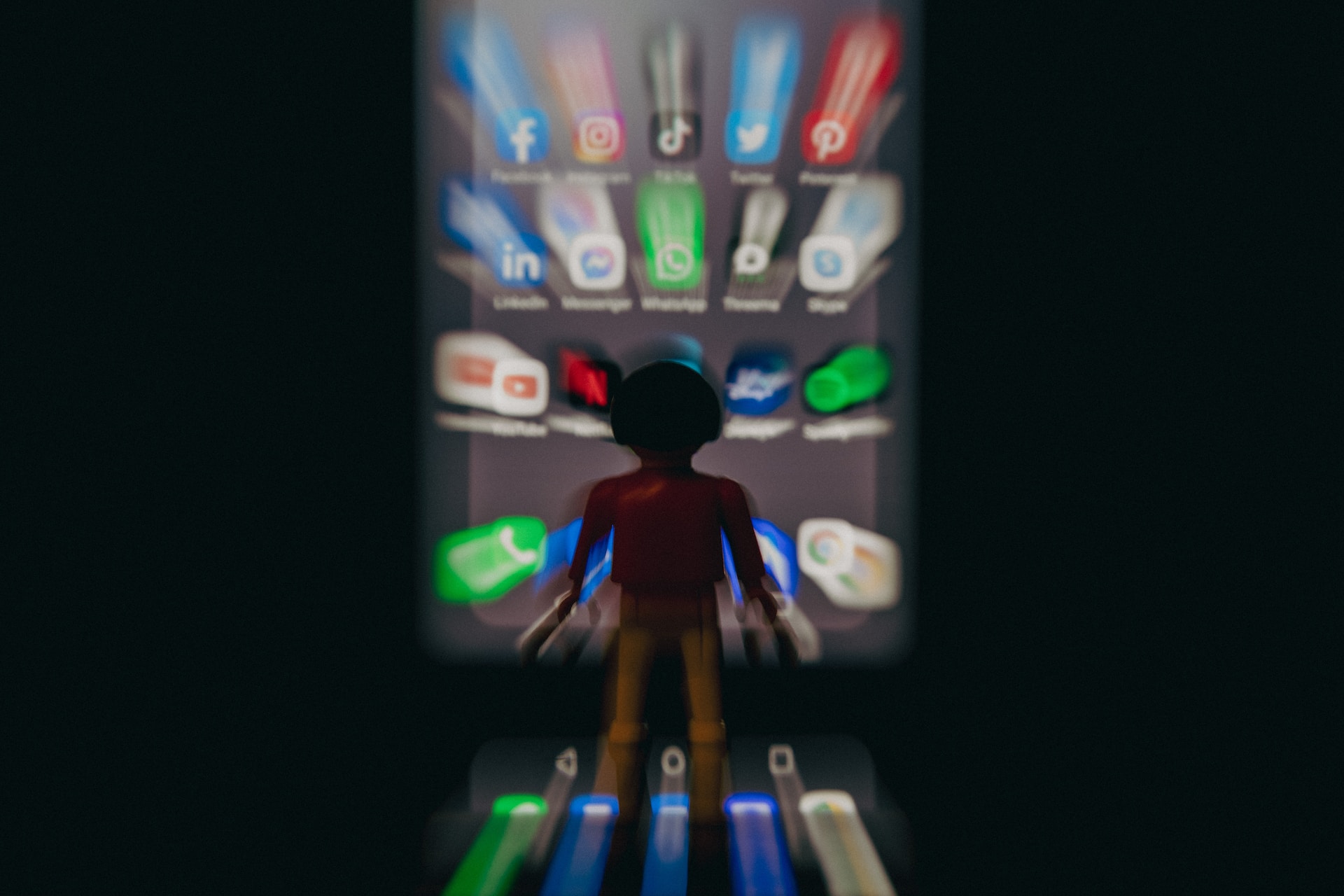
    Loneliness is increasing in youth at the speed of a thunderbolt. Where social media is consumed to fill the dark void inside our souls, it is also contributing to feelings of immense loneliness and this cannot be avoided easily at this time and age.

    While social media transmits useful information, at the same time the digital world fuels dark energies into our lives unwillingly. Loneliness is one of the worst feelings ever and social media enhances it more.

    For some people, embracing self-isolation mode is easy because they are so used to being alone all the time, but for people who constantly sit on their phones every day, a cloud of loneliness can unwrap their mind, body and soul. Loneliness can take over the lives of people and put their mental health on the edge. Watching Instagram reels daily and scrolling Instagram feeds can become highly addictive and can lead to unhealthy coping mechanisms. Escapism feels overwhelming when you become lonely and lost in the age of social media.

    At times, people tend to become fragile and vulnerable, and it is during these sensitive times, that they feel an increasing need to consume social media. It feeds the mind in the most unhealthy ways and some don’t even realize it.

    The pressure often gets to people, to be ‘perfect’ in a public setting, and to escape such situations, social media becomes the only way to avoid reality and the present moment. The majority of youth is hyper-dependent on social media just to ignore the outside world or inhibit any sort of human interactions.

    Loneliness has become the new social norm in the age of social media and the youth are adjusting to feeling lonely quite well. The high rate of suicide is increasing due to self-isolation among young people. However, with that being said, substance use and drug/alcohol addiction have also been increasing due to loneliness. The consequences of being addicted to social media come with many cons and fewer pros.

    The current generation seems to be lost, yet comfortable in their loneliness. We cannot mix loneliness with being self-sufficient and independent. A lot of people misinterpret and misunderstand being alone all the time with their phones.

    Limiting the use of social media can make people feel less lonely, only if they treat their mental health disorders and learn to interact and mix with the outside world. Many young people are prone to experiencing identity crises because of self-isolation. Mental health is at risk due to excess consumption of social media, which pulls the youth into various pressures. This in return, forces them to become lonely. Social media is a form of escapism that puts many at risk of suicide.

    Self-care tip: Give yourself a social media detox, and become conscious about your current surroundings. Practicing new habits and unlearning old ones can inhibit feelings of loneliness and help control excessive social media consumption.

  • Tips for Finding Out Post-Secondary School Student Services

    Tips for Finding Out Post-Secondary School Student Services

    By Jacob Aron Leung

    For many new students, going to post-secondary can be overwhelming. A whole new school means lots of opportunities to meet people and learn new things. One other thing that new students benefit from is the number of services that many schools offer.

    However, without looking, many students may not know what their schools provide. Whether you’re a new student stepping on campus for the first time, or a seasoned student looking to explore their school more, here are some tips for getting the most out of your school services.

    Financial Services

    Post-secondary institutions have financial services to help students pay for the multitude of expenses that life brings during schooling. These offerings include:

    • Help for sudden financial emergencies, such as changes in living situations, food security, and other unforeseen circumstances
    • Bursaries — monetary rewards granted to students displaying a financial need.
    • Scholarships — monetary rewards granted to students, usually for displaying community or academic accomplishments. Some scholarships are based on financial need, but not all of them.

    Be sure to check the requirements for bursaries and scholarships because they all require different criteria. Bursaries usually require applications because of the financial record aspect, and they may apply to a certain demographic within their institution. While many scholarships do require proof of eligibility, they may not require an application depending on the circumstances. For example, the University of Victoria lists in-course scholarships and awards that do not require manual applications. The government of Ontario has a list of financial aid offices across their province’s public colleges and universities here.

    Counselling and Health Services

    Counselling and health services exist on campuses to help students navigate their physical and mental health. According to a 2022 study by the Canadian Alliance of Student Associations, one in two students had accessed their post-secondary institution’s mental health services. However, only 28 per cent of the 2,000 surveyed students were “aware of how to access [on-campus support] services.” A large factor limiting access was not only the long wait times but also the unawareness of the services offered. While on-campus counselling services suffer from long wait times, these services are free for all students and counselling offices often provide brochures outlining students’ options.

    Health services on campuses tackle many areas a general practitioner can, as well as offer referrals for more specific needs. Health services on post-secondary campuses are still equipped with professionals ready to help students. Additionally, some campuses may have separate designated sexual health clinics. Many institutions’ student unions offer a student health plan to help offset any health-related costs while studying.

    Student Union Services

    Post-secondary schools often have a corresponding student union, a group representing and supporting a college’s students. Students enrolled in institutions also automatically qualify as members of their student union. Though student unions operate separately from the schools, there is often overlap where they collaborate through services.

    Student unions often offer a variety of supports and services for student life including:

    • A dedicated ombudsperson service, that deals with complaints students may have about their student union or college. At some institutions, such as the University of British Columbia, the student union ombudsperson is separate from the school’s ombudsperson.
    • Legal and tax assistance services. Many student unions offer tax clinics or someone to help students navigate tax inquiries. Some student unions offer a legal representative for students to consult with for issues such as rent, employment, immigration, and many other problems they may encounter.
    • Peer support groups. Separate from a school’s counselling services, students find support through discussing with other students. While these services do not guarantee professional help, the more casual environment can ease students into the idea of opening up and not feeling alone. They can be a good alternative while waiting for counselling help.

    There are many more services available in Canadian post-secondary institutions not outlined in this article — when in doubt, students can consult various sources like their student engagement office or institution’s website. Every institution is different, but they all have services in place to serve their students. Schools have services in place to help students earn their academic credentials while ensuring they are supported in other aspects of life.

  • Student Mental Health in New Learning Environments

    Student Mental Health in New Learning Environments

    The way we learn keeps evolving, and with that comes a fresh set of challenges. One of the most important is supporting your mental health. This article explores some key strategies that schools, educators, and even you can use to navigate these new learning landscapes and prioritize well-being.

    Building a Supportive Classroom Community

    Imagine a classroom that feels safe and welcoming, where everyone is valued and respected. This kind of positive environment can make a huge difference in your mental well-being. Educators play a key role in creating this by setting clear expectations and promoting a sense of care and understanding. Simple things like using humour, checking in with students regularly, and showing genuine interest can go a long way.

    Understanding Mental Health

    Educators need to recognize the signs that a student might be struggling. This involves understanding mental health in general, but also being aware of the unique challenges that students from diverse backgrounds face. Some educators are even incorporating social-emotional learning into their curriculum, teaching you valuable skills like managing stress, resolving conflicts, and building empathy.

    Partnering with Parents and the Community

    Your parents or guardians can be a huge source of support when it comes to your mental health. Schools that prioritize open communication with families are on the right track. This allows them to share insights and work together to reinforce these skills you’re learning at school. Clear and supportive communication is key, especially if there are any concerns about your well-being.

    Leveraging Policies and Frameworks

    Schools should have a clear framework in place to address student mental health. This could involve creating inclusive environments, promoting well-being through teaching practices, and building connections with local mental health resources. Think of it as a roadmap that helps ensure everyone is on the same page when it comes to supporting you.

    Addressing Individual Needs

    Everyone experiences challenges differently. If you’re facing mental health issues, educators should be prepared to offer targeted support. This might involve connecting you with professional help or even adjusting your learning experience to accommodate your needs.

    The Bottom Line

    Supporting student mental health is a team effort. Educators, parents, and the wider community all play a role. By embracing a collaborative approach and fostering inclusive and supportive learning environments, we can help students navigate whatever challenges they face and ensure everyone thrives in their educational journey.

  • The Many Roles of Support Dogs

    The Many Roles of Support Dogs

    For many people, support dogs are an essential help in their daily lives. While dogs are man’s best friend, support dogs aid individuals in more ways than just through their fuzzy, friendly companionship. Support dogs help people navigate disabilities, difficult situations and/or emotions. There are three types of support dogs:

    • Service dogs
    • Therapy dogs
    • Emotional support dogs

    Service Dogs

    Service dogs are specifically trained to help a single person with their disability. Types of service dogs include seeing-eye dogs for the vision-impaired, hearing service dogs for the hard-of-hearing, and mobility service dogs for those with limited mobility. Service dogs work closely with their handlers, helping them with specific tasks.

    For example, former Albertan MLA Heather Forsyth received help from her hearing service dog Quill, who first accompanied her into the Alberta legislature in 2013. Quill was trained to alert his owner to certain sounds by performing specific actions. He would alert her if someone said her name by placing his paw on her leg or alert her of a fire alarm by spinning.

    Therapy Dogs

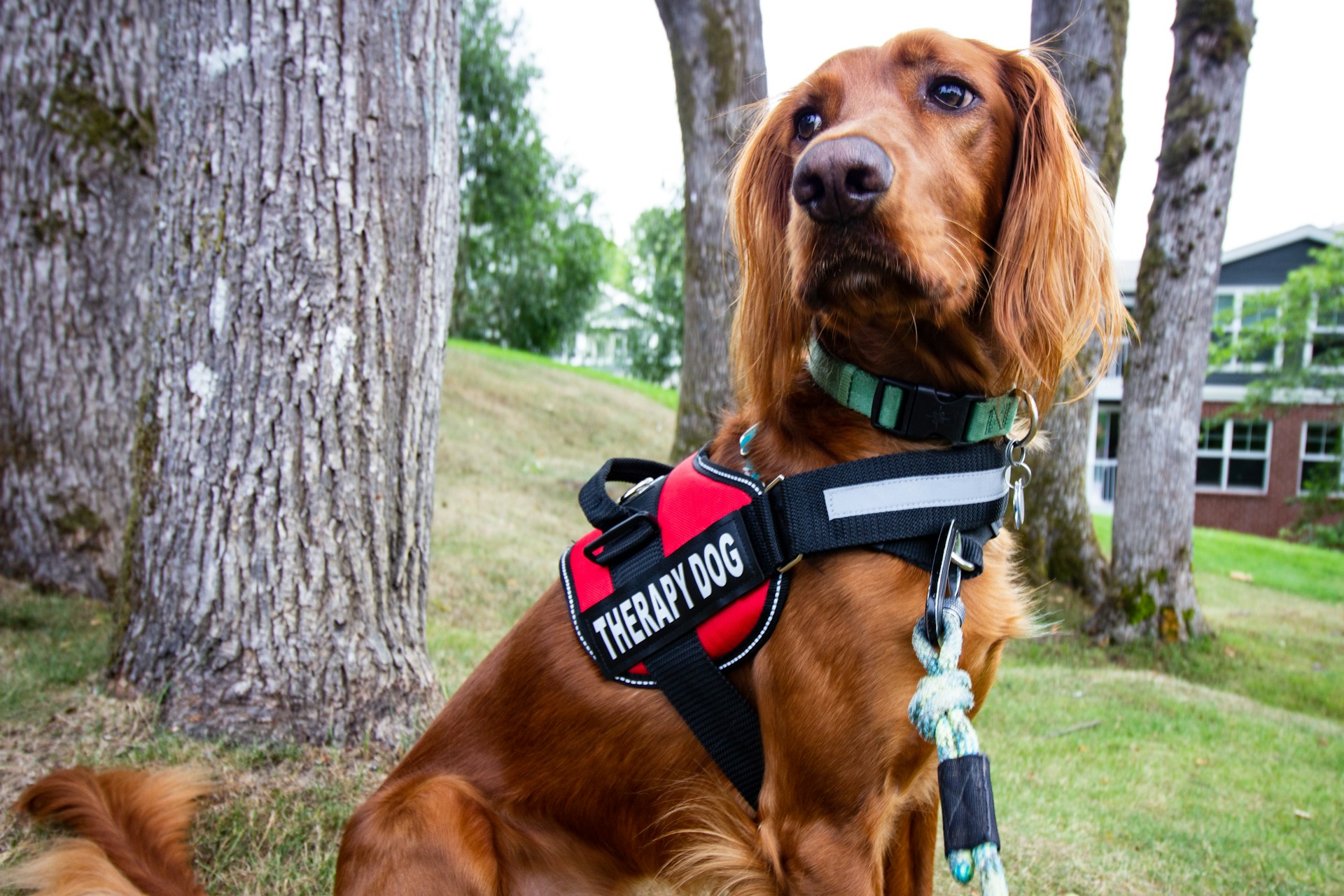
    Therapy dogs provide comfort to people at all times. They don’t need to learn specific tasks like service dogs, but they need to stay calm during all situations. Their role brings positivity to institutions such as care homes and hospitals. They serve to provide comfort to many people, not just one single owner. 

    Service dogs and therapy dogs often wear vests or harnesses that indicate their supportive role. It helps people identify that they are not simply pets and are primarily there to help others. If a support dog is not wearing a vest or harness, sometimes documentation shown by their handler will be enough. In Ontario, showing documentation for service dogs works in place of a harness/vest.  

    Emotional Support Dogs

    Emotional support dogs provide mental stability for their owners. Like service dogs, they lack specific training for tasks, but their strength comes from their presence. For example, having a dog provides benefits for many elderly people and/or many people with mental illnesses. 

    Interacting with Support Dogs 

    Support animals should be treated with respect, as should all animal companions. However, some support dogs, such as service dogs, are classified as working animals and should not be distracted from their tasks. This includes not petting service dogs without their handlers’ permission or giving service dogs other commands. 

    Rights of Support Animals in Canada 

    Rights of support animals vary across Canada depending on the type of support dog a person has and the province that they live in. In general, service dogs tend to hold the most rights in Canada due to their working status.

    Some provinces have specific laws for only service dogs, while other provinces’ disability acts and/or human rights acts may cover support animals already. As each province’s rules differ, it’s always best to check. For example, the Saskatchewan Human Rights Commission explicitly says therapy dogs and emotional support dogs do not receive the same rights as service dogs. 

  • Loneliness in the Age of the Internet

    Loneliness in the Age of the Internet

    By Bhargavi Venkataraman

    With access to millions of people’s thoughts, likes, dislikes, interests, and lives at your fingertips, it seems like this age of humanity should give rise to the most connected population since the beginning of mankind. However, research and conversations around loneliness with social media tell a very different story.

    Since its invention in the 1900s, the Internet has played a crucial role in education, work, and leisure. While it has had numerous beneficial effects such as improving efficiency and communication across professions, in the 1990s it sparked debate on whether Internet use harms participation in community life and social relationships and increases loneliness. Loneliness can be defined as an unpleasant sensation arising from lack of adequate social contact and relationships. It can have detrimental effects on health by elevating stress levels, causing mental health disorders and contributing to physical health issues as a result.

    Studies have shown that greater internet use is associated with lowered communication with family, a reduction in the size of social circles, and depression and loneliness. This may be due to people investing too much time online and as a result, too little time with their real life relationships or contrarily, lonely people find themself online more as they are seeking connectedness, companionship, and community membership. This is a phenomenon that has been exacerbated with the onset of the COVID-19 pandemic, to the extent that loneliness was considered as a major public health issue during this time.

    My personal experience with social media is that it has the potential to both be a boon and a curse. I am grateful for it in times like when long distance from friends and family or when connecting with communities you would never otherwise have a chance to meet. However, the problems arise when it starts inciting feelings of FOMO and loneliness after prolonged use and when it preoccupies me to the point that I start losing contact with my real-life connections. At times like this, it seems like my only choice is to completely rid myself of the issue and get off social media.

    To begin, I only really use 3 forms of social media: Facebook, Instagram and TikTok. Of these, I find that I predominantly use Facebook for its messaging capabilities, Instagram to stay updated with friends and TikTok for entertainment. As such, the first platform that I shut off is TikTok. I thoroughly enjoy scrolling on TikTok and have found so many accounts that connect me to things I am not always able to access in real life such as videos of my homeland. However, when I notice that I’m spending too much time online, I think I could afford to lose those connections and replace them with conversations with my family. Next, I shut off Instagram. I find that this is especially necessary to limit FOMO from seeing everyone’s stories and posts. While it does restrict my interactions with friends, sometimes it is necessary to ask them to message me on a dedicated messages app like through iMessage. I only close Facebook when I am doing a full social media cleanse as I don’t find that it creates many negative feelings in me. It mostly acts as a tool to connect with friends. However, during a cleanse, it might be beneficial to delete it just to prevent any temptations.

    Considering all this information, an important question that arises is, what can you do about this issue? The most obvious solution is limiting use of social media, much as I had done previously. While the extent of the limitation might differ according to individual preferences and capabilities, research evidence backs up the fact that cutting back on social media use can have a positive impact on wellbeing. One study looked at cutting back on Facebook use for a month in 3,000 regular Facebook users. The results showed that people missed the online interaction on the platform but observed benefits such as lowered online activity (including in other social media platforms) and increased offline activities such as spending time with loved ones or watching TV alone.

    Overall, deactivating Facebook seemed to improve subjective well-being by about 25-40% as much as regular psychological interventions. Another study was done in the University of Pennsylvania with 143 undergraduate students who were asked to follow their regular social media use for 3 weeks or limit Facebook, Instagram, and Snapchat use to 10 minutes each per day. Results showed that the group with limited use had reductions in loneliness and depression compared to the control group and that both groups experienced less FOMO and anxiety than their baseline.

    As such, in this age of technology and social media, loneliness is an unfortunate side effect of extensive online activity. While it may not be realistic for everyone to do a complete social media cleanse, I highly recommend giving moderated social media use a try. You can do this through self-monitoring, try it out with a friend to keep you accountable or download apps like AppBlock, Flipd, Focus, etc. to help you stay on track. No matter the method, it is sure to have some benefits to your wellbeing!