Category: Nature Watch

  • Where Are the Bees?

    Where Are the Bees?

    Pollinators

    Did you know that pollination is one of the most important ecological processes on the planet? This basic transfer of pollen from the male parts (anther) of a plant to the female parts (stigma) is vital for the reproduction of about 90 percent of the seed-producing plant species in the world. Pollination creates fertile seeds. Indeed, without pollination, many plants could not reproduce. Food webs and, therefore, entire ecosystems would collapse. We would quickly run out of food, medicine, wood products — almost everything humans and wildlife need to survive . Without it, the world as we know it, would be a different place.

    Scientists are concerned because of the vital role bees play in our food supply. About one-third of the human diet is from plants that require pollination from honeybees, which means everything from apples to zucchini. Bees have been declining over decades from various causes. “Colony collapse disorder” was blamed for large, inexplicable die-offs. The disorder, which causes adult bees to abandon their hives and fly off to die, is likely a combination of many causes, including parasites, viruses, bacteria, poor nutrition and pesticides, experts say.

    The value of these busy pollinators is immeasurable. While bees are probably the most recognized pollinators, it is important that we don’t forget about hummingbirds, butterflies, moths, bats, flies and beetles who are also important pollinators.

  • Is that an endangered species in my backyard?

    Is that an endangered species in my backyard?

    As someone who just moved to the Big Smoke (aka Toronto), I am constantly searching for nature in the city and surrounding landscape. I am truly fascinated by the resilience of many of the creatures that manage to eke out an existence in the highly urban and fragmented landscape of southern Ontario.

    The survival of many of these species is greatly aided by the Ontario Greenbelt, which hugs the outskirts of Toronto and stretches north to the Bruce Peninsula, including the Oak Ridges Moraine, Niagara Escarpment and lush Carolinian woodlands.

    The Greenbelt is home to 78 species-at-risk — almost 40% of Ontario’s provincially listed species. The survival of these species is supported by the habitat-protecting policies of the Greenbelt. Set amidst the never-ceasing pressure to build more shopping malls and sprawling sub-divisions, these policies prohibit the paving over of the area’s remaining farmlands and woodlots.

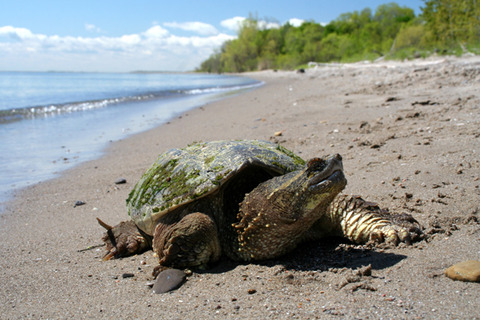
    Many folks would likely be surprised to learn how species in the Greenbelt have adapted to being thrust into an urban lifestyle. One of the most amazing is the industrious Jefferson salamander, which has been found crawling through the basements of homes built directly in the path to its breeding grounds. Another is the snapping turtle, which roamed the earth 200 million years ago with the dinosaurs, yet has managed to outlive their prehistoric brethren by millennia.

    The future of these critters in Ontario is uncertain. Some populations of Jefferson Salamander, such as the York Region population, are deemed unlikely to survive by Ontario’s Natural Heritage Information Center. Remarkably, anyone in the province with a standard fishing licence can still hunt for snapping turtles, despite it being listed as a species at risk — something Ontario’s Environmental Commissioner highlighted in his most recent report.

    Without a doubt, the presence of the Greenbelt and its habitat protection policies are giving species at risk a leg up. But, as DSF and Ontario Nature’s recently released report Biodiversity in Ontario’s Greenbelt illustrates, the Greenbelt also faces ongoing threats to its integrity, from loopholes that allow for road development and aggregate extraction.

    The Greenbelt must be supported, and grown, and its policies must be improved to reduce ongoing threats to the habitat of species at risk.

  • Great Changes for the Great Lakes

    Great Changes for the Great Lakes

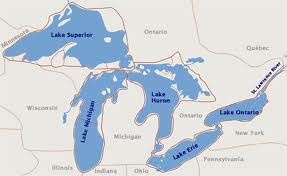
    Across the world North America is known for many things; the culture, the people and the great outdoors. Part of that great outdoors is the Great Lakes. The Great Lakes are an integral part of our North American identity; and to preserve that identity in 2005 the premiers of Ontario and Quebec and the leaders of eight American states that border the lakes came together and signed the Great Lakes Water Pact.

    The Great Lakes Water Pact is a pact that has introduced strict regulations in regards to the usage of the Great Lakes and it has sunk the tentative thoughts of shipping water to thirsty regions in the United States and Middle East. It was signed by the Canadian provinces and the American states that surround the Great Lakes; Ontario, Quebec, Ohio, New York, Pennsylvania, Michigan, Indiana, Illinois, Wisconsin and Minnesota. The agreement includes rules that make it difficult for communities surrounding the Great Lakes watershed to use the water and also aims to prohibit the commercial export of the lake water by restricting withdrawals of water to five gallon (twenty litres) containers.

    The affects this pact has on future generations are great. The Great Lakes are a natural resource that are depleting and are not renewing as fast or as much that is necessary. More than thirty five million people rely on the lakes for drinking water, and the lakes are only able to replace one percent of that per year.

    The Great Lakes Pact is important for North America’s future generation because it ensures that not all the lakes will be used up and it will be saved from disappearing. This works in the favour of future generations because it guarantees that the lakes will be there for their own usage as well just as it was there for the past generations usage. Not only does it assure fresh and natural drinking water for generations to come but it also promises that the amount of surface water in the world stays intact. The Great Lakes contains twenty percent of the world’s surface water and this pact will make sure that the surface water will remain for years to come. Without that surface water the world may dry up which in turn will not only affect people directly but also indirectly via the drying up of crops and vegetation.

    The Great Lakes Water Pact was signed in the year 2005 but its positive effects will last the world for years to come, both directly to people close to them and indirectly to people around the world. Directly through the fact that the Great Lakes are a source of fresh drinking water for people that surround them and indirectly because of the Great Lakes being a source of surface water that helps hydrate crops and vegetation, and without the lakes those crops and vegetation’s would dry up and therefore not feed communities around the world.


  • Need Volunteer Hours? Join a Mob

    Need Volunteer Hours? Join a Mob

    The student’s quest for 40 community service hours is not always a pretty one. Sponge-bathing senior citizens and picking up garbage are healthy for the community, but often so uninspiring to the average teenager that procrastination happens and some diploma-getting is in jeopary.

    What if you could find volunteer work that you’re passionate about, that gives you larger opportunities, that is part of a worldwide social activist movement? The Me to We (Mob)ilizers are students all across Canada, working from the ground to promote and support the charity Free The Children and facilitate real social change in the world.

    It’s all about going from thinking ‘me’, with selfish or self-centred motives and aspirations, to thinking ‘we’, with motivation to do right for all. If you are seeking to volunteer and get involved as a global citizen on a larger scale, consider joining the Me to We MOB.

    The entire enterprise began when a 12 year old Craig Kielburger read a news article about a 12 year old in South Asia who had died as a result of horrible child labour exploitation. This inspired him to make a difference. In 1995 Craig began speaking out for children’s rights in different small venues throughout Ontario. His vision caught on and late that year, he founded the Free the Children organization, with what he described as the motivation to “free the children from poverty, and free the children from the notion that they are powerless to affect change”.

    This means that while we work to end the enslavement and exploitation of children far from home, we can help children here to understand how valuable they are to the world, becoming enlightened and empowered.

    Today, Free the Children is the world’s largest network of children helping children through education, with more than one million youth in 45 countries involved in its education and development programs (like the Me to We initiatives).

    When an organization gets so large, it can become difficult to stay connected to the individual people while continuing to bring new, passionate youth into the cycle. That’s where the MOB comes in, taking Free the Children back to its grassroots and spreading the message from the ground up.

    Erica Baker is a MOB-Lead for Canada’s West Coast and a summer intern with Free the Children headquarters. When asked to describe what the MOB is Erica’s response, “Can I just say amazing?” was one of honest passion.

    “We are the masses. We are the movement. We are the MOB,” Erica said, “a vast group of students operating out of many cities across Canada, who are serious about making a mark on the social issues of our time. We organize events and fundraisers to benefit Me to We and Free the Children, and bring awesome, motivated young people together from across the country to make change.” Erica continued.

    She revealed that this year, the (Mob)ilizers are supporting one village in India, one in Ecuador, and one in Haiti, with funds going toward building houses, schools, and health clinics there. (Mob)ilizers have the option of going to one of these villages at the end of the school year to see exactly what their efforts are accomplishing.

    Applications are open until July 25th for next year’s MOB. To check out more or apply for a MOB position in your city, visithttp://www.metowe.com/movement/mobilizers/join/.

  • Old-growth forests 101

    Old-growth forests 101

    Why are old-growth forests important?

    When thinking about healthy forests, it’s not often that we think about dead, dying or diseased trees but any forest manager will tell you that they’re an essential part of a healthy forest ecosystem, and a key characteristic of old-growth.

    Dr. Bill Freedman, a professor of biology at Dalhousie University in Halifax, Nova Scotia, and Chair of the Nature Conservancy of Canada’s (NCC’s) National Board of Directors, explains that “old-growth forest contains some large and old trees, but all age classes are present.” Old-growth forests exist because they have not been subjected to a significant disturbance such as wildfire or clear-cutting for a century or more. Overall, it’s not easy to pin down an age at which a forest becomes “old,” because depending on the climate, geography and soil, a forest’s composition and lifespan will vary drastically.

    So what makes old-growth forests unique, and why are they important? The first answer is that old-growth forests contain trees in all phases of their life cycle, from saplings, to mature trees, to dead standing trees and finally, as rotting trees on the forest floor. This provides a home for many species of plants, fungi, invertebrates, salamanders and snakes, and makes old-growth forests hotspots for biodiversity and a refuge for high concentrations of species at risk.

    “Protecting old-growth forests means respecting the elders, letting them die a natural death and crash down, even if they’re diseased,” notes Mark Stabb, NCC’s Central Ontario Program Manager. Dead trees significantly change the structure and composition of the forest, but there are always saplings waiting in the shadows to take their place. “This helps us understand how they will respond to disease and natural disturbances such as fire, tornadoes or earthquakes,” says Stabb.

    “There aren’t many old-growth forests left compared to a couple hundred years ago,” he adds. But the 200-year-old Happy Valley Forest (HVF) Natural Area in Ontario is a good example of a forest that is growing old. Located just 35 kilometres from Toronto, this 2,851-acre (1,154-hectare) forest is an outstanding example of mature Sugar Maple and beech forests characteristic of the Oak Ridges Moraine. The HVF is critical habitat for over 110 breeding bird species, including the nationally significant Acadian Flycatcher and Cerulean Warbler and amphibians like the Jefferson Salamander.

    Dr. Henry Barnett, whose land NCC helped protect in the HVF and who has been instrumental in convincing neighbours to put their land under conservation protection, remarks, “with more than 210 acres (85 hectares) protected so far, hopefully the Happy Valley Forest will have a chance to become truly old-growth in the years ahead.”


    Provided by Nature Conservancy Canada

    www.natureconservancy.ca

  • Canada Environment – current issues and definitions

    Canada Environment – current issues and definitions

    Sourced: index mundi ( Canadian issues and definitions )

    Environment – current issues: air pollution and resulting acid rain severely affecting lakes and damaging forests; metal smelting, coal-burning utilities, and vehicle emissions impacting on agricultural and forest productivity; ocean waters becoming contaminated due to agricultural, industrial, mining, and forestry activitiesDefinitions to understand

    Acidification – the lowering of soil and water pH due to acid precipitation and deposition usually through precipitation; this process disrupts ecosystem nutrient flows and may kill freshwater fish and plants dependent on more neutral or alkaline conditions (see acid rain).

    Acid rain – characterized as containing harmful levels of sulfur dioxide or nitrogen oxide; acid rain is damaging and potentially deadly to the earth’s fragile ecosystems; acidity is measured using the pH scale where 7 is neutral, values greater than 7 are considered alkaline, and values below 5.6 are considered acid precipitation; note – a pH of 2.4 (the acidity of vinegar) has been measured in rainfall in New England.

    Aerosol – a collection of airborne particles dispersed in a gas, smoke, or fog.

    Afforestation – converting a bare or agricultural space by planting trees and plants; reforestation involves replanting trees on areas that have been cut or destroyed by fire.

    Asbestos – a naturally occurring soft fibrous mineral commonly used in fireproofing materials and considered to be highly carcinogenic in particulate form.

    Biodiversity – also biological diversity; the relative number of species, diverse in form and function, at the genetic, organism, community, and ecosystem level; loss of biodiversity reduces an ecosystem’s ability to recover from natural or man-induced disruption.

    Bio-indicators – a plant or animal species whose presence, abundance, and health reveal the general condition of its habitat.

    Biomass – the total weight or volume of living matter in a given area or volume.

    Carbon cycle – the term used to describe the exchange of carbon (in various forms, e.g., as carbon dioxide) between the atmosphere, ocean, terrestrial biosphere, and geological deposits.

    Catchments – assemblages used to capture and retain rainwater and runoff; an important water management technique in areas with limited freshwater resources, such as Gibraltar.

    DDT (dichloro-diphenyl-trichloro-ethane) – a colorless, odorless insecticide that has toxic effects on most animals; the use of DDT was banned in the US in 1972.

    Defoliants – chemicals which cause plants to lose their leaves artificially; often used in agricultural practices for weed control, and may have detrimental impacts on human and ecosystem health.

    Deforestation – the destruction of vast areas of forest (e.g., unsustainable forestry practices, agricultural and range land clearing, and the over exploitation of wood products for use as fuel) without planting new growth.

    Desertification – the spread of desert-like conditions in arid or semi-arid areas, due to overgrazing, loss of agriculturally productive soils, or climate change.

    Dredging – the practice of deepening an existing waterway; also, a technique used for collecting bottom-dwelling marine organisms (e.g., shellfish) or harvesting coral, often causing significant destruction of reef and ocean-floor ecosystems.

    Drift-net fishing – done with a net, miles in extent, that is generally anchored to a boat and left to float with the tide; often results in an over harvesting and waste of large populations of non-commercial marine species (by-catch) by its effect of “sweeping the ocean clean.”

    Ecosystems – ecological units comprised of complex communities of organisms and their specific environments.

    Effluents – waste materials, such as smoke, sewage, or industrial waste which are released into the environment, subsequently polluting it.

    Endangered species – a species that is threatened with extinction either by direct hunting or habitat destruction.

    Freshwater – water with very low soluble mineral content; sources include lakes, streams, rivers, glaciers, and underground aquifers.

    Greenhouse gas – a gas that “traps” infrared radiation in the lower atmosphere causing surface warming; water vapor, carbon dioxide, nitrous oxide, methane, hydrofluorocarbons, and ozone are the primary greenhouse gases in the Earth’s atmosphere.

    Groundwater – water sources found below the surface of the earth often in naturally occurring reservoirs in permeable rock strata; the source for wells and natural springs.

    Highlands Water Project – a series of dams constructed jointly by Lesotho and South Africa to redirect Lesotho’s abundant water supply into a rapidly growing area in South Africa; while it is the largest infrastructure project in southern Africa, it is also the most costly and controversial; objections to the project include claims that it forces people from their homes, submerges farmlands, and squanders economic resources.

    Inuit Circumpolar Conference (ICC) – represents the 145,000 Inuits of Russia, Alaska, Canada, and Greenland in international environmental issues; a General Assembly convenes every three years to determine the focus of the ICC; the most current concerns are long-range transport of pollutants, sustainable development, and climate change.

    Metallurgical plants – industries which specialize in the science, technology, and processing of metals; these plants produce highly concentrated and toxic wastes which can contribute to pollution of ground water and air when not properly disposed.

    Noxious substances – injurious, very harmful to living beings.

    Overgrazing – the grazing of animals on plant material faster than it can naturally regrow leading to the permanent loss of plant cover, a common effect of too many animals grazing limited range land.

    Ozone shield – a layer of the atmosphere composed of ozone gas (O3) that resides approximately 25 miles above the Earth’s surface and absorbs solar ultraviolet radiation that can be harmful to living organisms.

    Poaching – the illegal killing of animals or fish, a great concern with respect to endangered or threatened species.

    Pollution – the contamination of a healthy environment by man-made waste.

    Potable water – water that is drinkable, safe to be consumed.

    Salination – the process through which fresh (drinkable) water becomes salt (undrinkable) water; hence, desalination is the reverse process; also involves the accumulation of salts in topsoil caused by evaporation of excessive irrigation water, a process that can eventually render soil incapable of supporting crops.

    Siltation – occurs when water channels and reservoirs become clotted with silt and mud, a side effect of deforestation and soil erosion.

    Slash-and-burn agriculture – a rotating cultivation technique in which trees are cut down and burned in order to clear land for temporary agriculture; the land is used until its productivity declines at which point a new plot is selected and the process repeats; this practice is sustainable while population levels are low and time is permitted for regrowth of natural vegetation; conversely, where these conditions do not exist, the practice can have disastrous consequences for the environment .

    Soil degradation – damage to the land’s productive capacity because of poor agricultural practices such as the excessive use of pesticides or fertilizers, soil compaction from heavy equipment, or erosion of topsoil, eventually resulting in reduced ability to produce agricultural products.

    Soil erosion – the removal of soil by the action of water or wind, compounded by poor agricultural practices, deforestation, overgrazing, and desertification.

    Ultraviolet (UV) radiation – a portion of the electromagnetic energy emitted by the sun and naturally filtered in the upper atmosphere by the ozone layer; UV radiation can be harmful to living organisms and has been linked to increasing rates of skin cancer in humans.

    Water-born diseases – those in which bacteria survive in, and are transmitted through, water; always a serious threat in areas with an untreated water supply

  • Grizzly Bears

    Grizzly Bears

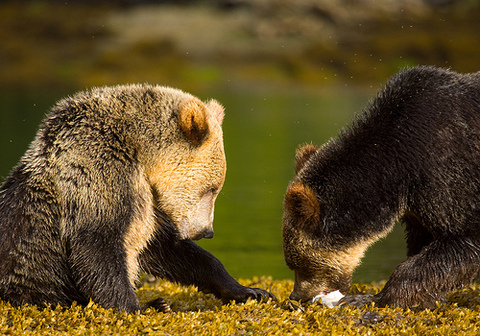
    British Columbia may be home to as many as half of Canada’s remaining grizzly bears — and the last best hope to maintain healthy populations south of the 60th parallel.

    Scientists believe that grizzly bears are an essential part of healthy, fully functioning ecosystems in western North America. Known as a “keystone” species, grizzlies are “ecosystem engineers” that help to regulate prey species and disperse the seeds of many plant species, such as blueberry and buffaloberry. They also help to maintain plant and forest health, both by aerating the soil as they dig for roots, pine nuts and ground squirrels, and by moving thousands of kilograms of spawning salmon carcasses into the forest, where trees and other plants absorb their high levels of nitrogen.

    “Grizzly bears are indicators of sustainable development,” says Dr. Stephen Herrero, who headed Alberta’s Eastern Slopes Grizzly Bear Project, one of the largest grizzly bear research projects in North America. “Where viable populations of grizzly bears persist, the landscape is being managed sustainably.”

    Unfortunately, grizzly bears face the same threats in B.C. as they face everywhere they live: habitat loss, damage, and fragmentation; the cascading effects of salmon collapse and climate change; and human-caused mortalities as a result of sport hunting, poaching, collisions with trains and vehicles, and the inevitable challenges grizzlies endure because of careless human behaviour. Grizzlies have already been eliminated or are currently threatened in 18 per cent of the province, including the Lower Mainland and most of the Interior.

    Scientists predict that the current rate of grizzly bear habitat degradation — from expanding human settlements, road-building, recreation, forestry, and other industrial developments — could result in grizzly bears being threatened or critically endangered in close to half of their current range in B.C. by 2065. By that time many local populations will be beyond hope of recovery and will likely be eliminated altogether.

    Human-caused mortality is also a significant problem in B.C. Between 1977 and 2009, almost 11,000 grizzly bears were killed by humans, 87 per cent of which were legally killed by hunters.

    The solution to reversing this continuing pattern of alienation and regional extinction is two-fold: reduce human-caused mortality and protect the habitat that grizzly bears need to survive.

  • Don’t say the D-word

    Don’t say the D-word

    A kerfuffle is raised every time a comedian, politician, or businessperson uses the F-word or the N-word. I understand that. But to me, the D-word is the most obscene. I’m referring to disposable. Let me explain.

    When I was a boy, we were poor and it was a big deal when my parents bought me a new coat. I would quickly outgrow it, and it would be passed on to my sister. My parents boasted that three of their children had worn the same coat. They weren’t concerned (nor were we kids) about gender differences or fashion; it was the coat’s ability to keep the wearer warm and its durability (now there’s a good D-word) that mattered.

    We now have an economic system in which companies must not only show a profit each year, they must strive for constant growth. If a product is rugged and durable, it creates a problem for even the most successful business — a diminishing and eventually saturated market. Of course, any product will eventually wear to a point where it can no longer be patched, so the market will continue to exist to replace worn products.

    But that’s not good enough in a competitive world driven by the demand for relentless growth in profits and profitability. So companies create an aura of obsolescence, where today’s product looks like a piece of junk when next year’s model comes out. We’ve lived with that for decades in the auto industry.

    I’ve always said a car is simply a means of getting from point A to point B, but it’s become far more than that. Some cars convey a sense of power, and cars become safe havens when loaded with cup holders, sound systems, and even TVs and computers. Some people even name their cars, talk to them, and care for them like babies — until next year’s models come along.It’s similar with clothing, even with outdoor attire beloved by environmentalists. We have a proliferation of choice based on colour, sexiness, and other properties that have nothing to do with function. I don’t understand torn blue jeans as a fashion statement, and I wish people would wear their pants till they spring their own leaks rather than deliberately incorporating tears. All of this is designed to get us to toss stuff away as quickly as possible so the economy can keep spinning.Nowhere is this more obvious than with electronic gadgets. When my wife lost the cord to charge her cellphone, she went to seven stores. None had the necessary plug for her phone. Finally she went back to the retailer that sold her brand only to be told that the cords for the new models don’t fit the old ones and hers was so old, it wasn’t even on the market any more. It was a year-and-a-half old.I remember when I was given the first laptop computer on the market. It had an LED display screen that let me see three lines at a time and a chip that stored about three pages of writing. But it was small and had word processing and a port to send my pieces by telephone. It revolutionized my life. I was writing a weekly column for the Globe and Mail and was able to send articles from Russia and even remote towns in the Amazon.

    A couple of years later, a much better laptop hit the market. It had an LCD screen, a huge memory, and it displayed almost a full page. I got one. A year later, I got a new model, and then half a year after that, another. Each served me well, but every year, new ones would appear that were faster, smaller, and lighter, with longer-life batteries and more bells and whistles.

    Try to get one fixed or upgraded, though. As with digital cameras, I was repeatedly told that it would cost more to fix an old laptop than to buy a new model. This is madness in a finite world with finite resources. At the very least, products should be created so components can be pulled apart and reused until they wear out.

    You see why I think the D-word is so obscene.

  • World population grows to 7 billion

    World population grows to 7 billion

    Written by David Crary

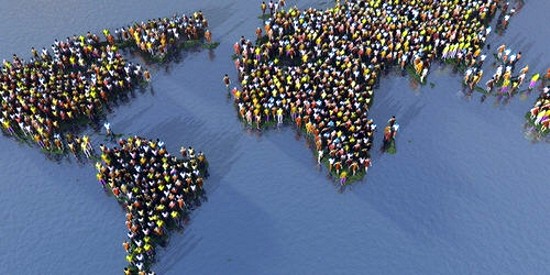
    Halloween this year brings with it a new spectre. As of Oct. 31 there will be 7 billion people sharing Earth’s land and resources, the UN Population Fund says.

    According to demographers, the world’s population didn’t reach 1 billion until 1804, and it took 123 years to hit the 2 billion mark in 1927. Then the pace accelerated – 3 billion in 1959, 4 billion in 1974, 5 billion in 1987, 6 billion in 1998.

    Looking ahead, the UN projects that the world population will reach 8 billion by 2025, 10 billion by 2083. But the numbers could be much higher or lower, depending on such factors as access to birth control, infant mortality rates and average life expectancy – which has risen from 48 years in 1950 to 69 years today.

    “Overall, this is not a cause for alarm – the world has absorbed big gains since 1950,” said John Bongaarts, of the Population Council, a New York-based research organization. But he cautioned that strains are intensifying: rising energy and food prices, environmental stresses, more than 900-million people undernourished.

    “For the rich, it’s totally manageable,” Mr. Bongaarts said. “It’s the poor, everywhere, who will be hurt the most.”

    The executive director of the UN Population Fund, former Nigerian health minister Babatunde Osotimehin, describes the 7-billion milestone as a call to action – especially in the realm of enabling adolescent girls to stay in school and empowering women to control the number of children they have.

    “It’s an opportunity to bring the issues of population, women’s rights and family planning back to centre stage,” he said. “There are 215 million women worldwide who need family planning and don’t get it. If we can change that, and these women can take charge of their lives, we’ll have a better world.”

    But as Mr. Osotimehin noted, population-related challenges vary dramatically around the world.

    In Western Europe, Japan and Russia, it will be an ironic milestone amid worries about low birth rates and aging populations. In China and India, the two most populous nations, it’s an occasion to reassess policies that have already slowed once-rapid growth. In sub-Saharan Africa, the demographic news is mostly sobering as the region staggers under the double burden of the world’s highest birth rates and deepest poverty.

  • The Latest from David Suzuki

    The Latest from David Suzuki

    Canadian environmentalist and scientist David Suzuki brings us the latest hot issues on global warming.

    The well being of our natural environment continues to increase in importance as the negative impacts of our unsustainable behavior become more and more apparent. In recognition of the damage humanity is instilling upon the earth, environmental super hero David Suzuki continues his commitment to educate Canadians and the world about our ecological footprint, long after most folks his age would have happily settled into retirement.

    Over the years, Suzuki has been a proponent for aboriginal rights, saving forests, the Kyoto accord and more, but in recent times, one of Suzuki’s most important and oft spoken platforms is global warming. Global warming continues to be one of society’s great debates, and while Suzuki recognizes this, he also points out that there is never anything to lose by being kinder to the environment. A resounding metaphor from Suzuki, regarding global warming, is this: If there was even a small chance a sandwich was poisonous, would you eat it? Likely not. The same goes from global warming.

    Suzuki’s recent communications about global warming have focused on whether or not natural gas will help Canada achieve a low carbon economy, aiding to keep our temperatures down. The David Suzuki foundation, in collaboration with The Pembina Institute, conducted a study to determine whether natural gas is in fact a key route in helping to avoid the use of coal and petroleum. The answer is no. Suzuki states that “Natural gas is also a powerful greenhouse gas in its own right, and creates warming effects 20 times more powerful than CO2” (Suzuki, 2011). Natural gas still produces emissions, so is obviously not the solution to emission reduction. However, Suzuki suggests that natural gas, if it must be used, be used as a transition until we find newer, cleaner sources of power.

    David Suzuki has also always been a strong proponent for the Canadian government to focus more on the environment and its people, and has pushed for more scientists to become involved in politics. On this note, a contributor to Suzuki’s blog, Leanne Clare, reported on the recent meeting of Canada’s energy and mine ministers, who had corporate sponsors (that’s right, apparently corporations are now sponsoring government meetings) for their meeting. Clare states, “How can our elected officials possibly claim to be unbiased and uninfluenced in their decision-making during this meeting?” (2011).

    Suzuki has never shied away from controversial topics, and whether or not you agree with him, his ability to stimulate discussion on these important issues in itself plays a key role in the education of Canadians. So whether or not you agree with global warming, at least understand that there is never any harm in being environmentally friendly.

    Check out Suzuki’s blog at http://www.davidsuzuki.org/blogs/.

    A brief end note from Suzuki on summer time shenanigans: While you’re out enjoying the beauty of the great outdoors, keep in mind that standing dead trees are “excellent habitats”, being the home for many species, so think twice about chopping one down for your camp fire!