Category: Science

  • Online Learning: The Best Sites On The Web!

    Online Learning: The Best Sites On The Web!

    Finding information on any given subject is as easy as clicking a button on a search engine. Gone is the need for rows of encyclopedia’s, dictionaries and tangible books. Everything is available online at your discretion. Wading through the options, however, can take the shine off of the ease of accessibility. If you are looking for something specific, you still need to wade through your choices until you find a reliable source. This is not as easy as it sounds. Wikipedia, the wonderful, epic, online encyclopedia, is not considered a trustworthy website as it is user-generated. Literally any one can add and edit information at their discretion.

    Yet the World Wide Web is an amazing resource of quality material, knowledge from experts and an educational smorgasbord at your fingertips. It is argued that a quality education should not cost as much as some private universities are charging and that influential change makers are creating ways to offer learning opportunities through the internet that are solid and authentic. So how can you navigate your way through the dead ends, cobwebs and arm chair educators to find what you need? With a little research and a lot of time you can hunt out the best, but I have compiled a list of quality geography, history and science sites to get you on your way.

    Seterra is a geography program that offers a free download for a multiple level map game. Players choose their continent and go from there with either a wide focus, such as labeling the countries, or a more narrow one, such as finding the capital cities. The great thing about Seterra is the fun factor. It is easy to become addicted to improving your score and to forget that you are learning!
    www.seterra.net

    National Geographic is a trusted name and the organization has done a fabulous job of utilizing the internet to engage students of all ages with a variety of learning strategies that often come under the guise of games and videos.
    www.nationalgeographic.com
    http://kids.nationalgeographic.com/kids/

    The History Place is a gift to those who appreciate the past and love to dig deeper. It is a website filled with detailed information and pictures. The site has also won numerous awards.
    www.historyplace.com

    Ted Talks is an amazing website with hundreds of video presentations about ideas worth spreading by innovative change makers from around the world. You can find just about anything worth knowing about on this website.
    www.tedtalks.com

    Khan Academy is a free world class education that changed the way people learned online. It recently got a grant of money which has resulted in a lot more lessons and a lot more exposure.
    www.khanacademy.org

    BBC history section is an incredible source of material, both compelling and richly informative. Anyone who visits this website leaves with a better understanding of the world we live in.
    http://www.bbc.co.uk/history/0/
  • The Importance of Wetlands

    The Importance of Wetlands

    What Are They?
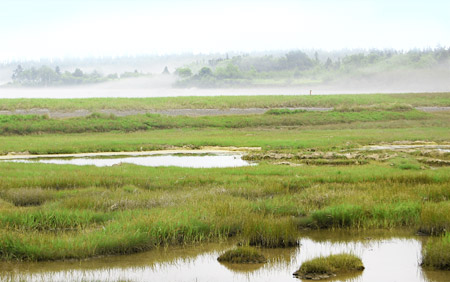
    A wetland is a habitat where land meets water such as ponds, marshes, swamps, bogs and fens. To classify as a wetland, the area must be completely covered or partially covered with water for a significant amount of time over the course of a year. This could be from flooding due to rain or melting snow, or because it exists as an established waterway. Wetlands are home to aquatic and land creatures, a combination that creates an incredible habitat able to function at great efficiency. This produces a rich environment for its inhabitants – wetlands sustain more life than any other ecosystem!

    Swamps: streaming water, often confused with marshes, set apart by the presence of trees and shrubs.
    Ponds: shallow waters, surface free of vegetation.
    Marshes: continually flooded with lots of surface vegetation.
    Bogs/fens: high water levels, large accumulation of peat, looks like solid ground but easy to fall through.

    Why Should I Care?
    Wetlands are home to more than 200 species of wildlife. Canada has a diverse population of amazing creatures, many that are endangered or at risk. Scientists have estimated that a third of these rely upon the wetland ecosystem. Migrating birds return to the same spot each year, and if that wetland is now a Superstore they have lost nesting grounds and their food source.

    Wetlands act like sponges, preventing floods from rainfall and melting snow. They also filter the water from pollution and chemicals, cleansing it before it recycles to the larger water basins. Amazingly, wetlands also remove and store greenhouse gases from the environment, making them important to the future of climate change as well.

    Cause to Worry
    Canada is home to many varieties of wetlands. It is estimated that 14% of the country is covered by a wetland, though the number shrinks every year. Wetlands are in danger of disappearing across the globe due to agriculture and residential development. According to the Alberta Wilderness Association, 70% of wetlands have been destroyed in that province alone. It is only in more recent years people come to understand the great importance of wetlands and their impact on our country. Without these powerful ecosystems, fowls, amphibians, mammals, reptiles and plants will eventually become extinct.

    What Can I Do?
    There are numerous organizations that recognize the value of wetlands and work hard to see them untouched and preserved. There are many things still yet to be done and much awareness that still needs to be raised. One factor in the decline of wetlands is the rapid consumption of water. We all need to conserve our water intake. Limiting the chemicals and pesticides we use will also have a positive effect on this ecosystem. Perhaps the most important thing one can do to help protect the wetlands is to educate themselves and others on the subject and become willing advocates. Finally, we can all take the time to enjoy the remaining wetlands and allow ourselves to be reminded why they are important.

  • The Plight of the Honey Bee

    The Plight of the Honey Bee

    They are a marvel of architectural design and one of nature’s most heroic creatures. The honey bee is an incredible insect with a work ethic beyond anything humans could ever endeavor to mimic. The honey bee works day and night without tiring, each assigned to a specific task.

    There are three groups bees can be categorized into: workers, queens and drones. The worker bees are the only bees people ever see. They gather food from the outside world, build and clean the hive and work to protect it. The drone’s only job is to fertilize the queen and in the fall, when the hive is at its bursting point, they are ejected from their home, sent to live in the wild elements where they eventually die. Honey bees are social creatures that co-operate well within the confines of their narrow existence. They have a job to do and they do it well.

    The worker bees must gather food for the queen and the drones. They do so by collecting pollen and nectar from flowering plants, thus beginning the production of new seeds. This process is called pollination and the honey bee is the biggest contributor. Without pollination, many crops of fruits, vegetables and nuts would die. It is estimated that one third of the world’s food source depends on honey bees to pollinate them.

    In 2006, there was a sudden collapse in honeybee colonies. This decline in bees was so drastic that scientists coined the event “Colony Collapse Disorder” or CCD. Throughout history bee colonies have experienced sudden and unexplainable collapses, but none so wide spread and epic as in recent years. Why is this happening? Many scientists have speculated that there is no one particular cause for the decline in the bee population, rather it is several factors put together. Some believe the pesticides farmers use on crops is to blame. Others feel it the radiation from cell phones causing poor navigation for the bees. Global warming has been cited as a possible reason as well. The real answer is that no one knows why the bees are disappearing, but everyone agrees on one sobering fact – if the problem continues to persist, the world has a very big problem.

    Humans have been exploiting the actions of the honey bee for centuries, capturing and manipulating their surroundings to acquire the much sought after honey and wax the bees so guilelessly create. It was not until the 1600’s that North America was introduced to this ambitious worker. European settlers brought their precious bee hives to ensure a certain quality of life laced with the natural sweetness of honey, and today it is unfathomable to imagine a life without the bees and their effects.

    Fabricated bee colonies are cropping up everywhere in a global effort to repopulate the bees. So far this has met with success, but perhaps this phenomenon should be a warning to all of us. Rather than try to only fix the problem, we might just want to ask what the bees are trying to tell us. If there is a lesson to be learned from their disappearance it would be wise to understand it.

  • How Animals Survive the Arctic Tundra

    How Animals Survive the Arctic Tundra

    The Arctic tundra, a snowy biome that is housed within the Arctic Circle, is characterized by freezing temperatures, strong winds and permafrost. Yet, despite being one of harshest environments on earth, many animals call the Arctic home. So how do animals living in the Arctic, a place that has months of continuous light followed by months of continuous darkness, survive in such a harsh habitat?

    Only a limited number of animal species in the Arctic do not migrate or hibernate during the winter months. The ones that do brave the winter have become well adapted to the extreme conditions and are able to survive year round. Some notable adaptations include the following:

    Bigger is Better
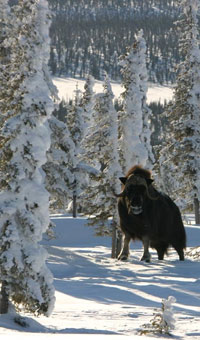
    Polar animals seem to be larger in size, have shorter limbs, denser fur and more fat and blubber than their counterparts in more temperate climates; these characteristics help reduce heat loss. It is also important to note that only larger animals, like the muskox, roam the Arctic in winter and huddle in herds to keep warm.

    Dig for Cover
    Smaller animals, such as the collared lemming, go under the snow for warmth, shelter and protection. These smaller animals dig elaborate tunnels under the packed snow and live on the roots of plants during the winter months.

    Fur Better, not Fur Worse
    As the temperature dips, animals replace their summer coats with thicker, longer coats. The snowy owl, for example, is covered in fluffy white feathers from head to toe These feathers are overlapped with more feathers to ensure the owl will remain warm in cold weather. The Arctic fox replaces its brown coat with a heavier white coat that not only keeps it warm, but also provides camouflage. The muskox grows plenty of shaggy, coarse hair that covers everything but its feet.

    Tick Tock
    A research team in Alaska studied the heart rates of two types of Arctic rodents exposed to continuous daylight, nocturnal porcupines and the Arctic ground squirrel. Despite having no time cues, the animals seemed to respond to something that provided them with regularity and allowed them to retain a normal day/night, 24-hour cycle and a biological clock. So what was the one constant factor that kept the animals’ cycle on schedule in Alaska? It was the sun, which moves overhead in a circular motion and, at midnight, is tipped to the north. The animals are aware of the position of the sun in the sky, and the nearness of the sun to the horizon can act as a clue to animals to maintain a 24-hour cycle.

  • Are plastic bags really necessary?

    Are plastic bags really necessary?

    A national newspaper columnist wrote that “banning plastic bags will do exactly nothing to save the planet.” She went on to argue that they’re even environmentally friendly. Outright bans may not be the best solution, but plastic bags pose a big problem that must be addressed. The columnist appeared to be more interested in contrarianism for its own sake than in acknowledging the environmental harm these products cause.

    Plastic bags are bad and for the most part unnecessary. Many of us older folks remember a time, only a few decades ago, when we didn’t have them. Sure, they’re convenient, but is that an excuse to damage the environment and the life it supports?
    Subscribe to Science Matters

    A University of British Columbia study found that 93 per cent of beached northern fulmars (migratory seabirds related to the albatross) had bellies full of plastic — a substantial increase from the last time they were tested, in 1980. Head researcher Stephanie Avery-Gomm told the Globe and Mail that one bird had 454 pieces of plastic in its stomach. Eating plastic can severely harm or kill birds, as well as the 260 other marine species, including turtles and fish, that we know eat or get entangled in the stuff.

    It’s not just bags, of course. We humans have become dependent on plastic for a range of uses, from packaging to products. Reducing our use of plastic bags is an easy place to start getting our addiction under control.

    Canadians use between nine- and 15-billion plastic bags a year, enough to circle the Earth more than 55 times, according to the Greener Footprints website. (U.S. citizens use about 100 billion a year!) Few plastic bags are recycled. Most are used for a short time to carry groceries, and then maybe re-used as garbage bags or to wrap dog poop before ending up in the landfill or the ocean. Some people argue that, because they make up about one per cent of the volume of waste in landfills, we shouldn’t worry. But one per cent of the massive amounts of what’s in landfills is a lot, especially since plastic doesn’t biodegrade.

    Because they’re lightweight, plastic bags are easily carried by wind and water. Besides accumulating in the ocean, they litter our streets and natural areas, often clogging drainage systems and contributing to flooding. They take at least 1,000 years to break down, and even then, they don’t biodegrade; rather, they fragment into smaller and smaller pieces, making them more likely to be eaten by marine and land animals.

    Plastic is also a petroleum product, so continued and increasing use of it accelerates the depletion of valuable fossil fuels. According to Greener Footprint, 8.7 plastic shopping bags contain enough embodied petroleum energy to drive a car one kilometre.

    Finding something to carry your groceries in is easy; inexpensive re-usable bags come in a variety of materials and sizes. Many are small and light and can be carried in a purse or daypack. I carry one in my back pocket and have refused dozens of plastic bags as a result. Some people worry about bacteria and other contaminants that may accumulate in the bags, but you just need to wash them regularly.

    One of the bigger issues is what to put garbage in. Before the 1980s, no one used plastic bags for groceries or garbage, nor did we have composting or recycling programs, so we know that plastic garbage bags aren’t entirely necessary. The first step is to reduce the amount of garbage we produce. In fact, there’s really no such thing as garbage. It’s all resources, so we should more accurately refer to it as “waste”.

    Buying products with less packaging and reducing overall consumption of unnecessary goods is a start. Re-using, recycling, and composting also help you cut down what you send to the landfill. For the unavoidable waste, and the dog poop, use bio-compostable bags.

    Outright bans on plastic bags may not be the best solution, but education and incentives to get people to stop using them are necessary. If we have any hope of finding ways for seven billion people to live well on planet with finite resources, we have to learn to use our resources efficiently. Plastic bags are neither efficient nor environmentally friendly.

  • Vertical Farming for the Future

    Vertical Farming for the Future

    What do you think about when you hear about farms or farming? You probably imagine huge fields planted with wheat or corn and a farmer driving a tractor, combine, or other farm machine. People have farmed the land for thousands of years, but that way of producing food might soon end due to increasing populations and limited land. Experts believe that by 2050, the world’s population could reach about nine billion people, with about 80% of them living in cities. All of those people will need up to 70% more food than the world currently produces. However, much of the world is covered by areas unsuitable for farming, such as oceans and deserts, and about 80% of the good, arable land is already in use. How will farmers ever produce enough for everyone to eat?

    One possible solution is vertical farming. Dickson Despommier, a professor at Columbia University in New York, believes that growing food and even raising animals inside buildings could help solve the food problem in the future. On a small scale, the roofs of buildings could become gardens where a few people could grow what they need to feed their families. On a larger scale, buildings the size of apartment blocks could become farms, with each floor used to grow a different type of food. Some of the space could even be used for raising animals such as fish. Eventually, traditional farms could be a thing of the past.

    Growing food indoors is not a new idea. Many people already use greenhouses to produce food when the growing conditions outdoors are unsuitable for farming, such as in winter or in small spaces. Indoor farming could solve many of the problems farmers currently face, including bad weather, insects, and the loss of soil due to drought or overfarming. An indoor farm would be climate-controlled and mostly insect-free, making it easier to grow large crops with less waste. A sample vertical farm in Dover, England, has already been very successful; the crop yields from this space have been twenty times as large as on traditional farms. The techniques for indoor farming would be new for many people, but there are already university programs in place for teaching them.

    Vertical farming has many benefits, but it also has drawbacks. The biggest barrier is the cost. Setting up a vertical farm could cost about fifty or sixty million dollars with all of the cost of developing technology to keep the place running. Providing heat, light, and air for the plants could be a very complicated and expensive process, likely making food more expensive than it is now. Vertical farming would also decrease the types of food that are available, since some are not suitable for growing in small spaces. Cattle and pigs, for example, would likely be unsuitable for life in vertical farms. However, the quality of the food would likely be greater.

    Is vertical farming the way farmers will grow food in the future? If it helps feed the world’s growing population, it could be part of the solution for helping people everywhere.

    Bibliography:

    Climate.org. “Vertical Farming.” http://www.climate.org/climatelab/Vertical_Farming.

    Parsons, Paul. “Vertical Farming Takes Agriculture to New Heights.” http://www.thenational.ae/business/energy/vertical-farming-takes-agriculture-to-new-heights

    University of Lancaster. Exploiting vertical growing strategies for sustainable crop production.”

    http://www.lec.lancs.ac.uk/postgraduate/pgresearch/research-degree-opportunities.php?phd_id=97.

    Vertical Farm.com. “The Vertical Farm.” http://www.verticalfarm.com/more.

    Walsh, Bryan. “Vertical Farming.” http://www.time.com/time/magazine/article/0,9171,1865974,00.html.


  • Atmospheric Science

    Atmospheric Science

    Environment Canada is a key Canadian focal point for the advancement of atmospheric science, providing the research needed to improve Canada’s air quality, respond to climate change and increase the accuracy of weather forecasts.

    Human activities are changing the atmosphere, and the work of Environment Canada’s atmospheric scientists is focused on observing, understanding and predicting these changes. These scientists are tracking changes in the atmosphere through monitoring networks, analyzing and maintaining long-term data records, studying atmospheric processes, and developing complex computer models. This modeling work enables Environment Canada scientists to predict future change, from tomorrow’s weather and air quality, to climate conditions over the coming decades.

    Environment Canada atmospheric research provides valuable advice and guidance to decision-makers working to reduce air pollution, protect the ozone layer, respond to climate change and safeguard Canadians from hazardous weather. Atmospheric research also provides the scientific basis for many services to Canadians, including the air quality, health index and UV index  and increasingly accurate forecasts of severe weather.

    Working in collaboration with Canadian universities and the international science community, Environment Canada’s scientists generate new knowledge about the atmosphere. Departmental scientists also take an active role in development of national and global scientific assessments that provide authoritative compilations of the current state of the science on atmospheric issues.