Category: Science

  • Astronomers: Observers of Space

    Astronomers: Observers of Space

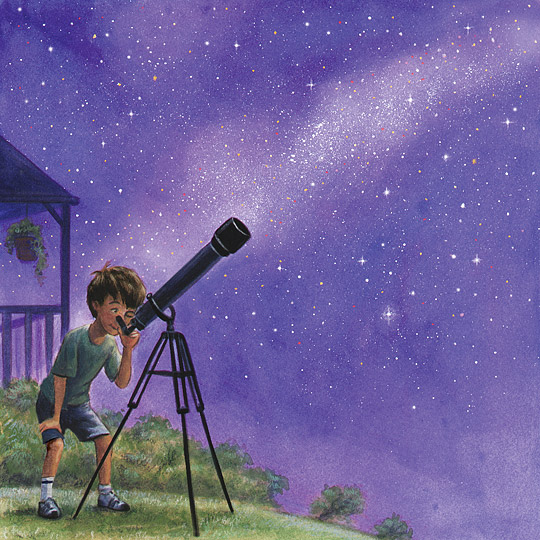
    It’s easy to imagine an astronomer spending their days (or, rather, their nights) gazing up at the stars observing planetary activity and other celestial bodies. To a certain extent you wouldn’t be too far off from the truth, but the life of an astronomer isn’t anywhere near as romantic as we’d like to think it is. In fact, the majority of the a professional astronomer’s career is spent analyzing pre-recorded data. There are occasions when an astronomer might take a seat at the helm of an optical telescope or use the recorded data from a radio telescope to inspect extraterrestrial space, but these instances will usually take place every few months or even years, depending on the nature of his or her research. Others exclusively use programmed computer simulations to research and simulate recorded findings to learn more about them. An astronomer’s primary focus, however, remains to observe planets, stars, galaxies and the ever changing intergalactic landscape.

    Education you say?
    The academic background of an astronomer can vary. There are universities like York and the University of Toronto that offer degree programs in Astronomy. Typically, a bachelor’s degree in science (usually chemistry or physics) is completed first. Then an aspiring astronomer might set his or her sights on a Master’s of Astrophysics and/or a Doctorate in Astronomy. Needless to say that there are a variety of paths to take, most of which generally stay close to the mathematics, chemistry and physics fields.

    Where can you get a job?
    Generally, astronomers find work with research institutions and universities. Working at a research station will require the astronomer to be fully focused on a branch of research, while a position at a university usually includes a teaching component, instructing courses at the undergraduate level, or supervising those at the master’s and doctorate levels.

    The skills you’ll need
    If you’re thinking of pursuing astronomy in the future, there are a few things you can start on now to help increase your chances of success. In high school it’s a good idea to take a wide range of courses while also taking all of the sciences and mathematics, of course. Geography and geology (if your school offers it) wouldn’t be such a bad idea either, since most celestial objects are composed of the same components as Earth. Lastly, work on developing your research skills, as well as reading and writing. As you enter post-secondary education you won’t have as much time to perfect those skills, so the sooner you feel confident in your ability to think critically and articulate your thoughts, the better.
  • “Esperanto” – The Beginning of a New Language

    “Esperanto” – The Beginning of a New Language

    Invented languages can be fun. Have you ever used a language like Pig Latin with your friends and watched as other people struggled to understand you? When you use these kinds of invented languages, your purpose is usually to keep other people, such as your parents, from understanding what you say. However, what if an invented language could actually help strangers from around the world to understand each other? That’s what a man named L. L. Zamenhof hoped when he invented the Esperanto language in the late nineteenth century.

    L. L. Zamenhof was born in the city of Bialystok, Russia (now Poland) in 1859. He later moved with his family to Warsaw, the capital city. When he was growing up he learned several languages, including Russian, Polish, and Latin. He became a doctor but dreamed of inventing a world language that would allow people of all countries to speak with each other. In 1872, he began to invent a language which he called Esperanto or Eo; the name “Esperanto” means “hope”. Zamenhof hoped that Esperanto would eventually overtake all other languages and gave it a third name, “La Lingvo Internacia” or “the international language.”

    In 1887, Dr. Zamenhof published a book outlining the grammar and vocabulary of his new invention. To make his new language easy to learn, L. L. Zamenhof designed it to be as simple as possible. He used many of the words that already existed in languages like German, French, and Spanish but simplified the spelling and pronunciation. He used the same alphabet as these languages (with a few additional letters) but reduced the number of words in the vocabulary.

    Instead of having a different word for everything, Esperanto uses a smaller number of basic words. These words then have extra letters called affixes added to the beginning or end of the word for different meanings. For example, “mi” means “I” and “mia” means “my.” “Mal” means “bad” and is used to change almost any word to its opposite. For example, “granda,” meaning “big,” becomes “small” with the word “mal” at the beginning. The language also has its own rules for how to put sentences together, much like English and other languages. It has fewer rules than most other languages, and the rules are generally easy to learn and follow.

    The idea behind Esperanto was to make sure that everyone has an equal chance to learn and use the language of communication. So far, Esperanto has spread to 115 countries, including Poland, where it first started. Eastern Europe has the largest population of Esperanto speakers, although many parts of Asia and South America also have people who use the language, and some in North America. By 1999, about two million people had learned to understand and speak Esperanto.

    Why would anyone want to learn a language like Esperanto? The language has never reached the kind of acceptance that its inventor hoped it would. However, if more people begin to learn it, who knows what might happen in the future?

  • Climate Change and the Loss of Sea Ice in the Arctic

    Climate Change and the Loss of Sea Ice in the Arctic

    Climate change affects every part of the world in a different way, but most experts agree the North will be impacted more than any other region. Sea ice spans most of the Arctic’s coastal and inter-island channels from eight to 12 months of the year and supports a number of species. It’s expected to undergo the most significant transformation.

    The effects of climate change in the North are not new occurrences. Actually, changes have been happening for quite some time. Over the past 25 years, Inuit and scientists have observed a decrease of roughly seven percent in sea ice area, with the largest rate of decrease during the summer months.

    Using highly scientific models of prediction, it has been determined that if warming trends continue at their current rate, by the end of this century the Arctic Ocean will be nearly ice-free during the summer.

    If Arctic sea ice melted away …
    Large sections of the Arctic Archipelago would open up.

    This would create more noise, traffic, pollution and safety issues for both humans and wildlife.
    (more…)

  • “Big Picture” Thinking Needed to Protect Nature

    “Big Picture” Thinking Needed to Protect Nature

    Few places on Earth have been untouched by humans, according to a study in the journal Science. Satellite images taken from hundreds of kilometres above the planet reveal a world that we have irrevocably changed within a remarkably short time.

    Although industrial projects like the proposed Enbridge Northern Gateway pipeline or the recently defeated mega-quarry in Ontario typically grab the headlines and bring out public opposition, it’s often the combined impacts of a range of human activities on the same land base that threaten to drive nature beyond critical tipping points. Once those are passed, rapid ecological changes such as species extinction can occur.

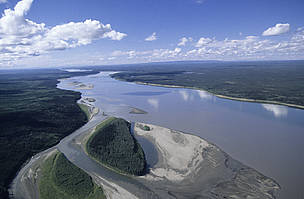
    For example, in British Columbia’s booming Peace Region, forestry, energy and mineral leases and licences are widespread and often multilayered in the same area. As various industries have exploited these “tenures”, a sprawling patchwork of large clearcuts, oil wells, dams and reservoirs, fracking operations and thousands of kilometres of seismic lines, roads and pipelines have come to dominate the landscape.

    Today, more than 65 per cent of the region has felt the impact of industrial development, leaving little intact habitat for sensitive, endangered species such as caribou to feed, breed or roam. Degradation or destruction of habitat has convinced scientists that remaining herds in the region are no longer self-sustaining and are spiralling toward local extinction. First Nations, who have relied upon caribou as their primary source of food for thousands of years, can no longer hunt them. This is a clear violation of treaty rights.

    This dire situation didn’t happen by accident or because of a laissez-faire approach to resource and land management. Numerous industries in the area have been operating legally and according to rules and regulations set by government.

    But legal experts, such as those at the nongovernmental organization West Coast Environmental Law, believe a root cause of the problem lies in laws about land, resource and water management that are “hardwired” to fail communities and the environment. The narrow focus of those laws enables industries to operate in isolation from one another.

    B.C., for example, has developed numerous individual laws, like the Forest and Range Practices Act, Oil and Gas Activities Act and Mines Act, alongside the regulated industries they enable. But the province lacks a legal framework to proactively and comprehensively manage the cumulative impacts of multiple resource industries operating within the same area.

    Because of this, WCEL and its First Nations partners are engaged in a multi-year law reform project that aims to overhaul the way we currently oversee and regulate cumulative impacts, ranging from declining water quality that may arise as a result of multiple industries using a common resource to emerging threats such as climate change.

    A cumulative-impacts approach to governing resource development would upend the current management paradigm. It would focus on the management needs of the land, water, air and wildlife and the communities that depend on them first, rather than the resources to be extracted. In practical terms, this would mean that, rather than focusing on what we should take from nature to create wealth and employment, we should first consider what must be retained in nature to sustain both wildlife and the well-being of local communities — such as clean air, safe drinking water and healthy local food.

    At a recent symposium on managing the cumulative impacts of resource development in B.C., numerous speakers — from First Nations to academics to business leaders — stressed that effectively managing cumulative impacts will require new institutions and governance mechanisms, even new legal tools. More importantly, it will require our leaders to adopt a more proactive and holistic way of thinking about the world — one that recognizes that far from just being a place to extract resources like fossil fuels, timber and minerals, nature is our home. Nature provides our most fundamental needs and dictates limits to growth and so its protection should be our highest priority.

    Managing our massive, growing human footprint on this planet more sustainably will require leadership, much of which is emerging from First Nations peoples who are on the frontlines of the day-to-day realities of cumulative environmental change. We need to look at the big picture rather than individual elements in isolation.

  • Uncovering Life on Mars with the Curiosity Rover

    Uncovering Life on Mars with the Curiosity Rover

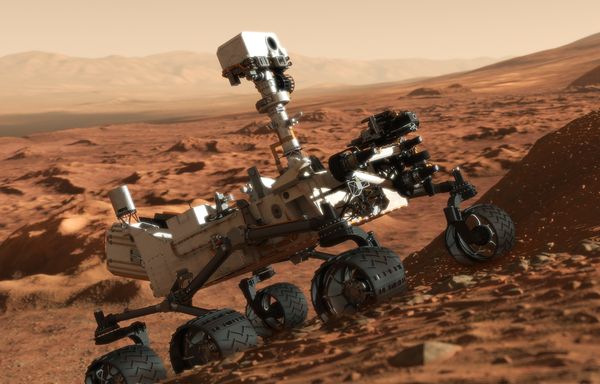
    The Curiosity Rover is a mobile laboratory built by NASA’s Mars Science Laboratory. Launched on November 26, 2011 from Cape Canaveral in Florida, Curiosity’s 23 month journey through outer space finally came to an end on August 6, 2012. On landing day, a live stream of NASA’s JPL (Jet Propulsion Laboratory) team gave the public a small glimpse into the landing process. Upon successfully reaching its destination, Gale Crater, Curiosity began its official mission to determine if that area of the Martian surface was ever able to sustain microbial life.

    Over the course of a two-year mission, Curiosity will deploy its 10 instruments to collect data on its surroundings. Curiosity will analyze samples of rocks, dust and minerals looking for any evidence of favourable conditions for life. In the first three weeks after arriving on Mars, NASA reported the rover had beamed back more data than all of the other rovers previously deployed to Mars.

    As of March 2013, Curiosity has uncovered considerable evidence that suggests ancient life existed on Mars. Samples from what is thought to be an ancient lake bed reveals the remnants of clay and minerals that could have only come into being with the presence of favourable conditions for microbes.

    Mount Sharp: The Key to a Martian History?
    Early on in its documentation of the Red Planet, Curiosity sent back various images of Gale Crater. One image, taken with a wide angle telephoto lens, revealed a “geological unconformity” in the layers of Mount Sharp, the 5km-high peak at the centre of Gale Crater. According to the New York Times, for planetary geologists, the layers of Mount Sharp are an archive of the planet’s history and could bring us closer to discovering if Mars sustained microbial life at one time.

    “Those layers are our ultimate objective,” says Mastcam (Master Camera) principal investigator Michael Malin. “The dark dune field is between us and those layers. In front of the dark sand you see redder sand, with a different composition suggested by its different color. The rocks in the foreground show diversity – some rounded, some angular, with different histories. This is a very rich geological site to look at and eventually to drive through.”

    Curiosity will take the better part of a year to make its journey towards Mount Sharp, making brief stops to take readings and test samples along the way.

  • How Babies Learn Languages

    How Babies Learn Languages

    When you were just a tiny baby, you probably cried a lot – just like every other baby. A few months later, you started to make sounds called babbling. By the time you were six or eight months old, your babbling might have started to sound a bit like words in the language you heard most often at home. At the age of one or two, you could probably use a few words. By about age five, you could speak well and understand what people said to you.

    Your language learning is still continuing now and will likely go on for many more years. How did this lifelong process of language learning start? Until recently, researchers believed that children began learning to speak and understand a few months after birth. Now, however, some researchers believe that children might begin to learn even earlier, maybe even before they are born.

    How do researchers know how much babies understand when they are still unable to speak? One way is to watch how they react when they hear the sounds of the language their parents use. An experiment with babies who were only a few hours old showed that the babies reacted differently to sounds from their parents’ language than to sounds from a foreign language. Languages all over the world have many similar sounds, but often they are pronounced slightly differently. That is especially true with vowels like a and e. When English speakers use these sounds, they normally add a y sound at the end and thus actually use two vowels instead of one. Other languages, however, are different. Making the vowel sounds from different languages allowed researchers to see that babies seemed to react to the sounds of their own languages.

    Another way that researchers could tell how much language babies had learned before birth was to listen to them crying. To most people except the parents, one baby’s crying can sound very much like another’s. However, researchers have noticed that babies seem to cry differently depending on the tones and melodies of the language they hear. If people tend to raise their voices at the ends of sentences or talk in a musical way, babies will also use that sound pattern when they cry. French babies, for example, tend to cry with a rising sound at the end like the language they hear around them. German babies use a falling tone at the end like their parents do when they speak. Although some researchers think the babies might just be imitating their mothers, others think that children might already be learning their language.

    As they grow up, children slowly learn to speak and later to read and write. Researchers know a lot about the different stages of learning, such as when children usually begin to use single words and when they start to use sentences. This new research, however, could change the way people think about babies and language learning. Who knows how that knowledge will help children and parents in the future?

  • The Most Dangerous Places On Earth

    The Most Dangerous Places On Earth

    Extreme heat and extreme cold can kill within hours if not minutes. In extreme cold, the human body without clothing does not maintain a high enough temperature to live. If you were to be naked at freezing point of zero degrees, it would take you only twenty minutes to die. Our bodies are simply not strong enough to work as hard as it would need to to keep us warm enough to survive.

    One thing we need even more than warmth is oxygen. Mount Everest’s summit, for example, has incredibly thin air. To survive the trip to the top, a climber would have to move slowly over a period of several months for their body to adjust to the change in oxygen. If somehow we were able to teleport to the top of Mount Everest, we would only be able to survive for about 2-3 minutes because there simply isn’t enough oxygen!

    Death would come even quicker if you were at the bottom of the Mariana Trench. You would be submerged under 7 miles of water – that’s about 11 kilometers! At pressures of 15,000 pounds per square inch, your lungs would collapse immediately and you would fall unconscious in under 20 seconds; you would be dead in under 90 seconds.

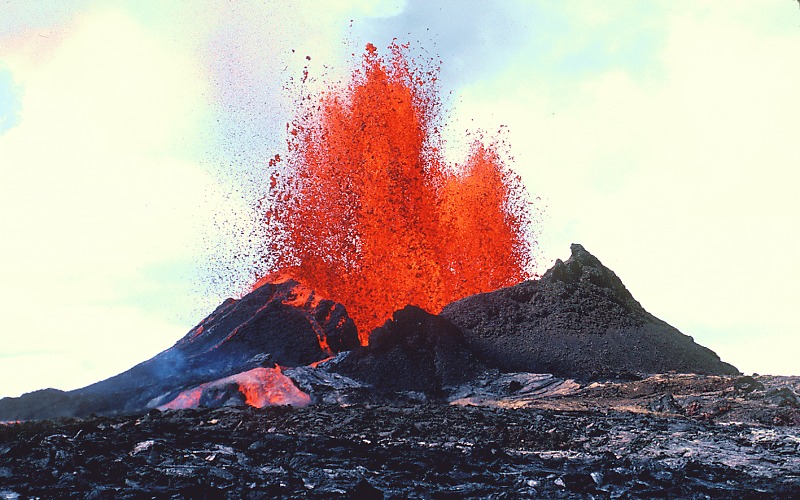
    Swan diving into a molten lake of lava would be something else. I bet you think your body would burn up in seconds and become ash or burn to nothing at all. Well, actually, It would be a lot like fireworks! Technically lava is liquid rock, burning four times hotter than your oven at home could ever get. Our bodies are comprised of mostly of water, which, when exposed to that kind of heat, turns to steam – explosively!

    If we were to measure danger by fatalities caused rather than how rapidly we would die in the world’s most extreme temperatures, we would have to consider something as microscopic as the flu. In 1918, influenza killed nearly one hundred million people. At the time, this would account for 3% of the world’s entire population. Between 1347 and 1353, a third of all people in Europe died because of the bubonic plague, also known as black death. Though it was at its most lethal all those years ago, it is still around. In fact, five to fifteen people get the plague in America every year. Even with those stats, influenza and the plague have nothing on plasmodium – it’s a micro-organism that can get into our blood because of mosquito bites and causes malaria. Researchers such as Nobel Laureate Baruch Blumberg have determined that, of all the humans who have ever existed, it is likely that half died from malaria. So, statistically speaking, any place where one could be bitten by a mosquito and contract malaria would be called the most dangerous place on Earth!

  • Controlling the Rage of Forest Fires

    They are difficult to control, unpredictable, and can destroy acres of land in minutes. It is estimated that forest fires decimate 10 million acres of land each year in North America alone. While it is difficult to give an exact count of how many wildfires there are in a given year, Newfoundland and Labrador suffer from more than 160. A safe guess would be in the hundreds of thousands.

    Forest fires are unplanned, unwanted fires caused by humans or nature. These types of fires are stopped with aggressive counter actions by trained fire fighters who are more successful when wildfires are reported early.

    Most fires are started by people. In fact, four out of five forest fires are due to the human factor. There are three elements that must be present in order for a forest fire to start. These are known as the fire triangle; conditions that present the perfect storm: oxygen, fuel and a heat source.

    Heat Source: This is where humans play their biggest role. A heat source can come from cigarettes, matches, campfires, or lanterns. It can also come from natural sources such as lightning, hot winds and the sun.

    Fuel: Anything flammable including brush, wood, leaves, grass and homes. The more fuel the greater the fire.

    Oxygen: the air.

    Taming the fires is a matter of simplifying the equation. Take away one of the elements in the fire triangle and you solve the problem. Fire fighters do this by using water to eliminate the flame or the heat source. They work to clear away fuel, thus starving the fire. Another method is called controlled burning – firefighters may start a fire to end one. A controlled burning takes fuel from the uncontrolled fire.

    Homes and whole cities can be destroyed by forest fires if they are not detected early, but nature intended this disaster to be for good. Wildfires are important to maintaining the balance of nature. Now that scientists know more about this, a greater number of controlled burns are being sanctioned.

    When fire eats away at the vegetation, they are feeding the soil important nutrients – basically the cycle of life at its simplest. Fire is a way to purge the bad. It kills off disease and aggressive insects that might damage fragile ecosystems.

    Forest fires are something of an anomaly. They create chaos and end life, but they also restore balance and allow new life to emerge.

  • Researching the Effects of Climate Change on the Polar Bears of Southern Hudson Bay

    Researching the Effects of Climate Change on the Polar Bears of Southern Hudson Bay

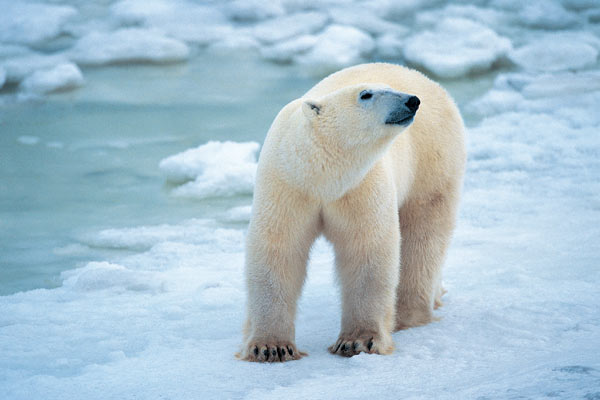
    As I sit comfortably in my warm office in Toronto writing this post, the polar bears of the Southern Hudson Bay subpopulation are out on the frigid sea ice in the middle of Hudson Bay and James Bay looking for seals. Food is relatively plentiful for polar bears this time of year, and with so many adaptations that allow them to live in this Arctic marine habitat, these winter conditions suit the bears just fine. Mother polar bears of this subpopulation are warm in their dens along the northern coast of Ontario, having just given birth to their cubs. After a few months of nursing the tiny dependent newborns, these family groups will leave their dens to head out on the ice where the mother polar bears will catch as many seals as they can to feed their young families before the ice breaks up in the summer. All of the Southern Hudson Bay polar bears are then forced to retreat to the northern Ontario coastline or islands of James Bay to fast and await the return of the ice next winter. Because the life history of the polar bear is so intrinsically tied to the sea ice, the recent weakening of the Hudson Bay annual sea ice through the effects of climate change will have dire consequences for this population of polar bears that lives at the southern extent of the species range.

    This year represents the first of a three year project through a partnership between York University and the Ontario Ministry of Natural Resources to study the effects of a changing climate on the feeding habits of the Southern Hudson Bay polar bears. We completed our first field season this past fall, handling polar bears along the shore of Akimiski Island and the western shore of James Bay. We had a very successful field season, deploying ten GPS collars on adult female polar bears and collecting important biological samples and morphometric information from a total of 36 bears. My PhD supervisors Dr. Gregory Thiemann and Dr. Martyn Obbard are experienced polar bear biologists, but this was my first time getting hands on experience studying polar bears. It was an amazing experience getting to appreciate the sheer size and power of these animals up close. The bears we handled ranged from young subadults spending their first fall apart from their mothers, to large, stoic adult males tipping the scales at over 1,200 pounds! We certainly encountered a wide range of bears, including pregnant females in excellent body condition who were preparing to enter dens later in the season, as well as mothers with dependent cubs who were quite thin from the added stress of feeding their young.

    The range in individual polar bear size and condition is really quite striking, and ties in closely with our research which will compare the feeding habits of different classes of polar bears based on age, gender, and body condition. By determining the food habits of individual polar bears and linking this information with movement patterns of bears equipped with GPS collars, we will increase our knowledge on the specific types of sea ice habitat polar bears exploit. By combining this information with future predictions of sea ice extent and prey availability in Hudson Bay, we will contribute to ensuring that informed and proper conservation measures are taken in the future. Through the support of the Canadian Wildlife Federation Endangered Species Fund, this important research will help in predicting the future of polar bears in this region, as the challenges currently faced by the bears by an extended ice-free season are forecasted to intensify in the coming decades.

  • Science Isn’t Just For Scientists

    Science Isn’t Just For Scientists

    A 14-year-old boy in Donetsk, Ukraine, recently made a fascinating discovery halfway around the world and 894 metres under the sea. Kirill Dudko was watching Neptune Canada’s live-stream footage of the ocean floor near Vancouver Island on his computer when he saw a creature with a “nose and moustache” eat a hagfish. It seemed unusual, so he contacted Neptune scientists, who checked the footage and identified an elephant seal.

    It was unusual. Predators normally spit out the eel-like hagfish or avoid them altogether because they excrete foul slime when threatened. Scientists had never before seen an elephant seal eat one, and may not have noticed this evidence had it not been for Kirill. They believe the seal quickly slurped up the hagfish before it could release its slime.

    Like many “citizen scientists”, Kirill played an important role in advancing our understanding of the world. It takes a lot of study and training to become a scientist, but with some knowledge of scientific method, anyone can practise science.

    Citizen science is not a new concept. The Audubon Society started its Christmas bird count in 1900. As the Society explains, from December 14 to January 5, tens of thousands of volunteers throughout the Americas grab their binoculars, bird guides and checklists and head outside. “Each of the citizen scientists who annually braves snow, wind, or rain to take part in the Christmas Bird Count makes an enormous contribution to conservation. Audubon and other organizations use data collected in this longest-running wildlife census to assess the health of bird populations — and to help guide conservation action.”

    Thanks to the Internet, citizen science is a more powerful tool than ever before. Some projects are passive, such as Seti@home, where people set their home computers to search for signs of extraterrestrial life when they aren’t using them. Others take a bit more effort. The Louisiana Bucket Brigade provides tool kits and training for people who live near oil refineries and chemical plants to take air samples for lab analysis.

    Some, like the American Gut project, are highly interactive, requiring participants to provide detailed information about their diet and send in stool, oral or skin samples. In return for that and varying levels of monetary donations, researchers give participants information about their bodies and the microbial life inside them. The research is designed to “help shape a new way of understanding how diet and lifestyle may contribute to human health through each person’s suite of trillions of tiny microbes.”

    Some initiatives require only simple observation. In a recent column, we mentioned RinkWatch, which asks people to send information about outdoor skating rinks to researchers at Ontario’s Wilfrid Laurier University to help track the impacts of climate change. The David Suzuki Foundation has also invited assistance from citizen scientists, most recently asking Canadians to participate in a survey about toxic ingredients in common personal care products like soaps, shampoos and cosmetics.

    On its website, Scientific American describes a range of citizen science projects designed to do everything from tracking animals in Africa’s Serengeti to analyzing historical patterns in human DNA to studying the ways people play with their dogs.

    Beyond providing valuable research, citizen science is a fun way for people to engage with nature and learn about the world and their place in it. Participating in the bird count, for example, is a good way for individuals and families to enjoy time outside in winter. Citizens can also enjoy the results of the research. Do you want to know what an indigo-banded kingfisher or a forest elephant sounds like? Cornell University’s Macaulay Library is “the world’s largest and oldest scientific archive of biodiversity audio and video.” Thanks to contributors worldwide, site visitors can hear sounds made by three quarters of the Earth’s birds, as well as a large number of insects, mammals, fish and amphibians. And anyone can add to the collection.

    Some citizen scientists get involved for fun. Others have a general interest in science or a particular research area. Kirill Dudko plans to become a marine biologist. Regardless of their reasons or level of involvement, all citizen scientists help us gain a better understanding of the world and our place in it.