Category: Trades

  • Career Profile: Snubber

    Everyone needs help at times. Drilling for oil and gas is a complicated task, and people in this field can use all kinds of help. For getting pipes into or out of the ground, a snubber is the person they need.

    You might think that a snubber is someone who says rude things to other people, but actually this job is all about making it possible to get oil or gas out of the ground. Basically, snubbers put pipes, tubing, or other equipment into oil or gas wells or take it out.  This allows other people to do their work of pumping the fuel out of the ground. Often, snubbers come when an oil or gas well is under pressure and they need to decrease the danger of an explosion.

    Because snubbers work when there are already problems, their job can be dangerous. They use a large machine that looks like a pole with a platform on top to drill down into the well. Often, snubbers need to remove pebbles or anything else that has fallen into the well. They might have to work for a long time at one place or move from one oil well to another in a very short time. The work can be hard, but with the right equipment, it does not have to take a lot of strength.

    Snubbers can work at different levels, and their pay rises with the amount of responsibility they have. Starting wages are about $29 per hour for beginners, but pay for supervisors starts at $56 per hour. Salaries can rise with experience, but many people leave the job as they get older. If you want to become a snubber, you will need a high school diploma and a driver’s license, but the rest of your training comes from your employer.

    Even with no official training programs to become a snubber, you can prepare for the work in many different ways. Taking courses in mathematics can help you to calculate the amount of pipe or other materials that you will need to help everything to run smoothly. Also, getting practice in working with your hands could be helpful. Being able to repair broken machines is important, since you will need to make sure that you can take care of the machines you use.

    Most snubbing jobs are in areas like Alberta, where the oil and gas usually come from. The number of jobs also depends on how well the economy is doing and what kinds of fuel people are using to heat their homes and run their cars. Snubber jobs are likely to be fairly easy to find when the economy is doing fairly well but harder when demand for fuel decreases. For some people, moving to a different province might not be an option, but it could be possible to fly in to the area for a few months and then to return home, like many people in the oil and gas business.

    If you like to solve problems and you don’t mind danger, the job of snubber might be right for you.

    Bibliography:

    Careers in Oil and Gas. “Snubbing Operator: About This Career.”  https://www.careersinoilandgas.com/careers/snubbing-operator

    Government of Alberta. ALIS. “Snubbing Services Operators and Supervisors.”. https://alis.alberta.ca/occinfo/occupations-in-alberta/occupation-profiles/snubbing-services-operators-and-supervisors/.

    Guera, Tony. “The Average Salary of a Snubbing Driller.” http://work.chron.com/average-salary-snubbing-driller-30235.html.

    Huffingtonpost.com. “Oil Patch Jobs: How Much Do They Pay?” https://www.huffingtonpost.ca/2014/11/02/alberta-oil-jobs_n_6090190.html#gallery/563501/25.

    Rigzone. “History of Snubbing Units.” https://www.rigzone.com/training/insight.asp?insight_id=348&c_id=.

    Schlumberger.com. “Oilfield Glossary: Snubbing.” http://www.glossary.oilfield.slb.com/Terms/s/snubbing.aspx

    Wkiipedia.org. “Snubbing.” https://en.m.wikipedia.org/wiki/Snubbing.
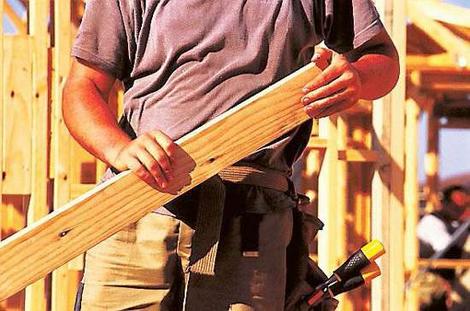
  • Trade Profile: General Carpenter

    Trade Profile: General Carpenter

    If you like working with your hands, designing and building things large and small, and working with tools and machinery, a career as a carpenter is a great idea.

    Carpenters work mainly with wood to construct, install, repair, and maintain things like houses, apartments, and other buildings, as well as smaller projects such as cabinets, stairs, or artistic wood projects.  They can also work with materials such as wood composites, drywall, lightweight steel products, and other materials used in building.

    General carpenters are trained in a wide variety of building construction and detailed woodworking skills.  In carpentry, you also have options to specialize.  You can be a rough work carpenter who does framework and construction work.  You can also be a detail woodworker who builds and installs cabinets and other wood furniture, stairs, trim, and railings.  You can also specialize in either new construction, or repair and renovation.

    As a carpenter, you need skills like drawing and reading blueprints, knowing how to measure and calculate sizes and specifications, how to calculate cost estimates for clients, and how to cut and join wood and wood materials.

    For rough construction, you will need to know how to frame walls, floors, and stairs, and how to install support beams for floors and roofs.  For detail woodworking, you will build smaller wood projects, install doors, ceiling trim and floorboards, install hardwood flooring or wall panels, moulding, and all associated hardware.

    Carpenters can work independently in a sole proprietorship or small business, which usually means working a variety of short-term contract jobs.  You can also work with a company, such as a construction company that employs a number of carpenters and woodworkers, as well as other trades people, and is hired to do specific construction projects from beginning to end.

    Generally, carpenters will require at least their high school diploma or equivalent, and also either a three-to-four year college program, or several years of an apprenticeship program or work experience.  Currently, there is mandatory certification only in Quebec; other Canadian provinces have a voluntary certification process for carpenters.  The Red Seal interprovincial trade certification is also available for carpenters who meet the required qualifications.

    In terms of wages, carpenters start around minimum wage to $17/hour.  With experience, and depending on the market in your area, skilled carpenters can make up to $30-60/hour.  These days the skilled trades are always in demand, with new construction and renovation projects starting every day, so the future job prospects are very promising.

    With hard work and diligence, you will have a great career as a carpenter!

  • Disability and the Trades

    If you have a disability, you can often get used to the limits placed around you. It might seem that getting into a trade is too difficult for anyone with a disability, but even with limitations, people can be successful in a variety of trades.

    Unfortunately, people with disabilities are known to have a harder time finding work than people without disabilities- which is more a problem with corporations and organizations, than anyone else with a disability In 2011, about 79% of people without disabilities had jobs, but only 49% of people with disabilities worked for pay. This could include people with physical disabilities like deafness or intellectual disabilities. Still, people who struggle with many kinds of disabilities can still get into different types of trades and become very successful.

    How easily people with disabilities can get into trades depends on what they want to do. People who are physically unable to stand or walk for long periods of time, for example, would have a lot of trouble with trades like construction that involve a lot of activity. Becoming a truck driver could be an option if you have the stamina to sit for many hours. If you can find a special stool to sit on, you might even be able to become a hairstylist. Hairstylists can earn close to $30,000+ a year if they find enough customers who will come regularly for their services.

    If you are missing a limb, the possibilities might seem very limited, but with special tools, you can use machines and even pick up small items. The pincers that city workers use to pick up garbage, for example, could help someone with a physical disability to work in a factory or maybe as a house painter or other jobs that traditionally require physical fitness.

    If you have an intellectual disability, a bit of help can make many trades possible. Becoming a cook is a good choice for people with these kinds of challenges as long as you are able to plan ahead and to handle pressure. Learning recipes ahead of time can help make things easier for you have trouble with reading or following directions. Chefs or head cooks can earn over $47,000 per year with experience, and there are many opportunities for people to work in different areas of a kitchen.

    If you have a mental health issue, you might have a very hard time working with other people. Working as an electrician might be a good choice since it gives people a chance to work alone or with one or two others and to work at their own pace. Electricians can earn over $56,000, although their salaries usually depend on how many customers they have and how hard they work.

    Before starting on a trade, people with disabilities should think hard about whether or not the job is right for them. If you decide to pursue this work, the first step is to decide how much you want a trade despite the difficulties. For the right people, working in the trades can be a good choice.

    Bibliography:

    Monster.ca. “Best Jobs for People with Disabilities.” https://www.monster.ca/career-advice/article/best-jobs-disabilities

    Statistics Canada. “Overview of the Study.” http://www.statcan.gc.ca/pub/75-006-x/2014001/article/14115-eng.htm

    Trade Schools.net. “34 Great Jobs for People with Disabilities.” https://www.trade-schools.net/careers-for-people/who-are-disabled.asp.

  • Getting into a Trade: How Easy is it?

    Getting into a Trade: How Easy is it?

    Some people love to work with their hands. Does that describe you? If so, you probably should consider getting into a trade. Not all trades are the same, but you can already prepare to get into any trade you want if you have the ability.

    The trades can include many different jobs. Hairstylists, plumbers, and electricians are all tradespeople, and also workers in construction, tile and metal work, and more. Bicycle repair people, cooks, and others all work in trades. People in these trades all tend to work with their hands, and many of them learn their trades on the job, often through apprenticeships. Often, they produce something for people, like furniture, or perform a service, like cleaning out drains or putting sprinkler systems into buildings in case of a fire.

    Generally, trades fall into two categories: compulsory trades that require certification and registration, or voluntary trades that have no special requirements other than being able to do the work. Before you decide to get into a trade, you need to know what kind of trade you are starting. If you have trouble with tests, you might not want to choose a trade that involves certification unless you are willing to study very hard.

    If you wanted to become a teacher or a doctor, you would have to go to university to learn what you need to know. Training to work in the trades can include classroom time, but usually it involves a lot of practical work. Often, people work in apprenticeships where they learn each task on the job from people who have been working in the area. Sometimes, students can begin to learn through summer jobs, especially when they have a mentor like a parent or family friend who can show them what to do.

    Suppose that you wanted to become a hairstylist. By the time you begin to work with clients, you will already need to know many of the basics of cutting and caring for hair. You could study magazines and websites to learn about styles and how to create different looks. Still, working with actual hair could be very different because some people have straight hair, some have curly, and some have waves. If you can start by practicing on yourself or your friends, you can prepare for your career even before you start to work officially. Learning to be a baker or a cook is also something that you can start to prepare for while you’re still young.

    Some trades are easier to practice than others. Testing your skills as an electrician, for example, could result in fires that could destroy buildings. In that case, you would want to spend a lot of time watching the experts and reading about the techniques of putting wiring into a wall. Before you try to practice your trade, be sure that you know the risks and benefits.

    Talking with people is also a good idea. Even if you don’t know anyone working in your field, you can check with your school counsellor to find out who might be able to help you. With hard work and perseverance, you can get into any trade that suits you.

    Bibliography:

    Mathews, Justin. “A Beginner’s Guide: What Is A Skilled Trade, And Is It Right For Me?”https://talentegg.ca/incubator/2015/03/09/skilled-trades-101-guide-canadas-demand-industry/.

    Matuson, Chinsky. “Break into the Trades.” https://www.monster.com/career-advice/article/break-into-the-trades-skilled.

    McGinn, Dave. “Looking for a Job? Why You Should Consider a Trade.” https://www.theglobeandmail.com/life/looking-for-a-job-why-you-should-consider-a-trade/article9117896/.

  • Three Ways to Travel with the Trades

    Three Ways to Travel with the Trades

    When people consider trades jobs, they think of tiny minutiae, such as the intricacies of wiring and plumbing that keep buildings and homes running effectively. These are important and rewarding careers, but sometimes can feel small in scope. Some tradespeople work in a single area where they live. However, there are many growing opportunities to work in the trades in such a way that you get to see the world. It makes an already rewarding career path even more gratifying.

    One way to travel while working is to do it literally. Cruise ships venture around the world to many exciting locales. While they are filled with tourists and people on vacation, they also have many employees and workers ensuring a great experience for those travelers. Carpenters and electricians are regularly hired to be stationed aboard these ships, either in senior or assistant roles, for regular maintenance. Carpenters ensure furniture and accommodations in theatres, lounges, and more are in proper shape, and electricians guarantee all electrical systems are functioning so that the cruise’s activities go on unhindered. You can help many happy travelers while being one yourself.

    Another option is to take your skills to where they are needed. As technologically advances, people around the world are turning to more environmentally-friendly power sources. Wind technology is becoming an increasingly popular choice. The wind turbines that make this possible are often in remote locations, and the technicians and repairers for these devices are required to travel frequently in order to reach and service the hundreds of thousands of turbines around the world. Due to the vast size and intricacies of certain wind farms, it may be necessary to have portions of the land managed by different organizations. This can require tradespeople to travel between different sites to work on various turbines. You can venture to many locales while making the world a better place.

    Finally, you can also take your skills with you on the road. Many musicians and music bands depend on national and international tours in order to make a living. As they travel from city to city, or country to country, they depend on a talented crew to ensure their show is pulled off seamlessly at all venues. Sound technicians are critical to guarantee pristine acoustics for the crowd. Musical acts also depend on proper lighting for the stage, and perhaps special effects as well. Lighting technicians work hard to make sure this component of the performance is properly in place. You will get to journey with the musical act to see many cities and create great memories for countless audience members.

    There are numerous ways to equip yourself with trades skills that will allow you to travel. As technology evolves in a world of increasing globalization, there will be more and more opportunities to do so. If this is of interest to you, seek out job opportunities along the lines of cruise ships and musical tours, as well as growing industries that sprawl many locales, such as wind energy. Not only can you do work that you are passionate about, but you can do it with the added bonus of seeing the many wonderful sights the world has to offer.

    Sources:

    Gomez, Monica. “Skilled Trades That Allow You to Travel.” ISpeak CTE. https://mnlearningthatworks.org/2014/11/19/skilled-trades-that-allow-you-to-travel/

    O’Carroll. Etain. “The best careers for travelling the world.” Lonely Planet. https://www.lonelyplanet.com/travel-tips-and-articles/the-best-careers-for-travelling-the-world/40625c8c-8a11-5710-a052-1479d2766b79

  • Career Profile: Glazier

    Career Profile: Glazier

    Nearly every building and vehicle you pass each day has glass windows or doors. The unique properties of glass mean that most uses require a specialized professional to perform installation and maintenance. This is done by skilled tradespeople known as glaziers.

    Glaziers are skilled tradespeople who are responsible for cutting, fitting, installing, and replacing glass inside and outside all kinds of buildings, including commercial and residential, as well as other types of structures. Glaziers will assemble and install prefabricated glass and glass substitutes for windows, mirrors, doors, skylights, cabinets, and aquariums.  They will also be trained to build wood or metal frames for windows and other glass installations.

    Other aspects of construction-related glasswork also fall under the duties of a glazier.  This includes tinting glass, working with stained glass for churches or museums, and specialty glass such as glass railings, smoke baffles, or shower enclosures.  The automotive industry also employs glaziers to work with the glass in windshields, sunroofs, and doors.

    However, most glaziers are employed by construction companies to install glass, or manufacturing companies where they perform fabrication of unitized panels.  Working on construction projects involves working both indoors and outdoors, depending on the project.  Depending on the job, glaziers will need to know how to use equipment including lifting equipment, scaffolding, cranes and hoists.  Many tasks a glazier performs are considered heavy labour, and so glaziers must be physically fit and capable of bending, lifting, kneeling, standing, and maneuvering suspended loads.

    Tradespeople who work as glaziers will often work closely with other construction professionals and members of the skilled trades, such as architects, bricklayers, carpenters, roofers, ironworkers and automotive vehicle repair people

    Most glaziers will work regular hours with a construction or fabrication job, such as 9am to 5pm.  However, depending on the job or the needs of a specific project, occasional overtime or working in evenings and weekends may be required.

    Entering the trade is usually accomplished through completing an apprenticeship program after graduating from high school, which requires a combination of approximately 8,000 hours of on-the-job and in-school training, followed by a certification exam.  The International Union of Painters and Allied Trades is one group that offers glazier internship programs.

    This kind of trade apprenticeship requires you to train under an experienced mentor while you learn the work involved.  The benefit of this is that apprenticeships are paid positions in Canada, so you are able to earn a wage while you learn the trade.  There is also a Red Seal accreditation program and exam available for glaziers, which is optional, but will often be considered a significant benefit as it means you have all the current standards and can work in any province in Canada.

    Salaries for glaziers in Canada range from around $28,000 for apprenticeship and entry-level workers, up to around $69,000 for those with experience.

    Sources:

    http://www.red-seal.ca/trades/gl.1z.3.2r-eng.html

    http://www.careersinconstruction.ca/en/career/glazier

    http://www.routestotrades.ca/glazier

  • Career Profile: Forest and Conservation Technician

    Career Profile: Forest and Conservation Technician

    A large portion of Canada, across all the provinces and territories, is covered with boreal forest.  This forest is both the habitat for the wide and varied wildlife of our country, but also a valuable resource for wood and wood products which Canada uses for its own population, as well as for trade with other countries.  Canada’s forests are also popular for camping, hiking, fishing and other outdoor recreational activities, and are also an essential part of the culture and lifestyle of Canada’s Indigenous people.

    But contrary to what you might think, because people want to use the forest as a resource, this means the forest must be carefully managed to ensure that wildlife still has enough habitat to live in, activity spaces are maintained and safe, and that the wood resources we have are not depleted.

    This is the role and responsibility of forestry and conservation technicians, who work to manage forest environments by performing surveys of trees and wildlife, using photographic and mapping techniques to prepare management and harvest plans, and coordinating many forest activities including fire suppression, timber scaling, disease and insect control, thinning, and reforestation planting.  Forestry technicians will also assist to plan, develop and build forest access roads for logging and conservation use, so that these workers can reach the areas they need.

    Forestry technicians will collect data on the different types of trees, wildlife, water sources, and other plants that live in a section of forest, and use this information to make decisions about when and where a section of forest should be trimmed, culled, or harvested.  They will also ensure that all forest activities are conducted safely, and in accordance to any local, municipal, provincial, and national requirements for logging, environmental protection, and conservation.

    Most forestry technicians will live and work in areas that have a significant amount of surrounding woodlands, and therefore a strong forestry industry.  This can include working for logging companies, for timber or wood pulp mills and processing companies, both as an employee or as a contractor.  You could also work on the conservation side through the government and the Ministry of Natural Resources, which has offices and conservation operations across Canada.

    This career is ideal for people who enjoy being outdoors and working with their hands, as much of the work takes place on site in a woodlot, logging camp, or reforestation project. It can also be a great job for those who like working with others, as outreach is often an important part of a forester’s job.  This can be through forest fire prevention and safety presentations, or working at one of Canada’s national or provincial parks to maintain the grounds and help campers to enjoy their experience.

    Educational requirements are a minimum of high school if accompanied with an apprenticeship or other work experience, but usually a one to three-year college or university program in forestry or a related subject will be required to work in this industry. This field is also regulated in most provinces and territories, so you will likely be required to complete a certification or registration process in your province.  You may also need some additional licensing, such as a scaler’s license, depending on your job.

    Wages start around $17 per hour for entry level positions, up to around $45 per hour, depending on your level of experience, and which province or territory you’re working in. Working hours are usually fairly regular, as most outdoor forestry work can only be done during daylight hours, but your schedule can include long days or travel to worksites.

    Sources:

    https://www.jobbank.gc.ca/report-eng.do?area=0011&lang=eng&noc=2223&action=final&ln=n&s=1&source=8#report_tabs_container2

    https://bigfuture.collegeboard.org/careers/environment-foresters-forestry-technicians

    https://www.recruiter.com/salaries/forest-and-conservation-technicians-salary/

  • A Closer Look at a Career as a Baker

    A Closer Look at a Career as a Baker

    A lot of people can’t take their coffee in the morning without a pastry or two on hand—be it a cookie, a croissant, or a muffin. And just as there are as many coffee shops in the country, there will be as many bakers as well. There is no doubt that bakers will remain one of the most in-demand careers in Canada.

    Furthermore, the popularity of shows like the Great Canadian Baking Show is testament to the fact that a career as a baker can ultimately be a promising and exciting one. If you are looking into going this direction, you have to know though that it does take a lot more to succeed in the baking industry than knowing how to spread butter icing on pastries…

    Bakers – What You Need to Know

    The main job of bakers is to prepare the baked goods that the establishment offers to customers. For those who work in regular coffee shops or bakery, they are responsible for the typical fare like doughnuts, muffins, cookies, croissants, and others. For those who work in specialty coffee shops or restaurants, they are responsible for preparing items that are more specialized like artisan baked goods or specialty desserts.

    Salary

    According to PayScale.com, a baker can earn an average of $22,519 to $44,702 a year.

    Skills

    To become a baker, training in the culinary arts will be an advantage as some establishments do have this as a pre-requisite for hiring. This will allow them to learn not just about baking essentials and techniques but also about nutrition and food safety. They can further their knowledge by joining an apprenticeship program or any on-the-job training.

    Apart from formal training and the baking know-how, bakers are recommended to be in excellent physical form since they should be able to work well in the kitchen, operate the oven efficiently, and withstand fairly warm temperatures. Sometimes, they are also responsible for loading and unloading baking supplies. Apart from good physical condition, mental alertness is a must. They should have quick thinking skills and attention to detail as they have to always be on their feet to check the progress of their baked goods.

    Bakers can either work under the management of an establishment or work under their own bakery business. Some are referred to as production bakers, and these are those who work in manufacturing facilities that make breads, pastries, and other baked products for distribution in larger establishments like supermarkets or superstores. Whichever the case may be, bakers should have collaborative skills and be able to work harmoniously with others, as well as customer service strengths in order to deal well with customers.

    Pros and Cons

    A career in baking will be rewarding one for those who have a passion for baking or cooking. As bakers, they can also maximize their creative potential as they may be asked to create their own signature pastries.

    However, it’s not all icing on the cake though as being a baker means working mostly in early morning shifts or late evening shifts under quality-monitored environment and strict deadlines. It can also be a physically strenuous job as they are required to stand most of their working hours and have to work with equipment with safety risks such as ovens, mixing machines, and dough cutters. To ensure safety in the workplace, they must always be alert and follow the required safety procedures.

    SOURCES:

    https://www.payscale.com/research/CA/Job=Baker/Hourly_Rate

    https://www.wowjobs.ca/BrowseResults.aspx?q=Baker&s=r&l=&job=KCZnZP4fwr1gfOMNbhDTs-fXg8c0OGw8OXCVkiL8r7d9sdueB22ujA

    https://www.cobsbread.com/careers/

  • A Closer Look at a Career as a Carpenter

    A Closer Look at a Career as a Carpenter

    With Canada’s continuous efforts to be a major player in world economy, it’s not a surprise why building and infrastructure stays on its must-do list. As a result, a job that is generally perceived as an old-fashioned or outdated one is, in fact, one of the most in demand more than ever especially in the British Columbia province, according to the Global News website. It is also starting to grow in Manitoba, Northwest Territories, Nunavut, Ontario, P.E.I. and the Yukon.

    A carpenter is profession that can’t easily be replaced by technology or machine as one would always need to come in and do the work manually, whether they are working on commercial or private properties.

    Carpenters – What You Need to Know

    For the most part, carpenters are responsible for the wood or steel components to be utilized in any structure, be it as a foundation or framing itself or doors, windows, and furniture. They often work with tools or machinery to carry out their duties. Due of the nature of their job, carpenters are expected to be in the best of health to be able to carry heavy items and be flexible and adaptive enough to work at any kind of environment, whether it is within a house, shop, building, or the site itself. Work hazards are a given in this profession, and thus carpenters should be well-aware of safety measures like wearing protective clothing at all times and others.

    While to be successful in the carpentry field requires a great deal of physical skills and knowledge in machines and tools, carpenters are also required to have excellent attention to detail as they have to deliver products that are not only functional but also aesthetically and consistently pleasing. Carpenters should also be able to read and interpret blueprints easily and have good mathematical knowledge to deduce measurements. With these in mind, you can tell that carpentry is both a physically and mentally demanding.

    Salary

    According to PayScale.com, a carpenter can earn an average of $33,352 to $75,991 a year, with more experienced workers having the potential to earn more.

    Skills

    Physical prowess and mental strengths are a must for this job. A high school diploma or equivalent is required as well, and taking elective courses such as shop, industrial arts, and mechanical drawing can prove to be an advantage. It is recommended to undergo a pre-apprenticeship program and afterward an apprenticeship program with a certified carpenter or what is referred to as a journeyperson. The time it takes to complete these programs, which consist both of classroom and on-site training, vary depending on the location, but it generally takes four 12-month periods.

    Carpenters who target to work in Quebec must obtain certification, where it is required. In other provinces and territories, certification is voluntary. However, it is always an asset to obtain certification even in locations where it is not required. The certification process involves a four-year apprenticeship program, plus four years on-the-job experience. If you wish to take it further, you can also look into applying for the Red Seal where you can work as a carpenter anywhere in Canada.

    Pros and Cons

    The biggest advantage of being a carpenter is that it helps you be in tip-top shape as physical strengths are a large part of the job. With any job that’s focused on this, you tend to take care of yourself more, knowing that your livelihood depends on it.

    The biggest disadvantage are the hazards that are part of the job. Some environments can be downright noisy that you may develop hearing sensitivity while some environments are polluted that you may develop sensitivity in your respiratory system. It is therefore important to practice safety measures at all times to minimize these hazards.

    SOURCES:

    https://globalnews.ca/news/3854605/jobs-making-a-comeback-canada/

    https://www.payscale.com/research/CA/Job=Carpenter/Hourly_Rate

    http://www.careersinconstruction.ca/en/career/carpenter

  • A Closer Look at a Career as a Landscape Architect

    A Closer Look at a Career as a Landscape Architect

    Have you ever gone to the park in your community and wondered how the park came to be? We might not realize it, but we often find ourselves immersed in the output of the hard work of a landscape architect—whether it’s the green space at your favourite mall, the al fresco cafeteria at your mom’s or dad’s office building, or the open study space at your sibling’s university.

    There is a misconception, however, that landscape architects are the same as landscape designers, but architects are involved in the planning stages before a project even gets off the ground, while landscape designers are brought in during the design stages. This means landscape architects deal with a wide variety of elements and collaborate with various teams to bring an outdoor space into life. Let us take an in-depth look at a career as a landscape architect and how you can get your foot in the door in this promising industry.

    So What Is a Landscape Architect?

    A landscape architect bears the responsibilities similar to a building or house architect except that they solely work with outdoor spaces, which are either residential, commercial, or government. For example, when a property owner buys office space and decides to convert it to a strip mall, they will hire a landscape architect to conceptualize an outdoor space aligned with that strip mall’s brand and ensure the project is completed according to timelines, budget, city regulations, and environmental considerations (soil, irrigation, drainage, etc). At the same time, they have to collaborate with city planners, engineers, property owners, and government departments.

    Salary

    According to PayScale.com, a landscape architect can earn as much as $41,396 up to $80,497 a year. Those with experience of seven years and up can earn as much as $100,000 to $140,000 a year. In some cases, they are also entitled to profit sharing and other bonuses.

    Skills

    It takes more than knowledge of design aesthetics to be a successful landscape architect. You will need great heaps of collaborative skills since you will be working alongside different teams to achieve the same goal – an incredible outdoor space that the public or the community can enjoy.

    Being a team player is a skill that we learn to acquire or develop at an early age, so welcome with open arms if your teacher asks you to work with groups on school projects. As you grow older, you can enhance your collaborative spirit, which is a must if you want to succeed in the landscape architecture field.

    Apart from this, one also has to be knowledgeable in the scientific elements involved in creating outdoor spaces. A good dose of project management expertise will also be beneficial in the field as landscape architects are also responsible for monitoring the progress of an outdoor space project.

    Education-wise, a degree in landscape architecture is a must, and there are two prestigious institutions that offer this in Canada – a BA at the Uni versity of Guelph and a BAP at the Universite de Montreal. For advancement in the industry, future landscape architects can also complete a master’s program.

    Pros and Cons

    The most obvious advantage of being a landscape architect is that they have the wonderful opportunity to be mainly responsible for bringing green or environment-friendly outdoor space ideas into fruition, putting their creative spin and innovative thinking, while keeping true to their green initiatives.

    A disadvantage is that it is not an isolated profession which means they have to deal with different types of people.  They have to be open to the possibility that they will encounter people whom they would not see eye to eye with in terms of initiating the project, and in turn, they have to work doubly hard and make an effort to put differences aside while remaining focused on the same goal.

    The Future

    There is a shortage of landscape architects in Canada, but this is something that can easily be mitigated.

    SOURCES:

    https://www.theglobeandmail.com/report-on-business/careers/career-advice/life-at-work/i-want-to-be-a-landscape-architect-what-will-my-salary-be/article23197945/

    https://www.payscale.com/research/CA/Job=Landscape_Architect/Salary

    http://www.eco.ca/career-profiles/landscape-architect/