Category: Trades

  • Working on a Farm

    Working on a Farm

    By Gavin Mercier

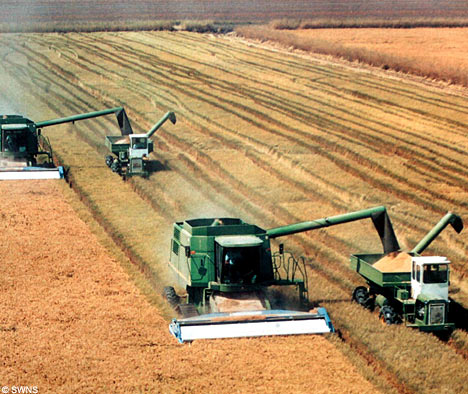
    Farm work is hard work- there’s no other way to say it. However, it is also some of the most valuable and rewarding work you can do. Farmers hold one of the most important jobs of our community, but they are also the most underappreciated. Working on a farm not only gives you a sense of what it’s like to be a farmer, but it also teaches you some real- life skills that will be valuable for your future.

    Hard Work, Fun Work, and Responsibility

    Yes, working on a farm is hard. But farming is the best example of the phrase “hard work pays off.” With farming, the harder you work the better the end result will be – in this case the end result is crop or cattle. Not only that, all the outdoor work is really great for great for your body. Working on a farm, you get to watch your work develop into something wonderful, whether it’s a crop of corn or a baby calf.

    While farming is hard work, it can also be a lot of fun. There is so much to do on farms you just can’t get bored. From feeding cows on a cattle farm to tending horses on a ranch, there are just so many fun things you can do on a farm – as long as you’re a little bit adventurous.

    Being on a farm isn’t all fun and games though. There is a lot of responsibility involved. Farmers are responsible for taking care of their animals and crops, and that can sometimes be a lot to handle. However, if you like being around animals and taking care of them, then this isn’t much of a chore at all.

    Appreciating Farmers

    Being a farmer is an underrated job – not many people choose to become a farmer anymore. There are also a lot of false facts about farming nowadays that put people off. Working on a farm, you get to see firsthand just how much they really do for us and what it’s really like. You will get a better appreciation for your food and how much work people really put into it. Seeing how your food is produced and being a part of that process gives a better understanding of the world we live in and how it all works for us.

    Appreciating Our Earth

    Not only will working on a farm help you appreciate all that farmers do for us, but it will also teach how to appreciate our planet more. Almost everything about farming is controlled by the weather and the landscape – crops are planted in the best soil around and watered by the rain. If there is no good soil, the crops can’t be planted, and if there is no rain then they cannot be watered. If we can’t take care of the earth, then it becomes harder for it to take care of us. Working on a farm is a great way to learn about the earth and how you can help take care of it.

    Working on a farm is great for so many reasons. I actually used to work on a cattle farm, and I still think it was one of the best experiences of my life. I had so much fun working there and learned so much, from the value of hard work to how I can help our earth. Working on a farm was one of the best things I ever did, and I hope it will be the best thing you ever do, as well.


  • Fighting for the Future a Plant at a Time: An Arborist Career Profile

    Fighting for the Future a Plant at a Time: An Arborist Career Profile

    Our world continues to grow increasingly industrialized and urbanized. It is more important now than at any point in our history to take care of the trees and plants still rooted in our planet’s fragile ecosystem. Does that important role intrigue you? Then consider a career as an arborist. Your work would focus on maintaining, trimming, and planting trees to ensure their health and longevity. It is a way to remain connected to nature in an increasingly technological world.

    Arborists work within a specific area to trim, prune, hedge, remove, and plant trees. This is done via hand tools or heavy machinery. The area could be as small as a backyard or garden, or as large as a public park or golf course. Arborists strive to keep plants and trees healthy and active. The work can also entail landscaping, evaluation of trees for diseases, managing nutrients and water, and more. Be prepared to spend much of your time in the field, working on your client’s property and ready to respond to emergency calls. You will also need to complete paperwork in offices and sample processing in labs. Arborists get to spend plenty of time outdoors and work in a variety of locations. It is physically demanding work with constant pressure applied to maintain the health of the greenery in your client’s area.

    The average hourly rate for arborists in Canada is $22.72. This can range from about $18 hourly to approximately $30. The annual wage depends on years of experience, with an average of $37,000 for those with fewer than five years of work. After a decade or more, arborists can expect to make $74,000 annually. Canada’s vast land, filled with large regions of greenery, allows for many job opportunities. Those looking for better prospects and higher salaries will find preferable wages further west in Canada, particularly in Calgary, Alberta and Vancouver, British Columbia. Pay is comparably lower in Toronto, Ontario.

    Those looking to pursue a career in this field should have educational or volunteer experience in fields such as physical education, chemistry, and biology. Apart from a high school diploma, you will need to obtain a minimum of a technical diploma in programs such as botany, forestry, ecology, environmental studies, and horticulture. You can also become a member of certified bodies, such as the International Society of Arboriculture. As you gain experience, you can progress into other related careers ranging from agriculture specialist, botanist, crop and livestock producer, soil scientist, wetland biologist, ecologist, and beyond.

    It is arduous and demanding work to protect nature. Many of our day-to-day activities do plenty of harm via pollution and waste. People such as arborists, who dedicate their professional lives to protecting our natural world, are playing a vital role in our present and future. No matter how urbanized or technologically advanced, humanity is still dependent on the Earth’s delicate ecosystem. When you choose a career as an arborist, you are playing an important part in ensuring that gardens are healthy, parks stay beautiful, and life remains sustainable.

    Sources:

    ECO Canada. “Arborist.” https://www.eco.ca/career-profiles/arborist/

    PayScale. “Average Arborist Hourly Pay.” https://www.payscale.com/research/CA/Job=Arborist/Hourly_Rate

  • Career Profile: Agricultural Fruit Growers

    Career Profile: Agricultural Fruit Growers

    If you have cereal in the mornings, you might put a few berries or a banana on top. Maybe you eat an apple with lunch or some fruit as a bedtime snack. Have you ever thought of where that fruit comes from?  Some might come from your yard, but a lot of it probably comes from farms. The people who help bring this food to you and your family are agricultural fruit growers.

    Growing large amounts of fruit can be complicated. Agricultural fruit growers analyze the soil to make sure that it is healthy enough for the plants and decide where to put each kind of plant. Apple trees, for example, need much more space than raspberries. Some types of fruit grow in black soil and others in different kinds of soil. In Canada, two of the major fruit-growing areas are British Columbia and southern Ontario, but other parts of Canada also grow fruit in smaller amounts. The warm areas with long summer seasons can grow fruit like peaches, cherries, and plums.

    Fruit grows for only part of the year, but the work can be very busy even during the winter. For example, fruit growers might need to thin out raspberry bushes or prune apple trees to make them healthier the next spring. They might have to add fertilizer to the soil or dig in new areas to find better areas to plant the next year. Owners of fruit-growing businesses have a lot of responsibility to make sure that they do whatever they can to help ensure a good crop for the next summer.

    Depending on what kinds of fruit they grow, people might be busy early or late in the season. For example, strawberries tend to be an early summer fruit, but peaches and nectarines come much later, close to fall. Many commercial fruit growers are likely to have several different kinds of fruit so that they can have something to sell throughout the season. Studying botany in university or completing an apprenticeship can help, although anyone can work in this area.

    Growing fruit can be very risky because bad weather can ruin an entire crop or badly damage delicate fruit. Owners of the businesses might do very well one year and not sell anything the next year because of frost or hail damage. The employees who work on the farm to pick the fruit are likely to earn minimum wage, but their work also depends on weather conditions. If a crop is ruined, they might be out of work for the rest of the season.

    Another factor that agricultural fruit growers have to consider is who buys their fruit. Some farmers who live close to cities or towns might have U-Pick fields where people come to get fresh fruit. Others might take their fruit to farmers’ markets, but that also means that they have to be close to the cities. Supermarkets and other large stores are also important places to sell fruit, but the prices that the growers get are not always very high. Sometimes, it might be very hard to make a profit in this business.

    Still, for people who love the outdoors and enjoy working with plants, being an agricultural fruit grower can be a very good option.

    Bibliography:

    Durham Workforce Authority. “Agriculture Fruit Grower.” https://durhamworkforceauthority.ca/wp-content/uploads/2014/03/Agriculture-Fruit-Grower1.pdf.

    Indeed.com. “Farm Worker Salaries in Canada.” https://ca.indeed.com/salaries/Farm-Worker-Salaries

    Ontario Fruit and Vegetable Growers’ Association. “About the OFVGA.” http://www.ofvga.org/aboutofvga

  • Motorboat Mechanic

    Motorboat Mechanic

    When cars break down, mechanics can often fix them by repairing the engine, dealing with rust, or putting on new bumpers. Being a car mechanic is something that people can do in almost any city or town, and there will always be work. Being a motorboat mechanic is a much more specialized job, but it could be the right career for you.

    Motors are complicated pieces of equipment, and many things can go wrong with them. Motorboat mechanics work with two types of motors: inboard motors, which are on larger boats like yachts, and outboard motors, which are attached to smaller boats and can more easily be taken off and fixed in a shop. Both kinds of motor have various moving parts that can break or become worn out.

    Mechanics who work with motorboats need to know as much as possible about the machines that they fix. A high school diploma is usually necessary for work in this area, and trade school courses in motors can be helpful. Working as an apprentice is also a good idea if people are able to do that, even informally, at summer jobs. Like with many trades, learning on the job is a good way of getting into this type of work.

    Depending on what they specialize in, motorboat mechanics might work mainly indoors or outside. For inboard motors on yachts and other larger boats, mechanics have to go to where the ship is docked, usually on an ocean or a large lake. This might mean that the mechanic has to live near one of the coasts or an area like the Great Lakes. Since outboard motors can be removed from their boats, mechanics who specialize in these types of machines can have their own workshops where they repair the motors before putting them back onto the boats.

    Like most trades, motorboat mechanic wages can vary, depending on experience and location. In general, pay starts at about $21 per hour and can reach $39 after a few years. In small shops, mechanics might earn less than in larger places, but the work can be more varied and interesting in small companies.

    People who work as motorboat mechanics need a certain amount of strength to be able to work with heavy machines, and they need to be good with their hands. An ability to work with other people is important, and a knowledge of basic bookkeeping is useful, especially for mechanics who work on their own. Even in a larger company, mechanics might have to meet with clients to discuss what they need.

    Working hours for motorboat mechanics can vary. In much of Canada, lakes and rivers are frozen in winter and using boats is impossible. Mechanics are unlikely to get much work at that time of the year, but they can be very busy in spring and summer. Having another source of income is likely to be necessary for many motorboat mechanics, but the skills they learn in their work can also apply to many other jobs.

    Do you like to work with your hands and to fix machines? Why not consider becoming a motorboat mechanic?

    Bibliography:

    CareerPlanner.com. “Motorboat Mechanics.” https://job-descriptions.careerplanner.com/Motorboat-Mechanics.cfm.

    Payscale Canada. “Marine Mechanic: Hourly Rate.” https://www.payscale.com/research/CA/Job=Marine_Mechanic/Hourly_Rate.

    State University.com. “Motorboat Mechanic.” http://careers.stateuniversity.com/pages/776/Motorboat-Mechanic.html.

  • Career Profile: Insulation Workers – Floor, Ceiling, and Wall

    Career Profile: Insulation Workers – Floor, Ceiling, and Wall

    In Canada and other cold countries, insulation is important for keeping people warm and preventing pipes in buildings from freezing. In summer, insulation in floors, ceilings, and walls helps to keep homes cool in hot weather and reduces noise. Working with insulation is very useful, and this trade can be a good choice for people who like to work with their hands.

    Much of the work of people in the insulation trade happens during the construction of a building. Workers blow or roll insulation into walls or attics to help keep buildings climate-controlled and to reduce moisture. Some insulation is also necessary for reducing noise, such as between apartments in a building where many different people live. In schools that teach music or theatre, insulation might also be necessary to keep one musician from drowning out another.

    Installing insulation often involves cutting larger pieces down to the right size using saws, knives, and other tools. With other types of insulation, the work may involve weighing out the right amount to insert into the area. Some types of insulation require special tools to spread the material throughout the space that needs to be filled. Making accurate measurements is very important so that the building will stay at the right temperature.

    Some insulation workers learn on the job, but many enrol in apprenticeships through career colleges. Insulation worker apprenticeships are three or four eight-week periods with both classroom work and practical experience. Normally, this training takes about a year to complete. Beginning salaries start at about $17 per hour or $36,000 per year and can rise to $32 per hour or $69,000 per year. Insulation work is a Red Seal trade, meaning that the training in one province is valid in others, as well.

    Like with many other trades, being able to read instructions and make calculations is important. High school courses in English and mathematics are useful, as well as anything that gives people experience in working with their hands. Being able to work alone or with people is important, as well as being able to work quickly and efficiently when necessary.

    In Canada, most new construction of buildings happens in spring, summer, and fall. Some insulation work may be possible during the winter, but people in this field might want to find other work for that season.  People will also need help with putting new insulation in their buildings since it tends to become compacted over time and needs replacement. This can also help with energy efficiency, which is important to many.

    The materials used for insulation can be harmful to people’s health if they breathe in too much of it. Wearing a mask at work is important for people in this trade. Besides breathing in harmful substances, insulation workers can get small injuries like cuts, scrapes, and other wounds. Working on the upper floors of a building can also be dangerous. Taking safety precautions is very important in this job.

    A job as an insulation worker can be a good choice for people who like to work with their hands and to help make homes and offices more comfortable and energy efficient. If this describes you, why not consider this trade?


    Bibliography

    Career Planner. Job Duties and Tasks for: ‘Insulation Worker, Floor, Ceiling, and Wall.” https://job-descriptions.careerplanner.com/Insulation-Workers-Floor-Ceiling-and-Wall.cfm.

    Northern Alberta Institute of Technology. “Insulator (Heat and Frost).” https://www.nait.ca/programs/insulator?term=1-winter.

    Owl Guru. “Floor, Ceiling and Wall Insulation Workers: Salary, Job Description, How to Become One, and Quiz.” https://www.owlguru.com/career/insulation-workers-floor-ceiling-and-wall/.

    Payscale Canada. “Average Insulation Hourly Rate (Canada).” https://www.payscale.com/research/CA/Job=Insulation_Installer/Hourly_Rate.

    Red Seal. “Insulator (Heat and Frost).” https://www.red-seal.ca/eng/trades/.3ns.5l.1t.4r.shtml

    Salary Expert. “Insulation Worker: Floor, Ceiling, and Wall.” https://www.salaryexpert.com/salary/job/insulation-worker-floor-ceiling-and-wall/canada/quebec

  • Paving and Surface Equipment Operator (French version available)

    Paving and Surface Equipment Operator (French version available)

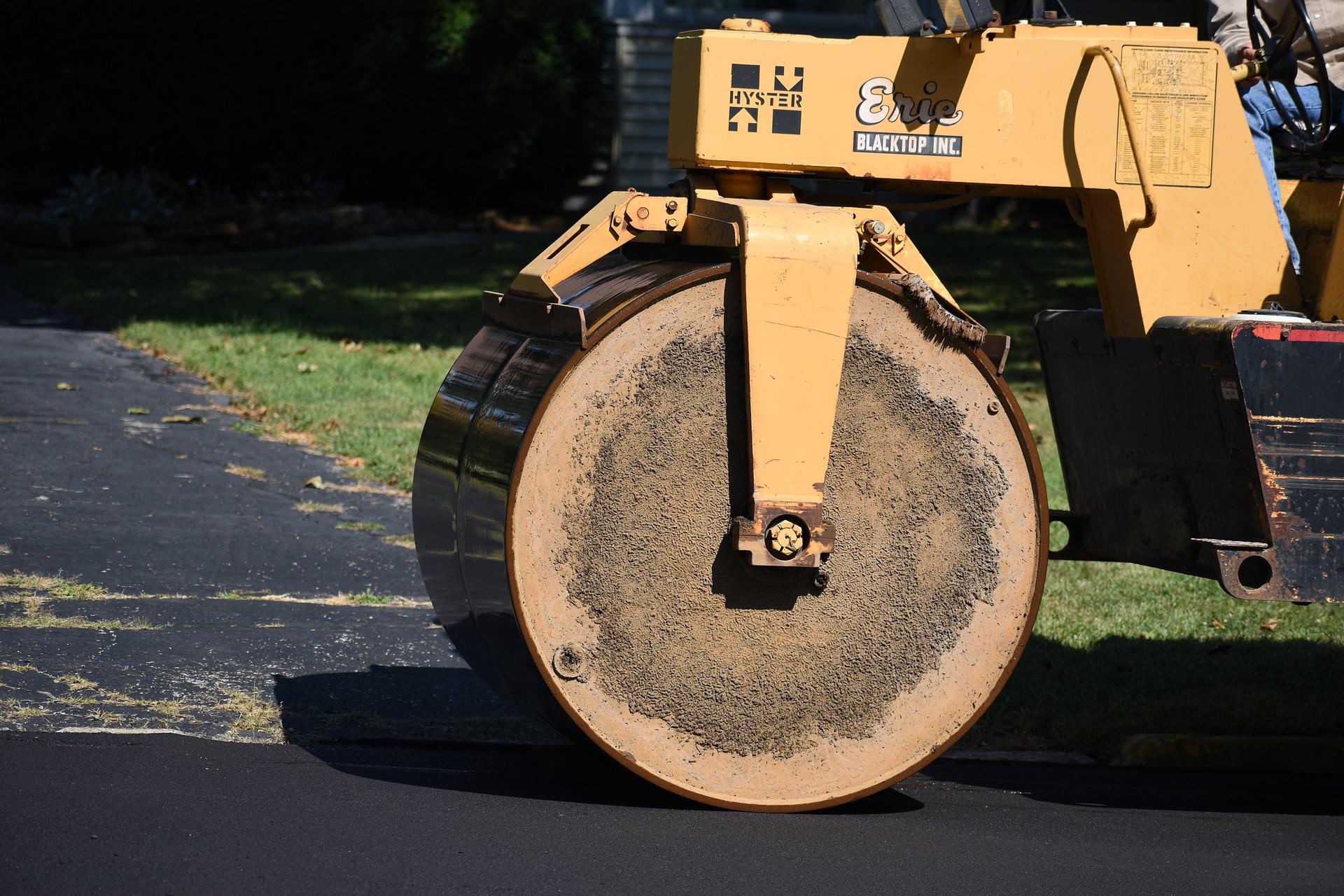
    Melting snow and warmer weather in spring bring road repairs in many parts of Canada. Many people are involved in this work, but some of the most important ones are paving and surface equipment operators.  For anyone interested in operating heavy machinery, this career could be a good choice. The condition of many roads in spring and other times of the year means that the skills of a paving and surface equipment operator will always be in demand.

    Operating heavy equipment like the machines that resurface roads takes strength and skill. People in this trade need to monitor the thickness of asphalt in the mixer and ensure that the road surface is evenly covered. The machine itself can have complicated controls, which the worker needs to learn to use. The work can be dusty and hot, and the equipment is often very loud, which can sometimes make the work unpleasant.

    Like most work in construction, paving, and surface equipment operator work is seasonal and heavily dependent on the weather. Although construction often continues even in bad conditions, a severe storm can cause major delays. People in this trade should be prepared to deal with heat, cold, dampness, and many other kinds of situations that are less than ideal.

    Generally, workers need to finish an entire section of road or sidewalk so that it will dry and harden as one piece. This could mean working late into the evening or even at night. Although paving and surface equipment operators often work regular days, they should also be flexible enough to work overtime when necessary.

    Having a license to drive large equipment is necessary for this job. Some employers might also require a commercial driver’s license, especially if it becomes necessary to move equipment from one place to another. High school is normally a requirement, especially if it includes courses in dealing with large machines.

    Some employers might require employees to complete a one- or two-year apprenticeship, and possibly some college or industry courses. Trade certification is necessary for working in Quebec and is available but voluntary in the Northwest Territories, Newfoundland and Labrador, and Nunavut. Some employers might also have their own systems of certification or apprenticeships for their employees, and on-the-job training is common.

    Knowing about the equipment and safety procedures is essential in this job. Starting and shutting down the equipment can be complicated. Making a mistake can potentially injure workers or damage the equipment, and it can cause delays in the work. Reading all instructions carefully and remembering them can help to keep workers safe. Good observational skills are also essential to be able to notice any potential problems, such as children playing nearby or rough sections of the road.

    Wages for paving and surface equipment operators begin at $22 per hour or about $45,000 per year and can rise to $32 per hour or $69,000 per year.  Operating equipment is not as strenuous as other construction jobs, and people can often stay in this work for many years. However, it can be tiring and hard on the eyes, and moving to a more supervisory role later in life is a good idea.

    Working as a paving and surface equipment operator is a good choice for people who like being involved in construction and helping to make transportation run smoothly. If you have the necessary qualities, it could be a good job for you.


    Bibliography:

    Indeed. “Asphalt Paving Operator.” https://ca.indeed.com/Asphalt-Paving-Operator-jobs?vjk=bebd40acf94648ad.

    Payscale Canada. “Asphalt Paving Machine Operator: Hourly Rate.” https://www.payscale.com/research/CA/Job=Asphalt_Paving_Machine_Operator/Hourly_Rate.

    Statistics Canada. “National Occupational Classification (NOC) 2011.” https://www23.statcan.gc.ca/imdb/p3VD.pl?Function=getVD&TVD=122372&CVD=122376&CPV=7521&CST=01012011&CLV=4&MLV=4.

    Your Free Career Test. “What does a Paving Equipment Operator do?” https://www.yourfreecareertest.com/paving-equipment-operator/.

  • Career Profile: Machinist

    Career Profile: Machinist

    Machines are part of all of our lives, but some people make a career of working with them. Tradespeople who set up or operate machines like lathes, milling machines, and grinders are called machinists. If you can work with very precise measurements and handle different machines safely, the job of a machinist is a good choice for you.

    Like many other people in the trades, machinists often work closely with the construction industry. This means that much of the work happens in spring, summer, and fall when the weather is warm enough for people to be outside for long periods. Still, the machinists themselves normally don’t have to work outside and deal with the weather. Most machinists work in factories, where they produce the metal parts that other people use for their work. Machinists can also work with car parts and might even help with assembling vehicles.

    Being a machinist requires a certain amount of physical strength and endurance. Lifting heavy objects is often part of the job, and standing in one place to work on a machine is also often necessary, although some machinists might be able to move around. Many machinists who work in large factories have to do shift work, meaning that they might have to work early in the morning or late at night, or even through the night.

    Starting wages for machinists are close to $18 per hour and can rise to almost $34 per hour. Many machinists leave the trade after fifteen or twenty years to become millwrights, tool and die makers, or maintenance planners, but others stay until retirement. Becoming a machinist usually requires an apprenticeship where people spend about 720 hours in classroom training and 7,280 hours in training on the job. Normally, this takes about four years, and it can sometimes start in high school. If you are interested, you can check out schools like the Southern Alberta Institute of Technology, the British Columbia Institute of Technology, or any other trade school in Canada for specific requirements.

    Working as a machinist requires mathematical skills and the ability to read blueprints. You can already start to prepare for a career as a machinist by taking math courses, and also working on your ability to read complicated diagrams and other documents. Writing skills can also be important, since you might need to write reports for supervisors or clients. If you work on your own or for a small business, you might have to deal with customers, and developing your ability to work with people is also important. Learning to estimate costs, write out bills, and keep records can also be useful in this kind of work.

    Machinists can decide to specialize in certain types of machines, or they might decide to work in repairs instead of operating the machines themselves. Repairing machines can be a good career choice, although the work is likely to be less regular and predictable than for other machinists. In either case, the job of a machinist can be a good choice for people who like to work with their hands.

    Bibliography:

    Career Profiles. “Machinist.” http://www.careerprofiles.info/machinist-career.html.

    Payscale Canada. “Average Machinist Hourly Pay.” https://www.payscale.com/research/US/Job=Machinist/Hourly_Rate.

    Work BC. “Machinists and Machining and Tooling Inspectors.” https://www.workbc.ca/Jobs-Careers/Explore-Careers/Browse-Career-Profile/7231

  • Career Profile: Information Technology Network Technician

    Career Profile: Information Technology Network Technician

    If you ever work with computers, you know how helpful but sometimes frustrating they can be. You might have worked for hours on a project and then found that only the first few pages of your work were saved. Maybe you have a project ready to send to a classmate or teacher, but your connection to the Internet is not working. That kind of problem can be a major issue for businesses. Information technology network technicians help to keep computers and their connections running smoothly so that people can continue with their tasks.

    Generally, information technology network technicians work in places such as large offices, universities, or school districts where people use computers regularly for a variety of tasks, such as information searching, communicating with colleagues, or other tasks. As the job title suggests, much of the work deals with networks such as LANs (Local Area Networks) or web servers. They install software to monitor security or to allow computers access to printers, monitors, or keyboards.

    Sometimes people in this field work with computer hardware, including hard drives and web server equipment, to make sure that it is working properly. At other times, they work with software. Anything related to making sure that computers are functioning properly can be part of the work of an information technology network technician. Often, this job involves responding to crises and finding problems in computer coding or connections. Troubleshooting is an important skill for people in this field.

    Sometimes, information technology network technicians work with several other people in a computer department of an office, but they often work alone or sometimes with one colleague. Being able to work alone is an important aspect of the job. However, these technicians also need to be able to explain the concepts to people in the office who might know little about computers or networks. Being able to take a complicated concept and explain it to others is helpful in this job.

    The education necessary for this job depends on the situation. However, most employers require a college education in computer science, network administration, web technology, or a similar field. An education in a related area is also a possibility in some cases. Normally, these programs take at least two or three years to complete. Software vendors also have training programs that can help people gain the knowledge they need.

    Preparing for a career in this field is important. In high school, taking computer courses is a good idea. Classes in English are useful for reading instructions and learning more about the work, and mathematics courses are good for learning to make calculations.

    Working as an information technology network technician can involve long hours and occasional emergencies when a network breaks down. The work is normally indoors, but technicians might sometimes need to work on outside cables and do the necessary repairs. Paying attention to details is important to be able to detect the problems when they occur.

    Generally, salaries begin at about $37,000 per year and can rise to $69,000 per year. The detailed work can become difficult later in life as people’s vision fades and their hands become less steady, but it can be a good career for many years. It could be the right career for you.


    Bibliography:

    Canadian Council of Technicians and Technologists. “Information Technology.” https://www.cctt.ca/disciplines/information-technology.

    Job Bank. “Computer Network Technician in Canada.” https://www.jobbank.gc.ca/marketreport/occupation/24514/ca.

    Payscale Canada. “Average Network Technician, IT Salary in Canada.” https://www.payscale.com/research/CA/Job=Network_Technician%2C_IT/Hourly_Rate.

  • Job Shadowing for a Day with a Skilled Trade

    Job Shadowing for a Day with a Skilled Trade

    So, you are getting close to the end of your schooling, and you have decided to go into one of the skilled trades for your career. You may even already have an idea of what trade industry you want to work in – that’s great!
    Whether you have already decided on a career path or are still looking at options, a great way to learn more about what it’s like working in a specific trade is to do a job shadow with someone in that field.

    Job shadowing is when you accompany a professional during their workday to see what sort of tasks and activities their job involves. When you are learning about a prospective career, internet research, books, and other resources are very useful, but there are always some aspects of a job that need to be seen and experienced in person to give you a real sense of what it would be like to work in a specific trade.

    Spending time with a working professional makes it easier to get accurate, first-hand information about the job responsibilities and the industry itself. You also have the opportunity to ask questions one-on-one with someone who is an expert in the field. As well, even though you will be shadowing with one person, you will have the opportunity to meet other people working other positions and in other departments. This is a great chance to network and make connections in the company and trade industry, which can be valuable contacts later on when you are looking for an internship or other career opportunity. Seeing how the employees of a company interact will also give you an idea of the company culture and dynamics.

    Not sure how to find and arrange a job shadow opportunity? Your first option is to check with your school guidance counsellor or careers teacher, as they likely have a good idea of people or companies suitable for hosting a student job shadow. You can also ask someone you know personally, such as a family member or family acquaintance, if they or someone they work with would be interested in taking a job shadow with them for a day. You may also feel more comfortable spending the time with someone you are familiar with, and therefore be more relaxed and willing to ask questions or participate in work activities.

    Lastly, you can approach someone at the company directly, such as through their human resources department, to inquire if they have done job shadowing opportunities before. Many companies in the trades also have co-op and youth apprenticeship programs, and so are likely to have someone willing to take you as a job shadow- don’t be afraid to ask!

    Most importantly, when you are out on your job shadow, remember to be enthusiastic and interested. Whomever you shadow with, they are willing to spend valuable time in order to share their job, their experience, and their interest with you, so be sure to return the favour. Have fun shadowing!

  • How Working in the Trades can Apply to Your Every-Day Life

    How Working in the Trades can Apply to Your Every-Day Life

    You may not have thought of it, but working in a trade can help you in your everyday life. The skills you develop in a trade can be practical, technical, and useful. When you think about working in the trades, keep in mind all that it could bring to your personal life, alongside a great career.

    Here are some trade career examples that have the potential to help you in your personal life:

    Carpenter: Being a carpenter is about putting together projects and mainly building things. If you have ever dreamed about building your own home, being a carpenter would cut labour costs for you, making it easier to afford in the long run. Carpenters have a general sense of how to fix practical things. For example, if you have a door that won’t close in your house, you would be able to examine the problem, take the door off and put it back on properly. Even if you don’t build your own house, but are still a carpenter, you would be able to fix things that are broken within your house. How cool would it be if you could build a tree fort for your kids?

    Chef: Being a professional chef has its perks. When you train to be a chef, you learn about safe food practices, nutrition, and the importance of cleanliness, before and after cooking. These things can be applied at home. You can impress your friends and family with your culinary skills by hosting social events and parties. If you have children, you will be aware of what nutritious food is best, and you could even teach them how to prepare it. You could also lend your skills and knowledge to places like shelters and food banks. We can’t live without food; so naturally, being a chef will always be a part of your personal life, alongside your career.

    Electrician:
    We use electricity almost every moment of every day. If it isn’t powering the lights on in our house, it is charging our phones or laptops. Electricians have exciting jobs, for every day is different. You could be doing commercial wiring in a big building to setting up power cables in a residential home (depending on what company you work for and what your specialty is). If you are an electrician, you could fix faulty wires in your house or your friend’s house, possibly fix your electronics, install solar-power within your house, and maybe fix the radio wires in your car. The opportunities to bring your electrical know-how into your everyday life are endless.

    Auto Mechanic:
    The perk of being an auto mechanic is simple: You can fix your own vehicle. People spend thousands of dollars a year on their cars and trucks. If you become an auto mechanic, you will be able to fix your own vehicle problems without anyone trying to hustle you for more money. Most auto mechanics have a garage at home and work tools on hand, just in case they have any problems with their own vehicles. You could even help your family or a friend in determining what their car problem is before they go into the shop, reducing the chances of them being taken advantage of.