Category: Trades

  • Women in Skilled Trades (French version available)

    Women in Skilled Trades (French version available)

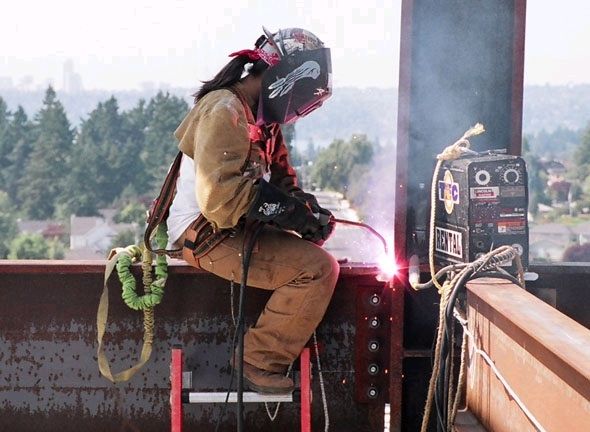
    You’re a girl that knows what she wants.

    Rolling up your sleeves for a demanding, rewarding, and well-paying career that combines both your hands-on and creative interests; that’s the future you want. And now is the perfect time to go get it!

    Currently, the Canadian government is working to address a skills mismatch, which has many workers undertrained or unprepared for the current economy’s workforce.

    There is a worsening shortage of tradespeople in Canada. For women interested in pursuing a career in the skilled trades, this means that now is the perfect time to start the path to career success in this high-demand industry.

    While some may be nervous to start a career in the skilled trades, which has been and is predominantly male, there are a number of support programs and aids available to assist women as they train for a career in the trades.

    The government of Ontario offers a Women in Skilled Trades and Information Technology Training program, which provides unemployed and underemployed women in communities with a high demand for skilled trades and IT professionals funding and training both in-class and on-the-job.

    Additionally, there are other organizations and support programs throughout the province, country, and world dedicated to women interested in the trades. For example, Women in Nuclear (WIN) offers mentorship, networking and professional development opportunities for women interested in nuclear energy.

    Similarly, the Canadian Association of Women in Construction provides support for women interested in pursuing a successful career in the construction industry.

    There are plenty of other programs designed for women interested in pursuing a career in the skilled trades, offering a community of mentorship, funding, networking, and support specifically for women.

    With a growing presence of women entering the skilled trades, there has also been a growing presence of women’s skilled trades equipment and clothing. Moxie Trades provides mentorship, support, and apparel for women working in the trades. Whether it’s pink work boots, hard hats or safety glasses, or speaking at events across North America, Moxie Trades is a voice for women in the trades.

    Once thought of as primarily a male industry, women are moving toward more inclusion in the skilled trades.

    If you’re looking for a rewarding, secure, financially stable career in your future – it’s time to invest in the next steps toward a career in the skilled trades.

  • Should You Relocate for a Trades Career? Consider the Pros and Cons (French version available)

    Should You Relocate for a Trades Career? Consider the Pros and Cons (French version available)

    One of the greatest benefits of being a skilled tradesperson is that there are opportunities everywhere, and your skills are directly transferable.  But should you relocate specifically to take on a trades job?  There’s no single answer that is right for everyone, but there are some core pros and cons you should consider if you’re thinking of moving for a job.

    Pros

    1. Availability of Jobs in Your Trade

    A common reason to relocate is the availability of jobs in your chosen trade.  Trades employment is often based on supply and demand, though demand is often high.  But depending on your trade, certain areas will have more opportunities than others.  For example, if you are in a trade related to oil & gas, there are typically more jobs and more companies hiring in the Alberta oil sands compared to Southern Ontario.  Make sure to consider both the availability of jobs and the suitability of the location before committing to a relocation.

    1. Higher Wages, or a Lower Cost of Living

    Whether you’re considering a relocation to a job that pays more, or to a city with a lower cost of living, the end goal is the same: a better financial situation.  In-demand trades in high-demand areas will often command a higher wage.  By the same token, moving to an area where the cost of living is lower can provide the same benefits, allowing your wages to stretch farther when it comes to renting or buying a home, shopping for essentials, and paying for utilities.  It’s a good idea to research your prospective city or town and compare the cost of living to the potential wages of your trade.  Work out a budget to see whether the move would make financial sense.

    1. Find the Lifestyle that Suits You

    Not everyone wants to stay in their hometown or live in a city, but luckily for people working in the trades, they have the flexibility to seek out work somewhere that offers the lifestyle they want.  For example, fast-growing cities and towns are likely to have opportunities for construction and service trades and offer exciting amenities in terms of entertainment and social life.  Rural towns offer a slower pace, close-knit communities, and affordability, and may have more opportunities for agricultural tradespeople, outdoor recreation, and tourism.  The important thing is to find a job in a location that offers you the lifestyle you want.

    1. Financial Incentives

    Relocating, especially across a significant distance or to another province, can be pricey.  However, many companies hiring tradespeople for high-demand jobs may offer financial incentives to people willing to relocate.  This could be a hiring bonus, or offering to cover the costs of moving.  While counting on a monetary bonus shouldn’t be the main consideration when seeking a new job, it can offer some security in the process to help you establish yourself in a new place.  Relocation costs can also be deducted from your taxes, so be sure to keep track of what you pay for transportation, storage, temporary living expenses, and other costs associated with your move.

    Cons

    1. Relocation is Expensive

    As already mentioned, relocating for a job can be quite expensive between moving costs and a different cost of living.  It is important to make sure that not only can your existing financial state afford the move, but that the new job will pay a high enough wage to ensure you can live comfortably and put money into savings.  Even if you get a hiring bonus or are reimbursed for moving costs, it may not be enough.  Do your research to price out moving costs and living costs, and examine different budgets to make sure that the move will be the right financial choice.

    1. Partners and Family May Struggle to Find Work or Community

    If you are considering relocating for work and have a partner, it’s important to consider the effect moving will have on them.  You may have a job, but will they be able to find work easily, as well?  Does the lifestyle and financial situation of the new location fit with their needs?  If you have children, will they have access to the schools, entertainment, and community that they need?  When you are the only person relocating, this might not be a concern, but if you will be bringing family with you, make sure you keep their wants and needs in mind.

    1. Need to Build a New Social Circle

    While it’s true of any move, the farther you go the more isolated you will be from your existing family and friends.  You will need to build an entirely new social circle in a new place, which isn’t always easy.  It can also be difficult to go long stretches of time being unable to visit family, especially if you are used to seeing parents, siblings, and friends all the time.  This can lead to feeling homesick, isolated, or depressed, and makes it hard to enjoy a new job or new home.

    1. You May Need to Re-Certify

    Depending on the trade you’re in, moving to a new province might mean you need to complete additional training or recertification to meet the regulations and standards of that province.  This is an additional expense that can impact your move, both financially and by requiring time spent training instead of working. To help avoid this issue, consider completing the Red Seal certification for your trade.  This not only ensures you have proof of all the right skills but makes it easy to work in your trade anywhere in Canada.

    Relocating might not be right for every tradesperson, but for many, it can provide opportunities not available where they currently live.  The important thing is to do your research into the requirements and availability of your trade, the lifestyle and costs associated with new locations, and whether you believe you can build a community and a life for yourself.


    Sources

    Fraser Dove. “The Pros And Cons Of Relocating For Work.” https://www.fraserdove.com/the-pros-and-cons-of-relocating-for-work/.

    Government of Canada. “Moving within Canada to work.” https://www.canada.ca/en/employment-social-development/programs/labour-mobility.html.

    Impact Recruitment. “Benefits of Relocation.” https://impactrecruitment.ca/relocation-options/.

    Red Seal. “Red Seal Program.” https://www.red-seal.ca/eng/about/pr.4gr.1m.shtml.
  • Pipefitters (French version available)

    Pipefitters (French version available)

    Pipes are everywhere in our cities and towns, carrying water, fuels, or other substances to and from buildings or across the country. When these pipes work well, they are barely noticeable. However, people need to put the pipes in place before they can be useful. If you are precise and like to work with your hands, the trade of pipefitting might suit you.

    Pipefitters, also known as steamfitters, work mainly as contractors in the construction industry, but some also work in manufacturing. Basically, people in this trade build and maintain systems of piping to carry water, steam, fuel, and other materials from one place to another. The water in the pipes can be used for people’s daily needs, but many of the other contents of pipes might be used for heating or cooling buildings or for other processes.

    Pipefitting is very precise work requiring steady hands, good manual dexterity, and reasonably good vision. An ability to crawl into small spaces is also important. The work can be either indoors or outdoors, depending on the job. Like in many trades, the work can be physically demanding, and being in good health is important. Many people in this trade might want to move into a supervisory role as they age, although others can stay in the work until retirement. Wages start at about $22 per hour or $44,000 per year and can rise to $50 per hour or $121,000 per year.

    If a pipe is made and installed well, it can last for many years. However, cracks or rust can develop and cause a pipe to leak, spilling its contents. The ability to repair pipes is a very important skill for people in this trade. Sometimes, this may involve applying sealants to the pipes or closing small gaps in the line, but often it means replacing parts of the pipe.

    Knowing how to repair piping can give people extra work in seasons when little other work is available. In a cold winter, for example, dealing with frozen or burst pipes could keep a good pipefitter busy.

    Requirements for this job can vary, depending on the employer, but a high school diploma and an apprenticeship are normally the minimum level. A high school education with courses in mathematics and English is a good basis for the job. Mathematics can help with calculating the amounts of pipe necessary for the work, and English courses help the tradesperson read instructions and study new techniques for the work.

    Most employers also require pipefitters to complete an apprenticeship of four terms, which includes both classroom learning and practical experience. These apprenticeships are often available through individual employers, but it is also good to check with local trade schools. This trade is also part of the Red Seal program. Pipefitters who have passed the Red Seal test can more easily move from one province or territory to another without having to retrain or gain new qualifications.

    Like in many other trades, job opportunities are likely to be easier to find in cities than in towns, but even small villages are likely to need pipefitters. Since much of the work depends on the construction industry, downturns in the economy can greatly affect this job. However, being willing to move for a job can help people find work in this trade. Having another skill to use in the slow times can also help people to find enough work, even when jobs are scarce.

    Every building has pipes, making the job of pipefitter a good choice for the future. If you like the idea of this work, you can already begin to prepare for this career.


    Bibliography:

    ALIS. “Steamfitter-Pipefitter.” https://alis.alberta.ca/occinfo/occupations-in-alberta/occupation-profiles/steamfitter-pipefitter/.

    Job Bank. “Steamfitter/pipefitter (Non-Construction) in Ontario.” https://www.jobbank.gc.ca/marketreport/outlook-occupation/21490/ON.

    Payscale Canada. “Pipefitter: Hourly Rate.” https://www.payscale.com/research/CA/Job=Pipefitter/Hourly_Rate.

    Skills Competences Canada. “Steamfitter Pipefitter.” https://www.skillscompetencescanada.com/en/skill_area/steamfitter-pipefitter/.

  • Role of Trades in Post-Disaster Reconstruction

    Role of Trades in Post-Disaster Reconstruction

    Disasters can come suddenly or build slowly over a long time. However, they all require reconstruction once they are over, and the trades can be an important part of the recovery.

    Suppose that a fire or flood happened in your area. People would have to clean up everything that had been destroyed and decide what can be repaired. Restoration companies work directly with this stage of reconstruction. People from these companies go into a building after a disaster has occurred and assess the level of damage to walls, furniture, and even clothes and other personal items.

    People in the restoration trade often come in after many other tradespeople have already done their work. Restoring basic services is usually the first job after a disaster, so that people have water to drink and electricity to light their homes and cook their food. Plumbers, electricians, and other tradespeople are very important at this stage.

    Many disasters can weaken buildings from the force of water, earthquakes, or other events. Tradespeople like builders check the structure of homes and office buildings affected by disasters to make sure that the structure is still strong enough to stay upright. If the building is too badly damaged for people to use, tradespeople might need to pull it down and rebuild it entirely. If possible, they can make repairs to strengthen the building.

    Once buildings are safe to use, tradespeople are necessary for many small jobs. Insulation installers help to prepare buildings for winter, and painters make rooms look nice while helping to protect walls from water or snow damage. Bricklayers, pipefitters, and all kinds of tradespeople are necessary for reconstructing buildings after a disaster. A certificate or diploma from a trade school is normally necessary for this type of work.

    Clean energy can be another area where tradespeople are needed. Often, powerlines and fuel sources are damaged in disasters, but this situation can give a chance for people to switch to clean energy. People who have skills in alternate forms of energy can help to move communities away from fossil fuels towards other options such as solar or geothermal energy.

    Cleaning up and rebuilding after a disaster can be difficult and dangerous work. People in the trades working with these types of jobs need to know and follow safety procedures and to be able to instruct other people in how to keep themselves from being hurt. A knowledge of First Aid is also useful in case of an accident.

    Danger after a disaster is not only from rusty nails or weak buildings. Sometimes, gas leaks or other hazards might put tradespeople and other reconstruction workers at risk. Knowing how to repair leaky pipes or how to contain dangerous fuels and gases can help make the job of reconstruction much safer. Knowing how to use safety equipment is also essential for people working with hazardous materials. Often, training for this kind of work is available as short courses at community colleges or trade schools.

    No one wants to be in a disaster, but it is important to be prepared. With the right training, tradespeople can be a major part of post-disaster reconstruction.


    Bibliography:

    Government of Canada. “Follow Your Passion. Find Your Skilled Trade.” https://www.canada.ca/en/employment-social-development/campaigns/skilled-trades.html.

    Morrish, Sussie C. “Post-Disaster Business Recovery: An Entrepreneurial Marketing Perspective.” https://www.sciencedirect.com/science/article/pii/S0148296319302243.

    People Ready Skilled Trades. “The Importance of Skilled Trades.” https://skilled.peopleready.com/the-importance-of-skilled-trades/.

    Skilled Trades College https://www.skilledtradescollege.ca/blog/skilled-trades-jobs-in-demand-canada.

  • Alternative Agriculture: Permaculture Farming in Canada

    Alternative Agriculture: Permaculture Farming in Canada

    Agriculture is a significant part of the foundation of Canada’s culture and economy, with large areas of the country devoted to agricultural practices, especially food production.  While for over a century many agricultural methods have remained the same, with modern environmental movements and education, the agricultural industry in Canada is seeing new ideas and new methods taking hold–as well as old ideas made new again.

    One of these is the concept of permaculture farming, which is an approach to farming at both the large scale and small scale that emphasizes designing agriculture to work with and alongside natural areas and patterns to enhance sustainability, rather than the industrialized monoculture method of commercial farming that is most common.  Permaculture agriculture examines the farm as an entire system jointly with the natural world around it and the resources available, taking into account geography, climate, ecology, culture, and the economy of the area.

    The three central concepts to permaculture farming include:

    • Caring for the earth, by ensuring the natural life systems can both maintain and multiply so that people can flourish in a healthy world.
    • Caring for the people, by ensuring that people have access to the resources they need to exist and thrive.
    • Fair sharing, by managing our needs in order to provide resources for the first two concepts, and to recycle waste and reinvest surplus resources back into the system.

    Permaculture is growing in popularity on small working farms in Canada, but it’s not just a new way of growing vegetables — it’s a new way of designing farms.  Where most commercial monoculture farms are designed for the convenience of chemical fertilization and mechanical planting and harvesting, permaculture farms are instead designed in a way that emphasizes diversity of crops and arrangements defined by where crops will perform best or where they are most conveniently maintained.  For example, high-maintenance crops such as annual vegetables are planted close to the irrigation and human resources needed to care for them, while low-maintenance crops such as orchards are located further away.

    Permanent crops are also popular for permaculture farms, such as fruit trees and nut trees, and other perennials such as berry bushes.  Often these perennials are used as a base permanent crop, with diverse annual crops such as vegetables rotated in on a yearly basis.  This can make for a much less effort-intensive way of farming, as the backbone of the farm is a permanent thing, with only part of the crops being planted and harvested on a seasonal cycle.

    Having a diverse selection of crops sharing space also encourages sustainability and resilience, as yearly and seasonal variations in weather will see certain crops flourish at different times, and making it less likely a farm will suffer a catastrophic outcome from a bad season or disease.

    Currently, permaculture is still a growing movement in Canada, somewhat hampered by the seasonal extremes across most of the country.  Between hot summers and long, often very cold winters, permaculture farms can have difficulties maintaining a diverse set of crops that can withstand both ends of the temperature range.  But the number of permaculture farms is growing, and while this is unlikely to replace commercial monoculture farming, it offers a unique alternative for smaller farms aiming for a more environmentally friendly and sustainable agricultural model.

    Sources:

    https://www.smallfarmcanada.ca/features/permaculture-comes-of-age/

    https://en.wikipedia.org/wiki/Permaculture

    http://www.theurbanfarmer.ca/permaculture-design

  • Career Profile: Electric Motor System Technician

    Career Profile: Electric Motor System Technician

    Some people love to take motors apart and put them back together. Does that describe you? If so, you might want to consider becoming an electric motor system technician. This career is good for people who enjoy working with their hands and repairing mechanical objects.

    Motors are complicated machines, with many different parts that can break or otherwise go wrong. Electric motor system technicians maintain, test, and repair all kinds of electric motors, working mainly in repair shops and manufacturing plants. Knowing about electric parts such as transformers and switchgears is very important. Technicians might work with small motors like the ones in lawn mowers, or they might work on large machines in plants and factories.

    Certification requirements for electric motor system technicians depend on the province. However, most employers require a high school graduation and a four-year apprenticeship, which includes 1,500 hours of on-the-job training mixed with eight-week periods of classroom work each year. Besides their technical skills, electric motor system technicians need to learn how to estimate costs and determine the kind of repairs required for each motor.

    People in this trade often work around other people but not necessarily with them. They need to be quite independent and to be able to solve problems that come up. Still, they need to be able to work while other people are talking or making noise nearby. The job is not especially dangerous, but car parts might sometimes fall on workers and injure them, or technicians might cut themselves on metal parts sticking out from the motors. The job can also be very messy because of the oil that keeps the parts of the motor running smoothly.

    The best way to prepare for a job as an electric motor system technician is to practice taking motors apart and putting them back together. Shop classes are useful, and mathematics and English courses will help give you the skills necessary to calculate costs and to read more about your trade. Business management classes could also be useful for starting a small company.

    Even before the COVID-19 pandemic stopped many activities in Canada and around the world, the job prospects for electric motor system technicians were only moderately good. With so many businesses and factories shut down these days, it might take time for jobs to appear again. Still, every machine has a motor that occasionally needs repairs. The skills necessary for this job are also useful for other trades, and people can learn to do other work with only minimal training.

    Working as an electric motor system technician can be busy, but with quiet periods in between. Having other options is a good idea, especially in smaller towns where fewer people need this kind of help. In some areas, it might be possible to specialize in a certain kind of motor, although it is usually best to have a wide range of knowledge of the workings of many different types of motors.

    Electric motors are a part of everyday life in our society. If you become an electric motor system technician, you will help many people work and move around as they do their daily tasks.

    Bibliography:

    ALIS. “Electric Motor Systems Technician.” https://alis.alberta.ca/occinfo/occupations-in-alberta/occupation-profiles/electric-motor-systems-technician/.

    Government of Manitoba. “Electric Motor System Technician.” https://www.gov.mb.ca/wd/apprenticeship/discover/mbtrades/electmotorsystech.html.

  • Career Profile: Cabinetmaker

    Career Profile: Cabinetmaker

    Each day, people use kitchen cabinets, drawers, shelves, and many other wooden storage areas in their homes. They may never think of the people who make these shelves and cabinets, but building these spaces takes a special set of skills that people need to learn and develop. Working as a cabinet maker is a good choice for people who like to work with their hands and to manage a variety of tools.

    As the name implies, this job is about making cabinets and other wooden structures for kitchens and other rooms. Although the skills can translate well to some outdoor building tasks, cabinet makers generally work indoors. They read blueprints, choose the right tools and the type of wood that the customer wants, and cut the wood to the right shapes and sizes. This step involves using different types of tools, including manual and electric saws, sanders, and much more.

    Cabinet makers sometimes work on assembly lines in factories, putting together only a small part of a cabinet or shelf. However, working in a small business is also a possibility for people who prefer to work through the entire process of putting a cabinet together. The job can be physically demanding, since cabinet makers have to be able to lift heavy pieces of wood and manage tools that can be hard to handle. Each day, cabinet makers use nails, glue, screws, or clamps to join pieces together after cutting or sanding them down to the right size.

    Although being a cabinet maker is not as dangerous as other construction jobs, it has its own hazards. Sawdust can get into the lungs, and the glue used for putting the wood together can cause breathing problems. The tools can also be dangerous to the fingers and hands. In addition, the job can be quite physically demanding as people have to lift heavy items and be active for much of the day.

    Becoming a cabinet maker involves study and practice. Each area of Canada has its own requirements, but most people go through an apprenticeship program to get into this trade. In most cases, the apprenticeship involves four twelve-month periods of preparation for the job. These years include on-the-job training, technical training, and a final exam. In most of Canada, except Saskatchewan and Quebec, certification is available but not required. A high school diploma is also necessary. Salaries start at $39,000 and rise to about $63,000 with experience.

    Being flexible is important for people in this trade. Working alone is sometimes necessary, while at other times, cabinet makers work closely with others. The days can be long when a project needs to be finished, but people in this trade can generally work regular hours. As with other jobs in the field of construction, work tends to be busiest in the warmer seasons, but it can be busy at any time of the year. In the colder months, much of the work can often be related to replacing or repairing old or broken cabinets.

    Cabinet makers have an important role in making homes and other buildings function better. If you are good with your hands, it might be the right job for you.


    Bibliography:

    ALIS. “Cabinetmaker.” https://alis.alberta.ca/occinfo/occupations-in-alberta/occupation-profiles/cabinetmaker/.

    Careers in Construction. “Cabinetmaker.” https://www.careersinconstruction.ca/en/career/cabinetmaker.

    Payscale Canada. “Cabinet Maker Hourly Rate.” https://www.payscale.com/research/CA/Job=Cabinet_Maker/Hourly_Rate.

  • Career Profile: Nursery and Greenhouse Managers

    Career Profile: Nursery and Greenhouse Managers

    Green spaces around your town or city, or the beautiful gardens that people grow around their own homes, add beauty and natural touches to our lives.  But most of the plants, flowers, and trees in these gardens and landscaped areas didn’t sprout there naturally — they came from garden centers supplied by plant nurseries and greenhouses.  Greenhouses are also a vital part of the agricultural food chain, supplying greenhouse-grown fruits and vegetables to processing factories or grocery stores, and supplying starter plants or seeds to farmers.

    Nursery and Greenhouse Managers are the people who oversee the operation of plant nurseries and greenhouses.  They are responsible for managing staff, planning and directing nursery or greenhouse operations, designing care and planting schedules, determining what plants to grow, performing inventory of stock and ordering supplies, maintaining records and accounts, and providing information to customers.

    Many different horticultural and agricultural products rely on greenhouses and nurseries, including Christmas tree farms, flower farms, fruit orchards, tree and shrub farms, and vegetable greenhouses.

    These horticulture workers also need to have a strong interest in plants, the knowledge to identify plant problems such as insect pests or diseases, and an understanding of plant growth and seasonal cycles.  Most positions as a nursery or greenhouse manager require a college or university degree in horticulture, botany, agriculture, or a related field, as well as three to five years of work experience in a greenhouse or nursery.

    Lots of greenhouses and nurseries will regularly hire high school and university students during the summer, which can be a great way to start gaining experience for those who want to become greenhouse managers.  Since a management position requires supervising, mentoring, and disciplining staff as well as working closely with others, it’s important to work hard to improve your people skills.

    Greenhouse and nursery managers will usually work daytime hours, but may need to start very early in the day or work evenings and weekends, depending on the needs of the greenhouse.  For example, spring and summer hours may be longer or include weekends, as these are the busiest seasons for gardening and agriculture.

    The workplace tends to be a combination of working in an office and working directly with plants on the greenhouse or nursery floor.  These jobs require a certain level of physical fitness, as there will often be moderate to high amounts of standing, walking, bending, and lifting required, as well as operating equipment including hand tools, hoses and irrigation systems, hand trucks and dollies, and even forklifts or motorized pallet carts.

    In Canada, greenhouse and nursery managers earn between $17 and $43 per hour on average, depending on the level of experience and the location of the job.  While many places across Canada have greenhouses, the larger proportion of these career opportunities is found in Ontario, BC, and the prairies, and near large urban centers or farming and agricultural regions.

    Sources:

    https://careers.stateuniversity.com/pages/38/Nursery-Greenhouse-Manager.html

    https://www.agcareers.com/career-profiles/greenhouse-manager.cfm

    https://www.jobbank.gc.ca/marketreport/summary-occupation/8903/ca

  • Career Profile: Cement (Concrete) Finisher (French version available)

    Career Profile: Cement (Concrete) Finisher (French version available)

    Every job has its own purpose, even if it seems minor. Cement (concrete) finishers might not seem to have as important a job as many others in construction, but work in this field helps to make sidewalks safer and buildings sturdier. If you are precise in your work and like to make things look nice, the job of cement (concrete) finisher could be a good choice for you.

    Knowing the difference between cement and concrete is a good first step in becoming qualified for this trade. Although many people use the terms “cement” and “concrete” to mean the same thing, cement is really one ingredient in concrete. When people mix cement with water and other substances like sand and gravel, it becomes concrete, which workers can then pour onto a sidewalk, driveway, or the foundations of a building.

    Once workers have poured the wet concrete, the finishers can get to work. The first step is to level off the concrete to make sure that it is not lumpy or uneven. It may be necessary to use a power vibrator or other tool to compress the concrete and remove any pockets of air that could be in it. Then the concrete finisher applies hardening and sealing compounds to cure the concrete. This process involves maintaining the right temperature and amount of moisture to allow the concrete to harden properly.

    Making concrete weatherproof is important. Concrete finishers apply special coatings for waterproofing and damp-proofing new concrete and repair any old sections that are crumbling or cracked. Part of the job is also to install anchor bolts, steel plates, and anything else that can help keep the new concrete strong.

    Many concrete finishers work for construction companies, but some work as independent contractors, being hired by people who need new driveways or patios. The hours can be long since concrete must dry as an entire piece rather than in sections. If other workers pour concrete near the end of the workday, the concrete finisher must stay late to complete the job, even if that means remaining after dark.

    Like with most construction jobs, cement (concrete) finishing work happens mainly in the snow-free months. However, some indoor work is likely to be available even in winter. The work can be physically strenuous and sometimes complicated. People in this field need to be problem-solvers who can work with others but still be independent. Generally, workers in this trade earn between about $18.50 and $37.50 per hour, or $38,000 and $80,000 per year.

    Requirements vary in different parts of the country, but some of the basics are the same. A Grade 10 education is normally the minimum, and a high school diploma is often necessary. Mathematics, science, and drafting courses in school are helpful for calculating proportions and volumes.

    Many employers require workers to complete an apprenticeship program, which normally consists of three twelve-month segments. Certification is required in Quebec and is available but not required in all other provinces. Some employers may require a degree. This is a Red Seal trade, meaning that if people pass the required tests, they can work anywhere in Canada without retraining.

    Working as a cement (concrete) finisher can be a good career choice. If you are precise and like to work with your hands, it might be right for you.


    Bibliography:     

    Careers in Construction. “Concrete Finisher.” https://www.careersinconstruction.ca/en/career/concrete-finisher.

    Concrete Contractors Association of Greater Chicago. “What’s the Difference Between Cement and Concrete?” https://www.ccagc.org/resources/whats-the-difference-between-cement-and-concrete/.

    Job Bank. “Concrete Finisher in Ontario.” https://www.jobbank.gc.ca/marketreport/summary-occupation/6481/ON;jsessionid=B72B88B103A745012DCCA16EC984A4FE.jobsearch76.

    Palmer, Bill. “Guide to Concrete Curing Time & Methods.” Concrete Network. https://www.concretenetwork.com/curing-concrete/.

    Payscale Canada. “Concrete Finisher Hourly Rate.” https://www.payscale.com/research/CA/Job=Concrete_Finisher/Hourly_Rate.

    Trade Up Manitoba. “Concrete Finisher.” https://tradeupmanitoba.com/index.php/explore-careers/concrete-finisher/.

  • Career Profile: Horse Groomer

    Career Profile: Horse Groomer

    Each day, you comb your hair, brush your teeth, and take care of other aspects of hygiene and neatness. Except for children and the elderly in need of assistance, most people can take care of their own personal grooming, but horses need someone to do that for them. If you like horses and want to help keep them healthy and clean, the job of horse groomer might be right for you.

    Horse groomers, also known as caretakers, work with all aspects of a horse’s outer appearance. They brush down the horse’s sides and back, trim the hooves, and make sure that the mane is free of tangles. For many horses, this means daily care to make sure that they are as clean as possible. If the horse appears to be sick, the groomer can also alert the owner or trainer that a veterinary appointment might be necessary.

    Horses can have very different personalities. To avoid injury, groomers should know which horses are likely to be calm and which ones might bite or kick. Being able to calm down an angry or frightened horse is important in this job. Some groomers are also animal trainers, and they can often find ways to help nervous or agitated horses to calm down. Getting to know the horses is a very useful step in the process.

    Being a horse groomer means working in all weather, outside or in barns that might be only partially heated in winter. People in this trade should enjoy being around horses and be able to manage their time well. Reliability and the ability to get the work done properly are also very important. Learning from others or taking courses in the care of horses can help.

    Depending on the employer, horse groomers might be able to learn on the job, or they may need to take courses. For people who want to study, two options are available in Canada. Equine Guelph in Ontario offers courses geared towards horse groomers in its diplomas and certificates in equine studies. In addition, the school offers short online courses through its Horse Portal. The diplomas and certificates normally take a year or two to complete, depending on the person.

    Another option is Olds College in Alberta, which offers a Professional Racetrack Groom Course, a four-month course that teaches students how to take care of racetrack horses. Some people might want to complete a university degree in an area such as animal husbandry, which would allow them to do more than just grooming. Normally, these degrees take at least three or four years.

    Much of the work of horse grooming happens at racetracks, which are likely to be in almost any large city in Canada. However, groomers can also find work in places like summer camps for children, cattle ranches and farms, or tour companies that specialize in outdoor adventures. Even a movie set might be a possibility. Depending on where they work, horse groomers can earn between about $35,000 and close to $47,000 per year. Work is likely to be busiest in summer, when people tend to be involved in outdoor activities, but the horses need grooming all year, and a good groomer is likely to have work even in winter.

    For people who love large animals, becoming a horse groomer could be an ideal job. If you are good with your hands and enjoy the outdoors, why not consider this trade as a career?


    Bibliography:

    Horse.com. “How to Become a Career Groom.” https://horse-canada.com/magazine/grooming/how-to-become-a-career-groom/.

    Talent.com. “Horse Groom Average Salary in Canada.” https://ca.talent.com/salary?job=horse+groom.

    University of Guelph. “Associate Diploma in Equine Care & Health.” https://www.ridgetownc.com/future/decm/.