Category: Trades

  • Career Profile: Miner

    Career Profile: Miner

    Imagine a very dangerous job where most of the work happens underground. Working as a miner is a difficult but very necessary job. Miners go deep into the ground to dig out gold, copper, zinc and many other metals that we use every day. Without miners, our world would be a very different place. If you don’t mind dangerous and often dirty working conditions, you might want to take on this essential job.

    In Canada, about 400,000 people work in mining and related industries, and almost half of the money people make in some provinces comes from mining. Some of these people work above the ground with processing minerals, but many of them work down in the mines, cutting into rock walls and digging out the minerals that they find.

    Even if you have never been in a mine, you probably know something of what happens there. Many of the substances that we use come from deep inside the earth, often buried in rock. Gold and silver from the ground can become jewellery, but they also have many other uses in manufacturing and medicine. For example, copper is often part of the wires that carry electricity or the pipes that carry water and other things that we use every day, such as coins. Everything that has metal in it comes from the ground, and much of it comes from the work of miners.

    The work that miners do is very important, but it is not easy.  They have to know how to use various types of equipment but also be in good physical condition to carry heavy loads or push large machines. Miners work with all kinds of rock and metal, and accidents are common. Another problem is breathing down in the mines. Sometimes, miners who work underground for many years develop diseases from breathing in the dust from the different kinds of rock. Working underground can also be very hot, and miners have to be careful not to get sick in those conditions. The work is hard, but it can also be good for people who like physical labour.

    The difficulty of this kind of work also means that miners are fairly well paid. Generally, miners earn between $15.00 and $35.00 per hour, which is between about $32,700 and $115,400 per year. The requirements for becoming a miner can vary from one company to another, but a high school diploma from a vocational school is usually necessary. The vocational training should include studies in mining procedures and also information on how the industry works. Certification for using different tools is also useful.

    It can be difficult to know what the job is really like before starting to work in a mine, but getting as much background information as possible is helpful. You might not be able to practice working in a mine before you actually get a job, but you can prepare yourself for this dangerous but very necessary career.


  • Career Profile: Telephone Repair Technician

    Career Profile: Telephone Repair Technician

    Learning to use something that is constantly changing can be a challenge. Have you ever learned to use a new phone, only to have the technology change as soon as you learned it? Telephone repair technicians often face that challenge. Their work is changing all the time and they constantly have to learn new methods to keep up with the new technology. For people who like technology and enjoy working with their hands, however, working as a telephone repair technician can be a good and fulfilling career.

    Telephones, especially these days, have a lot of technology in them. Cell phones can be especially difficult to fix, but even the older styles of phones can have a lot of small parts and tricky connections. Telephone repair technician have to be good with their hands and to be able to work with very small objects without dropping or breaking them. They also need to understand the technology to be able to fix the problems. They have to know how traditional landlines work and also have an idea of how signals connect with cell phones so that people can talk with each other.

    Some telephone repair technicians learn about their work from experience or from other people on the job. Sometimes, a high school diploma and a few years of experience can be enough for telephone repair technicians to get good jobs. However, many employers now want technicians to have professional certification, which involves learning about the different parts of the job and then passing a special test.

    Another way for telephone repair technicians to get to know their jobs is through apprenticeships. This way, they get to see first-hand how to work with telephone equipment and with the wires that connect home phones to the outside lines. Many telephone technicians also work with installing phones and also cable television or even satellite equipment. They might also need to know about how fax machines, pagers, and other pieces of equipment work.

    Working conditions for telephone repair technicians can sometimes be difficult. Often, they have to work outside, repairing phone lines that have been brought down by storms or icy weather. They might have to climb high on telephone poles to work with wires that could give them electric shocks if they move them the wrong way. The need for repairs can come at any time, and technicians often have to work days, evenings and weekends. However, the pay is generally higher than for similar jobs, and some workers can make $25 per hour.

    Being a telephone repair technician can be a good job for people who enjoy the challenge of dealing with equipment.  Does it sound like something you want to do?

  • Women in Skilled Trades

    Women in Skilled Trades

    You’re a girl that knows what she wants.

    Rolling up your sleeves for a demanding, rewarding, and well-paying career that combines both your hands-on and creative interests; that’s the future you want. And now is the perfect time to go get it!

    Currently, the Canadian government is working to address a skills mismatch, which has many workers under trained or unprepared for the current economy’s workforce.

    According to a February 2013 publication titled Looking for a job? Why you should consider a trade in The Globe and Mail, there will be a shortage of one million tradespeople in Canada by 2020. For women interested in pursuing a career in the skilled trades, this means that now is the perfect time to start the path to career success in this high-demand industry.

    While some may be nervous to start a career in the skilled trades, which has been and is predominantly male, there are a number of support programs and aids available to assist women as they train for a career in the trades.

    The government of Ontario offers a Women in Skilled Trades and Information Technology Training program, which provides unemployed and underemployed women in communities with a high demand for skilled trades and IT professionals funding and training both in-class and on-the-job.

    Additionally there are other organizations and support programs throughout the province, country, and world dedicated to women interested in the trades. For example, Women in Nuclear (WIN) offers mentorship, networking and professional development opportunities for women interested in nuclear energy.

    Similarly, the Canadian Association of Women in Construction provides support for women interested in pursuing a successful career in the construction industry.

    There are plenty of other programs designed for women interested in pursuing a career in the skilled trades, offering a community of mentorship, funding, networking, and support specifically for women.

    With a growing presence of women entering the skilled trades, there has also been a growing presence of women’s skilled trades equipment and clothing. Moxie Trades provides mentorship, support, and apparel for women working in the trades. Whether it’s pink work boots, hard hats or safety glasses, or speaking at events across North America, Moxie Trades is a voice for women in the trades.

    Once thought of as primarily a male industry, women are moving toward more inclusion in the skilled trades.

    If you’re looking for a rewarding, secure, financially stable career in your future – it’s time to invest in the next steps toward a career in the skilled trades.

  • Motorcycle Mechanic

    Motorcycle Mechanic

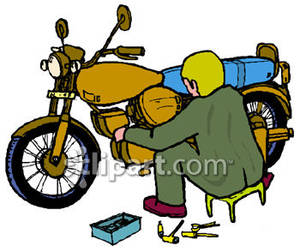
    Motorcycle mechanics work on motorcycles and other units such as motor scooters and all-terrain units. They inspect, clean, test, assemble, diagnose, maintain and repair engines, transmissions, drive systems, steering assemblies, braking systems, chassis, suspension, electrical systems, vehicle management systems, fuel systems and exhaust systems.

    Motorcycle mechanics work on motorcycles and other units such as motor scooters and all-terrain units. They inspect, clean, test, assemble, diagnose, maintain and repair engines, transmissions, drive systems, steering assemblies, braking systems, chassis and suspension, electrical systems, vehicle management systems, fuel systems and exhaust systems. They may specialize in repairing, rebuilding, customizing or servicing these systems or assemblies.

    Motorcycle mechanics work with hand, power, pneumatic and measuring tools, shop equipment, and diagnostic and testing tools. Reference material, documentation and computers are also necessary tools in this trade.

    Motorcycle mechanics may work in service shops of motorcycle dealerships, manufacturers and retailers or in independent service establishments. They may specialize in specific motorcycle, scooter and all-terrain unit makes or types.

    The work environment may include noise, fumes, odours, hazardous compounds, drafts and vibrations; therefore, safety procedures are important. The work often requires considerable standing, bending, crawling, lifting, pulling and reaching.

    Some important attributes of motorcycle mechanics are good hand-eye coordination, mechanical aptitude, time management skills, document use, numeracy, logical thinking and decision making skills, excellent communication and the ability to educate themselves as technology advances. They must also be competent to test ride units.

    Experienced motorcycle mechanics may advance to supervisory positions, shop foreman, service manager or instructors. Some mechanics may open their own garage or motorcycle specialty shop. With additional training, motorcycle mechanics can transfer their skills and knowledge to related units and equipment such as, but not limited to, snowmobiles, watercraft and outdoor power equipment.

  • Finding a Career in a Non-Red Seal Trade

    Finding a Career in a Non-Red Seal Trade

    There is more to the trades than you think – here are other jobs that are part of the trade industry. See if one feels right for you! Click through to see more information on select trades from Service Canada, and check back each month as we feature profiles of some of these exciting careers right here on Jobs People Do.

    Construction Sector
    –Cement (concrete) Finisher
    -Concrete Pump Operator
    –Construction Millwright
    –Electrician (Domestic and Rural)
    -Exterior Insulated Finishing Systems Mechanic
    -Hazardous Materials Worker
    –Heat and Frost Insulator
    – Heavy Equipment Operator
    – Dozer Operator
    – Excavator Operator
    – Tractor Loader, Backhoe Operator
    -Native Residential Construction Worker
    –Painter and Decorator: Industrial
    -Precast Concrete Erector
    –Precast Concrete Finisher
    –Refractory Mason
    –Residential Air Conditioning Systems Mechanic
    –Residential (low rise) Sheet Metal Installer
    -Restoration Mason

    Industrial Sector
    -Bearings Mechanic
    –Blacksmith
    -CNC Programmer
    -Composite Structures Technician
    –Die Designer
    –Draftsperson (Mechanical, Plastic Mould Design, Tool and Die Design)
    -Electrical Control (Machine) Builder
    -Electrician – Signal Maintenance (TTC)
    -Elevating Devices Mechanic
    -Entertainment Industry Power Technician
    -Facilities Mechanic
    -Facilities Technician
    –Fitter-Assembler(Motor Assembly)
    –Gas Technician
    -Hydraulic/Pneumatic Mechanic
    -Light Rail Overhead Contact System Lineperson (TTC)
    -Locksmith
    -Machine Tool Builder and Integrator
    -Mould Designer
    -Mould Or Die Finisher
    -Mould Maker
    -Optics Technician (Lens and Prism Maker)
    –Packaging Machine Mechanic
    –Pattern Maker
    -Precision Metal Fabricator
    -Pressure Systems Welder
    -Process Operator (Food Manufacturing; Power; Refinery, Chemical and Liquid Process; Wood Products)
    -Pump Systems Installer/Mechanic
    –Railway Car Technician
    -Relay and Instrumentation Technician
    -Roll Grinder/Turner
    -Saw Filer/Fitter
    -Ski Lift Mechanic
    –Surface Blaster
    –Surface Mount Assembler
    -Thin Film Technician
    –Tool And Cutter Grinder
    -Tool And Gauge Inspector
    –Tool/Tooling Maker
    –Tractor Trailer Commercial Driver
    –Water Well Driller

    Motive Power Sector
    –Alignment and Brakes Technician
    –Auto Body Repairer – Br.2
    -Automotive Electronic Accessory Technician
    –Automotive Glass Technician
    –Marine Engine Mechanic
    -Motive Power Machinist
    -Powered Lift Truck Technician
    –Small Engine Technician
    -Tire, Wheel and Rim Mechanic
    –Transmission Technician
    -Turf Equipment Technician

    Service Sector
    -Aboriginal Child Development Practitioner
    –Agriculture – Dairy Herdsperson
    –Agriculture – Fruit Grower
    –Agriculture – Swine Herdsperson
    –Arborist
    –Baker
    -Bicycle Mechanic
    –Chef
    –Child and Youth Worker
    -Child Development Practitioner
    –Cook – Assistant Br. 1
    –Developmental Services Worker
    –Educational Assistant
    –Electronic Service Technician
    -Gem Setter/Goldsmith
    -Hardware, Lumber and Building Materials Retailer
    –Service Sector Horse Groomer
    -Horse Harness Maker
    –Information Technology (Hardware Technician,  Network Technician)
    –Institutional Cook
    -IT Contact Centre (Customer Care Agent, Sales Agent, Technical Support Agent)
    -Micro-Electronics Manufacturer
    -Native Clothing and Crafts Artisan
    -Network Cabling Specialist
    –Pool and Hot Tub/Spa Installer
    –Pool and Hot Tub/Spa Service Technician
    –Retail Meat Cutter
    -Saddlery
    –Special Events Coordinator
    -Utility Arborist
    -Wooden Boat Rebuilder/Repairer

  • Career Profile: Printing Press Operator

    Career Profile: Printing Press Operator

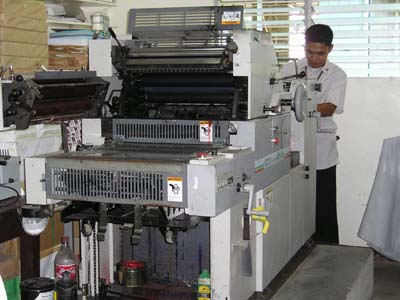
    Printed words are everywhere in our world. We see them on posters, street signs and all kinds of other places. Many of the materials that people read have gone through a printing press. If you look at a book, you can find out the name of the author, the editor and the publisher. One person who is never mentioned is the printing press operator. However, printing press operators have very important jobs. Without them, many of the books, magazines and newspapers that we read would not exist.

    In the last few years, computers have changed the way people read. Printed books, magazines and newspapers have become less popular as many people have changed over to electronic devices instead of paper. This shift has also affected job prospects for printing press operators, reducing their chances for employment. However, their work is still valuable. Universities, libraries, governments and others still use printed documents every day. Whether the documents are textbooks or novels, they are still important for helping people find the information they need or for giving them a chance to relax and enjoy an interesting story. Printing press operators help people have access to these books.

    The work that printing press operators do can vary a lot. Some people work only with machines that print paper documents, but others work with plastic, metal and other materials. They might work with illustrations and designs or mainly with written text. Printing is normally the last stage of the publication process. When the printing press operator receives a book or magazine to print, it normally has everything in order and all of the different sections in place. For a book, this means that the cover and title page come first and that the book is set up the way the author and publisher want it to look. The printing press operator then sets up the machine to print the pages according to the instructions.

    The training required to become a printing press operator varies, depending on the employer. Many printing press operators work for small businesses, although some work for larger companies. They might need only a high school diploma to get a job, although official training in printing techniques is helpful. Vocational schools that offer programs in printing, photofinishing and related fields can help train printing press operators for the kinds of work they will do. Basic computer skills are also very useful, and knowledge of book publishing can also help printing press operators get good jobs.

    Finding a good job often depends on a printing press operator’s flexibility. Some people work in paper manufacturing and other areas related to publishing and books. Any extra skills that printing press operators learn can help them to earn more and to get jobs more easily. Wages start at about $13 per hour and go up to almost $35 per hour. Experienced printing press operators earn over $40,000 per year in some parts of Canada.

  • Career Profile: Airport Baggage Handler

    Career Profile: Airport Baggage Handler

    When people go on trips by airplane, they might not think much about everything that goes on to get them and their luggage to their destination. One exception to that is when something goes wrong, such as when their luggage goes to the wrong place. Passengers might not know much about how the process works, but airport staff know that the work of baggage handlers is essential. Without baggage handlers, air travel would be very difficult and often uncomfortable.

    What makes airport baggage handlers so important? Most people, except on very short trips, need to take clothes, toothbrushes and other items with them. They might have books, snack food, gifts and even computers or medical supplies with them. Some of those items can fit in the storage areas under or above the passengers’ seats, but not all of them. When companies send products like rugs or furniture by airplane, these items also need somewhere to go. A lot of mail also travels by air. Most airplanes have a special luggage area below the passengers for anything that is too large to fit into the main part of the plane. Getting all of the luggage, mail and other shipments in and out of the plane can be a big job.

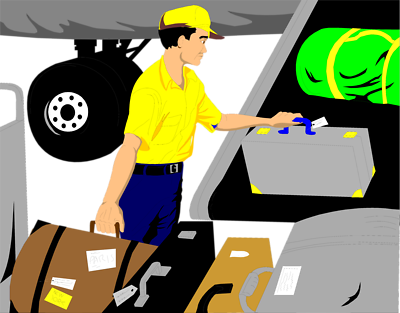
    Airport baggage handlers are the people who put the luggage in at the beginning of each flight and take it out at the end. They use equipment such as fork lifts and conveyor belts to move luggage from one place to another. They tie the luggage down inside the plane to make sure that it stays in place throughout the flight. A certain level of physical strength is necessary for baggage handlers in case their equipment fails or they have to lift luggage onto trucks or conveyor belts. The need for strength might be even greater in small airports, where limited resources mean that much of the work has to be done by hand. Baggage handlers also need to be able to work quickly and efficiently to make sure that they cause as few delays as possible. Some of their work happens outside and they need to be prepared for bad weather.

    If you want to become a baggage handler, the most important education you can have is a high school diploma. Some airlines might also want applicants for the job to have some post-high school academic or vocational education. The best way to learn about educational requirements is to find an airline where you would like to work and then to find out what specific training is necessary. Next, you can apply for a job with that airline. Job prospects vary from one area to another, but they will probably improve when older workers start to retire. Salaries for baggage handlers start at about $20,000 per year, but experienced baggage handlers can make $60,000.

    Do you enjoy helping other people get to where they need to go? Are you physically strong and able to carry heavy loads? You might want to consider a career as a baggage handler.

  • Why Red Seal Trades Might Work For You

    Why Red Seal Trades Might Work For You

    You may have heard the advice, “learn a trade – it’s an important skill to have.” That’s good advice: there will always be a need for carpenters, electricians, plumbers, mechanics, and welders. But what exactly is a Red Seal trade? What financial assistance is there for a person interested in becoming a tradesperson? How do you find out which trade is right for you? Read on to find out.

    In short, a Red Seal trade is one where you may work as a tradesperson in any province without having to take extra qualifications. The training and certifications of Red Seal trades are not individualized to each province; rather, they are standardized on a national level. Although each province is responsible for educating and training apprentices, or those who are at an entry level in their industry of choice, the Red Seal Program promotes the coordination of standards across the country. But in order to qualify as a journeyperson with a Red Seal, apprentices need a mix of classroom instruction and on-the-job training. Although they earn money while training on the job, acquiring necessary tools and classroom instruction is expensive.

    The government recognizes the necessity to fund tradespeople. There is a provision called the Apprenticeship Incentive Grant, which is a $1000-$2000 per year taxable cash grant for apprentices once they have successfully completed their first or second year or level of their program in one of the Red Seal trades. Another is the Apprenticeship Completion Grant, which is available to an apprentice who completes their training and acquires their journeyperson certification in a Red Seal trade. But tools are expensive, too. The government provides the Tradesperson’s Tools Deduction of up to $500 yearly to assist in the purchase of new tools necessary for the trade in question. That leaves one final question: which trade to choose?

    In Ontario, there are forty seven trades of the Program’s available 55 that you may choose from. These range from Automotive Service Technician to Baker to Hairstylist to Welder. The official website, www.red-seal.ca, contains a detailed job description of each. For instance, its page on carpentry tells us that “Carpenters construct, renovate and repair residential, institutional, commercial, and industrial … structures made of wood, steel, concrete and other materials.” We read about the risks involved, knowledge that a carpenter ought to have, and other skills that are useful. It tells us the career path a carpenter may be interested in taking. Further down the page, there is a chart that tells us that there is a provincial certification in all thirteen provinces and territories. Beyond that is additional information with links to relevant documents. You can also find this information on any of the other Red Seal trade pages. Read them over and decide which one may fit you best. Do you have an affinity for working in the kitchen? Bakers and Chefs can become Red Seal certified. Like tinkering with engines and other machines? A wide variety of trades will let you do just that: Automotive Service Technicians and Heavy Duty Equipment Technicians are among those who may acquire their Red Seal.

    The opportunities are numerous, and you can work anywhere in the country. Why not look into qualifying for a Red Seal trade?

  • Career Profile: Roofer

    Career Profile: Roofer

    Roofers install, repair and replace flat and sloped roofs. They work with membrane roofing systems that consist of a variety of materials with different application methods. They also install, replace and repair shingles, slate, shakes, roofing tiles, sheet metal and other preformed sheeting on sloped roofs.

    Essential Skills
    Reading
    Roofers read instructions on work orders as well as application and installation instructions for roofing products and materials. They read information sheets to learn about new products and materials. They also need to refer to blueprints and specifications to complete roofing jobs.

    Document Use
    Roofers reference documents such as work orders, plans and specifications and site specific safety plans that are required for construction, alteration and repairs. They identify the location and orientation of parts in assembly drawings of equipment. Roofers read Workplace Hazardous Material Information System (WHMIS) documentation to obtain and follow safe handling and application procedures.

    Writing
    Roofers may write in logbooks and on contract forms and work orders to describe the work that needs to be done. They may fill out maintenance and inspection reports. They are required to complete safety documents according to jurisdictional regulations.

    Numeracy
    Roofers measure the length, width and height of roof surfaces so they can order the correct amount of materials to complete a roofing job. They also use drawings to calculate material requirements. Roofers use numeracy skills to determine the layout of shingles. They may use thermometers to measure the temperature of roofing materials and working environments to ensure conditions are appropriate for application of the materials.

    Oral Communication
    Roofers communicate with colleagues, other trade workers, manufacturers and supervisors to discuss and review job and safety requirements. They speak to customers to explain procedures used for application and disposal of roofing material. They may also use specialized communication such as hand signals to communicate with crane or hoist operators when moving material and equipment.

    Thinking Skills
    Roofers use problem solving skills to address oversights and discrepancies on the job site. They assess roof conditions and consult with supervisors and clients to adjust the scope of a roofing job. They must anticipate changes in weather to prevent damage to an existing roofing structure and to roofing material. Roofers use decision making skills to decide the start and end of work considering factors such as weather and the availability of supplies and labour. They use critical thinking skills to judge the quality of finished roofing jobs. They also test to make sure roofing materials are sealed and have adhered properly.

    Working with Others
    Most roofers work collaboratively on teams to complete roofing projects. They discuss safety, work processes, installation improvements and quality control.

    Computer Use
    Roofers may use email to communicate with others in the industry. They may also use the internet to look up product and safety information.

    Continuous Learning
    Roofers are continuously learning in order to keep abreast of new roofing products, application procedures and safety precautions. They take WHMIS and provincial construction safety courses, as well as other safety-related courses to stay current. Manufacturers sometimes provide training on their products. Roofers may also learn from manuals and newsletters.

  • Careers in Non-Red Seal Trades

    Careers in Non-Red Seal Trades

    There is more to the trades than you think – here are other jobs that are part of the trade industry. See if one feels right for you! Click through to see more information on select trades from Service Canada, and check back each month as we feature profiles of some of these exciting careers right here on Jobs People Do.

    Construction Sector
    –Cement (concrete) Finisher
    -Concrete Pump Operator
    –Construction Millwright
    –Electrician (Domestic and Rural)
    -Exterior Insulated Finishing Systems Mechanic
    -Hazardous Materials Worker
    –Heat and Frost Insulator
    – Heavy Equipment Operator
    – Dozer Operator
    – Excavator Operator
    – Tractor Loader, Backhoe Operator
    -Native Residential Construction Worker
    –Painter and Decorator: Industrial
    -Precast Concrete Erector
    –Precast Concrete Finisher
    –Refractory Mason
    –Residential Air Conditioning Systems Mechanic
    –Residential (low rise) Sheet Metal Installer
    -Restoration Mason

    Industrial Sector
    -Bearings Mechanic
    –Blacksmith
    -CNC Programmer
    -Composite Structures Technician
    –Die Designer
    –Draftsperson (Mechanical, Plastic Mould Design, Tool and Die Design)
    -Electrical Control (Machine) Builder
    -Electrician – Signal Maintenance (TTC)
    -Elevating Devices Mechanic
    -Entertainment Industry Power Technician
    -Facilities Mechanic
    -Facilities Technician
    –Fitter-Assembler(Motor Assembly)
    –Gas Technician
    -Hydraulic/Pneumatic Mechanic
    -Light Rail Overhead Contact System Lineperson (TTC)
    -Locksmith
    -Machine Tool Builder and Integrator
    -Mould Designer
    -Mould Or Die Finisher
    -Mould Maker
    -Optics Technician (Lens and Prism Maker)
    –Packaging Machine Mechanic
    –Pattern Maker
    -Precision Metal Fabricator
    -Pressure Systems Welder
    -Process Operator (Food Manufacturing; Power; Refinery, Chemical and Liquid Process; Wood Products)
    -Pump Systems Installer/Mechanic
    –Railway Car Technician
    -Relay and Instrumentation Technician
    -Roll Grinder/Turner
    -Saw Filer/Fitter
    -Ski Lift Mechanic
    –Surface Blaster
    –Surface Mount Assembler
    -Thin Film Technician
    –Tool And Cutter Grinder
    -Tool And Gauge Inspector
    –Tool/Tooling Maker
    –Tractor Trailer Commercial Driver
    –Water Well Driller

    Motive Power Sector
    –Alignment and Brakes Technician
    –Auto Body Repairer – Br.2
    -Automotive Electronic Accessory Technician
    –Automotive Glass Technician
    –Marine Engine Mechanic
    -Motive Power Machinist
    -Powered Lift Truck Technician
    –Small Engine Technician
    -Tire, Wheel and Rim Mechanic
    –Transmission Technician
    -Turf Equipment Technician

    Service Sector
    -Aboriginal Child Development Practitioner
    –Agriculture – Dairy Herdsperson
    –Agriculture – Fruit Grower
    –Agriculture – Swine Herdsperson
    –Arborist
    –Baker
    -Bicycle Mechanic
    –Chef
    –Child and Youth Worker
    -Child Development Practitioner
    –Cook – Assistant Br. 1
    –Developmental Services Worker
    –Educational Assistant
    –Electronic Service Technician
    -Gem Setter/Goldsmith
    -Hardware, Lumber and Building Materials Retailer
    –Service Sector Horse Groomer
    -Horse Harness Maker
    –Information Technology (Hardware Technician,  Network Technician)
    –Institutional Cook
    -IT Contact Centre (Customer Care Agent, Sales Agent, Technical Support Agent)
    -Micro-Electronics Manufacturer
    -Native Clothing and Crafts Artisan
    -Network Cabling Specialist
    –Pool and Hot Tub/Spa Installer
    –Pool and Hot Tub/Spa Service Technician
    –Retail Meat Cutter
    -Saddlery
    –Special Events Coordinator
    -Utility Arborist
    -Wooden Boat Rebuilder/Repairer