Category: Trades

  • Running a Business in the Trades

    Running a Business in the Trades

    Do you want to pursue a career in the trades, and prefer to be your own boss? Starting and running your own business in the trades might be a good option for you.

    Though some of the particulars may differ depending on the trade you pursue – like carpentry, electrical, or plumbing– many parts of running a business remain the same.

    If you are thinking of starting a trades business, you likely already have experience working in a trade and want to pursue it further. Before starting your business, make sure you have all the education, skills and licenses to work in your trade. This can include college programs, apprenticeships, work experience, and any necessary local or provincial regulatory licensing. You may also want to register with your local and provincial trade union, as these groups can be a good resource when you need help or information.

    The process of setting yourself up as an entrepreneur usually involves creating your own company. You can have a sole proprietorship (just you), or some form of partnership agreement (you and one or more other tradespeople, business people, administrative, etc.).

    You will need to register a business name and number with Service Canada. This number is required for most dealings that involve your business, especially for work permits and taxes.

    You will also need to use this business number to open bank accounts for your company. It is recommended to keep all business finances separate from your personal accounts.

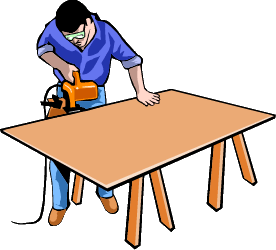
    Make sure you have a very clear idea of what service you plan to offer. For example, if you want to run a carpentry business, you need to decide if you will specialize in a specific task, such as detail work like cabinetry, trim, stairs and railings, or rough work such as framing and roofing.

    Once you decide what your business will focus on, it is time for the most important part of any business: the business plan.

    A business plan is a document that you research and compile, which sets out your goals, product or service offerings, finances, and plans for future growth. This document is essential to directing the course of your company, and any banks or financial investors will require it. Ask yourself a few questions like; what will make my business special from others? What is my target market? What kind of prices will I charge for my company’s services?
    Networking is important and will lead to potential clients. Talk up your company and skills when you meet people in your trade industry. Attend trade shows or conventions related to your trade and those related to other trades. You may be running a plumbing business, but it can be helpful to meet people in other trades like construction – you never know where you might find your next customer!

    Another key factor to running your business is to market yourself and your skills. These days, you will need a website that details your business, the skills and services you offer, and even list prices or quotes to help gain customers.

    Once you are working jobs, make sure to build your reputation – do quality work at a good price, be on time to start and finish projects, and treat your customers well. After the job is done, the best thing to do is ask for a client review; good words go a long way!

  • Why Should Girls Get Involved with STEM?

    Why Should Girls Get Involved with STEM?

    In our society, girls seem to be underrepresented in fields related to science, technology, engineering, and mathematics. Even more interesting is that in contrast to girls, boys seem to be actively involved in all of these fields. So what’s the deal? Why are girls not participating in these fields as much as boys? These are questions that are stumping researchers and other experts.

    There is a stereotype that has been circulating around, that maybe girls just aren’t as good at these subjects as their male counterparts. However, research suggests that there isn’t any evidence to support this claim. We all know girls are just as capable and smart as boys. Researchers have found that, when tested, girls are equally as successful in any of these subjects as boys. However, as long as this negative stereotype continues to persist it can cause real harm. It can actually cause girls to believe that they aren’t good at these subjects before even trying them. There is a natural bias for people to assume that science and math are fields best suited to males and that the arts are better suited to females. Why not disprove this theory?

    People also believe that maybe girls aren’t involved in STEM because there aren’t enough female role models in these fields to look up to. Seeing women who are thriving and successful in these fields could make them more enticing to younger females. People like Bill Gates and Mark Zuckerberg have made their fortunes in fields related to STEM. However, there still seems to be lacking female equivalents. It would be great to see females who have invented or developed ideas related to STEM in our society. The women that are contributing and involved in STEM should be given more visibility in order to promote these fields.

    There are many reasons why girls should get involved in STEM. Firstly, positions related to these fields are abundant. Why not make contributions to them and stand out from others? Scientists are trying to solve some of the most difficult questions in our time. Engineers are designing different things that we can use to better our lives and make things easier. With the internet and other forms of communication becoming more popular, there are a wide variety of job opportunities relating to technology.  People in these professions are doing creative and innovative things. In addition to this, these positions provide a person with a really great income (who doesn’t like money?). Helping the world and making great money doesn’t sound like a bad thing to me!

  • The Importance of Safety Training in the Skilled Trades

    The Importance of Safety Training in the Skilled Trades

    While every workplace requires safety training for its employees, this is particularly important for those who work in the skilled trades.  Every workplace comes with some risks, whether you work in an office or out in the field.  But the prevalence of heavy labour, machinery and equipment, and occasionally harsh conditions in many trades jobs means an increased chance of having an accident leading to injury or worse — and therefore a greater need for stringent, in-depth safety training.

    Safety training is required for all employees, from workers and contractors to supervisors, and should be supplied by the employer in accordance with requirements under the Occupational Health and Safety Act (OHSA) and Workplace Safety and Insurance Board (WSIB).  Some safety training can be taught by a qualified internal person, but other high-risk or more in-depth training can be arranged through external third-party training and certification providers.  Types of safety training include both general workplace safety training (e.g., WHMIS, workplace violence and harassment training, or fire safety) and site-specific or project/role-specific hazards training (e.g., forklift safety, scaffolding safety, excavation safety).  Safety training will also ensure you know what safety equipment is required for the job, and how to wear it safely and effectively.

    Comprehensive safety training in the trades has many important aspects.  First, it ensures that you know what risks are inherent in the job, how common they are, and how to avoid or mitigate those risks.  Safety training will teach you what to watch for in your work environment, how to perform a task correctly and safely or operate a piece of equipment (e.g., operate a forklift), and most importantly will teach you what NOT to do to stay safe on the job site.

    Safety training is intended to prevent unsafe behaviour in the workplace. This includes teaching you how to identify an unsafe action or environment, how to act safely yourself, and how to report an unsafe situation to a superior.  You will also have the tools to recognize unsafe behaviour by others.  The goal is to reduce accidents and injuries on the job site, and ideally eliminate them.

    It is also important to remember that all workers have the right to refuse to do work that they believe to be unsafe. In this situation, you should immediately report your concerns to a supervisor.

    Lastly, safety training includes information on how to communicate about workplace safety – whether that is discussing risks and safety requirements with your coworkers, or reporting safety concerns to your supervisor, WSIB, or an OHSA representative.

    Remember, regardless of which trade you work in — whether you’re a carpenter, electrician, hairstylist, or another trade — you have the right to a safe workplace and to insist on receiving the correct health and safety training for your role.


    Sources

    https://www.thesafetymag.com/ca/topics/technology/5-reasons-why-safety-training-is-important-in-construction/408703

    https://www.ihsa.ca/pdfs/products/W001-Training-Requirements-Chart.pdf

    https://www.labourly.ca/recruiter-guide-to-skilled-trades-health-and-safety/

  • How to Use Technology and Idea Generating to Build a Non-Traditional Career Path in the Modern World

    How to Use Technology and Idea Generating to Build a Non-Traditional Career Path in the Modern World

    Work is changing. We have seen it in rapidly accelerating technology. We have read about it with more and more statistics showing a decrease in job stability and the rise of the gig economy. We have experienced it with social distancing in response to COVID-19. As the pace of change picks up, you owe it to your future to explore non-traditional careers that look vastly different than the career paths of your parents. The use of technology and idea generating can lead to a plethora of unique career and life paths.

    The very notion of a career has been redefined. Many students can no longer expect to choose a narrow career path and follow that trajectory for decades. It is increasingly common to see a career be a mixture of part-time jobs, to have paths changing every couple of years, and for people to be constantly training and retraining to pick up new skills. Creativity is key. Flexibility is very much required.

    As traditional jobs become less viable and less desirable, individuals are assembling their own careers through “solopreneurship,” a mixture of freelance and part-time work. Technology allows them to create online articles, do copywriting for advertisements, and other forms of idea generation all under the umbrella of a sole-proprietor. They are utilizing co-working spaces to network and find different ways to provide their creative services across various industries.

    According to the World Economic Forum, major investments in robotics increased from 23% to 37% by 2022, depending on the industry. It was also determined that 71% of all tasks in multiple industries were done by humans in 2018, but this decreased to 58% in 2022. With robots and artificial intelligence taking on more mundane tasks, idea generation will be in demand in non-traditional career roles. Social media specialists and digital marketing experts can focus more on content and let the computer automatically upload posts at certain times. Life coaches, therapists, and career counsellors can focus on solutions for their clients and let programs organize their schedules and other administrative tasks.

    Technology is transforming traditions for us to generate ideas in brand new ways. Media creators are no longer bound to television, but can write scripts and entertainment for YouTube, augmented and virtual reality, and more. Artists can utilize 3D printers for meticulous three-dimensional pieces. Trainers and educators can create lessons for webinars and mobile devices, freeing them from the confines of a traditional classroom. With the instability and uncertainty of the modern workforce also comes unprecedented levels of freedom and opportunities to create and share ideas.

    None of this is easy. Gone is the security of the past and the assuredness of a full-time career. If you love generating and creating original content, then there are plenty of ways to capitalize on technology to build your own non-traditional career path. Start thinking about what you want your career to look like, whether it be more focused or a mixture of roles. Consider your own ideas and the fields where they may be best suited. Forge your path.

    Sources:

    Bersin, John. “Catch the wave: The 21st-century career.” Deloitte. https://www2.deloitte.com/us/en/insights/deloitte-review/issue-21/changing-nature-of-careers-in-21st-century.html

    Lane, Carrie M. “Gig Work Doesn’t Have to Be Isolating and Unstable.” Harvard Business Review. https://hbr.org/2017/05/gig-work-doesnt-have-to-be-isolating-and-unstable

    World Economic Forum. “The Future of Jobs Report.” http://www3.weforum.org/docs/WEF_Future_of_Jobs_2018.pdf

  • Career Profile: Earth Drillers, Except Oil and Gas

    Career Profile: Earth Drillers, Except Oil and Gas

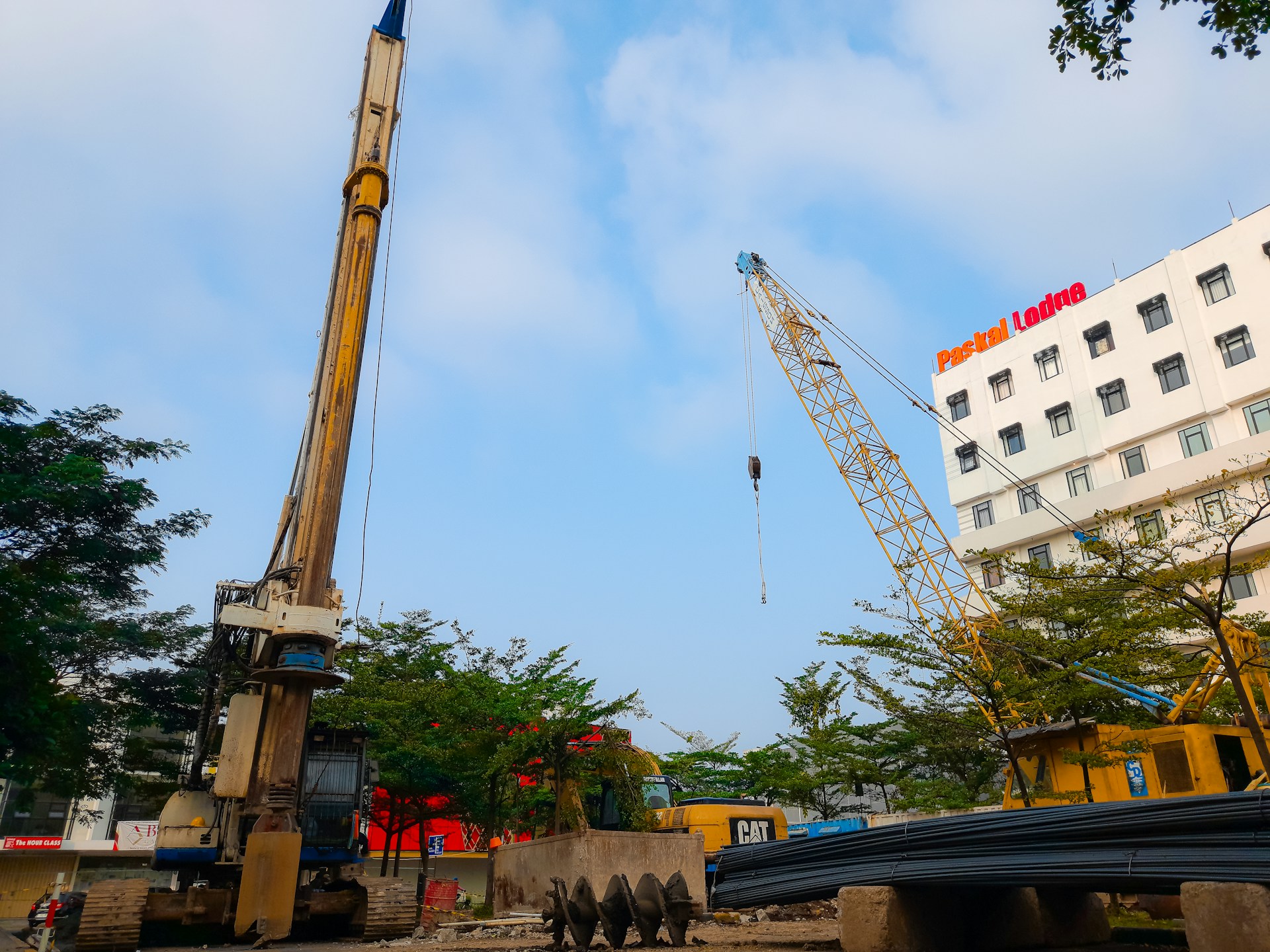
    Many people, whether children or adults, enjoy digging in the earth to see what they can find. For some people, digging holes into the ground can be a career. Earth drillers can help to support many other jobs that make life easier and better for people.

    In some parts of Canada, earth drillers work mainly with oil and gas companies to make these resources available. However, this job can support many other trades and help to make their work possible. Mining is one example where earth drillers are important. These tradespeople drill the shafts that miners need to find nickel, silver, gold, and many other metals. People in this field can also work for geologists or other scientific researchers, governments, and construction companies.

    A high school education or the equivalent is normally the minimum requirement for earth drillers. Taking courses in geology or geography in high school can help, and courses in mathematics and English are useful for making calculations and for reading and understanding instructions. Apprenticeships and technical college courses after high school are good ways of learning the specific techniques of the job.

    Some earth drillers do specialized work, such as handling or storing hazardous materials or working with earthquake detection machines, called seismographs. An ability in accounting can be very useful, especially for self-employed earth drillers or people working in small companies. Having a variety of skills can be helpful to ensure that people in this trade can continue working, even in difficult economic times.

    Like in many other trades, earth drilling is often a seasonal job, with the bulk of the work taking place between late spring and early fall. However, some earth drilling still needs to happen even in winter, such as repairing broken water pipes. Jobs are easier to find in cities than in towns, although mines, where people search for gold and metals, are also good places to find work. Prospects vary according to the state of the economy. Depending on their location and experience, earth drillers can earn between $20 and $47 per hour, or $44,000 and $105,000 per year.

    Operating heavy machinery for earth drilling does not necessarily require much strength, but it requires endurance to work for hours, often in the heat or the cold. Understanding different kinds of soil and rock is useful, and it is important to know the possible dangers of building in various areas. For example, areas near cliffs or riverbanks can be too unstable for many buildings or underground pipes.

    Collaborating with others is an important part of this kind of work. In construction projects, earth drillers need to know what kind of structure is planned for the site or what size of pipe is supposed to go under the ground. Normally, builders and engineers do most of the planning, but earth drillers can also contribute their knowledge to help avoid potential problems.

    One example where an earth driller’s knowledge could be useful is in understanding how earth settles after it has been dug up. Unless builders take that factor into account, they can sometimes encounter problems with the ground under the building settling unevenly. The most famous example of this issue is the Leaning Tower of Pisa in Italy, which started to tilt soon after it was built in 1173. Earth drillers can help prevent that kind of issue.

    Working as an earth driller might not seem very exciting, but it is important for people who work with Canada’s buildings and underground pipes. The job could be right for you.


    Bibliography

    College Grads. “Earth Drillers (Except Oil and Gas); and Explosives Workers, Ordnance Handling Experts, and Blasters.” https://collegegrad.ca/careers/earth-drillers.

    Government of Canada. “Minerals Sector Employment.” https://natural-resources.canada.ca/science-data/science-research/earth-sciences/earth-sciences-resources/earth-sciences-federal-programs/minerals-sector-employment/16739.

    Indeed.com. “Earth Drilling Jobs.” https://ca.indeed.com/q-earth-drilling-jobs.html?vjk=fc9175bbc9f2b305.

    Pathways to Jobs. “Earth Driller (Except Oil and Gas).” https://pathwaystojobs.ca/career/162/Earth_Driller__Except_Oil_and_Gas.

    Payscale Canada. “Average Driller Hourly Pay in Canada.” https://www.payscale.com/research/CA/Job=Driller/Hourly_Rate.

    Pruitt, Sara. “Why Does the Leaning Tower of Pisa Lean?” https://www.history.com/news/why-does-the-leaning-tower-of-pisa-lean.

  • The Importance of Co-op Programs in Ontario High Schools

    The Importance of Co-op Programs in Ontario High Schools

    No one has their future all figured out while they’re in their teens.  You’re still learning new things about yourself, and still growing your knowledge and skills.  Yet it sometimes may seem as though your high school expects you to decide your whole career path before graduation.  It’s a daunting prospect.

    While some students might know exactly what they want to do for higher education and eventually their career, that’s not the case for everyone.  So, what’s an uncertain student to do?

    This is where a co-op program can come into play.

    What is a Co-op Program?

    Cooperative education programs are courses offered by high schools that enable students to explore options for their future careers while also earning credits toward their diploma.  Students taking a co-op program have the opportunity to learn about a job or workplace by engaging with it directly through a work placement.  This is combined with classroom learning or online learning, all of it overseen by a co-op teacher or guidance counsellor at your school.

    Co-op placements are arranged by the school or school board connecting with local businesses in many different industries – such as many different trades, as well as healthcare, computer technology, performing or visual arts, education, hospitality, and many more.  Potential workplaces are vetted to ensure they will offer students a safe and accepting work environment, and must also adhere to policies and guidelines from the Ministry of Education.

    Why You Should Consider a Co-op Program

    Taking a credit or two of co-op during high school offers plenty of benefits to students.  First and foremost, a co-op placement lets you “try before you buy” in a sense, allowing students to engage with a specific potential career to learn whether or not it’s something they would like to do in the future.  It can be hard to know whether you’ll enjoy certain types of work unless you have the chance to try it out, and finding out you hate it after being hired for a job isn’t ideal.  In this way, co-op programs can help students make decisions about their future career path.

    With a co-op program, students have the chance to learn about daily work tasks, and the workplace environment, and have the opportunity to speak with lots of people who work in the same job or industry.  It’s also an opportunity to apply your classroom learning in real-life situations, which helps students better understand and retain the information they’ve learned.  While the are some exceptions, most co-op programs prefer students to be in grade 11 or 12 before registering.  You can also complete co-op programs after completing the requirements for graduation, but before moving on to post-secondary education or the workforce.

    Co-op programs are available for students in any study track – essential, college, or university level – and with any post-graduation direction, whether that’s more school or into the workplace.  For students who are pretty sure they don’t want to go the full academic route through university and would rather go into the trades, a co-op during school can potentially lead to an apprenticeship after graduation.  In some cases, your co-op can work in conjunction with the Ontario Youth Apprenticeship Program. Because a co-op program is part of your high school curriculum, the hours will be scheduled during your regular school day, which ensures there are no conflicts for students who don’t have the time for a part-time job (for example, due to family commitments) or who do have an after-school job already.

    Co-op placements help students build the important skills they will need in their future careers, whether or not they end up in the same field.  One of the hardest parts of job hunting as a young adult is building work experience when you may not have had a full-time or part-time job before.  But a co-op placement provides the opportunity to develop good workplace etiquette, and soft skills such as communication and decision-making, and gives you some solid real-life work experience to put on your resume.

    If you’re interested in a co-op program, talk to your teachers and guidance counsellor, who can share the details of how your school’s program works and what you’ll need to do to get started.


    Sources

    https://schoolweb.tdsb.on.ca/rci_test/Departments/CO-OP

    https://www.ontario.ca/page/skilled-trades-ontario-schools

  • Trades Careers in the Entertainment Industry

    Trades Careers in the Entertainment Industry

    Lights, Camera, Action!  If the thought of hearing these iconic words every day – of being part of the magic that makes them happen – then maybe a career in the entertainment industry is just the right fit for you.  While people may often think “working in TV and movies” only means “being an actor or producer” there are actually tons of unique and interesting jobs within the entertainment industry, many of which fall under the banner of the trades.

    The Canadian film and TV industry employs thousands of people, in careers covering a wide variety of skills.  The only real requirement is enthusiasm for working in film, television, and theatre.  Tradespeople working in entertainment are the ones making the magic happen – sometimes literally.  From camera operators to set builders, makeup to costuming, and much more, most of what we see on screen in our favourite show or the latest blockbuster goes through the hands of a tradesperson at some point in the creation process.

    If you think the entertainment industry is where you want to build your career, there are lots of options to consider.

    Camera Operators use and manage the camera equipment of a film or television production, and are responsible for filming the action according to the composition, framing, and movement desired by the Director of Photography.  They are familiar with all the camera equipment available on a production, including stationary cameras, Steadicams, and drone cameras, and know how to choose the right camera and settings to capture exactly what they want.

    Carpenters and Electricians are responsible for building and maintaining physical sets and set pieces for a production.  Carpenters will build realistic-looking sets for homes, businesses, castles, and much more including props made out of wooden materials.  They will also repair, and eventually dismantle set pieces.  Electricians are responsible for all the electrical equipment on a production site, including the lighting for both on-site and studio settings. They can also work on electrical props or powered set pieces.

    Catering and Craft Services are people responsible for providing meals and snacks to the actors, production technicians, and other crew members on a movie or TV production site.  On smaller productions, the food is often pre-prepared, but on larger productions catering full meals or hot meals may also be involved.  A background in culinary or restaurant work isn’t required but can be an asset, though food handling safety certifications are necessary.

    Costuming and Wardrobe roles include costume design and creation, as well as on-set wardrobe management and assisting performers with costume changes.  Costume designers will design the look for all the performers in a production, and will create or buy all the necessary clothes and accessories.  Costume or Wardrobe Supervisors oversee and manage all the costumes for a production, typically with help from junior Costume Assistants who will assist with research, sourcing, and purchasing costume pieces.  These assistants often also help the Designer with fittings, adjustments, and cleaning costumes.

    Hair & Makeup Artists create the look and feel of characters on stage and screen through makeup and hairstyles.  Make-up artists will design both normal styles and more special-effects styles depending on the character and type of production, and can work with many materials outside of make-up to achieve the desired look – for example, fake blook and injuries, or putty and tape to change the shape of a face.  Hair Stylists are in charge of creating hairstyles for performers, maintaining a specific look throughout different scenes.  They will also style and care for any wigs being used.   Professional Hair and Make-up artists typically need to complete a beauty school certificate and need to have a strong portfolio showcasing their prior work.

    Sound & Lighting Technicians set up, move, and operate all the sound recording and lighting equipment on a production.  Sound techs can hold boom mics and other sound recording equipment to capture the sound within a scene, as well as move and maintain sound equipment on-set.  Lighting techs will set up, align, move, and maintain lighting equipment.  Both roles are vital to creating the exact mood and atmosphere of the finished production.

    Transportation & Drivers in the entertainment industry are responsible for operating cars, trucks, vans, and trailers to transport cast, crew, equipment, props, costumes, or even vehicles that will appear on screen – basically, anything and anyone that needs to go from point A to point B during a production.  A driver’s license is the primary requirement, and some provinces may need additional licenses for driving larger trucks/vans or trailers.

    These are only some of the unique and interesting career paths within the entertainment industry – there are also lots of niche jobs such as stunt work, fight choreography, animal wrangling, subtitling, descriptive video transcription, and much more.


    Sources

    https://www.toronto.ca/wp-content/uploads/2021/12/950b-screen-industry-pathways-career-guide.pdf

    https://reelcanada.ca/reel-opportunities/careers-in-film/

  • Safety Measures in High-Risk Trades

    Safety Measures in High-Risk Trades

    Every job has its challenges, but some careers have higher risks than others. In high-risk trades, workers and managers should be sure to implement safety measures to help keep people from being injured on the job.

    Knowing which jobs are the most dangerous is the first step. One of the best examples of a high-risk job is construction. People in this trade can fall off high places, be crushed under building materials, or receive serious injuries while using tools such as power saws or blowtorches. Chemicals can burn people’s skin or harm their eyes, and fires can break out, especially if electrical wiring is not working properly. Some of these risks are also issues in other trades, but construction sites are especially vulnerable.

    Statistics show that construction continues to be a dangerous trade. More than 40,000 construction workers are injured across Canada every year. In 2020, 924 construction workers were killed on the job. Besides accidents, a substance called asbestos that is found in many old buildings can cause deadly diseases.

    Other trades also have their own dangers. For example, people working in tight spaces can become trapped. In November 2023, forty-one workers in India were rescued after being trapped in a collapsed tunnel for seventeen days. Thirty-three miners in Chile spent sixty-nine days underground when part of the mine collapsed and blocked the entrance to the areas where they were working.

    Taking precautions to avoid situations like these is important. No one can prevent all possible accidents, but conducting regular safety checks can help people be prepared. For mining or tunnel construction, propping up weak sections of the surrounding area can help. Having clear guidelines about what to do in an emergency can help workers react quickly to get out of danger when necessary.

    Even in less dangerous trades, safety measures are important. Personal protective equipment such as safety goggles can help keep people safe, but it must fit properly to be effective. Since much of that kind of equipment is designed to fit men, women might need to have their own equipment made or find ways to make sure that it protects the way it should.

    Other precautions can also help. In a factory or other building, workers should always be sure that the exits are clear and free of clutter. Someone who is trying to get out quickly might not have time to move objects like boxes, books, or even papers aside. Some of these items can also be fire hazards. Extension cords in the wrong places can also trip people as they are trying to escape from danger. Making sure that extension cords are not in anyone’s way can help to make factories and other workplaces safer.

    Another danger in many workplaces is being injured by a forklift. These machines have two large metal pieces sticking out the front. A careless forklift driver could run into other people and possibly cause major injuries. Regular training in forklift use can help.

    Factories, mines, construction sites, and other places where tradespeople work can be dangerous places. Taking safety measures is very important for avoiding injuries that can happen easily while people are working in construction, mining, and other high-risk trades.


    Bibliography

    Canadian Occupational Safety. “Safety and PPE in the Workplace.” https://www.thesafetymag.com/ca/topics/safety-and-ppe/workplace.

    Fung, Ivan W. H. “Developing a Risk Assessment Model for Construction Safety.”

    https://www.sciencedirect.com/science/article/abs/pii/S0263786309001082.

    Iacono, Greg. “9 Injury Statistics in Canada: 23 Updated.” https://housegrail.com/construction-injury-statistics-canada/.

    Jackson, Kathy. “5 Most Important Safety Guidelines for Skilled Trades Workers.” https://pksafety.com/blog/5-most-important-safety-guidelines-for-skilled-trades-workers.

    Mogul, Rhea, et al. “All 41 Workers Rescued from Collapsed Tunnel in India after 17-Day Ordeal.” https://www.ctvnews.ca/mobile/world/all-41-workers-rescued-from-collapsed-tunnel-in-india-after-17-day-ordeal-1.6663553?clipId=68597.

    Morrison, Kyle W. “7 Common Workplace Safety Hazards.” https://www.safetyandhealthmagazine.com/articles/14054-common-workplace-safety-hazards.

    Ontario.ca. “Asbestos in the Workplace.” https://www.ontario.ca/page/asbestos-workplace.

    Wikipedia.org. “2010 Copiapó Mining Accident.” https://en.wikipedia.org/wiki/2010_Copiapó_mining_accident.

    Worksite Safety. “Consultants.” https://worksitesafety.ca/ohs-consultants/.

  • Ontario Colleges Offering Carpentry Programs

    Ontario Colleges Offering Carpentry Programs

    Some people are good at making tables, shelves, and other objects out of woods. Does that describe you? If you want to study carpentry in Ontario, you will have many choices of where to learn your trade.

    Sixteen colleges in Ontario have programs in carpentry, many offering basically the same education. Each program has slight differences that can affect the students’ future career, although any of the colleges can be the right choice for people learning to become carpenters. Most of the programs are about a year long, although some are longer, and some offer apprenticeships.

    Many of the colleges offer general carpentry courses. Algonquin College of Applied Arts and Technology has a two-year program in construction carpentry, a carpenter apprentice program, and a program for becoming a building construction technician. Cambrian College has a carpenter general and a carpentry apprentice program, and Canadore College has a Building Construction Technician program and a Renovation Techniques program. Conestoga College of Applied Arts and Technology has a general carpenter program, as well as a special program for Women in the Skilled Trades.

    Carpentry courses are also available at other colleges. These schools include Fanshawe College of Applied Arts and Technology, George Brown College, Georgian College, Lambton College of Applied Arts and Technology, Loyalist College, Mohawk College of Applied Arts and Technology, Niagara College, Northern College of Applied Arts and Technology, Sir Sandford Fleming College, and St. Lawrence College. Each one teaches the basics of carpentry but also has a special focus that can fit with what different students need.   

    Carpentry is all about working with wood. People in this trade work with construction and renovation of residential, commercial, and industrial buildings. Sometimes they work on restoring heritage buildings, which are older buildings that are special for historical or architectural reasons. Specialty woodworking shops are other places where carpenters can find jobs.

    With the different type of work that are available, choosing the right training program is important. For students without much experience in the trade, an apprenticeship program could be an important way of learning the practical skills that they will need for the work. Other students might want to choose a program based on location if they want to be near relatives or at a place where they know some of the instructors.

    The cost and the length of the program can make a difference. Some programs are twenty-four weeks and others are fort-eight weeks or somewhere in between. Although the usefulness of the program is more important than the length, some people might need to start earning money quickly. Other people might prefer to have more time to learn the techniques thoroughly before they graduate.

    Carpentry is a practical trade, and getting experience is very important. In high school, students can already start to learn the techniques for working with wood. Mathematics courses are useful for calculating the materials needed for various projects, and courses that improve students’ reading skills are essential.

    Training as a carpenter can be a good choice for people who enjoy working with their hands and building homes or other structures. Studying at one of these colleges can be a useful way to start.


    Bibliography

    Canadian-Universities.net. “Ontario Carpentry Programs and Courses.” https://www.canadian-universities.net/Community-Colleges/Programs/Carpentry-Ontario.html

    College Trades. “Careers: Construction.” https://trades.ontariocolleges.ca/careers/construction/.

    Indeed Career Guide. “How to Become a Carpenter in 6 Steps.” https://ca.indeed.com/career-advice/finding-a-job/how-to-become-carpenter.

    Ontario Colleges. “Carpentry.” https://www.ontariocolleges.ca/en/programs/professions-and-trades/carpentry.

  • Trades Industry Essentials: What You Need to Know About Careers in the Trades

    Trades Industry Essentials: What You Need to Know About Careers in the Trades

    Are you interested in a career in the trades but don’t know where to begin? Have you ever wondered about the difference between an Apprentice and Journeyperson? What about the terms Red Seal Program, Red Seal Endorsement and RSE? If all this seems confusing, read on to learn more and find out how to prepare for your career.

    What is an Apprentice?
    As an Apprentice, you’re trained to become a Journeyperson through a 1 to 4 year apprenticeship, a post-secondary education program that combines on-the-job and technical training. Approximately 80% of your learning is done on the job, so you need to find an employer who is willing to hire you as an apprentice. The other 20% is through a college or technical training institution.

    Your apprenticeship begins when you register with the apprenticeship authority at your province or territory and sign a Memorandum of Understanding with an employer who is also registered with the apprentice authority.
    Typically, you’re paid 60% of the Journeyperson’s wage rate and the rate increases as you progress through the apprenticeship period until you receive your certification. You may also receive Employment Insurance benefits and federal, provincial or territorial grants.

    What is a Journeyperson?
    Once you satisfy all the requirements of the apprenticeship program, you’re eligible to write the Certificate of Qualification exam, and if successful, you become a certified Journeyperson for your province or territory and receive the wages and benefits associated with that trade.

    As a Journeyperson, you can train and mentor a certified Apprentice, monitor their progress and sign off on whether the apprentice is achieving their key competencies on the job.

    What is the Red Seal Program?
    The Red Seal Program is the national standard of excellence for skilled trades. Its goal is to set common standards in training and certifying tradespersons across Canada.

    You must meet the requirements of your province or territory to attempt the Interprovincial Red Seal exam. The examination determines whether apprentices and experienced tradespersons meet the national standard in a Red Seal trade. Typically, the exam contains 100 to 150 multiple-choice questions and can last up to 4 hours.
    After passing the exam with 70% or higher, you receive a Red Seal Endorsement or RSE on your provincial or territorial Certificate of Qualification. The RSE recognizes the professionalism and the knowledge, skills and experience of tradespeople. With this endorsement, you can practise your trade as a Journeyperson anywhere in Canada, where it is designated, without having to attempt further examination.

    How do I Prepare?
    The first step you should take is to finish high school since the market is very competitive. Take courses related to the trade you’re interested in and participate in an entry-level training program if your high school offers one.

    Need to Learn More?
    Research the trade and speak with potential employers to learn about opportunities and find out what they look for when hiring an apprentice. By taking the steps to prepare, you’re on your way to entering an exciting career.
    ____________
    Giselle Mazurat is a resume writer living in Winnipeg, Manitoba. She also writes technical and business content for government and private companies.

    Bibliography:
    Information on the Red Seal Program
    http://www.red-seal.ca/w.2lc.4m.2-eng.html
    Interprovincial Standards
    https://en.wikipedia.org/wiki/Interprovincial_Standards
    Journeyperson Definition
    http://www.statcan.gc.ca/pub/81-004-x/def/4153355-eng.htm
    Overview of the Red Seal Examination
    http://www.red-seal.ca/resources/.2x.1ms_.1b.4.5t-eng.html
    Red Seal Designated Trades
    http://www.red-seal.ca/trades/tr.1d.2s_l.3st-eng.html
    Red Seal Endorsement (RSE) Acronym
    http://www.red-seal.ca/about/rs.2_msr-eng.html
    Red Seal Exam Preparation Checklist
    http://www.red-seal.ca/resources/pr.2p-ch.2ckl.3st-eng.html