Category: Trades

  • 3 Unique Outdoor, Year-Round Trades Careers

    3 Unique Outdoor, Year-Round Trades Careers

    Do you enjoy spending time outdoors, getting lots of fresh air and sunshine? For those who aren’t interested in working indoors all the time, a career in a primarily outdoor trade could be a great fit!

    When deciding to pursue a trades career where you will mostly work outdoors, there are a few things you can ask yourself to figure out if this is the right path for you.

    Do you:

    • Prefer being active, rather than sitting for long period of time?
    • Enjoy being outside in nature during the different seasons?
    • Like to do physical work to stay healthy?
    • Want to experience lots of different environments and activities?

    If your answers to these questions are “Yes,” then you should consider a career in an outdoor trade! There are lots of options, including some that you might not realize are skilled trades careers.

    Arborist

    If you love being around trees, then a career as an arborist might be ideal.  Arborists are tradespeople who are responsible for cultivating, managing, conserving and studying trees and shrubs. They work to improve the health of trees, will assess damage and trim or cut down trees if required, and pursue conservation efforts.

    The job of an arborist can involve using harness systems to climb trees in order to inspect them, operating power tools such as hand saws, chain saws, and drills to trim branches or take samples, and assess trees on public or private property for safety and health.  Arborists can be employed by the government, such as the Ministry of Natural Resources, or by landscaping companies, parks, schools, greenhouses, farms and nature conservatories.

    Most of the arborist’s job takes place outdoors, but there are some indoor tasks including writing reports on assessments, maintaining project records, calling clients to arrange service visits or consulting with clients on the safety and wellbeing of their trees.

    Heavy Equipment Operator

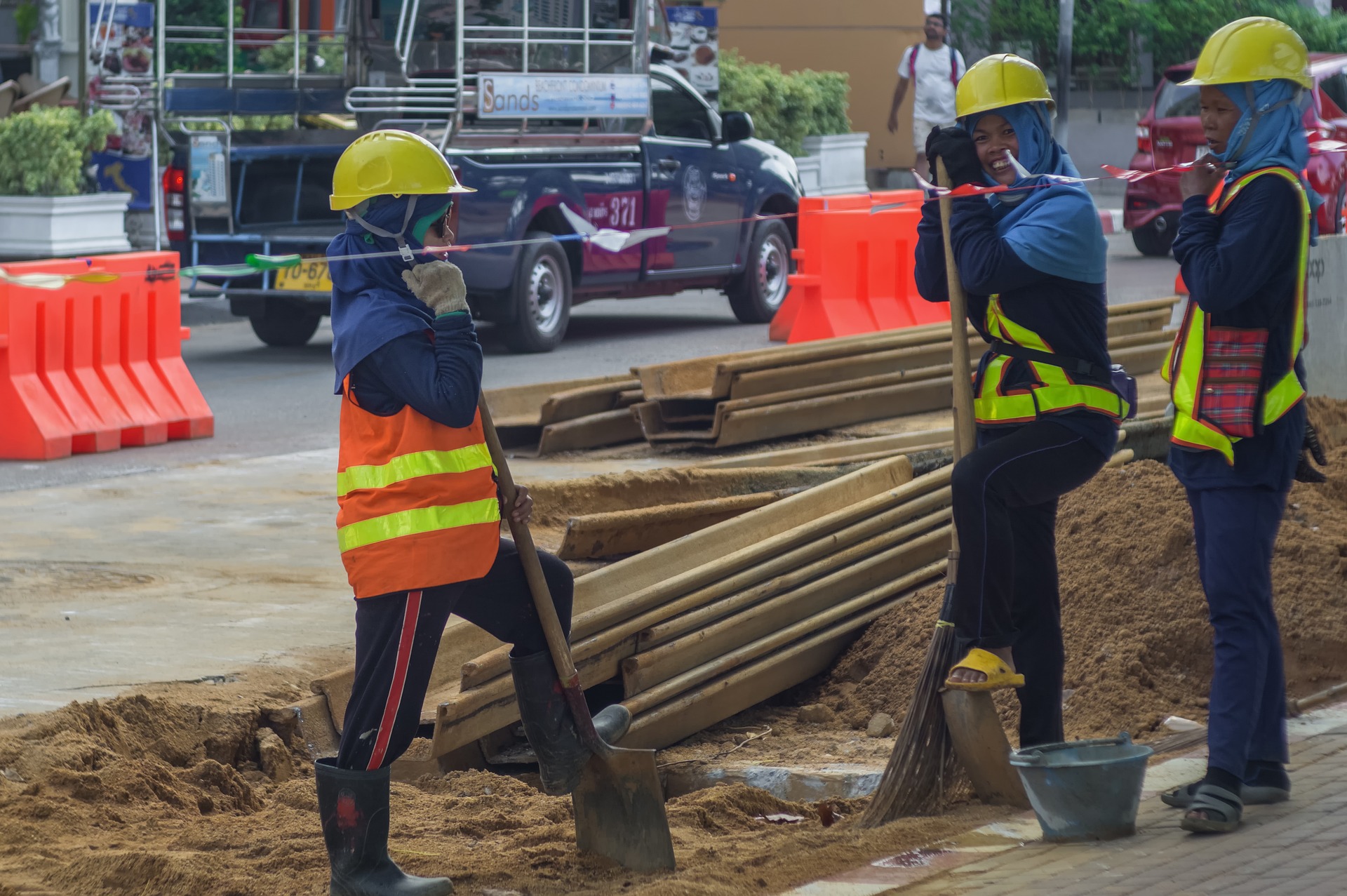
    This is a great trades career as you can choose the industry to match the amount of time you wish to spend working outdoors.  These tradespeople operate the heavy equipment used in many industries, including mining, forestry, construction, oil and gas, and civil infrastructure.  Depending on certifications and training, these heavy equipment operators can operate cranes, bulldozers, backhoes, forklifts, excavators, tractors, skidders, dump trucks, steamrollers and many other large machines.

    Many of these machines are common to more than one industry, which means you can choose whether you want to be outdoors all year, or only part of the year, depending on the seasonal schedule of the work.  Where you live in Canada will also have an effect, as some industries will not operate in the winter in certain parts of the country.

    For example, in Toronto or Vancouver the winters are often mild with limited snow, meaning construction projects are active all year round. In contrast, some mining or forestry operations in the far north parts of Canada will shut down or significantly reduce their activity through the winter.

    Horse Groom

    While there are parts of the country where this would be an uncommon profession, horse grooms are needed wherever horses are kept.  These tradespeople work closely with the horses themselves, maintaining their health, nutrition, grooming, exercise and training.  They will also oversee the care and maintenance of stables, stalls, and riding and grooming equipment.

    This career is ideal for those who both love working with horses, and want to work outside a significant amount of their time.  Grooms are employed by racing tracks, farms, recreational riding stables, and private horse owners.

    Most training in this trade comes through apprenticeships and work experience in a variety of stables or farms, though college or trade school courses in animal handling, animal grooming, and veterinary medicine can be required for specific employers.

    SOURCES:

    https://en.wikipedia.org/wiki/Arborist

    https://en.wikipedia.org/wiki/Heavy_equipment_operator

    https://www.jobbank.gc.ca (Job Market Report by Occupation)

    http://www.learnhowtobecome.org/career-resource-center/outdoor-careers/

    http://talentegg.ca/incubator/2016/03/07/10-jobs-didnt-skilled-trades/

  • Emerging Green Trades in BC: The Career of the Future

    Emerging Green Trades in BC: The Career of the Future

    If you listen to people talking about the state of the world, you know that the environment is often an important concern for them. In British Columbia, as in many other parts of Canada, jobs that are “green,” or not harmful to the environment, are careers of the future.

    For many years, people used resources like water and minerals without much thought about what they were doing to the environment. Now, however, becoming involved in green jobs can help preserve the environment for the future.

    British Columbia has various options for working in a green trade. The first involves locally grown food. Although this work involves farmers more than tradespeople, every farmer needs machines such as tractors, as well as electricity to light barns and greenhouses. Water pipes and hoses are also necessary. Working in many different trades can help support agricultural work for locally grown food.

    Green building and design is a second area where the green trades are growing. Sustainable materials and better construction methods are key parts of this work. For example, some builders might look for ways to use sunlight or wind power instead of traditional electricity and heating fuels.

    Green transportation is one of British Columbia’s major projects. Electric vehicles have been in the province for at least ten years, and the first electric airplane in BC flew in 2019. Tradespeople who can work with electric vehicles are likely to have good job prospects for many years.

    Sustainability services and education are also important. Although tradespeople might not be directly involved in this work, they can provide the information that educators and others need. They need to be organized and clear about what people need to know so that others can give the public the right information. Tradespeople might even have a chance to help directly with some of the services and facts that people need.

    Land and water management and environmental consulting can also be part of a tradesperson’s job. Other people are likely to do most of the work, but tradespeople can help support the initiatives with suggestions to help preserve the environment. Finding better ways of digging wells, for example, could help preserve the environment.

    People in the trades can get involved in materials management and recycling. Repairing and upgrading old machines so that they run efficiently can help keep usable machines from being thrown out and help to make people aware of the possibilities of reusing even the most worn-out objects.

    The area where tradespeople can have perhaps the biggest impact is in clean technology, alternative energy, and green building products. Working together with scientists and engineers, tradespeople can identify areas that require better resources and make suggestions for areas to develop, such as environmentally friendly building materials or glues. They can set up wind turbines or other forms of clean energy production where possible and help to support clean technology in whatever they do.

    In the future, green trades are likely to become increasingly important. For anyone getting into one of these fields, being aware of the options is very important. If you want to work in British Columbia, you can already start to consider how you can get involved.


    Bibliography

    Natural Resources Canada. “Green Jobs in Natural Resources.” https://natural-resources.canada.ca/climate-change/canadas-green-future/green-jobs/87.

    Province of British Columbia. “BC’s Green Transportation Innovations.” https://www.britishcolumbia.ca/news-stories/bcs-green-transportation-innovations/.

    Skilled Immigrant Info Centre. “Fastest Growing Industries: Green Economy.” https://www.vpl.ca/sites/default/files/Fastest_Growing_Industries_Green_Economy.pdf.

    Work BC. “Green Economy.” https://www.workbc.ca/research-labour-market/bcs-economy/green-economy.

  • How To Become an Electrician in Ontario

    How To Become an Electrician in Ontario

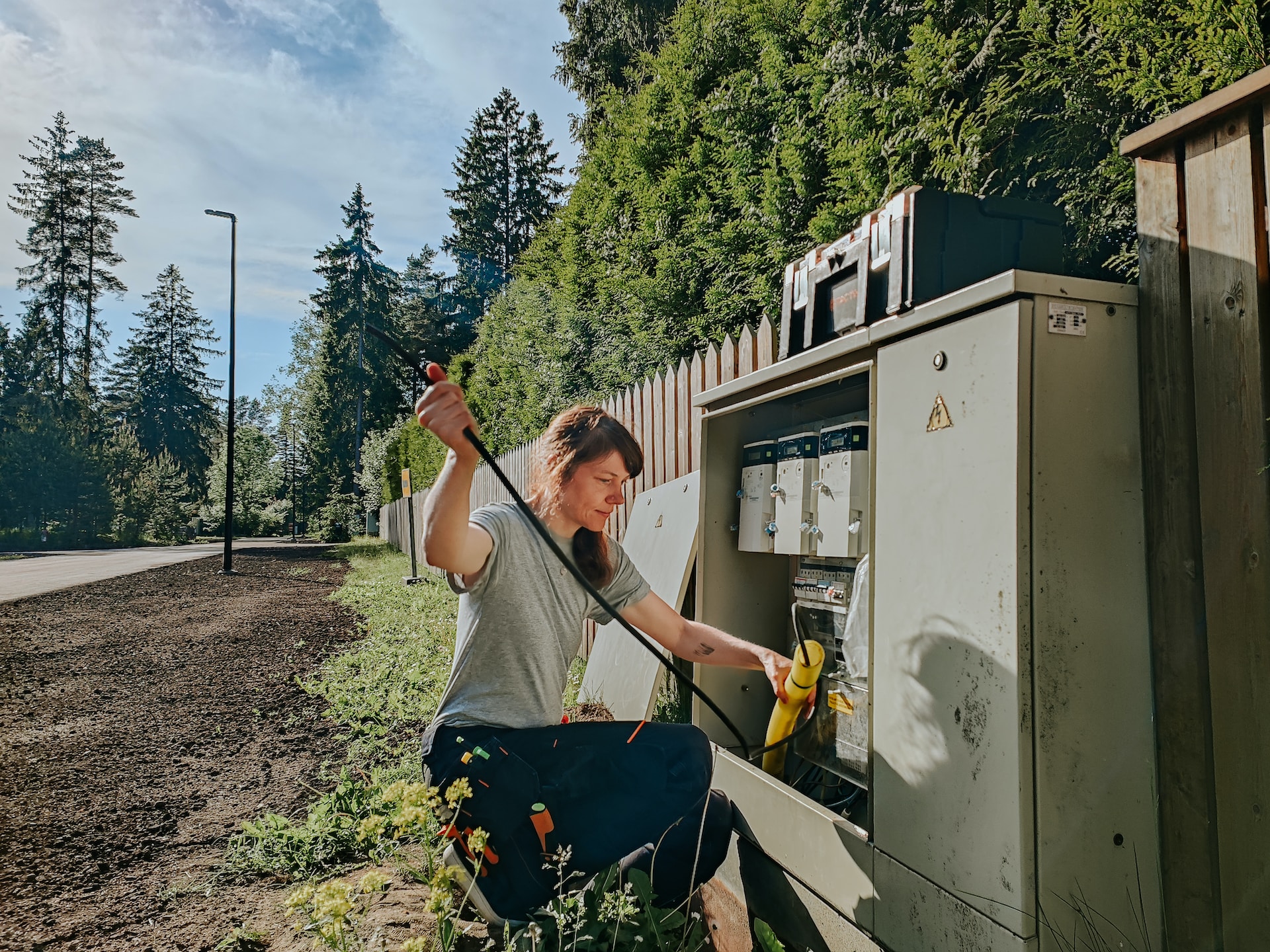
    Almost every building has electricity, and these homes, schools, and offices need someone to connect and maintain the electrical connections. Becoming an electrician is a good choice for people who are precise and able to work with their hands.

    Electricians work with wiring, fuses, and other equipment to make sure that everything works properly. Faulty wiring can cause fires, and it is important to be precise and accurate as an electrician. Being able to read well and to do basic mathematical calculations is important in this career. High school courses in these areas, as well as anything related to construction or similar fields, can be useful. Some employers require a high school diploma, but a Grade 10 education is enough for other employers.

    After high school, many electricians begin apprenticeship training. In Ontario, most electricians begin with formal training, which normally involves 840 hours of in-class training at a trade school or community college. Often, the first step is to find an employer willing to sponsor an apprentice. Electricians can work for construction companies, but many people choose to work for small companies or to work on their own for people who need help with electricity in their homes or offices.

    Wages for apprentice electricians start at about $15 per hour. When people progress to being a journeyperson, their wages can rise to $40 per hour. With benefits, wages can reach $60 per hour. Jobs are easier to find in large cities than in small communities, but even a village requires an electrician. Having a second source of income can be helpful.

    Electrical work needs to be very precise, and people in this trade need to keep their knowledge current. Taking upgrading courses or reading articles about new techniques and materials can help electricians understand the best ways of doing the work. Electricians might sometimes need to work very quickly or work long hours when a job needs to be finished, but many electricians can choose their hours at least to some extent.

    Like in most trades, working as an electrician can be physically demanding, but it can also be mentally tiring. Electricians must concentrate on what they are doing to be able to get the work right and avoid potential disasters. Some electricians work with other people, but they frequently complete projects alone. However, being able to consult with builders, carpenters, and other tradespeople is important for getting the job done well.

    Good eyesight with or without glasses is important in this job since electricians need to be able to see small wires and to attach them correctly. Steady hands are also necessary to avoid knocking things over or touching the wires to other objects. Electricians should also have a good knowledge of building codes and safety issues. Being familiar with the kinds of wiring common in older buildings or in special kinds of architecture can be helpful.

    Electricians are important for keeping buildings running properly. Working in this trade could be a good choice for you if you have the qualities necessary for the job.


    Bibliography:

    Electrician Authority. “How to Get an Electrician Apprenticeship in Ontario.” https://www.electricianauthority.com/electrician-apprenticeship-ontario/

    Indeed.com. “How to Become an Electrician in Ontario (with FAQs).” https://ca.indeed.com/career-advice/finding-a-job/how-to-become-electrician-in-ontario.

    Ontario Colleges. “Electrician/Electrical.” https://www.ontariocolleges.ca/en/programs/professions-and-trades/electrician-electrical.

    Skilled Trades College of Canada. “How To Become an Electrician.” https://www.skilledtradescollege.ca/resources/become-an-electrician.

  • Top-Paying Trade Jobs in Ontario

    Top-Paying Trade Jobs in Ontario

    Finding a good job with a decent salary is difficult these days. Although low-paid jobs are often still available, high-paid jobs are hard to find. However, certain trades still pay good salaries and can be good choices for people in Ontario.

    Sometimes it seems that workers are getting paid less and less, and that is true for many people. According to Statistics Canada, the percentage of people working for minimum wage doubled between 1998 and 2018. At those kinds of wages, it can be difficult to get ahead or even to pay for the basics like food and housing.

    The best way of dealing with this problem is to choose a high-paying job, especially in the skilled trades. Although the job market changes frequently, opportunities are likely to be better in the trades than in most other fields because people still need electricity, plumbing, and other services in their homes and offices. Some of these skilled trades pay very well, even if the salaries depend to some degree on the location and changes in the economy.

    Elevating device mechanics are people who work with elevators, escalators, and other devices that lift people or objects from one level to another. This kind of work is useful in apartment buildings, offices, restaurants, and other places with more than one floor. Elevating devices need frequent maintenance and can break down as they age or if a part is badly installed or breaks for another reason. Salaries for people in this trade tend to be about $80,000 per year, although some people earn less, and others earn more.

    One of the highest paid skilled trades is senior electrician. These people must work their way up from low-level work to the higher levels, but some of the best-paid electricians can earn over $91,000 per year. At that point, the work might involve supervising other workers, but it could still include installing wiring in buildings, checking connections, and other practical tasks.

    Steamfitters and pipefitters earn less than elevating device mechanics or electricians, but they can still earn over $70,000 per year. Much of this work is in factories and refineries, and this trade is part of the Red Seal program. That way, people who gain this qualification can work anywhere in Canada without having to retrain.

    Industrial electricians are also often well paid. Much of the work in this field tends to be in factories or refineries, but jobs are also available in construction. The job can be difficult because of noise from the machines running in the area and because of the need to be extremely precise, but it can be a good choice for many people. In Ontario, median, or middle, salaries are about $62,400.

    Millwrights and heavy-duty equipment technicians can also earn good wages in Ontario, often about $54,600 to $58,500. The work might be in factories or even in mines, but a variety of jobs are available around Ontario. An ability to repair equipment is necessary for both of these careers, which can be part of everything from manufacturing to wastewater treatment.

    Although these trades are some of the highest-paying ones in Ontario, other careers also have high salaries. For example, cooks can often be well paid, depending on their skills and where they work. Delivery truck drivers and machine tool operators are also well paid.

    Finding a good job is very difficult these days, but some of the top-paying trades can be good choices. One of them might be right for you.


    Bibliography:

    Arnold, Chris. “The Highest Paying Trades in Canada.” 2023.

    https://www.coursecompare.ca/highest-paying-trades-in-canada/.

    Government of Canada. “Follow Your Passion. Find Your Skilled Trade.” https://www.canada.ca/en/employment-social-development/campaigns/skilled-trades.html

    Immigration.ca. “Here Are The 10 Most-In Demand Jobs in Ontario.” https://www.immigration.ca/here-are-the-top-10-most-in-demand-jobs-in-ontario/.

    Kong, Stacie Lee. “These Careers Pay Solid Salaries, Even While You’re Training.” https://macleans.ca/work/high-paying-jobs-and-careers-in-skilled-trades/.

  • Women in Trades: Breaking the Stereotypes

    Women in Trades: Breaking the Stereotypes

    Trades are an essential career path in society. This field is frequently dominated by men. In fact, “women only make up 5% of the skilled trades workforce.” (Skilled Trades College) Why is this? One issue faced by women in the workforce is sexism and discrimination. Women are consistently treated negatively due to societal stereotypes. Even if the bias against women is unintentional, the repercussions are obvious. Women are given less demanding, lower paying, and demeaning jobs. Additionally, women are being harassed in their jobs. Many report unwanted touching and comments from their coworkers and superiors. For women with families, access to childcare can be a big issue. Childcare is expensive, and people in trades work long and unpredictable hours. This often results in a difficult choice between work or family.

    In the past, women were not given access to blue-collar careers. Realistically, it wasn’t until World War I that women took the men’s places in these careers. Once the war ended, few women kept their careers going. Then, in World War II, women were called back to the workforce to ensure the nations didn’t collapse. These women were “were early pioneers for females in the skilled trades, but most of them were only temporarily in this industry.“ (FORTIS) Again, men were prioritized and preferred for these jobs because of stereotypes. Despite this, some women decided they wanted to continue working and find a way around these biases.

    So, now what? I hope I didn’t deter you from pursuing a career in trades. In fact, I encourage you to pursue it! Change is only going to be made with continuous progress, and

    willingness to challenge current biases. Canada is one of the countries that is rapidly losing their trade workforce. This presents a unique opportunity for women. You have the opportunity to make a change in the force. Also, there is a possibility of earning more money here than in a typical 9-5 job. Also, many companies are now making a distinct effort to promote diversity and inclusion, so they are looking to hire women and people of colour.

    How do you get started? It is important to zero in on what specific trade interests you. You can do this by asking people in the field, taking career assessment quizzes, or by doing some research. Then look into what post-secondary school is of interest to you. It never hurts to be over-informed.

    Women in trades are under-appreciated, disrespected, and underrepresented. In the present day, many women are working hard to disprove biases and shut down negative stereotypes about women. If you’re considering a blue-collar career, I wish you the best of luck and am excited to see how you change the field!


    References

    https://www.skilledtradescollege.ca/blog/women-in-skilled-trades

    https://www.cbc.ca/news/canada/toronto/women-on-site-ontario-discrimination-trades-1.6823862

    https://www.fortis.edu/blog/skilled-trades/a-history-of-women-in-skilled-trades–then-and-now.html

  • Role of Community Colleges in Trade Education

    Role of Community Colleges in Trade Education

    If you decide to train as an electrician, plumber, or other tradesperson, you might assume that a trade school was the best place to learn the skills you need. However, a community college often has advantages over trade schools that can make it a good choice.

    Experts estimate that by 2025, about half of the jobs in Canada will be in the skilled trades. Being part of one of those trades could be a good choice for anyone who enjoys working with tools and machines. Trade schools can teach people the technical skills they need and help them to find work, but sometimes other skills are necessary, as well. At community colleges, people can gain skills to help them in the future.

    One of the advantages of a community college education is the chance to get an overview of the trade in general, including the history and trends in the profession, local economic development, and changes in educational requirements. This kind of information might not be immediately useful, but it can help people gain a perspective of how their own goals fit with other aspects of society.

    This kind of information can be very useful. For example, if statistics show that electrician jobs are being combined with other trades in many workplaces, students will have a better chance of obtaining work if they have both sets of skills rather than just one. If work is opening in unexpected places, their instructors can help them find contacts in those workplaces.

    Having a variety of options can be useful in case a change in the economy or even an injury alters a person’s ability to work in a certain trade. A downturn in the economy, for example, could mean fewer jobs in construction and the trades associated with it. An injury could also mean that someone who had been working as an electrician or builder can no longer manage the work. Community college education usually includes some courses in fields such as computers or bookkeeping, which could help with getting into a new line of work.

    Another advantage of community colleges is that graduates gain foundations that can help lead to further studies. If someone wants to move from a trade into a degree in engineering, for example, a community college education can introduce students to the skills necessary for academic studies that might not be available in trade schools. Community colleges also tend to be less expensive to attend than trade schools, giving students the option of learning a trade without getting too deeply into debt.

    Canada has more than three hundred different trades, including fifty-four with a possible Red Seal designation. This means that someone who has successfully completed a set of tests in that trade can gain a Red Seal certification, which allows the tradesperson to work anywhere in Canada without retraining. Added to the benefits of studying at a community college, this aspect can be very useful.

    With the benefits that a community college education can bring, studying at one of these institutions rather than at a trade school can be a very good choice for many people. If you study your options, you might decide that a community college is right for you.


    Bibliography:

    Community College Review. “Community Colleges Are More Important than Ever.” https://www.communitycollegereview.com/blog/community-colleges-are-more-important-than-ever.

    Government of Canada. “Follow Your Passion. Find Your Skilled Trade.” https://www.canada.ca/en/employment-social-development/campaigns/skilled-trades.html.

    Ontario Colleges. “Programs and Careers in the Trades.” https://www.ontariocolleges.ca/en/apply/skilled-trades.

    Vocational Schools and Colleges. “Skilled Trades Schools in Canada.” https://www.vocationalschools.ca/trades/.

  • Natural Resources Careers in BC

    Natural Resources Careers in BC

    Natural resources are all around us, from water in the lakes and rivers to the oil and gas under the ground to the sun in the sky. Natural resources careers in British Columbia are about either preserving natural resources for the future or making them available for people to use.

    Many different jobs are available in natural resources. BC has many natural resources careers, including jobs for people who administer the programs and authorize the work with natural resources. People in this branch of the work gather information and make decisions in fields such as fish and wildlife, timber, and water. Listening to others, especially Indigenous groups and other people who can help to make sure that natural resources are available in the future, is very important in this job.

    Deciding what is important requires information. Biologists study animals, fish, and their habitats to find out how to preserve the natural world and keep the animals from decline or even extinction. These professionals help to educate people about how different parts of their work fit together and provide a scientific basis for the decisions that government officials and others make for the environment.

    Indigenous people are often closely connected to the land where they live, and they have insights and knowledge that other people might not have. Because of that, a third career in natural resources is a First Nations or Indigenous relations advisor who can help Indigenous and non-Indigenous people to work together. This job might involve arranging meetings, writing reports, doing research, or even travelling out to remote locations to consult with people on the negative and positive aspects of any project.

    Once people have gathered enough information and obtained an agreement from everyone concerned with the project, natural resources engineers can get to work. These people work with infrastructure such as roads and bridges that allow workers to get access to resources and to the cities and towns where the markets are. Maintaining the infrastructure is important, and natural resources engineers are often involved in projects until they are completed, monitoring the use of various parts of the infrastructure to make sure that workers maintain safety standards and find any problems or missing pieces.

    These jobs require a high level of understanding of the issues to allow people to work at more than a basic level. Normally, at least a bachelor’s degree is necessary for working in these fields, and sometimes a master’s degree might be necessary. Some people might be able to work their way up from low-level jobs, but normally these types of careers require at least some formal education. Useful high school courses include biology, history, and English. Salaries might start at about $30,000 or $40,000 but can rise to about $100,000 with experience, depending on the job and the location.

    Even without a bachelor’s degree, people can get jobs in natural resources. Biologists need lab assistants, engineers need construction workers, administrators need office workers, and Indigenous relations advisors need helpers to file documents or answer phones. Although these jobs might not be very well paid, they are still important. Training in the trades is often important for many natural resources jobs.

    Working in natural resources can be an exciting and important career choice. If you want to be part of this field, you can already begin to prepare for it.


    Bibliography:

    Government of Canada. “Follow Your Passion. Find Your Skilled Trade.” https://www.canada.ca/en/employment-social-development/campaigns/skilled-trades.html

    Government of British Columbia.  “Natural Resources Careers.” https://www2.gov.bc.ca/gov/content/careers-myhr/job-seekers/featured-careers/careers

    Natural Resources Canada. “Career Profiles.” https://natural-resources.canada.ca/careers/career-profiles/19466.

    Pawlowska-Manville, Agnes and J. D. Chapman. “Natural Resources in British Columbia.” https://www.thecanadianencyclopedia.ca/en/article/natural-resources-in-british-columbia.

  • Emergency Preparedness Skills in Trades

    Emergency Preparedness Skills in Trades

    Suppose that an emergency happened. Would you be prepared for it? For people in the trades, emergency preparedness skills are important for ensuring that the work can continue, while also keeping people safe.

    Fires, floods, and other disasters can happen very suddenly, but preparation can help people to recover quickly. The first stage is to conduct a risk assessment to see where the dangers are. Getting input from the workers themselves is important so that they can highlight areas that still need extra preparation.

    People in the trades have a special knowledge of what needs to be done after an emergency. They know how to restore electricity to communities that have lost power and other services for people who need them. Before a disaster happens, tradespeople need to plan how they will work to restore these services. Writing procedures down and identifying the roles for each person will help ensure that everyone knows what to do when the time comes to act. At this stage, people with good communication skills are important, since someone needs to gather the information and put it together in a form that is easy to understand and remember.

    Tradespeople frequently work with hazardous materials, and they know how to deal with these kinds of substances. In emergencies, however, many other people can be exposed to hazards like radioactive material or sometimes other dangers such as asbestos, which used to be part of many buildings. If fires, floods, or earthquakes destroy the structure of buildings or power plants, someone must contain the materials and ensure that people are safe.

    Being able to assess dangerous situations and to choose the right containment procedures is important. People in the trades learn these skills through their work in dealing with insulation and other potentially dangerous substances. However, a general knowledge is not always enough. People in the trades also need to study new types of hazardous materials and to work at improving their emergency preparedness skills whenever possible.

    Organization is a key part of emergency preparedness. Within each company, tradespeople need to assign different tasks to people who can complete them so that no one will neglect those tasks in an emergency. Writing those procedures down is important so that people can study them without having to ask other people for the information. Regular drills to practice those skills can help the procedures to become automatic so that people can act quickly without having to stop and think about each step.

    Part of this kind of preparation is learning how to help people who are injured or who have limited mobility. Knowledge of First Aid is important for taking care of people until help arrives, and assisting workers who are unable to get out of the building on their own is essential. Everyone should know the basics of First Aid and other procedures. However, designating a few people to take charge of these aspects of an emergency can help save valuable time.

    Tradespeople who know emergency preparedness skills for their own workplaces also have the skills to help in larger emergencies that affect entire communities. Developing emergency preparedness and communications skills can be useful for many people in the trades.


    Bibliography:

    Government of Canada. “Get Prepared.” https://www.getprepared.gc.ca/index-en.aspx.

    Government of Canada. “Get Prepared: Make an Emergency Plan.” https://www.getprepared.gc.ca/cnt/plns/mk-pln-en.aspx.

    Infrastructure Health & Safety Association. “Emergency Response Planning Overview.” https://www.ihsa.ca/pdfs/magazine/volume_16_Issue_2/emergency-response-planning-overview.pdf.

    International Water Management Institute. “Before Disaster Strikes: Preparing for Complex Emergencies with Anticipatory Action.” https://www.iwmi.cgiar.org/2023/10/before-disaster-strikes-preparing-for-complex-emergencies-with-anticipatory-action/.

    SafeCare BC. “Emergency Preparedness – What Employers Need to Know.” https://www.safecarebc.ca/2021/11/25/emergency-preparedness-what-employers-need-to-know/.

  • The Role of Trades in Renewable Energy

    The Role of Trades in Renewable Energy

    Imagine being able to solve the world’s energy problems, just by going to work. People in the trades can have an important role in promoting renewable energy to help make the future more sustainable.

    Most people likely think that engineers and policymakers are the most important experts involved in renewable energy projects. However, inventing new technologies or making policies to encourage the use of renewable energy is not very useful unless people have access to these sources of power. People might want solar energy for their homes, for example, but they cannot use this energy until someone installs the system in their homes or offices.

    This point is where the trades are essential. In 2018, about eleven million people around the world were employed in the green energy sector, but that number is increasing. Many governments are emphasizing training and funding for green energy jobs, including the trades. Older workers will likely retire in the next few years, leaving space for younger workers to fill their spots.

    Many different aspects of the renewable energy sector need tradespeople to work with new technologies or older systems. For example, solar energy has been available for years, but the specific practices change as inventors make new discoveries and develop new technologies to fill the needs that they see. If tradespeople keep their knowledge current, they can be ready for all kinds of jobs.

    Tradespeople are necessary for installing and repairing renewable energy devices. Solar panels, for example, are not useful unless someone can install them on the roof of a building or the side of the road and repair them if they are damaged. Geothermal heating and other forms of renewable energy also require people to dig holes, connect wires, and take care of other technical aspects of the work.

    If you decide that you want to be part of the movement for renewable energy, you will have many career options. You could work as a general technician in an energy company, participating in whatever projects come your way. You might even be able to work at a university or an organization like the United Nations, helping to test renewable energy projects, or even start your own company to work with one or more types of renewable energy.

    Working with renewable energy takes skills that many tradespeople have not learned yet. If you choose this field, you could spend some of your time training others in how to install the equipment or deal with problems. Another role could be in helping to make information available. If you like to write or give lectures, you could submit articles to trade magazines or participate in conferences, helping to show how the trades can be an important part of the transition to renewable energy,

    With governments investing more money in renewable energy, this is a good time to consider a career in this field. The trades are an important part of the transition from fossil fuels to other sources of energy, and you can use your skills to help move Canada in that direction. Everyone can help with this important task.


    Bibliography

    EnergyNow Media. “Revitalizing the Skilled Trades: How to Attract a New Generation of Workers in Canada.” https://energynow.ca/2023/07/revitalizing-the-skilled-trades-how-to-attract-a-new-generation-of-workers-in-canada/.

    Power Mag. “Addressing a Skilled-Trades Gap in the Energy Sector—and How to Ease the Transition.” https://www.powermag.com/addressing-a-skilled-trades-gap-in-the-energy-sector-and-how-to-ease-the-transition/.

    United Nations Conference on Trade and Development. “The Role of Trade in a Development-Led Global Energy Transition.” https://unctad.org/system/files/official-document/cid53_en_0.pdf.

    United Nations Educational, Scientific and Cultural Organization. “Skills Development for Renewable Energy and Energy Efficient Jobs.” https://unevoc.unesco.org/pub/solar_energy_demands-discussion_paper1.pdf.

  • Begin Your Apprenticeship Journey with Help from Support Youth Ontario

    Begin Your Apprenticeship Journey with Help from Support Youth Ontario

    The trades are a vital part of the Canadian workforce, but over the last few decades there has been a lack of new young people entering the trades. With the increasing number of tradespeople who are reaching retirement, it is essential to bring new workers into the trades to address the growing gap between the trades work that needs doing and the workers who are available to do it.

    Informing young people about the trades, and supporting them through the process of entering and working their early trades career is the only way to ensure an increase in new tradespeople.  Luckily, there are many excellent resources and organizations dedicated to helping young tradespeople navigate the ins and outs of this journey.

    Support Ontario Youth (SOY) is one of these organizations, an Employment Ontario program funded jointly by the Ontario and Canadian governments.  SOY’s mission is to support young people seeking to become apprentices in the trades. The program works with young apprentices, employers in trades industries, and other stakeholders in order to strengthen and streamline the apprenticeship journey.

    Finding an Apprenticeship

    Becoming an apprentice is the primary way to enter the trades as a career.  While you can apply for an apprenticeship independently, organizations and programs like Support Ontario Youth can make the process much easier.

    Navigating the apprenticeship process can be difficult, but SOY offers information on apprenticeships in Ontario, including the process for applying and how an apprenticeship journey leads to a trades career.  The program offers information for young people to help them determine whether an apprenticeship in the trades is a good fit, and assists them in completing applications and negotiating with the employers sponsoring their apprenticeship.

    SOY will assist with determining whether your previous education credits or work experience will affect the length of your apprenticeship term, and will help you to enroll in any necessary education or training programs required as part of the apprenticeship.  They will also help you complete your application for a Registered Training Agreement with your chosen employer, and will assist you in registering as a member of Skilled Trades Ontario.

    Scholarships and Funding

    Though an apprenticeship is less costly than going to college or university—and you can earn a decent wage while you work and learn—there are still some educational and material costs involved.  This can include registering for training or trade school courses, or purchasing tools and equipment.  SOY facilitates several scholarships: the BOLT Women in Construction Scholarship, the Saniflo Apprentice Journey Plumbing Scholarship, and the SOY Education Scholarship.  These are aimed at supporting the costs of apprenticeship, and SOY will help with the applications for apprentices registered with the program.

    SOY also offers detailed info on the funding opportunities at both the provincial and federal level that are available to young apprentices in Ontario to help offset the costs of apprenticeship.  These include a federal Tool Grant to cover the costs of purchasing your own tools; the Canada Apprentice Loan interest-free loans to help cover costs related to tuition, tools, and living expenses; or various provincial and federal tax credits.

    Tools of the Trade Boot Camp

    Another resources SOY provides to young prospective apprentices is the Tools of the Trade Boot Camp program.  This offers Ontario youth the opportunity to participate in a day of job shadowing with a trades professional in the construction, motive power, and industrial trades.  This is a great way to experience what it’s like to work in a specific trade, as well as giving young people the chance to meet and network with prospective employers.