Tag: advice

  • Advice on Advice

    Advice on Advice

    Choosing an educational or career path is difficult, especially when you try to do it alone. But asking for advice can sometimes make things more confusing. When asking for opinions, it’s important to know what – and who – to ask. This guide will help you to collect the kind of advice that will help, not hinder, your decision making.

    1. Think about who really knows you best. You might automatically think, “Mom!” or “Grandpa Joe!” – but that may not be the case. Loving someone or being close to them doesn’t automatically mean that they know you best. Does your Grandpa Joe see you the way you are, or the way he would like you to be? He might think you’d make an amazing mathematics professor when, really, you can’t count and love ballet.

    2. Consider why people make the suggestions they make. Does your Aunt Louise want you to be an orchestra musician because she knows that you love to play violin; or is it because she never realized her own dream of playing in a symphony? Make sure that the suggestions you get are tailored to you, and not to the person suggesting them.

    3. Interview people and ask work-related questions. Ask people what they do (or did) and find out what their jobs were like. Ask family members about their jobs – why they chose them, what they like and don’t like, or what a typical day looks like. People are your best resource: don’t be afraid to ask around to get a better idea of what field might most interest you.

    4. Do your homework. If you already have an idea of what you’d like to do, research it before asking opinions on it. If you’d like to work in accounting, you may not want to ask the opinions of your performing arts family members unless you’ve done a bit of background research. People often react to jobs that they think are “boring” or “difficult” without considering whether or not they’d be right for you. Doing research can also help you when asking questions about other peoples’ jobs.

    The right advice can help you to make a career decision that you feel good about. The wrong advice, on the other hand, can do the opposite. The most important thing to remember is that at the end of the day, the only person doing your job is you. Your cousin Fred may love you, but he won’t be coming to work with you every day. Take advice with a grain of salt; use it to inform your decision making, but remember that your decisions are yours to make.

  • Life After High School

    Do you ever think about what you plan to do when you finish high school? Maybe you want to work right away or maybe you want to continue studying. For the first time, you’ll be making decisions that could affect you, your family, and your friends for the rest of your life. You can’t control everything in your life, but you can make a plan that will help you to enjoy whatever you do and to have a fulfilling life.

    You might expect that life after graduation will be completely different from your life in high school. For some of you, this might be true. You might decide to get married or to move to a different country or a different city. Suddenly, you’ll have to make your own decisions about your future, and even if your parents help, you’ll be responsible for your own life. You’ll be an adult.

    For at least the first while, your new freedom might seem very exciting. If you decide to go out and get a job, the freedom of having money might be a lot of fun. You might decide to get a job right away working in the retail or service industries. You might decide to go to university to become a doctor or teacher or go to a vocational school for a career in a trade.

    If you choose to work right after graduation, you might find that your job is a lot like high school. You’ll have to get to work on time and stay for the whole day unless you have a special reason to leave. If you miss work too often without a good excuse, you might lose your job.

    If you choose to continue with your education, you might find that your instructors pay little attention to whether or not you attend classes. You could attend only the first and last classes and still get good marks. However, you’ll still have to take all of the tests and complete all of the assignments if you want to pass the course. The professors likely won’t watch over you the same way teachers do in high school, but they’ll still expect you to get your work done.

    One thing that will likely stay the same after high school is the types of people you meet. Whether at work or in university, you’ll find the same mixture of friendly or unfriendly people, helpful or unhelpful, tense or relaxed. You will probably also remain much the same. Different situations might bring out skills and interests you never knew you had. However, your basic character will probably remain unchanged. That’s why it’s important to begin thinking about not just what you want to do, but what kind of person you want to be.

    Does life after high school sound like the kind of life you already have or like an exciting adventure that is opening up? In the end, both of these possibilities might be true. Use this opportunity to be everything you’ve always wanted to be.

  • Work Safety Risks and Tips for Tree Planters

    Work Safety Risks and Tips for Tree Planters

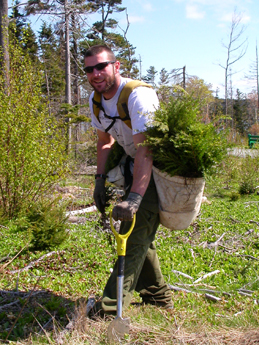
    What does a tree planter do?
    Tree planters and other forestry workers perform physically demanding work. Some of their main duties are to:
    – Clear brush.
    – Carry and plant trees using manual tools.
    – Feed machines manually.
    – Prepare a site for planting.
    – Use, clean and maintain various equipment.
    – Work with chemicals for growth, or for weed and pest control.
    – Supervise other workers.

    What are some health and safety issues for tree planters?
    Tree planters face a variety of physical, biological, chemical, ergonomic and safety hazards. These include:
    – Insect bites or stings.
    – West Nile virus (mosquitoes).
    – Lyme disease or rocky mountain spotted fever.
    – Rabies.
    – Allergic reaction to plants.
    – Exposure to bird or rodent droppings:
    – Histoplasmosis
    – Psittacosis
    – Hantavirus
    – Exposure to chemicals.
    – Risk of pain or injury from working in awkward positions, performing repetitive tasks or lifting.
    – Risk of injury from hitting a hidden rock with a shovel.
    – Exposure to extreme temperatures or other extreme weather conditions.
    – Driving – vehicle safety hazards.
    – Slips, trips and falls.
    – Working with chainsaws and other tools/equipment.
    – Stress.
    – Working alone.
    – Extended work days.

    What are some preventive measures for tree planters?
    – Learn safe lifting procedures.
    – Keep tools and equipment in good working order.
    – Use appropriate personal protective equipment (PPE) for the task.
    – Wear appropriate footwear.
    – Avoid awkward postures and repetitive manual tasks, or take frequent breaks.
    – In the warmer months, cover up for protection from sun, heat and insects.
    – Stay hydrated.
    – In vehicles, always wear a seatbelt.

    What are some good general safe work practices?
    Use safety procedures for:
    – Safe lifting
    – Selection, use, maintenance and storage of PPE
    – Working with pesticides and other substances
    – Using chainsaws and other tools or equipment
    – Follow company safety rules.
    – Learn about chemical safety, WHMIS and MSDSs.
    – Know how to report a hazard.
    – Follow good housekeeping procedures.

  • Regarding Bullying

    Regarding Bullying

    In high school, people undergo changes and are developing themselves in different ways. Due to the pressures of growing up, some people learn to adapt and cope in successful ways – such as by finding an outlet for their emotions in activities like competitive sports, clubs, individual pursuits like running or writing, or even just seeking friendship and support from others. Unfortunately, some people have negative coping mechanisms that lead them to find more destructive outlets for their emotions. Sometimes a negative coping mechanism will reveal itself as bullying. This bullying can take many forms, from verbal abuse of other people to stealing from people to physically abusing others. Bullying is a problem that needs to be addressed both with the bully and with the victim because the consequences can present themselves in different ways.

    When people are bullied they can feel sad and left out, as well as feel that they have something wrong with them that caused the bullying. These emotional wounds can take years to heal, and so it is very important to try to resolve the bullying situation as soon as possible. If you are being bullied, the most important thing to remember is that it is not your fault and that you can stand up and speak out. It may not be safe to confront the bully themselves, but by informing your principal, teachers, parents and friends, you can create a support network to protect yourself from the person or people that are harassing you. Remember that the law is on your side when it comes to bullying and any evidence that you can get for proving that the person or people are harassing you will be invaluable if you need to confront the issue with others. Try to have a friend present with you at all times so that you have a witness and a protector, or learn how to use your phone as a recording device so that you can audio record any verbal or physical abuse.

    The person or people who do the bullying have emotional wounds themselves that need to be addressed by a counselor or other qualified professional. Many times bullies have problems at home or problems with other aspects of their life that is causing them to act out in negative ways. These people may be viewed as “bad people” but the reality is that they probably have a serious insecurity or deep emotional wounding that is preventing them from growing up in a healthy way.

    By reporting a bully, you are doing everyone a favor because that person is probably bullying more people than just you. This negative situation may be painful for you, but don’t worry – bullying is becoming more and more of an important issue in schools. When you speak out, it will be received by a well-prepared and receptive audience. The issue of bullying is being covered by the media and there are more and more campaigns against it every day.

    You are not alone and your voice will be heard.

  • Writing A Scholarship Application Essay

    Writing A Scholarship Application Essay

    Getting a scholarship at any leading college or university requires immense preparation for students. One of the most challenging jobs is to submit a well articulated scholarship essay. Admission officers consider this as an integral part of the scholarship grant process. However, things have changed for the better with many websites being launched which publish numerous sample essays which can be used as a baseline for students who are applying for scholarships. Let us quickly see what these websites have to offer and how we can use the services to come out with world class scholarship essay.

    For starters, these websites ask students to create their profile. After the profile is created, students can submit any number of essays that they want. At any given point, website visitors vote for the essays after which the best five essays are shortlisted. The best among the five essays get a prize of varying amounts depending upon the website’s policies.

    Students are diligently using the services of these websites. They can read essays which they feel are closely related to their requirements and use these as a baseline to write their own original scholarship essay. Some of the websites have video tips which help the students to get better ideas of how to write a scholarship essay. Many sites also have message boards where students can come together to provide tips to each other.

    The essays which are submitted to the site are stored in the database for future reference. The concept is new and, as a result, finding lots of acceptance among students. Most of these websites have different sections which highlight the recently submitted essays and also the most popular sample scholarship essays. As we move forward we will see that there will be many more websites which will offer essay scholarships. Students are expressing their happiness at the launch of these sites. Different sections of the education fraternity have also expressed their support for many of the leading websites.

  • Getting Organized

    Getting Organized

    As we face another semester, the importance of getting organized is hugely evident. Whether you’re in Grade 9 or Grade 12, you are going to want to be sure that you know at least 4 pieces of information going in to this semester:

    1. What classes are you taking this semester? This question is really important for being able to prepare mentally for what is coming. If you know that you have five intensive classes, you are going to want to be sure to organize your social and extracurricular activities so that you have enough time to do homework. If you are also going to be working, you will want to be sure that you have organized your schedule to accommodate the extra stress of the difficult classes. This works the opposite way as well – if you have a lighter school schedule, you can pack more extracurricular and volunteer activities in to your schedule.

    2. Do you have all of the school supplies that you will need for the level of classes that you will be taking?
    Depending on what your semester has in store for you, you will need to make sure that you have at least the basics when it comes to school supplies, and you can wait until the first week of school to pick up any specialty supplies that you may need for an art or math class.

    3. Do you have a study spot that will be useful to you once the semester starts?
    Clearing off the holiday clutter from your desk will help you to start getting into “school mode”. You want to be somewhat mentally prepared for going back to school after the holiday break so that when your first assignment is due, you are ready to succeed. Feng Shui is the Japanese art of meditation and stress relief that says that having a calm environment helps to create calm in one’s mind. This is a useful tip to employ for your study area; try to keep it clean and organized so that your mind is less distracted when you need to focus.

    4. What are your rewards and landmarks along the way that will help you to keep going?
    School days can be tiring, especially if you are loaded down with courses that are heavy or difficult. You are still going to need to take some time off and make sure you allow time to have fun. Maybe your family is planning a vacation for spring break, or maybe you’ll go on a weekend shopping trip with friends. Whatever it is that you are looking forward to, be sure that you have those dates firmly implanted in your mind.When you are starting to feel stressed out, you will be able to persist because you know that you have something good to look forward to. If you don’t have anything planned, then plan something now!

  • Being Happy On a Budget

    Being Happy On a Budget

    Do you want to be rich or poor after you finish school? You might think the answer is obvious. Very few people actually choose to be poor. Being poor means constantly being careful about money and often giving up a lot of things you might want. It means living on a limited budget, but it doesn’t have to mean the end of fun.

    Most people have to live on a budget at some point in their lives. These days even highly educated people, who have traditionally earned high incomes, often have to survive on very low salaries in positions such as fast-food servers or cleaners. In difficult economic times, it can be hard to make enough money to pay the bills. In that case, how can you ever earn enough to have fun?

    Even on a tight budget, however, life doesn’t have to be bleak. With creativity and careful planning, you can still have fun even while watching your pennies. The most important thing when you design your budget is to remember what’s important to you and to plan around that. After you pay for the basics like housing, food, and clothes, you have to decide how to spend or save the money you have left.

    How you spend money depends on your situation and what you consider important. Living with your parents or with several roommates can help save a lot of rent money, or you can look after other people’s houses. If you live on your own, learning to like inexpensive foods like beans and lentils can help cut down on your grocery bills. Using coupons, looking for sales, and buying food in bulk can also help. If you find interesting recipes and know how to use spices, you can make good food without spending a lot of money. You can also allow yourself to have an occasional steak or restaurant meal to make it easier to stick to your budget.

    Entertainment can still be part of life on a budget. Instead of going to the movies on Friday evenings, you can spend time at a park or the zoo or attend a free cultural event like a concert. You can make gifts for people instead of buying them and you can turn a trip to the dollar store into a fun outing with friends. You can share your belongings with others and borrow from them, and maybe make new friends at the same time.

    Learning to live on a budget might even help you get a good job. Employers who are looking for people to manage budgets, for example, might be impressed if you know how to get the most out of a small amount of money. The leadership and cooperation skills you learn while living on a small amount of money might also be valuable. Even if that doesn’t work, you can still use the skills you’ve learned throughout the rest of your life.

    Living on a budget doesn’t have to mean the end of fun; it can be a beginning of something new and exciting. With creativity and determination, you can make a low income work for you.

  • Confidence Boosting Tips

    Confidence Boosting Tips

    Imagine for a second a world where you truly believe you can do anything; where the words “I can’t” no longer exist as part of your vocabulary. A place where you are as great as you always dreamed you could be. Now imagine that as your reality. Sounds great, doesn’t it?

    As great as it sounds, many of us have a hard time when it comes to self-confidence and self-esteem. Maybe it’s because from an early age we are taught not to “toot our own horn” too much or we will seem arrogant or egotistical. Doctor Bobbe Sommers, a world-renowned psychologist, said, “Having a low opinion of yourself is not ‘modesty’. It’s self-destruction. Holding your uniqueness in high regard is not ‘egotism’. It’s a necessary precondition to happiness and success.”

    But what does that mean and how do we hold our uniqueness in high regard?

    I have compiled a list of confidence boosting tips that may help you gain the happiness and success you want from life.

    –Discover yourself: Get to know you. Listen to what you are thinking and feeling. Know what you want and why you want it. If it helps, keep a journal to help you understand yourself better.

    –Make a list every day: On the list write at least three things you really like about yourself. For instance, “I like how I can make people laugh even in uncomfortable situations” or “I like my eye colour.” It can be absolutely anything you like about yourself. This will help remind you why it’s great being you.

    –“Dress for the job you want, not the one you have”: This may be an old cliché, but it’s stuck around for a reason. One of the best ways to feel good about yourself and to boost your self-confidence is to look good. Have a shower, do your hair, brush your teeth, wear nice clean clothes and comfy shoes and head out in the world with your head held high. This will surely get you noticed and get people to take you seriously.

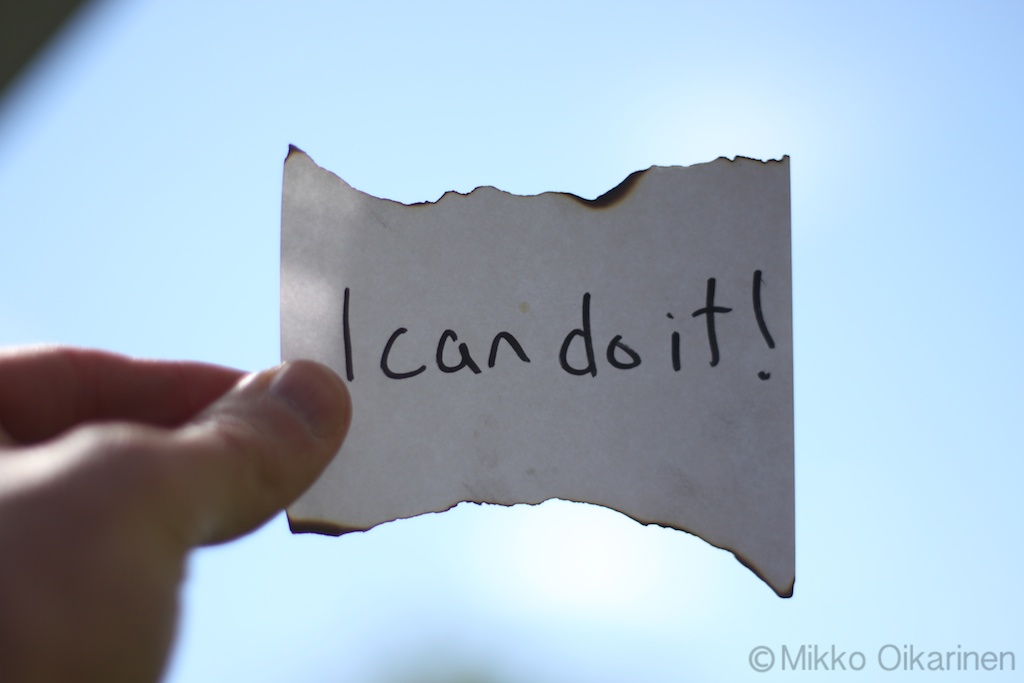
    –Remove the word can’t: Stop saying “I can’t do that” before you even try. Fear of failure is common and sadly it prevents most of us from doing things we’ve always wanted to do. To overcome this, think positively – don’t think of the worst possible scenario. Picture yourself succeeding. Some of the greatest experiences you will have in this life will come from overcoming things you thought you couldn’t do.

    –Treat others the way you want to be treated: It’s karma, baby; the idea you get back what you send out into the world. So send out the good, and always remember to treat others fairly and kindly.

    –Be prepared: One of the best ways to improve your self-confidence is by being prepared. Whether it’s a test you need to study for, a university application you need to complete or a big basketball game coming up, make sure you are ready. Stop putting stuff off and get to it already. You will feel more confident if you are ready to face what’s ahead.

    –Be grateful: Don’t dwell on what you don’t have. Be thankful for all you do have.

    –Exercise: It’s a great way to immediately boost your mood. It also helps in the long term to boost self-confidence. You will be healthier, happier and more sure of yourself.

    –Listen to your favorite song: Nothing gives me an instant boost of confidence and energy, especially in the morning, as my favorite song. It really helps me have the right attitude to face the day with.

    The most important thing to remember is to think positively. If you believe you are good enough, the world will see you that way.

  • It’s Only Hard Until It’s Not

    It’s Only Hard Until It’s Not

    Walking, tying your shoes, reading, riding a bike, solving equations…they all seem hard to do at first. But suddenly, one day – it’s not.

    We generally enjoy doing things we are good at because they are easiest. But when it comes to post-secondary education, this would be the wrong mentality to have. College is not easy and requires a lot of dedication. Be sure to pick a course you’re passionate about, but don’t be discouraged if it gets hard. You’re definitely not the only one feeling that way! There IS help. Find out what services your school offers and use them. Most schools have tutors, counselors and other friendly staff who are there to help you succeed.

    Do not let the difficulty of a particular course effect you personally. Accept that it will be hard and devote yourself to getting through it. Remember – no program is made to be impossible. The best part of learning is surprising yourself about how much you can do. The more you do it, the easier it will become. Giving up is easy, but generally the easy choice is never the right one.

    Never say you can’t do anything. The ones who quit so easily without giving it their all are the ones who never really intended to stay. If you are someone with low self-confidence, try saying or writing down some daily affirmations. It may seem silly, but there’s magic in it. Say, “I am strong enough, I am smart enough, I can do it,” over and over again. Looking into the mirror is the best way to do your affirmations because you are confronting yourself. Motivational speaker Tony Robbins said, “People who fail focus on what they will have to go through; people who succeed focus on what it will feel like at the end.” This is what you should focus on, not the obstacles. Think back at other goals you have never accomplished; goals you had set for yourself a year of more ago but gave up on. Now think about what you could have accomplished had you not given up on that goal. Before you submit your application to the program of your choice, go see a counselor and talk to them about it. They know what the courses consist of and can help you make the right decision for you.

    It’s your life, it’s your time, it’s your future!

  • Gossip Is Bad For You

    Gossip Is Bad For You

    Gossip is something that is very prevalent in high school, generally due to all of the changes that people are going through. With any luck, gossiping will diminish as you grow up and move on with your life. It is a type of conversation that is not very productive in terms of creating positive change in communities, and in fact is often the source of a lot of unnecessary harm and pain.

    An interesting quote I read recently said: “Great minds discuss ideas, average minds discuss events, and small minds gossip about people. Life is much too short to be lived talking about people, gossiping, and stirring up trouble that has no substance. If you don’t understand someone, ask questions. If you don’t agree with them, tell them. But don’t judge them behind their back to everyone else” –Entrepreneur Secrets 2012.

    This quote draws attention to the fact that there are often conversations that you would rather avoid, because they are nothing but mean-spirited and a waste of time. I disagree with the quote because I think that there is a time and a place for gossip. Often talking about other people is a way of understanding the social world that we live in, which is just as important as understanding anything else. Sometimes not talking about other people is a mistake because you don’t have an opportunity to digest what another person is about. People are interesting, and talking about them is not always a waste of time. The linchpin is the intention that you have when talking about other people. If you are attacking someone out of mean-spiritedness and to gain power over that individual, you must be bored or looking to “stir trouble” like the quote above says.

    I agree with the above mentioned quote in how they draw attention to the fact that not understanding someone should bring you to asking more questions. This is really true, because most of the time other people are misunderstood simply for lack of information. This is not something to capitalize on with gossip, but rather an opportunity to learn more about something that you don’t understand. A popular old adage states “don’t hate what you don’t understand”.

    In school and work situations, there will always be times when people will say or do things that you don’t agree with. It is during these situations that it is healthy to vent about the outcome of a certain conversation or event. The distinction to be made, however, is between attacking someone’s character and attacking their words or behaviours. There are relevant points and there are irrelevant points when talking about other people. If you are trying to capture them as an individual with pros and cons, this is usually a better approach than trying to twist them into a character with only cons. Most people are not evil, so spreading rumors and creating a monster out of someone else is simply mean and counter-productive.

    So resolve to stop the bad gossip in 2013!