Tag: advice

  • Writing Effective Cover Letters

    Writing Effective Cover Letters

    A cover letter is the first thing a potential employer sees, even before they look at your resume. Without a strong cover letter, they may not even get that far.

    Cover letters are more often sent by email these days, with your resume sent as an attachment. But, whether print or paper, the anatomy of a cover letter is essentially the same. You open with a greeting, state the position you’re applying for, outline your qualifications, and sign off.

    It may sound like a lot, but your cover letter should only be about one page long.

    Greeting
    Start it as you would a letter, “Dear So-and-So.” Using “Hi” or “Hello” in place of “Dear” may come across as too casual.

    If possible, your letter should be addressed to the specific person doing the hiring, and lead “Dear First Name Surname.” You can find this out from the ad, through a contact who already works there, or by calling up the human resources department and asking. But if not, “Dear Hiring Manager” works in a pinch. However, going the extra step will help your cover letter stand out.

    In the past, you’d preface the name with Ms or Mr, but these days it seems a little fussy and can quickly become confusing for gender neutral names.

    Position You’re Applying For
    Following the greeting should be a short statement about the position you’re applying for – “Please consider my application for [position title] at [company].” You may want to include a note about how you heard about the position. If a friend or family member who already works for the company recommended that you apply, the hiring manager will take a closer look at what you have to offer.

    Your Qualifications
    This is the most important part. It’s what gets them to flip to your resume and call to arrange an interview. Depending on your level of experience, this section may be one to three paragraphs long.

    The focus should be on showing how your skills meet the employer’s needs. Highlight the work, volunteer, or personal experience you have that demonstrates you’re a perfect fit for the position. Don’t just give a bald work history – they can read that in your resume. Instead list your professional skills, soft skills or interests, how you won employee of the month, or had the highest sales during the holidays. If you’ve taken any certified courses relevant to the position, be sure to include them here.

    Closing Remarks
    Close with something courteous like, “Thank you for your time and consideration. I look forward to hearing from you.” On another line, your valediction, “Sincerely,” or “Regards,” another line break, your name, phone number, and email address.

    Look It Over
    Once it’s finished, look it over and make sure it flows. Don’t solely rely on spell check to catch spelling and grammar errors. “Deer” may be spelled correctly, but if you write “Deer Jane Smith,” you’re going to look pretty silly – and even sillier if it’s actually “Jayne Smyth.” Triple check the spelling – there’s nothing more embarrassing than getting someone’s name wrong.

    It’s a good idea to have another pair of eyes go over it. Have a friend or family member who may be able to offer suggestions or catch any typos or omitted words you might have missed.

    Good luck!
  • Reasons to Use Kids Help Phone

    Reasons to Use Kids Help Phone

    Kids Help Phone is a free, anonymous resource that is there for you 24/7. Its purpose is to give young people someone to talk to when they feel they have no one who will listen to them. It is important to know that there are people who care and want to help you with any problems you may have. Kids Help Phone has many uses – here are just a few.

    1) You need an objective opinion or want to ask questions anonymously.
    If you need to talk with someone who will listen to what you’re going through, and you don’t trust or want to speak to friends or family, then the Kids Help Phone is a great resource for you. Sometimes you don’t want the people closest to you to know what it is that you are feeling or thinking about. It may be because of a fear of losing their respect or simply of changing the image that they have of you. Whatever your reason, speaking with someone who is trained and knowledgeable on how to handle the information you will share with them is often a good option. When you call the Kids Help Phone you can rest assured that the information will remain confidential, unless it involves information that must be reported to the police (such as reporting a threat to your own or someone else’s life).

    2) You are undergoing a traumatic period in your life and would like support.
    Sometimes we suffer because of life’s circumstances, and in this case it is really important to talk with people about what you are going through. You may not want to talk with friends or family because you feel they may not understand, but with Kids Help Phone you can talk to a person who has been trained in dealing with emotional crises. They will be able to talk to you about relationships, sexuality, drugs and alcohol, eating disorders or anything else that you feel is affecting you.

    3) You want to speak with someone who will listen to you.
    Often in the hustle and bustle of everyday life, there is so much going on that we can feel ignored or that we don’t matter. It can be very hard to find someone who will just listen to what it is that you are going through. The time rarely comes up where you feel it is okay to pour out your soul, and because of this you can be left with some important issues bubbling just under the surface. It is important to “vent” and to talk about your life and what sorts of challenges you are facing.

    4) You need to report an incident.
    If you don’t feel comfortable speaking directly to the police or don’t know what to do after an incident, the people at Kids Help Phone will listen and help you to deal with the situation. This can range from bullying, an incident of physical or sexual abuse or a crime like theft.

    5) You are in a crisis and need to talk to someone as soon as possible.
    If you are feeling that you are in a crisis and are having thoughts of suicide, a counselor at the Kids Help Phone will be a great person for you to speak with. They can help to “talk out” your problem and ensure that you get the assistance you require. Remember that you are never alone! Suicide is not the answer. Reach out to someone at Kids Help Phone and they will be there for you when you feel no one else is.

  • I Think I’m In Love! Handling a Crush

    I Think I’m In Love! Handling a Crush

    Like their first kiss and their first love, most people can remember any number of details about their first real “crush.” The butterflies in their stomachs, the dry mouths, the sweaty palms, the racing hearts – it may all sound gross, but these symptoms are exhilarating when you get to pair up with your crush for a science experiment, sit next to your crush on the bus or manage to eat a whole lunch by your crush’s side. Unfortunately, the title “crush” is apt as it is very easy to be crushed if you find out that (s)he does not return your affections. Don’t be crushed by a crush! Instead, follow these tips for moving on and moving up to someone who deserves your special attention.

    Defining a Crush
    A crush, unlike a relationship, is not a two-way street. Often you’ll realize that you feel a strong attraction to someone you barely know, for reasons you barely understand, and that this, in all of its glory, is a crush.

    Signs of a Killer Crush
    Even if you know better, falling hard for a crush can be unavoidable. Signs of a killer crush include:
    • Wanting to be near him/her, even if you don’t know his/her name, and (s)he wouldn’t know yours.
    • Wanting to find out as much as you can about your crush and searching for clues to “prove” your compatibility.
    • Changing your habits or schedules to coincide with theirs.
    • Feeling embarrassed or flustered when your crush pays attention to you.
    • Reacting nervously when you are physically close .
    • Obsessing for hours about a hypothetical future with him/her.

    Coping with a Crush
    Living with a crush isn’t easy – in fact, it’s hard work. Having a crush makes it hard to concentrate, it makes it hard to eat and it especially makes it hard to sleep, even if you are hoping to meet up  somewhere in your dreams. To make sure that the rest of your life doesn’t fall apart for the duration of your crush:
    • Confess your crush to your friends and ask them to distract you.
    • Throw yourself into schoolwork to make sure you don’t fall behind (and who knows, maybe by standing out you’ll catch your crush’s attention).
    • Take up a hobby that will get you out of the house and get you moving.
    • Give yourself enough time alone to fantasize , but don’t let it interfere with your real life.

    Living with a crush can be a wonderful, magical, painful, torturous time. Allow yourself to enjoy the frivolity of a crush, but don’t let your feelings override your common sense. Don’t risk your safety, or your reputation, in order to get your crush’s attention. In other words, don’t irrevocably change your life for a crush that will likely disappear as quickly as it began.

  • Teen Make-Up 101

    Teen Make-Up 101

    It wasn’t until I was 14 that my father would even allow the sight of lip gloss on me, and only on special occasions. As I started to flirt with makeup throughout high school, I learned just how tricky these magic wands of beauty could be. Raccoon eyes to smudged lips, I could have saved myself a lot of embarrassment learning these tricks sooner;

    Softer is better – Your best intentions for recreating that bold and glittery Kesha look-a-like can leave a smudged, clumpy mess that even lunch period isn’t look enough fix. Trying too hard with your makeup is a lot like trying too hard with a guy. A disastrous mess that everyone can see. Instead, try for a softer, natural look. Think Taylor Swift and Selena Gomez. Freshen yourself with a little eye shadow, a shade of colour to your lips and maybe some mascara to highlight the look.

    Tailor to your features, not your clothes– You might think sparkly blue eye shadow would be the perfect thing to accent that new blue sweater, but going too matchy-matchy will only age you – all the way back to the 90’s. Instead try warm browns for blue eyes, mellow greens or gold for brown eyes and lavender for green eyes. Lipsticks and stains should only be one or two shades darker than your natural lip colour. Otherwise things can get a bit….dramatic. Case and point, that great-aunt of yours.

    Keep it Clean– Nothing, not even that 1200 word essay in history, can spoil the week faster than a full pimple break out. You may think caking foundation on will make those unsightly pimples disappear, but in reality they will be setting up shop. Invest in a good facial soap and clean off your makeup every day after school. And never, ever, EVER go to bed wearing makeup; a stained pillow will be the least of your worries.

    It’s OK to ask for help – Learning all this at once is a long and bumpy road, so why not cash in on others’ experiences? Older sisters, friends and even class mates may have a gold mine of experience to spark up your look. Don’t be afraid to ask around. Once you get your artistic flare rocking, they might be asking for tips from you!

  • Coping with Jealousy

    Coping with Jealousy

    Jealousy occurs in most human relationships at one time or another. Whether your relationship is an intimate one, a friendship or even co-workers.

    For most teens there will come a day when you realize that one of your friends is jealous – whether it be of who you are, what you’ve done or something you have – and that this jealousy is hurting your friendship. Sometimes, when this happens, it feels like there is nothing you can do. But the good news is that there is! Don’t let jealousy spoil your relationships. Confront the problem and you may find your relationship will be back to normal much sooner than you think.

    Confront Your Friend
    You may find it difficult to walk up to your friend and ask them what the problem is, but if you want to save your friendship you’ll have to do just that. Don’t approach them and ask why they are jealous of you (unless of course you want to appear totally conceited), just take some time alone with them and let them know that you’ve been feeling like there’s something that has been coming between you and that you cherish their friendship. If they refuse to respond, then use the opportunity to explain how you have been feeling. Chances are that something you say will strike a nerve and your friend will open up as well.

    Find a Solution
    When you figure out what is freaking your friend, ask him or her what (s)he thinks would make the situation better. If, for example, (s)he say that (s)he feels like (s)he doesn’t get to spend any time with you because you’re off with your new friends from the swim team, then maybe you could invite them along the next time or block off one day a week for just the two of you. Remember that whatever solution you decide on needs to be a compromise. Don’t limit your own talents or opportunities simply because your friend is unhappy. Try instead to include him or her in your new life and see how that works out.

    Practice Your Patience
    Even if you do get to the bottom of your friend’s jealousy, you’ll probably need to remain patient while (s)he works out their own emotions. Even if you can think of a compromise to help get your friendship back on track, you can’t do the emotional work of getting over jealousy for your friend. You may even find there will be troubles up ahead, and you may need to chat with your friend about it again. If it turns out to be the same issue, tell your friend that you feel you have been sticking to the compromise. It may be that your friend is unable to see that, or (s)he didn’t really commit to the compromise and wanted you back all to him or herself. If this is the case, then there’s not much you can do about it besides reiterate your offer to meet him or her half-way.

    Even the best of friendships can be affected by jealousy. This destructive emotion is rarely productive and can turn best friends into worst enemies. Before taking drastic action, chat with your jealous friend to see if the two of you can work out a compromise. If you can’t, be prepared to know exactly how far you will go to keep your friend – and how far you won’t.

    Remember, don’t limit your own talents or opportunities simply because your friend is unhappy.

  • Stop Bullying – You’ll Have More Friends!

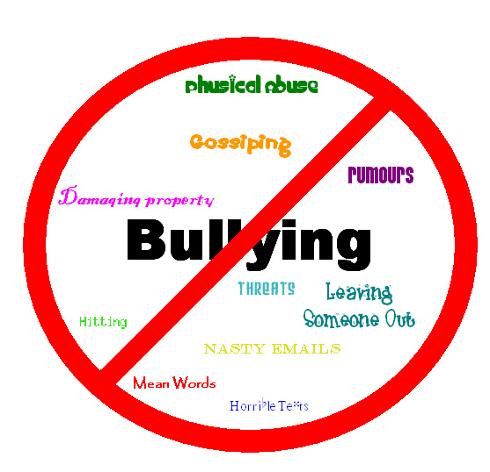
    The issue of bullying has been talked about a lot over the past year in the media and in schools. In particular, the bullying of LGBT youth has led to many unfortunate cases where suicide felt like the only way out. Are you or someone you know being bullied? Are you a bully? Ask yourself these important questions and you can make a difference in by taking steps to change your behaviour or helping those who you see being bullied by others.

    If you have bullied others, think of the reasons why you did it. Did you want to look cool in front of your friends? How did it make you feel after you bullied the person? One of the best ways to stop this behaviour is to put yourself in the shoes of the person being bullied. If you were called those names, reflect on how you would feel. Often, realizing the power of your words is the best medicine to stop such actions.

    Don’t put yourself into a box – just because you may have bullied people before, it does not mean you still have to do it now. The power to change is within all of us! By changing your behaviour, you will positively impact everyone around you. Be the person in your school who sets an example and says no to being a bully. Change starts with one person and grows larger from there.

    If you have been bullied, or are currently being bullied, reach out to someone you care about. If you feel like they would not understand, or you don’t feel comfortable talking to them, there are many anonymous and free services where people are ready to help you at any time of the day. Kids Help Phone is a great example. Even though it may seem futile, talking with someone and having a human connection with someone who wants to listen to you and help you is extremely beneficial to your mental health. Someone who is “outside” of your situation can give you advice that you may not hear from someone that is close to you. The anonymity of a service like Kids Help Phone allows you to be completely honest about your thoughts and feelings without the fear of being judged.

    You can also volunteer to help with programs that raise awareness about the effects of bullying, or create your own campaign in your school. Awareness of the issue will give others the confidence to speak up when they see someone being bullied.

    If you need help, please do not hesitate to reach out to someone. There is strength in numbers, and you will get through this.

  • Don’t Like Your Boss? Be Nice Anyway

    Don’t Like Your Boss? Be Nice Anyway

    The working life can be hard. Poor pay, bad hours, unappealing work and unhelpful co-workers can sometimes seem to follow you from job to job. On top of all that, the presence of a ‘bad-boss’, and whatever that may entail, can make it all the worse. Whether making you work those extra hours on a Friday night or just putting extra pressure on you, the knee-jerk reaction may just be to fire back on all cylinders; to yell, scream or be passive-aggressive to the individual who sometimes seems so comfortable doing the same to you.

    The appropriate response is, however, simpler: be nice.

    It is always important to stand up for yourself but you have to bear in mind that you are this individual’s employee and it is your job to cater to both their needs and the needs of the job, within reason.

    Hopefully instances such as this, where you are forced to deal with an unpleasant work environment, are few and far between, but they do (unfortunately) exist. Many bosses are easy to work with – are even constructive and friendly – but it is important to remember that your boss is your boss, whether amicable or not. They are an authority figure within the confines of your workplace and it is important to do your best to maintain positive relations with them to the best of your ability. Why? A friendly attitude may bring about some better hours in the future but more importantly: the reference.

    The importance of a letter of reference or positive referral from a previous boss cannot be understated when looking for a new job. A glowing letter of recommendation from a past employer may be what it takes to elevate your resume over those of your peers. So be nice to your boss. Do your best to keep a positive attitude during those extra hours at work – what’s there to lose? The worst case scenario is that you’re friendly for no reason. The best case scenario is that you cultivate a good working relationship with your employer, obtain a good referral (or perhaps invitations to come work with them again) and improve the overall working environment of wherever you may find yourself employed.

    So be nice. It can be difficult sometimes, but if you can manage to rise above your negative feelings for your boss or workplace you’ll be enjoying yourself in no time.

  • Study What Interests You

    Study What Interests You

    Going to college or university is a pretty big deal and the program or courses you choose can impact your future success, both financially and in terms of doing something that excites you.

    You may already know exactly what you want to major in, or you may not. Either way, don’t panic. Many students begin college or university without a clear idea of what they want to study or what kinds of jobs they’ll be qualified for at the end of their studies.

    The perfect mix
    We take courses to expand our knowledge, hopefully in things we’re interested in, so we can find ways to enjoy what it is we do for a living – however far on the horizon that may be.

    The perfect job covers three main points. It’s: 1) something you’re good at, 2) something other people will to pay you to do, and 3) something you’re interested in or excited about. The sweet spot is right at the center of all three.

    Study what you’re good at
    If you’re good at something, it may be because you’ve spent a lot of time doing it because you enjoy it or simply because it comes naturally to you. Either way, taking courses where you’re likely to get good marks can beef up your transcript and you may find that these courses lead to new opportunities. They may be requirements for another course, or you may discover new aspects of the course that lead to something you’re more interested in.

    Study what other people will pay you to do
    Long term, you probably want a career you’ll enjoy where you have opportunity to do new and interesting things, but there are few jobs available playing video games or ultimate frisbee (though they do exist).

    Check out career fairs and look online for jobs related to what you like to do and see how other people are able to make money in related fields. You’d be surprised by the variety of jobs available, and it helps to have something to work towards.

    Study what you love
    School’s expensive, both in money and the time it takes to complete the coursework, so you might as well spend it doing something that you find inspiring. The best courses are sometimes the most difficult because that’s where you find room to grow, expanding your knowledge and skills.

    You may be able to take electives in subjects that are outside the scope of your larger program, but ones that are fun and teach you things you never knew you were interested in. Don’t be afraid to take advantage of these opportunities when they arise.

    Explore your options
    Look for programs or courses that complement your strengths, attributes and interests – it can make all the difference. Choosing a path you feel comfortable with, that builds confidence and challenges you to accomplish more, can be incredibly rewarding.

    The earlier you begin, the easier it is to create a map of where you want to go. And don’t worry about making wrong decisions; you can always change track if something more suitable comes up.

    While the sweet spot may be where these three things collide, also consider courses which only hit two of these points. Take a look at course catalogues for different universities and see what’s out there.

  • Bullying Is Everyone’s Problem

    Bullying Is Everyone’s Problem

    There is no doubt that bullying is a problem which has been around for a long time – within all forms of human interaction, there have always been those that not only feel superior to others but feel the need to demonstrate this at any cost. Where bullying was once mostly confined to the schoolyard, now more and more children are plugged in to the internet. This has made the problem significantly worse, becoming more insidious, dangerous and sometimes even fatal.

    By now, most people will have heard about the B.C. girl who, having been relentlessly bullied for a number of years online, combined with her allegedly fragile state of mental health, felt it was necessary to end her own life. Sadly, she is certainly not the first to do this and will not be the last. While it is impossible to find any shred of positivity in the current situation, the fact is that social media allows more people to become aware of the severity of the problem. Although bullying will likely never be completely eliminated, this may lead to concrete measures being taken to severely diminish it over time.

    While it is obvious that the bully and the bullied are the central players, the problem of bullying is far-reaching, affecting family, friends, entire schools and workplaces. It is no surprise that the majority of people who are aware that some form of bullying is taking place are more likely to ignore it rather than take action. However, it is a fact that by becoming involved, whether simply standing up to the bully on behalf of the victim or making friends with the victim (who are often in great need of friends), the bully will think twice about his or her actions. Of course, this is not always the case and sometimes a greater degree of intervention is needed.

    The first step for anyone being bullied, or for those that suspect it is happening to someone, is to speak up. It is widely believed, particularly among kids, that ‘telling’ is akin to ‘tattling’ which is just not the case. The fear also may be that by telling someone they may inadvertently make the problem worse by angering the bully. While this is a genuine concern, it certainly should not be a reason to remain silent. Making bullying known through Facebook or some other form of social media may not always be the best idea as this can leave the victim open to even more abuse and torment from anonymous comments made by online bullies and ‘trolls’. Even if the victim is reluctant to speak up, they can still get support through one of the many anti-bullying organizations that exist online such as www.kidshelpphone.ca, www.pinkshirtday.ca and www.antibullying.net.

    While it is obviously the victim of bullying that requires the most immediate help, one shouldn’t forget that by letting them continue their behaviour, the bully’s future can also be put in jeopardy. It is rare that a bully simply bullies for the sake of it and by getting help early on they can avoid problems later in life. According to Free From Bullies, 60% of adults aged 18-24 who once bullied end up with criminal convictions, a fact that can have an effect on society and the economy as a whole.

    There is no simple solution to the problem of bullying and it is very sad that even adults who should know better can be just as guilty as children. The problem will not be stamped out overnight, but through talking, understanding and, most importantly, taking action, we can make small steps to fight back.

  • Five Steps to a Strong Essay

    Five Steps to a Strong Essay

    Writing essays shouldn’t seem like a massive burden. Just try to follow these five simple steps.

    Step 1: Think
    Ask yourself, “What is the purpose of this assignment?” The assignment is meant to assess how much you have learned in class. Keep this in mind constantly from when you begin to write to when you revise your final draft.

    Step 2: Brainstorm
    Depending on the assignment’s requirements, decide what you want to say in the essay. Make a list of what you want to write about and don’t hesitate to write down any and all ideas that enter your mind. The more, the better.

    Step 3: Plan
    Planning your essay might be the most important step. Once you have determined what it is you want to say, you will now need to map out how you’re going to say it. A typical essay format might look something like this:

    Introduction with a thesis statement that says your essay will be about topics A, B and C
    Body paragraph that describes topic A
    Body paragraph that describes topic B
    Body paragraph that describes topic C
    Conclusion that restates the introduction (but does not repeat it verbatim)

    Step 4: Write
    Choose the items on your brainstorm list that you want to use in the essay and write a full sentence for each. These sentences might become the topic sentences for your body paragraphs. It doesn’t matter (yet) exactly how you will say it, but rather that you have included everything your teacher has asked for. Don’t worry about writing formally or even completely logically. Just write. You can improve your work later. Sometimes it is helpful to say what you want to write out loud. Tell a sibling, parent or friend about what you are trying to say and then work what you have said to them into sentences in your essay.

    Step 5: Edit
    Edit your work at least three times. Every essay you write should go through several drafts. If you have done a good job of editing, your final draft will likely be significantly different from the first. (Hopefully you will have completed the first draft early enough to edit and not the night before the assignment is due!) Read your work through once from the beginning to end without stopping to make sure the sentences flow and the paragraphs are logically connected by transition sentences. Read your work through twice to make sure the thesis statement (which explains what your essay is about and which is usually the last sentence of your introduction) describes what you have written in the body paragraphs and vice versa. Read your work through a third time very slowly to check for spelling and grammar mistakes. Then ask someone else to read your work through in case they spot anything you might have missed.