Tag: apprenticeship

  • Motorcycle Mechanic

    Motorcycle Mechanic

    Motorcycle mechanics work on motorcycles and other units such as motor scooters and all-terrain units. They inspect, clean, test, assemble, diagnose, maintain and repair engines, transmissions, drive systems, steering assemblies, braking systems, chassis, suspension, electrical systems, vehicle management systems, fuel systems and exhaust systems.

    Motorcycle mechanics work on motorcycles and other units such as motor scooters and all-terrain units. They inspect, clean, test, assemble, diagnose, maintain and repair engines, transmissions, drive systems, steering assemblies, braking systems, chassis and suspension, electrical systems, vehicle management systems, fuel systems and exhaust systems. They may specialize in repairing, rebuilding, customizing or servicing these systems or assemblies.

    Motorcycle mechanics work with hand, power, pneumatic and measuring tools, shop equipment, and diagnostic and testing tools. Reference material, documentation and computers are also necessary tools in this trade.

    Motorcycle mechanics may work in service shops of motorcycle dealerships, manufacturers and retailers or in independent service establishments. They may specialize in specific motorcycle, scooter and all-terrain unit makes or types.

    The work environment may include noise, fumes, odours, hazardous compounds, drafts and vibrations; therefore, safety procedures are important. The work often requires considerable standing, bending, crawling, lifting, pulling and reaching.

    Some important attributes of motorcycle mechanics are good hand-eye coordination, mechanical aptitude, time management skills, document use, numeracy, logical thinking and decision making skills, excellent communication and the ability to educate themselves as technology advances. They must also be competent to test ride units.

    Experienced motorcycle mechanics may advance to supervisory positions, shop foreman, service manager or instructors. Some mechanics may open their own garage or motorcycle specialty shop. With additional training, motorcycle mechanics can transfer their skills and knowledge to related units and equipment such as, but not limited to, snowmobiles, watercraft and outdoor power equipment.

  • Career Profile: Roofer

    Career Profile: Roofer

    Roofers install, repair and replace flat and sloped roofs. They work with membrane roofing systems that consist of a variety of materials with different application methods. They also install, replace and repair shingles, slate, shakes, roofing tiles, sheet metal and other preformed sheeting on sloped roofs.

    Essential Skills
    Reading
    Roofers read instructions on work orders as well as application and installation instructions for roofing products and materials. They read information sheets to learn about new products and materials. They also need to refer to blueprints and specifications to complete roofing jobs.

    Document Use
    Roofers reference documents such as work orders, plans and specifications and site specific safety plans that are required for construction, alteration and repairs. They identify the location and orientation of parts in assembly drawings of equipment. Roofers read Workplace Hazardous Material Information System (WHMIS) documentation to obtain and follow safe handling and application procedures.

    Writing
    Roofers may write in logbooks and on contract forms and work orders to describe the work that needs to be done. They may fill out maintenance and inspection reports. They are required to complete safety documents according to jurisdictional regulations.

    Numeracy
    Roofers measure the length, width and height of roof surfaces so they can order the correct amount of materials to complete a roofing job. They also use drawings to calculate material requirements. Roofers use numeracy skills to determine the layout of shingles. They may use thermometers to measure the temperature of roofing materials and working environments to ensure conditions are appropriate for application of the materials.

    Oral Communication
    Roofers communicate with colleagues, other trade workers, manufacturers and supervisors to discuss and review job and safety requirements. They speak to customers to explain procedures used for application and disposal of roofing material. They may also use specialized communication such as hand signals to communicate with crane or hoist operators when moving material and equipment.

    Thinking Skills
    Roofers use problem solving skills to address oversights and discrepancies on the job site. They assess roof conditions and consult with supervisors and clients to adjust the scope of a roofing job. They must anticipate changes in weather to prevent damage to an existing roofing structure and to roofing material. Roofers use decision making skills to decide the start and end of work considering factors such as weather and the availability of supplies and labour. They use critical thinking skills to judge the quality of finished roofing jobs. They also test to make sure roofing materials are sealed and have adhered properly.

    Working with Others
    Most roofers work collaboratively on teams to complete roofing projects. They discuss safety, work processes, installation improvements and quality control.

    Computer Use
    Roofers may use email to communicate with others in the industry. They may also use the internet to look up product and safety information.

    Continuous Learning
    Roofers are continuously learning in order to keep abreast of new roofing products, application procedures and safety precautions. They take WHMIS and provincial construction safety courses, as well as other safety-related courses to stay current. Manufacturers sometimes provide training on their products. Roofers may also learn from manuals and newsletters.

  • Career Profile:  Farmer

    Career Profile: Farmer

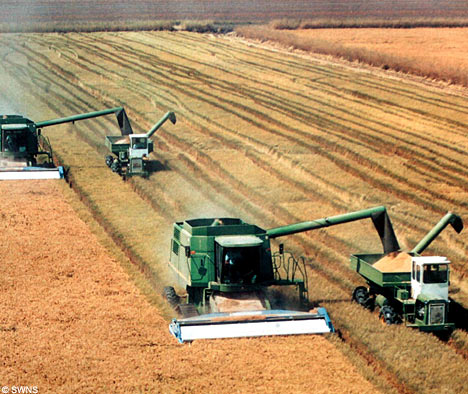
    Every day, people cook and eat food that has come from farms. Bread comes from grain that grows on farms, and fruits and vegetables also often come from there. Milk, cheese and eggs come from animals that live on farms, and also much of the meat that people eat. Farmers grow the food and take care of the animals so that people in the cities and around the country can eat. Working as a farmer can be a difficult and dangerous job, but it is an essential part of every society.

    Farming is a very old occupation which is found in almost every part of the world. People living in North America have grown crops like corn and beans for hundreds of years. However, when settlers came from Europe they brought many other crops with them. Farmers found that British Columbia, with its warm winters and wet climate, is good for growing many types of fruit like peaches and apricots. They discovered that they could grow grains like wheat and barley in places like Manitoba and Saskatchewan, with long, cold winters and short, hot summers.

    Flexibility is an important part of being a farmer. In the past and even now in many countries, farms were small and farmers would be involved in many different types of work. Besides growing grain, vegetables and fruit, they might raise chickens for eggs and for meat, keep bees for honey and possibly even raise fish or other animals. However, in countries like Canada, many farmers concentrate on growing one type of food, such as grain or fruit. They learn how to prepare the soil, fertilize the plants and care for everything the plants need to grow and thrive. Farmers who work mainly with animals learn how to deal with medications, diseases and injuries and to help the animals with finding food and other needs.

    Farming can be a tough job. Grain, fruit and vegetable farming tend to be very busy in spring, when farmers plant their fields, and in fall when they harvest the crops. Animals require a lot of care throughout the year, and many farmers wake up early every morning to milk the cows or to take the animals from the barn to the fields. When diseases hit the crops or animals, farmers can lose a lot of their earnings. Their income depends on the weather, the soil, the health of their animals and many other factors. Farming can also be a very dangerous occupation with all of the accidents that can happen.

    Despite the difficulties of farm life, many people enjoy it. Sometimes, people who grow up on farms decide to take over when their parents retire, but others start out on their own. A degree in agriculture is helpful but is not necessary, since farmers learn a lot from other people and from experience. Farming can be a very good life for people who love to work with their hands and to be outdoors. You might want to consider this ancient occupation.

  • Following Your Heart Into the Trades

    Following Your Heart Into the Trades

    Sometimes it might feel like you’re pressured to have your entire future planned out already. This is a false misconception, especially with the rapid way education and workforce demands are changing. The idea that you need to pursue one life or career path is an outdated one in today’s fast-paced, technologically driven society.

    Unlike in past decades, in the last few years education and work has shifted. It is now becoming more and more common for students to take several programs before they decide on one that they actually enjoy. It is also becoming more common for older members of the workforce to go back to school to re-train or take on new skills and professions to keep up with the competitive job market.

    It may seem like there is a lot of pressure to get into a good college or university or else you won’t be considered “successful”, but this is simply not the case. Many other fields, especially the trades, are accepting employees right out of high school. Due to the growing demand in Canada for tradespeople such as welders, plumbers, pipe fitters, and electricians. Some trades workers are making $50 or more an hour at the age of only twenty-four.

    Money isn’t everything, however, and the most important part of life is enjoying it, which pretty hard to do when you’re doing something that you hate. Yes, money is necessary for things like rent, food and entertainment, but its much more important to be happier and emotionally stable than depressed from spending every day doing something you do not enjoy.

    The world is a large place, and with the internet at your fingertips there is almost no limit to what you can be and accomplish if you set your mind to it. Just because one thing doesn’t work out it doesn’t mean something else won’t. You may even stumble into something that you really enjoy without thinking about it.

    In today’s constantly evolving job market, it’s not uncommon for people to re-train, re-educate and switch professions many times in their life. There are students who spend years at university for a Master’s program but end up going into the trades.

    So while it seems like there is a lot of pressure to choose an education path now, it is important to remember that money and prestige aren’t necessarily going to bring you any sort of happiness – but finding something that you love to do certainly will.

  • What Does it Mean to Be an Intern?

    What Does it Mean to Be an Intern?

    For many students and recent graduates, an internship is simply a route to a full time career. Many companies hire interns with the intention of permanently hiring them within the company.  Although a full-time position is the ultimate goal, internships should be taken advantage of for more reasons than a possible path to a full-time job.

    The purpose of being an intern is to learn. It’s okay if you’re not an expert on the position or the company. Usually interns, especially first timers, are not expected to be experts. Take advantage of the opportunity and don’t be afraid to ask questions. The more questions you ask, the more information you gain. Asking questions also shows your leaders that you are interested in the position and are excited about learning more. It’s also important to accept that you will make mistakes. Again, you are not expected to be an expert, and making mistakes is another form of learning. Take responsibility for the mistakes you make and learn from them.

    Interns may or may not know what they want to do as a career. The best way to find out if you are right for a position or company is to test the waters. You’ll never know if you’re good at something until you try it out for a while. An internship is like a trial run in a specific position. If you know that position is right for you, make it known that you are interested in becoming a full-time employee. If you discover that maybe this is not the right path, then gain as much experience as possible and move on to something else. Talk to your leader or supervisor about shadowing. As an intern, you should have the flexibility to schedule time to shadow someone who is experienced. Shadowing can help you see what a normal day would be like working in a certain position. You should try to shadow different positions within the company as well as different levels. Shadowing someone who is higher up is a great way to see the possible growth opportunities.

    Overall, being an intern should be an enjoyable experience. Relax and do the best that you can. Don’t stress over whether or not you’re going to get hired after the internship has ended. If you do your best work, and gain as much experience as possible, the time spent as an intern will be well worth it. If you take full advantage of the opportunity of an internship, you will know exactly what you want to do within the company or as a career in general, and you will know your goals for the future. The value of an internship depends on what you do with your time and the experience that you gain.

  • Apprenticeships Develop Enthusiasm Among Young People

    Apprenticeships Develop Enthusiasm Among Young People

    The literal meaning of the term Apprenticeships is the work which is done under some master craftsman while completing theory studies at an accredited trade college. To explain it better, we can say that there are many courses which are offered by colleges that are different from degree programs. These courses are termed as trade courses as they are related to trades such as plumbers, electricians, hairdressers, carpenters, cooks and more.

    While completing these courses, you start working in a professional environment and gain work experience in a job referred to as trade job. In the concept of trade jobs the employer would hire you for a particular job and in return they teach you the practical aspects of the trade. This can be viewed like a barter system in which both the parties gain benefit. Training for trade jobs is conducted on site and for a particular time period (it can start from few months and last up to few years). Students gain a lot while doing these jobs. When we work under a qualified person who has extensive experience in that trade, it becomes easy for us to gain more knowledge than we could have acquired if we read only from textbooks.

    These apprenticeships provide the basic training for future tradespeople. These courses are offered by many colleges that have well qualified staff – the staff members have a lot of knowledge about the trade they are teaching. They provide all the information which is required for each type of trade. Once the course is over, students would be provided with a certificate to indicate that their apprenticeship and training has been completed and they are now qualified to work in their designated field.

    Apprenticeships help you in building a secure future.

  • What’s An Apprenticeship?

    What’s An Apprenticeship?

    Apprenticeship is a form of post-secondary training that teaches the skills and competencies necessary to perform tasks to an industry standard. Apprenticeship training provides the opportunity for hands-on learning under the direction of a certified journeyperson, with the ability to earn while you learn. The training combines alternating periods of on-the-job (80 to 85%) and technical training (15 to 20%). Technical training can occur at a college, a union training centre, a private trainer or online. Once the apprentice has completed the required hours and/or modules for the trade, the apprentice can write a certification exam. Apprenticeship is regulated by the provinces and territories, creating 13 unique systems geared to the labour market needs and conditions in each region of Canada.

    Canada also has a standard of excellence known as the Interprovincial Standards Red Seal Program. It is offered in 55 trades. Through the Program, tradespersons obtain an endorsement on their provincial/territorial certificates by successfully completing an interprovincial exam, making it easier for them to move between provinces or territories, and employers.

    How long does it take to complete an apprenticeship program and become a certified tradesperson?

    The length of the training varies depending on the trade, but generally takes between 2 and 5 years. Most of the training is provided in the workplace. Normally, an apprentice works for 40 to 44 weeks a year and goes to school for a six-to-eight week “block” of training.

    How much does it cost to complete an apprenticeship?

    Apprenticeships cost very little compared to most post-secondary training options. Tuition costs vary depending on the trade and the province/territory. There may be additional costs for books, equipment, tools and living expenses. However, apprentices are paid during their on-the-job training. There are also a number of grants and tax credits available to reduce the cost of apprenticeship training. Consult your local apprenticeship office to learn more about both federal and provincial/territorial supports.

    Another big benefit of apprenticeship training is that it allows apprentices to “earn while they learn,” significantly reducing student debt loads. University under-graduates left school with an average debt load of $25,000 in 2005, with much higher rates of debt in the eastern provinces. As paid employees, apprentices are generally able to cover their costs without substantial student debt.

    Does an apprentice receive an income while attending a technical school?

    If apprentices have been employed for long enough to qualify, most are eligible for Employment Insurance (EI) while they are in school. Some employers pay their apprentices while they’re in school, or “top up” EI benefits so apprentices continue to receive the equivalent of their wages while they’re in school. It is recommended that apprentices have this discussion with their employers upfront. Apprentices serve only one two-week waiting period per apprenticeship and are not generally required to wait in subsequent training periods. It is important to understand the regulations surrounding Employment Insurance eligibility, so be sure to contact Service Canada for more information.

    Are apprenticeships regulated by the government?

    Apprenticeship programs are regulated by provincial and territorial governments. Each province and territory is responsible for deciding whether a trade is designated “compulsory” or “voluntary.” If a trade is compulsory, legislation generally requires someone working in that trade to be a qualified journeyperson or an apprentice working under the supervision of a journeyperson. This typically comes into play in areas involving public safety (i.e. an electrician). Check with your provincial/territorial apprenticeship authority to learn more about designated trades in your jurisdiction.

  • Why Red Seal Trades Might Work For You

    Why Red Seal Trades Might Work For You

    You may have heard the advice, “learn a trade – it’s an important skill to have.” That’s good advice: there will always be a need for carpenters, electricians, plumbers, mechanics, and welders. But what exactly is a Red Seal trade? What financial assistance is there for a person interested in becoming a tradesperson? How do you find out which trade is right for you? Read on to find out.

    In short, a Red Seal trade is one where you may work as a tradesperson in any province without having to take extra qualifications. The training and certifications of Red Seal trades are not individualized to each province; rather, they are standardized on a national level. Although each province is responsible for educating and training apprentices, or those who are at an entry level in their industry of choice, the Red Seal Program promotes the coordination of standards across the country. But in order to qualify as a journeyperson with a Red Seal, apprentices need a mix of classroom instruction and on-the-job training. Although they earn money while training on the job, acquiring necessary tools and classroom instruction is expensive.

    The government recognizes the necessity to fund tradespeople. There is a provision called the Apprenticeship Incentive Grant, which is a $1000-$2000 per year taxable cash grant for apprentices once they have successfully completed their first or second year or level of their program in one of the Red Seal trades. Another is the Apprenticeship Completion Grant, which is available to an apprentice who completes their training and acquires their journeyperson certification in a Red Seal trade. But tools are expensive, too. The government provides the Tradesperson’s Tools Deduction of up to $500 yearly to assist in the purchase of new tools necessary for the trade in question. That leaves one final question: which trade to choose?

    In Ontario, there are forty seven trades of the Program’s available 55 that you may choose from. These range from Automotive Service Technician to Baker to Hairstylist to Welder. The official website, www.red-seal.ca, contains a detailed job description of each. For instance, its page on carpentry tells us that “Carpenters construct, renovate and repair residential, institutional, commercial, and industrial … structures made of wood, steel, concrete and other materials.” We read about the risks involved, knowledge that a carpenter ought to have, and other skills that are useful. It tells us the career path a carpenter may be interested in taking. Further down the page, there is a chart that tells us that there is a provincial certification in all thirteen provinces and territories. Beyond that is additional information with links to relevant documents. You can also find this information on any of the other Red Seal trade pages. Read them over and decide which one may fit you best. Do you have an affinity for working in the kitchen? Bakers and Chefs can become Red Seal certified. Like tinkering with engines and other machines? A wide variety of trades will let you do just that: Automotive Service Technicians and Heavy Duty Equipment Technicians are among those who may acquire their Red Seal.

    The opportunities are numerous, and you can work anywhere in the country. Why not look into qualifying for a Red Seal trade?

  • I’m an Apprentice – How Do I Find an Employer?

    I’m an Apprentice – How Do I Find an Employer?

    Finding an employer is the first and often most difficult step in an apprenticeship. If the employer you’re interested in approaching doesn’t employ apprentices, check out our list of resources for employers and know your facts when you go meet with them. They might be willing to consider hiring an apprentice, once they are aware of the business case that supports apprenticeship training.

    Network
    Just like any job seeker, talking with people who are already employed in the trade for a good source of information about becoming a skilled tradesperson. Some apprentices find employers through family and friends. Another good place to meet potential contacts is through organizations such as trade unions, professional association or training institutions. Don’t forget to consider local employment offices, programs and agencies, especially those that specialize in trades-related training and employment. You may also want to consider approaching an employer or training instructor to ask for an informational interview. This is a great way to learn about job opportunities and connect with potential employers.

    Upgrade your job
    Some skilled tradespeople start working for an employer in a different capacity, then apply for a trades position when one becomes available. For example, one man began working as a general delivery person for a construction company. After a year or two, he decided to approach his employer about hiring him as a plumbing apprentice. Today, several years later, he is a fully qualified journeyperson plumber working for the same construction company and earning more than twice the pay.

    Search job boards/internet
    Job leads can also be found on major job boards, such as Monster.ca, Workopolis and working.canada.com. Search using terms such as “trades,” “construction” and “manufacturing” or go to sections designed for jobs in these fields. While you’re there, check out their resources for résumé and interview tips.

    Don’t forget – once you’ve found an employer, you still have to:
    – Register at your local apprenticeship office
    – Apply for grants and supports

  • Defining Internships and Apprenticeships – Your Rights

    Defining Internships and Apprenticeships – Your Rights

    There are few laws in Canada defining or regulating internships directly. Each province has its own employment standards legislation, regulations and/or guidelines that may apply to interns.

    ONTARIO
    Ontario’s Employment Standards Act states that all employees must be paid at least the Ontario minimum wage ($10.25 per hour for most employees). An “employee” includes a person who receives training from an employer. A person is not considered an employee if these six conditions are met:

    – The training is similar to that which is given in a vocational school
    – The training is for the benefit of the individual
    – The person providing the training derives little, if any, benefit from the activity of the individual while he or she is being trained
    – The individual does not displace employees of the person providing the training
    – The individual is not accorded a right to become an employee of the person providing the training
    – The individual is advised that he or she will receive no remuneration for the time that he or she spends in training

    BRITISH COLUMBIA
    BC’s Employment Standards Act states all employees must be paid at least the BC minimum wage ($10.25 per hour for most employees). An “employee” is a person receiving or entitled to wages for work performed for another, who was hired and receives training from an employer. ”Work” is defined as labour or services an employee performs for an employer whether in the employee’s residence or elsewhere.

    According to the Interpretation Guidelines Manual, an “internship” may be considered “work” and therefore is subject to the minimum wage. An internship is defined as follows:

    “An “internship” is on-the-job training offered by an employer to provide a person with practical experience. Often internships are offered to persons who have completed a diploma or degree program and are seeking employment. Completing an internship does not itself result in an academic certificate or diploma. If the duties performed by interns fall within the definition of “work” contained in the Act, the intern falls within the definition of “employee”, and the agency using the services of an intern falls within the definition of “employer”, internships will be considered “work” for the purposes of the Act.”

    BC has distinguished an “internship” from a “practicum.” A practicum is “hands-on” training that is part of a formal education process and done for school credit. A practicum is not considered “work” and therefore not subject to the minimum wage.

    QUEBEC
    Under Quebec’s Labour Standards Act, most employees are entitled to the minimum wage of $9.90 per hour. An employee is deemed to be at work “during any trial period or training required by the employer.” A person is considered an “employee” if these criteria are met:

    – the person performs work that is defined by an employee
    – the person’s tasks are clearly defined
    – the person receives renumeration
    Therefore, an unpaid intern (commonly called an Stagiaire in Quebec) are generally not considered employees, but this can be evaluated on a case by case basis.

    ALBERTA
    Alberta’s Employment Standards Code provides for a minimum wage of $9.40 for most employees (Reg 14/97). An “employee” is an individual employed to do work who receives or is entitled to wages. It is unclear what “entitled to wages” means and therefore unclear whether interns in Alberta should receive a minimum wage.

    MANITOBA
    Manitoba’s Employment Standards Code states that employees must be paid the minimum wage of $10 per hour, subject to some exceptions. An “employee” is defined as “an individual who is employed by an employer to do work.” ”Work” is defined as “skilled or unskilled manual, clerical, domestic, professional or technical labour performed or services provided by an employee.” In Manitoba, it appears that any intern is entitled to the minimum wage.

    SASKATCHEWAN
    Saskatchewan’s Labour Standards Act provides for a minimum of wage of $9.50 for most employees. An “employee” is defined as someone who receives or is entitled to remuneration for labour or services performed for an employer. It is unclear what “entitled to remuneration” means and therefore unclear whether interns should receive a minimum wage.

    NEW BRUNSWICK
    New Brunswick’s Employment Standards Act provides for a minimum wage of $10,00 for most employees (Reg. 2011-54). An “employee” is defined as a person who performs work or supplies services to an employer for wages. It is unclear whether unpaid interns are entitled to the minimum wage in New Brunswick.

    NEWFOUNDLAND & LABRADOR
    Newfoundland & Labrador’s Labour Standards Act provides for a minimum wage of $10,00 for most employees. An “employee” is defined as a person who works under a contract of service for an employer. This definition of employee is sufficiently broad to include unpaid interns, meanings that all interns in Newfoundland & Labrador are entitled to minimum wage.

    NOVA SCOTIA
    Nova Scotia’s Labour Standards Code provides for a minimum wage is $10.15 for most employees. An “employee” is defined as a person employed to do work. Based on this broad definition, it appears that an unpaid intern would be entitled to minimum wage in Nova Scotia.

    PRINCE EDWARD ISLAND
    PEI’s Employment Standards Act provides for a minimum wage of $10 for most employees (Reg EC139/96). An “employee” is a person who performs any work for or supplies any services for an employer for pay, and includes “a person who is being trained by an employer to form work for or supply services to the employer.” It is unclear whether unpaid interns are entitled to the minimum wage in PEI.