Tag: bullying

  • The Bully, The Bullied and The Bystander

    The Bully, The Bullied and The Bystander

    There is a dangerous notion of what normal is for today’s young person, defined in part by media images, Hollywood and reality television. The rest in a cocktail definition is pieced together by those with a voice and a platform. Whether that platform is prom queen or king, fashion icon or cultural diva, it matters little for the message is clear from wherever it is preached; normal is what normal does and if you don’t fit the mold you do not fit in.

    The reality is that you either fit in or you are cast out. As long as you have a group to fit into, life should pace itself to the rhythmic meter that is everyone else’s. This is the important distinction. Friendship circles do not have to mimic each other, in actuality the only common factor they might have is the willingness to accept each other. What happens when there is no peer group that accepts you? What does a young person do when no one extends welcome and isolation creeps in? Suffer in silence? Dig deep for resilience and self-respect? Perhaps, but the number of suicides in this country has reached an all-time high. More and more teenagers are choosing to end their lives rather than fight for them.

    Why?

    The simple answer is that bullying is also on the rise, but this is an unsatisfactory conclusion. Bullies have always existed. Cruel pranks and hurtful words are nothing new. So why the percentage increase? It comes down to one thing, neither small nor easy to fix – the internet. Cyber-bullying is an emerging form of cruelty that is wreaking havoc on many a teen life and there is little to no awareness on the part of parents and teachers. Think of how fast gossip used to travel before Facebook, text and Twitter. We may live in the age of technology, but when it comes to human decency it appears we are in the dark ages. Kindness, acceptance and grace for our mistakes do not seem to exist.

    Barbara Coloroso, international speaker, author and expert on the topic of bullying, says bullying is about contempt; putting one down to build the bully up. She also asserts that bullying is a learned behaviour and that home is where children first learn how set their moral compass. Those who are bullied typically remain secretive about it. They don’t want their parents to think of them as weak and are afraid of retaliation. They endure while quietly losing themselves. The bystander is the one who watches the bullying and does nothing to prevent it. They may even contribute with laughter or taunts. Bystanders are usually afraid of bullies as well and may have low self–esteem. They worry about becoming a target themselves or go along with the bully for lack of a better option. Even if a bystander would never bully on their own, by not stepping in they are picking the side of the bully and in essence enabling them.

    It is too late to care after the fact. A suicide is not the time to ‘tsk’ the sad situation or wish something had been done about it. Kind words for those around us, a smile, inclusion and a willingness to see into the heart and soul of a person will make a difference. The greatest desire in all of our hearts is to be known.

    We all need to have a story. What do you want to do in the future? What are your goals? What would you like to get better at and how can you make that a reality? When we have a story we have focus on the horizon and all that lies ahead, which makes the daily struggles a little easier to endure.
  • Stop Bullying – You’ll Have More Friends!

    The issue of bullying has been talked about a lot over the past year in the media and in schools. In particular, the bullying of LGBT youth has led to many unfortunate cases where suicide felt like the only way out. Are you or someone you know being bullied? Are you a bully? Ask yourself these important questions and you can make a difference in by taking steps to change your behaviour or helping those who you see being bullied by others.

    If you have bullied others, think of the reasons why you did it. Did you want to look cool in front of your friends? How did it make you feel after you bullied the person? One of the best ways to stop this behaviour is to put yourself in the shoes of the person being bullied. If you were called those names, reflect on how you would feel. Often, realizing the power of your words is the best medicine to stop such actions.

    Don’t put yourself into a box – just because you may have bullied people before, it does not mean you still have to do it now. The power to change is within all of us! By changing your behaviour, you will positively impact everyone around you. Be the person in your school who sets an example and says no to being a bully. Change starts with one person and grows larger from there.

    If you have been bullied, or are currently being bullied, reach out to someone you care about. If you feel like they would not understand, or you don’t feel comfortable talking to them, there are many anonymous and free services where people are ready to help you at any time of the day. Kids Help Phone is a great example. Even though it may seem futile, talking with someone and having a human connection with someone who wants to listen to you and help you is extremely beneficial to your mental health. Someone who is “outside” of your situation can give you advice that you may not hear from someone that is close to you. The anonymity of a service like Kids Help Phone allows you to be completely honest about your thoughts and feelings without the fear of being judged.

    You can also volunteer to help with programs that raise awareness about the effects of bullying, or create your own campaign in your school. Awareness of the issue will give others the confidence to speak up when they see someone being bullied.

    If you need help, please do not hesitate to reach out to someone. There is strength in numbers, and you will get through this.

  • Bullying Is Everyone’s Problem

    Bullying Is Everyone’s Problem

    There is no doubt that bullying is a problem which has been around for a long time – within all forms of human interaction, there have always been those that not only feel superior to others but feel the need to demonstrate this at any cost. Where bullying was once mostly confined to the schoolyard, now more and more children are plugged in to the internet. This has made the problem significantly worse, becoming more insidious, dangerous and sometimes even fatal.

    By now, most people will have heard about the B.C. girl who, having been relentlessly bullied for a number of years online, combined with her allegedly fragile state of mental health, felt it was necessary to end her own life. Sadly, she is certainly not the first to do this and will not be the last. While it is impossible to find any shred of positivity in the current situation, the fact is that social media allows more people to become aware of the severity of the problem. Although bullying will likely never be completely eliminated, this may lead to concrete measures being taken to severely diminish it over time.

    While it is obvious that the bully and the bullied are the central players, the problem of bullying is far-reaching, affecting family, friends, entire schools and workplaces. It is no surprise that the majority of people who are aware that some form of bullying is taking place are more likely to ignore it rather than take action. However, it is a fact that by becoming involved, whether simply standing up to the bully on behalf of the victim or making friends with the victim (who are often in great need of friends), the bully will think twice about his or her actions. Of course, this is not always the case and sometimes a greater degree of intervention is needed.

    The first step for anyone being bullied, or for those that suspect it is happening to someone, is to speak up. It is widely believed, particularly among kids, that ‘telling’ is akin to ‘tattling’ which is just not the case. The fear also may be that by telling someone they may inadvertently make the problem worse by angering the bully. While this is a genuine concern, it certainly should not be a reason to remain silent. Making bullying known through Facebook or some other form of social media may not always be the best idea as this can leave the victim open to even more abuse and torment from anonymous comments made by online bullies and ‘trolls’. Even if the victim is reluctant to speak up, they can still get support through one of the many anti-bullying organizations that exist online such as www.kidshelpphone.ca, www.pinkshirtday.ca and www.antibullying.net.

    While it is obviously the victim of bullying that requires the most immediate help, one shouldn’t forget that by letting them continue their behaviour, the bully’s future can also be put in jeopardy. It is rare that a bully simply bullies for the sake of it and by getting help early on they can avoid problems later in life. According to Free From Bullies, 60% of adults aged 18-24 who once bullied end up with criminal convictions, a fact that can have an effect on society and the economy as a whole.

    There is no simple solution to the problem of bullying and it is very sad that even adults who should know better can be just as guilty as children. The problem will not be stamped out overnight, but through talking, understanding and, most importantly, taking action, we can make small steps to fight back.

  • Anti-Bullying Viral Video!

    Anti-Bullying Viral Video!

    We recently came across this video by poet Shane Koyczan and just had to share. It has gone viral in the past few weeks due to its powerful anti-bullying message. Shane was bullied growing up, too, so his message is even more powerful. As he told The Globe and Mail in 2011, “I got bullied a lot when I was a kid, and because of that I thought for the most part that I didn’t really have a childhood – I had to grow up so quick and there was no real enjoyment in that for me.”

    Unfortunately, bullying is still a major problem in schools all around the world. We can all make a difference by pledging to not bully and to speak up when you see that someone is.

    According to Wired Magazine, Shane kneads his experiences into powerful poetry. His piece about bullying is now a short animation. It rises above the bruises left by words and the hiding places pills can’t provide, all the way up to a place of beauty. The video is a collaborative piece, created using 20 second segments contributed by animators and artists. It will surely prompt reflection and discussion. It also promotes more formal anti-bullying efforts.

    In terms of what he hopes people take away from his video, Shane told the Huffington Post, “Just that sense of connectivity. As much as you may feel alone in this, you’re really not. There’s people who go through this every day. In a lot of ways, there’s more of us than there are of them.”

    Shane, born in Yellowknife and raised in Penticton, was even a part of the opening ceremonies of the Vancouver Winter Olympics in 2010! We love to see Canadians making a difference in the world. Watch this video and share it with your friends.

  • Don’t Be THAT Girl

    Don’t Be THAT Girl

    “Your hair is so ugly!”

    “Did you gain weight?”

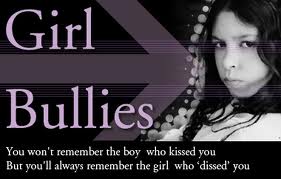
    Have you heard some of these or other worse things uttered in the hallways? Were you the one who said some of those nasty things? A recent article from the New Zealand Herald found that 85 per cent of teenage girls have experience some sort of bullying. The most shocking thing is that, when it comes to girls, some of this bullying is coming directly from their friends.

    If you’re the victim of a friend’s torment you may be blaming yourself first and bringing unnecessary doubt and confusion to yourself. Rachel Simmon, author of Odd Girl Out, found that “one of the chief symptoms of a girl’s loss of self-esteem is the sense of being crazy, of not being able to trust one’s own interpretation of people’s actions or events.” If you don’t understand why your BFF is turning on you, it may be her problem – not yours.

    Now, if you’re on the other side of the equation and are part of bullying, please think about your actions. It’s a false position of power to be the bully. Girls may form cliques and have their own way of dressing, talking or sharing of a secret. Leora Tanenbaum states it simply in her book Catfight – “the ironic thing about being included is that it necessarily entails exclusion.”  Bullies need to ask themselves why they are excluding others. There isn’t a guarantee that you’ll stay in the exclusive clique forever; you may just end up being the outcast.

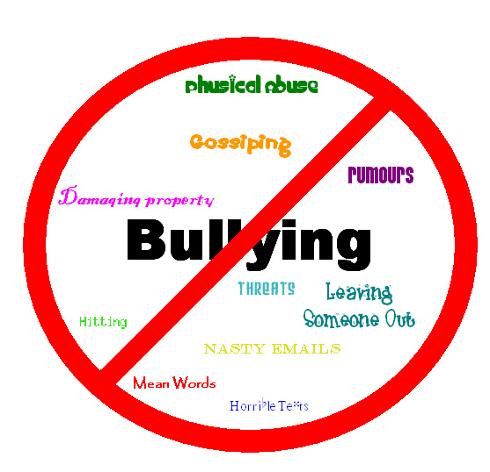
    Some would tend to think that bullying would involve violence, but this isn’t always the case. Getting a group of friends to ostracize, say hurtful things and spread rumours about you are all forms of bullying, too.

    The one thing someone being bullied should do is also the thing they will most likely avoid: to talk to your parents about what you’re experiencing. If you’re too scared to do that, you should talk to an adult you trust. Sometimes it’s beyond your own control when it comes to bullying. It’s important to let someone in a position of authority know what’s going on. High school should be a place that will give you four years of great memories, not something you should dread.

  • Stop Bullying!

    Stop Bullying!

    BULLYING – THE CHANGE IS WITHIN YOU

    The issue of bullying has been talked about a lot over the past year in the media and in schools. In particular, the bullying of LGBT youth has led to many unfortunate cases where suicide felt like the only way out. Are you or someone you know being bullied? Are you a bully? Ask yourself these important questions and you can make a difference in by taking steps to change your behaviour or helping those who you see being bullied by others.

    If you have bullied others, think of the reasons why you did it. Did you want to look cool in front of your friends? How did it make you feel after you bullied the person? One of the best ways to stop this behaviour is to put yourself in the shoes of the person being bullied. If you were called those names, reflect on how you would feel. Often, realizing the power of your words is the best medicine to stop such actions.

    Don’t put yourself into a box – just because you may have bullied people before, it does not mean you still have to do it now. The power to change is within all of us! By changing your behaviour, you will positively impact everyone around you. Be the person in your school who sets an example and says no to being a bully. Change starts with one person and grows larger from there.

    If you have been bullied, or are currently being bullied, reach out to someone you care about. If you feel like they would not understand, or you don’t feel comfortable talking to them, there are many anonymous and free services where people are ready to help you at any time of the day. Kids Help Phone is a great example. Even though it may seem futile, talking with someone and having a human connection with someone who wants to listen to you and help you is extremely beneficial to your mental health. Someone who is “outside” of your situation can give you advice that you may not hear from someone that is close to you. The anonymity of a service like Kids Help Phone allows you to be completely honest about your thoughts and feelings without the fear of being judged.

    You can also volunteer to help with programs that raise awareness about the effects of bullying, or create your own campaign in your school. Awareness of the issue will give others the confidence to speak up when they see someone being bullied.

    If you need help, please do not hesitate to reach out to someone. There is strength in numbers, and you will get through this.

  • Using Kids Help Phone

    Using Kids Help Phone

    Everyone has those days where they may be feeling a little down or are dealing with something scary or sad. Sometimes, on days like those, you just need someone to talk to! On the other hand, you may have questions that you just feel too embarrassed to ask your parents or friends. It is good to know that there is a place you can go to – whether it’s picking up a phone or going online.

    Kids Help Phone (1-800-668-6868) is a free service for all youth up to the age of 20. The phone lines are open 24/7 and you can remain anonymous and discuss anything you wish to in complete confidentiality. The agency does not have caller ID display and you do not have to leave your name. If you are hesitant to call in, they also offer advice via their website – www.kidshelpphone.ca. Ask your question online!

    The website provides valuable information on topics such as dating, bullying, family, friends, school, mental health, violence, abuse, money and so much more. I looked up the topic “Bullying” on their website and it listed many different types (physical, emotional, social, cyber-bullying, etc.). I also learned that if you are victim of bullying, you should always tell someone, whether it be your teacher, parents, friends or even someone at Kids Help Phone. The next important tip I read on this topic was to make sure that I stay safe by taking the necessary steps to protect myself as much as I can. If the bully is targeting you when you are alone, try to walk with friends and keep in the company of others when at school. Try to avoid the person and, again, reporting this person is the best course of action to take.

    Take a look at the website and browse the topics which offer so much advice and reading material on the daily issues that may be a part of your life right now. There is also a forum in which you can see other readers’ questions and posts under any topic. The best part is that a counsellor from Kids Help Phone responds to the posts, so you know you will be getting great advice. This may help you if you are going through a similar life event or situation. Just remember that this service exists for a reason – to help kids know that there is someone out there who cares and wants to listen. Even if you feel that you don’t need to call this number right now, it is helpful to keep the number handy by putting it in your cell phone or writing it down somewhere. No question or concern is too little, so feel welcome to use Kids Help Phone at any time!

  • Anti-Bullying Viral Video!

    Anti-Bullying Viral Video!

    We recently came across this video by poet Shane Koyczan and just had to share. It has gone viral in the past few weeks due to its powerful anti-bullying message. Shane was bullied growing up, too, so his message is even more powerful. As he told The Globe and Mail in 2011, “I got bullied a lot when I was a kid, and because of that I thought for the most part that I didn’t really have a childhood – I had to grow up so quick and there was no real enjoyment in that for me.”

    Unfortunately, bullying is still a major problem in schools all around the world. We can all make a difference by pledging to not bully and to speak up when you see that someone is.

    According to Wired Magazine, Shane kneads his experiences into powerful poetry. His piece about bullying is now a short animation. It rises above the bruises left by words and the hiding places pills can’t provide, all the way up to a place of beauty. The video is a collaborative piece, created using 20 second segments contributed by animators and artists. It will surely prompt reflection and discussion. It also promotes more formal anti-bullying efforts.

    In terms of what he hopes people take away from his video, Shane told the Huffington Post, “Just that sense of connectivity. As much as you may feel alone in this, you’re really not. There’s people who go through this every day. In a lot of ways, there’s more of us than there are of them.”

    Shane, born in Yellowknife and raised in Penticton, was even a part of the opening ceremonies of the Vancouver Winter Olympics in 2010! We love to see Canadians making a difference in the world. Watch this video and share it with your friends.

  • Regarding Bullying

    Regarding Bullying

    In high school, people undergo changes and are developing themselves in different ways. Due to the pressures of growing up, some people learn to adapt and cope in successful ways – such as by finding an outlet for their emotions in activities like competitive sports, clubs, individual pursuits like running or writing, or even just seeking friendship and support from others. Unfortunately, some people have negative coping mechanisms that lead them to find more destructive outlets for their emotions. Sometimes a negative coping mechanism will reveal itself as bullying. This bullying can take many forms, from verbal abuse of other people to stealing from people to physically abusing others. Bullying is a problem that needs to be addressed both with the bully and with the victim because the consequences can present themselves in different ways.

    When people are bullied they can feel sad and left out, as well as feel that they have something wrong with them that caused the bullying. These emotional wounds can take years to heal, and so it is very important to try to resolve the bullying situation as soon as possible. If you are being bullied, the most important thing to remember is that it is not your fault and that you can stand up and speak out. It may not be safe to confront the bully themselves, but by informing your principal, teachers, parents and friends, you can create a support network to protect yourself from the person or people that are harassing you. Remember that the law is on your side when it comes to bullying and any evidence that you can get for proving that the person or people are harassing you will be invaluable if you need to confront the issue with others. Try to have a friend present with you at all times so that you have a witness and a protector, or learn how to use your phone as a recording device so that you can audio record any verbal or physical abuse.

    The person or people who do the bullying have emotional wounds themselves that need to be addressed by a counselor or other qualified professional. Many times bullies have problems at home or problems with other aspects of their life that is causing them to act out in negative ways. These people may be viewed as “bad people” but the reality is that they probably have a serious insecurity or deep emotional wounding that is preventing them from growing up in a healthy way.

    By reporting a bully, you are doing everyone a favor because that person is probably bullying more people than just you. This negative situation may be painful for you, but don’t worry – bullying is becoming more and more of an important issue in schools. When you speak out, it will be received by a well-prepared and receptive audience. The issue of bullying is being covered by the media and there are more and more campaigns against it every day.

    You are not alone and your voice will be heard.

  • The Bully, The Bullied and The Bystander

    The Bully, The Bullied and The Bystander

    There is a dangerous notion of what normal is for today’s young person, defined in part by media images, Hollywood and reality television. The rest in a cocktail definition is pieced together by those with a voice and a platform. Whether that platform is prom queen or king, fashion icon or cultural diva, it matters little for the message is clear from wherever it is preached; normal is what normal does and if you don’t fit the mold you do not fit in.

    The reality is that you either fit in or you are cast out. As long as you have a group to fit into, life should pace itself to the rhythmic meter that is everyone else’s. This is the important distinction. Friendship circles do not have to mimic each other, in actuality the only common factor they might have is the willingness to accept each other. What happens when there is no peer group that accepts you? What does a young person do when no one extends welcome and isolation creeps in? Suffer in silence? Dig deep for resilience and self-respect? Perhaps, but the number of suicides in this country has reached an all-time high. More and more teenagers are choosing to end their lives rather than fight for them.

    Why?

    The simple answer is that bullying is also on the rise, but this is an unsatisfactory conclusion. Bullies have always existed. Cruel pranks and hurtful words are nothing new. So why the percentage increase? It comes down to one thing, neither small nor easy to fix – the internet. Cyber-bullying is an emerging form of cruelty that is wreaking havoc on many a teen life and there is little to no awareness on the part of parents and teachers. Think of how fast gossip used to travel before Facebook, text and Twitter. We may live in the age of technology, but when it comes to human decency it appears we are in the dark ages. Kindness, acceptance and grace for our mistakes do not seem to exist.

    Barbara Coloroso, international speaker, author and expert on the topic of bullying, says bullying is about contempt; putting one down to build the bully up. She also asserts that bullying is a learned behaviour and that home is where children first learn how set their moral compass. Those who are bullied typically remain secretive about it. They don’t want their parents to think of them as weak and are afraid of retaliation. They endure while quietly losing themselves. The bystander is the one who watches the bullying and does nothing to prevent it. They may even contribute with laughter or taunts. Bystanders are usually afraid of bullies as well and may have low self–esteem. They worry about becoming a target themselves or go along with the bully for lack of a better option. Even if a bystander would never bully on their own, by not stepping in they are picking the side of the bully and in essence enabling them.

    It is too late to care after the fact. A suicide is not the time to ‘tsk’ the sad situation or wish something had been done about it. Kind words for those around us, a smile, inclusion and a willingness to see into the heart and soul of a person will make a difference. The greatest desire in all of our hearts is to be known.

    We all need to have a story. What do you want to do in the future? What are your goals? What would you like to get better at and how can you make that a reality? When we have a story we have focus on the horizon and all that lies ahead, which makes the daily struggles a little easier to endure.