Tag: career profile

  • Community and Social Service Workers

    Community and Social Service Workers

    Community and social service workers administer and implement a variety of social assistance programs and community services, and assist clients to deal with personal and social problems.

    Outlook
    Over the past few years, the number of community and social service workers has risen very sharply. This growth is attributable to the large increase in the range and intensity of social service needs, and the handling of a growing proportion of these needs by community organizations. Since the community network is now well established, higher government spending in the health and social services sector should be more conducive to the hiring of members of other occupations and the number of income security claimants should continue, the number of community and social service workers is expected to grow sharply over the next few years, but at a more moderate pace than before.

    Sources of employment
    Openings will arise first from employment increase and from the need to replace community and social service workers who will be retiring or entering jobs in other occupations. In fact, with appropriate training, quite a large number of them will find positions in other occupations, for instance as social workers. Turnover is actually quite frequent within the occupation. For instance, many community and social service workers start their careers in community organizations, and move on after a few years to better paid positions in the public and parapublic sectors.

    Industries
    According to census data, in 2006 approximately 62% of community and social service workers worked in the health care and social assistance sector. About 15% worked in public administration, primarily as income security program administrators, mainly in the provincial civil service, but also in municipal government. Another 14% worked in associations, especially civil and social organizations (8%) and social advocacy organizations (4%).

    Education and Training
    To enter this occupation, it is generally necessary to have a diploma of college studies (DEC) in social work technology, special care counselling or correctional intervention, or a Bachelor’s degree in a field related to social services, such as social work, social service, psychoeducation, psychology, criminology or sexology. Experience of the social services sector as a volunteer or even as a former beneficiary, such as a former drug addict, alcoholic or pathological gambler, may in some cases be accepted in lieu of the academic requirements.

  • Career Profile: Golf Caddy

    Career Profile: Golf Caddy

    Playing games can be fun and relaxing, but sometimes people need help. If you play any team sports, you know how important it is to work together with the others to get a goal or a touchdown. Golf is not normally a team game, but the players can often use help. Golf caddies used to be essential to the game. Even though fewer people work in this field than in the past, it can still be an interesting job to have for people who enjoy golf and spending time outdoors.

    Before the invention of golf carts, caddies were essential to every golf course. Golf clubs and other equipment can be very heavy, and caddies would carry everything so that the players could concentrate on the game. They would estimate distances between wherever the ball landed and advise the players on the best club to use and smooth out any part of the course that got disturbed so that it would be good for the next player. They would look at the weather, ground conditions, and other factors and try to help make the game more enjoyable for everyone involved.

    With motorized carts, most players no longer need caddies to carry their heavy bags around, and many of them prefer to make their own decisions about how to play the game. However, caddies are still necessary in some contexts. Elderly players, for example, might not have the strength to carry golf bags and might also appreciate having someone to help them decide about their next move. In addition, professional players normally have caddies who can tell them about the course and make sure that they can concentrate on the game. A good caddy can help a player win important tournaments and win large prizes.

    Becoming a golf caddy takes time and experience but no particular education. Basic math skills are important for keeping score, and knowledge of weather patterns can help. However, the most important requirements are to know about the game and to know the particular golf course where the people are playing. Caddies need to know where the player has to hit the ball next and what might cause problems along the way. Caddies also need to know the rules of golf and how to use all of the different equipment.

    Salaries for golf caddies can vary a lot. Some people in this field work for one or two golf courses and receive regular salaries. Others get paid according to each bag that they carry and can earn up to about $5000 in one summer. In professional tournaments, caddies often also receive a percentage of the prize money if the golfer wins. Sometimes this amount can be quite large, and caddies can earn a lot of money by doing their job well. If this idea is appealing to you, why not start practicing your golf skills?

    Bibliography:

    Answers.com. “How Much Do Caddies Earn.” http://www.answers.com/Q/How_much_do_caddies_earn.

    Careers.org. “Career Occupational Profile for: Golf Caddy.” http://www.careers.org/occupations/16812/golf-caddy

    Cameron, Patrick. “How Much Money Do Golf Caddies Make?” http://www.golflink.com/tips_5167_much-money-do-golf-caddies.html.

    Herrfeldt, Bill. “How to Be a Golf Caddy.” http://www.golflink.com/how_1185_be-golf-caddy.html.

    Payscale.com. “Average Salary for Industry: Golf Course.” http://www.payscale.com/research/CA/Industry=Golf_Course/Salary.

    Roland, James. “How to Become a Professional Golf Caddy.” http://golftips.golfsmith.com/become-professional-golf-caddy-1888.html.

    Wikihow.com. “Be a Golf Caddy.” http://www.wikihow.com/Be-a-Golf-Caddy.

  • Career Profile: Concrete Pumping

    Career Profile: Concrete Pumping

    Concrete pumping; what is it? You may have seen those cement trucks dumping cement into trenches and sidewalks. The concrete pump serves a similar purpose, but it is used for more complex situations, such as getting the concrete to the roof of a high rise building.[1] Individuals who operate the pumps are tradesmen.

    Individuals who wish to get into this trade can do so by attending various concrete and stone mason programs. Some are offered by colleges. Conestoga offers a Brick and Stone mason program.[2] These trades are closely related and are both relevant to one another.

    The industry is in high demand for concrete pumpers as structures are always being built and will eventually need repair and occasional maintenance.

    In Ontario the Operating Engineers Institute Ontario offers a concrete operator apprenticeship. Applicants should have a high school diploma and a DZ driver’s license as heavy equipment and trucks are used on a day to day basis.[3] Wages usually start at $19.00 per hour. There are a lot of vacancies for concrete pumping jobs.

    Placements are outdoors in all conditions. Conditions are often rugged with loud noise and a lot of dust. Be expected to problem solve on a daily basis and coordinate movements of objects and people.[4]

    Local 793, the International Union of Operating Engineers looks after heavy equipment operators which include concrete pump operators. They offer benefits as well as on the job protection.

    If you enjoy working with your hands, operating heavy equipment and working in rugged conditions, then this job is for you. It is physically and financially rewarding. Inquire about apprenticeships near you!

    Sources:

    [1] http://www.concretenetwork.com/concrete/concrete_pumping/

    [2] http://www.conestogac.on.ca/fulltime/0844.jsp#GO-Graduate-Opportunities

    [3] http://www.oetio.com/Concrete_Pump_Apprenticeship_Program_637C.aspx

    [4] http://www.apprenticesearch.com/AboutTrades/GetTradeDetails?tradeId=265

  • Career Profile: Dairy Herder

    Career Profile: Dairy Herder

    Imagine a job that may require you to feed cattle or goats, help sick animals and repair machinery. The hours vary widely and include both day and night work. Some people in this job even live and work at the same place; these people are dairy herders. Being a dairy herder can involve many different tasks, but the basic job is taking care of animals and making sure that they have the food and water that they need. Herders might also assist veterinarians, do basic maintenance of buildings and machines, and supervise other farm workers. They help to keep our dairy, meat and fur industries running.

    With experience, dairy herders can increase their level of responsibility in able to earn more money. A dairy herder’s salary is usually between $13 and $20, and the work can be physically tiring, especially in bad weather. However, the chance to work outside the city is a benefit for anyone who loves nature and has skills working with animals.

    Many of the skills that dairy herders need come with experience and natural ability, but a university degree in a field like agriculture or animal behaviour can be helpful. Information on some of the specific requirements is available at the Canadian Dairy Information Centre or from a local farmer.

    Learning to understand animals and to deal with their problems is an important part of being a dairy herder. Volunteering to work on a farm on the weekends might be a place to start. Dairy herders have to learn to be comfortable around all kinds of animals and to be able to understand their moods and know how to handle them.

    Cattle are the most common source of milk in North America, although sheep and goats are also part of the dairy industry. If you work as a dairy herder, you will have to learn to work with large animals that will not always do what you want. You will have to learn how to understand animals and to find out how to make them happy and cooperative. Learning about animal behaviour in an educational institution would be an asset. Formal education in an area such as animal care is useful, although employers might be willing to hire someone with more hands-on experience.

    Besides the daily tasks of feeding and milking the animals, herders might also need to clean barns and care for newborns. Dairy herders might need to solve difficult problems when they help sick animals or recapture ones that have escaped from where they are kept. On large farms, some dairy herders might have to supervise other workers and learn how to keep everything running.

    Becoming a dairy herder might be difficult for people who have grown up in the city, but it can be a good job for anyone who loves the outdoors and can work with animals.

    Bibliography:

    The Canadian Dairy Information Centre. “About Us.”

    http://www.dairyinfo.gc.ca/index_e.php?s1=cdi-ilc.

    Careers.org. “Occupation Profile for Farmworkers, Farm and Ranch Animals.”

    http://www.careers.org/occupations/45-2093.00/farmworkers-farm-and-ranch-animals.

    Dairy Farmers of Canada. “Animal Health and Welfare.”

    http://www.dairyfarmers.ca/what-we-do/animal-health-and-welfare.

    Ferrier, Donna. “Herdsman Job Description.”

    http://www.ehow.com/about_6468360_herdsman-job-description.html.

    Indeed.com. “Dairy Herdsperson.”

    http://ca.indeed.com/cmp/Shelter-Valley-Land-and-Cattle/jobs/Dairy-Herdsperson-d7033f438a0c92cc.

  • Career Profile: Personal Shopper

    Career Profile: Personal Shopper

    Some people love to shop by themselves or with friends. Others, however, find the process very tiring or boring, or they might be too busy to spend much time on it; these people need a personal shopper.

    Suppose that you go into a store to look for a gift to buy for a friend or relative. Maybe you already knew what you wanted to get, or maybe someone else gave you advice on what to buy. Personal shoppers learn what people want and then try to help them find it, either by telling them where to go or by going out and shopping themselves.

    The first step in personal shopping is normally getting to know the customer’s needs and wishes. An interview with the client is the first step so that the shopper knows what kinds of items to buy or to recommend. Some personal shoppers work through large department stores or other shops, but some set up their own businesses.

    Many personal shoppers work in a specific area such as groceries or garden tools. A common type of personal shopping is in buying groceries for elderly people or others who have trouble walking around or carrying heavy loads. The personal shopper asks the client about allergies, tastes, and anything else that might be important and then goes out to buy the items at the store before taking them back to the client’s home. Sometimes, a personal shopper might take the client along to look at what is available, but not usually.

    In many cases, working as a personal shopper might be a daily or weekly job, but in some cases, it might be something special like shopping for a wedding or family gathering. Personal shoppers need to keep track of their clients and be able to remember what each client wants. An ability to work with money is necessary, and an understanding of different brands, colours, and designs is useful.

    Becoming a personal shopper normally requires experience but no particular education. Most employers are likely to prefer someone who has graduated from high school. Personal shoppers should also be able to keep up with the latest trends by reading about them or getting help from store managers.

    Salaries for personal shoppers can vary widely, depending on where they work. The average salary for people in this career in Canada is about $25,000 per year, but some personal shoppers can earn $100,000 or more. Most people start by working in a store where they learn about the products and working with the public. As they gain experience, they will have the skills they need to become personal shoppers in an established store or in their own businesses.

    Do you enjoy shopping with your friends and family? Do you have a good sense of what people like and what suits them? If so, why not consider becoming a personal shopper?


    Bibliography:

    Farfan, Barbara. “Personal Shopper Job Description – Retail Career Job Profile of Personal Shopper.” http://retailindustry.about.com/od/retailjobscareers/p/personalshopper.htm.

    Henricks, Mark. “Starting a Business as a Personal Shopper.” http://www.entrepreneur.com/article/75238.

    Kennedy, Casey. “How to Become a Personal Shopper.” http://www.ehow.com/how_15306_become-personal-shopper.html.

    Wow Jobs.com. “Average Salary of Jobs Matching Your Search: personal shopper Salary in Canada.”

    Wow Jobs.com. “Personal Shopper Salary in Canada.” http://www.wowjobs.ca/salary-personal+shopper.

  • Career Profile: Business Interviewer

    Career Profile: Business Interviewer

    Some people are good at asking questions and getting people to talk about themselves. They know how to get to the core of an issue and retrieve the right information Does that describe you? If it does, you might want to consider a career in asking questions. Business interviewers work to help people get the information they need to work with others.

    Suppose a business owner wanted to sell dog food to a chain of grocery stores. The seller would have to know a lot about the buyers before they could really be sure of what kinds of products or services to offer. Maybe the grocery stores are in areas with many more cats than dogs. The seller is unlikely to make much money in that case.

    How can business owners find out what they need to know before they spend a lot of time on something that is unlikely to work? They can hire an interviewer who can go to the other businesses to find out what they need. The interviewer then does research on possible customers for the product or service and asks questions about what kind of help people want.

    If you’ve ever answered a survey, you know that the questions depend on what kind of information the people want to know. The same thing happens with business interviews. Good interviewers will choose their questions to reflect the kind of information that the company needs.

    Business interviewing requires many of the same skills as employers need for interviewing possible employees. Interviewers have to choose their questions carefully to get the right kind of information. They also have to be good at understanding what is not being said. In job interviews, people often leave out a lot of information, possibly because they are embarrassed about it or maybe they just think that it is not important. It is not mandatory to answer certain questions in a job interview, however. For example, it is illegal for an interviewer to ask how old you are when interviewing for a job position.

    Part of the job is to take the information that comes out of interviews and to assess it, deciding what to pursue if another interview is necessary. This step might require repeat visits to the company’s office to talk to people and to learn more about it. Business interviewers often work at whatever time suits the other person, and they might spend little time in their own offices.

    Becoming a business interviewer requires a thorough knowledge of the type of work that the company does. The interviewer has to know how well the products or services match with what other companies need. Being able to talk easily with other people is also necessary, and technical knowledge might also be required in some cases, especially for companies that deal with computers or other technology. Some full-time business interviewers earn about $12 per hour or more, but it depends on the company.

    Do you like to talk with people and to ask them questions? If so, you might be well suited for a job as a business interviewer.

    Bibliography:

    Business Interviews.com. “Our M.O.” http://www.businessinterviews.com/about/.

    Call Centre Job.ca. “Business Interviewer.” http://www.callcentrejob.ca/en/job-offer/qc/montreal/greenwich-associates-19272/business-interviewer/690610.

    Entrepreneur.com. “How to Conduct an Interview Effectively.” http://www.entrepreneur.com/article/225960.

    Statistics Canada. “Job Description (Interviewer).” http://www.statcan.gc.ca/eng/employment/otheropp/interview/description.


  • Career Profile: Welder

    Career Profile: Welder

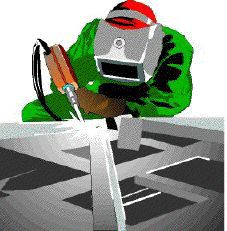
    Welding is a growing trade with many opportunities across both construction and manufacturing industries. In Canada welding is a certified trade with a three year registered apprenticeship.

    With Canada’s oil based economy, welders are in high demand in the western provinces. Some of the highest paid welders in the world work in pipeline construction. Working in pipeline construction as a welder requires you to have your Journeyman certification as well as a B pressure certificate. There are many opportunities when you enter the trade, to partner up with a seasoned welder as a helper to gain experience and hours towards your apprenticeship. Following this career path (pipeline welder) you can expect to make $200,000+ per year. You must have your own tools for this profession, and also your own vehicle to carry them (they can be heavy and road access can be rough). A pipeline welder usually works at remote sites and can spend 30+ days away from home. In this case, temporary accommodations are provided by your employer.

    The construction of buildings now relies greatly on qualified welders. As the future progresses, this will be needed more and more because of fast development growth and the economy. Almost every part of the construction process now requires welding on commercial and even some residential projects, from structure to plumbing. A journeyman welder working for a union plumbing contract can expect to make approximately $100,000 per year plus benefits and pension. Generally, working in building construction, you do not have to work out of town to stay busy.

    Other opportunities in welding can be in manufacturing. Many things, you may notice, are made of metal; all of those items require a welder at some point on the production line.

    A welder must have a steady hand and an attention to detail; some welder’s work is under much scrutiny especially when dealing with high pressure gas or liquids. A pipeline welder’s works is regularly X-rayed to ensure its quality. Hazards of the trade include toxic gases that can be very harmful over prolonged exposure. If you have steady hands, don’t mind hard work and feel welding may be a good fit, join the many welders in Canada for your electrifying future!


    Resource:

    https://www.cwa-acs.org/ 

  • Career Profile: Optician

    Career Profile: Optician

    For many people with bad vision, glasses or contact lenses are an essential part of daily life. Without help from these lenses, short-sighted people might be tripping over everything and far-sighted people would be unable to read. Ophthalmologists or optometrists can help by giving people the right prescriptions, but opticians are the people who actually make the glasses and fit them to people’s faces. If you want to help people see better and to get more out of life, the job of optician might be a good choice.

    Being an optician normally means working in a store and dealing with people all day. They sell glasses or contact lenses to customers and might even work with artificial eyes for people who have lost eyes through accidents or disease.

    When people have vision problems, they normally get their eyes tested and then go to the opticians with prescriptions for glasses or contacts. The prescriptions might tell the optician that one eye is better than the other or that the person has a common condition called astigmatism. When they make glasses or contacts, opticians have to grind the lenses just enough to match what the prescription says. They have to know how to make all kinds of lenses and to detect problems if they occur.

    Another task that most opticians do is to advise people about the style of frames that suit their faces best. Many stores have hundreds of different frames in various shapes and sizes for children and adults. Finding the right pair of glasses for different shapes and sizes of face can be difficult for people, especially if they are too short-sighted to see what they look like in different frames. However, it can be fun to work with them to find the right frames!

    Customers coming into the store might have no idea of where to start looking for something that will suit them and also have the right shape and size for their prescriptions. If they have trouble making decisions or if they have specific preferences or financial limitations, the optician might need to give them advice about different options that will still look and feel good. Having a strong sense of style is important in this part of the job.

    People can become opticians after finishing high school and two years of training in their field, although they might feel the need for more education. All across Canada, trained opticians need to obtain licenses from the government before they can start working. Job prospects are not very good right now, but they might improve in the next few years as people retire. Salaries vary across the country, between about $17 per hour in the Saskatoon area to $23 per hour in Winnipeg. Overall, opticians earn between $32,000 and $42,000 per year.

    Would you like to help people see? Why not become an optician?


    Bibliography:

    Alberta Learning Information Service. “Occupational Profile: Optician.” http://occinfo.alis.alberta.ca/occinfopreview/info/browse-occupations/occupation-profile.html?id=71002674.

    Living in Canada.com. “Optician Salary Canada.” http://www.livingin-canada.com/salaries-for-opticians.html.

    Opticians Association of Canada. “What is an Optician?” https://opticians.ca/page.asp?id=3

    Opticians Council of Canada. “What’s an Optician?” http://www.licensedoptician.ca/Whats_an_Optician.aspx.


  • Career Profile: Community News Manager

    Career Profile: Community News Manager

    Many people dream of someday being on the radio or television. They imagine how exciting life could be if they could be like the stars they see in movies, or at least the people they hear talking on the radio every week. Sometimes, the managers of community radio stations can give them that chance.

    Most radio stations have staff members who look after the technical aspects of the broadcasts, as well as the people who actually interview guests, play music, and give weather and news reports. They also have production managers who make sure that everything is working well, and who deal with hiring and firing people.

    A community radio station is a bit different. Most of the people working at these stations are volunteers who have ideas about what they would like to broadcast but who might have little or no formal training. They might stay for years, or they might try being on radio for a few months and then move on to something else.

    Managers in community radio stations have to make sure that they have enough people to cover all of the timeslots, or they have to find helpers who can do that work. Volunteers tend to come and go, but managers can help ease the process by finding one or two good employees who can help.

    Besides working with the day-to-day running of radio stations, managers have to make sure that the financial and business aspects are in place. In Canada, all radio stations need approval from the CRTC (Canadian Radio-Television and Telecommunications Commission), which also sets guidelines for aspects of broadcasting such as the amount of Canadian content. Managers need to make sure that volunteers know and meet these standards.

    Another task is fundraising. Many community radio stations, especially in colleges and universities, have some funding from sources like student fees, but these fees normally cover only part of the money necessary to keep the station going. Many other people help with finding donations, but managers need to take responsibility for ensuring that enough fundraising happens to keep the station alive.

    Managers for commercial radio stations normally need at least a Bachelor’s degree, and they might earn close to $100,000 per year. At community radio stations, the pay is likely to be much lower, and the educational requirements might not be very high. However, getting a bachelor’s degree is still a good idea for learning about the various topics that hosts and guests might discuss and for working with people in the community.

    Because community radio stations normally run with only a few paid staff, managers might need to work in several different areas, such as hosting shows or conducting training. They need to be flexible and be willing to work at whatever needs to be done.

    Being a community radio station manager can be a lot of fun when the volunteers and staff work well together and find a good way to connect with their audience. However, you must be a well- rounded person that adapts well to change and real time problem solving. If you enjoy working with people and expressing your ideas on the radio, this job might be the one for you!


  • Career Profile: Apartment Manager

    Career Profile: Apartment Manager

    Everyone needs a place to live and, if they don’t own a home, they might live in an apartment. When so many different people live in the same building, they need someone to manage things like rent, maintenance and other tasks that keep the building working well. Resident managers are people who do all kinds of jobs like these that help keep apartment buildings looking nice and working well.

    Working as a resident manager can involve many different tasks, depending on the situation. Most resident managers do at least some of the cleaning of public areas like the hallways and lobby. In small places with limited staff, they might also do repairs and general maintenance of people’s showers, sinks, cupboards and anything else that needs work.

    Much of the work of resident managers involves dealing with the people who live in the apartments. They collect rent every month, make arrangements for people moving in or out, answer questions and respond to emergencies such as frozen water pipes or keys that don’t work.

    Resident managers live in the buildings where they work, which might mean that tenants come to them with problems at any time of the day. Because their work is often unpredictable, resident managers might work evenings or weekends, and possibly even at night. However, they can usually take extra time off at a later point if necessary.

    Resident manager jobs usually have no special educational requirements beyond a high school diploma. However, managers should know how to use basic computer programs and be able to communicate well with people. They might need to hold meetings when tenants need extra information, and they need to walk around the property regularly to look for any problems that need to be fixed.

    Looking after the grounds of the building is an important part of the resident manager’s job. This might involve shovelling snow in winter, raking leaves in fall, and mowing the lawn in winter. The building’s caretaker is often in charge of doing these jobs, but the resident manager should be prepared to do them as well, if necessary.

    Salaries for resident managers can vary a lot, from about $25,000 to about $75,000 per year. Most of them, however, earn about $45,000, depending on their education and experience. One way to earn higher salaries is to get official qualifications from real estate management institutes or from other places that train people in that kind of work.

    Another benefit to being a resident manager is receiving a free apartment. They might still have to pay for their telephones, television connections, and other things, but normally the cost of the apartment is included in their salaries and benefits.

    All kinds of people, young, middle aged or elderly, can work as resident managers. If you enjoy organizing things and working with people, it might be the right job for you.