Tag: career profile

  • What Is An Epidemiologist?

    What Is An Epidemiologist?

    Every year, millions of people become sick with all kinds of diseases. Sometimes the diseases are isolated, affecting only a few people at a time. When one person breaks a leg or has appendicitis, for example, the illness will not spread to other people in the area. An orthopedic surgeon can take care of the leg, and general surgeon can look after the appendix. However, what happens if an epidemic breaks out? That’s when an epidemiologist can help.

    Most people get food poisoning or the flu at some point in their lives. In many cases, they recover within a week or two, often with only limited medical help. However, when a large number of people in a community suddenly get sick with the same disease, it becomes an epidemic.

    When this happens, the epidemiologists start to investigate the causes of the outbreak to see if there are any ways to treat the disease and to prevent future occurrences, whether the illness is very dangerous or not. Epidemiologists study the source of illness so that they can let people know what they need to do to stay healthy.

    Epidemiologists work closely with doctors and nurses, but their training is different. Having a medical background is very helpful, but not always necessary, depending on many factors, such as geographical location and the extent of other supports. An epidemiologist working in an African village, for example, might be required to have qualifications that are not necessary for someone working in a bigger city. Normally, a degree in epidemiology or public health is the basic requirement for people working in this field.

    Besides knowing about diseases, epidemiologists need to have mathematical and statistical skills. They need to be able to follow the progress of a disease and to make charts and graphs that will help other people understand the information. Epidemiologists might have to give presentations to the public or to government officials and to conduct research on various diseases. They sometimes advise the nurses and doctors who work with those kinds of illnesses.

    Some epidemiologists work mainly in hospitals and laboratories, but most of them spend a lot of their time working with the public. Some of them travel to schools to give immunizations for diseases like measles and others go to seniors’ homes to help the residents deal with diseases there.

    Working in remote areas or in other countries with little hospital care is also a good option for epidemiologists. If you have watched the news recently, you know about how much trouble the Ebola outbreak has caused in Africa. Epidemiologists have been hard at work over there, trying to find an answer.

    Depending on where they work, epidemiologists might make between about $49,000 and $86,000 per year. Although the salary increases slightly with experience, it generally does not rise rapidly. However, with the number of diseases in the world, epidemiologists will never be out of work. If you decide to become an epidemiologist, you can expect to have an interesting and rewarding career.


  • Career Profile: Statistician

    Career Profile: Statistician

    For some people, looking at a page of numbers and graphs causes their eyes to glaze over and a yawn to start. For others, however, the idea of working with numbers and how they relate to everyday life is exciting. Are you in the second group of people? If so, becoming a statistician might be the right career for you.

    Working in statistics is all about numbers. Have your parents ever talked about answering surveys or have you ever answered questions about something that you like to do or eat? Many businesses take surveys to find out about the kinds of things their customers might want. Then a statistician takes the information and turns it into something that the business can use for planning. The same thing happens with the government and other organizations. They find out how many people are in certain age groups or in particular jobs. That way, they know if universities need more funding or what kinds of jobs to encourage people to pursue.

    Gathering information is only part of the work of a statistician. A list of numbers means very little unless someone can interpret what that means. Statisticians take the numbers that come from surveys and other sources of information and turn that into something that governments or organizations can use. Most statisticians have at least a Master’s degree in mathematics. With this education, they can take a list of numbers and turn it into something that shows trends and changes. If the numbers of university students has increased by fifteen percent while the general population has increased by five percent, for example, they can show that. Being a statistician involves knowing about the relationships between numbers and being able to see patterns that many other people might ignore.

    Statisticians are not normally involved in making decisions about programs and funding for projects. However, their work is very important for the people who choose where to spend money. Statisticians work in all kinds of organizations, including government departments, businesses, and even community organizations. Although a Master’s degree in statistics or mathematics is the basic requirement for most people in this field, continuing on to a higher level of education might open up opportunities for teaching in a university.

    Besides academic qualifications, statisticians need to have the personal qualities for the work. They often work alone and need to be able to concentrate, but they also need to be able to work with people. They need to be able to communicate with people to get the kinds of information they need for their work.

    For people with the right skills, working in statistics can be a rewarding career. When they are good at their jobs and experienced in the field, statisticians can earn a good living, with salaries generally between $43,000 and $80,000 per year. Jobs are not always easy to find, but people who are flexible can also find work in related fields, such as accounting. Do you love numbers? Consider becoming a statistician.

  • Rig Technician

    Rig Technician

    Drilling is an important phase of oil exploration and extraction in Canada. Drilling is one of the methods used to access hydrocarbon formations. Rig technicians work on drilling rigs and other specialized equipment to drill holes to retrieve these hydrocarbons.

    Drilling rigs are owned by companies specializing in drilling, called drilling contractors. Some contractors are larger than others and some specialize in certain types of operations. However, all contractors offer their drilling equipment and the services of their employees to exploration companies on a contract basis.

    A rig crew’s operational structure is organized by a clearly defined set of duties and responsibilities. After gaining entry level experience as a leasehand and floorhand, workers in this trade must progress through the ranks of motorhand (level 1) and derrickhand (level 2) in order to become fully qualified rig technicians/drillers (level 3). The division of duties in the levels of skilled workers on a rig crew is:

    Motorhands: maintain drilling rig engines, transmissions, heating systems, diesel electric generators and motors, hydraulic systems and other mechanical equipment; maintain equipment logs and records; monitor fluid and supply levels; participate in rig mobilization (rig up) and demobilization (rig out); supervise and are able to do all duties performed by floorhands and leasehands.

    Derrickhands: operate drilling fluid systems and pumps during drilling; mix chemicals and additives; handle sections of the drill string assembly from the monkeyboard during tripping operations; monitor and record volume and properties of drilling fluids; supervise motorhands, floorhands and leasehands; and are able to do all duties performed by motorhands.

    Rig technicians (drillers): operate the drawworks, rotary equipment and pumps; inspect rig; maintain records of drilling operations; are able to perform all duties performed by any crew member; and are responsible for the safety, training and supervision of the crew members.

    Rig technicians report directly to the drilling rig manager. The scope of the rig technician for this analysis covers the duties of motorhands, derrickhands and drillers.

    A rig crew works with a variety of hand and power tools, as well as motorized equipment, lifting and hoisting equipment, and personal protective equipment (PPE) and safety equipment. Computers are an important tool in this trade to maintain operational records and interpret data related to drilling activities.

    The rig is set up and transported to different sites resulting in the rig crew often travelling to remote locations. The work is performed in all weather conditions and workers should be prepared to work in all types of weather and environmental conditions (example: cold, hot, noisy, dirty, dusty, wet and muddy). Drilling activity peaks during the winter months when the ground is frozen. The work pressures and demands may fluctuate depending on world oil and gas supply and demand.

    Important attributes for rig technicians are good hand-eye coordination, mechanical inclination, the ability to work well in a team and with third-party service providers, and strong leadership, communication, and organizational skills. Good physical condition is important because the work often requires considerable lifting, long hours and repetitive movement.

    Drilling is a 24-hour operation, requiring rig technicians to work shifts and often long hours. The job requires mental alertness due to the inherent work hazards such as moving equipment, exposure to chemicals, risks of explosions and working at heights. Rig technicians work outdoors in all kinds of weather, often in remote and isolated areas away from home.

    Rig technicians are expected to perform supervisory duties and training of apprentices and other less experienced crew members. Experienced rig technicians may move into other positions such as rig managers, instructors, well site supervisors, sales representatives or other technical positions within the industry.

  • Cabinetmaker

    Cabinetmaker

    Cabinetmakers build, repair, finish and install residential and commercial cabinets (including hardware), wooden furniture and architectural millwork using a variety of woods, laminates and other products. Cabinetmakers read drawings and specifications, and prepare layouts. They also set up and operate woodworking equipment, both power and computerized, to machine wood products and composite materials. Cabinetmakers use various power tools and precision woodworking tools to perform their work. Cabinetmakers sand and finish the surfaces either before or after assembly in some shops. They also apply finishing products.

    Cabinetmakers are employed by millwork contractors, furniture manufacturers and general contractors. They may also be self-employed. The products they produce may be production or custom-made pieces. Production pieces are made in large quantities and according to a standard design. Custom-made pieces are often from one-of-a-kind designs and are not mass‑produced. Some cabinetmakers specialize in a specific type of product, such as custom‑made furniture, stairs or cabinet doors. In large cabinet making shops using high-tech, computer-controlled equipment, cabinetmakers may specialize in one or two functions. A working knowledge of the design principles, functional requirements, and traditions associated with furniture building is also advantageous in many areas of the cabinetmaker trade.

    Cabinetmakers primarily work in a shop environment, but they may also work at locations where the products are installed. While the working environment varies according to employers and locations, cabinetmakers are often exposed to workplace health and safety risks such as high noise levels, sawdust and chemicals. There are risks of injury involved in working with woodworking machinery, portable power tools and hand tools.

    Key attributes for people in this trade are good eye-hand coordination, manual dexterity, mathematical aptitude and good conceptual skills. Cabinetmakers require a high degree of accuracy, and good eyesight to select woods and look for imperfections. The work may require lifting of heavy materials.

    This analysis recognizes similarities or overlaps with the work of carpenters and painters/decorators.

    With experience, cabinetmakers may act as mentors and trainers to apprentices in the trade. They may advance to supervisory or design positions or may set up their own shop. Some may choose to specialize in areas such as stairs, veneering or finishing.

  • Career Profile: Dietitian

    Career Profile: Dietitian

    Cooking a good, balanced meal can be complicated. Some types of food taste good, but they have too much fat or sugar to be healthy, or they contain something else that is bad for people. Planning a nutritious meal can be complicated even more by all of the choices that are available to people. How can anyone know what they should eat? Dietitians can help.

    Most people know the basics of nutrition and can plan a reasonably healthy meal. They know, for example, that vegetables are healthy but that ice cream is not. However, what happens when people have trouble eating or need a special diet? Dietitians can help people like that to know what they can eat without harming themselves.

    Suppose that a patient in a hospital needed to lose weight before having surgery. A dietitian could help the patient find out what and how much to eat. Dietitians often work in hospitals, clinics, nursing homes and doctors’ offices. They might also work in schools, daycare centres and other places where people need help in finding the right food to eat.

    Working as a dietician usually involves working with other people, although parts of the job are solitary. If you work in a hospital, for example, you might start by talking with the patients, their families and the doctors to learn as much as you can before starting on research.

    You need to know about allergies, food preferences and restrictions, and anything else that might affect the patients’ ability to follow the diet. Patients who dislike oranges, for example, are unlikely to stay with a diet long if it includes a lot of the fruit. In that case, the dietitian will have to find creative ways of giving patients the nutrition they need.

    Besides all of the other knowledge that dietitians need to have, they should also know a lot about how to cook. They might never actually have to prepare meals for the people they are helping, but they should have an idea of what kinds of food work together and how to use foods in unexpected ways. They might need to teach people about how to cook healthy meals, and they should know as much as possible about the best techniques for making food taste good while still keeping as much of the nutrition as possible.

    Working with so many different people and diets usually requires knowledge of foods and their benefits. Most dietitians require at least a bachelor’s degree in an area related to food systems management or dietetics. Normally, that takes about four years at a university or college. In many areas of Canada, dietitians also need official government certification to be able to work.

    Job prospects for dietitians are limited, but they are likely to improve in the next few years. Depending on where they work, dietitians might earn about $55,000 per year, but that can change with experience and other factors. If you love food and enjoy helping people, the job of dietitian might be right for you.

  • Career Profile: Clinical Psychologist

    Career Profile: Clinical Psychologist

    Suppose that you could solve people’s problems just by talking with them. Maybe you already talk with your friends or your family about their issues, and maybe you give them good advice about what to do. If so, you might want to consider becoming a clinical psychologist and learning ways to help not just your family, but also many other people.

    When people go through difficult times or suffer from a mental illness like depression, they might need help from professionals. If they need medication to treat the problem, they might need to go to a psychiatrist or other trained doctor. However, they might also need help from a clinical psychologist.

    When people need to talk about their problems with someone who can listen and help them work through the issues, they might want to contact a clinical psychologist. These professionals study psychology in university so that they know the techniques of helping people understand the roots of their problems and how to solve them.

    Basically, clinical psychologists assess people’s mental health and then recommend treatments for them. They might work with children, adults or teenagers and help families or individuals. Some of them work in community programs or schools, but others might work in their own clinics or in doctors’ offices. The average salary for clinical psychologists is almost $71,000 per year, but it can take some time to work up to that point. Most people in this profession move on to something else after about twenty years.

    The first step towards becoming a clinical psychologist is to get a degree from a university. Most people in this field have some kind of specialty, such as with a certain age group or illness. They might also decide to get into teaching or research. If you want to become a clinical psychologist, you might already want to think about the kinds of work you want to do.

    One of the first steps in training as a clinical psychologist is to develop the ability to listen. Even when you are trained in your profession, you will need to be able to listen to people without interrupting them or becoming bored or distracted. You can already start to develop that skill as you interact with your friends and family at school or at home.

    Right now, job prospects for clinical psychologists are good in Canada. Besides having a degree in a related field, clinical psychologists need to have certification from the government to show that they have the necessary qualifications. Each province or territory might have slightly different requirements, and it is important to find out what they are. When you have your training and certification, you can start to work at helping people professionally.

    Consultations with other professionals like doctors will be a large part of your work since many different factors can contribute to people’s problems. Finding out what other professionals know can help clinical psychologists understand their patients better. If they do their work well, clinical psychologists can help many people feel better about themselves and the world.

  • Career Profile: Power Line Technician

    Career Profile: Power Line Technician

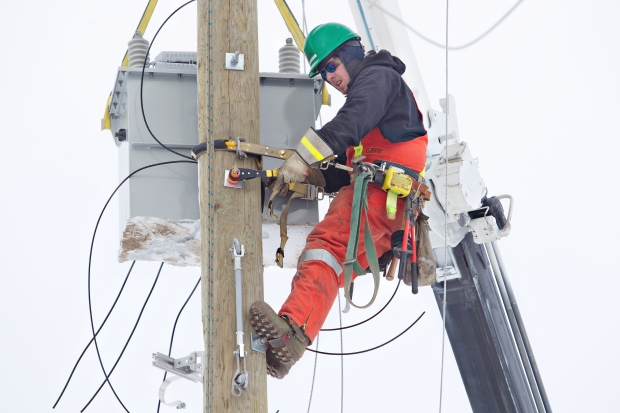
    As a power line technician, what would you do? Well, their tasks range from working with high and low voltage cabling to operating and maintaining structures associated with electrical equipment, such as switches and transformers. They work in all types of weather conditions and it’s a job that offers great benefits and flexibility.

    Most power line technicians have some sort of post-secondary education in the trade itself or experience in a related field, such as a construction line  or cable technician. In general, these type of courses last 2 or more years. Both math and English prerequisites are essential, and selection is very competitive.

    Power line technicians are often present after storms that have caused power outages. They normally work in aerial devices and in trees. It is important that candidates looking to get into the field do not have acrophobia (fear of heights) or claustrophobia (fear of confined spaces.) Candidates should enjoy working with their hands and constantly moving around.

    Wages for power line technicians vary, but as an apprentice they usually receive 50% of the regular earnings of a journeyman. In this case, as an apprentice, one would earn $27/hour and eventually earn $49/hour.

    Potential candidates should be aware that employers will require a clean driving record and may want you to have a valid CPR certification.

    If you’re looking for an exciting career that involves constant mobility and excellent dexterity, then this might be the career for you!


  • Construction Millwright

    Construction Millwright

    Construction millwrights keep industrial machinery running smoothly. They dismantle, move, install, adjust, and maintain power shafting, pulleys, conveyors, and hoists. Millwrights often work from plans and blueprints. They must make sure equipment meets safety and quality standards. They sometimes use grinders and lathes to make customized parts.

    Certification Requirements
    The Construction Millwright apprenticeship consists of 8,000 hours of combined on-the-job and in-class technical training.

    Apprentices must complete three 8-week in-class technical training sessions.

    Once you have successfully completed the apprenticeship requirements, you receive a Certificate of Apprenticeship and are considered a journeyperson candidate. If you choose to challenge the Certificate of Qualification exam and pass, you become certified as a journeyperson in the trade.

    A person with at least 8,000 hours of related work experience is eligible to apply for a Trade Equivalency Assessment (TEA) and challenge the Certificate of Qualification exam to become certified as a journeyperson in this trade.

    Educational Prerequisites
    Grade 10 or equivalent. Note: High school graduation is recommended. Employers often require more than the minimum educational requirements set by the province. They may also prefer apprentices who have taken certain courses related to their program.

  • Refrigeration and Air Conditioning Mechanic

    Refrigeration and Air Conditioning Mechanic

    Refrigeration and air conditioning mechanics install, maintain and service residential, commercial, industrial and institutional heating, ventilation, air conditioning and refrigeration units and systems. Their duties include laying out reference points for installation, assembling and installing components, installing wiring to connect components to an electric power supply and calibrating related controls. They also measure, cut, bend, thread and connect pipe to functional components and utilities.

    Refrigeration and air conditioning mechanics maintain and service systems by testing components, brazing or soldering parts to repair defective joints, adjusting and replacing worn or defective components and reassembling repaired components and systems. As part of commissioning, refrigeration and air conditioning mechanics start-up, test and charge systems.

    In addition to their regular duties, some mechanics may also prepare work estimates and plan systems for clients.

    Refrigeration and air conditioning mechanics work with a range of tools and equipment including hand, power, charging, diagnostic and measuring, and recovery and recycling tools and equipment.

    They may be employed by heating, ventilation, air conditioning and refrigeration contractors and manufacturers, property owners, retail establishments, and institutional and public sector employers. They also may be self-employed. Refrigeration and air conditioning mechanics may work on systems and units in office buildings, restaurants, food processing plants, ice arenas, supermarkets, hospitals and ships. They may also work on refrigerated trucks, automotive air conditioning systems, box cars and appliances.

    Refrigeration and air conditioning mechanics work in various locations such as rooftops, mechanical rooms and computer rooms. The work may be performed indoors or outdoors year round and may require extensive traveling. Much of the work is performed independently.

    Inherent risks in this trade include working at heights and in confined spaces, and working with compressed gases, utilities such as electrical, and hazardous chemicals.

    Key attributes for people entering this trade are strong customer service, writing, oral communication and problem solving skills, and an eye for detail. Coordination and manual dexterity are also important, as are mechanical and mathematical abilities. Good physical condition and the strength to lift heavy components are also valuable.

    This analysis recognizes similarities and overlaps with the work of steamfitters/pipefitters, plumbers, gasfitters, sheet metal workers, industrial mechanics (millwrights) and electricians.

    With experience, refrigeration and air conditioning mechanics may act as mentors and trainers of apprentices in the trade. They may also become specialized in one area of the trade, advance to supervisory positions or become instructors.

  • Painter and Decorator

    Painter and Decorator

    Painters and decorators apply decorative and protective finishes in residential, commercial, institutional and industrial settings. They prepare a variety of surfaces (wood, masonry, drywall, plaster, concrete, synthetics, stucco and metal) prior to the application of materials such as paint, high performance coatings, waterproofing, fireproofing, varnish, shellac, wall coverings and specialty finishes. These materials are applied for a variety of reasons such as protection, decoration, sanitation, identification and safety.

    Painters and decorators are employed by construction companies, painting contractors or building maintenance contractors, or they are self-employed. They work on residential, commercial, institutional and industrial projects. Some painters and decorators may work for years on a single site; others may work for contractors that rarely work on the same site more than once.

    Painters and decorators may come in contact with hazardous materials such as isocyanates, free silica, lead, volatile organic compounds (VOC) and at times, carcinogenic materials. They may work with some physical discomfort when preparing surfaces or applying coatings in awkward positions. Painters and decorators may work indoors and outdoors. They also may risk injury from falling off access equipment such as ladders, platforms, scaffolds and swing stages.

    Key attributes for people entering this trade are manual dexterity, excellent colour perception and artistic aptitude. The work often requires considerable standing, kneeling and repetitive activities such as brushing, rolling, spraying and blasting. Painters and decorators must have an eye for detail, the ability to plan work, and knowledge of many types of finishes, their properties and their applications. They must be able to calculate areas and relate such calculations to required material. Good communication and customer service skills are required by painters and decorators who often interact with home/business owners, contractors, interior designers, architects and engineers. Experienced painters and decorators may advance to supervisory positions for painting contractors or in other related fields such as construction management, instructing, estimating or building inspection.