Tag: career profile

  • Career Profile: Addictions Counselor

    Career Profile: Addictions Counselor

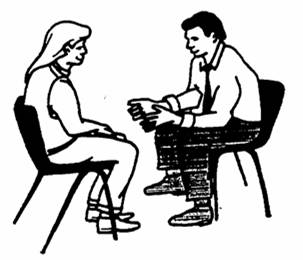
    Addictions counselors are specialists trained to help counsel or talk through people’s problems with addiction. This includes drug and alcohol addiction, substance abuse problems, gambling addiction and more. Each case that an addictions counselor receives will be different. Your job is basically to help support people with problems and try to help them learn to understand and cope with their addictions, as well as finding out and addressing the root cause of the addictive behaviour and developing a plan to help the client to overcome it.

    Addictions counselors may be hired to work in a number of different facilities, but the job remains to help people deal with their addiction problems. Some places where addictions counselors are commonly hired include: hospitals (especially in mental health wards), drug/alcohol and gambling rehabilitation centres (both private and public), as well as harm reduction centres and homeless shelters, such as those operated by the Salvation Army.

    It is not easy to become qualified as an addictions counselor, but you’ll find that the job is rewarding and well worth the work if it is something that you are truly passionate about. Most counselor positions will require you to have at least a bachelor’s degree in the fields of either human resources, social sciences or psychology. You will also most likely be required to get a certificate in counseling as well. This can be obtained at most colleges after a one year course on counseling.

    Dedication is perhaps the most important quality for an addictions counselor to possess. Many of the cases will be difficult and the hours are often odd and long, but the reward comes in the satisfaction of knowing that you’re helping out fellow people with their problems. This job will require you to have very good problem solving skills, patience, excellent communication skills and, above all, a strong sense of empathy.

    When you’re in college and university, it’s best to focus on courses that will help you towards achieving your eventual goal of an addictions counseling job. Some classes that will help you on your way include: anything to do with sociology or psychology, law, education, administration, anthropology, and philosophy and ethics. Many centres vary in the qualities they are looking for in their counseling staff, so you may find that you’re more comfortable working in a shelter or rehab centre than in a more formal hospital setting.

    Much like the employment requirements, the rate of pay for counselors can vary widely from centre to centre, so do a bit of research to find out which sort of place you’d like to work and check out the centres in your area to get an idea of what sort of salary to expect. Seniority is often based on which counselor is the most experienced, so counselors that have been doing the job for years will often be paid more than staff who have just been hired.

    Addiction counseling is a tough field to get into and the work is not easy. Expect long hours and irregular shifts when you start out. You’ll need to be able to converse with and help people of all walks of life, so good people skills are a must. A thick skin is also required; Much like paramedics, addictions counselors may have to face moral dilemmas and hear tragic stories. However, if you do pursue addictions counseling, it is one of the fastest growing career fields out there. It will leave you with a sense of satisfaction from having helped people.

  • What is a Technical Writer?

    What is a Technical Writer?

    When you read the instruction manual for your favorite software or gadget, do you ever ask yourself, “Who writes this stuff?” In case you’re curious, that person is a technical writer.

    A technical writer is a professional writer who simplifies complex technical and business documentation for a product or service to maximize reader comprehension. Technical writers produce relevant, accurate and complete information that helps the target audience find what they need, understand what they find and use that understanding to accomplish a goal. The goal can be complying with a policy, learning a software application or following work safety practices. Technical writers can have various job titles, including content developer, information developer, technical communicator or technical documentation specialist.

    Job opportunities exist for technical writers across many industries like banking, healthcare, transportation, oil and gas, government, military, manufacturing, information technology, insurance, architecture and engineering. Companies employ technical writers to produce technical documentation like software user manuals and engineering specifications or business documentation like company policies and reports. Technical writers can also be called upon to produce website content, warning labels, how-to videos, online help, FAQs (Frequently Asked Questions), test plans and more.

    If you’re still in high school, the best subjects to take to prepare for a technical writing career are English, journalism and computer-related courses. Try to learn some Microsoft Office programs, especially Word and PowerPoint.

    Although technical writing is not a regulated field, it will serve you well to take post-secondary training. Several schools offer a one-year certificate or a two-year diploma program in technical writing. Depending on the school, you may need a Bachelor’s degree before entering. These programs prepare you for a career in technical writing through a combination of course work and on-site placement. You’ll learn about research, audience analysis, technical writing, editing, information design, indexing, documentation project management and more. In addition, you’ll be introduced to the tools of the trade like Visio (a flowchart tool), FrameMaker (a publishing tool) and RoboHelp (an online help tool).

    To succeed as a technical writer, you’ll need strong research and communication skills to gather complex information from various sources then translate it into plain language. You must be a people person because you’ll work with not only writers and editors, but also with Subject Matter Experts (SMEs) like engineers, testers and computer programmers. You may also work with people in high positions like your manager, director, or even the Chief Executive Officer (CEO). If you’re the only writer in the company, you’ll have to work independently and solve documentation problems on your own since you won’t have the support of another writer.

    Technical writing can be very demanding, but it pays well. The average annual salary ranges from $37,000 to $82,000; and the average hourly rate ranges from $16.00 to $51.00. You can make more money if you have a technical background in engineering, computer science or network security.

    If you can grasp complex concepts quickly and have a flair for writing, technical writing may be the career for you.

  • Machinist

    Machinist

    Fully qualified machinists possess the knowledge and abilities to set up and machine using conventional, portable and Computer Numerical Control (CNC) machines that cut or grind metal and other materials into products with precise dimensions. These machines include lathes, milling machines, saws, grinding machines, drilling machines, boring machines, line borers and portable milling machines.

    Machinists work from drawings, specifications and their own measurements to calculate dimensions, tolerances and types of fit. Precise measurements are critical to machinists’ work. They must be knowledgeable about the properties of metals and non-metallic materials.

    Machinists may work in industries where machines are manufactured, repaired or used. These may include industries that manufacture machinery equipment, motor vehicle or aerospace parts. Machinists produce precision parts that are used in all aspects of manufacturing. They may also work in shipyards, rail yards, refineries, pulp and paper mills, mines, smelters, metal fabricating and repair shops. Shiftwork is common in some companies. Machinists tend to work indoors.

    Safety is important at all times. There are risks of injury working with moving machine parts, sharp edges, flying debris and extreme temperatures from heated or chilled materials. Precautions are required while working with manufacturing chemicals and airborne irritants.

    Key attributes for people entering this trade are: communication skills, mechanical aptitude, hand-eye coordination, manual dexterity, an ability to work independently and knowledge of mathematics and physics. The work often requires considerable standing and the handling of heavy objects. This analysis recognizes similarities or overlaps with the work of other tradespeople such as tool and die makers, mould makers, welders and industrial mechanics (millwrights).

    Experienced machinists may move into supervisory positions. With additional training, they may transfer their skills to related occupations such as tool and die maker, mould maker, industrial mechanic (millwright) or CNC programmer.

  • Job Profile: Drywall Finisher and Plasterer

    Job Profile: Drywall Finisher and Plasterer

    Drywall finisher and plasterers install exterior metal framing and sheeting, mouldings, furring, and lathing products, and thermal, fire, sound, and vapour barrier insulation and sealants. They also install moulded and cast forms, acoustical wall and ceiling panels, and interior window and door frames.

    Certification Requirements

    • The Drywall Finisher and Plasterer apprenticeship consists of 5,400 hours of combined on-the-job and in-class technical training.
    • Apprentices must complete 480 hours of in-class technical training.
    • Once you have successfully completed the apprenticeship requirements, you receive a Certificate of Apprenticeship and are considered a journeyperson candidate. If you choose to challenge the Certificate of Qualification exam and pass, you become certified as a journeyperson in the trade.
    • A person with at least 5,400 hours of related work experience is eligible to apply for a Trade Equivalency Assessment (TEA) and challenge the Certificate of Qualification exam to become certified as a journeyperson in this trade.
    • If you pass the Interprovincial Standards Examination, you qualify for Interprovincial Red Seal Certification.

    Educational Prerequisites
    Grade 8 or equivalent. Note: High school graduation is recommended. Employers often require more than the minimum educational requirements set by the province. They may also prefer apprentices who have taken certain courses related to their program.

  • STEM Job Profile: Sociologist

    STEM Job Profile: Sociologist

    The field of sociology is a major one and it is one of the fastest growing of the STEM career paths. Sociology has been growing in size and importance since it began to be studied in the early 1900’s. A degree in sociology can take you down a large variety of career paths and it is up to you to decide which one most suits and benefits you personally.

    The first step towards becoming a sociologist is being accepted into a sociology major program at a university. These programs generally take about four years to complete, but universities are flexible and it’s possible to complete the program faster (or slower) depending on your learning style, financial situation and other factors that might affect your education situation.

    Once you graduate from your sociology bachelor’s program there are a number of options available to you. You can decide to take further schooling and apply for a masters of sociology, or even achieve a doctorate if you decide to put in the serious dedication to the science of sociology. Many people don’t wish to take that path for a variety of reasons, and it isn’t necessary to hold a doctorate to be a sociologist.

    Some of the career fields open to sociology bachelor’s graduates can include the following: human relations, development, marketing, industrial relations, or as a personal support worker (PSW). PSWs are an integral part of the community and perform a number of important functions.

    PSWs can include youth support workers, whose function is to work with troubled young people in the community and reach out to those in need of support, especially youths with troubled home lives and legal issues. Community PSWs can also work with drug addicts and alcoholics in the community, helping them to find shelter, direct them to rehabilitation centres, find employment or hand out supplies such as sterile needles, clean pipes and pamphlets on addiction. Many PSWs will work with those most disadvantaged in society. It’s a difficult yet very emotionally rewarding job.

    Community social workers work with those in extreme poverty as well as the homeless. They help to provide support and direct them to services that can help them such as shelters, food banks, and navigating the complex welfare and disability system. Often PSWs work with the disabled or mentally ill as well, giving support to people that have no one else. Social workers can aid these people in finding affordable housing, work, or treatment.

    Community social workers can have a major benefit on the area in which they work, and they can often improve or even save people’s lives. It is not an easy job, requiring odd hours and being able to handle diverse situations. Patience and good people skills are essential for this line of work. All in all, being a community social worker can be an extremely rewarding job. Each day you work to improve people’s lives.

  • Career Profile: Locksmith

    When people need help, they have to call the right person. If they need to go somewhere, they might call a taxi service or get a ride from a friend. When they lose their keys or lock themselves out of the house, they call a locksmith for help. Locksmiths or lock technicians are tradespeople who are experts on everything related to locks, keys, and security. Becoming a locksmith is a good career choice for people who enjoy puzzles and working with their hands.

    Have you ever thought about the many different skills that go into working with locks? Becoming a locksmith involves learning about how to make keys that fit only one lock and how to repair broken locks or doors. Sometimes this might also mean that people have to learn how to replace doors and hinges as well as installing new locks. These days, working as a locksmith also requires some knowledge of electronic and keyless locks that use number or letter codes. As technology changes, locksmiths need to learn new techniques to keep up with what customers might want.

    Learning all of these techniques takes a combination of education and experience. Some people attend classes at locksmith academies, where they learn about key cutting, lock types, and other topics related to their work. Others go straight to an apprenticeship for the trade. Being an apprentice allows them to learn from people who are experienced in the work while also practicing their skills. Locksmith work can require a lot of delicate manipulation of small metal parts, and being able to practice this work is essential for learning the necessary skills. Many locksmiths also need to know basic accounting or bookkeeping skills and learn how to run a business. Receiving a certificate in the trade is also necessary in many parts of Canada.

    Keeping up with the latest locksmithing information is important, and many working locksmiths participate in workshops and seminars, as well as reading magazines related to their trade. Some locksmiths work as employees of companies, but many of them have their own businesses or work together with one or two other people. Generally, they work regular hours, but they might need to work evenings or weekends in case of emergency.

    Depending on where and how much they work, locksmiths make between about $24,000 and $55,000 per year. Most locksmiths stay in the job for under twenty years. Locksmiths work in a wide variety of conditions, often in small, confined spaces. The ability to use tools to work with very small moving parts of a lock is important, and good vision (with or without glasses) for close-up work is helpful.

    Almost every building has locks that need the services of a locksmith at some point. Jobs availability can depend on many factors, such as the number of older workers who are retiring and the size of the town or city where the locksmith lives. If you have the patience and skills to work with locks, you might eventually become part of this trade.

  • Mobile Crane Operator

    Mobile Crane Operator

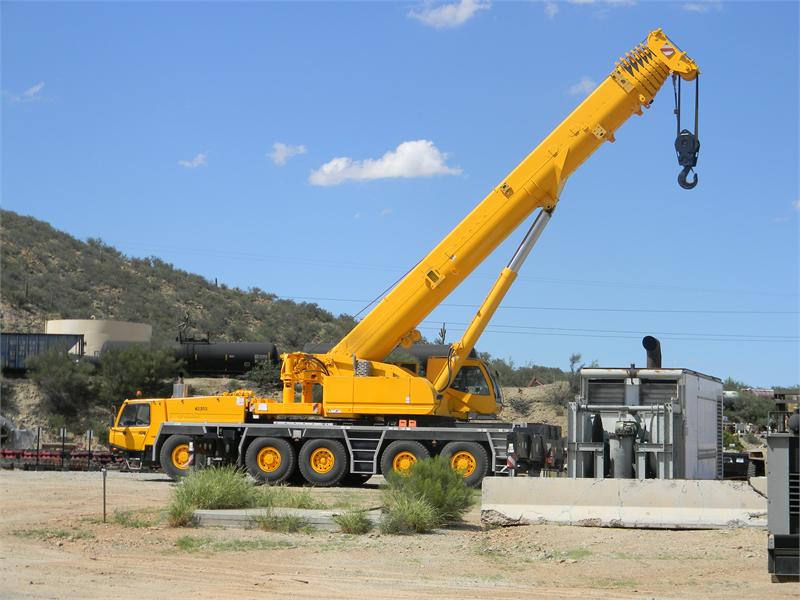
    Mobile crane operators operate mobile cranes to lift, move, position and place materials and equipment. They perform pre‐operational inspections. They calculate crane capacities, determine load weight, and set up, position and stabilize the crane before the lift. Mobile crane operators have the additional responsibilities of disassembling, traveling and transporting mobile cranes. They may also participate in rigging procedures. They also perform some routine maintenance and housekeeping of the crane equipment such as lubricating and cleaning.

    Mobile cranes are used in many industry sectors. They are very commonly used in the construction of buildings and the assembly of large equipment. They are used in locations such as construction sites, warehouses, factories, mines, oil rigs, refineries, railway yards, ships, windmill farms and ports. Mobile crane operators may be employed by rental companies, construction firms, manufacturers, public utilities, transport sector companies, ship builders, cargo-handlers, airports, railways and mines.

    Mobile cranes come in different types such as crawlers, truck-mounted, rough-terrain and all‑terrain. The boom of the crane may be lattice or telescopic. Some mobile cranes are fitted with equipment, including piledriver, clamshell, dragline, wrecking ball, magnet and personnel basket, which can perform specialized functions. They may be outfitted with heavy lift attachments, tower attachments and luffing jibs.

    Some mobile crane operators specialize in different crane functions. In some cases, an operator may work for years on a single large site, operating a single type and size of mobile crane. Mobile crane operators working for rental companies may rarely work on the same site more than once and may routinely perform a variety of tasks with different types and sizes of mobile cranes.

    The majority of the work in this trade is outdoors. Key attributes for people entering the trade are strong communication skills, mechanical aptitude, mathematical ability, excellent visual and depth perception and a high degree of hand-foot-eye coordination. The operation of some mobile cranes is physically demanding as is the handling of accessories.

    Mobile crane operators interact with other tradespeople, contractors and customers.

    The skills of mobile crane operators are transferable to operating other heavy equipment. With experience, mobile crane operators may move into careers such as business owners, supervisors, trainers and job coordinators.

  • Career Profile: Horticulturist

    Career Profile: Horticulturist

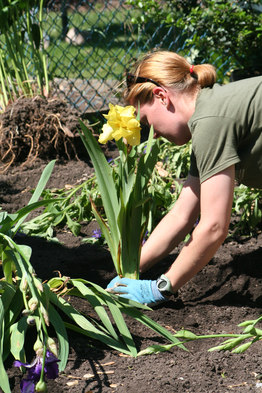
    Horticulture. What is it? In its simplest form we can define it as the cultivation of plants. But there’s a lot more to it than that.

    An individual who works in the horticulture field is called a horticulturist. Their duties consist of managing and coordinating anything that involves cultivating and breeding plant life. From working with landscape companies, to advising provincial ministries on proper techniques and maintenance of plants and landscapes; a horticulturist’s job often takes them from one job site to another and seldom leaves them standing in the same place.

    An ideal candidate for the horticulturist career path is an individual who enjoys working outdoors, nature, travelling and, well, getting dirty!
    Horticulturists may act as technicians or advisors for agriculture companies and provide information on techniques to yield a higher crop growth and impart pesticide-related info to both commercial and independent farmers. They may also work with landscaping companies to help them determine which plants will grow the most plentifully based on its required needs, like climate and precipitation.

    Horticulturists may choose to work as independent contractors or work directly for natural resource ministries to ensure soil levels are not contaminated and pose no threat to its vegetation or animals in the area.

    The career path of a horticulturist typically only requires some post secondary education as an apprentice. The individual could start out as a landscaper and gradually make their way to a horticulturist. If desired, university degrees are offered in the field of horticulture. These degrees may lead into other agricultural fields such as forestry and biology.

    So if you have always loved learning about plant life and even planting your own garden or flowerbeds at home, a career in horticulture could be perfect for you!

  • Career Profile: Hairstylist

    Career Profile: Hairstylist

    Hairstylists shampoo, cut, style and chemically treat hair. They may also provide other services such as scalp treatments and hairpiece services. In some jurisdictions, hairstylists may also provide additional services such as basic natural nail services, basic facial care and ear piercing.

    To be a successful hairstylist, one must incorporate technical and interpersonal skills. Continuous personal and professional development and client retention are crucial for long-term success. Hairstylists may recommend styles based on trends, clients’ physical features and lifestyle. Critical thinking, questioning and listening skills are important to serve their clientele. Depending on the workplace, recommending and selling hair and skin products may be done by the hairstylist.

    Hairstylists may work in hair salons, spas, barber shops, schools, hair replacement clinics, health care establishments, hotels, and in the cruise, fashion and entertainment industries. With experience, hairstylists may move into other positions such as salon managers, owners, fashion consultants, educators, platform artists and product sales representatives. Salons may specialize in services to either women or men, or both. Hairstylists may be remunerated through salary, commission, a combination of salary and commission or chair rental agreements. Some hairstylists work out of their residences where by-laws allow.

    Hairstylists work with various tools and equipment including brushes, combs, shears, clippers, razors, hair dryers and thermal irons. They own most of their tools and must keep them sanitized, disinfected and maintained.

    Some hairstylists specialize in areas such as cutting, hair extensions and chemical services. In addition, diversity across Canada requires specialization in ethnic specific services.

    Hairstylists work in clean environments, though the chemicals that they use may irritate their skin and produce strong odours and fumes. Some physical considerations of this trade are long periods of standing, posture fatigue and repetitive motion. This may result in repetitive strain injury, back and foot pain, although ergonomic considerations may reduce these effects.

    Key attributes for people entering this trade are: communication skills, personal interaction, coordination and manual dexterity, stamina, colour vision and depth perception. Respect, professionalism, teamwork, tact, discretion and creativity are important personal qualities. To keep current with trends and styles, hairstylists need to update their skills through trade shows and other educational venues. They must also understand and implement personal and public hygiene procedures to maintain workplace health and safety.

  • Career Profile: Tailor/Dressmaker

    Career Profile: Tailor/Dressmaker

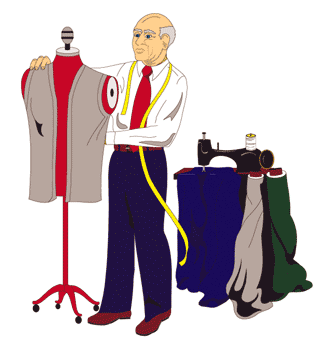
    When people go to a formal event like a banquet, they usually wear a nice suit or a dress. When they go to the lake, they put on swimsuits and wear shorts and t-shirts.  What do all of these clothes have in common?  They were all made by someone. In many places, some of the nicest clothes come from tailors or dressmakers. These experts in clothing make new suits, dresses, and other clothes or make alterations to customers’ clothes to make them as nice as possible. The job of tailor or dressmaker allows people to work with their hands and to be creative as they help people to get the kinds of clothes they want.

    Many of the clothes that people wear come from factories where workers make hundreds of the same types of clothes to sell around the world. These clothes come in standard sizes and colours, and they are generally fairly inexpensive and casual. However, what about special clothes, like wedding dresses, graduation suits, or bridesmaids’ outfits? When people need something they can’t find in a store, they might go to get their outfits specially made.

    Normally, tailors and dressmakers are not the people who design clothes. Instead, they follow premade patterns that they adapt to fit the person buying the clothes. They might also do alterations on clothes that people have bought elsewhere, such as raising or lowering the hems of pant legs or changing the size of a waistband. Whatever makes clothes more wearable is part of what tailors and dressmakers do. They often work with sewing machines but also have to know how to make clothes by hand. They have to be able to follow directions on patterns but also be flexible and creative to give customers the clothes they want.

    Tailors and dressmakers need to know a lot about how clothes are designed. They need good skills in reading and mathematics to read and understand patterns and to make calculations to alter clothes. Generally, a high school diploma is enough to get into the work, although courses in home economics are useful. The most important thing is practice. With practice, people learn the different sewing terms and learn all kinds of techniques, such as making special stitches or working with different kinds of fabric. Generally, tailors work with men’s and boys’ clothes and dressmakers work with women’s and girls’ clothes, but not always.

    Once they have the skills they need, tailors and dressmakers can work in all kinds of places. Some of them set up their own businesses in shops or in their homes. Others work in factories or in department stores. Some tailors and dressmakers work regular hours but make low wages, but experienced people in this field can often choose their own hours and make a lot of money. Getting to know the clients well and doing good work can help tailors and dressmakers succeed. If you like people and enjoy working with your hands, it could be the right job for you.