Tag: career profile

  • A Career as an Electrician

    A Career as an Electrician

    A career as an electrician provides a fair amount of job security whether you are self-employed or hired within a company. Electricians are required across the board, from domestic to commercial settings. Due to the dangerous nature of the work involved, electricians must be highly qualified and trained. If a career as an electrician appeals to you, read on to find out what steps you will need to take to become qualified as an electrician.

    Education
    In order to become an electrician you first need to get qualified, which requires you to enroll in an apprentice program. In order to apply for an apprenticeship program you will most likely be expected to possess a high school diploma or equivalent. Apprenticeship programs will provide classroom instruction as well as on-the-job training. Expect the apprenticeship to last a duration of 4 years, with approximately 144 hours of classroom based instruction and 2,000 hours of on-the-job training. Classroom instruction will consist of learning about electrical theory, mathematics, electrical code requirements, blueprint reading, and safety practices. Some specialized training may be received, such as working with elevators and fire alarm systems. As for on-the-job training, expect to be work under the supervision of an experienced electrician who will set your tasks and guide you until you can master the tasks given on your own.

    Graduating
    Once you have graduated there are a variety of routes you can go down. Many electricians choose to work for construction firms, service companies or utility companies. Most graduates will be involved in some kind of maintenance work, where they will be expected to primarily maintain and upgrade existing electrical systems. If you enter into the construction field, you will be part of a team responsible for installing new wiring systems within new buildings. Alternatively you can go down the self-employed route, but that would require a lot of self-promoting and an understanding of registering your self-employed status for tax purposes. You would also need to pass a licensing exam in order to obtain a trading license. Check with your local authority about what is required to set yourself up, if you are interested in becoming a self-employed electrician.

    Earning potential
    Electricians are expected to command very good base wages. However, much of this depends on the company you work for and the perks they offer. If you are self-employed you will set your own hourly rate or job rate, but keep in mind that you will need to factor in promotional costs, transport costs and parts costs.

    Advancement
    Once experienced, electricians can advance to positions such as a supervisory roles. Within the construction field they can become employed as construction superintendents or project managers.

    If this sounds like a career that would suit you, check online via your local job center or career center in order to inquire about local apprenticeship programs. Find out what apprenticeship opportunities there are with local electrical contractors and local electricians. In order to become qualified you will need to study in the apprentice role for 4 years, so make sure you this is the right career choice for you before becoming committing.

  • Career Profile: Teacher

    Career Profile: Teacher

    Teaching is a career which requires a great deal of knowledge and passion. While knowledge can certainly be learned, passion cannot be taught. However, if an aspiring teacher is passionate about the profession, a teaching education can certainly help him or her to develop the skills necessary to organize and manage a classroom that effectively promotes learning.

    Education
    In Ontario, teachers must hold a four-year Bachelor of Arts degree from any recognized University. A primary/junior teacher (grades K-6) will have a degree in any discipline, while an intermediate/senior teacher will hold a double-major degree in two “teachable” subjects.

    Then, teachers will complete the Bachelor of Education. This is a one-year degree where candidates spend most of their time taking courses in education, and the rest of it student teaching. For an average of two to three months spread across the year in “blocks” of time, the student teacher is paired with a working teacher, giving lessons and grading work in order to practice his or her skills.

    Job Searching
    Teaching jobs in Ontario are notoriously limited. Specializing in certain subjects (for example, French) will give candidates a hard competitive edge when job hunting. Many teachers must begin work as “occasional” (supply) teachers, sometimes having to work for several years before securing permanent positions. If you want it, don’t give up – however, if you are debating between several career options, this is something that you might want to keep in mind.

    What to Take?
    Primary/junior teachers are best advised to take a variety of subjects throughout their Bachelor of Education. For example, an aspiring teacher candidate might choose a major in child psychology, rounding out the timetable with diverse electives in math, art, or physical education.
    Intermediate/senior teachers are to have a minimum of two “teachable” subjects; this means that they have taken a certain number if courses in a high-school relevant subject. Examples of “teachable” subjects include mathematics, general science, biology, physics, history, English, and French.

    Do Your Research
    The Teaching Profession: www.edu.gov.on.ca/eng/teacher/employ.html
    Teacher Education Application Service (TEAS): www.ouac.on.ca/teas
    Ontario College of Teachers: www.oct.ca

  • Career Profile: Aviation Inspector

    Career Profile: Aviation Inspector

    Job Summary
    An aviation inspector is responsible for making sure that an aircraft is ready to fly. He or she performs safety checks, testing and carefully inspects all components of a plane before it is cleared for takeoff. Any repairs or maintenance work is also checked by an aviation inspector, who will report any damage or request further repairs if necessary. He or she is ultimately one of the last lines of defense in preventing aircraft malfunctions and accidents.

    A typical day for an aviation inspector is focused on inspecting aircrafts. There are several safety regulations that a plane must pass in order to be allowed to fly and aviation inspectors ensure aircrafts pass these measures. Much of an inspector’s responsibility lies in diagnosing mechanical issues and providing a recommendation for repairs. He or she may also observe an aircraft’s inflight performance as well as the pilot’s ability to fly with respect to flight regulations. If an inspector believes changes should be made to flight regulations, he or she is expected to make recommendations for amendments to the board of flight safety.

    Education
    If aviation inspection is a career that interests you, it’s best to get on the right track as soon as you can. In high school the best courses to take are physics, computer science, algebra and geometry. Technology and mechanic courses are also good options. Even if you decide aviation inspection isn’t for you, these courses will give you a good start in any other STEM (Science Technology Engineering Math) career you might want to pursue.

    After high school there are a few different options available to you. A Bachelor’s degree in engineering followed by vocational training specific to aviation inspection and maintenance will give you a good educational base to begin your career. In some cases, going right to the vocational training from high school may also be an option. Most inspectors start out as aircraft mechanics which is likely to require a 2-4 year degree.

    Skills Required
    There are some basic skills that every aviation inspector should possess. Interpersonal skills and the ability to effectively communicate with different kinds of people is essential. Problem solving, thinking critically, mechanical aptitude and a keen eye for detail are also crucial skills to cultivate. As the job title suggests, aviation inspection relies heavily on the inspection aspect. Well-developed skills of observation are paramount.

    Salary
    Most aviation inspectors make anywhere from $40,000- 60,000 a year.

    For anyone with mechanical talent, keen observation skills and knack for staying organized, ‘aviation inspector’ is a career path worth considering.

  • Career Profile: Horticulturist

    Career Profile: Horticulturist

    Many people like to grow flowers and vegetables in their houses and yards. They take care of the grass on their lawns, water their plants in dry weather, and pull weeds from among the plants. Sometimes, they put special fertilizer on the plants to help them grow better. When they take care of plants in this way, they do some of the work of a horticulturalist.

    The work of a horticulturalist can take many different forms. Some horticulturalists do very basic labour, such as digging up the soil in gardens to prepare them for planting or mowing and trimming lawns. They also prune trees by cutting off extra branches and prune smaller plants by removing dead leaves and flowers.

    These horticulturalists need only a basic education, such as a high school diploma. They do all of the basic jobs that keep the plants healthy and growing. Horticulturalists at this level are normally not paid very well, and usually they work only in the growing season from late spring until early fall. However, this kind of job can be good for students or for people who prefer not to spend years studying.

    Some horticultural work requires much more knowledge than a basic labourer needs. People working at this level often have degrees in agriculture, botany, or related fields. They research new plant species for different climates or try to find ways of making plants stronger and easier to care for. Some horticulturalists at this level also help design gardens or advise people on the best methods of plant care. Others become crop inspectors for large farms or work with small, local groups. Still others become professors and teachers in colleges and universities. These horticulturalists are generally fairly well paid, although the salary can vary according to what kind of work is available.

    Either of the two levels of horticultural work could be good choices for anyone who enjoys working with plants. They can work in edible horticulture, growing plants for food. Employment in this area is generally quite secure since people always need food. However, the low pay and seasonal work for some horticultural workers are disadvantages, as well as exposure to dangerous chemicals. Some of the work, such as digging up flower beds, can also be physically difficult. Another option is to work in ornamental horticulture, growing plants like flowers or shrubs for show rather than for food. Work in this area is often less physically difficult, although dealing with chemicals is still a problem.

    Do you love to work with plants and to see them grow? If so, maybe a career as a horticulturalist is right for you.

  • Career Profile: Cartographer

    Career Profile: Cartographer

    What is a Cartographer?
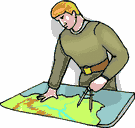
    When was the last time you looked at a map? Though you may not realize it, it probably wasn’t that long ago. Cartographers (or map makers) are usually associated with the paper incarnation of the navigation tool – the professional has learned to adapt to rapidly developing technologies. If you’ve looked up directions online, chances are a cartographer is responsible for building and updating the digital map you used.

    Traditionally, a cartographer would draw the lay of the land on paper. Depending on the nature of the map and what its intended use was, maps would typically depict important markers like major landmarks and cities. Aerial photography, computer programming and worldwide networks have forever changed how members of this profession complete their work. For instance, have you ever seen the Google Maps car or used the ‘street view’ function? Using onsite photographs, cartographers are able to reconstruct locations around the world. Another crucial tool is satellite imagery; Aerial pictures taken by satellites allow cartographers to keep maps up-to-date, preserving accuracy.

    Education and Skills
    There are a variety of ways to become a cartographer, but a having an interest in geography, math and science is key. Cartographers usually have a bachelor’s degree in cartography, geography, surveying, engineering, forestry, computer science, or earth sciences. With the advent of digital information sources, a strong aptitude for computer programming is highly desirable.
    Cartographers must be technically-minded and able to easily solve discrepancies in logic. Creating and maintaining geological and statistical data can be tedious work, making patience and endurance invaluable skills.

    Salary
    Most cartographers earn between $50,000-$60,000 annually.

    Day-To-Day
    Cartographers tend to spend the bulk of their time in offices working on computers. Much of their time is spent collecting, analyzing, interpreting and publishing data. Most of their work involves interpreting multiple factors, including but not limited to: landscape, law, climate conditions and changes in population and cultures. Mechanical drawing and map composition remains a fundamental part of the job, but these tasks are usually completed in a digital capacity.

  • Career Profile: Dental Hygienist

    Career Profile: Dental Hygienist

    Do you…
    • Enjoy working with your hands?
    • Enjoy working with people one-on-one?
    • Want to learn more about teeth and oral health?
    If you answered “yes” to any of the questions above, then a career as a Dental Hygienist may be right for you!

    What Is A Dental Hygienist?
    A Dental Hygienist is a registered dental professional who specializes in preventative oral care and proper oral hygiene. Dental Hygienists typically offer three types of general services:
    1. Preventative Services – to promote and maintain good oral health
    2. Educational Services – teaching patients about the importance of maintaining good oral health and showing them ways to maintain their oral health
    3. Therapeutic services – treatments to help stop diseases in the mouth

    Specific job duties performed under these three services include:
    • Assessment, Diagnostics, Planning, Implementing and Evaluating the individual needs of the patient (ADPIE)
    • Scaling and root planning (cleaning)
    • Polishing stains off teeth
    • Fluoride treatments
    • Taking and exposing x-rays
    • Conducting oral cancer screening
    • Making whitening trays and sport guards for patients
    • Placing pit and fissure sealants on the grooves of the teeth
    • Irrigating the tissues (gums) with therapeutic agents to help stop/prevent disease
    • Educating patients about proper brushing, flossing, mouth rinse etc.
    • Explaining oral health conditions with patients (such as gingivitis, periodontitis) as well as how to prevent such conditions

    Where Does A Dental Hygienist Work?
    A Dental Hygienist may work in a variety of settings:
    • Private dental offices (general and specialized dentistry)
    • Self-initiated Dental Hygienists can open their own dental hygiene practice in certain provinces such as Ontario, Alberta and British Columbia
    • Hospitals
    • Public health offices

    Some Dental Hygienists may also prefer to work:
    • As teachers and administrators in Dental Hygiene Colleges and Universities
    • In dental sales and dental research

    What Is A Typical Day For A Dental Hygienist Like?
    A typical day for a Dental Hygienist in a general dentistry dental office is to:
    • Set up their work space for the day (stock up, place barriers, set up dental trays etc.)
    • Review charts of patients coming in for appointments
    • Take in patient – review their medical history, ask if they have any concerns with their oral health. Take any prescribed x-rays (optional)
    • Follow ADPIE with patient
    • Complete an assessment of their oral health – assess teeth, gums and surrounding tissues
    • Diagnose problems or concerns and decide on a course of action for the appointment
    • Implement action plan: begin to scale (clean) teeth, polish stains, administer fluoride or therapeutic agents (if required)
    • Educate the patient on their oral health and on proper brushing and flossing techniques and other dental aids specific to their mouth
    • Ask the dentist to perform an oral examination on the patient
    • Record notes from the appointment in the patient’s chart. Dismiss patient.
    • Disinfect the operatory between patients (place dental instruments in sterilizer) and set up operatory for next patient

    How Do You Become A Dental Hygienist?
    1. Attend a college or university (Western Canada) that offers a Dental Hygiene training program (preferably an accredited program).
    2. Complete the Dental Hygiene program successfully.
    3. Write the Dental Hygienist certification exam put out by the National Dental Hygiene Certification Board (NDHCB).
    4. Pass the exam and register with the College of Dental Hygienists of Ontario (or province of work) and then become a registered Dental Hygienist or RDH.

  • Career Profile: Automotive Service Technician

    Career Profile: Automotive Service Technician

    Do you…
    • Enjoy working with your hands?
    • Enjoy fixing cars, trucks, motorcycles or small engines?
    • Want to learn more about electrical, hydraulics (fluid power), pneumatics (air power) and mechanical components in machines?

    If you answered “yes” to any of the questions above, then a career as an Automotive Service Technician may be right for you!

    What Is An Automotive Service Technician?
    An Automotive Service Technician is a certified and skilled tradesperson who diagnoses and repairs motor vehicles (e.g. cars, minivans, SUV’s, light duty trucks and medium duty trucks).

    An Automotive Service Technician performs various duties that help maintain a vehicle as well as repair it. Some of these job activities include:
    • Engine maintenance and repair
    • Transmission maintenance and repair
    • Exhaust system repair
    • Body repair and adjustments
    • Brake maintenance and repair
    • Steering, suspension and alignment repairs

    Where Does An Automotive Service Technician Work?
    An Automotive Service Technician may work in:
    • Dealerships
    • Independent automotive shops, repair shops and garages (owned by other people or themselves)

    Some Automotive Service Technicians may prefer to work as:
    • Teachers in high school teaching automotive class
    • Teachers in colleges that offer an accredited Automotive Service Training program

    What Does A Typical Day For An Automotive Service Technician Look Like?
    A typical day for an Automotive Service Technician in a dealership or automotive shop usually begins when a customer brings their vehicle to the shop. The customer tells the service advisor what the problems are with their vehicle. The service advisor documents the problems on a work order. The vehicle and corresponding work order is then given to an Automotive Service Technician who begins to work on this particular job.

    An Automotive Service Technician follows a certain procedure when working on a new job. He/she:
    1. Reads the work order written up by the service advisor.
    2. Examines the vehicle to further assess the problems mentioned on the work order.
    3. Provides the service advisor with an estimate on how much it will cost to fix the problems.
    4. Waits for the service advisor to confirm that the customer is OK with the repair costs before fixing the problems.
    5. Fixes the problems once the service advisor gives the go ahead.
    6. Takes the vehicle for a test drive and/or performs operational checks to ensure that the customer’s concerns are resolved.
    7. Informs the service advisor that the customer can pick up their vehicle.

    How Do You Become An Automotive Service Technician?
    1. Attend a college that offers a certified Automotive Service Technician training program.
    2. Complete the Automotive Service Technician program successfully.
    3. Find a suitable employer who will hire and train you as an Automotive Service Technician apprentice. (Complete your apprenticeship booklet/hours/activities at work and get it signed off by your employer).
    4. Write the Automotive Service Technician certification exam put out by the Ministry of Training, Colleges and Universities.
    5. Pass the exam, obtain your 310S license and become a licensed Automotive Service Technician!

  • Astronomers: Observers of Space

    Astronomers: Observers of Space

    It’s easy to imagine an astronomer spending their days (or, rather, their nights) gazing up at the stars observing planetary activity and other celestial bodies. To a certain extent you wouldn’t be too far off from the truth, but the life of an astronomer isn’t anywhere near as romantic as we’d like to think it is. In fact, the majority of the a professional astronomer’s career is spent analyzing pre-recorded data. There are occasions when an astronomer might take a seat at the helm of an optical telescope or use the recorded data from a radio telescope to inspect extraterrestrial space, but these instances will usually take place every few months or even years, depending on the nature of his or her research. Others exclusively use programmed computer simulations to research and simulate recorded findings to learn more about them. An astronomer’s primary focus, however, remains to observe planets, stars, galaxies and the ever changing intergalactic landscape.

    Education you say?
    The academic background of an astronomer can vary. There are universities like York and the University of Toronto that offer degree programs in Astronomy. Typically, a bachelor’s degree in science (usually chemistry or physics) is completed first. Then an aspiring astronomer might set his or her sights on a Master’s of Astrophysics and/or a Doctorate in Astronomy. Needless to say that there are a variety of paths to take, most of which generally stay close to the mathematics, chemistry and physics fields.

    Where can you get a job?
    Generally, astronomers find work with research institutions and universities. Working at a research station will require the astronomer to be fully focused on a branch of research, while a position at a university usually includes a teaching component, instructing courses at the undergraduate level, or supervising those at the master’s and doctorate levels.

    The skills you’ll need
    If you’re thinking of pursuing astronomy in the future, there are a few things you can start on now to help increase your chances of success. In high school it’s a good idea to take a wide range of courses while also taking all of the sciences and mathematics, of course. Geography and geology (if your school offers it) wouldn’t be such a bad idea either, since most celestial objects are composed of the same components as Earth. Lastly, work on developing your research skills, as well as reading and writing. As you enter post-secondary education you won’t have as much time to perfect those skills, so the sooner you feel confident in your ability to think critically and articulate your thoughts, the better.

  • Career Profile: Psychiatrist

    Career Profile: Psychiatrist

    Psychiatry is a specialization that is chosen after taking medical school. Being a psychiatrist means working in a clinic, a hospital, or a professional organization that caters to the mentally ill. A psychiatrist distinguishes him or herself from a psychologist in a few very important ways, namely being able to prescribe medication and being the primary authority for persons with a brain chemical imbalance. There are many overlaps between psychiatrists and psychologists, particularly in the counselling services that are offered by both of these professional viewpoints.

    In order to become a psychiatrist, one must graduate high school with grades that allow them to get into an undergraduate degree and, particularly, a scientific degree. At the high school level, you might have to take at least one or a few of the following courses: chemistry, biology, physics and calculus. Once at the undergraduate level, you have several options on which major to choose to be best equipped for medical school. You could choose psychological science, pre-medical science, biochemisty or biophsyics. There are options that will allow you to choose what fits with your strengths and weaknesses. In undergrad, you will be required to receive high grades that will open the doors for the next step: medical school.

    There are different requirements for different schools and you will have to become aware of these through visiting the school, visiting the website or making a phone call to the schools you are interested in. Once you’ve selected a school and are aware of the requirements, you will have to go through the MCAT (Medical College Admissions Test) if that is a requirement. Once you’re into medical school, you have four years ahead of you before you get into your specialization. During these four years you will have practical classes that allow for hands on experiences in a hospital or clinic, and you will also have classes that are more theoretical in nature. Both of these types of classes are important for your overall success as a practicing physician.

    Becoming a specialist enters you into the next four year phase of your degree, and you will need to have obtained a relatively high average throughout med school to be able to get into your chosen specialization. The exact requirements will vary per school, and this is something that you will want to look into before starting medical school to ensure that you will be able to achieve the targets set out by each.

    As a psychiatrist, you can look forward to having a very comfortable salary around the $150,000 per year range (according to About.com). You also have the option to choose your work setting, whether that be in your own private clinic, in a hospital or in public organization.

  • Becoming An Architect

    Becoming An Architect

    What is Architecture all about?

    Architecture is the art, the science and the business of building.

    Architects create homes, office towers, schools and churches. They are talented people with a flair for design, an awareness of social trends, keen business sense, solid engineering skills and an understanding of the law. The word “versatile” may have been invented to describe Architects!

    Today’s Architect may practice alone or be part of a small, medium or large firm. Some Architects are self-employed. Others may be on salary, as employees of government, real estate developers or large corporations.

    “Clients” are the people who use the services of Architects. A client may be a family, a school board, a company, a housing authority, a government department or a building contractor.

    Why does Architecture matter?

    There’s no place like home

    The design or re-design of a home is one of the most fascinating and important things an Architect can do. Homes house the daily activities of families and individuals. Sometimes they offer privacy and shelter. On festive occasions, they are places of open hospitality. Rural or urban, row house or apartment, the home may be used year-round or only for vacations. Beyond our homes, the community takes shape.

    Keeping the past alive

    Old buildings add variety to city streets and remind us of our links to the past. Public interest in restoring old buildings is as strong as the economic pressure to re-use them. The result ? Architects are using modern techniques and ideas to renew historic buildings across Canada.

    Inside the home and office

    Respected Architects have designed chairs, tables, cabinets and fabrics–objects that lend comfort and pleasure to people’s homes and work spaces. When the desire to create something “organic” or whole, is strong, Architects design not only a building and the space around a building, they will also shape the space inside the building.

    Mirrors of time

    Great civilizations leave behind great architecture. Think of the pyramids of Egypt, the columns of Greece and Rome, the great Gothic cathedrals. Architecture reflects the religious, political and social values of the day. Today’s buildings express our society’s common purposes and will tell our story long after we are gone.

    Where is Architecture going?

    Big and sleek

    In giant cities, the voices of commerce, finance, business and government call out for giant buildings. Big buildings can cause big problems, such as increased traffic flow. They also create a need for parking, water, sewer and fire-fighting access. Putting large buildings into a city involves balancing the technical, planning and aesthetic problems posed by size. Architects with special design skills are needed to tackle these big jobs.

    Designing the city

    Cities are where the action is. The social and economic character of a city is often expressed in urban design. Many Architects serve on planning boards or help people who live in urban neighbourhoods shape the city around them. Sometimes Architects get involved in restoring parts of a city, developing housing projects or industrial parks, or designing shopping centres.

    What do Architects do?

    It all starts with a commission–or contract–from a client. The commission may involve the design of a single building or a group of buildings and the spaces between them. The client may be a person, a board of directors, a government department or a business.

    Usually, the Architect leads a team of specialists including structural, mechanical and electrical engineers, as well as others. The Architect must also understand and deal with building codes and bylaws set out by municipal, provincial and federal governments.

    The Architect keeps everyone on time and on budget. Technical knowledge, good people skills and no-nonsense business sense are all important to this task.

    What’s the bottom line? Architecture is a business. Being creative and designing something beautiful are only the first steps in making a vision come to life.

    What is a typical day?

    Such a thing may not exist. But on any given day, an Architect may have to:

    • Meet with clients.
    • Win contracts.
    • Solve problems.
    • Estimate costs.
    • Meet with consultants.
    • Produce drawings.
    • Present at public hearings.
    • Draw up specifications.
    • Call tenders (bids).
    • Visit construction sites.

    It can be a real challenge to juggle all the aspects of this demanding job.

    What do Architects do?

    They Draw

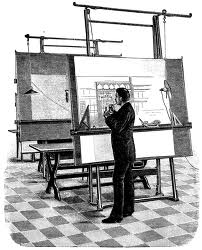
    Simple diagrams show the link between spaces or activities. Detailed working drawings show every last detail. Contractors and sub-contractors estimate the cost of the work based on the working drawings of an Architect. When the time to build comes, these drawings will be the building plan.

    Taking a drawing off the page and onto the computer screen through 3-D computer modeling can bring an Architect’s design to life, in living colour! Scale models or animated videos that help the viewer “see” the project from start to finish are other ways Architects present ideas to the public or clients.

    They Write

    Architects must

    • Write business letters.
    • Document all aspects of a project.
    • Develop charts and tables to analyse the project.
    • Develop specifications which define the building.
    • Prepare articles for professional journals and magazines.

    They Speak

    Being able to think on your feet and communicate clearly is a big part of being an Architect. Explaining, discussing, teaching and persuading are tools of an Architect’s trade.

    Architects are often called upon to:

    • Make presentations to clients.
    • Outline concepts, discuss options and offer creative solutions to problems.
    • Appear before public bodies as an expert.

    They Calculate

    It has to add up! Architects must be able to prepare accurate construction and office budgets. They also have to understand structural analysis, heat loads, electrical distribution and traffic flow.

    They Take Responsibility

    When an Architect “signs-off” on a certificate, it means that part of the job has been completed to the Architect’s satisfaction. Several certificates are signed-off during a contract.

    They Manage

    Architects often manage their own offices and businesses. They must also manage projects from the first spark of an idea to the ribbon cutting at a new building. During the construction phase, Architects manage contract administration, oversee drawings and specifications, handle problems that arise on the job site and monitor work in progress.

    What does it take to be an Architect?

    Ask yourself these questions:

    • Do details matter to me?
    • Do I understand and get along with people?
    • Do I truly value the things I see?
    • Can I analyze what I see?
    • Am I a creative thinker?
    • Do I think in a logical and orderly way?

    Spend some time in an Architect’s office. Ask questions. Read all you can about architecture. (Your local library can help you find books on the subject). Look at professional magazines. Visit the Schools of Architecture.

    How can I become an Architect?

    To be a licensed Architect, you will need

    • Education
    • Experience, and
    • a passing grade on an Examination.

    Education

    The vast majority of Architects complete a bachelor’s or master’s degree in architecture from a university program approved by the Canadian Architectural Certification Board (CACB).

    An alternative way to become an Architect is through the “apprenticeship” offered through the RAIC Syllabus Program.

    Experience

    To get experience, you must complete the Internship in Architecture Program. This program is offered through the associations of architects in each province. If you are accepted into the program, you will require a “Mentor” (a licensed Architect) who will guide your work over a period of time, according to the rules of the Internship in Architecture Program. Usually, interns or intern architects complete the program in about 3 years.

    Examination

    In all provinces, passing a computerized exam is one of the final steps in becoming a licensed Architect. Architects in Canada are licensed at the provincial or territorial level.

    Some provincial or territorial associations may have additional requirements before licensing or registration.

    Why must Architects be licensed?

    Architects are professionals. The public must be sure that people who call themselves Architects are qualified to practice in their field. So, all across Canada, Architects are licensed by provincial or territorial associations of architects. The goals of the associations are:

    • to encourage members to improve their skills and knowledge, and
    • to maintain high standards in the practice of architecture.

    Like other professionals, such as doctors and lawyers, Architects are legally responsible for the decisions they make. In some provinces, all licensed Architects must have professional liability insurance if they wish to practice architecture. This insurance protects both the public and the Architect. As well, each province and territory has an “Architects Act” which regulates the practice of architecture. It is against the law for anyone who is not licensed to use the title “Architect”.

    What courses should I take in high school?

    It’s hard to say which courses are best, because Schools of Architecture vary greatly in what they offer students at the university level. It is a good idea to find out now what is required for admittance to a university you would like to attend.

    Mature students (people who are not recent high school graduates) are also welcomed by most Schools of Architecture.

    As well, there is an important place in architecture for people who do not wish to pursue a university degree. You could take courses at a technical school, community college or university to become:

    • an architectural technologist,
    • an architectural technician, or
    • a draftsperson or CAD (computer assisted drafting) technician.

    What other work is available for Architects?

    Here are some job titles that tell you the kind of work Architects can do :

    • Architectural Critic
    • Graphic Designer
    • Architectural Photographer
    • Heritage Planner
    • Architectural Programmer
    • Illustrator
    • Architectural Renderer
    • Industrial Designer
    • Builder Inspector
    • Interior Designer
    • Building Envelope Scientist
    • Landscape Architect
    • CAD Coordinator
    • Market Researcher
    • Campus Planner
    • Model Maker
    • Carpenter
    • Municipal Architect
    • Cartographer
    • Museum Curator
    • Computer Presentation Designer
    • Printmaker
    • Computer Systems Analyst
    • Professor
    • Conservator
    • Property Assessor
    • Construction Inspector
    • Publisher
    • Construction Manager
    • Real Estate Agent
    • Contractor
    • Real Estate Project Manager
    • Corporate Consultant
    • Researcher
    • Design/Build Team Manager
    • Set Designer
    • Developer
    • Structural Engineer
    • Document Designer
    • Technical Writer
    • Environmental Planner
    • TV/Film Producer
    • Furniture Designer
    • Urban Planner