Tag: career profile

  • Career Profile: Electrician

    Career Profile: Electrician

    A career as an electrician provides a fair amount of job security whether you are self-employed or hired within a company. Electricians are required across the board, from domestic to commercial settings. Due to the dangerous nature of the work involved, electricians must be highly qualified and trained. If a career as an electrician appeals to you, read on to find out what steps you will need to take to become qualified as an electrician.

    Education
    In order to become an electrician you first need to get qualified, which requires you to enroll in an apprentice program. In order to apply for an apprenticeship program you will most likely be expected to possess a high school diploma or equivalent. Apprenticeship programs will provide classroom instruction as well as on-the-job training. Expect the apprenticeship to last a duration of 4 years, with approximately 144 hours of classroom based instruction and 2,000 hours of on-the-job training. Classroom instruction will consist of learning about electrical theory, mathematics, electrical code requirements, blueprint reading, and safety practices. Some specialized training may be received, such as working with elevators and fire alarm systems. As for on-the-job training, expect to work under the supervision of an experienced electrician who will set your tasks and guide you until you can master the tasks given on your own.

    Graduating
    Once you have graduated there are a variety of routes you can go down. Many electricians choose to work for construction firms, service companies or utility companies. Most graduates will be involved in some kind of maintenance work, where they will be expected to primarily maintain and upgrade existing electrical systems. If you enter into the construction field, you will be part of a team responsible for installing new wiring systems within new buildings. Alternatively you can go down the self-employed route, but that would require a lot of self-promoting and an understanding of registering your self-employed status for tax purposes. You would also need to pass a licensing exam in order to obtain a trading license. Check with your local authority about what is required to set yourself up, if you are interested in becoming a self-employed electrician.

    Earning potential
    Electricians are expected to command very good base wages. However, much of this depends on the company you work for and the perks they offer. If you are self-employed you will set your own hourly rate or job rate, but keep in mind that you will need to factor in promotional costs, transport costs and parts costs.

    Advancement
    Once experienced, electricians can advance to positions such as a supervisory roles. Within the construction field they can become employed as construction superintendents or project managers.

    If this sounds like a career that would suit you, check online via your local job center or career center in order to inquire about local apprenticeship programs. Find out what apprenticeship opportunities there are with local electrical contractors and local electricians. In order to become qualified you will need to study in the apprentice role for 4 years, so make sure this is the right career choice for you before becoming committing.


  • Career Profile: Graphic Designer

    Career Profile: Graphic Designer

    Hobbies can be fun and relaxing, but sometimes they can be more. Do you enjoy drawing and being creative? If so, you might want to turn your interest into a career. Graphic designers use their skills and creativity to make books, websites, and other documents more interesting and informative.

    Basically, a job in graphic design involves working with the visual aspects of documents, whether online or in print. Graphic designers might work with diagrams in technical documents, photographs and illustrations for brochures, and covers for books. Some of them design websites or business logos. Others work with publishers in designing the layout of books and magazines to ensure a good balance of text, illustrations, and blank space.

    Becoming a graphic designer involves both skill and education. Community colleges and trade schools offer courses in graphic design, where people can study for one or two years to earn a certificate. Universities also offer degrees in Fine Arts which can help improve people’s chances of getting a good job. A good website to check for information on specific programs is the National Association of Schools of Art and Design.

    Through their studies, students learn how to improve their drawing skills and to use the different tools that are available for their work. They also learn other skills. One of the most important qualities in graphic design, as in most other jobs, is the ability to solve problems. The problems might be fairly easy, such as finding an illustration for a cookbook. At times, they could be much harder, such as trying to fit a large amount of text into a small space. Sometimes graphic designers might need to work with other people, such as editors, to solve these problems. Knowing how to resolve the problems they encounter will help graphic designers become better at their jobs and help them succeed.

    Some graphic designers get full-time jobs with magazines or other publications. Depending on the size and type of magazine, graphic designers can make between about $34,000 and $54,000 per year, not including extra benefits like money for travel or further education. This type of work can sometimes be stressful because of tight publication deadlines. However, the stability of this kind of work can be worth the busy schedule.

    Freelancers make up about a third of Canada’s graphic designers. They might work for several different companies at once or they might work on one project at a time for several months. Even before one project is over, they need to start looking for a new one. This gives them a lot of flexibility in their work, but it also means that they frequently need their problem-solving skills for finding new jobs. For people who enjoy variety and who don’t mind some insecurity, this can be a good option.

    Would you like to work at making documents easier to use and understand? If so, you might want to consider a career in graphic design.

  • Career Profile: Police Officer

    Career Profile: Police Officer

    People who are attracted to being a police officer highlight the many benefits associated with this position. They want to work as a police officer because of the thrill of working to promote a crime free city or country, or they want to have the structure that working for a large organization like the city police or the federal police offers. The job of being a police officer is often unglamorous and involves a lot of paperwork – not like the movies would have you believe. It does, however, involve working on a team and also being responsible for your own independent work. In order to prepare to be a police officer, there is training to be done either at the college or university level. This training involves taking courses in law or another social justice type field, like police foundations.

    In Ontario there are many colleges and universities that offer these types of courses. If you’re looking for something in French, you could try the College Boreal in Sudbury. If you’re looking for something that will allow you to get through your schooling in the timeliest manner possible, you can check out the program at Mohawk College in Hamilton which has a duration of one year. Advanced Police Studies at Conestoga College in Kitchener will also have you through courses and ready to work in a year. If you’re on route to a university degree already, you may choose to enroll in a program at Georgian College in Orillia for a Bachelor of Human Services (Police Services) with a co-op option. Fleming College in Peterborough offers a program of 4 semesters for a total of 2 years of Police Foundations studies.

    Once you have your college or university degree you are all set to apply to the organizations for which you are qualified. If you chose a co-op option, you will be even more prepared for the work journey ahead of you. Once you get in with an organization, you will be able to earn a comfortable living starting at $46,000 per year and progressing to $83,000 per year after 36 months (OPP website, 2013). You also receive a set amount to cover travel expenses and benefits from the beginning of your employment. This will vary as per the organization that you are working for, but it gives you a good idea of what to expect.

    If being a civilian police officer is not for you, then you can look into being a military police officer – a position in which you will have many opportunities to travel. This is a great option for someone looking for structure and the protection that comes with working in a large organization like the Canadian Forces. In order to be a police in the military, you have to go through basic training (which is mostly physical in nature) and then you have to go through 6 months of training to become an officer. Starting wages as a military police officer are approximately $33,000 per year(Canadian Forces website, 2013).

  • A Career as an Agricultural Engineer

    A Career as an Agricultural Engineer

    Agricultural engineering might sound like complicated work, but the nature of the job is really quite straightforward. It’s a collision of two worlds – bringing engineering solutions to agricultural projects, particularly concerning crop production and raising livestock.

    What is an Agricultural Engineer?
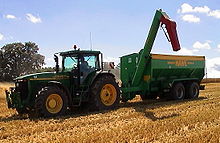
    An agricultural engineer designs the machines and tools used in farming including tractors, planters, animal housing facilities, harvesting machinery, drainage and soil conservation systems, water and flooding systems and much more. They are responsible for maintaining the efficiency of these machines and systems, making improvements to those that fail in order to meet the appropriate standards.

    Who do They Work for?
    Many work as consultants for large production companies or engineering firms that manufacture agricultural machinery and storage facilities. There are also teaching and research opportunities at colleges and universities and with branches of the federal government that deal with the farming industry. In some instances, they also work as sales representatives by selling products and engineering solutions to farmers and breeders in need.

    What Education Do I Need?
    If agricultural engineering is a field that piques your interest, it’s a good idea to focus on developing problem solving and critical thinking skills that enable you to think outside the box, so to speak. Typically, engineers will face problems with malfunctioning equipment and out-of-date practices that create time sensitive issues. Engineers must be able to think on their feet and discover solutions within the parameters given to them in the most efficient way possible.

    In high school, it is recommended that students take advantage of all available courses in mathematics, physics, chemistry and biology. In university, these courses are further explored with the addition of computer science, crop science, leadership, design and engineering courses.

  • Career Profile: City Planner

    Career Profile: City Planner

    Urban planning can make a huge difference to how people live and how visitors experience the city. Streets set in squares or rectangles, for example, are easier for visitors to follow but can be boring for the city’s residents. The number of parks and other green spaces can make a huge difference in how people feel about a city, and the organization of public transit or other methods of transportation can make a difference to the health and happiness of people in the city.

    Sometimes, good urban planning can even help transform a city. This happened in the South American city of Bogota, Colombia, several years ago. Even when the results are less dramatic, the role of city planners is very important. Becoming a city planner is a good career choice for anyone with the imagination and insight to find the best possible ways to use land in urban areas.

    Planning a city can be a lot like putting a puzzle together. Basically, the role of urban planners is to make the city as liveable and efficient as possible so that people can go to work, go home, and enjoy their lives as much as possible. Finding places for people to live is an important part of urban life. Planners need to find space for apartments, houses of different sizes, seniors’ homes, and other places for people to live. Making room for roads and public transportation systems like buses or subways is also an important part of urban planning. People also need places to shop and room for community centres, schools, churches, and many other buildings.

    Another very important part of city life is its parks and green spaces where people can spend time outdoors. When Enrique Peñalosa became the mayor of Bogota, Colombia in 1998, he wanted to do something about the crime and the huge economic differences in his city. He limited car usage in the city but also set up one of the best city bus systems in the world. He also realized the importance of green spaces. Part of his plan was to build new parks, walkways, and bicycle lanes so that rich and poor people could all get out and meet each other in public places. These ideas have not solved all of Bogota’s problems, but they have made a huge difference.

    This kind of creative thinking is essential for urban planners. Becoming a city planner normally requires at least a bachelor’s degree and often a master’s in urban planning recognized by the Canadian Institute of Planners. Many universities across Canada offer degrees in this field. City planners spend a lot of time gathering information, analyzing it, and trying to fit the information into plans that help the people in urban areas. For this work, city planners generally get paid between about $40,000 and $87,000 per year.

  • Career Profile: Ship’s Agent

    Career Profile: Ship’s Agent

    Before he heads to the office, the ship agent boards the vessel as it arrives in the port. He walks up a steep gangway with people from the federal government who work for the Canadian Food Inspection Agency (CFIA) and Transport Canada. As the latter inspects the ship, the agent finds the captain and assists him as he signs various documents that are required before the ship is allowed to enter the port.

    It is the ship agent’s job to coordinate the arrival of all vessels that enter Canadian waters. He is thus a vital link between all the imports and exports that come in and out of the country.

    Once back at the office, the agent performs a variety of duties. When a ship plans to arrive, the agent gathers information about the vessel such as: how many members are on the crew and where they are each from, how much the ship weighs and when it was built, and what kind of cargo it is carrying or picking up. He then sends the information to Canadian Customs and Immigration. When Customs clears the ship, it is free to enter Canadian waters.

    However, a ship cannot enter Canadian ports until the federal public servants have inspected the entire ship and cleared it for loading or unloading its cargo. It is the ship agent’s role to coordinate with members of CFIA and Transport Canada. He also organizes – with the ship’s owners, charterers and stevedores – when and where the ship will be loaded with cargo.

    The agent must also host the captain while he and his crew are anchored in the port. He brings the captain cash for the crew to use while they are anchored and he coordinates with ship chandlers who supply the crew with groceries and other necessary supplies. He also arranges for crew members to be picked up and taken to the airport when they are ready to return home if a new crew is taking over the ship.

    The ship agent links Canadian ports to the rest of the world.

    He coordinates much of the activity that sees that items like steel, sugar and electronics arrive safely in the country’s ports while grain, canola, lentils, yellow peas, barley, wheat, oats and other products are loaded into the vessels and shipped to places all over the world.

  • Career Profile: Family Lawyer

    Career Profile: Family Lawyer

    When you think “lawyer,” you might think of high-profile cases against notorious lawbreakers. It seems glamorous and exciting. But, just as there are many aspects of the law itself, so there are many types of lawyers to practice different kinds of law.

    Each type of law practice comes with its own job description. Family lawyers, for instance, represent clients in divorce cases, child custody disputes, and ensuring that other family members fulfill their legal obligations. They also handle matters such as wills and estates, setting up trust funds, and working with adoptions, among other matters. Family lawyers prefer to work efficiently. Court battles are time-consuming and costly. Family lawyers strive to settle disputes out of court by mediation, arbitration, or other forms of problem-solving. They will meet frequently with clients to discuss their options, advising them on the best course of action. But that is not all- attorneys have responsibilities within their own firm as well. Often, a newly-graduated lawyer will supervise office staff. These include paralegals, legal secretaries, office assistants, and interns. But getting into a law firm in the first place takes a lot of schooling.

    Before you even attend law school, you must complete two to four years of schooling in other areas. Some law schools prefer that you have an undergraduate degree before they accept you. Once this prerequisite schooling is complete, the aspiring law student will study for and pass their LSATs- Law School Admission Tests. Then, at law school, they acquire their Bachelor of Laws. This qualifies them for their first year of training, called articling. While many students take their articling year in a law firm, some choose to work as a clerk for a judge.

    Once this term of articling is complete, the next step is to take a bar admission course and the accompanying exams. This qualifies you for practicing law in the province where the exams were taken. If you want to practice law in other provinces, you may have to meet other requirements.

    Once all of these requirements have been met, you are eligible to practice any type of law you desire. Family lawyers often specialize even further: some do only estates and wills, caring for the property of a large variety of clients. Others may do pro bono work, offering their services for free to those in desperate need of representation but who cannot hope to afford it. Some may choose only to work custody cases, support arrangements, and adoptions.

    Client confidentiality is of utmost importance to all lawyers, but especially to family lawyers. Because of the often turbulent nature of cases involving family disputes, sometimes it is required that each party have a separate lawyer to avoid a conflict of interest. This means that often, a husband and wife seeking divorce would not have the same lawyer, nor would the mother and father each seeking custody of their children. This means that if a case is to be settled quickly, family lawyers must have a good working relationship with lawyers in other firms.

    Working as a family lawyer takes a lot of preparation. Schooling alone takes a commitment of six to eight years, but making a difference in other people’s lives makes all that hard work worth it.

  • Career Profile: Fire Investigator/Inspector

    Career Profile: Fire Investigator/Inspector

    Imagine a fire flickering and sparking as the logs burn and settle down. Would you enjoy watching it? Many people find fires calming and fascinating to watch, at least ones that stay controlled. However, a fire nicely contained in a fireplace at home or the cooking area of a campsite is not like a fire that burns down a house. Dealing with the fires that happen in buildings and cause destruction are the work of fire inspectors, who try to prevent
    fires, and fire investigators, who try to find out why fires happen. Together, they try to reduce the damage that fire causes to property and people.

    Fire inspectors and investigators work on different parts of the same problem. Fire inspectors check buildings to make sure that the rules about fire safety are being followed. They check to make sure that buildings have enough working fire extinguishers. They might check for proper storage of dangerous substances like gasoline. In some cases, they might check the electric wiring in a building to make sure that everything is working and that there are no frayed wires that might cause a spark. When they can, fire inspectors also teach people about how to keep fires from starting, and they work with insurance companies to try to maintain high safety standards. If they do their job well, they can help prevent many accidental fires from ever starting.

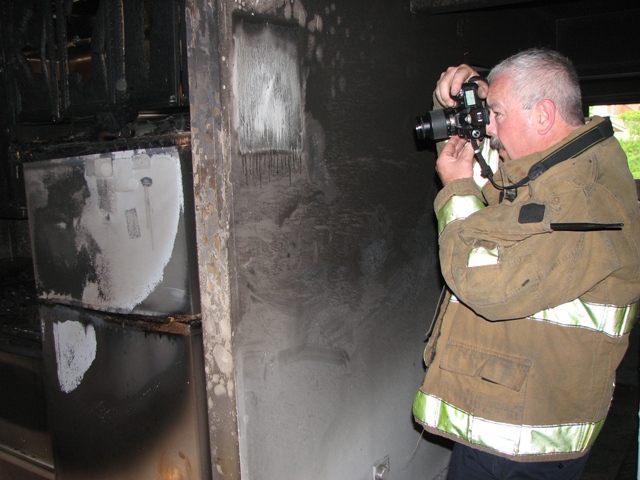
    Fire investigators work from a somewhat different angle, but they deal with many of the same things. Like fire inspectors, they check buildings for dangerous substances and faulty wiring. They might check to make sure that the fire extinguishers are working. However, fire investigators do their work after a fire instead of before. When a building has burned, even partially, fire investigators go in to find out what happened. They work with the police and insurance companies to find out what started each fire. What they find helps them decide what started a fire and if it was accidental or set on purpose.

    Becoming a fire inspector takes a basic education, such as a high school diploma, but a lot of experience. Most people who get into this work start as firefighters, learning the principles of safety and detection on the job. Taking several courses on fire prevention is usually enough to qualify experienced firefighters for the work of fire inspector. Many fire investigators have a bachelor’s degree or more. Salaries for fire inspectors and investigators can vary widely, depending on the person’s experience, the size of the fire department, and other factors. Generally, however, fire inspectors’ salaries start at over $50,000.00 and investigators’ pay starts even higher. Many investigators receive $80,000 per year or more.

    Fire inspectors and investigators generally have fairly good working conditions and face few dangers in the job, although looking through a burned-out building can be unpleasant. They job has a high level of responsibility, but it can be both challenging and rewarding. Does the job of fire inspector or investigator appeal to you?

  • Career Profile: Marine Biologist

    Career Profile: Marine Biologist

    Every year, humpback whales travel 4000 kilometres from the ocean around Alaska and British Columbia to the water near Hawaii. Soon afterwards, they turn around and make the return journey. Throughout the entire journey, they eat little or nothing until they return to their northern feeding grounds. While they swim, they make musical sounds that sound like singing. Sometimes, humpback whales can stay underwater for half an hour or more without breathing. When they swim near the surface, they often throw themselves out of the water and then crash back into the depths.

    Do facts like these or about other ocean animals interest you? If so, you might want to consider becoming a marine biologist. These scientists work to understand the fish, birds, and other animals that live in the world’s water, especially saltwater animals like whales or crabs.

    If you choose to become a marine biologist, you will need to take as many science courses as you can in high school and university. These courses could be in chemistry, biology, conservation, or oceanography (the study of oceans). Later on, you can to choose a specialty like the life cycle of crabs or the effects of pollution on sea turtles. Your work might end up being much very general, but having a specialty will help you find work. Volunteering at an aquarium or pet shop now might help you choose a field.

    Most marine biologists have at least a Bachelor’s degree, and many have Master’s or PhD degrees as well. If you prefer not to study for such a long time, you can decide to get a technical certificate instead and then work mainly with the daily care of animals instead of conducting studies and writing academic papers. As a biologist, you might collect and analyze samples of various animals. As a technician, you might clean fish tanks or feed the animals. Depending on what you do, you might make anywhere from $30,000 to $100,000 as you work to help people understand the world in which they live.

    Besides helping people understand the world, marine biologists help alert others to problems in the natural world. As they watch the animals in the world’s oceans and seas, for example, they can tell how water and soil quality affects these animals and humans. They see the connections between people’s health and the world around them.

    Do you love to explore streams and lakes to find out what lives in them? Do you have an interest in preserving the natural world? Maybe a career as a marine biologist is right for you.

  • STEM Jobs: Petroleum Engineer

    STEM Jobs: Petroleum Engineer

    What is a Petroleum Engineer?
    Oil and gas are two of the most crucial energy resources we rely upon in the modern world. Oil and gas companies extract the deposits of these resources from the earth and facilitate their distribution as an energy source. But how do they know where to dig? This is where a petroleum engineer enters the picture. Petroleum engineers are tasked with finding oil and gas deposits as well as developing ways to extract those deposits from the ground. They design, plan and execute drilling projects to ensure the safest, most effective way of implementing oil and gas wells.

    On-the-Job Duties
    The day-to-day duties of a petroleum engineer include designing and implementing ideal methods of drilling. Often they are responsible for monitoring the drilling area (including the ground, the rocks and the equipment) to ensure optimal conditions for drilling operations that harvest the maximum amount of oil and gas deposits.

    Who do they work for?
    Petroleum engineers are most often hired by companies who produced petroleum, but they can also find employment as consultants, researchers, and policymakers with the government. In some sectors petroleum engineers can also be called oil and gas reservoir engineers, well logging engineers, mud engineers, sub-sea engineers and drilling engineers.

    Salary
    Petroleum engineers can earn a yearly salary of anywhere from $35,000 to over $130,000, depending on seniority.

    Required Education
    The educational background of petroleum engineers can vary, but all are rooted in engineering. Attaining a bachelor’s degree in either petroleum engineering or a related program like biochemical engineering is the best way start off. Next, earn a master’s degree in petroleum engineering followed by a PhD to maximize career opportunities. For some aspects of the job, like approving drilling designs, a professional engineering license will be required.

    Other Skills
    Leadership, time management, critical thinking, logic, creativity, team work, and communication are crucial to the success of a petroleum engineer.