Tag: Nature

  • Incinerating Trash is a Waste of Resources

    Incinerating Trash is a Waste of Resources

    Many urban areas have built or are considering building waste-incineration facilities to generate energy. At first glance, it seems like a win-win. You get rid of “garbage” and acquire a new energy source with fuel that’s almost free. But it’s a problematic solution, and a complicated issue.

    Metro Vancouver has a facility in Burnaby and is planning to build another, and Toronto is also looking at the technology, which has been used elsewhere in the region, with a plant in Brampton and another under construction in Clarington. The practice is especially popular in the European Union, where countries including Sweden and Germany now have to import waste to fuel their generators.

    The term “waste” is correct; there’s really no such thing as garbage. And that’s one problem with burning it for fuel. Even those who promote the technology would probably agree that the best ways to deal with waste are to reduce, reuse and recycle it. It’s astounding how much unnecessary trash we create, through excessive packaging, planned obsolescence, hyperconsumerism and lack of awareness. This is one area where individuals can make a difference, by refusing to buy overpackaged goods and encouraging companies to reduce packaging, and by curbing our desire to always have newer and shinier stuff.

    We toss out lots of items that can be reused, repaired or altered for other purposes. As for recycling, we’ve made great strides, but we still send close to three quarters of our household waste to the landfill. Considering each Canadian produces close to 1,000 kilograms of waste a year, that’s a lot of trash! Much of the material that ends up in landfills is usable, compostable or recyclable, including tonnes of plastics.

    Turning unsorted and usable trash into a valuable fuel commodity means communities are less likely to choose to reduce, reuse and recycle it. Burning waste can seem easier and less expensive than sorting, diverting and recycling it. But once it’s burned, it can never be used for anything else — it’s gone!

    Incinerating waste also comes with environmental problems. Although modern technologies reduce many air pollutants once associated with the process, burning plastics and other materials still creates emissions that can contain toxins such as mercury, dioxins and furans. As with burning fossil fuels, burning waste — much of which is plastics derived from fossil fuels — also produces carbon dioxide and nitrous oxide emissions that contribute to climate change.

    Burning waste doesn’t make it disappear, either. Beyond the fly ash and pollutants released into the atmosphere, a great deal of toxic “bottom ash” is left over. Metro Vancouver says bottom ash from its Burnaby incinerator is about 17 per cent the weight of the waste burned. That ash must be disposed of, usually in landfills. Metro testing has found high levels of the carcinogenic heavy metal cadmium in bottom ash, sometimes twice the limit allowed for landfills. High lead levels have also been reported.

    Incineration is also expensive and inefficient. Once we start the practice, we come to rely on waste as a fuel commodity, and it’s tough to go back to more environmentally sound methods of dealing with it. As has been seen in Sweden and Germany, improving efforts to reduce, re-use and recycle can actually result in shortages of waste “fuel”!

    It’s a complicated issue. We need to find ways to manage waste and to generate energy without relying on diminishing and increasingly expensive supplies of polluting fossil fuels. Sending trash to landfills is clearly not the best solution. But we have better options than landfills and incineration, starting with reducing the amount of waste we produce. Through education and regulation, we can reduce obvious sources and divert more compostable, recyclable and reusable materials away from the dump. It’s simply wasteful to incinerate it.

    It would be far better to sort trash into organics, recyclables and products that require careful disposal. We could then divert these different streams to minimize our waste impacts and produce new commodities. Organics used in biomass energy systems could help offset fossil fuel use while creating valuable supplies of fertilizers. Diversion and recycling lessen the need to extract new resources and disrupt the environment while creating more value and jobs. That’s a win all around!
  • Carbon Scrubbers to Clean Up Emissions

    Carbon Scrubbers to Clean Up Emissions

    Research into methods of reducing carbon emissions is a continually advancing field, and a team of researchers developed an improved way to remove emissions directly from sources like smokestacks.

    The team recently had an article published in the Journal of the American Chemical Society detailing their findings, which focused on using substances based on a material called polyethylenimine to remove carbon dioxide (CO2) from sources. According to the article, these substances whoed some of the greatest results in removing CO2 from the air when compared to alternatives. The substances also proved capable of effectively capturing the CO2, and could either be re-used or isolated, so it wouldn’t contribute to global climate change.

    The team, which consisted of researchers from the Loker Hydrocarbon Research Institute and Department of Chemistry from the University of Southern California, explained in their article that the materials used are uniquely effective largely due to their low cost and reusability. The material is relatively inexpensive when compared to other options, and can be reused numerous times without losing its ability to capture CO2.

    The article also explains that materials manage to remain effective in real-world conditions. This means that the materials were observed as being able to accommodate for exceptionally humid, moist or dry environments, something that is important when considering practical application of scientific research such as this.

    Other options for CO2 reduction are more expensive, less effective or durable and use large amounts of energy than the processes being researched by this team. If the researchers are able to effectively implement these polyethylene materials, they will have created a valuable resource that is much easier to use. Considering the cost-effectiveness and stability of the polyethylenimine materials, the application of them will make sustainability much more accessible, and therefore potentially more widespread.

    The material’s main target for carbon reduction is smokestacks; however the research could also potentially be used to reduce CO2 emissions from car exhaust, submarines, and even the open atmosphere itself. Cleaning of the upper atmosphere would hopefully reduce the greenhouse effects of the CO2.

    CO2 is one of the greatest threats to the environment in recent years. The amount of CO2 emissions produced by humans is of great concern to the population due to its effects on climate change,rising sea levels and air pollution. Research on ways to reduce emissions of CO2 is an area of international concern.

    According to the World Health Organization, high levels of greenhouse gases — of which CO2 is a prominent part of — affect necessities to health like clean air and water and increase the incidence rates of climate-sensitive diseases.

    Up until now, finding ways to reduce these emissions has proven challenging and unpromising. However, if this research team is successful in implementing polyethylenimine as a way to reduce emissions, the levels of CO2 in the atmosphere may be significantly reduced. This would help reduce concerns of climate change, and result in cleaner air in an effective and affordable way.

  • Jobs in the Outdoor Adventure Industry

    Jobs in the Outdoor Adventure Industry

    A brief window into the thrill based and skill based world of adventure sport.

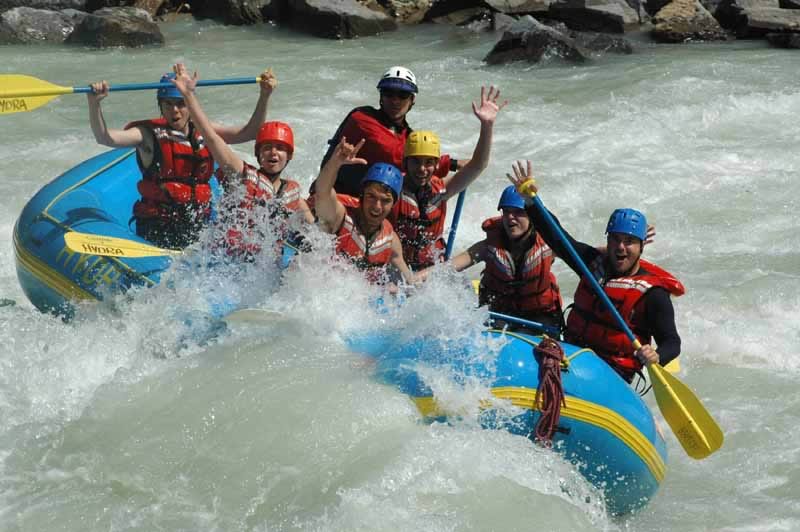
    The vast array of dangerous jobs out there has started to receive more exposure, especially with reality TV recognizing our love to experience these jobs from the comforts of our couch. From coal mining to deep sea fishing, television seems to cover it all. However, a less exposed but speedily growing industry falling into the “dangerous jobs” category is outdoor adventure. Whether it is rock climbing instructors, heli-ski guiding, white water kayak or raft guiding, Canada’s adventure sport scene is booming. An interview with Trevor Cardozo, who has rafted for Canadian Rockies Rafting in the Canmore/Banff area of Alberta, provides some insight on what it takes to work in a job so vastly different from the typical nine-to-five/sit at your desk kind of job that many of us will likely end up in.

    What made you decide to enter the outdoor adventure industry?

    I had done a ten day canoe trip in Quebec when I was in high school, and that was kind of my crash course into the outdoor adventure world. I got accepted into university for a computer related program, but decided to rethink what I wanted to do, and to instead attend Algonquin College’s Outdoor Adventure diploma program, because of my experience on that canoe trip. The Algonquin program became my springboard into a career of climbing, paddling and eventually water raft guiding. Many people enter the industry because of the adrenaline rush, but for me it was more the ability to not be stuck in an office and be in the outdoors all the time.

    How do you deal with the “danger” aspect of the job?

    Always be on your toes, thinking about risk management and minimization. Know the difference between perceived risk and inherent risk, especially in rafting, as people often have a misconceived idea of it, often assuming it may be safer than it actually is.

    What are the some of the skills needed to succeed as a raft guide?

    You have to be really personable, loud and assertive. It is your job to make sure people have a great trip, so you almost need to be an entertainer. Between rapids there can often be quite a bit of time spent on flat water, and you want make sure your customers are not bored.

    What advice would you give to someone who wants to get into the outdoor adventure industry?

    Do it! There are basically two routes to go through. The first being broad outdoor adventure and education training, through companies like NOLS and Outward Bound, or college programs like the one at Algonquin (at the Pembroke ON campus) or Thompson Rivers University (in Kamloops BC). The second way to get into the industry would be to go directly to the company you are interested in working for, with no experience and work your way up.. if you take that route, you need to pay your dues.. work hard, work a lot and maybe even work for free.. but it will be a great learning experience. Specifically with white water rafting, most companies offer a guide training program. Some companies charge for this or others will pay you for it, but not until the end of the season, to ensure guides do not skip out after training and work for another company. A great certification to get that most companies will require is Wilderness First Responder.

  • A Bad Deal for the American Eel

    A Bad Deal for the American Eel

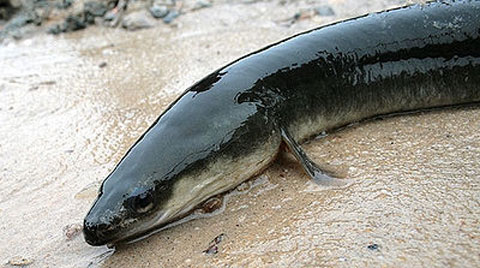
    Once extremely abundant throughout all tributaries to Lake Ontario and the St. Lawrence River, the American eel has seen a dramatic population decline. In 2006, the presence of eels in these waters decreased by almost 90 per cent. As of 2007, this species has been listed as Endangered under the Ontario Endangered Species Act.

    This dramatic population decline can be attributed to several factors, including the creation of hydroelectric dams, reduced access to habitat imposed by manmade barriers to upstream migration, general habitat destruction and alteration and commercial harvesting. The construction of dams threaten the American eel species in two ways: they result in habitat fragmentation and loss as they make it much more difficult for adult eels to migrate back to the ocean to spawn, and hydroelectric turbines contribute to higher injury and mortality rates of juvenile eels swimming downstream (depending on the size of the eels and the design of the turbines).

    The Canadian Wildlife Federation, in collaboration with the Ontario Ministry of Natural Resources, the Algonquins of Ontario and the Arnprior Fish and Game Club, have been tracking and tagging American eels in the Ottawa River since 2007. Previous work has been successful not only in determining which methods and locations are best for capturing eels, but also in documenting movement patterns and collecting data on habitat preferences and downstream migration timing. Currently the project aims to build on the knowledge gained in the first studies of eel movement and use this information to develop strategies for American eel recovery in the Ottawa River.

    On a section of the Ottawa River from Chats Falls dam to Chenaux dam, researchers are busily working to tag and track eels to monitor downstream migration patterns, determining if and when eels move past the Chats Falls dam. They are also monitoring upstream migration by installing temporary eel ladders at three barriers on tributaries to the Lac des Chats section of the Ottawa River. These ladders will be fitted with a trap at the upstream end, and eels that migrate up them and are trapped will be tagged and re-released downstream. If the eels are captured often enough, this will confirm to researchers that eels are indeed attempting migration through these routes and can provide important information about the barriers that may prevent later out-migration.

    Another important aspect of this project is the public awareness campaign that aims to educate people on the American eel and its importance in the ecology of the Ottawa River. This part of the project will be carried out through activities that increase local knowledge of the American eel, encourage the public to report eel sightings and discourage anglers from killing eels caught accidentally. Members of the public will also be invited to observe eel capture and tagging activities.

    The long-term goal is to re-establish a safe migration route for American eels in collaboration with local communities and hydroelectric producers. The ultimate goal is to see a future where the eel population is once again increasing in the Lac des Chats and adjacent sections of the Ottawa River.

  • What Happens After a Forest Fire?

    What Happens After a Forest Fire?

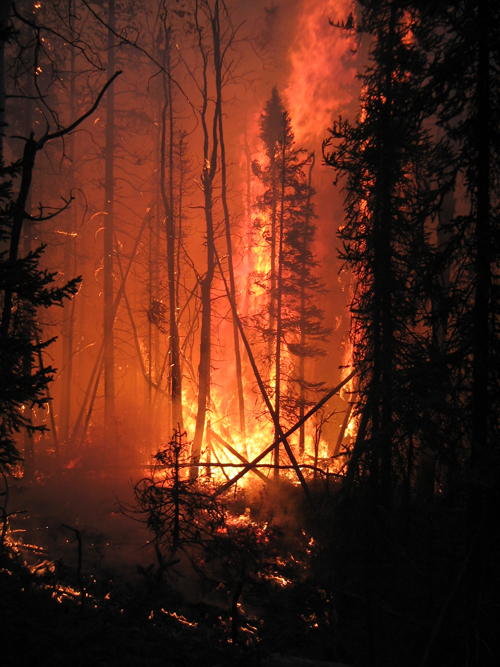
    Imagine what it would be like to watch a forest fire. Would you feel sad as you watched the trees and bushes burn and gradually turn to ash? Would you feel glad at the thought of all of the new life forest fires bring? It might seem strange to be happy at the thought of so much destruction, but forest fires can be a good and necessary part of the natural cycle of life. Without them, forests might never be the rich, green places they are – homes for animals and places where people can enjoy the outdoors.

    Every spring is the beginning of forest fire season in Canada, when about 10,000 fires will burn over the next few months. Some of those fires come from natural events, such as lightning striking a tree. More than half of them start because of human activity, such as when people forget to put out their campfires properly. By the time the snow and cold weather come at the end of the fire season, about 25,000 square kilometres of forest will be gone. Fires also pollute the air with carbon dioxide, which can make it difficult for people and animals to breathe. The animals that survived the fire will have to find new places to live, and plants will have to grow in place of the ones that were destroyed.

    Despite all of the destruction they cause, fires can also be good for the forests. They clear out all kinds of dead wood and thick grass that can choke new plants. With the extra space to grow, the plants can thrive. Trees like the Douglas fir and white spruce grow best on ground that has had a recent fire. Jack pines are especially dependent on fire. Their seeds come in thick cones which open up only with intense heat from a fire. Without an occasional fire to open up the cones, jack pines would eventually disappear. Many plants like these have ways of surviving even the worst forest fires.
    Despite opening up the ground for new growth, forest fires can damage the soil on the ground. With no plant roots to hold it down, the earth can blow away in the wind or wash away in heavy rains. Fire can also change the kinds of nutrients, such as nitrogen, that are available to feed the plants. The temperature of the ground can also rise, making it hard for certain types of plants to grow again, especially if the fire also affects the amount of moisture in the soil. Very intense fires can also affect small animals living in the ground, such as earthworms. Because these animals help to keep the soil healthy and full of nutrients, their loss can destroy the ground for years after a forest fire.

    So are forest fires good or bad? It depends on where they are, how big they become, and many other factors. However, fires are part of the natural cycle of life, bringing renewal and new growth to the world’s wooded areas.

  • Great Changes for the Great Lakes

    Great Changes for the Great Lakes

    Across the world, North America is known for many things; the culture, the people and the great outdoors. Part of that great outdoors is the Great Lakes. The Great Lakes are an integral part of our North American identity; and to preserve that identity in 2005 the premiers of Ontario and Quebec and the leaders of eight American states that border the lakes came together and signed the Great Lakes Water Pact.

    The Great Lakes Water Pact is a pact that has introduced strict regulations in regards to the usage of the Great Lakes and it has sunk the tentative thoughts of shipping water to thirsty regions in the United States and Middle East. It was signed by the Canadian provinces and the American states that surround the Great Lakes; Ontario, Quebec, Ohio, New York, Pennsylvania, Michigan, Indiana, Illinois, Wisconsin and Minnesota. The agreement includes rules that make it difficult for communities surrounding the Great Lakes watershed to use the water and also aims to prohibit the commercial export of the lake water by restricting withdrawals of water to five gallon (twenty litres) containers.

    The affects this pact has on future generations are great. The Great Lakes are a natural resource that are depleting and are not renewing as fast or as much that is necessary. More than thirty five million people rely on the lakes for drinking water, and the lakes are only able to replace one percent of that per year.

    The Great Lakes Pact is important for North America’s future generation because it ensures that not all the lakes will be used up and it will be saved from disappearing. This works in the favour of future generations because it guarantees that the lakes will be there for their own usage as well just as it was there for the past generations usage. Not only does it assure fresh and natural drinking water for generations to come but it also promises that the amount of surface water in the world stays intact. The Great Lakes contains twenty percent of the world’s surface water and this pact will make sure that the surface water will remain for years to come. Without that surface water the world may dry up which in turn will not only affect people directly but also indirectly via the drying up of crops and vegetation.

    The Great Lakes Water Pact was signed in the year 2005 but its positive effects will last the world for years to come, both directly to people close to them and indirectly to people around the world. Directly through the fact that the Great Lakes are a source of fresh drinking water for people that surround them and indirectly because of the Great Lakes being a source of surface water that helps hydrate crops and vegetation, and without the lakes those crops and vegetation’s would dry up and therefore not feed communities around the world.

  • A Garbage Patch In The Great Lakes?

    A Garbage Patch In The Great Lakes?

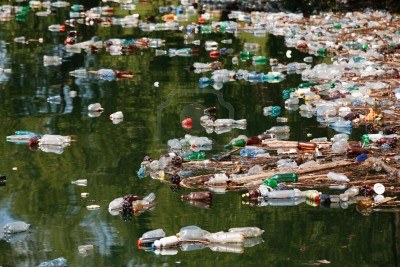
    You may have heard about the garbage patches that exist in the oceans – where specific ocean and atmospheric conditions ensnare debris, small pieces of plastic, which accumulate into large amounts of trash hundreds of kilometres from coastlines.

    Recent research has just discovered that the Great Lakes, the world’s largest freshwater ecosystem, are also being affected by plastic pollution.

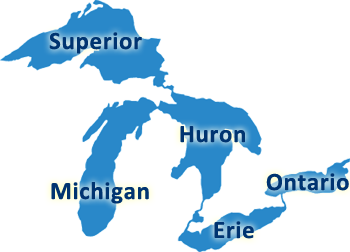
    Collecting water samples from Lakes Superior, Erie and Huron researchers found plastic concentrations ranging from 600 to 650,000 plastic pieces per square kilometer.

    While these plastic particles aren’t always visible, they’re there, absorbing toxic chemicals from the water, entering the food chain and impacting wildlife.

    For more information on issues impacting Canada’s water resources and actions we can take to help curb our impacts, please visit Rivers To Oceans.

  • “Big Picture” Thinking Needed to Protect Nature

    “Big Picture” Thinking Needed to Protect Nature

    Few places on Earth have been untouched by humans, according to a study in the journal Science. Satellite images taken from hundreds of kilometres above the planet reveal a world that we have irrevocably changed within a remarkably short time.

    Although industrial projects like the proposed Enbridge Northern Gateway pipeline or the recently defeated mega-quarry in Ontario typically grab the headlines and bring out public opposition, it’s often the combined impacts of a range of human activities on the same land base that threaten to drive nature beyond critical tipping points. Once those are passed, rapid ecological changes such as species extinction can occur.

    For example, in British Columbia’s booming Peace Region, forestry, energy and mineral leases and licences are widespread and often multilayered in the same area. As various industries have exploited these “tenures”, a sprawling patchwork of large clearcuts, oil wells, dams and reservoirs, fracking operations and thousands of kilometres of seismic lines, roads and pipelines have come to dominate the landscape.

    Today, more than 65 per cent of the region has felt the impact of industrial development, leaving little intact habitat for sensitive, endangered species such as caribou to feed, breed or roam. Degradation or destruction of habitat has convinced scientists that remaining herds in the region are no longer self-sustaining and are spiralling toward local extinction. First Nations, who have relied upon caribou as their primary source of food for thousands of years, can no longer hunt them. This is a clear violation of treaty rights.

    This dire situation didn’t happen by accident or because of a laissez-faire approach to resource and land management. Numerous industries in the area have been operating legally and according to rules and regulations set by government.

    But legal experts, such as those at the nongovernmental organization West Coast Environmental Law, believe a root cause of the problem lies in laws about land, resource and water management that are “hardwired” to fail communities and the environment. The narrow focus of those laws enables industries to operate in isolation from one another.

    B.C., for example, has developed numerous individual laws, like the Forest and Range Practices Act, Oil and Gas Activities Act and Mines Act, alongside the regulated industries they enable. But the province lacks a legal framework to proactively and comprehensively manage the cumulative impacts of multiple resource industries operating within the same area.

    Because of this, WCEL and its First Nations partners are engaged in a multi-year law reform project that aims to overhaul the way we currently oversee and regulate cumulative impacts, ranging from declining water quality that may arise as a result of multiple industries using a common resource to emerging threats such as climate change.

    A cumulative-impacts approach to governing resource development would upend the current management paradigm. It would focus on the management needs of the land, water, air and wildlife and the communities that depend on them first, rather than the resources to be extracted. In practical terms, this would mean that, rather than focusing on what we should take from nature to create wealth and employment, we should first consider what must be retained in nature to sustain both wildlife and the well-being of local communities — such as clean air, safe drinking water and healthy local food.

    At a recent symposium on managing the cumulative impacts of resource development in B.C., numerous speakers — from First Nations to academics to business leaders — stressed that effectively managing cumulative impacts will require new institutions and governance mechanisms, even new legal tools. More importantly, it will require our leaders to adopt a more proactive and holistic way of thinking about the world — one that recognizes that far from just being a place to extract resources like fossil fuels, timber and minerals, nature is our home. Nature provides our most fundamental needs and dictates limits to growth and so its protection should be our highest priority.

    Managing our massive, growing human footprint on this planet more sustainably will require leadership, much of which is emerging from First Nations peoples who are on the frontlines of the day-to-day realities of cumulative environmental change. We need to look at the big picture rather than individual elements in isolation.

  • Healthy Kids Need Time In Nature

    Healthy Kids Need Time In Nature

    Ontario’s Healthy Kids Panel recently proposed a strategy to help kids get onto a path to health. The problem is that the path doesn’t lead them into nature. Though the report quotes parents’ comments and research showing kids spend dramatically less time outside than ever, it doesn’t encourage time in nature.

    That said, many of the report’s recommendations should be implemented and supported locally, provincially and nationally to reduce the risks of obesity. Encouraging parents and children to be more critical about dietary choices and requiring more information and labelling from restaurants and food producers is long overdue.

    Ontario isn’t the only province working to reduce obesity rates and support parents raising healthy children, particularly in the early years. Alberta released relevant reports in 2011 and Quebec has had a ban on advertising junk food to children since 1980. No one can argue against public awareness and education around the benefits of healthy eating and active living. But a provincial, patchwork approach to addressing these issues isn’t enough. We need a national strategy to get our kids eating healthy foods and being active in nature.

    Although it seems logical that much of the time spent being active will take place outside, the Ontario report acknowledges that “many communities are not designed to encourage kids to move or be physically active…and have few safe green spaces.” One parent in a focus group explains that the parks in his community are either gated or locked up once school is closed. So, even when there is green space, it’s not always accessible.

    Last year, the David Suzuki Foundation conducted a survey with young Canadians and found that 70 per cent spend an hour or less a day outdoors. The 2012 Active Healthy Kids Canada Report Card says they spend almost eight hours a day in front of screens. So it’s not that kids don’t have time to be outside. It’s just not part of their lifestyle.

    Much has been reported about a recommendation by the Ontario panel to ban junk food advertising that targets children under 12. This has worked in Quebec and is being discussed in Alberta. But the approach has invited criticism from those who argue that people should have the right to choose. It’s always tempting to focus on making bad things less accessible, but perhaps policy-makers should be more creative and focus on ways to make good things more accessible.

    Being in nature is good for all of us. People who get outside regularly are less stressed, have more resilient immune systems and are generally happier. And it’s good for our kids. Studies show spending time in nature or green spaces helps reduce the symptoms of ADHD. Even in built playgrounds, kids spend twice as much time playing, use their imaginations more and engage in more aerobic and strengthening activities when the space incorporates natural elements like logs, flowers and small streams, according to research from the University of Tennessee at Knoxville.

    Despite all the obvious health benefits of spending time outside, provincial and federal governments are failing to integrate a daily dose of nature into their policies. It’s also something we as a society are failing to make a priority in the lives of our children. This inexpensive and effective way to make our lives healthier and happier should be an obvious solution.

    We need to make sure our neighbourhoods have green spaces where people can explore their connections with nature. We need to ask teachers and school board representatives to take students outside so that nature becomes a classroom. And we need to stop making the outdoors seem like a scary place for children by helping parents understand that the benefits of playing outside outweigh the risks.

    It will take public education and awareness-building as well as changes to the way we build cities and live in our communities to bring nature back into our lives. Connecting kids to nature every day needs to be a priority policy objective in any strategy for healthy children and could easily have been integrated into the recommendations from the Ontario Healthy Kids Panel. Taking our kids by the hand and spending time outside with them will have the added benefit of making us healthier and happier adults.

  • Controlling the Rage of Forest Fires

    They are difficult to control, unpredictable, and can destroy acres of land in minutes. It is estimated that forest fires decimate 10 million acres of land each year in North America alone. While it is difficult to give an exact count of how many wildfires there are in a given year, Newfoundland and Labrador suffer from more than 160. A safe guess would be in the hundreds of thousands.

    Forest fires are unplanned, unwanted fires caused by humans or nature. These types of fires are stopped with aggressive counter actions by trained fire fighters who are more successful when wildfires are reported early.

    Most fires are started by people. In fact, four out of five forest fires are due to the human factor. There are three elements that must be present in order for a forest fire to start. These are known as the fire triangle; conditions that present the perfect storm: oxygen, fuel and a heat source.

    Heat Source: This is where humans play their biggest role. A heat source can come from cigarettes, matches, campfires, or lanterns. It can also come from natural sources such as lightning, hot winds and the sun.

    Fuel: Anything flammable including brush, wood, leaves, grass and homes. The more fuel the greater the fire.

    Oxygen: the air.

    Taming the fires is a matter of simplifying the equation. Take away one of the elements in the fire triangle and you solve the problem. Fire fighters do this by using water to eliminate the flame or the heat source. They work to clear away fuel, thus starving the fire. Another method is called controlled burning – firefighters may start a fire to end one. A controlled burning takes fuel from the uncontrolled fire.

    Homes and whole cities can be destroyed by forest fires if they are not detected early, but nature intended this disaster to be for good. Wildfires are important to maintaining the balance of nature. Now that scientists know more about this, a greater number of controlled burns are being sanctioned.

    When fire eats away at the vegetation, they are feeding the soil important nutrients – basically the cycle of life at its simplest. Fire is a way to purge the bad. It kills off disease and aggressive insects that might damage fragile ecosystems.

    Forest fires are something of an anomaly. They create chaos and end life, but they also restore balance and allow new life to emerge.