Tag: trades

  • Career Profile: Automotive Painter

    Career Profile: Automotive Painter

    Cars and trucks come in all kinds of colours; from plain white or black to blue, yellow, and green. When the vehicles come from the factory, the paint is bright and unscratched. Once people start driving the vehicles, however, the paint may get scratched or chipped due to accidents, weather damage or age. Automotive painters are the people who can help make cars look nice and protect them from rust and other damage.

    Paint on cars makes them look nice, but it also helps protect them from the kind of damage that comes from rain and the salt that keeps drivers from sliding on icy roads. It also helps people to identify their own cars quickly and easily. Can you imagine how difficult it would be to find your car if every vehicle were painted the same colour?

    The first step in the process is to repair any damage like dents or broken parts. Automotive painters sometimes do the repairs themselves, but if they lack the knowledge or facilities for this type of work, the might let others finish that part before they begin their work.

    Since vehicles come in many different colours, painters have to try to match the exact shade of red or blue or green that the original paint contained. They mix different kinds of paint and add special protective chemicals like sealers.

    Next, workers might have to sand around the area that needs paint or use chemicals and power tools to remove any loose chips or anything else that could make the surface uneven. They put protective tape around the area to keep other parts of the vehicle clean and then start to paint.

    Painters might use many different tools for this part of the work, including spray painters and small brushes. Then, painters blend the newly done colour in with the old so that it all looks the same and then, after the paint is dry, they use a special tool to buff the area so that it shines.

    Being an automotive painter usually involves a combination of formal training and on-the-job experience. It can be creative work, especially in trying to match paint colours to each other, but it also involves some knowledge of mathematics for calculating the amounts of each paint to use. It sometimes includes some accounting or bookkeeping, especially in small repair shops with few employees. There is also specialty automotive painting where people request a specific design unique to their personality; this requires talent and knowledge in art. Auto art is like getting a tattoo but on your car instead of your skin. Average wages for automotive painters in Canada are about $21 per hour, and annual salaries are between about $33,000 and $66,000.

    A career as an automotive painter can be rewarding and interesting job for anyone who loves to work with vehicles; does that describe you? If so, check it out!

    Bibliography:

    Careers.org. “Occupation Profile for Automotive Body and Related Repairers.” http://www.careers.org/occupations/49-3021.00/automotive-body-and-related-repairers

    Industry Training Authority. “Automotive Painter (Automotive Refinishing Technician).”

    http://www.itabc.ca/program/automotive-painter-automotive-refinishing-technician.

    Monster.ca “Automotive Paint Technician.”

    http://my.monster.ca/job-profiles/Automotive-Paint-Technician.aspx.

    Payscale.com. “Painter Automotive Salary (Canada).” http://www.payscale.com/research/CA/Job=Painter_Automotive/Hourly_Rate.


  • Career Profile: Water Well Driller

    Career Profile: Water Well Driller

    Everyone needs water for all kinds of purposes, such as drinking, taking showers, washing clothes, and watering plants. People who live in cities usually get their water from a central system that takes water from a lake or river, purifies it, and sends it through pipes to homes and businesses,. When those systems are unavailable or not working properly, people get their water from wells; that’s when water well drillers can help.

    The first step in drilling a well is to look for the best place to find water. Some areas might be too rocky, or the soil might not be right, or the water level might be too low. Water well drillers need to know the most likely places to find enough clean water and to do tests to find out whether or not the location is good for a well.

    After finding the right spot, water well drillers use large machines to drill the well and install pumps and other equipment to help draw the water out of the well. This step can take a lot of knowledge and possibly some physical strength if the drillers have to move heavy equipment around. In remote areas where many machines are unavailable, the drillers might even need the strength to do some digging with hand-held tools like shovels.

    No special education is necessary to become a water well driller, although it helps to know about soil, rock, and other environmental factors. Most people in this trade learn on the job through apprenticeships, working together with experienced drillers.

    However, it can be helpful to take courses in equipment maintenance or environmental topics to gain a better understanding of the job. Some knowledge of accounting is also useful for estimating costs for customers and keeping track of expenses. Many water well drillers are self-employed, and they might need to learn the basics of running a small business and of supervising other people on the job.

    The way that water well drillers work changes with new technology and different environmental conditions, but the basic need for water means that there will always be a need for this trade. However, if people in this field can transfer their skills to a similar field, such as oil and gas extraction, that will help them to find work to keep them going throughout the year.

    Salaries for water well drillers can be high, especially after they gain some experience. Generally, people in this trade start at about $20 per hour and they can get to $45 per hour with experience. Many drillers work fairly long hours each week, and they have to be prepared for all temperatures but also be willing to cancel work in case of bad weather.

    If you decide to become a water well driller, you will be able to earn a good living by helping people find something that can sustain an entire community.

    Bibliography:

    Alberta Learning Information Service. “Water Well Driller.”

    http://occinfo.alis.alberta.ca/occinfopreview/info/browse-occupations/occupation-profile.html?id=71003107.

    Careers.org. “Career Occupational Profile for: Water Well Driller.”

    http://www.careers.org/occupations/26025/water-well-driller

    Industry Training Authority. “Water Well Driller.” http://www.itabc.ca/program/water-well-driller.

    Payscale.com. “Driller Salary (Canada).”

    http://www.payscale.com/research/CA/Job=Driller/Hourly_Rate.

  • Job Shadowing for a Day with a Skilled Trade

    Job Shadowing for a Day with a Skilled Trade

    So, you are getting close to the end of your schooling, and you have decided to go into one of the skilled trades for your career. You may even already have an idea of what trade industry you want to work in – that’s great!

    Whether you have already decided on a career path, or are still looking at options, a great way to learn more about what it’s like working in a specific trade is to do a job shadow with someone in that field.

    Job shadowing is when you accompany a professional during their workday, to see what sort of tasks and activities their job involves. When you are learning about a prospective career, internet research, books, and other resources are very useful, but there are always some aspects of a job that need to be seen and experienced in person to give you a real sense of what it would be like to work in a specific trade.

    Spending time with a working professional makes it easier to get accurate, first-hand information about the job responsibilities, and the industry itself. You also have the opportunity to ask questions one-on-one with someone who is an expert in the field. As well, even though you will be shadowing with one person, you will have the opportunity to meet other people working other positions and in other departments. This is a great chance to network and make connections in the company and trade industry, which can be valuable contacts later on when you are looking for an internship or other career opportunity. Seeing how the employees of a company interact will also give you an idea of the company culture and dynamics.

    Not sure how to find and arrange a job shadow opportunity? Your first option is to check with your school guidance counsellor or careers teacher, as they likely have a good idea of people or companies suitable to hosting a student job shadow. You can also ask someone you know personally, such as a family member or family acquaintance, if they or someone they work with would be interested in taking a job shadow with them for a day. You may also feel more comfortable spending the time with someone you are familiar with, and therefore be more relaxed and willing to ask questions or participate in work activities.

    Lastly, you can approach someone at the company directly, such as through their human resources department, to inquire if they have done job shadowing opportunities before. Many companies in the trades also have co-op and youth apprenticeship programs, and so are likely to have someone willing to take you as a job shadow- don’t be afraid to ask!

    Most importantly, when you are out on your job shadow, remember to be enthusiastic and interested. Whomever you shadow with, they are willing to spend valuable time in order to share their job, their experience, and their interest with you, so be sure to return the favour. Have fun shadowing!

  • Career Profile: Small Engine Mechanic

    Career Profile: Small Engine Mechanic

    A Small Engine Mechanic repairs and services small gasoline and diesel-powered equipment such as lawn mowers, motorcycles, boats, zero-turn mowers, snow mobiles, garden tractors and chainsaws. Mechanics can specialize in generators and power sports motors that include outboard motors, ATVs and dirt bikes.

    Typical responsibilities include prioritizing work orders, inspecting and testing engines, estimating repair costs, diagnosing and isolating faults as well as adjusting and replacing parts. Customer service is an important role for the mechanic. They advise customers on the work performed and show them how to take care of the equipment.

    No day is routine in the life of a Small Engine Mechanic. In the morning, either the mechanic or foreman reviews and prioritizes the work orders. The day can start with a simple problem such as an oil change and end with a highly complex problem such as the motor not starting due to a carburetor problem.

    To be a successful mechanic, you need a strong mechanical and electrical aptitude as well as excellent problem solving abilities. You need to figure out if the problem is as simple as needing an air filter change or as complicated as the engine suddenly stopped running. Good manual dexterity is a must since you’ll manipulate a lot of small parts and use a variety of tools.

    You may get a customer like me who knows absolutely nothing about machinery and they may not explain the problem properly. They may just tell you “my lawnmower won’t start” which doesn’t say much, so you need imagination to picture what could have happened. For example, did the customer neglect or abuse it? Did they fill the machinery while the engine was running? Or did they use it improperly? Answers to questions like these will help you diagnose the problem.

    The job of a Small Engine Mechanic is very cerebral because you have to focus on a lot of detail for complex tasks like taking a carburetor apart. A carburetor has a lot of small parts. If you take it apart in the wrong order or get the parts mixed up, you may have a very hard time putting it back together and your carburetor could end up like Humpty Dumpty who fell of the wall.

    If you’re in high school, you can take courses in electronics, mechanics, business math and science to prepare for a Small Engine Mechanic career. You can get experience by working part-time or during the summer at a mechanic shop then further your education in a certificate program at your local college.

    Most Small Engine Mechanics work full time during regular business hours, but they may work more hours during peak times. Employers who hire mechanics include shops, marinas, motor vehicle dealers, garages, boatyards, equipment rental companies, wholesale distributors, and parts dealers. An experienced Small Engine Mechanic can earn about $59,288 or $16.50 per hour.

    If you’re mechanically inclined, practical and love problem solving, a Small Engine Mechanic career may be a step in the right direction for you.

    References:

    Education Experience For Motorcycle And Small Engine Repair Worker http://www.careerexplorer.net/education-experience/education-experience-motorcycle-and-small-engine-repair-worker

    Payscale.com – Small Engine Mechanic (Canada) http://www.payscale.com/research/CA/Job=Small_Engine_Mechanic/Hourly_Rate

    Small Engine Mechanics http://job-outlook.careerplanner.com/Small-Engine-Mechanics.cfm

    Small Engine Technician http://www.ycdsb.ca/departments/instructionalservices/scp/documents/smallenginetech.pdf

  • Career Profile: Locksmith

    Career Profile: Locksmith

    Locks and keys have been around for thousands of years, almost as long as people have had belongings they wanted to protect. Ancient Egyptians and Assyrians had locks, and many wealthy Romans would wear key rings around their fingers as a sign of wealth. Locks have changed a lot over the centuries, and electronic locks are adding new challenges to the task of keeping belongings safe. Throughout all of these changes, however, the locksmith trade has been essential.

    Whenever people have locks, they need a locksmith to keep everything working the way that it should. Some locksmiths in Canada learn the necessary skills by studying at a school like the Academy of Locksmithing in Ontario. They learn about different types of locks and about the hardware (doorknobs, etc.) that goes along with a lock. They learn how to duplicate and cut keys and find out how to fix problems, such as when a key breaks off in a lock. Through an official program like this one, students learn the basics of what they need to know to get work in their field.

    Getting experience on the job can be just as important as learning in a classroom. Many people work as apprentices with experienced locksmiths so that they can learn on the job and see what it is really like. That can be especially important for locksmiths who install security systems or other complicated devices.

    Once they learn the necessary skills and become known to their clients, locksmiths can make quite a good living. In Canada, the median (middle) wage is $32,000 per year, but some people can make a lot more or a lot less. If you want to become a locksmith, it is important to develop your skills as much as possible so that you can advance in your trade.

    Besides the basic knowledge of how locks work, locksmiths need to develop other skills. Because they work with their hands on very small objects, they need to have good coordination and abilities with their fingers. They should be able to work alone but also to be able to communicate well with customers. They should be prepared to work all kinds of hours, sometimes even at night when there are emergencies and people need to get through locked doors.

    Locksmithing is very detailed work, and people in this trade have to be able to make sure that every part of each lock is in place. Keeping detailed records of customers is also essential, especially for locksmiths who run their own businesses. Problem-solving is a good skill to have for repairing locks, and patience is important for taking the time to make sure that everything is working properly.

    Working with locks can be a good job for people who have the types of skills and personal characteristics that the job requires. Do you think that you would have enough patience and attention to detail? If so, maybe you should consider becoming a locksmith.


    Bibliography:

    Canadian Universities.net. Profile of Academy of Lockmithing.” http://www.canadian-universities.net/Career-Colleges/Academy_of_Locksmithing.html

    Careers.org. “Occupation Profile for Locksmiths and Safe Repairers.”

    http://www.careers.org/occupations/49-9094.00/locksmiths-and-safe-repairers.

    Government of Alberta. “Occupational Profile: Locksmith.” http://occinfo.alis.alberta.ca/occinfopreview/info/browse-occupations/occupation-profile.html?id=71003092.

    Joblense.com. “Career Profile: Locksmith.” http://www.joblense.com/career-description/technical-careers/career-profile-locksmith-2/.

    Monster.ca. “Locksmith.” http://jobview.monster.ca/Locksmith-Job-Oshawa-ON-CA-151563375.aspx?jobPosition=1.

    Wikipedia.org. “Lock (security device).” https://en.wikipedia.org/wiki/Lock_%28security_device%29

  • Career Profile: Journeyman Carpenter

    Career Profile: Journeyman Carpenter

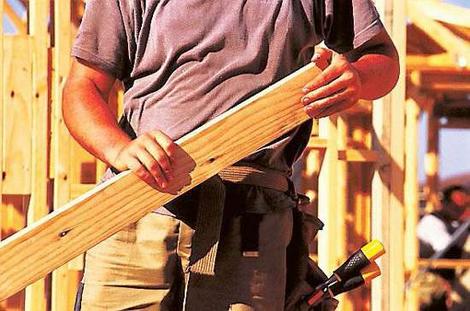
    Carpentry is a broad trade that includes many sub-trades. Carpentry is also a registered apprenticeship trade with internationally recognized certification. In a very general summary, carpentry is building structures or really anything out of wood.

    You can begin your career in this trade by calling your local Carpenter’s Union, going directly through a college course, or by simply applying to a job as a first year apprentice or helper. As the trade carpentry is so broad, usually after the initial training process carpenters specialize in an aspect within carpentry. A few examples may be: concrete form carpenter, finish carpenter, framing carpenter, commercial carpenter (ISM), wood shop carpenter. There are also many more examples of possible specializations within carpentry and each has its’ own hurdles and benefits. Nine time s out of ten, a general contractor comes from a carpentry background due to this wide ranging set of skills and understanding.

    When you are working in this trade you should be prepared for being outside all day in all seasons; generally carpenters are first on construction sites and the elements can be a challenge at times. The job requires you to be physically fit, and you must be able to perform muscle burning tasks for extended periods of time. You will often be asked to work at heights. In this case, a proper fall arrest protection should be used and training should be completed. Carpenters usually start their work day early to beat the hottest part of the day; a normal day will run from 7AM to 5PM or sometimes 6AM to 4-5PM.

    Income can vary depending on geographical region and your specialization within carpentry. For example, currently in Canada, a general carpenter can make between $35,000 and $120,000 per year. At some point in your career you may wish to work for yourself and start a small business; many carpenters do. At this point, income can increase beyond the above mentioned.

    If you are interested in what working in the trades, carpentry is a good place to start because it allows you a wide variety of choices and exposure to specializations and an understanding of construction in general. There is also a great feeling of pride looking at the work you accomplish at the end of the day; the work you complete is often there for many years to come. There are very strong unions to train and protect workers that choose to take up the trade; this has a side benefit of keeping non-union carpenter’s hourly rates within a fair range.

    If you want to keep your body in shape and are not afraid of some hard physical work, perhaps carpentry is a trade that is for you. Construction in Canada is an ever growing industry and as the aging workforce retires, there will be more and more opportunities in the future. If this interests you, grab yourself a hammer and start building your exciting future in the world of carpentry!

  • Career Profile: Drywall Finisher

    Career Profile: Drywall Finisher

    Before there was drywall, entire walls were finished with lathe and plaster; a labor and time intensive process. During WW2 when labour was hard to come by on the home front, they began manufacturing drywall. Drywall, or gypsum board , alleviated the need for using hand powered manual tools to create a smooth, fire resistant, acoustically sealed, and durable wall surface. So plasterers are out a job, right? Wrong. In today’s construction industry a plasterer usually refers to someone who does exterior coatings (stucco, etc.) but it could also refer to what is more commonly known as “tapers” or drywall finishers.

    Being a drywall finisher is like being a magician to other trades within interior construction. Although it technically falls under the trade of ISM (interior System Mechanic) there is no formal training provided in the curriculum. Most people learn the trade by studying under someone who has many years of experience on the job, or through an unofficial apprenticeship. Because of this ambiguous learning and certification process, drywall finishers that produce a quality finished product at a consistently fast pace, are greatly valued.

    The pros of working in this trade include: working inside and in a climate controlled environment (the materials you work with require it); not a tremendous amount of heavy exertion on your body, and because of the lack of quality people in your trade, you will always have work if you commit yourself. The cons are: potential repetitive motion strains, some days are dusty (especially when you are first learning), and it can be difficult to find resources to learn the trade.

    There are many things to consider when entering into any trade. My suggestion is for you to roll up your sleeves and try the ones that interest you until you find the one that feels the best. Unlike many career paths, when you learn this trade you will be trained on the job. That means you can skip the high tuition costs and put some cash into your pocket. In western Canada, a 1st year drywall finisher should bring home no less than $40,000 per year. After 4 years of working, the same person could potentially earn $90,000, and that by no means is a ceiling; many drywall finishers start their own small businesses and can make much more than that.

    Drywall finishing is a trade that requires a strong attention to detail and a determination for quality. It can be a messy job at times, but that’s part of the fun! If you’re interested in a career in drywall finishing, try reaching out to some local contractors and give it a go.

  • Career Profile: Welder

    Career Profile: Welder

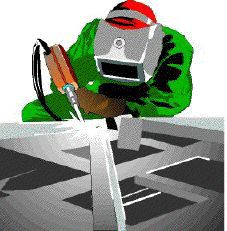
    Welding is a growing trade with many opportunities across both construction and manufacturing industries. In Canada welding is a certified trade with a three year registered apprenticeship.

    With Canada’s oil based economy, welders are in high demand in the western provinces. Some of the highest paid welders in the world work in pipeline construction. Working in pipeline construction as a welder requires you to have your Journeyman certification as well as a B pressure certificate. There are many opportunities when you enter the trade, to partner up with a seasoned welder as a helper to gain experience and hours towards your apprenticeship. Following this career path (pipeline welder) you can expect to make $200,000+ per year. You must have your own tools for this profession, and also your own vehicle to carry them (they can be heavy and road access can be rough). A pipeline welder usually works at remote sites and can spend 30+ days away from home. In this case, temporary accommodations are provided by your employer.

    The construction of buildings now relies greatly on qualified welders. As the future progresses, this will be needed more and more because of fast development growth and the economy. Almost every part of the construction process now requires welding on commercial and even some residential projects, from structure to plumbing. A journeyman welder working for a union plumbing contract can expect to make approximately $100,000 per year plus benefits and pension. Generally, working in building construction, you do not have to work out of town to stay busy.

    Other opportunities in welding can be in manufacturing. Many things, you may notice, are made of metal; all of those items require a welder at some point on the production line.

    A welder must have a steady hand and an attention to detail; some welder’s work is under much scrutiny especially when dealing with high pressure gas or liquids. A pipeline welder’s works is regularly X-rayed to ensure its quality. Hazards of the trade include toxic gases that can be very harmful over prolonged exposure. If you have steady hands, don’t mind hard work and feel welding may be a good fit, join the many welders in Canada for your electrifying future!


    Resource:

    https://www.cwa-acs.org/ 

  • Career Profile: Special Effects Technician

    Career Profile: Special Effects Technician

    Think of a movie or television program that has good special effects. They might be fires, explosions, or something less dramatic like breaking a table apart or creating a scar on someone’s face. Special effects technicians help to make these kinds of effects look real and help make movies and television programs better.

    Special effects technicians work with almost every stage of a production. They begin by looking at the script of a show, which says what the actors do and what they say. For each part of the show, they decide what special effects are needed and how to create them.

    Some special effects technicians work in companies that specialize in that kind of thing. Others work in television and film companies, but most work as freelancers. The work depends mainly on the location of the movie and television industry, although some people work in small theatres. Most special effects technicians in North America work in Vancouver, Toronto, New York, Chicago, and San Francisco.

    Becoming a special effects technician generally does not require any special education. However, taking courses in welding, lighting and other techniques can help special effects technicians to advance in their work.

    Special effects technicians can become specialists in working with fire or with other types of materials. Technicians also have to know about safety and how to keep people from being injured. When something goes wrong with the special effects, technicians also need to check all of the equipment and anything else that might have gone wrong.

    Keeping detailed records is important for special effects technicians. They write down what works and what they need to change the next time. These records can also be very valuable for other special effects technicians, who can learn new techniques for making everything work together.

    One of the benefits of working as a special effects technician is being able to think creatively and to solve problems as they work. Suppose that you had to find a way to make it look like a character flies through the air. How would you do that? If you can find ways to make something like that look real and natural, you might have the skills to be a special effects technician.

    Computers have helped to change the way that special effects technicians work. In the past, all special effects had to be done manually. Designing the effects and making them work could be a very complicated and time-consuming. With computers, however, special effects technicians can do many things that were impossible in the early years of the profession.

    Working as a special effects technician can involve long days during times of filming. Some technicians work regular hours and can earn over $21.00 per hour. Others work only when they can find short-term jobs, but often they can earn more money during those periods than others can earn at a full-time job.

    If you have a creative mind and enjoy movies and television, the job of special effects technician might be right for you.

  • Get a Move On!

    Get a Move On!

    Most people move at some point in their lives, either from a house to an apartment or the other way around. Some people also move from one office building to another or need new furniture or other equipment. Often, moving companies help these people to move their belongings from one place to another. If you are physically strong and enjoy working with a lot of different people, it might be a good job for you.

    Almost anyone who is physically capable of lifting heavy objects can be a mover. However, some people make that their specialty and learn methods of doing their job quickly and efficiently. Professional movers often work in companies that offer these services, but some movers work alone or in small groups.

    When people move from one home to another, they usually have furniture like tables and chairs, as well as boxes full of dishes, books and other objects which might require special care. People in offices might have computers, photocopiers and other large and breakable machines. Movers have to be strong but also very careful as they move objects that could easily be ruined if they fall onto the ground. Being able to pack a truck efficiently is also useful so that the movers have to make as few trips as possible.

    Becoming a mover does not normally require any special education, but gaining experience is useful. Learning special techniques from other movers is a good way to become an efficient mover. Some companies also provide training for their employees, especially for people who want to drive the moving trucks or perform other parts of the job. Most movers work in pairs or small groups, but it is also possible to work alone with the right equipment.

    Although much of the work is physical, movers should be able to talk to customers and to discuss what they need. Employees of moving companies might also need to fill out forms and to complete inventories to make sure that everything has arrived safely. They might accept payments and write out receipts, and they might also work in the offices of small companies. Sometimes, movers might have to put furniture back together and possibly work with electronic equipment to make sure that it is connected properly.

    Wages for movers depend a lot on experience. Most movers start at about minimum wage, but they can move up to about $35 an hour after they have worked in the job for several years. One of the challenges for movers is that the work tends to be seasonal. Although people can move at any time of the year, many of them prefer not to move in winter when the weather is very cold. Movers can be very busy in the warmer months and have little work to do during the winter.

    Moving is a hard job, but it can be good for strong people who like to work with their hands and to meet new people. Why not consider being a mover either full-time or part-time?