Tag: trades

  • Women in the Trades, Statistics and Perceptions

    Women in the Trades, Statistics and Perceptions

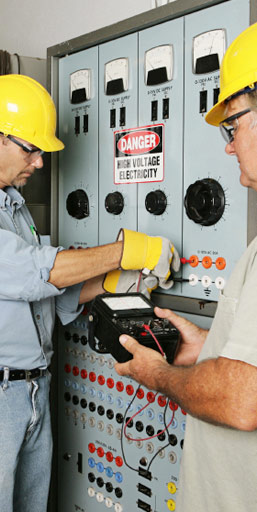
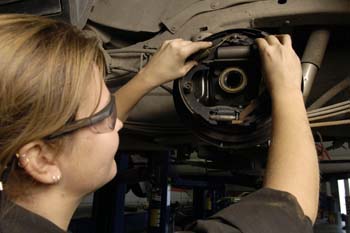
    When you picture a construction worker, plumber, electrician or pipefitter, what image comes to mind? Most people imagine a burly, middle-aged man, wearing overalls, covered in dirt or grease. Trades jobs have been predominantly dominated by men throughout history. Across Canada women are still under-represented in the industry.

    The Status of Women in Canada factsheet (http://www.swc-cfc.gc.ca/initiatives/wesp-sepf/fs-fi/es-se-eng.html) stated, “In 2014 women represented 47.3 % of the labour force. Women aged 15 years and over were most likely to be employed in sales and service occupations (27.1%).” It also states, “Women continue to have low representation in the skilled trades and other traditionally male dominated professions. For example in 2012, women held just 11.8% of the construction jobs, 19% of forestry, fishing, mining, oil and gas jobs, and 30.5% of agriculture jobs. In 2011 women accounted for only 2% of carpentry apprentices, 1.9% of plumbing apprentices and 1.5% of heavy equipment apprentices.”

    So why are there so few women working in the trades? An article on the website TalentEgg.com (http://talentegg.ca/incubator/2012/03/12/women-working-skilled-trades/) suggests “even in this day and age, women can be discriminated against in the skilled trades workforce. Women are usually in the top 10-15% in their class, but they are almost always among the last 10% to get hired.”

    The Government of Canada Skilled Trades website points out another reason there are fewer people in general working in the industry. It says there is a “negative perception towards skilled trades among youth and their influences, with many believing that these jobs are low paying, involve physical work, are dirty, and are less academically challenging.”

    Though this may be a common perception, it isn’t entirely true. The work may be more physical than an office job, but it can also be rewarding. Imagine being able to drive by a building, knowing you helped construct it. Stats Canada stated on average trades employees make $22.36/hour. Canadianbusiness.com stated in 2014, Electrician and Telecommunications Contractor held the number 10 spot on the Top 10 Best Jobs in Canada, with a median salary of $72,800/ year.

    Many skilled trades’ workers are hard-working individuals. Although a lot of people feel the trades are for students who are less academically inclined; this is also another myth. Trades workers need to have a good academic foundation with knowledge in math, literacy, problem solving and analytical skills. Depending on the type of trade you pursue you could be deciphering complex blueprints on a construction site, operating technical equipment, or installing intricate plumbing systems at an industrial site.

    There are a number of apprenticeship programs geared toward women. You can search online to see what’s available in your area. In Ontario there is a website with information on Women in Skilled Trades and Information Technology: http://www.grants.gov.on.ca/GrantsPortal/en/OntarioGrants/GrantOpportunities/OSAPQA005168.

    Careersintrades.ca (http://www.careersintrades.ca/) has information on how to get started.

    If you think you might be interested in pursuing a career in a skilled trade, it’s always a good idea to talk to someone who currently works in the field. They will be able to explain the ins and outs of the job, tell you what is involved, and what it is really like to work on a job site. They can also give you an idea of job availability and pay. You could also do a work study or internship, which will provide you with the hands on training and experience. This will be a great way to see if you like the job and the work environment, and to decide if the trades are the right field for you.

     

  • Spotlight: ACCESS ‘Your One Stop Shop’ for Aboriginal Apprenticeship

    Spotlight: ACCESS ‘Your One Stop Shop’ for Aboriginal Apprenticeship

    Who? “ACCESS Trades is committed to providing apprentices with the resources and support necessary to successfully complete the full term of their apprenticeship.  Our only goal is to help Aboriginal men and women attain Red Seal or Provincial certification in a trade.”

    How? Join the hundreds of ACCESS Trades apprentices who have found rewarding careers in the trades.

    Check out this link for instructions and process of obtaining your apprenticeship:

    http://accesstrades.accessfutures.com/apprenticeship/

    Training Schedules ( Updates Regularly) :

    http://accesstrades.accessfutures.com/training/

    Types Programs:

    Electrical Foundation, Piping Foundation, Metal Fabrication, Welding Level B, Sheet Metal Foundation, Machinist Foundation.

    Contacts:

    ACCESS Trades Office #109 – 100 Park Royal West Vancouver, BC V7T 1A2 TEL:  604 922-4077 FAX: 604 922-4088

    Helen Boyce Director of Access Trades

    Rob Egan Training & Apprenticeship Counsellor

    Larry Webster Training & Apprenticeship Counsellor Pauline Hanuse Administrative Assistant Donna Anderson Job Coach

    For more information on Aboriginal Employment and Programs, visit the main website at http://www.accessfutures.com/ .

    Via http://accesstrades.accessfutures.com/

  • Career Profile: Concrete Pumping

    Career Profile: Concrete Pumping

    Concrete pumping; what is it? You may have seen those cement trucks dumping cement into trenches and sidewalks. The concrete pump serves a similar purpose, but it is used for more complex situations, such as getting the concrete to the roof of a high rise building.[1] Individuals who operate the pumps are tradesmen.

    Individuals who wish to get into this trade can do so by attending various concrete and stone mason programs. Some are offered by colleges. Conestoga offers a Brick and Stone mason program.[2] These trades are closely related and are both relevant to one another.

    The industry is in high demand for concrete pumpers as structures are always being built and will eventually need repair and occasional maintenance.

    In Ontario the Operating Engineers Institute Ontario offers a concrete operator apprenticeship. Applicants should have a high school diploma and a DZ driver’s license as heavy equipment and trucks are used on a day to day basis.[3] Wages usually start at $19.00 per hour. There are a lot of vacancies for concrete pumping jobs.

    Placements are outdoors in all conditions. Conditions are often rugged with loud noise and a lot of dust. Be expected to problem solve on a daily basis and coordinate movements of objects and people.[4]

    Local 793, the International Union of Operating Engineers looks after heavy equipment operators which include concrete pump operators. They offer benefits as well as on the job protection.

    If you enjoy working with your hands, operating heavy equipment and working in rugged conditions, then this job is for you. It is physically and financially rewarding. Inquire about apprenticeships near you!

    Sources:

    [1] http://www.concretenetwork.com/concrete/concrete_pumping/

    [2] http://www.conestogac.on.ca/fulltime/0844.jsp#GO-Graduate-Opportunities

    [3] http://www.oetio.com/Concrete_Pump_Apprenticeship_Program_637C.aspx

    [4] http://www.apprenticesearch.com/AboutTrades/GetTradeDetails?tradeId=265

  • Career Profile: CNC Machinist

    Career Profile: CNC Machinist

    Computer Numeric Control, more commonly known as CNC emerged during the 1940s and 50s. In its simplest form, it is the usage of a computer to create and machine a design with machine tools. CNC machines can control lathes, routers, grinders and mills[1]

    The entire process is done through a computer using numeric equations and using the x, y, z axis[2]. Here, the computer can make precise cuts based on what the operator has set. Additionally it can repeat as many cuts as you would like. This makes it easy to duplicate templates than manually machining a replica. It also saves time while limiting the number of potential inaccuracies.

    CNC is widely used by machinists. It is used to manufacture complex templates, fixtures and designs like crown molding. The cost of equipment is very expensive but has dropped since it has become more publicly available.[3]

    CNC is incorporated into the more broad trade of tool and die making. Sheridan college offers a course included CNC programming and mechanical drafting[4]. It prepares students for careers in the machine industry. Students should have good math skills and be excellent with problem solving and reading drafts.

    Typically, CNC machinists make approximately $14-30 per hour. Companies are in demand for CNC machinists as manually machining has been come less common with the emersion of CNC operated equipment. Automotive companies are constantly using CNC machines for productions of their vehicles and vehicle accessories.

    If you enjoy manufacturing and computers and want to be part of a major industry in demand, give CNC machining a shot and see how rewarding this career can be!

    Sources:

    [1] http://www.thomasnet.com/about/cnc-machining-45330503.html

    [2] http://www.technologystudent.com/cam/cnccut1.html

    [3] http://www.mmsonline.com/columns/different-company-types-have-different-cnc-needs

    [4] https://www.sheridancollege.ca/academics/programs-and-courses/mechanical-techniques-tool-and-die-maker.aspx

  • Trades Programs for Women Across Canada

    Trades Programs for Women Across Canada

    Well, I can’t pretend that I don’t know women have it… a little more difficult than men when it comes to pretty much anything. When you’re trying to earn your diploma in the trades it can be even more difficult. But, JPD is here to help women in their respective fields, find programs that are right for them.

    YWCA Toronto offers a lot of great programs for women in the trades. YWCA Toronto offers a 34-week program in partnership with George Brown College. This free training program is for women interested in becoming a residential air conditioning systems, mechanic and gas technician. The programs offer things like better hours, higher pay, and a chance for self-employment. Women 16 and older are eligible to apply.

    There are also programs available for electricians. This particular one is in partnership with Centennial College for a 33-week program. You learn things like job readiness, training in refrigeration and air conditioning, and an 8-week work placement when you’re all done with the program.

    Mohawk College offers programs for women as well, not to mention they include several facts on their web page discussing women’s roles in trades: “Shortages in skilled trades have forced industry to think differently about who they can attract, retain and promote within the skilled trades. This change of view has been able to provide an abundance of opportunities for women who are considering skilled trades careers.”

    Obviously, women’s programs are not just sequestered in Ontario. British Columbia’s Okanagan College Women in Trades Training offers tons of opportunities for women to learn about the trades. They have the chance to learn about plumbing, welding, sheet metal, and automotive, among other things.

    Saskatchewan Polytechnic gives women the opportunity to attend specific sessions for carpentry (repairing holes in and applying sheath to drywall, framing walls), basic tasks in electrical and plumbing trades, and welding (cleaning, cutting tools, learning to weld steel).

    Women Building Futures is another great tool for female students to use as a source of empowerment and information, but also for application deadlines. The articles offered on their site range from Aboriginal women talking about their role in construction and local employers who are working to make a difference for women in the workplace.

    Nova Scotia Advisory Council on The Status of Women provides women with information on lots of programs readily available for them to apply to. Programs like Techsploration, Webgrrls International, and Women in Global Science and Technology are all linked on their main site so female students can look at which ones interest them.

    The time for women to “prove” themselves ended a long time ago. Women are just as valuable as men in any trade and now, it’s easier than ever for women to enter programs and become whatever they want to.

  • Career Profile: Elevator Installer

    Career Profile: Elevator Installer

    Every day, people in tall buildings go up or down in elevators. How often do they think about the people who make it possible to ride to their offices or apartments in comfort, instead of using the stairs? Without the work of elevator installers, skyscrapers and other tall buildings would never be useful for people.

    Elevators are easy for people to use but can be difficult to install. Workers in this field need to understand mathematics and science so that they can make calculations and know the basics of how machines work.

    For example, if elevator installers know the physics behind pulleys and other tools for raising heavy objects, they can have a better understanding of how elevators work. Knowing how much stress the materials can take before they crack is also useful for deciding when to replace parts on the elevator or to reinforce them for extra strength. Courses in metal and wood shop work can give people the background and experience that they need for this work.

    After getting a basic education in mathematics and the sciences, elevator installers normally complete their learning through apprenticeships. In a good apprenticeship, experienced elevator installers help the newcomers to learn their work on the job, by personally showing them the processes.

    Over a period of about four years, apprentices learn how to read blueprints and how to apply physics to their work. They also learn about electricity and the theory of electronics, and when they know the basics, they learn complicated processes such as installing wiring. Many people in this field do repairs as well as installation of elevators, and they have to know how to find and fix problems when elevators are not running well. This part of the job might involve some evening and weekend hours, since breakdowns can happen at any time.

    Besides installing elevators, some people in this trade work with other machines. Escalators, for example, are common in large stores and malls, and they work on many of the same principles as elevators. Some restaurants also have dumbwaiters, which are like small elevators for carrying dishes and food from one floor to another. Elevator installers sometimes work with both of these kinds of machines, which might require special knowledge and skills.

    Wages for elevator installers can vary, depending on where they live and what kinds of skills they have. In Canada, the average hourly rate is $37.00 per hour, but it can start much lower than that. However, with experience and skill, elevator installers can earn a good living.

    Generally, elevator installers should be good with their hands, work well on their own without supervision, and have enough strength and stamina to work with mechanisms that can sometimes be heavy and hard to use. Does that describe you? If so, you might want to consider learning to work as an elevator operator.

    Bibliography:

    Careers.org. “Occupation Profile for Elevator Installers and Repairers.” http://www.careers.org/occupations/47-4021.00/elevator-installers-and-repairers.

    Payscale.com. “Hourly Rate for Industry: Elevator Installation.” http://www.payscale.com/research/CA/Industry=Elevator_Installation/Hourly_Rate

    Salary.com. “Elevator Installer/Repairer Job Description.” http://swz.salary.com/SalaryWizard/Elevator-Installer-Repairer-Job-Description.aspx.

    Salary.com. “Elevator Installer/Repairer Salaries.” http://www1.salary.com/Elevator-Installer-Repairer-salary.html.


  • Career Profile: Drywall Finisher

    Career Profile: Drywall Finisher

    Before there was drywall, entire walls were finished with lathe and plaster; a labor and time intensive process. During WW2 when labor was hard to come by on the home front, they began manufacturing drywall. Drywall, or gypsum board , alleviated the need for using hand powered manual tools to create a smooth, fire resistant, acoustically sealed, and durable wall surface. So plasterers are out a job, right? Wrong. In today’s construction industry a plasterer usually refers to someone who does exterior coatings (stucco, etc.) but it could also refer to what is more commonly known as “tapers” or drywall finishers.

    Being a drywall finisher is like being a magician to other trades within interior construction. Although it technically falls under the trade of ISM (interior System Mechanic) there is no formal training provided in the curriculum. Most people learn the trade by studying under someone who has many years of experience on the job, or through an unofficial apprenticeship. Because of this ambiguous learning and certification process, drywall finishers that produce a quality finished product at a consistently fast pace, are greatly valued.

    The pros of working in this trade include: working inside and in a climate controlled environment (the materials you work with require it); not a tremendous amount of heavy exertion on your body, and because of the lack of quality people in your trade, you will always have work if you commit yourself. The cons are: potential repetitive motion strains, some days are dusty (especially when you are first learning), and it can be difficult to find resources to learn the trade.

    There are many things to consider when entering into any trade. My suggestion is for you to roll up your sleeves and try the ones that interest you until you find the one that feels the best. Unlike many career paths, when you learn this trade you will be trained on the job. That means you can skip the high tuition costs and put some cash into your pocket. In western Canada, a 1st year drywall finisher should bring home no less than $40,000 per year. After 4 years of working, the same person could potentially earn $90,000, and that by no means is a ceiling; many drywall finishers start their own small businesses and can make much more than that.

    Drywall finishing is a trade that requires a strong attention to detail and a determination for quality. It can be a messy job at times, but that’s part of the fun! If you’re interested in a career in drywall finishing, try reaching out to some local contractors and give it a go.

  • Women in the Trades, Statistics and Perceptions

    Women in the Trades, Statistics and Perceptions

    When you picture a construction worker, plumber, electrician or pipefitter, what image comes to mind? Most people imagine a burly, middle-aged man, wearing overalls, covered in dirt or grease. Trades jobs have been predominantly dominated by men throughout history. Across Canada women are still under-represented in the industry.

    The Status of Women in Canada factsheet (http://www.swc-cfc.gc.ca/initiatives/wesp-sepf/fs-fi/es-se-eng.html) stated, “In 2014 women represented 47.3 % of the labour force. Women aged 15 years and over were most likely to be employed in sales and service occupations (27.1%).” It also states, “Women continue to have low representation in the skilled trades and other traditionally male dominated professions. For example in 2012, women held just 11.8% of the construction jobs, 19% of forestry, fishing, mining, oil and gas jobs, and 30.5% of agriculture jobs. In 2011 women accounted for only 2% of carpentry apprentices, 1.9% of plumbing apprentices and 1.5% of heavy equipment apprentices.”

    So why are there so few women working in the trades? An article on the website TalentEgg.com (http://talentegg.ca/incubator/2012/03/12/women-working-skilled-trades/) suggests “even in this day and age, women can be discriminated against in the skilled trades workforce. Women are usually in the top 10-15% in their class, but they are almost always among the last 10% to get hired.”

    The Government of Canada Skilled Trades website points out another reason there are fewer people in general working in the industry. It says there is a “negative perception towards skilled trades among youth and their influences, with many believing that these jobs are low paying, involve physical work, are dirty, and are less academically challenging.”

    Though this may be a common perception, it isn’t entirely true. The work may be more physical than an office job, but it can also be rewarding. Imagine being able to drive by a building, knowing you helped construct it. Stats Canada stated on average trades employees make $22.36/hour. Canadianbusiness.com stated in 2014, Electrician and Telecommunications Contractor held the number 10 spot on the Top 10 Best Jobs in Canada, with a median salary of $72,800/ year.

    Many skilled trades’ workers are hard-working individuals. Although a lot of people feel the trades are for students who are less academically inclined; this is also another myth. Trades workers need to have a good academic foundation with knowledge in math, literacy, problem solving and analytical skills. Depending on the type of trade you pursue you could be deciphering complex blueprints on a construction site, operating technical equipment, or installing intricate plumbing systems at an industrial site. There are a number of apprenticeship programs geared toward women. You can search online to see what’s available in your area. In Ontario there is a website with information on Women in Skilled Trades and Information Technology: http://www.grants.gov.on.ca/GrantsPortal/en/OntarioGrants/GrantOpportunities/OSAPQA005168.

    Careersintrades.ca (http://www.careersintrades.ca/) has information on how to get started.

    If you think you might be interested in pursuing a career in a skilled trade, it’s always a good idea to talk to someone who currently works in the field. They will be able to explain the ins and outs of the job, tell you what is involved, and what it is really like to work on a job site. They can also give you an idea of job availability and pay. You could also do a work study or internship, which will provide you with the hands on training and experience. This will be a great way to see if you like the job and the work environment, and to decide if the trades are the right field for you.

     

  • De-Myth-tifying Skilled Trades

    De-Myth-tifying Skilled Trades

    You hear it all the time. To get a good job, you need to get a degree from a University and that those who cannot get into a school have to fall back on trades like plumbing or carpentry. A university degree will be useful to you for certain careers, but the myths surrounding the skilled trades should be examined when deciding on which path to take after high school. Here are five common myths, and the realities behind them:

    Myth: Skilled trades are for the uneducated, or unintelligent.

    Reality: Skilled tradespeople apprentice for years and have numerous certifications under their belts. While it’s true that many trades don’t require a university or college degree, the certification process for each trade can take years. Often, the education is paid for by an employer, and while studying apprentices are paid for the work they do, leaving very little student debt to carry into later life.

    Myth: Women can’t do skilled trades.

    Reality: Many skilled trades don’t rely on sheer physical strength; what they do require is dexterity, stamina, good hand-eye coordination and balance, all traits women possess. Technology has changed the tenor of this industry also, allowing many tradespeople to work with computers and advanced electronics.

    Myth: Going into a skilled trade makes you a failure. University is the only path for success.

    Reality: A degree from a University is a prerequisite for careers like medicine, law, or education. However, tradespeople have so many opportunities for success. These include entrepreneurships, mastering the trade, and generally being in high demand. Anyone who has ever needed a plumber in the middle of the night can attest to this. These days the definition of success is changing. A degree will not always guarantee job security, or even work within your chosen field. Education is important, but the way we attain it has become less elite over time.

    Myth: Skilled trades offer very few choices in careers.

    Reality: The trades are always in demand, in every sector of business. A plumber could be called upon to work in a basement, a movie set, or even a cruise ship! The sky is the limit when you think outside the box. In addition, many skilled tradespeople own their own business, becoming an entrepreneur. This opens a lot of doors for different opportunities, but is also a lot of work. Being independent is something a lot of trade-oriented people take pride in.

    Myth: Skilled trades do not pay very well.

    Reality: The average salary for a plumber in Ontario is $26/hour (2009 Labour Force Survey). Considering minimum wage is $11/hour this is more than double! In addition, as a plumber gains certifications and experience, her wage will only increase. Also in economic downturns, skilled trades are always in demand, so layoffs are very rare. People always need toilets fixed! Many skilled trades are also unionized, providing another layer of job security. However, some industries like welding pipeline and oil-related trades have economic downturn periods. The oil industry goes up and down and tradesmen and women may be laid off for months at a time. Some don’t mind taking the risk of entering this particular field for it pays well once you have received all your certifications ( 60-120,000 per year).

    Hopefully this shows that thinking of a skilled trade as less valuable than a university degree, is flawed. Take a look at the Jobs People Do Trade listing and see if anything strikes you as a possible path for a career. Talk to your Guidance Counsellor for more info!

  • Career Profile: Motorcycle Mechanic

    Career Profile: Motorcycle Mechanic

    If you go out to the street where you live, you are likely to see several different methods of transportation. Cars and bicycles are two popular choices, but many people prefer to ride something that is halfway in between, like a motorcycle. Have you ever heard of a job called a small engine mechanic? People sometimes refer to motorcycle mechanics by that term because most other mechanics work with much larger machines, such as cars or airplanes.

    Becoming a motorcycle mechanic involves putting motorcycles together, maintaining and repairing them, and sometimes restoring old machines. Some mechanics might also work with other small vehicles, such as all-terrain vehicles (ATVs). Anything other than bicycles that has controls in the handlebars can be part of a motorcycle mechanic’s work.

    Becoming a motorcycle mechanic takes good physical coordination, a good grasp of details, and the ability to handle small objects. The job is not suitable for people who tend to be clumsy and to drop things, although practice in working with motorcycle parts can help. You can already start to train yourself by taking your bicycle apart and putting it back together, or possibly by working on an old engine that is no longer being used. That way, you can learn about how machines work as early as possible.

    Once you finish high school, you can start training to become an official motorcycle mechanic. Training programs are available at several different career colleges in Canada, and some schools also offer distance education programs that allow students to complete their courses at home. Some employers might also require mechanics to complete an apprenticeship program in which they work together with experienced people who can show them what to do; this is highly recommended.

    After the training period is over, new mechanics can find work on their own as freelancers or get jobs with repair businesses. In many parts of Canada, the work tends to be seasonal because of the cold winter weather, but there is likely to be at least some work throughout the year. If you want to be a motorcycle mechanic, it is a good idea to find another type of machine to fix during the coldest months of the year.

    Salaries for motorcycle mechanics can vary, depending on where and how much they work. The average hourly wage in Canada is almost $21 per hour, and most mechanics earn between $30,000 and $65,000 per year. Knowing about many different types of motorcycles can help, since then the mechanic can work on machines that were made both in North America and in other parts of the world.

    If you like motorcycles and working with machinery, this might be the right career for you!

    Bibliography:

    Alberta Learning Information Service.” Occupational Profile Motorcycle Mechanic.”

    http://occinfo.alis.alberta.ca/occinfopreview/info/browse-occupations/occupation-profile.html?id=71003095.

    Career Opportunities.net. “Motorcycle Mechanic.”

    http://www.career-opportunities.net/career_profiles/motorcycle_mechanic.

    Enginecycle.ca. “Motorcycle Technical Training Schools—Canada.” http://www.enginecycle.ca/motorcycle-technical-training-schools-directory.

    Payscale.com. “Motorcycle Mechanic Salary.” http://www.payscale.com/research/CA/Job=Motorcycle_Mechanic/Hourly_Rate

    PCDI.com “Motorcycle Mechanics.”

    https://www.pcdi.ca/career-programs/motorcycle-mechanics/job-outlook/.